
Bridechilla
Time to Ditch Wedding Stress. Life’s too short to be worrying about wedding favors, obligation guests and bridesmaid dramas.


425- Creating an Inclusive Wedding Experience with Tirzah Stein of NearlyWed Coaching
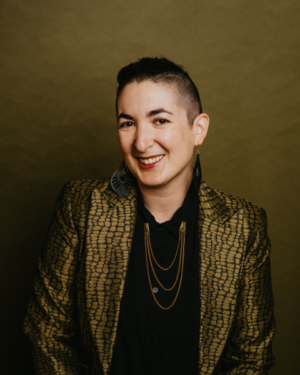
Tirzah Stein of NearlyWed Coaching returns this week with insights on inclusivity and diversity in wedding planning! She shares practical advice to couples on how to identify vendors who genuinely embrace inclusivity of all types in the wedding industry. In addition, she offers suggestions to how vendors and those providing services can step outside the bride/groom framework and provide more inclusive experiences to couples at all intersections of diversity.
Follow Tirzah on Instagram: @nearlywedcoaching
Resources:
LGBTQ I Do (Colorado-Specific Vendors)
Have a wedding question? Leave a message at speakpipe.com/bridechillapodcast and your question may be featured in an upcoming Q&A!
Visit thebridechilla.com for all the latest news!
Sponsors

From destination weddings and honeymoons to anniversaries and renewal of vows, Sandals Resorts delivers Caribbean romance with stunning beaches, global inspired dining, and unforgettable luxury — perfect for couples planning a destination celebration.
Sandals Resorts' “Your Wedding On Us” complimentary package makes it simple to say “I do” in paradise. Use the link below or call 1-877-SANDALS for details.
Where to Listen
Find us in your favorite podcast app.

Leah Haslage:
Welcome to the Bridechilla Podcast. I'm your host, Leah Haslage. Whether you're just starting to plan or you're counting down the days, I'm here to help you stay cool, calm, and collected throughout the wedding journey. So let's get this wedding party started and embrace your inner Bridechilla.
Hey chillas, welcome back and welcome back to our guest, Tirzah Stein, who is the owner and creator of Nearly Wed Coaching. So happy to have you back on the show.
Tirzah Stein:
Thanks for having me again.
Leah Haslage:
And today, I know it's something that we have been talking about as being a really important topic, but inclusivity in the industry. And this is both for couples planning and for those that work in the industry, more B2B. When we're talking inclusivity, Tirzah, can you kind of tell us what exactly it means because some people might be confused by what that exactly means.
Tirzah Stein:
So I think specifically in the wedding industry I like to start off with thinking about our society as a whole and so we are living in a heteronormative society where the binary meaning that we have a social construction of gender that is very much made up about the attributes, characteristics that we assign to people when they're born with the genitalia of male or female. And we put people into those categories. And it's a box that you're put in your whole life, how you should behave and what you should be interested in, what you should wear. Right. And so we could talk about that for like hours and hours. So that binary is something that we definitely put each other in. And in the heteronormative world, that's the norm. And you can't be anything outside of that. You can't explore having no gender or having identity with multiple areas of that gender spectrum. And so I think that the wedding industry is a microcosm of our heteronormative industry. Society is a heteronormative industry where we have this, we're really stuck in this idea of the binary of bride and groom, bridal-centric thinking.
Leah Haslage:
Bridesmaids, groomsmen, which we'll get into the language later, but yeah.
Tirzah Stein:
And so I think that when you think of the word inclusive, just to be super simple about it, the opposite of that is exclusive. So people often feel excluded when we're not thinking about inclusivity and really implementing it in all of our businesses, as all vendors in this industry. I think we have a lot of room to grow in this area.
Leah Haslage:
I agree with that. And to me, inclusivity also, it's like it's gender, it's race, it's religion, it's sexual orientation. Again, like you said, exclusive versus inclusive. So, yeah.
Tirzah Stein:
It's being able to make sure that people feel celebrated, seen and affirmed and understood across all spectrums of their identities and like, we all have intersectionality of identities. And so I think intersectionality is something really important to understand. that we all experience different levels of oppression depending on what identities we hold, and we also hold identities of privilege. And so understanding when that privilege shows up and understanding when people experience multiple layers of oppression based off their identities, how are we supporting them and making sure that we're understanding who they really are as humans and what makes them special and how can we be in their corner, how can we celebrate all of who they are as a couple.
Leah Haslage:
When choosing vendors, because we've heard stories obviously that have made the news like the cake incident, how can we make sure that we're finding vendors that share our inclusive values?
Tirzah Stein:
I think a few things, I know for sure talking to lots of queer newlyweds, the common experience is carrying the burden of having to ask the questions. Are you inclusive? Have you worked with queer folks before? Because we can't see it. It's very unclear and confusing. And so I think the biggest thing is making sure that you can see that right away when you're hiring your vendors. You shouldn't have to ask those questions. I think we're at a day and age now where we shouldn't have to carry that burden anymore.
Leah Haslage:
So if they have some kind of wording on their website or show photos of couples that are in, you know, LGBTQ+ relationships or interracial, interfaith.
Tirzah Stein:
Are you seeing yourself represented in their work? Do you have that representation where you're like, oh, OK, I can see they've worked with folks that are similar to me and that there is like a clear statement that they're saying, like, this is what we stand for. This is what we value. This is the type of couple we want to work with. And just putting it out there. Being direct about it, making sure that you can see it right away. And so you should be able to know like, okay, and that goes across all aspects of their business. So it's not just if you're just seeing like a rainbow on their social media, and then you see nothing website that even mentions anything about inclusivity, then maybe that's not being consistent, right? And thought out in a way. So I think that making sure you're seeing that across all aspects.
And then like, also, that it's in the, you know, client facing documents you receive as well. And like, for me and my wife, we were hiring a wedding planner. And we felt good about it up until the point where we received the proposal. And the whole thing said bride and groom throughout the whole language. And we were like, but we just had a discovery call and talked to you and you know we are two women and so we did not hire them. Because we were like, I don't feel seen at all, kind of dismissed here.
Leah Haslage:
They could have just taken that extra step to have other documentation or just change the wording to fit.
Tirzah Stein:
Exactly. Are they using pronouns? Are they asking you about your pronouns? Are they making sure that they're really getting to know you and seeing all of who you are and making sure that you feel really seen and that they're going to be in your corner and have your back? Because you don't want to work with vendors who don't. It's important. You're going to spend so much time with them.
Leah Haslage:
So much time and so much money.
Tirzah Stein:
Lots of time, lots of money. You want to make sure you hire the right people. And if you feel like there's anything that's off or it doesn't feel like a good fit for you, don't hire them.
Leah Haslage:
What if someone lives in an area where it's a little more, I'll just say conservative, I guess. It's the nicest way of putting it, I guess. Like where they don't have many options where they're welcome.
Tirzah Stein:
That's really hard and that's definitely the case for many people. depending on where you live in the country or the world. One option is you can elope. I know that personally, I've worked with quite a few queer folks that have eloped to Colorado from Texas and Florida and other places. I had one couple who I talked to and they said, we can't walk outside of our house and hold hands.
Leah Haslage:
That's heartbreaking.
We can't get married here. And I was like, come to me. So I mean, I know that's not going to work for everybody. That's like a lot to consider, you know, people having to travel and all of that. But that definitely is an option and something that I know some folks will do. I think that there are people out there, it just might take more looking and effort. And there's also certain platforms that people can use.
So when I was getting married, I feel frustrated by this. But like, I had no idea at the time that there was like, platforms I could search for specifically for queer and like, inclusive, and like POC, because we really my wife's black, and we really wanted like, POC vendors and queer vendors, and we just had such a hard time. We felt like we were searching for a needle in a haystack, and it was really frustrating. However, there are resources like Equally Wed is a national database of queer and allied vendors, and you can search for folks there if you're local to Colorado. We have LGBTQIdo, which is specifically for Colorado for queer and inclusive vendors. And then the other tip, which is really helpful because I think a lot of people use The Knot and the Wedding Wire, they actually have like a drop down menu for inclusivity options. So you can search specifically for the type of inclusive identities that matter to you and then you can search in that way and it will filter for those specific requests. So I think that's awesome.
Leah Haslage:
Yeah, that's awesome. And Love Inc. Magazine, shout out to Brittany, is a great one and Rock N Roll Bride out of the UK really promotes inclusivity as well. I think those would be awesome too. Those are great resources you gave, though.
Tirzah Stein:
Rainbow Wedding Network. I think if you can, you just type in like career or whatever, you know, identities you're looking for, like you'll be able to hopefully find some of those platforms.
Leah Haslage:
It's great that there's more resources being made available. So how do we address situations like you were starting to go through with your wedding planner where say you've already hired a vendor, but as you're going through the process, you find out that they don't have the same values. They don't align. What can you do? What are next steps?
Tirzah Stein:
That's a really hard one. The first step would be, if you feel comfortable, would be to maybe have a conversation and express what's not working for you. See if you can give that vendor maybe an opportunity to learn and change any behavior. Also, that's a burden that a lot of people don't want to have to deal with.
Leah Haslage:
And extra stress on top of all the other stress.
Tirzah Stein:
And like maybe you don't feel like it's your job to have to do that. I would say if you have a planner, that's what planners are for. I feel like we definitely underutilized our planner in some aspects when like something happened and we were frustrated. I almost forgot that that's what she was there for and I felt like it was all me to figure out. But your planner can be a huge resource. So maybe you can express what's going on with your planner and they can take on some of that burden and see if they can remedy it. But if you still feel really uncomfortable, I know this is a financial consideration, but you can fire them.
Leah Haslage:
You might lose your deposit.
Tirzah Stein:
But it might be worth it if it's to that point where you feel like this is not the person I want in my wedding. You don't owe anybody anything. I think that's something that's really hard. I remember feeling that I would talk to someone in a discovery call and I immediately owed them something or I had to hire the first person I talked to. You just don't.
Leah Haslage:
That is easier said than done because if you have had a habit or are a people pleaser by nature, you don't want to let anybody down even though they're letting you down.
Tirzah Stein:
I know. Believe me, I have a lot of things about how I did that myself during my wedding. I was like, what was I doing? I just like felt like I owed everything and like I couldn't say no or speak up for what I needed. So I totally get that. It's definitely easier said than done. But I think that what's important is that those are the kinds of conversations you can start having now, like preventing conversations. What do we do if XYZ potentially happens? What do we do if we hire someone we end up not really liking? Have those conversations beforehand so that you and your partner are on the same page about how you would want to go about handling it. There's nothing wrong with preparing a little bit for some of those scenarios.
Leah Haslage:
Yeah, so language. We started talking about language earlier. How has language used in wedding planning evolved to become more inclusive? Because there's, I know, different examples out there that you could probably give.
Tirzah Stein:
Yeah, there's like a shift for sure in inclusive language. I do feel like there's also a lot of room to grow. I still feel like we're very, as an industry, we're very, we're holding on very tight, to the bridal thing, where it's like the bridal industry. And what's my issue with that, and I know a lot of people would agree, is that it's focused on one person. And we're focused on one person in a relationship, which is, I don't think that-
Leah Haslage:
Which I know you're saying this as you're on Bridechilla, so you're probably like, ah!
Tirzah Stein:
You know, that's the name of the podcast, but I think that it's it's something that we've been so, so used to being a bride and a bridal centric industry. And this is a shift maybe into more inclusive language because that is also gendered language. We talk about what are we often thinking about someone who identifies as female. And so that doesn't really include all people who get married. But there definitely are some shifts. So for example, I think in stepping away from like bride and groom, people might use like couple, marriers, celebrate, nearly weds. Obviously, I'm going to pitch that.
Leah Haslage:
Yeah.
Tirzah Stein:
I really like that. I think they're all like inclusive terms. Spouse, yeah. I mean, well, there's a variety of different things. I think it's figuring out what makes sense in your own language, but also asking people, like, how do you want to be referred to? We need to just ask more questions instead of making assumptions. It's really easy to make those assumptions when we talk to people or like we see two people on a discovery call and we're like, oh, we make that assumption. Oh, you look like you're a hetero couple. But that might not be true. Maybe one person's non-binary or maybe one person's transgender. We don't know how people identify. So I think we just need to ask those questions straight up. Like, how do you want to be referred to as we plan your wedding together? What titles do you want? Like, do you even like brides? Like, what else, what can we call, what can we refer to you as? And then it expands past the nearly weds. It expands into…
Leah Haslage:
The bridal party, quote unquote.
Tirzah Stein:
Right. So we, I think that's another one we get tripped up on a lot. Like, um, I was just at a wedding with two grooms and one of the vendors, we were just kind of talking right before the ceremony to figure out the mics and everything. And they mentioned oh, bridal party. And I was like, wedding party. There is no bridal party. And I just said that because it's like, there's obviously no bridal party. That's just not how they're identifying the people that are there for them. So I think just all vendors across the board need to know. How do you want to refer to your people?
So for example, for us, like we had some non-binary friends in our wedding party and we were like, we were both women, but we really don't, we're not, we don't really like the like bridal thing. And so we referred to everyone as our I do crew. It was really fun. And it was like gender neutral and it was Tirzah’s I do crew and Lauren's I do crew. And what's nice about that is that like all vendors can know about that. So, for example, when photographers are calling out their shot list, they can say, okay, where's Tirzah’s I Do crew? Let's get everybody here. And everyone knows, okay, that's me who is on, you know, in my group versus being like, okay, where's Tirzah’s Bridal Party? And then I have non-binary friends who are like, wait, that doesn't feel good. Like that excludes me, right? So those are the types of conversations that we can be having. And there's a lot of alternatives. Kind of went on a tangent there, but just staying away from bridal, like bridal suite, getting ready rooms, like we can call things, they don't have to be bachelorette and bachelor parties, they can be batch or batch ex parties. There's a lot of alternatives.
Leah Haslage:
Yeah, I was like looking up some different alternatives because like, there's gotta be ones I'm missing out there and like honor attendants, best persons instead of like maid of honor and you can do officiants and administer and priests if you don't have a minister and priest.
Tirzah Stein:
I think what's important is like to challenge ourselves as vendors to be like, yes, maybe we're used to doing it a certain way, but that doesn't mean that's the way we should continue to do it. I think now more than ever, we really need to be mindful of taking those steps to be more inclusive for everybody. And it's hard. Just go through. Go through your documents. Open your website and take out bride and groom. Take out he, her. Just use neutral language. And it's not like, there's not options out there. There's like we just discussed, there's plenty of options. So I think if you can, if you're a vendor listening, go do it right now. It's not hard.
Leah Haslage:
Is there anything to consider that with like invitations and anything in your wedding website and stuff? Yeah, totally.
Tirzah Stein:
I think there's a lot of wedding etiquette that the younger generations are like, goodbye. like traditionally you would say like you know Mrs and Mr first name guy’s last name like it's like you don't have to address your invitations like that just do what feels right for you um i think that's what's really important that it comes down to at the end of the day. Like, use first names. You don't have to overly gender people. I think another one, too, that we...
Leah Haslage:
Or be super formal. If you don't want to have a formal wedding, you don't have to still stick to formal writing. Exactly. It could be as laid back as your wedding.
Tirzah Stein:
Exactly. Like, have it match your vibe. I think another one that just stood out to me in my mind is that we all the time will be like, ladies and gentlemen, like, for DJs. And so that's another good, like, reminder. Oh, yeah. We don't need, we can just say, hey folks, or like there's other ways to address a crowd of folks without saying those kind of gendered wording.
Leah Haslage:
So that's such a great tip right there. So there's obviously still challenges for the LGBTQ plus community. What advice can you give for those in the community when they're choosing their vendors in specific?
Tirzah Stein:
I think just like don't settle or feel like you have to go with the status quo. There are so many inclusive vendors out there and queer vendors who are like dying to meet you. I'm one of them. Like when I get connected with a queer couple, like my heart gets so full and just happy because it means the world to me. And so I just think, remember that this is your choice. You are choosing your family for your day and like everything up until it and so you want to be very selective with who you choose and so making sure that like some of the things we've already been talking about that you're really seeing that they're walking the talk of inclusivity that they feel like the right fit for you that when you talk to them on a discovery call that like…
You know when you just vibe with someone and you're like, oh, they're my people, I feel comfortable. You just know. You just know. You feel comfortable in the right way. Then that's a really good sign that that might be the person you want to hire. If it just feels like you're off and uncomfortable and it's not vibing, then do not hire that person. I just feel like we have to remember that we have agency and we have choice and it is okay to be picky or whatever, right? It is okay because this is about you and centering your relationship and your love and so you should be as comfortable as possible on your wedding journey and day.
Leah Haslage:
Speaking about being comfortable on your wedding day, family dynamics. There's so many different ways that you can have old school mindset, older family members that are not accepting, unfortunately. How do you deal with those dynamics when it's like, Maybe a matriarch of the family or your own parents. So you want them there, but they're not as supportive as they should be.
Tirzah Stein:
I know. It's really devastating. First of all, letting yourself feel those feelings. It's OK to just let yourself be upset, be sad, grieve that. I think a lot of times I hear queer folks feeling like they're coming out all over again. Because sometimes in these dynamics, and of course I just want to say as a side note, the queer community isn't a monolith, this isn't like everyone has the same experiences, we are all on a spectrum of diverse experiences, so I just want to say that first and foremost.
But there are some very common experiences, and when people don't have accepting family, sometimes I think what happens is that like they come out when they're younger maybe and then it's like it's this thing and it might be very traumatic maybe they're not accepted or maybe they're even kicked out of their home or whatever it might be and then they find their person and the family knows, but they don't want it in their face or they don't want to see it. But that's what a wedding is. That is the center. And so I think for sometimes for career folks, it feels like that's the trauma reigniting because they're like coming out over all over again, having to deal with like, this is something that has to be faced for unaccepting parents or family members. And so it can be really, really, really challenging.
I think relying on your partner for support, also counseling, right? Therapy is a good resource that might be really good to have if you're not doing it already as you're going through this. Also, do you have the emotional space and bandwidth for a conversation? Is it important enough to you? Then you could maybe try to have a conversation about how this hurts you. What this means to you, that you want them there, but you also want them to support you. And if they're going to be there, they need to be able to do that.
Leah Haslage:
Yeah. Don't show up and cause a scene.
Tirzah Stein:
Yeah. I think sometimes people have to come to terms with, like, is it even worth it? Do I really want people there who aren't going to support me? And sometimes if it's like a really important primary relationship, that might be the case. Oftentimes we're also talking about aunts, uncles, other types of people in the relationship who are unsupportive and accepting. And maybe you're like, I don't want them there. And so sometimes it also comes to telling people they can't come. Or not inviting people that you know are going to cause harm or hurt during your day, you want to be very protective. That's also some things to think about.
And then lastly, I would also say, if parents end up not coming, are there other friends, chosen family, or other family members who can step into those roles? Who can fill that void? I really wanted my dad to walk me down the aisle, let's just say. He's not coming. My brother's gonna do it though, because my brother has supported me and my partner more than my dad ever did, right? And maybe that is actually okay, because we get kind of in our minds, we can get very stuck on the idea of traditions, like, oh, this is what you do when you get married, your dad walks you down the aisle. Well, not everyone has a dad or not everyone has a good relationship with their dad or not everyone wants like in this scenario, maybe that person isn't supportive. And so it's okay, like anyone can walk you down the aisle. If that's what you choose to do. You can also walk each other down the aisle.
Leah Haslage:
I do see that becoming more popular, even getting ready together in the morning.
Tirzah Stein:
Yeah, we did that. Me and my wife got ready together. And you know why? Is because the venue we chose did not have inclusive getting ready rooms. One was very, very bridal and like big and beautiful. and lots of lights and mirrors and couches and a bathroom inside. And the other one was like a little room with lockers and a pool table. And my wife was like, wait a second, I'm not going into that one. And so we got ready together with all of our people and it was really, really fun. And then we separated and we put our dresses on and then we did our first look. And so I think it's just like permission to throw things out if they don't work for you.
Leah Haslage:
Did it still make the first look as special?
Tirzah Stein:
We bawled. My wife is on video, she’s like no, I’m ugly crying! It made us feel the same exact experience. We were just like, it was chaos. We had probably 10 people total getting ready, hair, makeup, all the things, outfits, and we were all over the place. And then we separated, and she hadn't seen my outfit yet, so that was a surprise. I had seen hers because I went with her to go shopping. But then we got to see each other for the first time fully in all the things, and it was very special.
Oh, and lastly, before we go to another question, I just wanted to say, there are some resources out there that are super, super cool. So there's Stand in Pride and Mom Hugs. They will come to your wedding and stand in to have that first dance, to walk you down the aisle. They really get to know you. They can even do a speech if you need that. They do all sorts of different things for your wedding.
Leah Haslage:
That's amazing. I love that. Yeah. That's so rad. We'll be right back after a quick break.
Leah Haslage:
Kind of going off our last question, cultural sensitivity. You know, because we're dealing with family dynamics and all that as well. How can we, when planning our wedding and dealing with dynamics within it, people with cultural and religious traditions, how can we make sure that they're being respected and represented as well?
Tirzah Stein:
I think it's similar to all the things we've been talking about. Like, you want to make sure that your vendors see the whole of who you are. So it's all of our identity. It's not just one identity. And so have those conversations up front with all your vendors and make sure they know this is what you want. You're a multi-racial couple. You're a multi-faith couple. You have different cultures because that's very common, right? Oftentimes, two people don't come from the exact same hometown and look the same way. We have our diversities just in our couple as well.
Leah Haslage:
Yeah, one person might be Jewish, the other Buddhist or Catholic.
Tirzah Stein:
Exactly. Well, that was me. I'm Jewish and my wife's not, and so we were like, how do we bring in some Jewish elements but not make it overly Jewish? And also, I'm not very religious, and so we didn't want this super religious ceremony.
Leah Haslage:
You wanted to honor it, but not do all the tradition.
Tirzah Stein:
Exactly. And like, like my sister, her husband's Swedish. And so how do they bring in some Swedish traditions or have some Swedish, you know, readings and those kinds of things. So there's definitely lots of creative and really beautiful ways to incorporate your traditions and your culture. I think it's just a matter of making sure your vendors are aware of that and making sure that they, they, they're going to be there to support you and put those things in and implement them and make sure that that's like, what you need and want during your wedding and if people are giving you vibes of like they don't get it or they don't support you then like don't hire them.
Leah Haslage:
Really vet your vendors.
Tirzah Stein:
If you can take anything away from this conversation is don't just like hire the first person you talk to, like, it's okay, interview multiple people, make sure that like, you are very feeling very confident about who you're hiring, and that you're touching upon all the aspects that are important to you. I think another piece of this is knowing what that is to start. So a great, like advice is before you get engaged, and you just start interviewing vendors, stop, slow down, have some conversations, talk about what do we really want this to look like? What's most important to us? What are our values? An exercise I like to do, I don't know if I talked about it last time, did I talk about the values thing with the...
Leah Haslage:
You did, but in case someone hasn't heard that episode yet, this is a great one. This is a great tip.
Tirzah Stein:
Really talking about what your values are, and a lot of times couples are like, values, what does that even mean? Well, it's important to think about what are our values as a couple and like, what matters to us? How... we are in the world with other people, how we are together, maybe we're starting a family, like, what's the culture and values we want to pass along. So those are the types of conversations start having. And so you can draw a circle and you can write all those down inside of there. And then you can do another one, another circle and highlight those main values, and then transition them over to your wedding circle as an exercise. Think about how does this apply specifically to our wedding.
So if we have community as a value, we bring community over to our values for our wedding, let's write out words off of community and thoughts about what does that look like at a wedding. So we want to make sure that our community is somehow involved in our ceremony, they're there, they're witnessing, but they're also doing something to us during a ceremony. Or we want to make sure that during the reception, we have a touch point with every single person who's come to our wedding. Someway, somehow, we've had a conversation with every single person, or maybe our partner is getting to meet people they've never met before, because that happens at weddings.
Yeah, more often than people realize. Yeah.
Yeah. Like I never met my my wife's a few of my wife's best friends because they don't live here. Right?. Making sure that you're carving out time because then all of those things that you figure out as a couple. can then get communicated to your vendors. So for example, once you hire a planner, hey, we're working on our timeline. We really want to make sure that we're carving in time to have touch points with every single person that came to our wedding. How can we do that? Is it going around to each table during the dinner? Whatever it might be. Hey, we need to talk to our officiant and make sure that we're incorporating something with our community during a ceremony because that's really important to us. You don't know these things unless you're figuring those out together first. So that's where you can start.
Leah Haslage:
I love the community idea of finding ways for them to be involved during the ceremony. Because we always think of reception with like on the dance floor or like, you know, if you have an outdoor wedding, a trend for a while was having lawn games or things like that. I think during the ceremony, having people like maybe sing along to a song.
Tirzah Stein:
Other examples are a community blessing. We did that at our wedding. We had a little blessing that was the same, and it was on everyone's seat. And then at the very end of the wedding, everyone took out their little blessing and they all read it at the same time, which was really cool.
That's such a great idea. I love that.
A lot of people like to do like silent blessings so I'll take a moment during, I always do like a grounding moment during my ceremonies just to ground the couple and like I have everyone take a deep breath like literally everyone I'm like okay now we're all gonna take a deep breath and everyone's like… It's really cool. And then I say, okay, we're going to take a moment of silence and just send forth your blessings and wishes, wishes for them as they enter into marriage. And so everyone just kind of closes their eyes. And sometimes you can do a ring warming, which is another really popular, popular one where you pass the rings through everyone's hands before they exchange their rings. And we always pass them in the box because we don't want rings dropped. But you take the box and you start with one person and then you pass it through the whole entire community. And then as they're holding the rings, they warm them. And so it's very similar to the silent blessing. They warm them with their intentions and wishes for them. It comes back up and then they exchange them. So that's something that's another cool way to include everything.
Leah Haslage:
Wow.
Tirzah Stein:
Something really fun I just did at a wedding recently, we did a secret ring bearer.
Leah Haslage:
A secret ring bearer?
Tirzah Stein:
Yeah. So the rings were taped to the bottom of a random guess me. And then before we did the exchange we were like okay so we're doing this Oprah style like under one of your chairs is the ring and whoever has it is the ring bearer. Surprise! Like you have it.
Leah Haslage:
Oh my god.
Tirzah Stein:
It was so funny because the groom he was like I really we were taking bets they were betting on who was gonna have it and he's like I really think it's gonna be my uncle because he's just like a wild he has like this like big white beard and like, he just kept thinking it was going to be him and it was him. And it was so cool. And so when his uncle got it, I was like, you were right. And it was just such a fun moment because I couldn't even say like, ready, set, go. Everyone was already standing up and like turning their chairs over.
Leah Haslage:
That's such a fun way to get everybody involved.
Tirzah Stein:
Yeah, I think it's nice. And like, there's also other ways to include people, like, also thinking about including your wedding party too, because they're, they're standing up there with you, something that they're doing as well, that like they're something's being passed along their hands. Like I had something that was really funny. I married my good friends, and they had two of their crew read their Tinder exchanges. and like act it out during the ceremony. It was hilarious.
Leah Haslage:
That's hysterical.
Tirzah Stein:
It was hysterical. So they were like one was pretending to be one and one was pretending to be the other. It was so it was so funny. There's other things too like involving people to come up and do a reading like for example with the Jewish thing like um he's Jewish and his dad came up and read you know a blessing that was in Hebrew like there's there's definitely back to the multicultural piece there's a lot of ways to incorporate your different culture, religions, traditions into your ceremony. I always ask people about their identities and if there's anything that they feel really connected to. Because again, we don't want to do anything just to do it.
Leah Haslage:
Yeah, I think that becomes a big issue in wedding planning. You can get so caught up in what other people have done already or what you see on Pinterest and Instagram and feel like you have to do certain things because it's trendy or it's been done so many times, you know, and you really don't have to do half the shit. Just, you really don't. Please release that pressure from yourself. Release the pressure.
Tirzah Stein:
It's so true. It's like the best advice ever because we get so caught up into the shoulds what we're seeing on social media, movies, whatever it might be. Like, this is what it looks like, but it's really not true and can do whatever you want. Ceremonies are practiced all over the world, right? So if your family has a culture with a ceremony tradition because you're from the Philippines. Is that important? And let's incorporate it. And a lot of times we do. So I think those things are important to think about. Or if let's say you're connected to something and you're just like, I don't care, we don't need to do it, right? So it's really getting clear on what do you feel aligned with and what's important to you and then make it your own.
Leah Haslage:
Yeah, there's nothing set in stone that you have to do. And like you said, though, unless you're following a specific traditional, cultural or religious way of doing things and you want that, go for it. A hundred thousand percent supportive of that. But if it's not something that vibes with you and your partner, you do not have to do it. Even if mommy and daddy want you to, you don't have to do it.
Tirzah Stein:
And if you have a vendor who's telling you you should, then that's probably not the right vendor for you. Vendors shouldn't be ever telling you like you should or shouldn't do a certain element.
Leah Haslage:
So something in inclusivity I think is important to touch upon is accessibility. Because, you know, there are people that have disabilities. And so what are ways that we can make sure that our venues and our vendors are being mindful, whether someone in the couple has disabilities, or you want to make sure your guests, you know, how can we make sure that we're being inclusive for them?
Tirzah Stein:
Yeah, I will say I'm not the expert on this for sure. So I don't want to speak on it from that viewpoint. But I will say that I think it's similar to what we've been talking about. Make sure that you're asking those questions.
So when it comes to accessibility with a venue specifically, is the venue accessible? Does it have multiple levels? Is there an elevator? How will people access the venue if it's like a mountainy venue because a lot of the times in Colorado specifically we have a lot of venues that are kind of hard to get to, right? And so making sure that like you're having those important conversations and those are deal-breakers, right? so making sure that you're checking those boxes for the venue that you choose off the bat, that that's going to work for everyone that's coming based off of what their accessibility needs are.
And then it might be other things to think about, like, maybe you want to make sure that someone is there to sign during the ceremony, like you maybe hire other types of people or have someone who is a friend or a family who could step into that role. So I think it's making sure you know, like, what are the needs for just for you two but for your people.
A thing that I know is there's becoming a lot more awareness around is like neurodivergent folks. And so I've been learning a lot about this too, which is just creating space, maybe at a venue where it's less stimulation for people. Um, and so like, is there like a quiet area that people can go to if they feel overstimulated or overwhelmed during the wedding? So those are kind of some considerations to start thinking about if that's important.
Leah Haslage:
No, those are great tips because I know when I had planned my wedding, it was already after I had chosen the venue that I was like, Oh, how are the elderly people? How are the grandma's going to get upstairs? Yeah. Like really, there was a if you've ever seen Rocky Horror Picture Show, you know how there's like the sidecar chair that goes up the it was that or in the back of the brewery was like the big like monstrous elevator that they carry equipment up. Like those are the two options. So I think one of the grandmas ended up doing the like Rocky Horror chair.
But yeah, considering is there elevator access, is there ramps? If you know that someone's going to have a wheelchair, that's going to be a guess. I consider the guests too. And again, if you or your partner, you know, that are planning the wedding have that need. I love the signing idea. Consider Braille invitations and menus. If you know people are going to be blind at your wedding, would probably be another one.
Tirzah Stein:
Yeah, absolutely. I think, kind of back to the cultural piece, too, is like if people are not, you know, have a different language than what the ceremony might be, and you could also like translate your ceremony. And a lot of people do that, or they'll like translate their whole ceremony and have it in a program so that people can read along during their ceremony as well. So that just kind of goes back to the other question. But I think that yeah, these are all really important considerations to make. And you need to figure out what those are. together for your family, your community, what's going to be important.
Another thing could be like, if you end up choosing a venue that has a space that's not accessible, like maybe you're not using that space as a place where people need to go. It could be like, okay, this is a space where we can put our stuff and maybe like it serves another purpose. But being mindful of like, the place where everyone would need to access is a space in the venue that everyone can get to.
Leah Haslage:
Any final advice when discussing inclusivity in the industry, whether it's you planning your wedding or for vendors out there that are listening?
Tirzah Stein:
Oh, well, I definitely have advice for vendors. I think now more than ever in our political climate, it's really important to be clear about what you stand for and what matters to you and what you value and not being afraid to speak that loudly in your business. You might lose some business but that's probably okay because maybe those are the people you don't want to work with anyways and you are going to attract more of the people that you do and we're tired. Okay, we're tired of having to keep asking the questions.
I can't tell you how many times too,I hear negative experiences, people are continuing to have negative experiences, as they're planning their wedding, where they're being like, discriminated against, where they're being harassed, where they're being completely unseen. It's still happening.
There was a couple who, I do want to tell this story really quick because I think it's powerful, but there was a couple I talked to who said they went to an expo, and they were doing a demonstration as part of the expo, and it was a photographer who was doing different kind of styling poses. And they asked for a couple and the queer couple said, we’ll come up. And the photographer said, no, a real couple. And then kept saying it. I'm looking for a real couple. Is there a real couple out there? And like that had devastating, harmful impacts on them. Like that is like literally like dismiss everything of who they are, like told them that they're not valid in their relationship. I mean, it was horrible. And that happened like a year ago, right? So we need to do better.
And there's a lot of things you can do. They're not, they don't need to be super hard, but I think it's about educating yourself, understanding why it's important, finding those resources, making sure you're like, you understand why pronouns are important. You're understanding the LGBTQI plus community and all of the beautiful spectrum of identities and what they mean. and how you can best support everybody and hire an inclusivity consultant, because that's me. And I would love to work with more vendors. I work with you to make sure you're implementing inclusivity across all areas of your business, being consistent with your messaging, coming from your own voice, who you are, your mission, being authentic to who you are and really making a difference.
Because I think if every single vendor could just start doing this and making it a priority in how we're presenting our businesses, then we could make a huge, huge, huge difference for folks that are navigating this hetero industry that just don't always feel safe and seen and accepted and have negative experiences when they should never feel that way. They should feel completely supported and safe and special and celebrated and affirmed 100% of the time. Not questioning if that's going to happen or not. It's just we all need to do better.
Leah Haslage:
Everyone should feel accepted for who they are. Yeah. Last time you were on the show, we talked about, I think it was your TV or your favorite TV or movie wedding. Yeah. So this time, what is your favorite celebrity or royal wedding?
Tirzah Stein:
When you asked this question, I could not think of anything to save in my life, because I don't know why. I just have no touch points with celebrity weddings. I just think they're all extravagant and ridiculous. But something funny came to mind, which is I'm a big Bachelorette fan. I have no shame like, it's my guilty pleasure more so because of this podcast I listen to called Game of Roses where they break it down. Anyways, so the golden bachelor, he's divorced now so this wedding's a little tainted in my mind. I loved the wedding. I loved Susan. Anyone who doesn't watch, she was one of the other contestants on the show, one of the women he didn't end up choosing, but they all became super good friends. The best part of the show was just the relationships all the women formed together. It was the best thing in the world. The Golden Bachelors are all 70-year-old and 80-year-old people with super love. And they had Susan who is an officiant. That's her career. And so she officiated their wedding and I just thought it was so cute and sweet.
Leah Haslage:
I love that.
Tirzah Stein:
They did get divorced though. So, oh well, it happens.
Leah Haslage:
You say the Bachelor and Bachelorette though, you'll appreciate this. So when I was a bridesmaids consultant at Catan's Bridal back in the day, I started right after the very first bachelor wedding, the Bachelorette Trista and Ryan. Yeah. So I started working there like right as that premiered. And let me tell you, the pink bridesmaids dresses was so popular because of that show. And that's where my brain was starting to go when you were saying bachelor. I was like, oh, is it going to be Trista and Ryan?
Tirzah Stein:
Oh my gosh, yeah, and she's still with him, isn't she?
Leah Haslage:
Yeah, they're still together. They're one of the few of the Bachelor and Bachelorette couple still going strong.
Tirzah Stein:
The record is low, especially for the Bachelorettes. They do a really bad job choosing their winner. And then the Bachelors have a little bit of a better track record, but...
Leah Haslage:
Yeah, not by much. Well, that was 2003, so that's...
Tirzah Stein:
A long time ago.
Leah Haslage:
Oh my god that's so long.
Tirzah Stein:
I know.
Leah Haslage:
Was it 21 years? 21 years ago. It's a drinking adult. That's how long they've been together.
Tirzah Stein:
If that doesn't make me feel old, I'm like...
Leah Haslage:
Tirzah, that was so great to have you back on. How can people find you and some of the resources that you've given out today that you recommend?
Tirzah Stein:
Yeah. So, um, I am Nearly WedCoaching and you can find me at nearlywedcoaching.com. Hello@nearlywedcoaching is my email and @nearlywedcoaching is my Instagram. So I'd love to connect. I, um, just so everyone knows I do that inclusivity consulting. So I'll work with you one-on-one. I also do team training. If you want to train your team on inclusivity and education, And then I'm also a wedding coach, helping you from the emotional side of planning the wedding, a premarital coach, helping you strengthen your relationship before you enter into marriage, and I'm an officiant, as we've been discussing, if you're looking for that as well. And then those other resources, maybe we can put it somewhere.
Leah Haslage:
Yeah, we'll have it in the description in the show notes for sure. Thanks again, Tirzah, and we'll have you back soon.
Tirzah Stein:
Okay, thanks so much Leah.
Leah Haslage:
Thanks for joining us today! Be sure to subscribe wherever you get podcasts so you never miss an episode. Give us a follow on social media and visit thebridechilla.com. To leave a question you'd like to hear answered on the show, head to speakpipe.com/bridechillapodcast, also linked in the description.
Bridechilla is a production of Evergreen Podcasts. Thanks to our producer and engineer, Gray Sienna Longfellow, and our executive producers, Brigid Coyne and Gerardo Orlando. And of course, a special thanks to Aleisha, our OG bridechilla, and Meghan Ely of OFD Consulting. I'm your host, Leah Haslage. Until next time, Chillas!
Recent Episodes
View All501 - Spring 2026 Bridal Fashion Trends and Styling with Lulus
Bridechilla500 - Wedding Tax Myths, Tipping 101 & the Stories You Need to Hear with Adrienne Gardner
Bridechilla499.5 Q&A – A Bride’s Real Questions About Budgets, Planners & Pushback
Bridechilla499 - “Say Yes to the Dress” & Real Wedding Drama with Michelle Elaine
Bridechilla



Hear More From Us!
Subscribe Today and get the newest Evergreen content delivered straight to your inbox!
Advertising & Sponsorship
Interested in sponsoring or running an ad for your business on an Evergreen Podcast? Contact us to get pricing and availability.