
Bridechilla
Time to Ditch Wedding Stress. Life’s too short to be worrying about wedding favors, obligation guests and bridesmaid dramas.


428- The Ultimate Guide to Engagement Rings and Wedding Bands with Andrew Eilberg
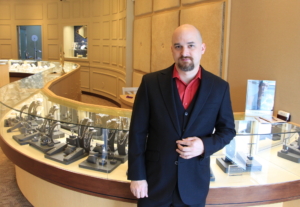
Andrew Eilberg, owner of Marlen Jewlers, joins us this week to share his advice and tips for those of you who are looking to purchase an engagement ring or wedding band! As a fourth-generation jeweler, Andrew shares his advice on designing and picking the perfect ring, tips for caring for your jewelry, and insights into wedding jewelry’s evolving trends.
Have a wedding question? Leave a message at speakpipe.com/bridechillapodcast and your question may be featured in an upcoming Q&A!
Visit thebridechilla.com for all the latest news!
Sponsors

From destination weddings and honeymoons to anniversaries and renewal of vows, Sandals Resorts delivers Caribbean romance with stunning beaches, global inspired dining, and unforgettable luxury — perfect for couples planning a destination celebration.
Sandals Resorts' “Your Wedding On Us” complimentary package makes it simple to say “I do” in paradise. Use the link below or call 1-877-SANDALS for details.
Where to Listen
Find us in your favorite podcast app.


Leah Haslage:
Welcome to the Bridechilla Podcast. I'm your host, Leah Haslage. Whether you're just starting to plan or you're counting down the days, I'm here to help you stay cool, calm, and collected throughout the wedding journey. So let's get this wedding party started and embrace your inner Bridechilla.
What's up, chillas? Today we are talking all things jewelry, your wedding and engagement rings, how to buy them, how to care for them, and so much more. And we're with expert Andrew Eilberg, who is the owner of Marlen Jewelers, which is located outside of Cleveland, Ohio in the United States. Welcome to the show, Andrew.
Andrew Eilberg:
Thank you so much.
Leah Haslage:
So give us a brief background about yourself and Marlen Jewelers. I know you come from a legacy in jewelry.
Andrew Eilberg:
Yes, I'm actually fourth generation. My great-grandfather started on East 55th and Woodland right here in Cleveland, Ohio.
Leah Haslage:
Okay, on the east side.
Andrew Eilberg:
Little on the east side, yep. And this was back in 1914. My great-grandfather was an immigrant from Lithuania. He came originally to Boston. He worked for a watchmaking company there and then moved west. to Cleveland back in 19... And my great-aunt, the joke was always since they were going west, Boston to Cleveland, she was afraid they were going to get attacked by Indians because they were going out west. Got here, started the company. My great-grandfather had seven daughters and one son.
Leah Haslage:
Oh my gosh.
Andrew Eilberg:
But two of his son-in-laws came into the company while my grandfather was at war. So that's where the Marlen comes from because it was Martin and Leonard. So we combined those two and made Merlin, and then when my grandfather came back from World War II, he opened up Westgate Mall. From there, my dad took over after him, and then I took over a couple years ago.
Leah Haslage:
Okay. So yeah, definitely a legacy, and I'm sure y'all have seen a lot of changes in styles and trends, and we can get into that later on in the episode, because that's something I know we all want to hear about. But let's start from the beginning of where do you start when you're searching for an engagement ring or a wedding ring? Like, what's a good first step?
Andrew Eilberg:
First step is kind of decide whether you want to do it solo or if you want to involve her. Right now, I say involve her. I mean, at least get an idea of what she likes.
Leah Haslage:
Get your partner in there with you.
Andrew Eilberg:
Well, get an idea of what she likes. Not necessarily with you if you want to keep her surprised, but Pinterest is a great place to check. Every girl has a Pinterest board that has their engagement rings on it.
Leah Haslage:
I might have a secret Pinterest board.
Andrew Eilberg:
Bring it in, bring it…
Leah Haslage:
My best friend is also secretly a part of.
Andrew Eilberg:
I always say, do they have a Pinterest page? Open it up and hand it to me. I can find what she likes based off of that. But you always want to make sure you're getting the right one. I mean, we're guessing today. Even we are. Because my father always used to say we used to have five options. Do you want with the little diamonds on the side with that? Now just about every single vendor has 40, 50,000 different types of ring.
Leah Haslage:
And you can do custom, which again, we'll get into later, but that's also an option. So it can be very overwhelming when going to shop for one.
Andrew Eilberg:
Yes. So I always say, have an idea and then I'll help you from there. But as long as you have that idea and you know what to show like, that's what's important.
Leah Haslage:
So, I mean, a lot of people have already heard this. This is kind of like Jewelry 101, but the four C's. What are the four C's and why are they so significant when looking to shop for jewelry?
Andrew Eilberg:
The four C's, I'm gonna be honest with you, I'm trained by GIA. They're the ones who wrote the book on the four C's. They tell me what to charge you. What they really tell you, they give you a guideline. The four C's are color, cut, clarity, and carat size. Carat size is a weight. It is not measurements. That is something that a lot of people get wrong. Yeah. Carat size is the actual weight. It's a unit of weight. But it tells you more or less the size it will be. If it's a well-cut diamond, it should be in this range. Depending on the shape, depending on everything else, it should be in this range. But it is, again, a unit of weight. How we buy and sell diamonds in the industry is we have a spreadsheet. And it tells us, here's the color...
Leah Haslage:
You have to go by GIA. Kind of.
Andrew Eilberg:
Kind of. You have to at least have an idea of what the GIA would call it.
Leah Haslage:
Does it also go by your region? Like someone shopping in New York City being different than someone in Cleveland versus someone in the UK versus someone in Asia.
Andrew Eilberg:
It's released by Mountain Rap Report. It's called the Rap Pricelist. It is worldwide. Interesting. And prints it in rubles, I think the Hong Kong dollar, and the US dollar.
Leah Haslage:
Fascinating. Okay. So carat and then we have clarity.
Andrew Eilberg:
Easiest way to remember color and clarity. Think of an ice cube. If you can see anything, someone hands you a glass of water with an ice cube in it that's off color or has something floating in it. you're gonna send it back. It's the easiest way to remember it for a diamond. If it looks off-color, or there's something in it that you can see, you gotta take it into consideration.
Leah Haslage:
Oh, so what would make it off-color?
Andrew Eilberg:
It's actually the chemicals in the ground as the diamond is formed.
Leah Haslage:
Okay, so let's talk about this actually, because I know there's a lot of misconceptions with diamonds and eco-friendliness and how they're made, so can you actually, let's step aside from color and clarity for a minute to talk about that, because that does affect color and clarity. How the diamond is made.
Andrew Eilberg:
Yes. A little bit. It could be what's in the ground, or what's in the machine when the lab grows. It's nitrogen, makes it yellow. Copper makes it green. Beryllium makes it blue. Boron, I believe, as well. There's a lot of chemical into it, but it's what is in the ground around it as it's formed, because it's literally being pressured together. You are taking a carbon atom and perfectly aligning it to make it a diamond. The carbon is a perfectly aligned prism. All the atoms are in perfect lines in a cube.
Leah Haslage:
So, okay. So then this goes into the hot topic of, we're just going to jump right to the hot topic because I have to. Natural versus lab-grown because lab-grown has blown up over the years. I know there's controversy behind it. Some people think it shouldn't be a thing because natural is natural and vice versa. So what is your honest take on this and what is the difference?
Andrew Eilberg:
The biggest difference is whether it was formed over millions of years in the ground or formed in 36 hours in a machine. It's still carbon. It's manipulated through intense heat and pressure. In the ground, it's natural and it takes millions of years. So what's the way you do that faster? You put it in a machine, you jack up the heat, and you jack up the pressure.
Leah Haslage:
Does that change the durability of it?
Andrew Eilberg:
I have not seen where it has. It changes some of it. You look at the diamond, it's not the same.
Leah Haslage:
Oh, if you put them side by side, you can tell.
Andrew Eilberg:
I am trained. I have looked at millions of diamonds. The common person would not. I look at them and I see it's not as sharp. Everything's not as...
Leah Haslage:
Is the clarity not as good either?
Andrew Eilberg:
Now, the clarity can be just as good. It's graded on the same scales. The color's graded on the same scales. GIA will even grade. They do call them synthetic. Okay. They call them lab-grown. They call them synthetic. And they are required to be stamped on them. You may so inscribe right on the girder, which is the widest part of the diamond, lab-grown in the number. That is required by law.
Leah Haslage:
So check your rings to make sure which one it is.
Andrew Eilberg:
You're going to need some magnification to see it. It's nothing that will affect the clarity, nothing that will affect anything visible, except when you're looking at it under magnification.
Leah Haslage:
So what do you think about the growth of lab-grown versus natural?
Andrew Eilberg:
Personally, I don't love lab-grown because there's nothing rare about them. Diamonds are rare. There's only so many of them in the world. A perfect example, lab-grown was first coming out. I had one of the vendors come in and hand me what's called a parcel, which is a grouping of a bunch of one carat diamonds. And I'm looking at it, and I'm like, these things look good. I like them. Let me think about it. It's going to take some time. I'm a fourth generation. So what these vendors do is they leave from New York, drive out. We're in Cleveland, so we're right on their way. And they go out probably to Indiana, maybe Chicago. But Chicago's got its own. So typically, it's just before Chicago, the region, as it's called. I went to IU. But yeah, the region. And then they come back. So I'm like, hit me on your way back. When he handed me this parcel, it goes, every stone in there is $1,000. Oh. That's pretty good. So he goes out, comes back two months later, he hands me the exact same parcel I can see, even crossed out weight. I'm looking at it again, he goes, any stone in there is $800. I'm like, it was a thousand two months ago? What's going on here? He goes, we grew more. I'm like, that's it. That's what I needed to hear. I'm not going to carry it.
Leah Haslage:
Yeah.
Andrew Eilberg:
And we've seen it. The prices have dropped. I mean, the margins are much nicer.
Leah Haslage:
Well, people want to be cost effective. It is a better option for you. Right?
Andrew Eilberg:
It is. The price is substantially less.
Leah Haslage:
So when you're looking to get a diamond and you want the natural, you are going to pay more because like you said, it is rare. So that is something to keep in mind. Do you want something that is unique in that way or are you OK with…? And there's no judgment. But like this is something to consider.
Andrew Eilberg:
I mean, this is my personal opinion, that I don't carry them. If you came in and asked me to get it, yeah, I'd get you one. I have no problem with them. Everyone's like, oh, you hate napkins. I don't. I think they're a great alternative if you don't have the money, but you want to give something. Your engagement ring is a promise. It's to show their worth to you. If you don't have it, don't start your life together in debt.
Leah Haslage:
Correct. That's what we preach on here all the time, so thank you for saying that.
Andrew Eilberg:
Yes. I don't want you to spend a ton of money with me and start your life together in debt. This should be a happy thing.
Leah Haslage:
Every time they go past Marlen Jewelers, it's like… cha-ching!
Andrew Eilberg:
Well, no, it should be a happy thing. This should be something that just says, you mean this much to me. I don't want you to go into debt. I don't want you to overspend. You don't need that. You just need something that's between you and her that says, we're going to spend our life together.
Leah Haslage:
Yeah.
My wife has a carat and a third, and it's an HVS. It's nothing, but it was what I could do at the time, and I spent a ton of time picking the right diamond for her. That's what I wanted. I wanted something that was unique for me. I made the ring myself. She actually helped. Funny story.
Leah Haslage:
Yeah? Tell us.
Andrew Eilberg:
I was working on it one night and she came home back when we were dating she came home and she's like Oh, what are you working? I'm like, oh, I'm making a custom ring. What would you do if this were your ring? I had to come over and help do things and she was kind of picking some things on there It was funny cuz like at the end she's like, oh, I think this is a really pretty ring I made a couple changes after that that personalized it to her and I but I The day I went to go get engaged, I had printed this off for her, the CAD image, computer animated design image of the ring. And I printed it out for her and gave it to her. I'm like, this is the ring you helped design. And the day I went to get engaged, I put the ring into my jacket pocket and left it upstairs next to the dresser. So I ran back up to grab it, and I noticed on her dresser, there was a folded up piece of paper. And I opened it up, and it was the CAD design. So I knew it was the right ring. Not everyone gets that, sorry.
Leah Haslage:
I was going to say, is that something you can request?
Andrew Eilberg:
Yeah, I can make the CAD image. They can be as involved with it as possible. But keep it a surprise. Yeah, it kind of worked for me because I'm in the industry.
Leah Haslage:
Oh, the one C we haven't covered yet is cut. And there's a handful out there, right? You have emeralds and…
Andrew Eilberg:
This cut actually refers to only in rounds. It's the cut of the diamond itself, which causes how much sparkle.
Leah Haslage:
This whole time I thought cut was just like if it's emerald or if it's heart shape, if it's oval, if it's...
Andrew Eilberg:
Nope, that's called shape.
Leah Haslage:
Oh, okay.
Andrew Eilberg:
Cut is actually how perfect a round diamond is, how much sparkle it has. Because the perfect way, light comes down into the diamond, reflects over, and comes back up. So the sparkle you get off of a diamond is all coming in from the top. Everyone's always like, oh, I want to keep the sides open. That does not add any sparkle. It might add some light, but…
Leah Haslage:
That's so good to know.
Andrew Eilberg:
The sparkle comes from light going down, being reflected over, and coming back up. If it's cut slightly off, you're going to lose it off to the sides, and there's going to be dark spots in the diamond. Like when you see an oval shape, because the perfect thing, think of it as a bucket of mirrors. Any adjustments you're going to do, it's going to leave that light leak. So an oval diamond has what's called a fisheye or a bowtie. There's really no way to avoid it. The reason why is because it's light escaping. Yeah. Where it's not getting reflected back. What you want to do is minimize either fisheye or bowties. Okay. Most fancy shapes will have it. Fancy shapes is every shape other than around.
Leah Haslage:
Okay. And there's a lot of those to like choose from. But you're not going to get the same sparkle as you would around. That's so interesting.
Andrew Eilberg:
That's why rounds are actually priced on a different list. That spreadsheet I get is rounds and fancies.
Leah Haslage:
That is fascinating. Had no idea.
Andrew Eilberg:
They're always the most sought after.
Leah Haslage:
The rounds are?
Andrew Eilberg:
Yes. So they're always going to be the highest priced. Supply and demand.
Leah Haslage:
So you choose your shape, you know, at that point, but then you have the metal and there's gold, there's silver, there's platinum, there's rose gold was trending for a while there as well. So talk about metals and like the differences.
Andrew Eilberg:
Okay, difference? Gold comes out of the ground yellow. Always yellow. You add alloys to it. Every ring is going to have alloys because gold itself is too soft. There are some 24 karat rings. 24 karat is pure gold.
Leah Haslage:
So it's worth more?
Andrew Eilberg:
Yes. It's 100% gold. Most rings in the United States are 14 carat. That is 58.333% repeating, because it's 14/24 gold. That extra percentage is how we change colors. So white gold, you're going to use white alloys in there. Then you also, with white gold, you rhodium plated. Rhodium is a member of the platinum family, and we electroplate it on to get that nice shiny white.
Leah Haslage:
Well, in platinum, because I remember platinum being so hot and considered a newer thing back in the mid to late 90s is when platinum really started to, maybe early 2000s.
Andrew Eilberg:
Palladium was supposed to be the next “it” metal because it could stay white like platinum. White gold, over time, gets a little bit yellow because gold is yellow. So it's going back to its natural state.
Leah Haslage:
Yeah.
Andrew Eilberg:
Platinum, over time, gets what's called a patina. Still is white, but it gets like a grayish tone to it. Palladium, over time, stays white. So we're supposed to be this great new thing, and there's problems with it. I mean, heating it is very difficult. Working with it is difficult.
Leah Haslage:
What about everyday use, if someone has a ring of that?
Andrew Eilberg:
It's fine.
Leah Haslage:
It's just the, on the manufacturing end of things, like the creating of it.
Andrew Eilberg:
The manufacturing, fixing. Yeah. It's just not there yet.
Leah Haslage:
And then like titanium, especially with men's bands was like a huge thing too.
Andrew Eilberg:
Titanium and tungsten for men's.
Leah Haslage:
Oh, tungsten, yeah.
Andrew Eilberg:
They are great. They're scratch resistant. They can never be sized.
Leah Haslage:
They can't be sized?
Andrew Eilberg:
No. You just send it back and get a brand new one. And most of these companies offer that. I mean, I carried it at first. Every single guy was asking me for it. So I carried it. And back then, there was one company that basically had the patent on it. So it was like $300 for a ring. Oh, gosh. Now, the patent's dead. So you can go on Amazon and get one for $25.
Leah Haslage:
Oh my gosh. I wonder how many people spent $300 and is pissed off now.
Andrew Eilberg:
Me.
Leah Haslage:
What do you think is the biggest misconception when shopping for an engagement or wedding ring?
Andrew Eilberg:
That it needs to be big.
Leah Haslage:
Oh, yeah.
Andrew Eilberg:
It doesn't. It's not meant to put you into debt. Yeah. It's meant to be a symbol of your love for each other. And I mean, that's my biggest thing that I have to break. This is an engagement ring. This is a symbol. All that matters is you and her. Even GIA, getting back to what I was saying about GIA, GIA is three people's opinion. It goes off to the laboratory in either Carlsbad or New York, are the two in the United States. And three people take it. They're trained, so they're going to be pretty close. And they take the average of those three. You have no idea if that guy's girlfriend broke up with him yesterday. He was crying all night. He was crying all night. His eyes don't work. You don't know. Basically, what I tell people is you look at the diamond. Take a look at that diamond. Is it pretty to you? Is it pretty to her? Yeah. There's two opinions that matter. Your two.
Leah Haslage:
I think that is a thing, though, where people feel like you have to have the biggest rock on your hand.
Andrew Eilberg:
The biggest rock. The nicest rock.
Leah Haslage:
Yeah. It's like, do you?
Andrew Eilberg:
I have people come in that are like, I won't do anything less than VVS clarity. It's like, how clarity works is how hard it is to spot the inclusion. I1 can be seen with the naked eye. SI’s, you need 10-time magnification, and then it's easy to find it. On larger stones, a lot of untrained eyes can see SI’s, because it is inclusions to volume. VSs, I have yet to see a VS that any untrained eye can tell the difference. So VVS, all you're doing is paying extra money for a letter. Literally, you're paying extra money for that extra V.
Leah Haslage:
Oh my gosh, well that's good to know, so people don't like...
Andrew Eilberg:
I do have one customer who has a flawless diamond and when he was looking at it, I was like, this diamond's nicer. It's a VVS. He goes, my wife's perfect, I can't give her anything that's not.
Leah Haslage:
He has the money to do it. That's sweet. It is.
Andrew Eilberg:
That's expensive. I looked at him and said, well, my wife's not perfect.
Leah Haslage:
She's perfectly imperfect, right?
Andrew Eilberg:
To this day, when we see each other, I'm like, man, how's your perfect wife? It’s great, Andrew. How's your imperfect wife?
Leah Haslage:
So with the wedding band and the engagement ring, do you have to match them? Because some things are sold in sets.
Andrew Eilberg:
At least with me, I always have an exact match. But no, it's your thing. I have customers that hate this matchy-matchy.
Leah Haslage:
Yeah, I get that.
Andrew Eilberg:
They won't do it. No. And bands, there's so much fun stuff you can do with them.
Leah Haslage:
We'll be right back after a quick break.
Leah Haslage:
Is it easy to resize your ring?
Andrew Eilberg:
That's a difficult question.
Leah Haslage:
It depends on the metal?
Andrew Eilberg:
The metal, the thickness, how many diamonds, how the diamonds are set. Oh, yeah. This all goes into it because how you resize a ring, it's perfectly round. So if you want bigger, you got to bend all the way around to keep it a circle. So every single diamond on there has to be tightened.
Leah Haslage:
So you really want to make sure you know your ring size or their ring size. So there's less of a chance that when you pick out this ring and you go to put it on them…
Andrew Eilberg:
Get one size. Beyond that, that's where it gets difficult. Yeah. One size, I would say 99% of rings can be sized one size. They go too far. Eternity bands, of course. Oh, yeah. You can't. Well, you can, but...
Leah Haslage:
You're losing diamonds.
Andrew Eilberg:
Or you're losing security. Theoretically, on an eternity band, you can grind out. I never, ever, ever recommend grinding out.
Leah Haslage:
No? What's another big no-no we should be aware of?
Andrew Eilberg:
Don't wear your jewelry in pools.
Leah Haslage:
OK, so I want to get to that with maintenance and everything. So correct me if I'm wrong. Like, pools, beaches, and the gym are three places you definitely should not… well, working out.
Andrew Eilberg:
Beaches are the only one that just because water's cold, your fingers shrink, and the ring's gone.
Leah Haslage:
Yeah. Oh, and suntan lotions. And what about, like, with maintenance and care when it comes to lotions, sanitizers?
Andrew Eilberg:
Use it. Don't worry about it. We'll clean your ring. Stop in every three to six months. The other nice part about that, we check your prongs. We check the tightness.
Leah Haslage:
So keep up on your maintenance.
Andrew Eilberg:
Yes. Three to six months is standard recommendation. Any fine jeweler, not just me, any fine jeweler should do a polish for you, at least get it clean. They want you in their store.
Leah Haslage:
I mean, right? You can buy more things.
Andrew Eilberg:
That is one that I very much so say, stick up every three to six months, bring it in. We're happy to do it for you.
Leah Haslage:
So we start talking about custom. You did a custom ring for your wife. What is the custom process like if someone wants to go that route?
Andrew Eilberg:
With me at least. We'll sit down, we'll discuss, I'll get a good idea. There are two types of jewelers. There are CAD jewelers and creative jewelers. My personal jeweler at my store is a wax carver. He has a creative mind. He can design. Most jewelers say that it's done through CAD. CAD can get it much more exact and you can get an image of what it would look like.
Leah Haslage:
Oh, nice.
Andrew Eilberg:
I go to them with an idea. OK, we want three millimeter diamonds going up to here. Then we want 3.2, 3.4. I have to give them exact numbers.
Leah Haslage:
There's a big science involved.
Andrew Eilberg:
There is, yes. The computer program will do it all. And it will tell them if something is out of variation. So that diamond's too big. We're going to have to make the outside wider to do that, that type of thing. But we get to be creative.
Leah Haslage:
Yeah.
Andrew Eilberg:
When we're sitting down and talking, we're creative.
Leah Haslage:
Yeah. So to kind of like break it down, how soon should you start working on this if you want to do it as an engagement ring or wedding ring?
Andrew Eilberg:
Again, this is me because I work with a guy who is very small. If I call him up, go, hey, I need this in two weeks. Right. He will have it in two weeks.
Leah Haslage:
But the average probably be a couple of months, right?
Andrew Eilberg:
Typically four to six.
Leah Haslage:
Four to six weeks. So they come meet with you, sit down, and, hey, I like this kind of metal. I prefer this kind of stone. Couples can really play with what they're looking to do.
Andrew Eilberg:
Very much so.
Leah Haslage:
Pretty much limitless.
Andrew Eilberg:
I mean, I made a guy who was obsessed with Captain America. I made him Captain America's shield as his engagement ring.
Leah Haslage:
Is it more expensive for custom or just kind of depends on what you do like anything else?
Andrew Eilberg:
It depends. Of course, if I can go into a catalog and go, here's the ring, they make 5,000 of that thing. So it's going to be less expensive because every time you use this mold, it takes off the upfront cost of making that mold. That being said, making a mold is not incredibly expensive. So maybe 10% difference.
Leah Haslage:
Oh, that's not bad at all. So, I mean, it could also be worth it to go custom. Oh, yeah. Make it truly you.
Andrew Eilberg:
When you get a lot of diamond set into it, you're still paying for labor. Right. And my guy is in the United States, so we pay more for labor in the United States.
Leah Haslage:
Oh, yeah.
Andrew Eilberg:
A lot of these companies that are overseas, they can get labor very cheap. They can set the stones directly into the mold. I mean, there's a lot of tricks that bring down the cost. I feel it brings down the quality.
Leah Haslage:
Why is that?
Andrew Eilberg:
If you're paying a guy 50 cents to set a diamond, he's going to set as many diamonds as he can as fast as he can. If you're paying a guy $5 to set a diamond, he's going to make sure he's worth that $5.
Leah Haslage:
Yeah, right. So what do you see is trending right now for 2025, 2026?
Andrew Eilberg:
I'm seeing more and more elongated stones, kind of longer fingers, longer stones that elongate down. Wider rings are finally coming back, which I love because, especially if you're selling diamonds on it, what I tell everyone, little diamonds, little prongs. You're going to lose a diamond. It's okay. They're not expensive, little diamonds.
Leah Haslage:
But still, it's extra maintenance and upkeep.
Andrew Eilberg:
I tell you, keep coming in and don't freak out when it happens. Just bring it in. We'll get it back to you as fast as possible, don’t worry.
Leah Haslage:
When you're saying elongated, are you meaning more like a baguette type style?
Andrew Eilberg:
The more cushions, radiance, but the rectangular. So you're getting that more rectangular shape. So it kind of goes along the finger up.
Leah Haslage:
Interesting. So over the years, I mean, your family has been… you’re fourth generation, like you said. What do you think has been the biggest change in wedding and engagement rings over the decades?
Andrew Eilberg:
Options. I mean, like I said, even my father, my father started in the 70s. You had five options. It was basically, which one do you want?
Leah Haslage:
Oh, and actually with that, you saying 70s made me think of this. That's another misconception, I think, is that when budgeting for your ring, there's always that saying that it's like, what, 30% of your paycheck or something.
Andrew Eilberg:
I hear that, or three months.
Leah Haslage:
Is that still a thing? Like, why was it a thing?
Andrew Eilberg:
You go back far enough with engagement rings. This is terrible. More or less what you do, your dowry. It was showing her her worth. She is worth a third of my pay. I don't feel that way. I don't think you should.
Leah Haslage:
What's a good healthy way to budget for your engagement and wedding rings?
Andrew Eilberg:
You figure out what you can afford. You don't go into debt. You don't put less money away for your retirement. That's your future together. You want a future together.
Leah Haslage:
Preach. Yes.
Andrew Eilberg:
So different people, it's going to be a different amount.
Leah Haslage:
It doesn't make your ring any more or less special than somebody else's.
Andrew Eilberg:
No. No, it's still your ring. You got to pick it. You got to choose it. And it's still just as special. I don't treat you any differently. People in the restaurants don't treat you any differently. It's still, you're married. You're engaged.
Leah Haslage:
I love that. So we talked about, with maintenance and care, you said three to six months, go to your jeweler to get it, you know, cleaned up and everything like that. Don't wear to the beach and pool. Or the gym. The gym, you can easily bang up your metal and everything on the machines and the weights and everything like that. Where else should you not wear your ring or you should not use on your ring?
Andrew Eilberg:
No toothpaste. So much of the internet tells you to use toothpaste.
Leah Haslage:
Oh, I've never heard that one. That's a thing?
Andrew Eilberg:
I use a toothbrush, but not toothpaste.
Leah Haslage:
There has to like erode the metal or something, right?
Andrew Eilberg:
No, but it just leaves a crusty... That film? That film.
Leah Haslage:
Yeah. Yeah, no.
Andrew Eilberg:
I mean, if you want to, we'll get it. We have an ultrasonic cleaner. We have a high pressure, high temperature steamer. We have a polishing machine.
Leah Haslage:
What about like the at-home ring cleaners, like in the little round containers?
Andrew Eilberg:
The little round containers, those are great.I use them. When I'm brushing my teeth, I drop my ring in there, just that circle, and then pull it out, and I take an old toothbrush, and that toothbrush you're using.
Leah Haslage:
A different brush.
Andrew Eilberg:
Different brush. And you brush off. And then you put on. Rinse off. There is chemical in there, so you always want to rinse off.
Leah Haslage:
Yeah. Just with cold water.
Andrew Eilberg:
Same water you're using for brushing your teeth.
Leah Haslage:
Okay, so we were talking about trends for a minute there. And, you know, Hollywood and celebrities, royalty, they, I feel like, have made some kind of impact in jewelry.
Andrew Eilberg:
Very much so.
Leah Haslage:
So I know you and I gave the example before. You know, Princess Diana, I remember in the 80s when her and Charles got together, she got the sapphire ring, it was a huge deal. And then, fast forward, William gave it to Princess Kate, which she wears. I think of J-Lo getting that pink rock from Ben Affleck the first time around. The proposal scene in Sweet Home Alabama where he closed down Tiffany's in New York. Do things like this actually make an impact in jewelry trends?
Andrew Eilberg:
Yes, they do. Her first ring from Ben Affleck and her second actually was the green diamond.
Leah Haslage:
Oh yeah, the green diamond. So the Princess Kate effect? The Princess Diana Kate? Did you start seeing emeralds?
Andrew Eilberg:
You saw it more with sapphires, but yeah.
Andrew Eilberg:
Sapphires, I'm sorry, yes.
Leah Haslage:
You saw it more with Diana than Kate. Okay. I mean, with Kate we got a couple, but it was more a Diana thing. Yeah. It's called, to this day, the Princess Diana style. This halo around an oval sapphire is called a Princess Diana.
Leah Haslage:
I love the halo trend.
Andrew Eilberg:
It gives you a bigger look.
Leah Haslage:
It does.
Andrew Eilberg:
It also, I mean what I'm hearing, is it cheapens it a little.
Leah Haslage:
Really?
Andrew Eilberg:
Because it makes it look bigger than it actually is. So you can get away with a smaller diamond.
Leah Haslage:
I don't mind that. I think it's lovely.
Andrew Eilberg:
I don't either. My wife has a halo.
Leah Haslage:
Yeah, I like halo. And then with the engagement scene from Sweet Home Alabama, have you had anyone request, like, can you close down the shop?
Andrew Eilberg:
This is going to sound really bad. Everyone tells me their engagement plans because I'm helping them. Right. And I love being involved in it. And it's a fun time. I get to be involved in the most fun parts of people's lives. Yes. The more elaborate the proposal, the more divorces I see.
Leah Haslage:
Oh, really?
Andrew Eilberg:
Because I see it, too, with the buying back. It's funny. Fascinating. And it's like, I don't know if it's just overcompensating for something, but.
Leah Haslage:
So the more elaborate and extra it is, the higher the rate of divorce. Fascinating.
Andrew Eilberg:
Almost everyone who's told me an over-the-top one. I mean, I had one that he literally, for a week straight, sent like 4,000 roses to our office. Then he sent an entire band. Like, this guy had real money, and I think he was just bragging. Like I said, four months later, he's like, yeah, it didn't work out. I would never ask, because I don't want to know, even though I hear it way too often, what happened.
Leah Haslage:
Yeah, right.
Andrew Eilberg:
But there's certain ones that's like, OK, what happened in four months that you went from 4,000 roses, bands, and then he met her, like he helicoptered her to the proposal scene.
Leah Haslage:
What?! Okay, that is elaborate. That’s extra
Andrew Eilberg:
And then four months later, you're divorced. Divorced. So they had to get married in that.
Leah Haslage:
Oh my gosh. I thought they just broke up.
Andrew Eilberg:
No, they actually got married. Because he bought both at the same time. Yeah, he sold both.
Leah Haslage:
So what's the sweetest proposal and you know that they're still together?
Andrew Eilberg:
I mean, most of mine are still together. I like just the more personal, like my personal one, I don't want people, I don't want, it's supposed to be between you two. I had planned on doing it, and then my wife's best friend's grandfather died, so she couldn't go out to dinner that night, like I had the whole thing set up. The following weekend, I'm like, I'm not doing it that soon. But the weekend after that was going to be Yom Kippur. I'm Jewish. Yom Kippur is our holiday. It's our new year. So my mom's like, I told your grandmother. And it's like, oh, crap. So I had to set up for the following weekend. Because if not, my grandmother would have told everyone.
So I called Michael Simon, who was a client. So I'm like, can you get me into Lola's? So we got into Lola's, and I knew she smoked after dinner. Back then she was still smoking. So I waited till after dinner when she went outside to smoke. And it was, it's April. So we were the only ones outside. And I start giving my kind of speech, like very nonchalantly talking to her.
Leah Haslage:
How much you love her.
Andrew Eilberg:
Yeah, how much I love her. And I go to get down and grab the ring out of my pocket. She thought I was tying my shoe. So she starts walking back inside. The entire staff is lined up along the window watching, because they know what's going on. So like, they're like turning around real fast, like acting nonchalant. I'm in like a running pose, so I had to like run and catch up to her. Because I'm down on my knee, and she's walking away, so I have to run and catch up to her. I'm like, no, no, I'm asking you to marry me.
Leah Haslage:
Oh my gosh. Did anyone capture it?
Andrew Eilberg:
I didn't want any. I don't want pictures. I don't want. No. The manager is still a friend of mine, and he still jokes about it. Because he's like, I'm telling everyone to get away, get away, get away. He thought something happened when she said no or something.
Leah Haslage:
Oh my god, when the chick's storming off.
Andrew Eilberg:
When she was coming back inside to get her jacket or whatever. But it should be a story between you two. It shouldn't involve anyone else. I mean, yeah, it's nice to get it captured. It is. I think getting that captured would have been funny and something we could always look back on. But it should be personal. It should be between you two. Like, yeah, I'd like a picture. I'm sure my speech was me rambling and that's why she walked inside.
Leah Haslage:
I love it so much. Okay, so besides your wedding and engagement ring, there's other jewelry you can wear for your wedding day. What would you recommend as options for couples?
Andrew Eilberg:
There's all kinds, but what I see a lot, blue sapphire, because it's something new, something blue. Oh, yeah. Any bluestone, blue sapphire, though, is just one of the most dirty, and it's something you can pass down because that's something new. It's something blue, something old, something borrowed. Yeah. I mean, it works for a lot.
Leah Haslage:
It does. I love that.
Andrew Eilberg:
Like I have a lot of mothers buying it. They're loaning it. Yeah. Because it's borrowed. Yeah. And they still get a piece that they're going to wear forever and they know it was involved in their son, their daughter's wedding. Yeah. That's a fun one, but the thing that a lot of guys forget, you should be giving her a gift on the wedding morning. Doesn't have to be anything elaborate.
Leah Haslage:
No. What's a popular or common… earrings, necklace?
Andrew Eilberg:
I mean, something as simple as like, a pair of studs. She doesn't need to wear it that day, but it's something that you gave her on her wedding day.
Leah Haslage:
And then gifts, with gifts, not just for the couple, but how often are you seeing people gift their wedding party or their parent?
Andrew Eilberg:
I see that quite a bit, especially I mean, again, it doesn't need to be expensive. Right. I get, Cleveland has ridiculously expensive weddings. Trust me, I look back at what I paid and it's like, I thought I paid a lot at $60 a head.
Leah Haslage:
That's like only if you did like Chipotle catering now.
Andrew Eilberg:
I know. It was $60 a head. That included the cake, the venue, all the decorations. It didn't include alcohol. My best man was an army ranger. He went and bought it all at the PX. But I mean, I'm getting people telling me like $200, $250, $300 a head. And it's like, I was always taught you give enough to cover yours and your date, your wife, as a wedding gift. And it's like, that's like $600 now. Right? It's a big commitment inviting people to your wedding.
Leah Haslage:
That's a very serious point because, and we've talked about this on the show before, but you really want to consider who you're bringing because that is also a cost involved. It's an emotional cost and it's a monetary cost. And like with the gifts then, you don't have to spend a lot, but you can get something meaningful like stud earrings, necklace. Are you still seeing for gentlemen, watches, cufflinks?
Andrew Eilberg:
I see cufflinks on occasion, not often.
Leah Haslage:
Do you think it's a lost art in fashion for men?
Andrew Eilberg:
I do. I love them. Whenever you come to my store, I ask to see my cufflinks. I have custom. I bought at auctions. Anytime something cool pops up. Actually, I'm picking one up after I leave here today.
Leah Haslage:
Let's bring the trend back. Let's bring back the cufflinks.
Andrew Eilberg:
I have some really cool ones. I have these frogs holding a black pearl. Completely diamond studded with ruby eyes.
Leah Haslage:
That's awesome.
Andrew Eilberg:
They're my daughter's favorites. She'll come up to me and be like, are you wearing your frogs? Are you wearing your frogs?
Leah Haslage:
OK, so pop culture question. What is your favorite wedding in a TV show or movie?
Andrew Eilberg:
As far as weddings go, I love that wedding scene in Wedding Crashers. Not because the people involved, but because of the actual scene. It was such a cool scene when they're in the barn and it's a Jewish wedding because they're holding him up. I love the actual, like, inclusion of it because it brings me back to mine. All my friends came because they have never been to a Jewish wedding and they wanted to pick the guy up in the chair.
My wife gets picked up by her mother's boyfriend, who's an ex-Navy SEAL, my best man, who's an army ranger, and two other army rangers. So they're holding her flat like this. I get picked up by my drunk best friends, who pick the chair up by the top and are throwing it up over their head. There was a wrought iron fleur-de-lis chandelier that I literally had to drop down so I did not get impaled by this chandelier.
Leah Haslage:
So the Wedding Crashers thing just brings you back to that?
Andrew Eilberg:
It brings me back to that and how much fun they're having.
Leah Haslage:
Oh, I love that.
Andrew Eilberg:
Because they're picking up and having the fun. Even Vince Vaughn and Owen Wilson, when they're throwing around, they want to be in there. They want to be involved because that is a fun moment.
Leah Haslage:
That is so special. And like you said, your friends that have never been to a Jewish wedding before, what a great experience for them to experience your religion, your culture, and all those traditions.
Andrew Eilberg:
I mean, ours was... Our wedding, we forgot to pour the cup that you break at the end in Yom Ha'Shotah.
Leah Haslage:
Oh, yeah.
Andrew Eilberg:
We forgot it. Oh, my gosh. So my rabbi is like, we're going to say the kiddish, if someone grabs some wine... And he's like yelling back and my best man runs off to grab it.
Leah Haslage:
Well, you know what? You guys have been married now how long?
Andrew Eilberg:
Fourteen years.
Leah Haslage:
So, I mean, it wasn't like a bad luck moment or anything.
Andrew Eilberg:
Not at all.
Leah Haslage:
Okay, so final advice for couples that are looking to buy their engagement and wedding rings or maybe already have it. What's your final piece of advice?
Andrew Eilberg:
Have fun. It should not be stressful. Don't be afraid. Have fun with it. Don't care what anyone else thinks about it. Don't care about anything. Pick something that's perfect for you two.
Leah Haslage:
Love that. Well, thank you so much, Andrew. How can we find you?
Andrew Eilberg:
We are in Rocky River, Ohio on Detroit Road, right next to Starbucks. We're online at www.marlenjewelers.com. That's Marlen with an E. And then also I'm Andrew at Marlen Jewelers. If you have any, email me any questions. I'm always here.
Leah Haslage:
Awesome. Thank you so much, Andrew.
Thanks for joining us today! Be sure to subscribe wherever you get podcasts so you never miss an episode. Give us a follow on social media and visit thebridechilla.com. To leave a question you'd like to hear answered on the show, head to speakpipe.com/bridechillapodcast, also linked in the description.
Bridechilla is a production of Evergreen Podcasts. Thanks to our producer and engineer, Gray Sienna Longfellow, and our executive producers, Brigid Coyne and Gerardo Orlando. And of course, a special thanks to Aleisha, our OG bridechilla, and Meghan Ely of OFD Consulting. I'm your host, Leah Haslage. Until next time, Chillas!
Recent Episodes
View All501 - Spring 2026 Bridal Fashion Trends and Styling with Lulus
Bridechilla500 - Wedding Tax Myths, Tipping 101 & the Stories You Need to Hear with Adrienne Gardner
Bridechilla499.5 Q&A – A Bride’s Real Questions About Budgets, Planners & Pushback
Bridechilla499 - “Say Yes to the Dress” & Real Wedding Drama with Michelle Elaine
Bridechilla



Hear More From Us!
Subscribe Today and get the newest Evergreen content delivered straight to your inbox!
Advertising & Sponsorship
Interested in sponsoring or running an ad for your business on an Evergreen Podcast? Contact us to get pricing and availability.