
Bridechilla
Time to Ditch Wedding Stress. Life’s too short to be worrying about wedding favors, obligation guests and bridesmaid dramas.


436- Wedding Catering Top Tips with Chef Dante Boccuzzi and Stephanie Petras
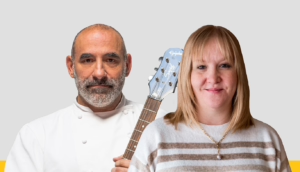
This week we discuss the crucial details of food and catering on your wedding day with Chef Dante Boccuzzi and Event Manager Stephanie Petras at the renowned restaurant Dante in Cleveland, Ohio. We cover valuable tips on food portions, menu tastings, and finding caterers that will ensure your day runs smoothly.
Find more information about Dante at https://danteboccuzzi.com/cleveland-private-event-venues/ and find them on Instagram at @danteprivateeventscatering
Have a wedding question? Leave a message at speakpipe.com/bridechillapodcast and your question may be featured in an upcoming Q&A!
Visit thebridechilla.com for all the latest news!
Sponsors

From destination weddings and honeymoons to anniversaries and renewal of vows, Sandals Resorts delivers Caribbean romance with stunning beaches, global inspired dining, and unforgettable luxury — perfect for couples planning a destination celebration.
Sandals Resorts' “Your Wedding On Us” complimentary package makes it simple to say “I do” in paradise. Use the link below or call 1-877-SANDALS for details.
Where to Listen
Find us in your favorite podcast app.


Leah Haslage:
Welcome to the Bridechilla Podcast. I'm your host, Leah Haslage. Whether you're just starting to plan or you're counting down the days, I'm here to help you stay cool, calm, and collected throughout the wedding journey. So let's get this wedding party started and embrace your inner Bridechilla.
Hey, chillas, today we're at Dante in Tremont. It's a neighborhood located in Cleveland, Ohio, and we're with Michelin star rated chef Dante Boccuzzi and Stephanie Petras, who is the event manager. And today we're talking all things catering. So grab a cup of coffee or tea or a big old glass of wine and settle in and get ready to learn about all the things with food for your wedding day.
All right, welcome Chef and Stephanie. Thank you for being with us.
Dante Boccuzzi:
Thanks for having us.
Leah Haslage:
So for those not familiar, give us a brief background about Dante, the restaurant, and your catering services.
Dante Boccuzzi:
So we're going on 15 years that we're open. Our anniversary is this January. As far as my career, I've kind of worked all over, maybe not the whole world, but pretty, pretty close. Spent a lot of time, I was a chef in New York City at Oriole Restaurant for a long time. That's where I received two James Beard nominations, a Michelin star, when the Michelin Guide came to New York City, so the very first time it arrived.
I was a chef in San Francisco at the Mandarin Oriental Hotel, so a very high-end hotel. And then I was a chef for Nobu restaurant for about two years, and that was in Milan, Italy.
Leah Haslage:
Oh, wow.
Dante Boccuzzi:
Actually working for George Armani, so I got nice suits out of the deal and fashion week and all that kind of fun stuff. And then came back home to Cleveland and here we are 15 years later and going strong and growing.
Leah Haslage:
My boyfriend, Dave, and I are big fans of the show The Bear. Yeah. And we thought about you recently with that. Like, wait, I wonder if that was his experience.
Dante Boccuzzi:
I mean, a lot of it's pretty close. And I know, I mean, a lot of those people they mentioned and, you know, through all the episodes. I don't personally watch it because I live it all the time. It's just, I watch Housewives of New Jersey more.
Leah Haslage:
Yeah, right. We're big Housewives fans here. Steph, how about you?
Stephanie Petras:
I was born and raised in Cleveland. And about 20 years ago, when I feel the country was kind of paying more attention to food, I've always been passionate about it and private events. So I was just always kind of interested in the execution of it and having the culinary side as well. So when I started working at Dante, which was actually 12 years ago.
Leah Haslage:
Oh, wow.
Stephanie Petras:
I know, right? So, I started as a waiter, but I always wanted to get into catering, and so as I went along, Chef extended the opportunity, and we started very light, and now it's into a full-blown catering program of in-house restaurant, off-site, basically anything you can think of. We like doing different challenges and, you know, when people come to us and say, like, we want something over the top and special. That's when Chef and I basically get together and start talking about something that we can do.
Leah Haslage:
Get to play.
Stephanie Petras:
Yes. Which is always a fun thing to do.
Leah Haslage:
I've been a big fan of the restaurant and your work for a very long time, as you know. But I love seeing how your catering is blowing up and some of the weddings you've been doing. We were just talking before the taping about the weddings like in Brahtenahl, you had the pasta wheel and all that kind of stuff. It looks so amazing. So we'll get into all that in a second. But what makes your catering unique compared to other catering out there?
Dante Boccuzzi:
I think because we're willing to adapt and change. And I think with every event, I mean, I'm always hands-on one way or another, whether it's creating a menu or actually being at the… I mean, all the large events, I'm there always, from set up to tear down and helping out and being a big part of it. But I think we also, in all these kinds of events, we also challenge ourselves to come up with new ideas, something more entertaining. Because I mean, the guests are always online, and they're always tuning in and seeing what's going on. And can we do this? Or can we do that? So we're always trying to be the trendsetters.
Leah Haslage:
I love that. Do you think, then, things like Instagram and Pinterest and all that has kind of helped make you want to elevate your food game, seeing what other people are kind of bringing to you and showing you?
Dante Boccuzzi:
You don't have an option. You have to. Because that's kind of what information is there, everywhere.
Stephanie Petras:
And a lot of times I'll have brides or, you know, clients come and say, like, that it's very kind of, you know, like, we want to do this. Can we do that? Like the Brahtenahl wedding we just had, they wanted to have an Aperol Spritz Tower. So, you know, leveling it up, basically, which are very popular right now. Yeah.
Leah Haslage:
They're like, we've seen the champagne tower. Yes. Let's do a different kind of tower.
Stephanie Petras:
Exactly. So, you know, just things like that of, you know, and basically from there, whatever they have, either our ideas or their ideas and how can we execute it and how can we do it the best of our ability. So, you know, I make it special and one of a kind.
Leah Haslage:
Yeah, and you can do it with, if it's a luxury wedding, you have the money to spend, or if you're champagne taste on a beer budget, working within the budget, there's different ways you can do this, which we'll deep dive into. But speaking of budget, it's the first thing we have to consider when wedding planning, or any kind of event. So what's a good percentage we should be considering when it comes to our catering budget?
Stephanie Petras:
I think it depends more on one, your overall experience. So what do you want it to feel like? How do you want it to coincide with what your dream is or what your thought is? And I mean, cause we've had weddings in the restaurant for 10 people or other places for 450 people. So when, thinking about that and thinking of how many people you want to have because that's going to be your jumping off point. Okay, we're going to have 200 people. What do I want? What's my realistic number that your budget of what you want to have, your big number? And then from there carving out everything that you want.
Are flowers important to you? Is the food important? Obviously the food's important to us. And so it just really depends. Sometimes people are okay with having a cocktail reception and having hors d'oeuvres or you can do a buffet, which is also going to impact the cost of your labor or the service that you're gonna have to go along with it. Or family style also, or you can go the full three course plated dinner, which is obviously, so as you get there, it's going to go higher.
Leah Haslage:
Oh, true. The carving station is going to cost.
Stephanie Petras:
Correct.
Dante Boccuzzi:
We had a wedding where they had five or six courses. So like a tasting menu. And then within each course, there was three different dishes.
Leah Haslage:
Oh.
Dante Boccuzzi:
So they tried all kinds of food. And that was for about 150 people. And I mean, that was very intensive on our end, very labor intensive, and a lot of details, and different plates for every course. So we brought in, I don't know, like over 1,000 plates just to accommodate the whole situation. Then they ate, they danced a little bit, and then they had late night eats of stir fried rice and breakfast sandwiches.
Stephanie Petras:
Then they had a second dessert.
Leah Haslage:
They had a big catering budget.
Dante Boccuzzi:
They had a big catering budget. A big budget, but then also for them, the food was very important. Yeah. It wasn't even the mother of the bride. It was the father of the bride who kind of steered the whole ship.
Stephanie Petras:
He did. He composed the menu.
Leah Haslage:
I feel like the men usually are the ones that get the most involved in catering.
Dante Boccuzzi:
Yes. I didn't even eat the bride. It was all the father and mother.
Leah Haslage:
That was their task.
Dante Boccuzzi:
She sat there in a corner. Yes, honey.
Leah Haslage:
So something with that to consider then, it's not just the cost of the food, it's also how many servers you're gonna have, if you have a carving station, if you have...
Dante Boccuzzi:
How involved.
Leah Haslage:
Yeah, that's true.
Stephanie Petras:
If you're gonna have a buffet, you're not gonna need as much staff as if you're doing a plated dinner, white glove service. So those are where you can save on your budget if you need to, if you want to, but still have that quality food that you really envision.
Leah Haslage:
Like you said, heavy hors d'oeuvres is an option. Yeah, absolutely.
Dante Boccuzzi:
That or just the same thing with the bar setup. You know, if they want special cocktails and wine stations and bourbon stations, then you need more and more bartenders. Oh, that's true. Yeah. And then also, depending on how many people, you need three, four people at each bar just to make sure the drinks are flowing.
Leah Haslage:
And that's a sneaky little fee that people always forget about is the extra bartenders or servers or security. Because there's X amount of security I think needed too, right? With bartenders, it kind of depends on your location.
Stephanie Petras:
It depends on the location. Like we're licensed and insured. So if you have a company that already has it, it's built in the cost. Um, but you want to make sure also that whatever, cause we'll, we'll do the bartending, but we've also had events where they've brought in their, you know, there's different companies that will do it. And that can save on costs too, but that's where you can also go to like Facebook and, you know, I see like in Northeast Ohio, they'll have catering bartenders where you can go and, you know, things like that.
Leah Haslage:
So like some of the outdoor events you get hired for, for example, you might provide all the food, but they'll have a separate bar service. That makes sense.
Stephanie Petras:
Which a lot of venues sometimes do because the venue themselves makes money off of the alcohol.
Leah Haslage:
Yeah.
Stephanie Petras:
So they like to do that a lot of times.
Leah Haslage:
Makes sense. Okay, something that always trips me up when planning a party or event is the price of the food per person. So like one guest, two pieces of shrimp, for example, right? Or two chicken satay for one guest. Right. So you have a hundred people. Do you order a hundred of that or you go like 50 because it's going to come to like a hundred pieces? Like what's the good rule of thumb on the guest per person food?
Dante Boccuzzi:
I think it depends on… Well, one, it depends on how long the cocktail hour or whatever is going to take place. That determines how much food and then also how many items. So some people ordered 12 different hors d'oeuvres. I don't think each person is going to eat 24 pieces. Right. So it all kind of fluctuates.
Stephanie Petras:
Usually for offhand, two pieces for an hors d'oeuvre per person. But just like he said, if there's 12 selections, and let's say you have 100 people, you don't need to order the hors d'oeuvres for 100 people. Then that can save on your budget, too. Because you can say, maybe we'll have 100 pieces of the 12 items of each item versus 200 or 300. Because especially if you have a lot of variety, And that can really, I like that personally because then I always want to have more variety. So if you can have more variety and save on where that can make it seem more elaborate than it actually is.
Leah Haslage:
And you don't know your guest's taste either. Everyone's so different.
Stephanie Petras:
Right, exactly. So, I mean, that's a good way where you can help your budget and give a decadent experience to the guests, which is nice.
Leah Haslage:
And Chef, you brought up a good point. Time limit, like if it’s a 45 minute to an hour cocktail hour, versus a two hour
Dante Boccuzzi:
Yeah, you just can’t get around fast enough and people don’t eat fast enough
Leah Haslage:
Yeah that’s so true, and it doesn’t always stay out either, because you have to make room…
Stephanie Petras:
And everybody always wants something to drink the first 15 minutes. They don't eat anything. I mean, unless they're, you have those very ravenous guests, but the first 10, 15 minutes, we'll always be ready to go with a bunch of hors d'oeuvres and every just, they want to go to the bar. So that's something to think about too.
Leah Haslage:
So when someone's considering a catering company, what are some things that they should be considering and questions they should be asking?
Dante Boccuzzi:
So like, you know, just to speak of ourselves, I mean, we aim for the most memorable experience and the highest level of quality that we could provide. And in every event, I'll sit down with the staff before, you know, when we have our meeting before and just remind them that, you know, this is somebody's wedding. Every year, they're going to think about this and talk about it. And we want to make sure that they're bringing up, “Oh, it was the most amazing day”. Our wedding day was so beautiful. Not that, oh, you remember when they dropped the soup on my mom or, you know, so I tell them all the time, you have to remember this is the most special day in these people's lives and we got to deliver no matter what. So that's always our game plan and our focus.
But I mean, keep in mind, there's a lot of companies, you know, just like here in town that, you know, you see their name all over the place, but as a business owner and a chef, we know what it takes to put out a great event. So when we have a big wedding, offsite wedding, we shut down the restaurant, we close the restaurant, we don't get greedy, and we focus all of our attention and all of our staff to this event.
But there's a lot of these catering companies that it's all about making the business, making the money. So I mean, I know all these chefs in town and I was talking to one guy, “oh yeah, we do like seven or eight weddings on a Friday. And a Saturday.” I was like, oh, that's great. But what kind of quality experience? Because there's no way they have 500 people on staff. They just don't. It's impossible. And how great is the experience? Or is the food prepared two days before the event? And yeah, they might cost less, but there's reasons why. There's a cost for every part of the way.
Leah Haslage:
There is. That's such a great point. And Steph and I were kind of talking about this beforehand, how there are catering companies that, like you just said, they prep everything or make everything like a day or two in advance, or it's basically a box lunch, if you will, right? It's kind of like...
Dante Boccuzzi:
And if you're fine with that, then you're fine with it.
Stephanie Petras:
Sure. A lot of times, just like with the budget, how we were talking about, if the focus isn't the food for you, if that's not what's important for you, then that's what the flowers are or the band. So you have to just pay attention to what's important to you because that's what's important. You know, and so you just have to kind of make your mind up on, you know, these are like flowers I had, I wanted for my wedding. I wanted to have really nice flowers. So I carved out a big chunk, more than my husband wanted, for flowers.
Flowers and food. That's what was important to me, you know, and so you just have to… because regardless, it's your wedding, so you, you should do what is important to you.
Leah Haslage:
But if catering is high, as I think it should be, because people always remember catering. And the music. Every wedding, people remember those two things. But if you want to allocate your bigger budget to catering, something to consider is a company like Dante, where you're making it fresh on site, you have the team dedicated, like you said, It's not these kind of more, it's no offense to them, but more corporate type, right?
Stephanie Petras:
Well, and that’s… I was talking with a client with a wedding we just did, and he said, you know, the difference between you and other catering events is that you bring a restaurant feel to the wedding. It's like you're going to, because you are, that's what we want. You're coming into Dante, wherever we are, and sitting down and having a restaurant quality dinner. We've put a lot of effort and, you know, work really hard to make sure down, I mean, to the service of, you know, having fine dining service.
Dante Boccuzzi:
This last event, I mean, we had at least 12 cooks and like how many servers, like 35?
Stephanie Petras:
35.
Leah Haslage:
Oh, wow.
Stephanie Petras:
35 servers. Our kitchen tent alone, just our kitchen was 60 by, or I'm sorry, 80 by 30 feet. So think about what a dining room is the size of that. And we built that with a tent and the equipment. And we basically just constructed a whole restaurant for this. Yeah, in their backyard. Oh, my gosh.
Dante Boccuzzi:
In the middle of winter, too. We've done it.
Leah Haslage:
Was it the New Year's wedding you're talking about? Oh, my gosh.
Stephanie Petras:
And that was, I mean, it was a whole show. What's your take on holiday weddings?
Stephanie Petras:
I don't, I mean, either way, I think it just depends. Like the New Year's.
Leah Haslage:
Kind of like a pro or con.
Stephanie Petras:
Yeah, you know, I think you can go either way, because holiday seasons can be busy. But, you know, also for people to go and have something to celebrate, that's always, you know, an amazing thing to have too. Because like we had for the New Year's Eve, we had disco balls and we did a whole cannon and champagne toast and, you know, everything like that. So, I mean, it can be really special and different.
Dante Boccuzzi:
Yeah, it just gives you the opportunity for newer ideas.
Stephanie Petras:
Yeah, more ideas.
Dante Boccuzzi:
Yeah, exactly.
Leah Haslage:
So once we choose our caterer, the next step then is going to be tasting the menus and figuring out your menus. So how does that process all go?
Stephanie Petras:
I think for us, each one will want… another thing that's very different about us is that with catering companies, a lot of times you go and there'll be a packet. This is what you choose from.
Leah Haslage:
These are packets versus an a la carte.
Stephanie Petras:
Correct. Versus us, we're going to actually sit down with you and write out a menu solely for your event.
Leah Haslage:
Oh wow.
Dante Boccuzzi:
Based on your likes, dislikes, expectations.
Leah Haslage:
The season, I’m sure.
Stephanie Petras:
Exactly. Yes. Same thing like we were talking about the family style dinner. One of the dishes that we had was a scallop mousse stuffed fluke.
Leah Haslage:
What?
Stephanie Petras:
And that was one of the courses among eight, six or eight plates.
Leah Haslage:
Sounds incredible.
Stephanie Petras:
Yeah. So well, the plate itself actually came in. It was on our tasting menu. So we have our chef's tasting menu.
Dante Boccuzzi:
So it was a restaurant dish created for that week, the changes every week, and it was a lot of steps, very involved. And that's what they loved, and that's what he wanted. He came in to eat that night, and he said, oh, I want this at the wedding. Okay.
I mean, we can do anything you want. Just with my culinary experience. I mean, I've worked everywhere. China, Japan, Italy, France, England, all over the States. I mean, I've tried all different things with all different chefs, different calibers, all… you know, so, I mean, we could deliver anything you want. There's just, there's a cost with everything involved. We could go crazy too.
We did a party down in Fort Lauderdale. We drove. This guy wanted his birthday party down there. He brought in national music groups and it was like a two or three-day event. We had a big tasting menu dinner for 200 people and then we had brunch the next morning. We flew the staff down and we drove all the food down in a refrigerator truck and camped out and did it. I mean, we can do anything. We can do anything anywhere.
Leah Haslage:
So yeah, if you're willing to spend the money and have great chef and catering, you can have some baller cuisine.
Stephanie Petras:
I mean, there's nothing better, though, at the end of the event and you have people walking around and coming up to you and just saying, like, that was the most amazing wedding or birthday or celebration that I've ever been to. And, you know, to make those experiences for people is something that You know, it's priceless.
Dante Boccuzzi:
But even like the New Year's Eve wedding where it's snowing outside and it's freezing. I mean, every big catering we've had, it's always the same compliment, but especially that one. Like, we're so amazed the food was hot. Every dish was hot. And it's just, I mean, for us at a restaurant, it's normal.
Leah Haslage:
Right. You're in an outside tent with the elements, hoping for the best.
Dante Boccuzzi:
And it's the same thing. It needs to be hot.
Leah Haslage:
Yeah.
Dante Boccuzzi:
You know, there's certain ways of doing things properly, and that's what we always strive for.
Leah Haslage:
I'm going to skip ahead since you're saying that. What's been the biggest challenge catering for a wedding that you've had so far, and how'd you overcome it?
Stephanie Petras:
I don't think that it's the challenge, it's the weighing of the elements. Honestly, for a lot of the times, it's Mother Nature, you know, and whether she's going to be nice that day or not, especially if it's an outdoor wedding.
Dante Boccuzzi:
That one time when it was raining.
Stephanie Petras:
Yes. the entire like a torrential downpour. And the wedding itself was planned in like two months. So they lost their venue. They needed a new one. You know, so the homeowner let them cater at their house. But, you know, I would say to be prepared for if you're having it outside for whatever Mother Nature is going to do and to have a backup plan for the backup plan, because that's probably…
Because with our food, once we're enclosed wherever we are with a tent and things like that, and everything is contained, then we're good to go.
Leah Haslage:
It's just getting everything there.
Stephanie Petras:
It's getting everything there and setting up. Personally, and I know I tell the chef this all the time, but usually my brain wakes me up at 3 a.m. and that says, let's think about some things right now and problems and issues and things like that. Which maybe at the time is very annoying when I'm trying to sleep.
But then you're prepared. It's constantly thinking and preparing and you doing it so your client doesn't have to. And when they can show up and not have to worry about any issues and solving the issue before they even know there is one, that's the things that are gonna set you apart and make sure that it's successful.
Leah Haslage:
Let's go back to tasting for a second. Sitting down, figuring out the menu and all that. I know some companies, it's just the couple and some let you bring people with you.
Should you just be the two of you or should you take the opportunity to bring other people, especially if it's like a parent holding the purse strings?
Stephanie Petras:
That's very relative. It depends on the family, really. Because, I mean, we've done several wedding tastings where it's 10 to 15 people.
Dante Boccuzzi:
Too many opinions.
Leah Haslage:
Too many cooks in the kitchen.
Dante Boccuzzi:
And it's always the people with the opinion are the ones that have nothing to do with it. The son-in-law who is just there to see something. Like, you're not getting married. You're not the bride and you're not the father. So just sit in the corner and just shut up.
Leah Haslage:
So just like with wedding dress shopping, keep it minimal.
Stephanie Petras:
Minimal, yes.
Dante Boccuzzi:
I think like six people is fair.
Leah Haslage:
Yeah.
Dante Boccuzzi:
I think the parents, the bride, the groom, and that's it. For me, that's what I always prefer.
Leah Haslage:
No, it sounds like a smart decision, especially when there's so many opinions.
Dante Boccuzzi:
But even for the bride, because it's just more and more people in their ears, at the end of the day, the bride needs to be happy.
Leah Haslage:
Yeah, right.
Dante Boccuzzi:
Not even the groom. The groom generally doesn't care. The bride needs to be happy.
Leah Haslage:
Yeah, for sure. So what usually gets involved in the tasting once you get to that point?
Stephanie Petras:
Well, we do a full mock dinner. So, I mean, as far as with the hors d'oeuvres, we're going to try everything that we have written the menu out. If you want to go elaborate and try a few things, like, well, basically whatever the client wants, we're going to do.
Dante Boccuzzi:
The challenge is when it's out of season.
Stephanie Petras:
Yes.
Dante Boccuzzi:
So, in the middle of the winter and they want summer.
Leah Haslage:
Yeah.
Dante Boccuzzi:
But we always work around it. And then on our end, we document every step of the way, what the plate look like, what the salt, you know, we'll write the recipe down immediately so that we remember six months later. OK, this is what they want. It's got to look just like this, taste like this.
Stephanie Petras:
And I think too, in my experience with the tastings, the people, the bride and the groom, it's a whole experience and that's why they want to do it. They want to have a good time and it's, you know, and make it, like I said, like the experience of it. Because it's special, you know, it's a big deal. It's not, you know, just a random Saturday.
Leah Haslage:
It should be a fun step in your process, right? It should be the less stressful.
Dante Boccuzzi:
But fun for all of us.
Leah Haslage:
Yeah. You get to play too. We're all playing together.
Dante Boccuzzi:
And play nice.
Stephanie Petras:
Yeah. As much as you can.
Leah Haslage:
Yeah. Right. Don't be demanding.
Dante Boccuzzi:
You can. It's fine. It's normal. But it's when everyone gets out of control. The mother, the father, and the bride. It's like, all right. But we aim to please.
Stephanie Petras:
We do. And it's a challenge.
Dante Boccuzzi:
Sometimes it is.
Stephanie Petras:
Once you execute it, however challenging it may be, it's satisfying because you pulled off something that everybody's looking at you like you're a little crazy. Like, seriously, you're doing Scout Moose stuff fluke in the middle of the country in a tent, you know? So, you know, those are the cool things where you're like, yeah, we did. We had an event last December and Chef did a salt-crusted, salt-baked halibut.
Dante Boccuzzi:
Yeah, so two large 30-pound halibuts covered in salt dough, and then we crack it open, and everyone comes through, and you scoop, you know, the baked fish. We've done, you know, same thing, salt-crusted steamship brows, so it's a big, you know, a huge piece.
Leah Haslage:
It's like a half a cow. So let's skip ahead to that. What are different ways that you can make food interactive for your guests, and when considering that with your menu?
Stephanie Petras:
We do, obviously, Chef has Ginkgo, so a lot of sushi. That's always a very exciting thing.
Dante Boccuzzi:
Or even a sushi station where they're rolling it from.
Stephanie Petras:
The parmesan wheel, people love.
Leah Haslage:
Which is so trendy, I see now. I love the parmesan wheel. I hope that never goes away.
Stephanie Petras:
I don't think it will. Definitely, no matter what. Do you think it's a trend to stay? Yes. Yeah, for sure.
Dante Boccuzzi:
Because it's also versatile. We do all kinds of pasta.
Stephanie Petras:
Yeah. Well, we do it anywhere. We've done it for several events because it's a stationary thing, so it's easy to execute, but it also looks very grandiose.
Dante Boccuzzi:
One time we did a champagne risotto, and that's something I learned in San Italy. But we set up a whole station right in front of the bride's table. We made risotto together, the bride and the groom and myself and served everybody.
Leah Haslage:
That's so special. I love that.
Dante Boccuzzi:
So just a big pot.
Leah Haslage:
That's very cool. What do you see trending right now? Going for 25, 26 couples?
Dante Boccuzzi:
Hopefully not cupcakes.
Leah Haslage:
Are you over cupcakes? Is that a trend you hope dies forever, Chef?
Stephanie Petras:
I thought you liked cupcakes.
Dante Boccuzzi:
Yeah, but...
Leah Haslage:
To eat them maybe, not to serve them.
Stephanie Petras:
I would say people just really want seasonal good food. Because personally, other than the Aperol Spritz Tower, I think that's going to keep going. The new Champagne Tower, you were saying is Aperol Spritz. Yeah, exactly. Just because it's a good showstopper when people walk in and it's decadent.
Whenever we're doing our menus, it's okay, it's summertime. So what's going to be, you know, in season at that time with tomatoes and vegetables and protein and make something that's like, feels the same way as the day feels. personally.
Leah Haslage:
Which is why seasonal is so important to consider. Right. Exactly.
Dante Boccuzzi:
We've even had requests, which could be a trend because there's been a lot of requests, to do vegetarian weddings where every course is just all vegetables or even vegan. And I mean, I can't imagine all 100 people are vegan, but people are, it seems like, are, you know, thinking more healthy.
Stephanie Petras:
Sustainable.
Dante Boccuzzi:
Sustainable and everyone wants to do something new and different, and so they have something different to talk about and brag about. And I think that's why we challenge ourselves and come up with new ideas.
Leah Haslage:
You have new ideas, but you have signature dishes that you tend to do as well, right? What are some things that are your signatures that you're known for and that you recommend for weddings?
Stephanie Petras:
I would say, like I said, your sushi. Pasta, because all of our pasta is made in-house, fresh. Because there's just something that's different about it, and it's comfort.
Leah Haslage:
And carnivores and vegans alike can get on board with pasta.
Stephanie Petras:
Absolutely. That kind of thing. And then the show-stopping. carving stations or, you know, like the hell of it. And, uh, we had, we brought in a huge walk that was what, three feet wide, three, four feet wide. And so late night eats, we did a fried rice station for late night eats are also a good thing too, that people really love, especially like, you know, after the, after having one cocktail for the whole night.
Dante Boccuzzi:
Well, like we just did like a charcuterie station, like weddings do, but then we brought in an old-fashioned slicer and somebody standing there cranking and slicing the prosciutto fresh and serving you.
Leah Haslage:
As a carnivore that's speaking my language.
Stephanie Petras:
So we did a raclette station late night. So we had a melting raclette with French baguettes and ham and pickles. That was a good one for a late night. That was something different too and fun that you don't see. Who doesn't like grilled cheese?
Leah Haslage:
I mean, right? I did see that trending for a while with appetizers, like the little grilled cheese and the tomato soup cup.
Stephanie Petras:
So it just kind of takes it to a whole to another level. Because, you know, why not?
Dante Boccuzzi:
I think more stations are always brings different levels of excitement and more just more involvement. And because then they're always talking with the chefs.
Leah Haslage:
Yeah. It breaks up the typical buffet. Yeah, exactly. Yeah. Yeah. What are some other ways we can add personal touches as a couple to our day and like bringing in maybe our cultural background or family recipes and things like that?
Stephanie Petras:
Yeah. I mean, background for sure. You know, there's things that resonate with you that you're going to enjoy. And it's like something that, I don't know, it's like when you go to grandma's house and grandma always makes fresh focaccia or I mean, my grandma does it.
Dante Boccuzzi:
We had that one wedding where the gentleman was Vietnamese and he wanted these banh mi sandwiches and he wanted them a certain way. And I just told him, I've eaten them, I'm not an expert on it. So he gave me all the recipes and flavors and I put it together for the tasting. And he's, oh, this is almost as good as my grandmother's.
Stephanie Petras:
Yeah, he wanted a whole, he had a Vietnamese Thai menu that we did like a five course tasting. Five course menu. So, and then the banh mi for late night…
Dante Boccuzzi:
Yeah, so even if we're not familiar with the cuisine or the culture, we'll study and make sure we know.
Leah Haslage:
Are there some global cuisine or fusion that we should be considering that maybe we hadn't thought of to add to our menu?
Dante Boccuzzi:
I kind of think like Indian is becoming more popular.
Stephanie Petras:
Yeah, absolutely.
Dante Boccuzzi:
And once again, something I'm not very familiar with.
Leah Haslage:
Nothing you can't do.
Dante Boccuzzi:
No, like we do some caterings, you know, for the professional teams and baseball teams and stuff. And then rather than trying to mess with the recipes of Latino breakfast and all this, I just brought in a grandmother, a Puerto Rican grandmother.
Leah Haslage:
Oh my gosh, it's amazing.
Dante Boccuzzi:
And she made everything. Just how she would make it at home. And the teams went crazy, you know.
Stephanie Petras:
The staff actually went crazy too, because then there was leftovers that they could all have.
Dante Boccuzzi:
Because it was all authentic.
Leah Haslage:
You can't mess with grandma, right?
Dante Boccuzzi:
No. So I think we bring in that secret weapon.
Leah Haslage:
I love that. Grandma is a great secret weapon. So what are some other challenges that you face as a caterer but that couples should consider when going into the experience and their day? So they're not like, oh, I wasn't considering that.
Stephanie Petras:
For our standpoint, it's having a kitchen. So there are so many, like,
Dante Boccuzzi:
Beautiful place.
Stephanie Petras:
Beautiful places.
Leah Haslage:
Yeah, and their venues are popular. Barns off the beaten path, DIY.
Stephanie Petras:
Because there was a venue that was inquiring, or bride and groom, and they said, you can't bring any open flame. Mm. So everything I said, what is that? Like, what do you do? You know what I mean? They're like, well, it's not a big deal. You just bring everything in hot boxes and then you serve it. And I'm like, well, that's not really what we do.
Leah Haslage:
Yeah.
Stephanie Petras:
You know that by the time you get through everything. So if you're thinking that the caterer is preparing everything, driving two hours, sitting in a hot box for two hours and then serving it, you know, like you're going to lose that quality. And so that as far as when I get a phone call now, we can build a kitchen anywhere. Yeah. if we're allowed.
Dante Boccuzzi:
Or we can bring our own equipment.
Stephanie Petras:
Right. Because it was actually the county that prohibited having open flame. So with that, you can still do something nice. But I would suggest thinking about your menu specifically if you're doing that so that you can still have a really enjoyable meal.
Leah Haslage:
You know, to me, like I always think when it comes to the venue, is there catering in-house or is it you have to work with certain caterers or free for all, right? Yeah. Never would have considered, like, do they have a kitchen set up? Is there a no flame rule? Because that's a big venue blocker for you, right?
Stephanie Petras:
Absolutely. And I mean, and again, like if that's, you know, if you're okay with that, then awesome.
Leah Haslage:
Not trying to deter you, just warn you.
Stephanie Petras:
You know, think about, again, back to what's important to you. Is the food important to you? make sure then if it is that you had there's something on site that can adequately accommodate it.
Dante Boccuzzi:
I still think even if the food's not your top priority, for the guests it always is. Because they're going to walk away and say whatever, you know, green beans again or I don't know. There's so many people, everyone's got to have something to say.
Leah Haslage:
That's true. And you're not going to please everybody, but if you can get the majority, yeah.
So you guys do a lot of outdoor and destination weddings and events. Besides weather and the kitchen setup, what are other things that couples should be taking note of or considering when it comes to catering?
Stephanie Petras:
I think really just the staffing. Because if you have the staff and the right staff, then they're going to make sure to execute it how you need to.
Dante Boccuzzi:
It seems like a lot of these events, they'll have unrealistic, many times, they'll have unrealistic timing. Will we want the food in?
Stephanie Petras:
20 minutes.
Dante Boccuzzi:
20 minutes, or I don't know.
Stephanie Petras:
For 400 people. Which we did.
Dante Boccuzzi:
So I just think that's a big part of it. That everyone understands the reality of how long it takes.
Leah Haslage:
You can do that for 100 people, but.
Dante Boccuzzi:
Yeah, how long it takes to actually serve.
Stephanie Petras:
Well, like cocktail hour. Everybody always says, oh, we only want 45 minutes for cocktail hour. No, you don't. You want an hour to an hour and a half for cocktail hour because it's going to go by so quickly. And then a big thing that I hear a lot is I didn't even get to try anything of like during the hors d'oeuvres or things like that, because especially as a bride and a groom…
Leah Haslage:
I didn't get any of mine.
Stephanie Petras:
Exactly. right? You don't get, you don't have any of it because you're so busy talking to people. Um, or I, we've done before where we'll make a little platter for the bride and groom to have, like when they're waiting to come out so that they can have something. That's a great idea too, so that you can make sure to enjoy it. Cause, and then again, then once you sit down and eat dinner, you know..
Leah Haslage:
I was hangry.
Stephanie Petras:
Yeah. You do not want a hangry bride and groom.
Dante Boccuzzi:
You know, no matter what the venue is, if you have 200 people, two, three, 400 people, it's gonna take a lot of time for them to show up, go through valet, go up the elevator.
Leah Haslage:
You have one or two bartenders to serve everybody.
Dante Boccuzzi:
It takes time. Yeah, the whole process takes time.
Leah Haslage:
And not everyone's getting a glass of wine or a bottle open. Some want that old-fashioned or, you know. And if you have signature cocktails, consider that too, because that takes, unless it's pre-batched, it takes a lot longer.
Stephanie Petras:
Yeah, for sure. So like that's, yeah, timing is on a standard event, smaller event, you can think of a half an hour for each course is a good rule of thumb. For once you start getting into your 100, 200, 300, add 10, 15 minutes onto that. you're either it's going to go one way or another.
It's either going to take longer because you don't have as much staff and you're trying to watch staffing or your budget's going to go up because you're going to need more waiters on hand to execute it quickly.
Dante Boccuzzi:
Yeah, yeah. Because I mean, that's why we had 35 people just to clear and carry the next course out. Yes.
Leah Haslage:
Something else we don't consider is the cleaning up part. The transition between the different meals and stuff.
Stephanie Petras:
Well, and a lot of times, too, while they're having speeches and things like that, people won't eat. They won't eat their course. They'll wait until the speeches are through, and then that adds time on to it as well. So those are things that, you know, because...
Dante Boccuzzi:
Yeah, it's all in the planning. Yes.
Stephanie Petras:
And being realistic for it.
Leah Haslage:
Realistic timelines.
Stephanie Petras:
Very, very vital.
Leah Haslage:
What else day of do you do to ensure things run smoothly?
Dante Boccuzzi:
We always have a backup system in place. So, you know, like any offsite catering, we send out a crew and then there's always a crew behind that will gather anything we forget. Or maybe there's just one appointed person who's going to drive back and forth. Cause as much as, you know, you think you could plan, there's always something, something that changes. So we always build that in; someone to go to the store, go get more ice or get coffee or whatever the case may be.
Leah Haslage:
Well, there are going to be last minute changes, I'm sure, during the day, too, because maybe they didn't realize someone's going to be a vegetarian or there's an allergy or something. So how can we be prepped for that?
Stephanie Petras:
I think that's more on our side to do it. And that comes to just hiring people that you can trust and that are going to show up and be there for you so that you don't have to. You shouldn't even know, if they're doing it correctly.
Dante Boccuzzi:
But even like all the dietary, any time with that stuff, we always over prepare. Yeah, maybe there's only gluten-free, but we'll prepare for non-dairy vegans and bring a cup full of them just so we have options and still wow them. Like, wow, how do they do that?
Leah Haslage:
Are couples still including chicken, steak, fish, or send us your dietary restrictions on their things? Are those days gone?
Stephanie Petras:
I think they're kind of gone. If you want to show up and eat, enjoy. I think it depends on the size.
Stephanie Petras:
Yeah, the size of the, you know, cause when you get to 400 and people have different, you just have more of a chance of things getting messed up and not being smooth and looking choppy. So I mean, a lot of times it's good to have just your main entree, whatever it may be, beef, surf and turf, whatever you want it to be. And then your vegetarian, vegan option or family style so that you can have family style on the menu or buffet and then people can pick and choose what they want.
Leah Haslage:
Because some people might want a little bit of something and a lot of another thing. Where should couples be, you recommend, they splurge and where they could save?
Dante Boccuzzi:
I think you could save on your level of alcohol.
Leah Haslage:
Yeah. Do you think people overdo it?
Dante Boccuzzi:
I mean, unless if it's like high-end wines or something. Yeah. But within the cocktails and all that, I think there's... You just need your basics. Yeah. I mean, once you mix the vodka with the pineapple, how much different is it?
Stephanie Petras:
Yeah. Yeah. Yeah.
Dante Boccuzzi:
I mean, I think there's levels of savings there, in my opinion.
Stephanie Petras:
Wine for sure too, because I mean...
Dante Boccuzzi:
And there's great wines at great prices.
Stephanie Petras:
Yeah. If wine's important to you, then yes. But most people that are going, you just need your basic house red and white, you know, sparkling, because the chances, I mean, unless you're in Napa, like a really nice venue and everything like that.
People who are at weddings, they want vodka tonic. Everybody reverts back to those classics for the most part. You know, I think it's maybe with the addition of espresso martinis. Right, which is super popular everywhere now, yeah. Do you think that trend's going to last? No, we haven't. Actually, I have it on our event menu right now. And we're going into the holiday season. And I think we had a party this past weekend. And I don't even know how many people loved them.
Leah Haslage:
Well, that's another tower I've been seeing, too, online, is the espresso towers. Yeah. What trend do you see dying a slow death or is basically done that was around for a long time in weddings, aside from cupcakes, Chef?
Dante Boccuzzi:
Maybe chicken cordon bleu.
Stephanie Petras:
Maybe seafood tower?
Dante Boccuzzi:
Dying? People are always going to eat shrimp.
Stephanie Petras:
I don't know. I feel like if they do, it doesn't nearly get touched as much as you think it's going to. So you can still have it.
Leah Haslage:
Like the seafood tower?
Stephanie Petras:
Yes. You can still have it, but you don't need to do it for a hundred people.
Leah Haslage:
Okay. So this is back to the guest with the per person count. Yes.
Dante Boccuzzi:
I mean, there's a lot of things that I wish were.
Leah Haslage:
That's what I'm saying. Be real. This isn't, I told you, this isn't.
Dante Boccuzzi:
Well, anytime, you know, we'll do the tastings and everyone wants the same boring vegetables, whether it's a baby carrot or green beans or broccoli or I don't know. I just think there's more interesting ways to do it.
Stephanie Petras:
Yeah. Try it. You know, it's.
Dante Boccuzzi:
It's your chance to try something new and different.
Leah Haslage:
You can still do those vegetables, but do it more fun. Exactly.
Stephanie Petras:
Yeah. I mean, it's a special day, again, and so have some fun with it.
Dante Boccuzzi:
Yeah, I mean, I love mashed potatoes, but not others.
Leah Haslage:
I love mashed potatoes. Mashed potato bar, I thought, was one of the cleverest things to come around in weddings in a while.
Stephanie Petras:
We did that last year. We did, well, it was a- Baked potatoes? Baked potatoes, Hasselback potatoes with different toppings. But I mean, I don't know, again, like how some people revert back to the wedding cocktails, they kind of revert back to food too. So like your classic flavors. So I mean, you could do it and tweak it a little bit.
Leah Haslage:
Do you think it's because people are afraid to venture out or they're afraid to piss off basic family members?
Dante Boccuzzi:
I think so. Yeah, there's too many variables that you have to make happy.
Leah Haslage:
But this is where you just have to say, fuck it. This is our day.If they don't like it, they don't have to eat it.
Stephanie Petras:
Yeah, have fun. You know, because at the end of the day, you should have fun.
Leah Haslage:
You're spending the money on it. Do you think that's the biggest mistake couples make is trying to please other people and not themselves?
Dante Boccuzzi:
And they end up divorced after a year. and when you get them back, second time.
Stephanie Petras:
And then you do it right the second time with the food. But yeah, no, I think it's, yeah, think about what you want and try, I know it sounds easier than it is. It's not, because no matter what, you get into the family politics and things like that. But like, at the end of the day, they'll usually revert and be like, you're right, it's your day, usually.
Leah Haslage:
If not, we have other episodes that talk about this.
Dante Boccuzzi:
Boundaries are important.
Stephanie Petras:
Yeah, right. Except when it comes to food, then you go on.
Leah Haslage:
Right. There's no boundaries in food. You brought sustainability earlier. What are ways that both you as a caterer and that couples can be sustainable in this process? Because I know food waste is considered a big topic in weddings and events right now.
Dante Boccuzzi:
Well, I mean, that's something we are always pretty conscious about is the portion size. And we'll, you know, we'll start that whole process through the tasting.
Stephanie Petras:
And it will. And again, with seasonality, because your asparagus in spring is going to be much more affordable than asparagus in November.
Dante Boccuzzi:
And not as good either.
Stephanie Petras:
And not as good. So I mean, it's kind of like a two for one with that.
Leah Haslage:
This goes back to your food and flowers. They're both seasonal. If you want to save money, do it in the season. Exactly.
Stephanie Petras:
Do it in the season and something that correlates with it. And it also just makes sense when you have something like that. When you're eating, when you go out to eat just for dinner and right now there's going to be a lot of fall and winter things on there. Those feel better to eat, I think, a more comfort food that correlates with the time of the year. And it makes you, at least to me, makes you enjoy it.
Leah Haslage:
Yeah. If you're in a snowy, wintry location, you're not exactly having a Hawaiian pig roast. Exactly. Right? I mean, it would be rad.
Dante Boccuzzi:
We can do it. Yeah, we did a luau party.
Stephanie Petras:
This summer, yeah. Yeah, we did.
Dante Boccuzzi:
And once again, it was a menu that I had to research and try and come up with. Because I mean, I've been to Hawaii once in my life. I was kind of drunk. I don't remember…
Leah Haslage:
Too many blue Hawaiians there?
Dante Boccuzzi:
Yeah. But we'll do the research. And everyone loved it. It was a big pig roast.
Leah Haslage:
That's very cool. Well, you brought so many different stories from your experiences. Is there a particularly unique and memorable experience with the weddings that you've done?
Stephanie Petras:
With what we do as far as is just with building wherever we are. Because even the scallop dish that we had, there was people coming around and looking at the kitchen because they couldn't believe that it was set up in the middle of nowhere making… You know, like it's a whole show. It's not just a wedding with dinner. And that makes something memorable that people just love to have.
Dante Boccuzzi:
I mean, the memory on my side is after the event's over and I'm driving the first load of equipment back to the restaurant, knowing that, OK, we nailed it. Everybody's happy. It's time to clean up and let's get out of here.
Stephanie Petras:
Yeah. On to the next.
Dante Boccuzzi:
But that's always the best memory because then it's like a moment of relief and relax.As tired as we are, we did it.
Leah Haslage:
And you get to be a part of someone's special day. Their memories.
Stephanie Petras:
Well, like whenever you see them at other times and they're like, you know, they bring in guests into the restaurant and they go, this is who did our catering and this is, you know, and they're showing pictures and, you know, and it's just, it's something that people are just so surprised and shocked and, you know, things like that. So that's what's memorable, to really make those different kinds of experiences for people.
Leah Haslage:
So just like your cuisine is global, the show is global. So no matter where our couples are in the world, what are your top, if you had to give your top tips right now when choosing your menu and doing your catering and choosing your caterer, what would it be if you had to break it down simply?
Dante Boccuzzi:
I would look at people's reviews because then hopefully you get an honest voice saying, you know, and get all the details. Okay. They did the wedding. It was here. This is what, what I loved it. Cause sometimes, I mean with, because of social media and there's a lot of smoke and mirrors, a lot of stuff that looks amazing, but yeah, you know, definitely check out the venue for me, the cleanliness of the venue. Because we showed at some places where you're like, OK, well, we'll clean the place before we even start. So, I mean.
Leah Haslage:
As a germaphobe, I appreciate that tip. I didn't even think about that.
Dante Boccuzzi:
Yeah, I mean, not everyone does things the way you would. But you're out there, whatever. So, I mean, for me, that's what I would dig into the nitty gritty and see what the caterer is about and what the venue is about.
Leah Haslage:
And not just on Yelp. Like, really do some research.
Dante Boccuzzi:
Maybe do a tour of their facility. Because I've worked for caterers here in town when I was in between opening up restaurants. And they just threw me out on the street with the van and said, here, go cater. And I'd do the party by myself. But I remember where they were working and how they were working and what they were doing. I was like, holy shit, man.
I was amazed at their level of standards and cleanliness and the level of the quality of the products. And I just covered the name on my jacket. I was like, I don't want my name to be attached. I just need the paycheck right now. So I would do that. Check out the facility, the caterers facility, the reviews.
Stephanie Petras:
And whatever caterer you are using, back to the tasting, they can give you something really good if you go and have the tasting, right? Because it's four people, six people. How are they going to execute it the day of? Because you go to the tasting and yes, it's wonderful and it tastes, you know, it's because it's freshly made right there. Are they going to do that as well the day of? How are they going to do that? Can you explain it to me so that we know? You know, just be inquisitive.
Leah Haslage:
So I bring up the wedding planner so many times on this show that people are probably sick of it. But there is a scene in the movie when Mary, J-Lo's character, is trying to get the client to be her client, right? Luxury wedding. And she invites them to see the wedding that she's currently doing. Do y'all do that? Do you allow couples to come observe a wedding? Is that allowed or is that totally strictly movie? We've never done it.
Dante Boccuzzi:
We've never had anyone ask. I don't know if I would do that. Only because nyou have full focus on your client and what's going on. And to bring in somebody else who's over your shoulder, sticking their finger in the sauce. I don't know. I wouldn't recommend it. Because also, like anything else, not every situation is comparable. Right.
Leah Haslage:
And different venues.
Dante Boccuzzi:
Yeah, different venues and menus and expertise, you know, every part of it. So I wouldn’t.
Leah Haslage:
So this is actually a good segue. The final question, what is your all time favorite movie or TV show wedding?
Dante Boccuzzi:
Me, I would say Hitch, how they're coming together. But yeah, the whole end scene with the dancing.
Stephanie Petras:
It's so good. I do like the Wedding Planner.
Dante Boccuzzi
And the song.
Leah Haslage:
That's a great one. No one's brought that one up. I actually forgot about it. That's an awesome choice. Wedding planner?
Stephanie Petras:
Well, just on an execution level, you know, because it is that type of, especially when you're doing luxury weddings and you know, like you, you do, you have to know every single thing and you do have to be, if you're not on point, then it's not going to go well.
Leah Haslage:
So certain things Mary's character's doing, you totally relate to.
Stephanie Petras:
Yeah, I'd do that for sure. Like run when she's running and then like walking when they can see her and then running. Oh yeah, in the church? Definitely done that.
Leah Haslage:
Hiding behind the pillar.
Stephanie Petras:
So many times.
Leah Haslage:
Do you have your tools on you in case you need to bust something?
Dante Boccuzzi:
She has so many bags. Purses and bags and I’m always like “Who’s shit is this? Get it out of the way” and then, “Oh, it looks like Stephanie’s” and I just move it.
I usually have four outfits on me for the day of because you don't know if it rains right now. All of it.
Dante Boccuzzi:
She always has duct tape.
Stephanie Petras:
Yes, I have my first aid kit, zip ties, whatever you need, I got it. That's smart.
Dante Boccuzzi:
Phone chargers.
Leah Haslage:
Oh, yeah. Oh, there's a great tip. Phone chargers. Something we probably don't always think about, but always are going to need. That would be nice. That would be great. This has been so much fun and it's flown by so fast. I really appreciate y'all taking the time to give us all this knowledge on what to expect with catering and how can people get a hold of you and find out more information?
Stephanie Petras:
We are on the Knot, so we do have our web page up there. And then just at danteboccuzzi.com, we have our catering web page that you can go on to and do any inquiry and things like that.
Dante Boccuzzi:
The phone number is 216-274-1200. I haven't dialed it in a while.
Leah Haslage:
You never call yourself. Thank you so much for being here.
Dante Boccuzzi:
Yeah, thanks for having us.
Stephanie Petras:
Absolutely.
Leah Haslage:
Thanks for joining us today! Be sure to subscribe wherever you get podcasts so you never miss an episode. Give us a follow on social media and visit thebridechilla.com. To leave a question you'd like to hear answered on the show, head to speakpipe.com/bridechillapodcast, also linked in the description.
Bridechilla is a production of Evergreen Podcasts. Thanks to our producer and engineer, Gray Sienna Longfellow, and our executive producers, Brigid Coyne and Gerardo Orlando. And of course, a special thanks to Aleisha, our OG bridechilla, and Meghan Ely of OFD Consulting. I'm your host, Leah Haslage. Until next time, Chillas!
Recent Episodes
View All501 - Spring 2026 Bridal Fashion Trends and Styling with Lulus
Bridechilla500 - Wedding Tax Myths, Tipping 101 & the Stories You Need to Hear with Adrienne Gardner
Bridechilla499.5 Q&A – A Bride’s Real Questions About Budgets, Planners & Pushback
Bridechilla499 - “Say Yes to the Dress” & Real Wedding Drama with Michelle Elaine
Bridechilla



Hear More From Us!
Subscribe Today and get the newest Evergreen content delivered straight to your inbox!
Advertising & Sponsorship
Interested in sponsoring or running an ad for your business on an Evergreen Podcast? Contact us to get pricing and availability.