
Banking Transformed
Hosted by top 5 banking and fintech influencer, Jim Marous, Banking Transformed highlights the challenges facing the banking industry. Featuring some of the top minds in business, this podcast explores how financial institutions can prepare for the future of banking.


Agentic AI Meets Open Banking: The Future of Money
AI is rewriting how value is created and moved, digital assets are making finance programmable, and open banking is turning data into a competitive weapon.
To become resilient, one must understand the collision between cutting-edge technology and centuries-old financial systems. How is open banking democratizing financial data? Why are some regions outpacing others in fintech innovation, while others lag behind? And what happens when AI agents start managing our money?
I'm excited to welcome Ronit Ghose, Head of Future of Finance at Citi Institute and author of the groundbreaking book "Future of Money," to the Banking Transformed podcast, recorded at Money 20/20 in Riyadh, Saudi Arabia. From his unique perspective at one of the world's largest financial institutions, he has seen how technologies that seemed like science fiction a decade ago are now fundamentally transforming how money moves, how we bank, and how financial services operate across different continents.
Whether you're a fintech founder, a traditional banker, or simply someone who wants to understand where money is heading in the next decade, this conversation will challenge how you think about the future of finance.
Where to Listen
Find us in your favorite podcast app.
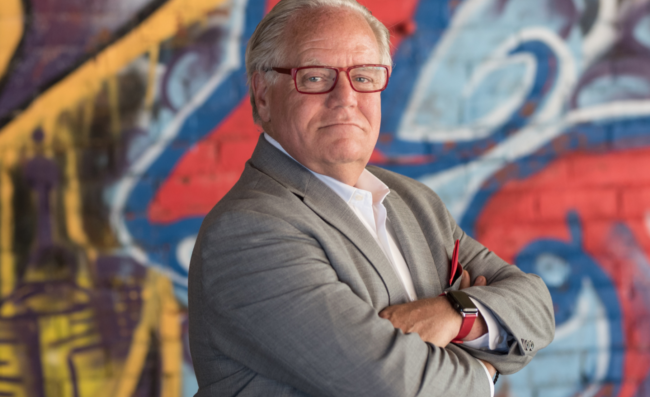

Jim Marous (00:00):
Jim Marous from Riyadh, Saudi Arabia at the MoneyPot at Money 20/20. I'm here with Ronit Ghose from Citibank, and we're going to be talking about AI and the transformation of banking over the last 5, 10 days and beyond. Ronit has had a illustrious career, quite a long career actually, at Citibank. How long has it been?
Ronit Ghose (00:36):
I think it's too long to talk about, isn't it, Jim?
Jim Marous (00:39):
Well, you're talking to the guy that's been in banking for 45 years plus.
Ronit Ghose (00:43):
So, I joined Citi or a predecessor company of Citi in London, 1997. So, we're sitting here in 2025, so you can, as the Americans say, do the math. That's 28 years, and the last nine years I've been based in Dubai, and the previous 19 years, I was in London.
Jim Marous (01:09):
Tell my audience a little bit about what you're doing right now, what your role is at Citi.
Ronit Ghose (01:13):
Sure. So, I run a think tank called Future of Finance, and it does what it says on the tin. We're a analysis content forecasting unit and we look at how technology, policy, regulations are changing the world of money and finance. We set this unit up about five years ago, give or take. The work we do in the unit has been going on for at least 10 years, but I used to do that as my side gig before.
Ronit Ghose (01:44):
Previously, I was global head of financial research, so stock market research. I was a stock market analyst. I started my career writing notes about banks like Northern Rock and for running SPA Bank and Julius Baer, European, UK banks. About 15 years into that career, or 18 years into that career, we began to realize this thing called fintech in the early 2010s was really taking over London where I was based and Asia.
Ronit Ghose (02:22):
And part of the reason for relocating was I wanted to be closer to the economic center of gravity, which has been somewhere around New York, London for much of the 20th century, is shifting back east to where it used to be in the 18th century and the 17th century. Somewhere between China and India, or probably in the stands if you did the kind of geolocation of the economic center of gravity, and so I wanted to be back near where the future was being built.
Ronit Ghose (02:53):
And about 10 years ago, I got fascinated by what was happening in China, and we wrote in English, I believe, one of the first in-depth reports about Chinese fintech, which went viral. And I was like, “Okay, there's a lot of people interested in this, there's a lot of things happening on my doorstep in London.” So, 2014, '15, so I went down the fintech and the crypto rabbit hole, and my bosses have now retired but all credit to them, they let me-
Jim Marous (03:25):
Follow that path.
Ronit Ghose (03:26):
Yeah, get a little bit off the beaten path because it wasn't obvious in the mid-2010s to be writing about and spending a lot of time hanging out with fintech founders and crypto entrepreneurs. They gave me that rope to do something different, and then what was my evening job or my weekend job became my day job. We set this unit up about five years ago.
Jim Marous (03:48):
Well, it's interesting because as you mentioned, it moved from the western countries to the eastern countries, and so much changed so quickly between Ant and WeBank, and they set the standard. I went to Shenzhen actually, it was the very beginning of 2020, and actually that trip took me from Shenzhen to Seattle, to San Francisco, to Boston, to New York. I go, I may be COVID number one and not even know it back then.
Jim Marous (04:17):
But it's interesting how fast everything changes as far as where the evolution of the industry's gone. You wrote a book in 2023, a bestseller called Future of Money, and what's interesting, even in that book, summary of your future views have more than come true and gone beyond that.
Jim Marous (04:34):
So, what have you seen since you wrote the book, and what did you predict or what did you see coming that's come? I mean, certainly, Africa and South America and India are three hotbeds now even beyond where China is and what we're trying to do in the UK and the US.
Ronit Ghose (04:50):
Totally. So, you're right, I wrote this book in 2023. I think it was 2022, lovely lady working for a publishing firm approached me, she pinged me on LinkedIn and said, "I think you should write a book." And I was like, "Okay, I'm pretty busy." But she was persistent, I knuckled down and wrote it in 2023, and then we published it in March '24, so it's about well just over a year out now.
Ronit Ghose (05:23):
I mean, like many of my friends, you've done a lot of books, it still excites me when I see my book in bookshops. So, I was in Dublin this weekend, just gone before this conference in Riyadh, and my son and I (the youngest boy) we were just hanging out in a bookshop.
Ronit Ghose (05:40):
My wife was shopping somewhere, and I was looking for actually a book about China. I was looking for this new book called … what's it called? Breakneck, no. You can put it in the show notes, it's all about how China's run by engineers and America's run by lawyers today.
Ronit Ghose (06:03):
I mean, a hundred years ago, America was run by engineers, and what's really interesting, I was looking for that book, not my own book. And then I found a solitary copy of my book in the business section. So, I called my 11-year-old over, I said, "Look at that," and he was just so excited to see it as well. Almost as excited as me.
Jim Marous (06:22):
Well, it's interesting because right now, my first book, but I'm a co-author with Brett King on this new one about Branch Tomorrow which is interesting because it's my first time, we're doing a book signing thing, which is kind of crazy. But what have you seen since the book that has really maybe shocked you a little bit about what's going on right now in the industry?
Ronit Ghose (06:40):
In terms of speed of change, so the book is all encompassing. It starts with the history of money as the start of kind of monetary innovation, which again, comes out of China, fiat money as we know it. So, paper notes, bank notes, the proto bank notes come out of China about 800, 900 AD, and then fiat, which is paper notes, not backed by gold or silver. That's not a 1970s Nixon administration thing, it goes back to Kublai Khan in the late 1200s.
Ronit Ghose (07:14):
So, the book starts with that kind of prehistory, and then it goes on to what we've lived through. So Alipay, WePay, the Revoluts, the Monzos of the world, and I was lucky being in London at the time because 10, 15 years ago, things are really happening in the UK-
Jim Marous (07:29):
And the regulations are kind of keeping pace compared to other regions.
Ronit Ghose (07:34):
Absolutely. The UK regulator and the policy establishment came out of their learning from 2008, was we need more competition, we need just more players in the market. And so, London had all of this finance talent, and maybe an optimism about the future, still just about.
Ronit Ghose (07:53):
It was beginning to fade but that optimism that there was in the 1990s in the Blair Administrations, that kind of carried on a little bit under the initial sort of Cameron Osborne administrations, and they had a very pro-reform innovation policy and there's just things happening in London. And so, that kind of fintech wave, I think is sort of played out.
Ronit Ghose (08:20):
What's kind of really exciting, and I'm sure we'll be talking about it during this conference, we talk a lot about it in Dubai and Abu Dhabi where I'm based, is digital assets, for wonder of a better word. So, it's not just about crypto, but the whole on chain money revolution, so crypto, stablecoins.
Ronit Ghose (08:41):
And what's really a big, big thing this year — and we wrote a report about this in April, and we called it this year … is like for institutional adoption of stablecoins or blockchain, specifically the ChatGPT moment. Now, I don't mean everyone and their granddad is going to start using stablecoins in the streets-
Jim Marous (09:02):
But the front edge of that.
Ronit Ghose (09:04):
But the institutions have been doing innovation theater for a decade on blockchain, and then the switch got flipped. It's suddenly become a real thing. It's not just about innovation being done by startups.
Ronit Ghose (09:21):
The biggest banks in America, my own company, others, we all know the names, you can fill that out later Jim. But the biggest banks in America, in Europe, in Asia are now putting into production, already put into production on chain money. In the book, we had a chapter on digital assets, but when I was writing it in 2023, I probably didn't write enough about it because I didn't see the change coming so fast.
Jim Marous (09:57):
Because sometimes when you're writing, you're writing based on what you see happening in the financial institutions and I think we just had an event where we spoke to a number of big bank bankers, and they said, resilience has been redefined where it used to be about fraud and risk, but now resilience is, am I going to be ready for what comes down the line?
Jim Marous (10:13):
So, these things are happening on stablecoin and blockchain and all that, and how fast cloud took off and blockchain made it so that the future is a lot tighter, we can define it, but then AI throws a curve ball. I think it was October 2022 (not quite three years ago), it really changed the dynamic of how quickly things can be done.
Jim Marous (10:38):
What have you seen? We'll go back a little bit. We'll go back to open banking because I don't want to skip that phase. Because actually, that was really the UK that has still had the lead in the whole open banking phase. How does open banking, stablecoin and AI, how's the confluence of those three come together to really change what's possible?
Ronit Ghose (10:59):
Sure. So, it's kind of interesting. Open banking has obviously from a legislative and a regulatory angle being led by the UK. But in production or in use in a slightly unregulated, anarchic way, the US has probably been ahead of the UK or the rule books that the UK had then got copied around the world, including in this region and the GCC and the Gulf.
Ronit Ghose (11:30):
But what open banking allowed was, and it was part of the same pro-competition agenda that the UK policymakers had. So, their agenda was (and this is where fintech came from) the UK ended up having two or three of the biggest banks in the world by balance sheet in 2008, and that meant that the taxpayer, the government had to go and put a lot of money into bailing out these banks.
Ronit Ghose (11:57):
Now, something similar happened in the US, but relative to the US GDP, it was a lot smaller. And this is the bit that often critics forget, the US made their money back and some. The UK didn't, and in real terms or inflation adjusted terms, and even in nominal terms, compared to the US, the UK experience was just horrible of having this middle size, quite a strong economy about what is the UK of world GDP now?
Ronit Ghose (12:30):
I think it's about 3% of world GDP. It's a number five or number six economy in the world. It's actually a big economy, but it's not China, it's not the US. And to have HSBC and Royal Bank of Scotland as the biggest banks, when the financial crisis happens, RBS and HBOS, Lloyds have to be bailed out. And then, so the UK policymakers are like, "Okay, we need to have a lot more competition."
Ronit Ghose (13:03):
And so, open banking is a response to that, a policy agenda saying we need more competition and the delivery mechanism or the tool that is APIs is to say, “Okay, I can, in very simple terms, if my bank accounts …” I've been a client of ooh, National Westminster Bank for 30 years, I think ever since college. Oh my God, no, it's more. It's more.
Jim Marous (13:30):
I told you it dates back.
Ronit Ghose (13:31):
I just did the dates. I've been a client of that bank for almost 35 years.
Jim Marous (13:35):
But how many relationships do you have beyond that? That's where the difference is. And actually, we talk about a lot on the podcast where open banking's being driven by the consumer where they're building their own open banking ecosystem with-
Ronit Ghose (13:48):
So, then if I have a new app like I have in Dubai for my kid with these prepaid cards, open banking allows me to just link that card with a couple of clicks to my checking, my payroll accounts, obviously with Citi because I work with Citi. So, I can just link my Citi UAE checking account, my payroll account directly to his fintech card. A couple of clicks, boom, done.
Jim Marous (14:13):
Like my son, yep, exactly.
Ronit Ghose (14:14):
Exactly. And without open banking, I'd have to onboard, fill out lots of data.
Jim Marous (14:21):
It was all paper based.
Ronit Ghose (14:22):
And it just takes a lot of time. So, open banking allows new players to come into the market, but it's not been … you Jim, know much more about the US than me — in the UK experience, it's not really been that much of a big game changer as we thought it would be.
Ronit Ghose (14:42):
So, it'd be interesting to see how AI plays out in stablecoins which is, I think a question before I went off on my tangent … AI, stablecoins because AI, I've heard this … this is not my term, I don't know who came up with this, but the concept of self-driving money.
Jim Marous (15:04):
We're going to use everybody to use the coin.
Ronit Ghose (15:05):
I don't know who came up with that but it's a great, great term (self-driving money) because it just makes it so vivid and easy to understand self-driving cars. We've spent 10 years also in the valley, in the Bay Area trying to get self-driving cars, and now there are self-driving cars. So, Waymo is what, 20% of all rides in San Francisco or something. So, we have self-driving cars.
Ronit Ghose (15:29):
Most of us, so me in Dubai or back in London, we jump in an Uber or a black cab, no one drives in the city. You drive in the suburbs or if you're doing road trips. In the city, someone else takes care of it and the car is driven by … actually, I love taxi rides in New York City. You get such great color because they're all relatively new immigrants.
Ronit Ghose (16:02):
But in many parts of the world, well, San Francisco today, a machine can do that. And just like people don't like driving in cities, most people don't like managing money.
Jim Marous (16:13):
People don't like banking.
Ronit Ghose (16:14):
Exactly. We use money to do something else. Like we don't wake up in the morning and go, "Oh, this credit card's so cool or this mortgage is just so exciting." You get a mortgage to get a house because you have a family. It's the classic marketing cliche, but that's why mortgage products are sold normally with a mom and a dad and kids or whatever the modern blended variety of that is. That's how you sell it.
Ronit Ghose (16:42):
You don't sell it by saying, "Hey, we've got this really cool financial technique or logic built into the product." You sell it by saying you want to live in this house. You sell a card by saying you want to go on this holiday, you want to go on this vacation. So, most of us don't want to think about money, we just want to use money to do something else, which goes back to AI, because AI becomes your self-driving car, your self-driving finance.
Ronit Ghose (17:12):
And so, AI can take care of, oh you've got a mortgage payment due, is your checking account up to date? Do you need to move money from your savings account into your checking account, if it doesn't auto balance? So, my NatWest account to give NatWest credit does auto balance. So, whenever my checking account runs low, it just pulls in money from there. So, I never go overdrawn on my checking account because I have enough money. But not every bank-
Jim Marous (17:41):
It's an automated transaction, it's not really AI.
Ronit Ghose (17:44):
It's very simple, but it's-
Jim Marous (17:45):
And you set the parameters.
Ronit Ghose (17:47):
Yeah. So, what AI can do is take those automated parameters, if this happens, do that, but do it in a more sophisticated way. They can say, "Okay, I know Rona gets paid on say the 18th of every month but his mortgage goes out on the 15th and his spending patterns during the month are more front end loaded before he gets paid, so let's pull some money out of the savings account into the checking account so that he doesn't get overdrawn or …”
Jim Marous (18:16):
Because we don't look at our statements anymore, we use the ATM as a balance-
Ronit Ghose (18:21):
Or the app. Like I always say, the analogy I give, so when I fly back to Dubai on Thursday this week, the fridge will probably be empty because my kids are all studying abroad, my wife is traveling this week, so I'm going to get back and the fridge will be empty. So, I always use this analogy of I end up ordering from the car, from the airport. So, rather than doing that-
Jim Marous (18:46):
And it gets there before you do.
Ronit Ghose (18:49):
And rather than doing that, wouldn't it be great that the fridge had some basic AI, some baby AI, it goes, "There's no milk, there's no water, there's no whatever." And the fridge just sends out the order, and then it can use either a stablecoin or it can use another kind of nano payment to just settle the payment because the fridge will have a wallet.
Ronit Ghose (19:11):
There'll be a wallet attached to the fridge, it's not connected to my bank account, there's just a standalone wallet with the fridge and the fridge will be able to order but there'll be a limit. So, the fridge can't order $10,000 worth of food. Well, like, I don't know, $10,000 worth of caviar waiting for me to get home.
Jim Marous (19:32):
But even if it did, there'd be checks and balances on where they're ordering it from that those parameters are already put in place.
Ronit Ghose (19:38):
I say just maximum order is a hundred bucks. Anything more than a hundred bucks, I need to get a pop-up message on my phone and they have to approve it. If you want to order $25 or a hundred dirham worth of food, it just does it. You just pre-order.
Ronit Ghose (19:57):
And when I arrive home on Thursday, my fridge is stocked, and it's already sorted. And it can be some very basic AI. It doesn't have to be a stablecoin — it could be a stablecoin. For me, stablecoins become interesting for micropayments, in-game. It's like if you have kids, you know they're always playing whatever it is, Minecraft or Roblox.
Ronit Ghose (20:20):
And so, we have in-game tokens, so just make the in-game token a general purpose token, and then that's your stablecoin. Because when you're playing based in Dubai with someone in Bahrain or San Francisco or Seoul, I don't want to think about FX. If I just have a coin, whether it's a USD something or a ROBX or something, it just settles and that's useful.
Ronit Ghose (20:49):
Now, that doesn't mean stablecoins take over the world because sometimes I see my friends who … we are all selling something, so I don't disrespect that. So, I see posts on social media saying stablecoins are going to take over the world, and sometimes our research also contributes to that hype. But actually no, stablecoins will be very useful in some areas of finance, and in some areas of finance, you'll get bank tokens.
Ronit Ghose (21:17):
Banks will have their own coins. Banks are already experimenting — us, Citi, JPMorgan, others are experimenting and put into production for our wholesale clients, for our institutional clients who want to move money. Even today, there are billions moving daily on these private blockchain networks.
Ronit Ghose (21:38):
So, one of the things we're arguing in a report that's just about to come out, one of our GPS reports is bank tokens. So, deposit tokens or tokenized deposits are going to be a big thing. And then in some countries, CBDCs (central bank digital currencies) will be a thing. So, it'll be, as you say in English (I’m sure you have this in American as well), it'll be horses for courses. For a certain product, a certain activity, you're going to have a certain form of money.
Jim Marous (22:02):
And for certain people. Let's take a short break here and recognize the sponsor of this podcast.
[Music Playing]
Jim Marous (22:11):
At the end of the day, we talk about what we think is going to happen with agentic AI, with stablecoins, with blockchain, all these elements. And we sometimes just don't pay attention and thinking if it's there, the consumers will take it. Heck, we can talk about it in the US that we still are using cash way too much.
Ronit Ghose (22:29):
Yeah, and checks.
Jim Marous (22:29):
Oh, yeah and checks.
Ronit Ghose (22:31):
You guys still use checks. The US is this amazing mix of the most advanced finance particularly in wholesale finance, and the most, I don’t want to say backward, but old fashioned in retail, because a lot of the pitches that we hear outside the US for fintech, from fintech founders in the US, they go, "Fintech solves this." And I'm like, "What are you solving? That's been solved in other parts of the world."
Ronit Ghose (23:00):
Like real-time payments for domestic, I mean, there's nationwide real-time payments in 70 plus countries as you know Jim. 70 plus countries have real time or instant payments. So, when a fintech founder comes and goes, "Oh, I'm going to do real-time payments," I'm like, "That's solved domestically."
Ronit Ghose (23:19):
Now, there are limits in size and if you're a merchant, you may not get paid real time, so that's a real pain point. If you are particularly a smaller merchant, by the time Visa, MasterCard of the bank settles, it can be days. For solo entrepreneurs, it can be weeks. So, there's still a merchant settlement problem, but from a consumer perspective, everything in most countries around the world is real time domestically. So, the US, I guess you guys do diversity in extremes.
Jim Marous (23:54):
Oh, exactly. So, with that in mind, you see the whole world and it's changed quite a bit. Why is there so much difference in the take up of different fintech concepts between … I mean, we've seen what's happened in Africa and South America. The payment rails took care of that quite a bit. But you saw it in China, there's hotspots that keep on changing. What's the hotspot right now, just overall for fintech and innovation, do you see?
Ronit Ghose (24:20):
So, for the last 10 years, but particularly in the 2010s, China was the hotspot. And what happened in China was you had this coming together of many factors. So, if you went back to sort of the 2000s, so pre-smartphone, China's just becoming affluent.
Ronit Ghose (24:44):
If you remember the 1990s, I don’t know if you ever visited China. I did in the 1990s, but my in-laws went and you hear all the usual stories of everyone's riding a bicycle, there are hardly any cars. Today, China has more high-speed network trains than any country in the world by a factor of, I don't know how many.
Ronit Ghose (25:06):
China in the last 10, 15 years built the whole US highway system once over, and had done that already before in the previous decade. So, China went from having almost no, call it modern infrastructure, 21st century infrastructure, to having cutting edge. And it happened at the same time, this revolution in China, as the digital or the smartphone revolution.
Ronit Ghose (25:28):
So, for me, fintech is basically finance for the smartphone era, finance for the consumer internet era. And what China happened to experience was at scale, this whole population or large parts of the particularly eastern seaboard, entering the 21st century, just as the digital revolution happened.
Ronit Ghose (25:50):
So, just like America, the middle class, the famous kind of 1950s, 1960s, emergence of the middle class in America happens and wealth broadens out in the 50s and 60s in the US, as you get those kind of early form factors of computers, like computers or mainframe computers come into banking and enterprise and the corporate world in the 60s, late 50s, 60s — credit cards appear in the 50s, 60s.
Ronit Ghose (26:19):
So, all these things that are basically a part of modernity, computers, cards, all happen in America in the 50s and 60s, China's going through the same revolution in the 2010s, and it's doing it while it's becoming rich at a scale level. Now, going forward and looking at the mid-2020s for the next 5, 10 years, where is it going to happen?
Ronit Ghose (26:40):
Now, we all love talking about Africa as the kind of next frontier, and there have been examples in Africa and full disclosure, I’m an advisor to a fund in Africa, which I've invested in, it's on my LinkedIn profiles, you can see, they're great.
Ronit Ghose (27:00):
The guys down in Cape Town who run Launch Africa, but Africa has delivered in pockets and obviously, everyone knows the M-PESA story, but even beyond M-PESA, there've been some great innovations from fintechs in South Africa, in Egypt, in Nigeria and elsewhere, and obviously, the granddaddy in Kenya.
Ronit Ghose (27:20):
But the challenge that you often have in continents like Africa or even sometimes in the Middle East, is connecting consumer demand for a new way of doing things with funding and domestic capital. The China story was really driven by, they had this economy transforming, but they also had — yes, they had the money from Sequoia and the American VCs and the American banks were there, the Goldman Sachs of the world and others investing really early into the likes of Alibaba. But they also had a domestic capital base that invested domestically. And the challenge-
Jim Marous (28:07):
They could scale easily.
Ronit Ghose (28:08):
Exactly. And the challenge for Africa or individual countries in Africa is the wealthy individuals in Africa, like in the Middle East, send their money overseas, and the wealthy individuals in China do that as well, but they also invest at home. The big companies in China invest at home, just like the big companies and the wealthy individuals in America invest in America.
Ronit Ghose (28:37):
And I know it's a political thing right now, but it's happened forever. If you're a billionaire or a big company in America, you invest in America. The challenge for the Middle East and Africa is to … and this event here we're doing is part of sort of the policy response, I suppose, is to make sure that we don't just send money out from Africa, from the Middle East or India, you reinvest in the opportunities and you develop a local kind of ecosystem.
Ronit Ghose (29:09):
What you said, we were talking about Shenzhen. So, what Shenzhen did really well or Hangzhou did which is where Baba is based Alibaba, Shenzhen which is like lots of companies-
Jim Marous (29:22):
WeBank, Huawei.
Ronit Ghose (29:24):
They have an ecosystem. I know it sounds like a-
Jim Marous (29:28):
But it feeds on itself. You go to Huawei, they're very connected to WeBank and the way they do things. You look at the campus of Huawei, which the innovation campus is astounding, would never expect it anywhere else in the world than there.
Ronit Ghose (29:41):
But the valley has that. Why does the valley and the Bay Area have this ability to … 10 years ago, people, particularly in the rest of the world, including in China, were saying, "Yeah, we're the future, America's finished."
Ronit Ghose (29:58):
I mean, I'm exaggerating to make a point, but it became a little bit of a consensus, 6, 7, 8 years to go. Yes, the best days of the valley are behind it, and look at it now. During COVID, everyone was like, "Let's go to Austin, let's go to Miami, let's go to Dubai, let's go to, I don't know, Mexico City," and now, if you're in AI and you're not building in the valley, you are kind of missing a trick.
Jim Marous (30:22):
And now, Austin. There's new hubs also, but-
Ronit Ghose (30:25):
So, the hub point is really important. Like having Stanford there, having Sandhill Road, having the entrepreneurial community and the mindset. On the journey here, I was chatting to old dear friend of mine about what's happening in Europe now.
Ronit Ghose (30:39):
I know Europe's a big place, 40 plus countries, but there's this kind of general … a lot of this is about mindset, in America for all its issues, there's still a mindset of amongst some people, tomorrow will be better, I can build a future. That mindset exists now in the Middle East, it exists in China, and that mindset, it's really hard to bottle, but it's not about the talent.
Jim Marous (31:03):
That's how scale can get.
Ronit Ghose (31:04):
Exactly, yeah. And so, I think that mindset, if you can encourage that … which your question, I haven't really properly answered what's coming in the future with AI and stablecoins.
Jim Marous (31:19):
Let's take it out a little differently. What right now is underhyped? In other words, you think is going to be bigger than people even realize?
Ronit Ghose (31:28):
Generally, what's under hyped or under discussed tends to be B2B. Let me explain. So, in our sort of public discussions on podcasts in the mainstream media, on social media, we tend to over index and over discuss B2C consumer. Why?
Ronit Ghose (31:50):
Because you can touch it, we can feel it, everyone listening to the podcast understands it. Having been in traditional finance for almost 30 years, I always say people outside the finance industry simply don't understand the scale of the amount of money that moves around. The amount of money that goes around every day, every night is gargantuan.
Ronit Ghose (32:14):
And money has become over the last 50 years in America and the rest of the world now an industry itself. And you can debate whether that's a good or a bad thing, and the scale of that is usually ... I read so many articles or tweets or whatever they're called now, Xs, or LinkedIn post saying, “Oh we are moving a billion dollars a day.” And you're like, that's cool, you're doing a billion dollars on this stablecoin or that fintech rail, bravo.
Ronit Ghose (32:43):
I wouldn't be able to build a business doing that, full respect for that, but do you realize the biggest bank in the world, biggest American bank moves over 10 trillion a night? 10 trillion. We move about half of that in our bank. It's insane, these numbers. And that's what people who are not in the B2B world completely miss, is the scale of cap … and this is where America is just so-
Jim Marous (33:09):
And the ability to do this now with digital. With the digital world, the ability to build a platform around B2B which wasn't there even three years ago is now there.
Ronit Ghose (33:19):
And this is going to be really interesting because a lot of this B2B … at least on the margin is moving to tokenization, is moving on chain. So, we just had a couple of days ago NASDAQ's announcement that they're looking to …
Ronit Ghose (33:30):
And we just put out a report about the future of post-trade with our colleagues in the trans in services, security services looking at … we interviewed like over 500 of our clients and they were saying they think 10% of transactions, securities transactions could go on chain within a few years.
Ronit Ghose (33:47):
Now, I don't know if that's going to happen as quickly because this takes time, but there could be transformative reconfiguration of the rails or supplementing of the rails that exist today. And that's sometimes hard for people not in finance to just grasp how big the numbers are, and secondly, the plumbing that's being reconfigured.
Ronit Ghose (34:12):
Because most of us don't care about the plumbing, it's like the internet. We use the internet, but do we really know about all the internet cables? I mean, the other day … I'm not going to speculate who, you can look it up online. One of the Microsoft cables that feeds the Middle East and India got cut, and suddenly internet traffic for a few hours, internet really slowed down and you're like, “Hang on …”
Jim Marous (34:37):
That's not supposed to happen.
Ronit Ghose (34:38):
That's not supposed to happen.
Jim Marous (34:40):
The WIFI’s gone off. Exactly.
Ronit Ghose (34:41):
You just forget about the physical infrastructure that backs the digital world we live in. And there's a lot of that physical infrastructure or the financial physical infrastructure's going to be re-plumbed.
Jim Marous (34:54):
Well, and just from the power, the dynamics of electricity and utility generation. So, we talked about what's under hyped, what do you think is overhyped right now?
Ronit Ghose (35:04):
Over hyped, oh gosh — you and I both know of this concept is most of the audience will; the hype cycles. So, I think Gartner and others have this concept of the hype cycle, and I totally get why you need a hype cycle. People go, "Oh, it's overhyped." So, right now, it'd be AI, “Oh, it's overhyped.” I'm like, yes.
Ronit Ghose (35:34):
But every big transformative project gets overhyped, it has to be for two reasons. One is, it's a bit like when the railways were being built in England in the 1830s and the rest of the world in the 40s and 50s in the 1800s — if you don't have a hype cycle, you don't bring in capital. So, I mean, Charles Dickens was writing books about this saying everyone in London is going crazy. This is in the 1800s, mid-1800s.
Ronit Ghose (36:00):
Everyone in London is going crazy over the railway bubble, and he was being very sniffy about it because he was obviously not approving of this. And I don't know, I'm assuming when electricity came, there was a hype cycle around it. Everything that we consider just infrastructure today, there's a hype cycle. And like when America decided to put a man on the moon, when JFK made that speech, “We're going to put a man on the moon,” there was a hype cycle around it, there has to be.
Jim Marous (36:29):
But it got the momentum to make it happen.
Ronit Ghose (36:32):
Exactly. You need to have a hype cycle to get in capital, to get people to build the future, and also to convince the users. So, whatever it is the project, so that this is something you need to use. So, I think by just looking at the sheer volume of capital going into AI or AI adjacent areas, that's the obvious big hype cycle but is it overhyped? Well, probably-
Jim Marous (37:01):
Timing may be off, but yeah.
Ronit Ghose (37:03):
I think what'll happen next year is people will go — or I see it happening even this year, yeah, it's not really changing how we do some of our day-to-day activities that fast. It's changing certain things like coding, summarization of information. But then you'll probably find in three or four years ago, wow, I think it's a Bill Gates quote: “We underestimate change in the long term and overestimate in the short term.” And so, I think, that's probably the big story for the next five years.
Jim Marous (37:36):
And finally, since we're in Riyadh, since we're in Saudi Arabia, since we're at Money20/20, in the MoneyPot, what excites you about what you've seen over the last couple days?
Ronit Ghose (37:44):
So, as you know, I've been in the region now for almost 10 years, and maybe I was a little bit too early to come to the region, but I'm glad I moved early rather than late. A single outstanding feature, whether it's of Saudi Arabia, of Riyadh, the UAE, Abu Dhabi, Dubai, is vision. I know it sounds soft and waffly, but in the 1960s, the US had this mission, I'm going to put a man on the moon, I'm going to put a human on the moon.
Ronit Ghose (38:22):
Countries that are young and youthful and optimistic have these visions, and it's the easiest thing in the world for us to be a little bit cynical and a little bit this is overdone. But we are seeing the flip side of that in Europe right now, and sometimes, also in the toxic zero sum politics in the US, which is, if you don't have a vision for the future-
Jim Marous (38:51):
You won't get there.
Ronit Ghose (38:52):
And you end up fighting in zero sum politics. And there are lots of challenges for all these countries in the Middle East, in the GCC, but the biggest advantage they have is that the leadership is-
[Music Playing]
Jim Marous (39:07):
Very open.
Ronit Ghose (39:09):
And tomorrow is going to be better.
Jim Marous (39:11):
It's the most interesting thing because I come to this region quite a bit; the difference between the different countries is astounding, a competition between them is astounding, and then you look at the World Cup last year, the cooperation between the countries, it's astounding given all the other dynamics.
Jim Marous (39:29):
I kid about the fact that many people within the region think that Dubai, they're like the petulant child that can't get out of its own way. But as you said, the vision's always there, and they keep on jockeying for position, it's exciting. We're out of time but thank you so much for being on the show finally.
Ronit Ghose (39:45):
Thank you for having me.
Jim Marous (39:47):
I had to come to see you-
Ronit Ghose (39:48):
Thank you for having me. It's been a pleasure to have this conversation.
Jim Marous (39:50):
Thank you very much.
Ronit Ghose (39:50):
Thank you.
Jim Marous (39:51):
Appreciate it.
Jim Marous (39:54):
Thanks for listening to Banking Transformed, the winner of three international awards for podcast excellence. If you enjoy what we're doing, we would really enjoy a positive review. Also check out my recent articles in The Financial Brand, the research we're doing for the Digital Banking Report.
Jim Marous (40:09):
This has been a production of Evergreen Podcasts. A special thank you to our senior producer, Leah Haslage; audio engineer, Chris Fafalios, and video producer, Will Pritts.
Jim Marous (40:20):
If you want to hear more about the Debbie platform and how it can boost engagement by rewarding positive credit behavior, check out our previous discussions with the Debbie founders on the Banking Transformed Podcast.
Recent Episodes
View AllThe SoFi Cross-Buy Engine Fuels Amazing Growth
Banking TransformedThe Best Banking Innovation Doesn't Need a Huge Budget
Banking TransformedArming Front-Line Bankers with AI Tools That Win Clients
Banking TransformedWhy Banks Miss Human Customer Moments"Most banks know far more about their customers than the customer ever feels. In this Banking Insight Video, I look at why relationship banking often feels programmed, from the quarterly business banker check-in that g
Banking TransformedYou May Also Like



Hear More From Us!
Subscribe Today and get the newest Evergreen content delivered straight to your inbox!
Advertising & Sponsorship
Interested in sponsoring or running an ad for your business on an Evergreen Podcast? Contact us to get pricing and availability.