
Banking Transformed
Hosted by top 5 banking and fintech influencer, Jim Marous, Banking Transformed highlights the challenges facing the banking industry. Featuring some of the top minds in business, this podcast explores how financial institutions can prepare for the future of banking.


Back-Office Modernization: The New Growth Strategy for Banks
Banks have spent billions building digital customer experiences. But most are doing it on top of back-office infrastructure built for a different era. That gap has quietly become one of the biggest drags on growth, pricing power, and profitability in banking.
Today's competitive edge isn't just about what customers see upfront. It's about how efficiently a bank operates, how smartly it prices on an individual basis, and how quickly it can turn data into action. That's why modernizing the back office has moved from an IT discussion to a strategic imperative.
I'm joined on the Banking Transformed podcast by Richard Ullenius and Brandon Sailors from CSG International to discuss what modernization truly means, how banks can progress without tearing everything down, and how smarter infrastructure is becoming the key to efficiency, engagement, pricing, and risk management.
This episode of Banking Transformed is sponsored by CSG
CSG delivers banking and financial services solutions to help banks reimagine pricing, billing and customer engagement across retail, commercial and institutional banking. By unifying smart pricing, customer and transaction data and accurate, flexible billing, CSG enables banks to modernize complex, multi-product relationships without rip-and-replace. As a result, banks can reduce risk and complexity, protect margins and power trusted, real-time experiences that drive growth.
Where to Listen
Find us in your favorite podcast app.
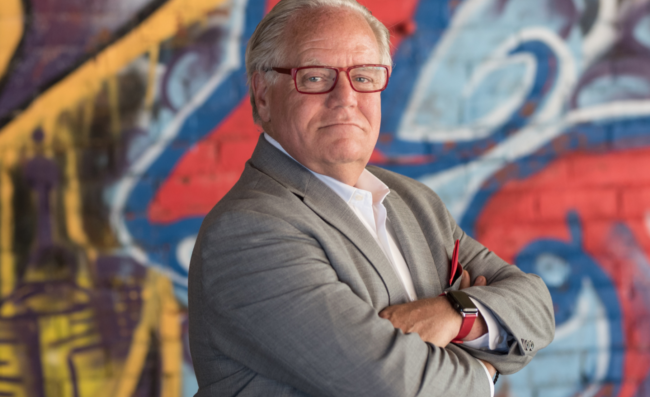

Jim Marous (00:12):
Banks have spent billions building digital customer experiences. We see it on our iPhones; everybody's pretty happy with the way it feels and looks. But most are doing this on top of a back-office infrastructure that's still built for a different era. That gap has quietly become one of the largest drags on growth, pricing power, personalization, and profitability in banking.
Jim Marous (00:42):
Today's competitive edge isn't just about what customers see upfront, it's about how efficiently a bank operates, how smartly it prices on an individual basis, and how quickly it can turn data into action. That's why modernizing the back office has moved from an IT discussion to a strategic imperative that can lead to resilience.
Jim Marous (01:09):
I'm joined on the Banking Transformed Podcast today by Richard Ullenius and Brandon Sailors from CSG International to discuss what modernization really means and how banks can progress without tearing everything down in the process, and how smarter infrastructure is becoming the key to efficiency, engagement, pricing, and risk management.
Jim Marous (01:36):
Before we begin, Richard and Brandon, I just have to tell you right now, I have dropped a whole lot of cliches and terminology points that it hits all the SEO and GEO factors. But rather than getting into those dynamics on a broad basis, can we start by you both introducing yourself and telling us a little bit about CSG International?
Richard Ullenius (02:00):
My name is Richard Ulleniusenius. Been with CSG for, oh, long time now, 16 years. And I lead our business in really helping corporate and commercial banks go through the type of transformation that you talked a little bit about Jim. Based in Stockholm, Sweden, super excited to be here chatting with you today.
Brandon Sailors (02:23):
And my name is Brandon Sailors. I'm a vice president in our CX business unit at CSG. I've been with the company for a little over 13 years, and I manage our most strategic accounts and really focus on verticals other than our primary, which is cable telco, and so that means financial services, retail, healthcare.
Brandon Sailors (02:44):
You've mentioned, well, a little bit about CSG, so we are a 40-year-old company. We are an anti-startup, is the way I like to explain it. But we are a purpose-built SaaS-based software company that supplies a billing system to the top 200 telecommunication carriers around the world.
Brandon Sailors (03:03):
We have close to a billion subscribers on our various platforms around the world and specialize in managing first-party data. When you have that many subscribers, you know that trust factor is integral to what we do and what we deliver.
Brandon Sailors (03:21):
And the fun part is when you think about, we're well-known in that cable telco space but you, Jim earlier had mentioned, not so well known in other verticals such as financial services. And I so multiple times have customers tell me, "You guys are the best company most people have never heard of." And I love that.
Brandon Sailors (03:40):
And it's really the fact that we can take that 40 years of heritage in working with tier-one providers and bring that into something like financial services. If you think about it, a one-time password is a one-time password, and appointment reminder is appointment reminder.
Brandon Sailors (03:54):
Doing different types of billing services, really these things carry across multiple verticals, and I like to say the reason that we're so successful in this space is that we focus on selling solutions and not just selling technology and capabilities, and that's why customers trust us and use us in this space.
Jim Marous (04:14):
It's interesting in this podcast, we get a lot of solution providers that are really ingrained in the financial services industry, can help on modernizing the core. And what's interesting is, I would say five, six years ago, I'd be hesitant to talk to a company that really focuses on multiple industries because you really want organization to understand financial services.
Jim Marous (04:40):
Well, things have changed dynamically when you look at digital and the way organizations of all types integrate with customers. In fact, we talk about on every podcast that customers are now judging their retail banking relationships, their commercial banking relationships, their institutional banking relationships based on how they work with Amazon, with their telco, with their food service, their grocery store.
Jim Marous (05:09):
And the reality is organizations and institution verticals are now more similar than they are different in the way that people integrate the back office, the way the back office has to operate in a digital world because we're just talking about so much data, and the usage of that data.
Jim Marous (05:28):
So, as we look back over the last four or five years, what feels the most different about how banking is approaching growth and customer relationships as it relates to the back office?
Richard Ullenius (05:45):
Let me start on that one. And actually, in fact, the way you just described the kind of the cross industry coming together almost is actually the main reason for why at least I'm here on this podcast today.
Richard Ullenius (06:02):
Because Jim, what we've seen over the last five, six years is basically a lot of the banks, the big banks and some of the medium sized banks starting to look at other industries because of what you said. They've seen other industries transform, how to build a different engagement with their customers, whether it's consumers, whether it's medium-sized companies, or large enterprises.
Richard Ullenius (06:26):
And how do you create a customer centric as opposed to a product centric, which I think is kind of how many of the traditional banks are still built and have been built for a long, long time. So, how do you change that? How do you transform that? How do you create a customer centric engagement model that truly is based on two things; one, delivering services in real time to customers when they need them and at the point and at the place where they need them.
Richard Ullenius (06:58):
And to be able to do that, you need to create a totally different velocity compared to how most of these types of organizations are working to create speed so that you can be at the customer's touch point when they really need the service.
Richard Ullenius (07:12):
So, for us, what we've seen over the last five, six years, Jim is really … and I'm speaking mainly from the corporate and commercial banking side and then Brandon will talk a bit about the retail aspect. But what we're seeing is those banks are waking up; the competition is here. The neobanks are starting to knock at least on the SME door as well and soon probably on the commercial and the CIB door as well.
Richard Ullenius (07:37):
And they’re built for speed. They’re built on customer centricity. So, many of the traditional banks that we've started to work with have really kind of come and said to us, "Hey, you've participated for a long time helping other industries transform in these different dimensions. Can you come and help us?"
Richard Ullenius (07:57):
So, I'd say what we've seen is the shift has started but it's pretty slow still, and I would say there's quite a long way for the banks to go because of what a lot of this is about is of course kind of almost like rewiring the DNA as opposed to thinking about it as a we need new technology or we need to change our business model. A lot of this is about thinking differently and kind of building a new DNA in the banks. So, that's a perspective from us on the corporate and commercial side. What do you think, Brandon?
Brandon Sailors (08:31):
I think those are excellent points, Richard. And you're right, even on the retail banking side of the house, it really does come down to personalization. I like to say we're all consumers first. So, from that perspective, you understand which brands you like to work with, you understand what you're used to and what experiences are the ones that drive loyalty.
Brandon Sailors (08:51):
And if you want to drive loyalty, it starts with trust, it starts with having the bank understand who you are and treating you as an individual and not just a number. And looking at your entire spend, if you will, the entire portfolio of what you bring to the table, and not just looking at you under individual products or solutions that you might be purchasing.
Brandon Sailors (09:13):
So, having that holistic 360-degree view of the customer, understanding where and how they like to interact with the bank, and again, that changes. And last but not least, is really the digital adoption portion of this. Again, how many apps are you going to keep on your phone? It used to be people would just download everything, and nowadays, people aren't doing that.
Brandon Sailors (09:33):
They have a handful of companies that they like to use that they know they're going to receive good service when they need it, it's easy for them to find the information they're looking for, and that their banker or their trusted financial services provider is going to respond proactively not just reactively, and is going to resolve any issues that they have quickly. Those are the types of things we're seeing.
Brandon Sailors (09:58):
And then Jim, to your point, they are being compared against the Amazons of the world that says, "Hey, I know that if I order something, I'm going to get an immediate confirmation. I know proactively when something ships, I know when something has shown up at my door."
Brandon Sailors (10:12):
Why wouldn't we provide those same types of experiences for fraud notifications, for loan applications, for onboarding, and all of these types of services. And the banks that embrace that are the ones that are starting to win in the market.
Jim Marous (10:26):
So, Brandon, sticking with you. We've talked to a lot as I mentioned, back office, modernization, companies. And what's really exciting from my perspective over the last five years is the different ways you can modernize your core.
Jim Marous (10:41):
I mean, you mentioned core transformation and it's like nails on a blackboard to financial institution, but the reality is there's so many different ways to do this today, where it doesn't upset the apple cart overall, or you can do it tandem in all different ways of doing it now. But almost every institution is stuck between their outdated system and limited budgets, almost everybody's got both those situations happening.
Jim Marous (11:09):
Based on what you observed in the market, what does a realistic step-by-step approach to modernization look like today for most organizations, especially those that are looking at, they probably have to overhaul their whole system, but really can't do that all in one shot.
Jim Marous (11:27):
What does that look like from not just a financial standpoint, but from a prioritization standpoint, and then from a timing standpoint, how long does that kind of thing take?
Brandon Sailors (11:38):
Well, that is a loaded question, Jim. A lot of layers to that one, my friend. But I think one of the things to think about is it's understanding any project needs to be driven by outcome, it needs to be driven by how is it going to impact your end customer first? And when you start with that as your North Star, then the rest of it starts to make sense.
Brandon Sailors (12:02):
Certainly, we have seen transformation across the retail sector and the retail banking sector, where first it was this massive rip and replace, and those projects would take 10 years, and by the time they got to the end of the 10 years, they wouldn't remember why the hell they started it in the first place and they never quite got the return they looked for.
Brandon Sailors (12:20):
Then it became, well, we just have to centralize all of our data. So, they spend years trying to bring all these disparate systems into a single perfect view. And that doesn't quite work out very well because of the siloed nature of so many of these banks, especially the larger banks.
Brandon Sailors (12:37):
So, really what we've seen is it really does come down to understanding what outcome are you trying to deliver and what's the return on investment for that, both for the consumer as well as for the bank?
Brandon Sailors (12:47):
Because what we see is that even those banks that have really large IT organizations, they still have a huge backlog of projects. So, which projects win, and they're competing against each other internally at the bank to say which project receives the funding as well as the people to go implement.
Brandon Sailors (13:03):
So, you have to have a really strong vision that you can paint that understands what are you trying to drive for your consumer, what's that going to look like, what's that return going to deliver, and then how do you measure it?
Brandon Sailors (13:15):
And that's I think, the biggest piece that we're starting to see right now is that if you can come in with a really clear vision on a problem that you're trying to solve, understand what it's going to deliver, and then have the ability to measure it and prove it. Because so many CX projects specifically just die on the vine because they can't necessarily prove that the impact of raising a customer experience is going to drive profitability or drive some other outcome.
Brandon Sailors (13:42):
But when you can figure out at the very beginning what are the metrics that you're going to measure, how do you measure them so that you can actually prove that there's a lift in revenue, a lift in margin, a lift again, in share of wallet with these customers, those projects win.
Brandon Sailors (13:56):
So, those are the types of things that we're seeing, which is, it's not necessarily about trying to get everything combined into one perfect system, it's recognizing where does the data live? Don't rip and replace, but put something in that's going to make all of those existing systems work better together to drive an outcome.
Jim Marous (14:14):
It's interesting, your answer to my question really focuses on the fact that to do anything, it's not really about the technology, it's finding a partner that'll have a consultancy approach to say, number one, what are the questions we have to answer? Number one, what's your North Star? What's the most broken part? How does this part interact with other parts of your core that may not be modernized at the same pace? Most importantly, what are the challenges that you are going to face that you've seen other organizations face?
Jim Marous (14:48):
And it gets back to my first reference that says, just because it may not be in the banking industry, doesn't make the challenges any different. The reality is neither one of you have mentioned that much about the technology involved as much as how you have to get the organization ready for that modernization journey.
Jim Marous (15:09):
And if you don't get those or if you don't get the right answers, if you start to feel like things are wishy-washy, or if the focus isn't really narrow on what needs to be done, not only won't you achieve it, but you won't be able to measure it.
Jim Marous (15:23):
And I'm glad you brought the whole measurement component because we see that a lot of organizations don't often know what their return on investment was. If you find a third-party solution provider that says, "We're not going to get out of this discussion and start implementing until we have that nailed down," that makes it so you've brought it all together so that you know, “Did this process succeed or fail?”
Jim Marous (15:49):
And not just from a starting point, but from a finishing point, and I'm sure you both would agree that if you don't do this upfront work, the implementation will take forever because it stays wishy-washy. Is that the biggest challenge you have in the marketplace right now, that when you're trying to modernize a back office, that organizations tend to want to jump into the technology implementation before they're really ready?
Richard Ullenius (16:20):
Yes, is the short answer. I'd say this, I mean, corporate and commercial banks, they perhaps aren't sometimes at least the most sophisticated when it comes to transformation. And I say that a little bit carefully because it's not like they're not investing lots and changing things and building new services.
Richard Ullenius (16:44):
But you are right, there is this desire, it's almost like this pressure to change things and try to do a lot of it at the same time. So, what I normally advise our customers on is that first of all, start off with what wins. And it’s not what wins for you as a bank, what wins for your customer. And in most cases Jim, what I get back is speed.
Richard Ullenius (17:02):
If we can get faster, with more predictability, more transparency, more reliability in the services that we provide, how we provide them, so on and so forth; but if we can do that also faster with the same level of trust, then we win.
Richard Ullenius (17:26):
And I'm like, “Okay, great, let's focus on that.” Because now you have a customer-centric perspective, you have something that your customers are asking you for. You've got something that your customers say, "If you do this for me, I will buy more from you," which creates loyalty. So, I think that normally is a starting point for where I work, and then from there on, you start to map, okay, we pick two, three use cases no more.
Richard Ullenius (17:49):
As Brandon rightly said, the days of big bank transformations and you want to do five-year massive core transformations and spend billions of dollars, I just don't think that's going to be winning in the market. So, you want to do a keyhole type surgery instead of the open-heart transformation or the open-heart transplant, and you want to pick a few things that really matter to your customers.
Richard Ullenius (18:11):
And then you do that at speed, and then you start to build the flywheel, you start to create the kind of the success feeling as well internally, you start to prove to your customers as well that you're building something that is different, something that is better, something that's faster that they can get value from.
Richard Ullenius (18:31):
So, the short answer to your question, as you said, is of course, yes. So, you need to make sure that you don't allow the whole team to jump into an IT project before you figured out what you're really trying to achieve. And it should, in my mind, always be focused on the end customer.
Jim Marous (18:49):
So, everybody's elevator speech from a banking perspective is saying, I want AI driven results, I have data-led banking, but an executive's focus on results. Can you give me a concrete example of how a financial institution improve their outcomes by modernizing their back-office data flows?
Richard Ullenius (19:10):
Yeah, I'll pick that up and then Brandon, please add your pieces. But I think like many industries, a lot of the work Jim, as you know, is still focused on building more efficient processes internally whether it's-
Jim Marous (19:23):
Cutting costs, yeah.
Richard Ullenius (19:24):
Doing a research or yeah, absolutely, right. And I think what we're starting to see is now the banks that are making the most progress on this, they've shifted the ball game totally. And they're starting to deploy AI as a trusted decision-making partner to the humans, which again, goes back to what we talked about four or five minutes ago, which is it creates speed.
Richard Ullenius (19:46):
So, if you can have almost like a human workforce, and you've got an AI workforce that's supporting it right, you've got the human supporting and building the relationships, building trust, continuing to build the business, servicing your customers, but you're deploying agentic or AI workforces to actually take a lot of the decisions that are needed during the processes, but they can do it in microseconds or milliseconds, where it would take a normal traditional bank, probably days or maybe even weeks in some cases to take those decisions with the traditional processes.
Richard Ullenius (20:19):
So, that's an area where we're slowly starting to see some of the more perhaps forward-thinking banks, not the least the neobank, look at AI in a very different way from how more perhaps traditional views of seeing it as an efficiency gain have been deploying it. What are your thoughts, Brandon?
Brandon Sailors (20:40):
Sure, Richard, I'll tag onto that, but more through the lens that my team partners with our financial services and the retail banks, again, from the customer experience side, and AI is the buzzword. That said, it's evolving. And most of our customers today, when you talk about agentic agents, when you talk about conversational AI, when you talk about some of these different solutions, it's very inward-facing, not outward facing.
Brandon Sailors (21:11):
And what I mean by that is due to the heavy regulated nature of banking, as an example, you can't just have an AI throw an answer out, there has to be guardrails. So, when we're consulting and working with our customers, it's looking at how do we leverage the benefit and the speed that Richard's talking about that AI can bring, the automation that it can bring, but doing so in a way that helps to improve maybe the way agents are working and answering customer questions.
Brandon Sailors (21:41):
It helps by going through all of that data Jim that you pointed out at the very beginning of the podcast, there's tons and tons of data; allow AI to sort through it faster and give you the data that you need to make a quick decision and inform the decision, or to summarize what's happened, what happened today, what happened last week, what are the trends, what's going on?
Brandon Sailors (22:02):
We see a lot of these types of things internally where banks are using these things to improve their internal efficiency because you can't quite trust it to purely just give answers to their customers yet, because if it says something wrong or it says something opaque, there could be fines, there could be a loss of trust, which is going to lead to churn.
Brandon Sailors (22:21):
So, what we see right now is banks really looking to leverage AI in a way that says, how do you make my team better, faster, more informed, so that they can answer questions, not necessarily, "Hey, I've got this bright shiny AI that's going to solve every question."
Brandon Sailors (22:39):
I think I used an example in a customer meeting just the other week. You're not going to use your banking app to ask what the weather is in The Bahamas. You can't just let AI run wild and answer any question that you want it to answer. It needs to be very focused on what's very specific to solving that problem, to answering that question with the proper guardrails.
Jim Marous (22:57):
It's interesting, you just opened a door that I'm challenged by every day, and that is our financial institutions moving at the pace they should when it comes to using data to provide opportunities, to provide options, to provide ideas on what a customer can do, do they get caught in the whole risk and compliance excuse and not move forward at the pace they can with regards to data?
Jim Marous (23:25):
I mean, it doesn't matter if you're working with banking industry or anything else. If you're trying to build a personalized solution with my telco company, with my retailer, the reality is they're all using data to make recommendations and to try to take me down the path that makes the most sense. But financial institutions historically are afraid to go and make that decision on behalf of the consumer or even offer some of the consumers for fear they may be wrong.
Jim Marous (23:52):
And wrong is viewed differently in bank than anywhere else, in that they don't even want everything that may be taken as being wrong if one customer comes into a branch or complains about it. How do you deal with that or how do your financial institutions that you work with in other industries as well deal with the whole balancing of risk and compliance with the ability to really help me by knowing me, understand me, and offer me services that would make me a better financial steward.
Brandon Sailors (24:25):
I'll start with this one, Richard. And I think from that perspective to some degree, Jim, you kind of answered it yourself there. Because from the standpoint, I saw an interview with Jamie Dimon, the CEO from JPMorgan Chase recently. In the interview itself, he said they've been leveraging AI for over 10 years in just in various ways, and in different ways.
Brandon Sailors (24:49):
And they're investing over $2 billion a year in various automation and AI projects. So, it's not that banks aren't utilizing the technology, they're just not necessarily utilizing it in a way that is very visible to the public. And quite honestly, those are probably some of the best projects that you have out there because it gets back to what Richard said, which is how do you provide answers and solutions at speed?
Brandon Sailors (25:13):
So, if you're using things to improve processes or get to the answer faster, those types of projects get funded, those types of projects work, but it does start by understanding from a compliance perspective and a regulatory perspective, you have to have those guardrails built and identified at the very beginning.
Brandon Sailors (25:32):
But you said something a moment ago, that is really what caught my attention because it's so central to so many of the solutions that we deliver for our clients which is you have to know your customer first. You have to be checking in and have real time context, what is the customer doing and have that real time context as it drives the journey, as it drives the solution, and how you respond and how you can either be proactive, provide the information at the right time and the right channel that the customer is looking for.
Brandon Sailors (26:04):
But you have to understand right off the bat, do you even have the permission, do you have consent to be able to contact that customer through various channels? Something as basic as that is very important to the foundation of building a solution for your customers.
Brandon Sailors (26:18):
So, it does come down to understanding what are some of those things that you have to do? What are the table stakes? How do you go back and have those various checks throughout the process or again, as we say, throughout the journey.
Brandon Sailors (26:31):
And it’s just very inherent, I think one of the things we see so many customers missing is they build solutions via channels. So, their email channel works very differently than their text channel, than their voice channel, than if you walk into a branch. And when you have all of those and you have different experiences that get delivered, it doesn't feel right to that customer.
Brandon Sailors (26:53):
And it shows that you don't necessarily know who they are because you're not necessarily checking to see if you're getting the action. If you send them a note to make a payment, and then you send them an email the next day that says, "Hey, you have to make a payment," and they've already made it, you've kind of already lost some trust there.
Brandon Sailors (27:09):
So, you have to understand and have those constant checks in real time to say, "Did I get the action that I'm looking for before I send the next message?" Or before they call an agent and the agent then asks them the same question, which is, "Oh, hey, have you done this yet?" It's making sure that you're tying all of these experiences together in real time, and then always looking to say, “Are we doing this in a compliant fashion?”
Jim Marous (27:32):
Very interesting because customers don't think about channels, they figure just because of the experiences they have with other industries, that if they have something that happens at the branch or on an app, or at a call center with a relationship team, that it'll be seamless, that the information flows seamlessly.
Jim Marous (27:53):
How are the best institutions orchestrating the connection of channels? Because we each want our channels to work really well independently, but it's how they work together that really separates the best from the rest here. How are the top institutions doing that?
Richard Ullenius (28:12):
I'll give a perspective from corporate, here is where I think corporate, commercial and retailers obviously quite different in one aspect but similar in another one. So, on the corporate and the commercial side, of course, as we know, the banks are built more on product lines supporting the customers with the kind of the subject matter expertise that sit in those product lines.
Richard Ullenius (28:34):
But I'd flip it and say, I think the bank of the future (and we're starting to see a few banks move in this direction right now, which is super exciting) are going to be those that have a single, holistic, enterprise-wide relationship with its business customers, and it'll be the same on the retail side of course.
Richard Ullenius (28:53):
And it's quite similar to where we saw telecommunications 10, 12 years ago, right? Where they had like 15 different divisions that were supporting a single company, where with different services et cetera. So, they've of course, overhaul that approach and I do think the corporate commercial banks will do the same.
Richard Ullenius (29:12):
Because at the end of the day, I think the business bank of tomorrow really has a one relationship where all the different banking products come together and the bank become much more of a proactive, almost predictive business partner to the company that they're servicing, and really stop seeing themselves as I'm providing financial services, products and services to those companies, instead becomes a business partner where I am the provider of different types of financial solutions, whether it's cash management, commercial lending, different forms of financing, payments, whatever it is, but it's provided as a single kind of business partnership between the bank and the company.
Richard Ullenius (30:04):
At least that's also what we're seeing from some of the non-banking customers we're working with. When we talk to them about what relationship do you want to have with your bank? They're like, "We would like it all to come together so that we can have a single partnership with them." So, that's a perspective from the corporate and commercial side.
Brandon Sailors (30:23):
So, not much different on the retail side from that perspective. But I think what's interesting, Richard, as I was listening to your answer, it’s technology can solve this from the standpoint of we can put technology in place that can look across all of the different divisions of a bank, and again, pull that 360-degree view and understand who the customer is holistically and make decisions, and prioritize which messages should go out so that you're not carpet bombing your customer with messages from five different groups all at the same time, and then diluting the effectiveness of those messages, which is what we see happening today.
Brandon Sailors (31:01):
I'll challenge it back to say a lot of it is due to, again, lack of leadership within the bank to set those priorities. Because what you have is that if I have a mortgage, if I have an auto loan, and if I have a let's say a checking relationship with a bank, which one wins? If I’m sending out a note, what’s the priority?
Brandon Sailors (31:22):
And if I'm having an issue with one of those groups, but I keep getting a ton of marketing messages from all of the other groups, am I actually defeating the purpose of trying to solve an issue with this customer if I'm so focused on just trying to cross sell, upsell all of these other services at the same time?
Brandon Sailors (31:40):
And again, with some of our customer management, communication management software, we can help with that from a technology perspective, that it really does come down to a governance perspective within the bank to actually have that leadership that says, we are going to solve this problem, we're not just going to seed communication lead to marketing who marketing thinks, "Hey, I'm just going to send as many messages through every channel that I can and hope that it hits."
Brandon Sailors (32:08):
And it really does come down to delivering a more personalized experience at the right time in the right channel and setting that internal prioritization that says, "Hey, I'm going to suspend a few messages to make sure that the most important thing that I'm trying to communicate to the customer actually goes through first and we resolve before we try and cross sell, upsell.
Brandon Sailors (32:28):
And so, solving that problem is one that we've been able to work through before, but it really does require a lot of fortitude from leadership to sit down and pull their business leaders together to understand how are you going to best service this to make sure you understand who that customer is.
Richard Ullenius (32:46):
Can I just take you back a little bit because you asked a really important question, I want to connect a couple of dots that popped up in my head. You asked a question five minutes ago if banks are moving at the speed and the pace they need on the data side, and the short answer to that is no.
Richard Ullenius (33:03):
And again, it's a little bit similar to what happened on the telco side, you even mentioned that right? 10, 12 years ago, they're sitting on incredible amounts of data. They've thrown a lot of money at putting a lot of that into data lakes and other kind of technical solutions that are supposed to make the data ready and actionable.
Richard Ullenius (33:25):
But the reality is that if you haven't taken the necessary steps to figure out what you actually want to try to do with the data, it's just going to be a pool of data. And your bankers and all of those who are supporting the frontline bankers aren't necessarily going to know what to do with it.
Richard Ullenius (33:42):
So, I'll go back to exactly what Brandon said, I think is a really important point. We are right now seeing a number of banks on the corporate commercial side that have deployed technology solutions for improving pricing, improving product creation, improving ordering, charging, whatever it is, doesn't matter.
Richard Ullenius (34:01):
And the conversation we're now having with them is like, they're like we have the latest, greatest modeling technology, or we built it in-house with our own IT teams, but we don't have ready, actionable, real time data that's feeding those fantastic systems which means our bankers are going back to what they used to do five years ago, which is Excel, pen, paper, manual processes, so on and so forth, because they can't use the systems.
Richard Ullenius (34:28):
So, I think there are three things that are really important to actually focus on in a banking transformation: one, what is, as we said, the use case to the end customer. That's for me number one. Number two is what data do you need to be able to service that customer and how are you going to get it? Then you can think about, okay, how do I then leverage that data using more modern technologies than perhaps what you have?
Richard Ullenius (34:57):
And then the final point where you started this conversation, which is the change management aspect, that you need to have thought through at the beginning of this because if all you do is put a lot of new technology in with fantastic real-time data but you cannot get your organization to move and actually want to use it. Because the difference is, as we all know, change management fails, if you feel that you have to do it, you must want to do it. So, if you don't have the organization with you, the rest doesn't really matter.
Jim Marous (35:26):
So, you actually brought up a question and answer that I was just going to ask but in a different way, but I'm going to expand it now and say, based on what you just said, how big of a challenge is it right now? You build a very good back-office system, you both have referenced it more times than not, that you really start on the outside and work back in to make it so that the machine can drive what the consumer wants and what the consumer expects.
Jim Marous (35:54):
But part of that machine are the people involved, how well are financial institutions now democratizing the data, the insights, the knowledge that a good modernization process internally will provide, but how do you avoid the old fashioned way of the IT department or the data department holds tight all the information they have as opposed to expanding across the organization?
Jim Marous (36:26):
As part of the modernization process that you implement, that you consult with, that you actually can turn on, how much of that is really going to be driven by how willing the organization's going to be to democratize what the output is so they can actually reach all the channels, getting back to the channel discussion?
Richard Ullenius (36:47):
I'll start it Brandon, and then would love to hear what you're seeing on the retail side. So, on the corporate and commercial side, I did an interview with a senior leader in one of the top banks in the world; he's been on the financial side, he's been on the IT side, on this exact question, Jim, fairly recently.
Richard Ullenius (37:09):
And he was bold enough to say that the leadership teams in the traditional banks that are in the C-suite today, they are most likely in many cases, the last leadership team that's going to get the chance to proactively create the environment inside of the bank that will actually fuel the change. Because the leadership teams that come later, the world will have moved on so fast, the traditional banks will struggle, and we've seen that in other industries, of course.
Richard Ullenius (37:45):
And I think a big part of the leadership change that needs to happen (and you were heading down that way already, Jim) is if you think of the neobank, you think of many of the fintechs, one of the reasons for why are they so good? Why is it that we like to work with them, whether we're, again, a consumer or a company?
Richard Ullenius (38:07):
It's because the product innovation is happening at our fingertips. They're not sitting in some ivory tower back at the headquarters doing product, thinking through, "Hey, what product should we build today?" And then six months later, when you've configured it, you've priced it, you've built the IT systems to support it, then you're launching it.
Richard Ullenius (38:27):
You know the best of the best, they're doing the product development and the product innovation based on what you're doing in the app, and they're doing it in real time. And it's done by the people who are the closest to the customers.
Richard Ullenius (38:39):
And I think, personally, the winners of the traditional banks on the corporate commercial side of tomorrow that will compete effectively against the startups and others that are moving into this space, they will be the ones who enable their organizations to operate in a similar way, which is really difficult for someone that's been around for a hundred years and have very different DNA and very different organizational structures, and very different view on risk.
Richard Ullenius (39:11):
But the leaders in those banks, they have the opportunity for the next few years to kind of like, almost like liberate the organizations to do that. So, it'll be very interesting to see.
Jim Marous (39:24):
It's interesting, it was in Shenzhen at the very beginning of COVID, end of 2019. And WeBank (the biggest digital bank in the world) had a process where the product managers could actually sit down in a computer in the customer care area and if a customer brought up a challenge that they thought was a product-related challenge, they could actually change the system themselves in real time.
Jim Marous (39:52):
So, they had access to the way that products were built, products were delivered, systems were handled, and every single employee within a certain level had the ability to adjust the product accordingly or at least set up a test function. What is interesting is everything we discussed today, we talk about the modernization of the back-office for a better customer experience. The underlying impact is trust and risk avoidance.
Jim Marous (40:21):
Because if you allow data to flow evenly and enhance the experience, you're taking risk out the equation because you'd know more and more about the customer but you're increasing trust exponentially because the customer's going to believe you actually know them, understand them, and will reward them with a better understanding for the future.
Jim Marous (40:41):
And they all intertwine. And again, it gets back down to those organizations that are going to do the best are going to open those doors, are going to review the transfer of data differently, are going to actually embrace the change.
Jim Marous (40:55):
And you referenced it in a way that those organizations that are running slowly, that game of catch-up doesn't get easier with time, it gets harder. We look at this, and what's interesting too is we see that both the small banks and the big banks are innovating really quickly. And as we look at the smaller financial institution and we look at the different constraints that they have, how can smaller financial institutions prioritize modernization maybe differently from the largest banks in the massive legacy backlogs?
Brandon Sailors (41:34):
Happy to. Again, I think it's scale but again, it does still start with understanding, I think the same thing we've been saying over and over again: a smaller bank's not going to have the budget, they're not going to have the staff so they have to be very, very smart about where they spend their time.
Brandon Sailors (41:50):
And it's probably not always best to go out and focus on building very large platforms as the beginning to that. It really is picking an outcome-based approach to say, what are the right types of solutions that I need to go deploy to really make a difference for those end customers.
Brandon Sailors (42:08):
And what we've been seeing, and I'll tie this to your last question as well, which is if the IT team just holds the data back and says, "Hey, I know this, I'm not going to share," it comes down to not being confrontational with those teams.
Brandon Sailors (42:25):
And saying, again, how can you extend or one of the approaches we like to take is to say, a lot of times the bank has already created various assets that will solve problems and answer questions, but they don't make it very accessible or easy to find. So, how do you help guide customers to the right place at the right time by understanding, again, contextually in real time what they're looking for?
Brandon Sailors (42:50):
So, don't fight with IT. It's a matter of saying, "Hey, you've built something, let me help you make that more accessible to your customers in real time, and hopefully proactively," because you see there's a change event that's occurred.
Brandon Sailors (43:03):
You know that as an example, the customer had a residual interest charge on their credit card statement. Well, guess what, if you wait until the statement gets printed and sent, you know it's going to drive a call into your call center, why not be proactive? Reach out to them ahead of time, send them a link to a video that you've already created as an example that explains what is it, how do you stop it from happening in the future? And oh, by the way, click here and let's enroll you in autopay.
Brandon Sailors (43:29):
These are the types of things that you can do by working hand in hand with the bank, with the IT department and giving them the tools to, again, take assets that maybe they've already created, make them more accessible.
Brandon Sailors (43:42):
So, again, small businesses just need to get really smart about utilizing those use cases but it's the same with the large banks. Again, they have plenty of money, they've all pretty much bought every technology that's out there. They're having fun trying to implement it all but they just miss some of the basics of going, "Hey, we've already created that asset. But if people can't find it, it didn't do them any good.
Jim Marous (44:05):
Yeah, that’s for sure.
Brandon Sailors (44:06):
So, the bottom line is that's how do you make it easy for people to find these things, to answer the questions, to be very proactive, and those are the projects that we see whether it's a small, medium or large organization.
Jim Marous (44:17):
You talk about that finding aspect that's both for the consumer and the internal employee. It's about employee experience as much as the customer employee.
Brandon Sailors (44:24):
Oh, absolutely.
Jim Marous (44:27):
If a CEO is listening today and they know they need to modernize their financial institution, but really don't understand really where to start, what's the first thing they should do tomorrow to generate momentum?
Richard Ullenius (44:45):
I'll start on the corporate and commercial side, I think it's two things. One what is it that we can do to support the relationship managers to create a significantly different engagement model, post an initial conversation until they've actually implemented a service, because in many cases, that's weeks, months.
Richard Ullenius (45:08):
Some of the banks we're working with right now come to us and say, "Hey, it takes six, eight weeks from an initial conversation between our relationship manager until we've deployed a service for a corporate customer. That doesn't work in today's world, so those banks, what we're saying, we're working with them on is how can we move that to six minutes? And again, it goes back to technology will play-
Jim Marous (45:32):
Well, it's all better than the six years.
Richard Ullenius (45:35):
Yeah, you're right on that, absolutely. And at the end of the day, there's lots of technology and stuff like that, but it does require you to rethink how you actually support and service that customer. And then for me, the second thing that I think I normally advise the C-suite on as well is skip the technology, focus on how do you want to service the customer? What's the value to the customer and what data is needed? When you figured those two things out, then picking your technology pieces, what should be bought, what should be built, how should we connect the old and the new, it's easy stuff, really is.
Brandon Sailors (46:15):
Yep, completely agree, Richard. And again, if I was going to start with one thing and we ask this question to our clients all the time, what are the top 10 reasons that your customers call you or walk into the bank? If you understand what's driving those calls, start there. Sometimes, you're going to find some really niche corner type cases that are a little harder to solve for.
Brandon Sailors (46:38):
But the reality is start by understanding why your customers are calling you, why they're coming into a bank, why they're seeing an advisor, and then look for those chances to automate. Look for those chances to improve those processes, and again, just create the consistency across the various channels that your customers use to solve it and get the answers to those questions. Best place to start.
Jim Marous (47:02):
At the end of the day, the back-office may not be glamorous, but it's increasingly the key difference between bank that can compete on price, service, profitability, and those that can't. It is not a matter of asset size, it's a matter of leadership; are you willing to take the change that are necessary to make you truly an organization that can benefit from what's available in the digital banking environment?
[Music Playing]
Jim Marous (47:26):
Thank you to both Richard and Brandon from CSG International for illustrating what pragmatic modernization looks like, and most importantly, for proving that it really is the front of the customer experience that drives what you need to do in the back office.
Jim Marous (47:42):
If you're involved in back-office transformation institution, I'd love to hear what you're working on and what's not working. I'd like to have you reach out to me on LinkedIn or leave a comment on my YouTube page to let me know how are things going and what challenges you have. I'm certain that Richard and Brandon would love to hear from you as well.
Jim Marous (48:01):
So, thank you both for being on the show. There's a lot to unpack here, I feel like we just scratched the surface, but I think we touched upon the things that can really make a process of modernization work and not work. So, thank you so much for being on the show.
Jim Marous (48:20):
Thanks for listening to Banking Transformed, the winner of three international awards for podcast excellence. If you enjoy what we're doing, we would really enjoy a positive review. Also, check out my recent articles in The Financial Brand, the research we're doing for the Digital Banking Report.
Jim Marous (48:35):
This has been a production of Evergreen Podcasts. A special thank you to our senior producer, Leah Haslage; audio engineer, Chris Fafalios, and video producer, Will Pritts.
Recent Episodes
View AllThe SoFi Cross-Buy Engine Fuels Amazing Growth
Banking TransformedThe Best Banking Innovation Doesn't Need a Huge Budget
Banking TransformedArming Front-Line Bankers with AI Tools That Win Clients
Banking TransformedWhy Banks Miss Human Customer Moments"Most banks know far more about their customers than the customer ever feels. In this Banking Insight Video, I look at why relationship banking often feels programmed, from the quarterly business banker check-in that g
Banking TransformedYou May Also Like



Hear More From Us!
Subscribe Today and get the newest Evergreen content delivered straight to your inbox!
Advertising & Sponsorship
Interested in sponsoring or running an ad for your business on an Evergreen Podcast? Contact us to get pricing and availability.