
Banking Transformed
Hosted by top 5 banking and fintech influencer, Jim Marous, Banking Transformed highlights the challenges facing the banking industry. Featuring some of the top minds in business, this podcast explores how financial institutions can prepare for the future of banking.


Build a Bank Brand Worth Fighting For
Fintech disruptors like Chime, Revolut, Venmo and the Cash App have shaken up the banking world by positioning themselves against traditional banking's pain points, yet most established banks continue to compete on incremental improvements rather than bold differentiation.
Consumers are drowning in nearly indistinguishable offers, a reality my guest on Banking Transformed, Laura Ries, calls out in her newest book, "The Strategic Enemy: How to Build and Position a Brand Worth Fighting For". Her antidote is intentionally counterintuitive: stop trying to be “better,” and instead become unmistakably different by defining, and then defeating, a single, visible foe.
Ries argues that when brands rally around an “enemy,” and reinforce the fight with a memorable “visual hammer,” they earn a permanent slot in the customer’s mind.
Our conversation explores how enemy-based positioning and vivid visual symbols can help banks escape commoditization, revitalize trust, and signal a bolder future.
Where to Listen
Find us in your favorite podcast app.
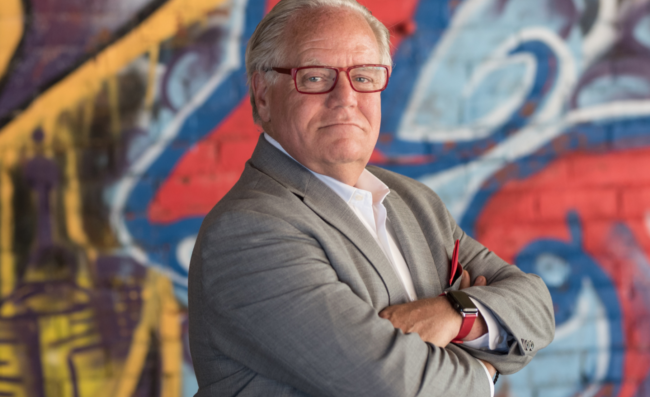

Jim Marous (00:11):
Consumers are drowning in nearly indistinguishable offers, a reality of my guest, Laura Ries, calls out in her newest book, The Strategic Enemy: How to Build and Position a Brand Worth Fighting For. Her antidote is intentionally counter-intuitive: “Stop trying to be better and instead, become unmistakably different by defining and then defeating a single visible foe.”
Jim Marous (00:38):
Ries argues that when brands rally around an enemy and reinforce the fight with their memorable visual hammer, they earn a permanent slot in the customer's mind. Our conversation explores how enemy-based positioning and vivid visual signals can help banks escape commoditization, revitalize trust, and signal a bolder future.
Jim Marous (01:05):
So, Laura, I feel like I've been connected with you in a unique way since I feasted on marketing positioning books written by your father in the early ‘80s and ‘90s, which I still own and read every once in a while, because you never can afford to forget what you learned in the past.
Jim Marous (01:25):
More recently, I've also enjoyed your books on positioning and branding. What makes your newest book different, and what made you write this?
Laura Ries (01:35):
Sure. Well, it’s very exciting. I've spent my life practicing positioning from when I was a small child when it came out, and I was indoctrinated into the religion of positioning very early. And it's such a powerful concept because it's all about the mind. That a brand isn't what you're saying out there, it's what you can establish and what will be accepted in the mind.
Laura Ries (01:58):
So, in working with the concept over the years, we've added additional things like you've talked about. Very important, can't wait to talk about the visual hammer because that's how you can visualize, use the power of an emotional visual to communicate your positioning strategy.
Laura Ries (02:14):
But what I've noticed when working with positioning —and listen, the word is used by everyone these days, but it's not always used correctly, because most often companies are like, “Yeah, what do we want to do? This is going to be our positioning.” And not thinking into what the mind is. And the most important thing in the mind is the contrast to what else is in there. And that contrast is what the strategic enemy is all about. It's your oppositional foe that you're trying to be the opposite of.
Laura Ries (02:40):
And that's the most important thing, because then, you're not just talking about yourself, you are relating it to something already in the mind and creating that contrast so that you're not just claiming to be better, you're showing how you can be different. And when you can do it with something very specific, something tangible, maybe even something visual, it becomes even more powerful.
Jim Marous (03:00):
Well, it's interesting because traditional banks have operated for decades on trust, stability, maybe being better; better rates, better service, better technology.
Laura Ries (03:11):
Better buildings. I mean, the bank building itself was incredibly important, I still remember these days.
Jim Marous (03:18):
Oh, well, we still have that. We still look at the big strong building with the pillars. Your book argues that this approach is fundamentally flawed. Why is being better not enough in today's banking landscape?
Laura Ries (03:34):
Well, listen, it was never enough. But now, as the competition gets greater, these strategies become more difficult, and the opportunity for new entrants to get into the market. If there's only two players in town, well, they're going to be successful. But if you have 16, it's going to get a lot more difficult.
Laura Ries (03:55):
Here's the thing, when you say you're better, nobody believes it, it's what you're saying about yourself. And so, that's the fundamental problem with self-reported claims, they're not believable. It's why we also wrote a book on The Fall of Advertising and the Rise of PR, realizing what is advertising? It’s what you're saying about yourself. And so, if you're trying to build or tell people or teach people something, advertising isn't the way to do it, you need the credibility of a third-party endorsement.
Laura Ries (04:25):
It's why what other people say is much more believable. What your friend recommends, or what you read on Reddit or what you hear on a podcast of what they recommend. And it’s much more credible and powerful.
Laura Ries (04:39):
And so, here's the thing, when it comes to what your position is, you have to establish something that is believable. If you can tie it to something very narrow, something ownable, that's also differentiates you (and then here's the catch), you got to keep repeating it. It's the repetition of an idea that really builds its strength.
Laura Ries (04:58):
For example, think about in the cars, the ultimate driving machine for BMW, it was a very important strategic enemy play against the leader Mercedes-Benz that was the ultimate sitting, comfortable machine. BMW was driving, but it wasn't just about saying it once, it was the repetition of that that really has established that position in the mind. And most companies, they're changing their strategy every day. They're trying to appeal to everybody instead of narrowing the focus and doing one thing, and having the courage to sometimes say no.
Laura Ries (05:31):
That is a powerful position that entrepreneurs have very much taken advantage of in what we see in the FinTech and doing that against those big players. People are always looking for an alternative. I mean, that's the thing, there's no one choice for everyone. And you can't play to be the one choice for everyone, you're better to establish something that you can own, you can dominate, and you can be the leader in. Because at the end of the day, leadership is the most powerful position to own.
Jim Marous (05:57):
It's interesting because we look at the banking environment, and we tend to get very product focused. And we know who the enemy may be in a general sense, but as you said, we can't stop talking about ourselves.
Jim Marous (06:17):
So, let's say you are facilitating a workshop in a bank's leadership team, what exercise would you use to surface that one enemy worth fighting against? And how do you feel, or how do you test whether that choice is both credible and motivating?
Jim Marous (06:34):
Because you talk in your book about it not only has to be motivating and credible to the outside, but probably more importantly, it has to be credible and motivating to the internal teams because they've got to live it.
Laura Ries (06:48):
They do. I mean, it's a very important thing. When you go to work, you want a purpose. And it doesn't have to be environmental, it doesn't have to be big; it could just be GEICO, 15 minutes saves you 15% on your insurance. I mean, this is a very simple idea that built that brand.
Laura Ries (07:13):
And it's challenging with banking where they do have a lot of products. And quite often, they're trying to communicate all of them instead of focusing on what's that one product, that one anchor that gets you into the bank?
Laura Ries (07:26):
Because marketing is a lot about, well, two things. It's one, getting new prospects. You've got to drive them in with one idea, one that's something that'll sway them with powerful emotion to get in there. Once they're a customer, well, then you can communicate with them, and then you have the opportunity to sell them more things. And lastly, the power of say advertising in your marketing to reinforce to people that they made the right decision. To feel good about what they're banking.
Laura Ries (07:54):
Before I get into your question, a funny fact, they studied the attention rates of automobile advertising. And you would think, who's more likely to pay attention to automobile ads? Well, if you're about to buy a car. But the research was exactly the opposite. In fact, the people that paid the most attention had already just bought the car.
Laura Ries (08:18):
So, after you made that big purchase, you want to say, “Okay, I feel good. I bought the BMW, it's the ultimate driving machine, I can show my status.” Or “I bought the Volvo; I'm going to be safe for the kids. I'm a family person. I'm a Subaru person, I'm the outback.” I mean, these are car brands and cars do it very well, many of those brands, with that narrow focus on identity, even though most of them have a wide range of things. But they find a way to focus and find again, what that enemy is. And doing it specific.
Laura Ries (08:47):
For example, what does Subaru do? They're four-wheel drive, that's what communicates that they're outdoorsy. They said no, in fact, at one point, they were 50% two-wheel, 50% four-wheel, because listen, in the South, we don't really need the four-wheel except every 10 years. So, purposely getting out of that business is actually what accelerated their growth. They were losing money trying to appeal to everyone.
Laura Ries (09:10):
Now, for banking, if I'm going into the meeting, first and foremost, let's not just think about what you want to say, what you want to do, or what new things you have. Let's think about what's in the mind of the consumer?
Laura Ries (09:23):
Two things; the current consumer, what do they think about you? What do they say about you? What would they tell their friends about you? And then what about the ones that aren't your prospects or that are going to other banks. What do they say about you? What do they think about you? And what do they think about those brands?
Laura Ries (09:40):
So, we got to understand the landscape of not the reality. Not the reality of what their interest rates are, what their products are, but the reality of the perceptions. Because listen, banking is complicated, most people don't have time to think about — what is that shorthand for those other banks and products that people are talking about? What are those perceptions? And then how could we leverage that? What are we now?
Laura Ries (10:04):
Now, one more thing, it's very difficult to make a radical change to your brand. You can't go if you are — if you're known for one thing, it's very difficult to suddenly be known for something else unless you make a big investment, a big name change. Ally, for example, they were able to go digital because they changed the name from the General Motors. I mean, that was what leveraged them and allowed them to do that, but that was a big spend. So, first and foremost, the perceptions are what matter most.
Laura Ries (10:34):
And then the simple idea of let's see what they own. In every strength there is weakness. Big banks are great, they have stability, they have all the services. I was talking to my son, he just got his own first apartment, he needed a cashier's check, but you can't get that from an online bank. Good thing he still was with mom and dad at Bank of America because we've got the branches and he could get that. But absolutely, in terms of what they need.
Jim Marous (11:04):
Let's take a short break here and recognize the sponsor of this podcast.
[Music Playing]
Jim Marous (11:10):
Welcome back to Banking Transformed. It's interesting because banks have a lot of data, and I would think a good tool in that workshop is to say, okay, let's look at the funds flow, where are your customers doing their other banking? Where have they gone to? What brands have they thought to be reputable, or at least different than yours enough to go there?
Jim Marous (11:35):
Is it Robinhood? Is it Chime? Are they Venmo customers? Are they PayPal customers? But that would at least give you a starting point then doing surveys to those customers going, what prompted you to diversify? What prompted you to do business elsewhere? Because it used to be when both of us were kids that we pretty much banked with one organization. We do most of our business at the organization, we opened our checking account with.
Jim Marous (12:00):
Well, that is no longer the case. In fact, you could easily argue that the checking account is no longer the primary financial relationship. Most of your case studies in your book feature challenger brands like Liquid Death and Oatly positioned against established players. Well, traditional banks are the established players being challenged.
Jim Marous (12:24):
How can established brands flip the script and use strategy as a strategic enemy positioning defensively while maintaining their core customer base? How do you avoid maybe alienating the people that are already there as you try to build a disruptor brand?
Laura Ries (12:43):
Well, it's very hard for the big established players to be a disruptor. I mean, they're facing those competitors. But when you have leadership, you have to remember what ... and you're absolutely right with the data. Let's look at the data, let's see where our strength is.
Laura Ries (13:03):
Unfortunately, most times when people look at that data, and I work with lots of different companies. I'll give you an example (hamburger chain because I remember the numbers). So, we look at how many hamburgers do you sell. And this one Mexican chain, they had all sorts of hamburgers. Four hamburgers represented like 70% of the sales. But listen, they went down the line, the Honolulu had 1%. So, what do they think? Oh my gosh, we got to promote the Honolulu.
Laura Ries (13:31):
And instead of saying let's hammer in the most important reason that people are coming here, what do we still have as the established legacy banking brands that the disruptor challengers or there's still less — they don't have the prestige, the long-term history. I mean, we still have strength in the long-term stability of our institution for the most part, and most of them. And that's where the visual hammer comes in.
Laura Ries (14:04):
The ability to then add a visual that is a constant hammer reminder of the brand, of the bank. It is important to have visibility out there. The constant seeing of it. Think about Coca-Cola and the real thing, the communication of that. And then combine it very importantly with that iconic bottle, which is the contour bottle, which is the original. They don't sell it that way anymore, but a very powerful visual along with it, that does communicate something.
Laura Ries (14:35):
So, in banking, you can think about Bank of America, very nice name to have a signal of a banking for the country with the use of the flag and those colors. And as well, as you mentioned, I mean, most banks go blue, why? Because they look at those colors and they say, “Blue means stability.” They think about what the color communicates.
Laura Ries (14:58):
Yes, I mean, sure, you can think about the psychology of colors, that's nice. But the most important thing when you're thinking about colors, if everybody is blue, we better be red or we better be purple, or we better be green. It has to be different, not so much what you want to communicate, but what color can we choose that separates us in the marketplace out there so we can be visibly seen. Because that repetition is going to impact, and seeing it is going to communicate of that being there, wanting to be there, reminding people of why they should use the institution.
Jim Marous (15:36):
It's funny, I was just going to get into the visual hammering. You're right, banks, blue, sometimes green, maybe a little red here and there, but they will show in their commercials or in their marketing, the generic buildings, as you referenced in the beginning of the podcast. The branch, the big building, the strength, the stability. Maybe there'll be a little handshake imagery. Maybe they'll actually be holding a mobile phone and seeming happy.
Jim Marous (16:05):
How can a traditional bank break through that sameness? Again, and I referenced it earlier, most bank ads, most bank mobile banking apps, everything. If you took away the name of the brand, you'd be hard pressed knowing who the bank is.
Jim Marous (16:27):
What would you recommend as maybe a visual hammer or a way to break through the sameness of every single financial institution in the neighborhood?
Laura Ries (16:36):
Well, I mean, a differentiating visual that also communicates something. One of the things that helps you is the name itself in the long term is very important. So, while the category you establish, whatever you pioneer, you're first in something, is very important. But long-term, the name itself is essential, because that becomes shorthand for the category, for your position.
Laura Ries (17:02):
So, having the right name that lends itself to a visual can be very powerful. There aren't a lot in banking. I mean, you have Chase with the shape thing. I don't even know what shape it is, I forgot my geometry. But I mean, that doesn't communicate something, but luckily, it is recognizable, that's step one. The ultimate, is that it also communicates something.
Laura Ries (17:25):
So, back in the day Wells Fargo had the stagecoach. So, that was their history, that was their heritage. It talked about — and they had a very differentiating color. And actually, in our bank, Wells Fargo, they would put a mural of kind of the history of the bank connecting to the community, which I really loved. Of course, they've washed away all of that to try to look modern, I suppose. But if everyone is trying to be modern, the opportune is to do the opposite, to say that we have been around forever.
Laura Ries (17:54):
You know they had some scandals, that was another problem that a visual can't help negative publicity like that, and internal issues and particularly in banking is going to be a big strategic problem. But having that visual and then having something, a slogan that can be repeated. So, Citibank and “The Citi never sleeps.” I mean, the Continual, it's like “Just do it.” The more you say that, banking being a big city, going with the bank that is connected to big cities, I mean, that's one idea.
Laura Ries (18:27):
The other idea is to be a small bank. It's about picking your fight, picking what you want to stand for. But back to the name because I got a local example I love to use. When banks merge, they always got to make the decision of what do we call the bank?
Laura Ries (18:42):
Well, actually, one of the best moves was back in the day, Chemical Bank in New York was the big bank, but they merged with Chase, and they renamed it Chase, because Chase was a better name. Can you imagine, Chemical Bank? I mean, what a horrible name for a consumer banking brand.
Laura Ries (19:01):
So, when it comes to names, don't let your ego get in the way. They were very wise to drop the name that was, at that time, more powerful. It was more successful but realizing the future potential of the Chase name. So, here in Atlanta, we had SunTrust emerging, and what did they do? They're like, “Well, we can't decide between the two names.”
Jim Marous (19:24):
So, we made up a new one.
Laura Ries (19:26):
So, we make up a new one — Truist. We got Truist now, I mean, Truist Park, it's a very powerful bank. We got the Braves play in Truist Park. But how do you visualize Truist? You can't. I mean, if I was hired for the strategy, I would've said SunTrust, why? Because SunTrust, simple name, unique, and you can visualize it with a sun. That's the powerful kinds of strategy that people can think about. And if you get away from just the egos but thinking about what is going to be the easiest for the consumer, and what is something that we can do that visual.
Laura Ries (20:03):
We've got the bank here that uses a lion. I mean, something that is unique to you, but then also, if you can find a single thing to fight against, whether it's free checking or no fees. “What's In your wallet?” Capital One. Great campaign of narrowing the focus on one idea. It's harder if you're a big bank, you've got to think about what is the one strongest thing we want to promote, again, to get new customers in there and reinforce those that we have, that they've made the right choice?
Jim Marous (20:39):
That's really good thought process. As you said, it can be the name, it can be the visualization, the Wells Fargo stagecoach, which they still leverage quite aggressively. It may be a nuance, maybe a color — as you said earlier, a color that's different than what they have. Huntington Bank uses a very brilliant, I'd say, abnormal for banking green that they've doubled down on.
Jim Marous (21:04):
And you look at that, and as I mentioned before we got on the podcast, I thought one of the most interesting rebrandings was PNC Bank, where they rebranded with the theme, “Brilliantly boring.” Which may be in its own dynamic of doubling down on what people maybe already thought, but it really doubles down on the trust and credibility aspect. Maybe that works out pretty well.
Jim Marous (21:32):
And while it's just like everybody else, they're actually taking ownership of that and saying, “You know what? We're not going to lie to you, we are brilliantly boring. We do what we do really well. We look out for your money, and we're going to work on your behalf.”
Jim Marous (21:46):
Well, all of a sudden, you're going okay, let's ... as you've mentioned, you always have to see how it plays out. I mean, Capital One's been using the same theme for probably almost a decade, “What's in your wallet?” And they even use it with their cafes. You've got to give it legs; you got to make it work.
Jim Marous (22:05):
Banking is also heavily regulated, which sometimes can limit how aggressively you can position against competitors that a lot will argue aren't not as heavily regulated or not as confined. How can banks apply your enemy framework while navigating maybe compliance elements?
Laura Ries (22:28):
Sure. Well, I think by using things like “brilliantly boring.” I mean, I don't think the regulators-
Jim Marous (22:34):
It's not going to get you in trouble, you're right.
Laura Ries (22:36):
We're not regulating boring, are we? I mean, I hope not. But I love that example because it is so perfectly using the strategy of positioning. And while everyone's out there running to try to be — I mean, like you mentioned, all the big banks, all of the advertisers, they always have a happy person using the app or some new technology.
Laura Ries (22:57):
They're all trying to look like they're forward thinking, we're in with the high-tech guys and do the opposite to double down on boring. We're not chasing all those things. We're going to do the very basics, the very best, and you can trust us because we're brilliantly boring. The perfect way to double down on something that many people think is a negative, but you can flip it into making it a positive.
Laura Ries (23:24):
And that's the perfect idea of a way to stand out. Now, the acronym name is a problem. I mean, again, names matter. Those that are more easily to say and remember: Chime, Dave Bank — that's not a bank, but it's a FinTech, these are things that the kids are talking about.
Laura Ries (23:43):
And here's the problem for the established banks; the next generation. They didn't grow up like us. I mean, it was a rite of passage. I still remember when I went to college, I had a savings account when I was in high school, but I went to college in a new city, I went to Chicago. And the most exciting thing was going to the local bank. Because it had to have local, it was state regulated. And you go to the bank, and you set up your account. It was like a big rite of passage.
Laura Ries (24:12):
That didn't happen with kids anymore. I mean, they don't have this experience. They don't have this connection, they don't have this feeling of that it's even important, and that's a danger. And here's the thing, if your category is going down, there's not a lot you can do.
Laura Ries (24:29):
Think about Kodak. I mean, one of the greatest brands ever in the world, and at the time of the turn of the century, people said, “Well, Kodak could be fine. It doesn't mean film, it means trust.” No, it doesn't, it meant film photography. They tried to launch Kodak Digital Science, it was a big loser. Not because the camera was bad, or the strategy was wrong — because the name was wrong, and nobody wanted a digital camera from a company named Kodak that stood for film photography.
Laura Ries (24:59):
So, one of the ideas, and I talk about it in the book, Strategic Enemy, is that you launch new brands that become your own enemy. Launch a new separate brand that can take advantage and have a narrow focus and be positioned for the future. Because we know the future is going to change more than likely if this is the direction, if physical banks aren't as important. And I mean, that's the leverage that the big banks have. All of the locations, although they're cutting down.
Laura Ries (25:28):
But think about, for other examples, what did Toyota do? They launched Lexus because to go high-end, they had no credibility with the Toyota name. And the same thing in banking. If your bank's name is not going to have credibility, you shouldn't go in that. And you should think about launching a second brand.
Laura Ries (25:47):
For example, then The Gap. The Gap launched Old Navy, and that was a great play. Fashionable clothes at affordable prices, they launched it early on to pioneer that emerging category. And today, Old Navy dominates the company's portfolio, why? Yeah, the brand was great, but it was the category that expanded, that made that incredibly important. And so, you see this tremendous change, and sometimes, it's very hard for the legacy companies to realize that change is happening.
Laura Ries (26:21):
Think about Blockbuster. I mean, you remember Friday night at Blockbuster, that was the thing. I mean, everyone rented the movies. They had all the best movies, but that category didn't last forever.
Laura Ries (26:33):
Now, listen, I don't think banking is going down like the blockbuster, but I do think you see a very slow change happening. And I think there's different strategies in terms of doubling down on their strength, making sure that the name, the visual hammer is incredibly strong. That all of their processes are simple and easy to understand.
Laura Ries (26:57):
And then thinking about potentially new brands or not, if they don't launch them, buy them, and operate them separately so that you're taking advantage of both types of consumers, whether they want the traditional or they want the more new age type approach for the younger generation.
Jim Marous (27:13):
Well, it's interesting because Chase developed not only an online brand back probably 20 years ago now, but they've also developed a mobile brand that they ended up abandoning. And I always say it's because there's 35 floors of branch-based people that said, “Kill that, let's just integrate it.” But on the other hand, Chase in a digital sense is in Europe and do an extraordinarily good job with a completely separate brand.
Jim Marous (27:42):
And one of the dynamics of the whole thing is that banking is, except for those organizations like Chime and things like that, a very customer-centric visual, sometimes one-to-one relationship-based type-like organization, industry.
Jim Marous (27:59):
So, we talked about it earlier, how do you make sure that the employees themselves buy into your disruptive brand presence, and that they live that rather than either going about it a different way? Or living by incentives that are built to incent the opposite behavior?
Jim Marous (28:24):
You talk about Wells Fargo at points, we're trustworthy, we're all this, and then all of a sudden, we find out that, geez, they didn't play that internally very well, we can get into that forever. But the reality is, how do you get — when you're doing a branding exercise and building a new brand, or working with an old brand and making it new, and by nature of the disruptors — how do you get the employees behind it and to stay behind it?
Laura Ries (28:50):
No, it's very important because you can have all the branding out there in the world, but if you're not walking the walk is the ... because you're right, banking is a very experiential type of service, and so, if it doesn't deliver on whatever you're promising, you're really dead in the water.
Laura Ries (29:09):
Simplicity helps tremendously. So, instead of just, “Go out there and be great people, go out there and be nice to the consumer.” I mean, that's going to wash all over everybody. You got to be very specific. And so, for example, what did Avis, competing against Hertz do? They said, “We're number two, we try harder.”
Jim Marous (29:28):
They lived it.
Laura Ries (29:29):
And then they put buttons on the employees that said, “We try harder.” There's something about when you put a button on somebody that actually makes them and incentivizes them to, “We try harder.” I mean, that was the strategy. So, it was very simple, it was very clear.
Laura Ries (29:45):
Or ACE, the helpful hardware place; are they really helpful? I don't know, but people believe it and they do put those shirts on the employees that we are helpful, go out there and be helpful, they hammer it in. Believe me, is it messy? Oh yeah, super messy, but luckily, they got a helpful guy or girl in there to help you find what you need. And so, it was a very classic play on that.
Laura Ries (30:09):
So, again, in banking, thinking about one specific thing. In Chick-fil-A, what did they do? Very great customer service. Of course, they focus on the chicken sandwich. They have the cows telling you to eat more chicken, that's their enemy. But they always instruct their employees, “It's my pleasure.”
Laura Ries (30:29):
So, they always say that to the employees, it's their customary phrase. And that repetition over time, that's what builds it. And that instills in the employees and builds over time, that once you keep saying that, it reinforces, “It's my pleasure to serve you, thank you.”
Laura Ries (30:47):
Without direction, people will go and scatter and they do what they want. But if you have that as whatever that mission is, whatever that specific idea is, and then find a way that you can verbalize it and communicate as this is what we're fighting for.
Jim Marous (31:05):
So, banking, as with many industries, is being reshaped by AI, embedded technology, new ways of doing payments, and basically it is changing every day because the technology is moving so fast.
Laura Ries (31:21):
It is.
Jim Marous (31:22):
How do you keep branding fresh when technology cycles actually outpace rebranding cycles?
Laura Ries (31:30):
Well, no, that absolutely, it's a big — believe me, this AI thing has taken over everything. And it's also a little bit ... I think there's this opportunity of like, “Can I talk to a person?” I mean, if I'm in banking or a lot of the industries, I'm like, “Can someone just answer me? I don't want to talk to AI, it doesn't understand me.”
Laura Ries (31:54):
Although it's getting better and just absolutely use cases to get answers quickly, but also the opportunity of like being able to have great customer service, actual people that answer the phone that you can understand what they're saying, and they're in the same time zone maybe is a big help. Well, all this outsourcing while great, there can be some communication challenges, and once you have a bad reputation, it's much harder to correct it through improvements within the company.
Jim Marous (32:29):
You mentioned a lot of brands in your new book, what brands really excite you right now? Just outside of banking into banking anywhere at all that you say, “They're getting it.” They're really disrupting an industry because of the way they're branding themselves. They've taken it upon themselves, they've defined their enemy, they've taken their visual hammer, they've made it work.
Laura Ries (32:52):
I got one. DUDE Wipes.
Jim Marous (32:57):
Yeah.
Laura Ries (32:58):
DUDE Wipes. Unbelievable success story of ... and if you haven't heard them, I'll give you the quick story. And after you hear it, believe me, you're going to run to Walmart, Amazon, anywhere you can to pick these puppies up.
Laura Ries (33:13):
Guy living with his friends out of college, bunch of guys in an apartment drinking, eating, all sorts. He goes to the store to make the weekly run and all sorts of paper products. But the boys were very — they loved the baby wipes. Nice way to clean up, so to speak. But he said, “Why isn't there anything out there that's flushable that has the branding that makes sense for us?” And so, he saw that open hole, and he did something about it.
Laura Ries (33:45):
So, young entrepreneur launched a company, great name, DUDE Wipes, not baby wipes.
Jim Marous (33:51):
There's nothing to chance, you know exactly what it is.
Laura Ries (33:55):
Yeah, exactly. And here's the thing, he didn't pioneer the idea; both all of the big, Charmin's and the Cottonelle had already launched these, they called it moist toilet papers in the early 2000s. But they saddled them with line extension names because they weren't bold enough to say, “This is the best thing going.” They said, “It's a dual product approach. Our paper goods are very good, but you might want to add these moist things along with them.”
Laura Ries (34:26):
It was never a strong positioning because why? They didn't want to say anything bad about their core product. And when they had the Charmin name on both of them or the Cottonelle, you couldn't. So, that was the opportunity that DUDE Wipes took advantage and went up against the biggest players out there to build a brand that had clear positioning and most importantly, a clear enemy.
Laura Ries (34:50):
Dry toilet paper just doesn't cut it. Send dry toilet paper back to the stone ages. He drives around in a little mini pooper with a poop emoji on the top, visiting stores and promoting this idea that this is a better, fresher way to be clean. But the narrow focus is important because I like to say ladies like the DUDE wipes too. Actually, he gets asked “Would you expand into Lady wipes?” And he said, “No.”
Laura Ries (35:22):
I mean, there's power in just being focused on DUDE Wipes. And listen, it doesn't mean that you're excluding ladies, ladies will buy it if it's called DUDE Wipes. I mean, there's no rule that you have to buy only things gender-specific. I mean, please we're living in a very different time here where people are fluid with all of these things, and it's terrific. But take advantage of being a dude and using the DUDE Wipes, and he has done tremendous.
Laura Ries (35:49):
It's just such a fun and great example of what can be done, and really kind of a boring product. But he took away the taboo issue of it, talking about it in a fun and open and honest way. And listen, everybody poops, so there you go.
Jim Marous (36:06):
Well, and it's interesting, just visiting my son down in Florida and his wife, and they both ... as it tends to happen when you're in an apartment, you just tend to have your own bathroom, you each have your own bathroom.
Jim Marous (36:17):
In my son's bathroom are DUDE Wipes, in his wife's bathroom is another version of a DUDE Wipe but for women. And the reality was toilet paper, man, there wasn't much available. And it's kind like going, “Well, we have it, but that's not really what we use.”
Jim Marous (36:33):
And it's very interesting because when you peel the layers back, for lack of a good term, but the reality is you can set your own price because you're not really competing against toilet paper. And the reality is, with everything that happened during COVID, toilet paper set its own price level that's way above where DUDE Wipes are at this point.
Laura Ries (36:55):
Oh, yeah, it's insane. Well, I don't know what it was about the pandemic, but like of all the products out there, it was toilet paper we felt we really needed, like that we were really going to-
Jim Marous (37:03):
Don’t want to run out of that.
Laura Ries (37:04):
We would not going to live without toilet paper and paper towels.
Jim Marous (37:07):
Yeah. And it's interesting, your book is excellent, Laura, and I really appreciate the time that went into that, but also, it's a different way of looking at branding. Yes, you've said it in many books, the whole hammer, you've referenced in a previous book. And the reality is, these are important especially for the banking industry where marketing is still important, branding is still important, but we tend to get in our own way doing things as we've always done.
Jim Marous (37:39):
So, finally, you're now a mid-tier regional CEO, and I've asked you for one concrete action that you want to build upon next week in building the enemy-based repositioning. What would you advise this bank CEO to do?
Laura Ries (37:59):
First of all, you got to figure out who are we going to go up against? Because if you are a regional bank, I mean, there's two ... listen, the reality is there's probably lots of strategic enemies out there. And are we going to go over the big national players and say, “But we're a regional player.” Or are we going to go against the more online FinTech approach?
Laura Ries (38:21):
I mean, which side do we see as our biggest enemy? And when it comes to the enemy, here's the decision you have to make. It's about the enemy, but it's about which one is going to create the greatest contrast that sets us up to win the battle? So, where can we really win and position against something that makes us the stronger player? But at the end of the day too, the enemy is not saying they're wrong, they're just different, because there's no one way to do anything.
Laura Ries (38:52):
And in most categories, you want to fly first class, sure, or you want to fly Southwest coach only. There's multiple ways to do something, but the best strategy you can have is to hone in on that one idea.
Laura Ries (39:06):
And here's one more tip; with DUDE Wipes in 2019 — don't fall in love with your brand. DUDE Wipes, he saw a future of DUDE nation and he launched DUDE Deodorant and DUDE Soap. And he went on that on that trajectory. And then he actually ... I love this story, I happened to read the 22 Immutable Laws of Marketing, and he got to the chapter in line extension, and he said, and I quote, “Oh, shit.”
Laura Ries (39:35):
And he got out of that and then also, luck is involved in many things. As COVID hit what it allowed him to do, because he ended the distraction and the cost and the time with the trying to sell soap against Dr. Squatch and all the other big brands, to say, “We're doubling down on toilet paper.” DUDE Wipes, they ramped up marketing, they ramped up promotion, they ramped up distribution, and with the rise in COVID, interest in toilet products, many people found it. But that became a huge point.
Laura Ries (40:12):
Leverage your success, narrow that down. What is that? How can we oversimplify what we're doing? Make it simple. That's the big opportunity for any brand, but especially in banking, that it can be overwhelming. Just tell me the one idea, why should I go there? Is it no fee checking? Is it high interest? I mean, give me one idea, because I want to feel good about it.
Laura Ries (40:35):
So, what is that one idea? Don't tell me 10. What is the one idea that will contrast from the other people and allow me to say, “Okay, I'm going to go with them and then I'm going to feel good about it?” Because banking is part of your many brands or they're part of your personality of which brand you go with. And you do want to have that reinforced, whether it's high-end elite, the American Express Platinum Card. I mean, people feel very particular about these products of what they reflect about them.
[Music Playing]
Laura Ries (41:07):
So, it's very important to figure out what that is and define it. And listen, there's always opportunity, I think in legacy banking, but these new types of FinTech products are very interesting. They should be very careful and maybe launch their own new enemies.
Jim Marous (41:21):
And be willing to step out of your past and take on something new that may challenge yourself. So, if you liked today's podcast, be sure to watch or listen to my discussion with Raja Rajamanner, the CMO of MasterCard on how AI is completely disrupting traditional marketing.
Jim Marous (41:43):
Thanks for listening to Banking Transformed, the Winner three international awards for podcast excellence. If you enjoy what we're doing, we would really enjoy a positive review. Also, check out my recent articles in The Financial Brand, the research we’re doing for the Digital Banking Report.
Jim Marous (41:58):
This has been a production of Evergreen Podcasts. A special thank you to our senior producer, Leah Haslage; audio engineer, Chris Fafalios, and Video Producer, Will Pritts.
Jim Marous (42:09):
If you want to hear more about the Debbie platform and how it can boost engagement by rewarding positive credit behavior, check out our previous discussions with the Debbie founders on the Banking Transformed Podcast.
Recent Episodes
View AllThe SoFi Cross-Buy Engine Fuels Amazing Growth
Banking TransformedThe Best Banking Innovation Doesn't Need a Huge Budget
Banking TransformedArming Front-Line Bankers with AI Tools That Win Clients
Banking TransformedWhy Banks Miss Human Customer Moments"Most banks know far more about their customers than the customer ever feels. In this Banking Insight Video, I look at why relationship banking often feels programmed, from the quarterly business banker check-in that g
Banking TransformedYou May Also Like



Hear More From Us!
Subscribe Today and get the newest Evergreen content delivered straight to your inbox!
Advertising & Sponsorship
Interested in sponsoring or running an ad for your business on an Evergreen Podcast? Contact us to get pricing and availability.