
Banking Transformed
Hosted by top 5 banking and fintech influencer, Jim Marous, Banking Transformed highlights the challenges facing the banking industry. Featuring some of the top minds in business, this podcast explores how financial institutions can prepare for the future of banking.


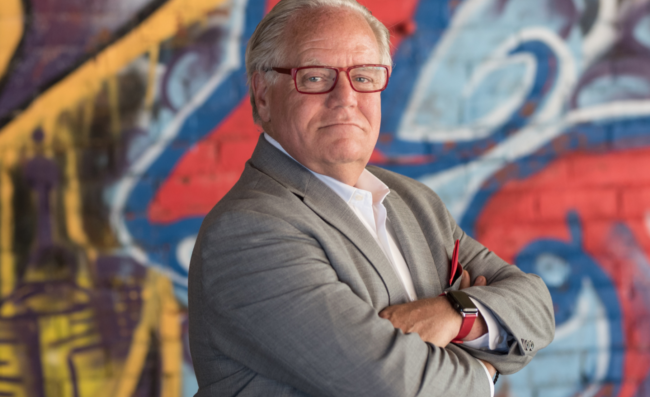
Building the Agentic Bank With Citi’s Driss Temsamani
Most banks still treat AI as a faster way to do the same work. Citibank believes the entire operating model of banking is about to change.
Recorded live at the Financial Brand Forum, Driss Temsamani, Head of Digital at Citi and author of The Agentic Bank, explains why the next phase of AI is not about chatbots or isolated use cases. It is about rebuilding how banks deploy software, organize teams, serve customers, manage operations, and create decisions at scale.
We discuss why software development costs are collapsing, why subject matter expertise becomes more valuable in an AI-driven organization, how agentic systems could reshape customer engagement, and why technologies like blockchain may become foundational to the future of financial services infrastructure.
This conversation goes well beyond automation. It looks at what banking may become once intelligence is embedded into every part of the organization.
Hosted by Jim Marous, Co-Publisher of The Financial Brand and Owner and Publisher of the Digital Banking Report.
#Banking #AI #AgenticAI #DigitalBanking #BankingTransformed #Citi #Fintech #CustomerExperience
Where to Listen
Find us in your favorite podcast app.

[Music Playing]
Jim Marous (00:11):
I want to welcome you to something we started three years ago, which is Banking Transformed Live or the Executive Leadership Series. As many of you know, some of you don't know, I do a podcast every week. In fact, I do three or two a week and try to interview those people that are making the biggest changes in the banking industry.
Jim Marous (00:31):
What was great about this idea three years ago that Jeffrey asked me to do, was trying to get the people that are really moving and shaking, moving the industry and doing really great things that many of us don't really get a good handle on because these people are doing their jobs in big financial institutions.
Jim Marous (00:50):
Our first guest today is Driss Temsamani. He is from Citi, and he wrote a book called The Agentic Bank. And it's really interesting because what he had done is really taking all of our thought patterns and putting it into what his experiences are. I don't want to talk anymore because it's really an interview, not a monologue, so please welcome Driss Temsamani.
Jim Marous (01:15):
So, in the backstage, I did notice something very quickly with Driss. He's got a great sense of humor. He's always smiling, so he's getting out a bank every while. I guess that sometimes when you're at an event like this, we're all smiling when we get away from the daily grind.
Jim Marous (01:32):
Driss, to start us off, can you tell us a little bit about your background and your role at Citi Bank?
Driss Temsamani (01:38):
So, first of all, you said I always smile, and I think it's something that happens when you come into a forum like this. You walk to a room and you see a lot of people and great content, and it's just natural. It's a natural trigger to this human connection that we have in this forum.
Driss Temsamani (01:58):
But my background, born and raised in Morocco, moved to the US in 1986 and fell in love with technology. As a matter of fact, technology for me was a way to overcome a learning disability. I think I discovered that because of technology, I could learn, I could actually read, I could type on a keyboard, and that was how I started in technology in my life.
Driss Temsamani (02:24):
When you fast forward a little bit, I realized that technology was not only just a medium to learn, but it was also a way to transform businesses. And I started working in consulting where understanding business problems and bringing technology to solve them was what I did, and that's how I started in Citi in 1994, to actually roll out the credit application program back in the days when the internet was not even a thing, and thirty years later, here I am.
Jim Marous (02:53):
As we look back 30 years, a lot has changed but especially in the last five or six years, it keeps on getting faster and faster. I've been in banking a bit longer than you and it's interesting, while things are changing so fast, there's many things that are staying the same.
Jim Marous (03:10):
One term that we've all heard quite a bit in this conference and every conference is digital transformation. But many banks have invested heavily not only in digital transformation, but even more specifically in AI. From your perspective, what have you seen in the industry as well as in Citi, what has worked and what is really challenging financial institutions right now?
Driss Temsamani (03:33):
I think we need to take a step back and we need to understand what we've gone through in these phases to your point, Jim. In the 70s and the 80s and in the 90s, it was all about electronification. So, it was all about process automation, using technology to automate processes and drive efficiency and reduce cycle time.
Driss Temsamani (03:56):
It was a head count play. It was mostly resources, how you could not only automate to gain efficiency, but potentially, how we could reduce, how we can centralize data centers, shared services, so forth and so on.
Driss Temsamani (04:10):
The internet brought a different wave to that, and what the internet allowed us to do is to reimagine business models. So, the internet came in and most of us thought about it in the sense that, what can I use this internet for to potentially go direct to consumers? What can I use the internet for to create a new business model that can disrupt some of the existing businesses?
Driss Temsamani (04:34):
And of course, with the advancements of the smartphones and e-commerce, we saw many companies that were born in this digital native era of the internet which were valued based on their data. So, data, in the middle of all that transformation of reimagining business models, data became center to the conversation about digital transformation.
Driss Temsamani (04:57):
Now, we find ourselves in the stage of AI. So, is this another way to reimagine business models or is it something different? And I think this is what many companies are still struggling with. It's a lot of AI talk, AI dominates the agenda, AI is everywhere. But we still have not come to the point where AI is part of the driving impact.
Driss Temsamani (05:24):
So, what is the scorecard against AI for one, organizational models? Basically, are we going to be structured as an organization with the same org chart with AI? Are we going to remain a human-based org chart, or are we going to have potentially agents to human ratios as part of an org chart?
Driss Temsamani (05:45):
So, there's a whole discussion around AI. How do you solve for that? Meaning, do you take advantage of the additional capacity that AI is going to create in your organization to drive efficiency or are you going to deploy it toward growth? Those are two different approaches. The other one is, what does customer service look like? What does product management look like? What does your electronic banking platform look like?
Driss Temsamani (06:11):
And this is not about headcount and organizational structure, it's about what is it that you're going to offer that potentially, one of your clients cannot create on the fly with one of the models that we have today just by feeding their context data and not having to come to your user experience, your digital experience as a platform, but just potentially just taking a feed from you as a bank or as a business.
Driss Temsamani (06:37):
So, that will change completely what we are building today as platforms, it will change completely. Would we become just potentially a data feed into some type of a context that automatically writes a dashboard, creates a dashboard, or even creates a UI? And then eventually, that UI goes away until the next use comes in for these clients that we serve.
Driss Temsamani (07:00):
So, AI, I think, is not just about reimagining our business model as we did during the internet or potentially automating processes and driving efficiencies. I think now we are facing a whole disruption that makes us rethink who we are as businesses.
Driss Temsamani (07:18):
It makes us rethink who we are as banks, as institutions, because this is not about fintechs coming in and disrupting banks, this is about potentially AI itself disrupting how we serve our clients because they will have the power, they will have the intelligence to create experiences that we serve them through our platforms just by using our data.
Driss Temsamani (07:37):
And I think this is where our industry, all of us businesses, are going to have to eventually come to some type of a scorecard that will start to measure what are we doing with AI. Not just talk about it, not just make it a use case, not just make it something that we rally the organization against, but we have to sit down and think about how are we going to measure impact, and that will drive the conversation about what are we going to use it for.
Jim Marous (08:06):
And we're hearing it quite a bit more now that you have to know your North Star before you deploy AI, before you make all these investments, because organizations right now as you mentioned earlier, are really wavering on where they want to do it. And we're seeing a whole lot of changes in the back office because financial institutions love to cut costs.
Jim Marous (08:26):
Where it gets difficult is, I think, while we talk about it, and I think everybody in the room has had at least a couple of conversations this week with other people talking about how AI is going to change the customer experience, but I think that's what it is. It's talk. We really are held back as an industry from deploying it where it can be customer felt, and we see it every day that there's misses all the time.
Jim Marous (08:50):
What are the financial institutions going to have to do to get out of their own way and really deploy the potential of being an agentic bank, being a thinking bank, being a customer engagement organization, as opposed to simply doing things behind the scene that the customer really doesn't feel.
Driss Temsamani (09:06):
In the 2000s, we used to say that banks are technology companies with a license. So, we were actually technology companies at the end of the day, but we had the banking license to take deposits and lend. And it was during the mid-2000s as we were starting to rethink this whole fintech disruption.
Driss Temsamani (09:27):
Are they friends? Are they enemies? Do we partner up? What do we do? Do they fill the last mile that banks don't reach in financial inclusion potentially? They think of their business model as a platform. We think about our business model as a balance sheet. So, during the mid-2000s and during the internet transformation, that was the discussion.
Driss Temsamani (09:45):
I think to your point, AI will actually give us a lens into one thing. Every bank gets slowed down because of their capacity to deploy software. So, software engineers and software development is one of the headwinds all banks have to grow, to expand.
Driss Temsamani (10:11):
Every time you want to deploy a new capability, the answer is, I need additional software engineers, I need to develop software, and it's going to take me six months, it's going to take me a year, so forth, so on.
Driss Temsamani (10:21):
When software costs start to go down almost to zero, and when software becomes on demand, banks stop to see that as the way to potentially grow and expand and deploy additional functionality. What that will do to a bank is it will start to look at its organizational model and resources as a way to deploy toward growth when it comes to expertise.
Driss Temsamani (10:48):
Well, the models will write software at a cheaper cost and deploy them faster, somebody needs to drive these models. The subject matter expertise becomes premium. It's not about letting go people, it's about keeping the people that have the subject matter expertise that can drive outcome from the models.
Jim Marous (11:08):
You actually mentioned in the book that we all talk about moving from data to insights, but the real money, the real value, is going from insights to decisions.
Driss Temsamani (11:19):
Absolutely. You're going to have very sophisticated models. They're going to need to be guided. Who's going to guide them? I believe that the people that are going to guide these models are the best people you have in your organization that are subject matter experts in operations, in technology, but their job needs to evolve.
Driss Temsamani (11:35):
They no longer code software and they no longer look at false positives or repair payments or do manual work in the back office. They have domain expertise and they can actually see outcomes and tell the models how to reach those outcomes without programming the database, without actually creating the logic of how to get there but they know what good looks like.
Driss Temsamani (12:00):
And I think this is where banks and institutions in general need to make these decisions about what do you do with your people, especially those that have subject matter expertise? Do you deploy them against growth? Do you use them to guide the models or do you take advantage of AI as a short-term opportunity to drive expenses down?
Driss Temsamani (12:22):
And I believe the winners are those that are going to have a much longer view to reinvent themselves into an insight organization to your point, Jim, where subject matter expertise become center to the organizational model and let the agents do the lower value activity, and let the humans tackle the higher value activity problems that usually don't get solved because we just don't have capacity, resources, and time.
Driss Temsamani (12:49):
Many of us, all of us, spend a lot of our time dealing with low value activities. And as soon as we have free time, we go tackle bigger issues. But we tend to be stressed about the low value activities that we leave behind. And we get pulled into these meetings and into steering committees, and into the inbox to answer emails.
Driss Temsamani (13:11):
And again, just imagine what we could do as companies when we have a whiteboard and enough time to just sit and think with the right people. And that's where the innovation is going to come from – not from the execution and the cost of software being high and hiring more people, but how you redesign yourself as a bank, as an institution to tackle this opportunity.
[Music Playing]
Jim Marous (13:37):
I think one thing that's really exciting, and I had a conversation with the CEO of a finance institution that's all of 400 million dollars (not 400 billion, but 400 million). And he said that using AI in the back office, in the call center, let him reduce the number of … the AI took over about two thirds of the calls from the call center.
Jim Marous (14:00):
He said I immediately reset the parameters to how we measure the call center employees, got rid of the time limits because now the lower value time is you make everybody an average of one and a half minutes per call when you got rid of the easy ones. But what he said is I empowered my call center to actually help the consumer on the tougher questions, and they immediately embraced that and got better at that.
Jim Marous (14:23):
So, what do you see in the industry as well? Obviously, when we talk about the industry, there's the haves and the have nots from a financial perspective. So, what Citi can do, what the other five, six banks can do at the top, they can do a lot more with the technology because they invested.
Jim Marous (14:37):
But I think what's really interesting is how organizations at the very lowest part of asset range can really deploy AI in a better way than any technology has ever been developed and the power of that and the impact that's going to be greater. Are you seeing that as well?
Driss Temsamani (14:53):
Yes. So, I think we should maybe leave this room today or leave this forum from Vegas thinking that … let's take the call center. The best call center is the call center that does not receive calls. The KPI is you're going to get zero calls. You can handle zero issues, you can handle zero calls. The best technology – another one, it could be that the best technology we can ever deploy is a technology no one can ever see.
Driss Temsamani (15:17):
It's an invisible technology where basically your clients don't even know that you exist as a bank. You're completely invisible inside an experience. So, imagine you start to define these visions, these strategic roadmaps, visions where you're against what a product manager job should be, what an operations person should be.
Driss Temsamani (15:37):
Maybe the call center is an insight center, is a decision management center versus a call center because calls don't exist anymore. They're not handled by humans. But to your point, I think the challenge we are going to have is … and perhaps this was the 1999, 2001, 2002 dotcom, the bricks and the clicks and all those conversations we used to have: should I have an E or I presence versus a physical presence?
Driss Temsamani (16:04):
And of course, the dotcom era showed us, and we learned that the power of the internet was to combine it, is you have to be digital and physical, is bringing both of those together not separating and spinning off a part of your company as an internet company and maintain your physical company. No, it was bringing them together.
Driss Temsamani (16:23):
Same thing with AI. It has to become embedded, and I would love to come back to this forum next year or in a couple of years and we just don't talk about AI anymore. It becomes completely embedded in everything we do.
Driss Temsamani (16:33):
So, I think the winners are going to move in that direction first, it’s going to become but what is the scorecard? How are we going to measure impact? What is this for? What does the organization look like? How we tackle call centers, operations, product management, sales. And you keep going in your organization chart and you have a vision and you move toward that.
Driss Temsamani (16:53):
And I think that's to your point, Jim, I think where we Citi are spending most of our time is basically creating this what we call assistance. So, you have an operational assistant, a product management assistant, a sales assistant, a call center assistant, a technology assistant, and what these assistants are is they move our people from manual to assisted, but eventually augmented and one day autonomous.
Driss Temsamani (17:19):
The way you move in this maturity is you go from prompting a model and just saying, “Basically, I'm working on this, give me some advice,” and taking that advice and then you manually integrating it in your work versus telling the model this is guiding the model, talking about the outcome. What does good look like? What do you want to achieve? Let the model do all the work.
Driss Temsamani (17:42):
Provide context information to the model. Come back in a couple of hours, maybe one hour or two, validate, be the human in the loop to validate the outcome, and then ask the model to move to the next step or take that work and now go execute, so that's augmented.
Driss Temsamani (17:57):
And then autonomous is where basically, I, as an employee of the bank, have five agents assigned to me. Their identity is linked to my identity. I'm completely responsible from an OCC point of view, from a regulatory lens – anything that agent does, which is assigned to me, I'm accountable.
Driss Temsamani (18:20):
They have a digital identity, I'm the human identity, and I have to monitor through a governance what these agents do. I have to have explainability. I have to see how they think, how they reason, how they execute, and then that is autonomous phase in that maturity model.
Driss Temsamani (18:36):
In that autonomous phase, to your point, the call center, that CEO, how much did he unlock from that call center? You start to think about, as a company, the way you speak to your investors, the way you present yourself to your shareholders, the way you actually talk in town halls to your employees changes completely. How do we get there?
Driss Temsamani (18:58):
Again, with intentionality, we have to make it intentional. It cannot be an accident. It has to be designed as part of a scorecard, a governance, what I call the AI work index, an AI work index, basically to sit in front of a console and know how your organization is shifting from manual to assisted to augmented to autonomous and say, “My organization has shifted 50% of the work to augmented.”
Driss Temsamani (19:27):
What does that mean? What will it deliver to your shareholders? What is your operational efficiency at that point? What is your revenue per headcount when it comes to sales as a bank? So, all of this needs to be built in and designed around the governance, the explainability. So, a lot of work.
Driss Temsamani (19:43):
So, we need people that understand this to get activated inside companies, inside banks to drive this. It's not just a use case. It's not deploying a model for your employees and let them have fun. It cannot be just that. It's much bigger than that.
Jim Marous (20:00):
Well, it's interesting because it's easy for financial institutions to authorize and to feel good about AI as it looks at augmenting and assisting employees. But when it comes to actually putting it out there in front of a consumer, my concern is financial institutions are historically very risk adverse (not risk management, but risk adverse). How do we get to the point?
Jim Marous (20:26):
You talk about it, I talk about it where an agent is going to be able to help the consumer experience to actually look ahead, proactively predict what's going to happen, make decisions or make recommendations that consumers take advantage of.
Jim Marous (20:38):
I mean, I mentioned it in the opening session we had this week that my Oura Ring gives me more insight and tells me what to do much better than my financial institution does. Now, mind you, there's a whole lot less risk here.
Jim Marous (20:52):
Do you believe that financial institutions will be able to embrace the potential and actually let go of some of that risk aversion and the ability to maybe make a bad recommendation to a customer that won't come back to bite them?
Jim Marous (21:05):
Because as consumers, we're more likely to accept this more than ever because we have mistakes made, and we understand how they're made. How do we get over that hurdle of risk aversion and actually deploy things in the marketplace as an agent on your behalf?
Driss Temsamani (21:20):
So, let me say something that usually shocks everybody when I say it, and I hope you would understand the point behind this. We operate in the internet, and so the internet is our infrastructure. And it just happened that the internet was never created to do business. People get shocked. People say, “What are you talking about?” And I say, “Yeah, so think about it.”
Driss Temsamani (21:41):
So, the internet was never, never created for us to use it for running businesses. It was created to share information. It's great for email, it's great for search, but it's horrible for banking. It's horrible to move value. Why? Number one, the internet does not have a form of money. So, we use physical money in a digital medium or a digital infrastructure.
Driss Temsamani (22:03):
So, money today moves in a physical way and the instruction about that money moves online, number one. Identity does not exist in the internet. Today, identity is stored in paper. We have to do KYC, it doesn't matter. We eventually have to take signatures, you have to have signature cards to verify, checks and payments, even if they're electronic to a certain point – that moves separate. That's another database where we store that information, and even conditions on the payment.
Driss Temsamani (22:33):
So, if I want to pay Jim, only if Jim releases the merchandise, or if I want to pay Jim on 90-day term, there's another database where I have to store that. So, payments travel separate from identity and if I want to know, did Jim get paid? When he got paid, how – all of that information, which we call a statement sits in another database.
Driss Temsamani (22:56):
We have a lot of databases all over the internet just to make it useful to do business. On the top of that, it’s very insecure because you can be in multiple places at the same time. You can be in Russia, in Europe, in Latin America, in the US and in Asia with the same name and last name. So, now I need an additional technology to multifactor you, take your biometrics just to figure out who is the real you where.
Driss Temsamani (23:19):
Because of this, there is a risk, and because of that risk, banks are the backbone of any government. If you want to destabilize any government, you destabilize their financial infrastructure. So, we banks are regulated for a reason because we maintain financial system stability.
Driss Temsamani (23:39):
So, when we move to the internet from our premise, on-premise systems to the internet, it becomes extremely risky. So, we have to have back office, and we have to have a lot of systems and technology to make it clear to the regulators and to our clients or our second regulators who trust us with their money that everything is okay.
Driss Temsamani (23:58):
So, now, imagine we have this intelligence and we have these AI agents, and we are staying on that same infrastructure, which is not meant to do business, which we need tremendous layers and stacks on the top of it to make it secure, now we're going to bring AI agents on the top of that infrastructure. So, of course not.
Driss Temsamani (24:19):
Now, that's not the end of the story. We know that the infrastructure we have today dates from the post-World War II era. We are operating on an internet that has not been upgraded since World War II.
Driss Temsamani (24:33):
Fortunately, there is a technology out there that's been around since 2008, which has been used in the dark web, which has been used for illegal movements of value but that technology is extremely good to upgrade the internet, and that technology is blockchain.
Driss Temsamani (24:51):
Why blockchain? Because blockchain allows the internet to have digital identity, you can tokenize money, all regulated, by the way. Everything I'm telling you right now is done with regulations. This is not the public chain; this is a regulated chain.
Driss Temsamani (25:05):
So, again, it has a form of money, it has a digital identity built in in the money, it has all the information of that money from the time it's minted to the time you receive it, all inside the same coin, and it has smart contracts that can be used to build conditions; release the money if the merchandise arrives or pay on these terms and those terms, conditions, if then else.
Driss Temsamani (25:28):
If you take that technology, put it on the blockchain, then you can unleash AI agents in a way where we can achieve the potential of what AI is all about for banking and businesses. And this is not an idea, it's not a vision, this is happening. This is happening as we speak. One, we're seeing regulations bringing the blockchain to the financial system. So, the GENIUS Act is an example of that.
Driss Temsamani (25:56):
GENIUS Act will allow us to tokenize fiat currency. So, we will have tokenized deposits, tokenized payments, and we will link even the private rails for stablecoins with the regulated banks.
Driss Temsamani (26:10):
So, we will have actually an interoperability between FedNow and ACH and Notch. We will have all of these rails, the banking rails in the US linked to these private rails but they'll be regulated. So, you'll go from fiat to stablecoins or potentially back. But that's just a part of the story.
Driss Temsamani (26:28):
The other one is that you have many companies without naming them right now, who are already creating the protocols led by Google, for example, where they're creating interoperable protocols for AI agents to speak to accounts, meaning wallets on a blockchain.
Driss Temsamani (26:43):
So, an agent can debit an account, credit an account based on conditions, but the beauty is we will have not only visibility and transparency, but we'll have much stronger controls than the internet itself.
Driss Temsamani (26:55):
So, I know it was a long answer, but I would like you to take away that the fact the internet will not take us there. An internet plus blockchain with an agentic AI or agentic banking is the way to go there, and we're seeing already the progress to move in that direction.
Jim Marous (27:12):
Okay, we look at agentic AI and agentic banking, who right now is the furthest ahead, either traditional, non-traditional, or non-bank completely – who feels to you, as you look at the marketplace on an ongoing basis, that is moving forward quickest to get to where the consumer actually feels what's happening, and then how do the others do that catch up?
Jim Marous (27:37):
So, who do you see right now that they're not there, nobody's there yet, but who's getting it globally even?
Driss Temsamani (27:44):
So, in this space of what I talked about in the tokenization of payments and tokenization of wallets, so basically having a wallet where you have stablecoins in the wallet and eventually, you want to credit your bank account and you do that conversion, there's a lot of progress in that space.
Driss Temsamani (28:02):
We're seeing now that these same companies who can offer you a wallet and a stablecoin that links to your bank account, and you can go back and forth based on what is the benefits you have in that stablecoin: moves faster, it's atomic, it gives you value. So, you maintain a dual fiat currency or a bank account with deposits in it and you have a wallet with tokens in it.
Driss Temsamani (28:22):
Those companies are moving in the agentic space, as I just mentioned. They're now writing protocols by which their databases on the blockchain, I call them databases, but their nodes in the blockchain are read and writable. So, agents can read and write.
Driss Temsamani (28:39):
It's very important because companies are now going to start competing, banks and even e-commerce companies they will start to compete by who first will allow an agent to come and read. Number one, read, which means you're in your whatever AI you use, you say, “I want you to shop for me,” and you give the parameters, and that agent can go to any one of the shopping websites and read from it.
Driss Temsamani (29:04):
Today, those databases are not readable by AI agents. So, the first competition is going to be which bank and which institution is going to say, “My database is agent readable.” The other one is, is it writable? Can an agent actually come and write into your database, meaning they can credit from an account or they can credit an account. That means they have to write into a ledger, into your bank ledger.
Driss Temsamani (29:28):
So, what we're seeing is these same companies who have wallets, who have already a consumer base and the wallet means they have a user interface that says you have this much money as in it's in tokens and these are your debits and credits. So, in a way, it's a banking application. These same companies now are creating agentic flows to shop on behalf of that consumer.
Driss Temsamani (29:49):
So, if that consumer wants to use their wallet with tokens in it, it doesn't matter, could be cryptocurrencies or could be stablecoins backed by bank deposits. If they want to shop and want to pay with that wallet, and that agents can actually debit that wallet, do the shopping on their behalf and feedback into the wallet which either way, it’s a banking application.
Driss Temsamani (30:07):
So, I think that's going to allow us, for number one, to see the consumer appetite on what's the transaction value in those flows. Are we moving to a higher transaction value, meaning you spend $1,000?
Driss Temsamani (30:20):
How many of us bought a TV for $1,000 in 1999 or 2002 from Amazon? None of us. We used to buy books, we used to buy music, but a certain time, we actually start spending thousands of dollars on those shopping applications, e-commerce applications, because we start to trust. We start to trust putting our credit card in that e-commerce platform and shop at a much higher transaction value. Same thing is going to happen here.
Jim Marous (30:44):
So, could it very easily be then a non-bank or a fintech bank being the farthest hit because they're already working on those transactions, they're already working – obviously, they start from a head start because they are digitally based or founded and built that way as opposed to having the technology from 50 years ago.
Jim Marous (31:04):
I mean, do you see it more that you could have an Amazon bank? Do you see that you could possibly have a Google bank or one of these organizations overseas that comes in and says, “We have figured out this way to transact.”
Jim Marous (31:18):
Because if you get that, then the transfer of information, plus getting over the hurdles of leadership stuck in the past. I mean, is that the biggest challenge right now, is the leadership issue of really seeing what the future's going to do, but then actually deploying against it as opposed to just talking about it in their annual reports?
Driss Temsamani (31:37):
It depends how you look at these companies and why I say that. Look, there's space for everyone. Let me take a step back. The part of the economy which is only cash-based, cash, purely cash, is $25 trillion in the world. $25 trillion.
Driss Temsamani (32:00):
Now, if I'm a technology company or a platform company that does what you just described, and my business model is to go after billions of people in the planet to move those flows, number one, I just want them to be a user in my platform because I give them a user experience, a digital experience.
Driss Temsamani (32:19):
Could have shopping in it, but a payment is embedded in their experience and a wallet is embedded in their experience. And that's my business model. I want to have millions of people in my platform, and then I'll offer them payments and I'll connect them. To me, they're not disrupting my business, I want them to be my client. As a matter of fact, I want them to open an account with me and to concentrate all of those flows with me as Citi.
Driss Temsamani (32:47):
I see them as not only an important client, but I see them as one of the fastest growing segments when you look at all the different industries. So, when you think about that, then we need to take a step back and say, “Okay, what is the role of a bank?” And again, even banks are all different shapes and sizes.
Driss Temsamani (33:06):
So, if a role of a bank is to have a network that gets connected to some of these players, then you're going to have a winning value proposition because you're not going to compete with them. So, you'll want them to do all of that, but you'll want them to move all their deposits to your corporate, as a corporate account.
Driss Temsamani (33:26):
You want to give them commercial cards for their T&E, for their procurement, you don't want to give them some type of an investment structure, and you want to, by the way, what is the aspiration of any business, any company, including the ones that do wallets and stablecoins and crypto, and all of that, once they are regulated? What is their aspiration? It’s to become global.
Driss Temsamani (33:44):
So, for me as a bank, I want them to grow with me. I want them to go from a small, medium-sized company to potentially a US domestic company, to potentially a company wants to go to Latin America or to Asia and around the world. So, I encourage this innovation to happen in that space, I don't see that as a threat.
Driss Temsamani (34:05):
But again, I think all banks should rethink – all banks that potentially want to get into this space, do they want to compete? Do they want to partner up, or they want to basically co-create in many ways. Some of these companies are brilliant in their technology, in the way they develop software platform experiences; they can be great co-creators with you. So, there’s a choice.
Driss Temsamani (34:31):
Again, speaking on behalf of Citi, these are some of my most important clients. I don't see them as a disruption, as a matter of fact, we partner with them. They are my clients, but at the same time, we have commercial agreements. Sometimes we call on clients together.
Driss Temsamani (34:46):
Watch this space. I believe the GENIUS Act, I believe that the way AI is evolving very, very fast, especially in some of the mid-language models that are becoming extremely efficient in software development – watch this space because by 2027, 28, I believe we're going to see new business models being born. They could be part of a co-creation, part of partnerships or potentially disruptions to our own businesses, and-
Jim Marous (35:13):
Yeah, that's where my next question going, is I get the sense that AI could usher in the greatest and fastest wave of consolidation in this industry, because it's not that the small institutions can't compete, but it's going to become more and more a game of scale, and the ability to deploy the agentic solutions in the marketplace to the consumer and even to commercial and regular consumers.
Jim Marous (35:41):
But do you personally believe that this could usher in a massive wave of consolidation? Because AI kind of, it's an efficiency game as much as anything else.
Driss Temsamani (35:50):
Yeah, to think that some of us in this room are going to develop our own AI models, I think it's hard to believe that we will have the data center power, we will have the chip power, we will have the electricity power. This is a very expensive business-
Jim Marous (36:09):
That's where partnerships come in.
Driss Temsamani (36:11):
I'm talking about developing your own AI model. So, number one is you can’t sit there and think, “I'm going to compete because I'm going to develop my own model.” No, it's not going to happen. Unless you're a government and unless you're one of these big tech companies who already are in the space. So, number one.
Driss Temsamani (36:27):
So, definitely, the first thing you got to wake up thinking is, “Okay, who do I partner up with?” And there are many out there that you have to … sometimes doing two or three of them. You're going to have to integrate with two or three AI companies. So, that's number one.
Driss Temsamani (36:39):
Now, what happens if one of these AI companies is also in financial services, to your point? So, what happens if you start to see that some of these technology companies who are also now becoming AI companies are getting into your space to payments, they're getting to taking deposits, they're getting into basically investment advice or giving investment instruments. First question would be, are they going after the same segments?
Driss Temsamani (37:07):
So, you'll have to somehow probably maneuver around this disruption by thinking, “Who am I serving?” And if you clash by which you're trying to partner up, but they're also going after the same exact customer in the same exact zip code for the same exact product, it's going to be very hard to be quite frank with you. It's going to be very hard. Then it becomes a whole different conversation. Do we join them? Do we just become one, to your point.
Jim Marous (37:32):
Well, that is my point that, do you see, again, as you look forward – is this truly going to most likely end up being a very large consolidation move to be able to be competitive? Now mind you, you said, anybody can partner. We're getting better and better at ability to do that.
Jim Marous (37:51):
But I'm seeing the reality being only certain organizations are going to have, most importantly, the trust and deployment and the innovative thought process to say, “We want to go to marketplace for this, we can go to marketplace for this, we can make an impact for this, and most importantly, the consumer and the businesses are going to trust us to go there for us.” I mean, is that a possible outcome?
Driss Temsamani (38:14):
Look, I think we're going to fall back on the most important thing a bank does or the most valuable thing a bank has, which is trust. And trust comes in two licenses. One is with your regulator, because you're part of a stability of a financial system and you cannot fail, and you're watched for any hiccup that potentially could affect that. The second one is your trust with your clients that you have built for many, many years. Those relationships, that trust is not only valuable, but it's part of the DNA of who you are.
Driss Temsamani (38:47):
And how do you maneuver this cycle? And we've done it, by the way, it's not the first time. If you have maneuvered the fintech cycle, if you have maneuvered the open banking or the open finance cycle, if you have maneuvered a lot of these, what we call disruptions, then you should have learned that something have kept you in that relationship.
Driss Temsamani (39:05):
Now, you just have to reimagine what does that means. If what you're relying on is your branches, if what you're relying on is your electronic banking platform as a differentiator, if what you're relying on is your potential unique formula for advice, potentially you're at risk. You're at risk for that consolidation.
Driss Temsamani (39:23):
But I think there's so much inefficiency in the financial system. There's so much low value and inefficiency. I mean, not just in financial services, in our life in general. I mean, every one of us, you wake up in the morning and how much of your time is spent on valuable tasks versus just tedious administrative tasks that filter down to your end consumer. Could be in healthcare, could be in education, just basically traffic, traveling, airports. There's so much out there that we could tackle with capacity and resources.
Driss Temsamani (39:55):
And in our financial services, if you're in that intersection of the only differentiation you have is your electronic banking platform, your branch, your secret formula for advice, then maybe it's time to rethink, how can I bring additional thing that make the trust that I have with my customer, plus potentially technology that I partner or I acquire or I co-create for, how can I actually sit with that client, and give them something unique that just makes delight to do business with you.
Driss Temsamani (40:27):
And I'm telling you, even today, 2026, it's not. With all the technology we have and all the disruption we've seen, it's still extremely inefficient. I don't think any of us can stand and say, “Wow, I mean, it's kind of a science fiction experience when it comes to banking.” None of us can say that. So, there's still a lot of work to do. There's still a lot of innovation, even with all the competition we have.
Driss Temsamani (40:52):
So, I'm not pessimistic about the next three years. As a matter of fact, I think with tokenization, blockchain and everything that's coming, I think that we’re all going to win. I think the pie is getting bigger, not smaller, and I think the people that will adopt and transform, the organizations are going to shift, are going to win.
Driss Temsamani (41:14):
And it cannot be about headcount reduction, expense reduction, it has to be about, again, how do we just move finally to a modern era? I'm craving this modern life that we saw as children in the magazines and in the science fiction movies. It's hard to believe it's 2026 and we still don't have it. It's not because of technology; it's because of the mindset shift that sometimes is required to maneuver through these evolutions.
Jim Marous (41:39):
Well, it's a leadership issue. We talked about this on Monday, that the reality is we've got to change the way we've done things from the back office to the front office to our mentality. We got to embrace that change.
Jim Marous (41:52):
Finally, we have institutions of all sizes here, and I'd like to end this and most of my podcast saying, what do organizations need to do Monday or maybe Friday (but we'll say next Monday) that can get them more prepared for what's coming down the path. And knowing that many of us are in the beginning of that path, what's the one thing that these leaders can take away and say, “I got to make headway on this path.”
Driss Temsamani (42:19):
Yeah, I see now that there are two different types of leaders or two types of employees or two types of managers. I'm starting to see that difference. There are those who have already embraced this AI era and that's how they live.
Driss Temsamani (42:36):
I mean, you go to their home, you go to dinner, their travel, vacation, personal life, it's already embedded in what they do. They understand it, they understand how to use it. They stop talking about it. It's just they don't search anymore. It's a prompt, it's a conversation, and they guide the outcome and they use contextual data, and they figured out what the power of this is.
Driss Temsamani (43:02):
It's pretty unique. It's almost like having extraterrestrial intelligence on planet earth. It's like finally UFOs came in and we met aliens, and they gave us this intelligence like, wow, this is incredible. That's what it is as far as I'm concerned.
Driss Temsamani (43:16):
And those people, they come to work as leaders, they come to work as employees, they come to work as managers, and they behave differently. They don't wait for HR to train them. They're not asking for permission. They're not sitting there and saying, “Well, others are doing and we're not doing.” They bring it to work, they bring it to their teams. They bring it to their thinking and they're moving faster.
Driss Temsamani (43:40):
And I think those are the leaders and the employees and the managers, they're going to stay and they're going to end up replacing others. So, it's not basically some people are going to get fired, I see it as some people are basically going to just sit there and wait for someone, and take them along versus them leading it.
Driss Temsamani (43:58):
And for leaders, it's exactly the same. If you're just basically sitting there and waiting for that HR training or for that use case to be created so that your organization or institution starts to shift, then you're not an AI leader, you're not a leader who's leading in the era of AI or an AI mindset.
Driss Temsamani (44:19):
But if you bring it to the way you think in an embedded way where you just don't mention AI at all in the conversation, but it reflects in everything you do with your teams, your organization, that to me, is if there is a wake-up call, if there's something to do on a Monday morning is to say, how much of AI is embedded in the way I, in my personal life and how much of that I bring.
[Music Playing]
Driss Temsamani (44:43):
And then of course, I'm not saying use personal AI at work, no, there has to be guidelines and it has to be institutionalized, but it's mostly of the mindset that Jim keeps talking about. That mindset is so critical. It's almost how many of us now put on our resume that we know how to use Microsoft Office.
Driss Temsamani (45:04):
How many of you used to have … I know how to use Microsoft Word and PowerPoint and Excel, and Lotus 1-2-3. We used to put it in a resume to get jobs. And so, imagine how silly is it now to talk about that same thing. How fast are you going to go to a point where you just don't say, I know how to prompt, but it's just natural to you.
Jim Marous (45:23):
Great way to end the podcast. Thank you.
Driss Temsamani (45:27):
Thank you.
Jim Marous (45:27):
Thanks for listening to Banking Transformed, the winner of three international awards for podcast excellence. If you enjoy what we're doing, we would really enjoy a positive review. Also, check out my recent articles in The Financial Brand, and the research we're doing for the Digital Banking Report.
Jim Marous (45:44):
This has been a production of Evergreen Podcasts. A special thank you to our senior producer, Leah Haslage; audio engineer, Chris Fafalios, and video producer, Will Pritts.
Recent Episodes
View AllThe SoFi Cross-Buy Engine Fuels Amazing Growth
Banking TransformedThe Best Banking Innovation Doesn't Need a Huge Budget
Banking TransformedArming Front-Line Bankers with AI Tools That Win Clients
Banking TransformedWhy Banks Miss Human Customer Moments"Most banks know far more about their customers than the customer ever feels. In this Banking Insight Video, I look at why relationship banking often feels programmed, from the quarterly business banker check-in that g
Banking TransformedYou May Also Like



Hear More From Us!
Subscribe Today and get the newest Evergreen content delivered straight to your inbox!
Advertising & Sponsorship
Interested in sponsoring or running an ad for your business on an Evergreen Podcast? Contact us to get pricing and availability.