
Banking Transformed
Hosted by top 5 banking and fintech influencer, Jim Marous, Banking Transformed highlights the challenges facing the banking industry. Featuring some of the top minds in business, this podcast explores how financial institutions can prepare for the future of banking.


Colin Walsh Shares the Status of Varo's Trailblazing Journey
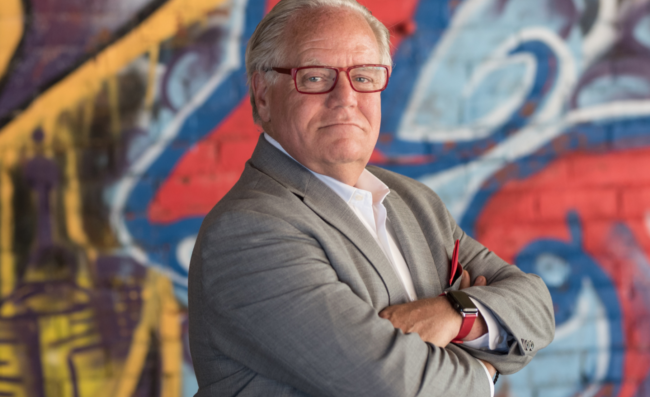
As part of the Executive Leadership Series, sponsored by Naehas and recorded live at the Financial Brand Forum, i was joined by Colin Walsh, the founder and CEO of Varo Bank – a true pioneer in the financial services industry. In 2020, Varo made history by becoming the first consumer fintech company to receive a national bank charter, transforming from an ambitious startup into America's first all-digital, nationally chartered bank.
Under Colin's leadership, Varo has revolutionized banking through innovative technology, human-centered design, and a mission to improve the financial health of millions of Americans.
We explore Varo's remarkable journey, their challenges, and how they leverage AI and product innovation to create sustainable competitive advantages in an increasingly crowded digital banking landscape.
This episode of Banking Transformed is sponsored by Naehas
Naehas provides financial institutions with a centralized platform to efficiently manage product creation, pricing strategies, compliance, and disclosures. By automating complex processes and integrating advanced governance tools, Naehas significantly reduces operational risk and accelerates execution. Trusted by 6 of the 10 largest U.S. banks, our solution supports top-tier institutions in delivering precise, compliant offers with speed and accuracy.
Where to Listen
Find us in your favorite podcast app.

Jim Marous (00:12):
Thank you for joining me. I don't know how many of you have been here for a couple sessions between yesterday and today. We have our third guest today, a friend, a person I've followed in his journey since he started it in 2017, I think it was.
Jim Marous (00:30):
Colin Walsh is the founder and CEO of Varo, a fintech organization that is the first fintech to get their banking license, we're going to talk about that, but he is also next banker. So, it's a banker that went into at that point, back in the 2017 went into the dark zone and went into be the enemy at some point. But I think in our discussion, we're going to talk a lot about the fact that it's really not that, it's the way they go about doing business.
Jim Marous (01:04):
I do want to take some time to thank Naehas for sponsoring our podcast. For all of you that want to see this in replay, we will be producing as a podcast and as a video cast on YouTube on the Banking Transformed Podcast. My shameless plug time is to say, if you haven't already listened to Banking Transformed, please do so.
Jim Marous (01:27):
And if you have an idea for a guest, somebody who's very interesting, who's doing some really great things, I would love to hear from them, I'd love to have them on the show. So, without further ado, I'd like to introduce our guests, Colin Walsh from Varo. So, we finally meet in person.
Colin Walsh (01:42):
We finally meet in person after speaking many times.
Jim Marous (01:45):
Yeah, we've had various video interviews. As I mentioned when we were in the back, one thing that's interesting is The Financial Brand and Banking Transformed, and us as individuals. I've followed you from basically the beginning. I think it was a couple weeks after you got your banking license, which was a huge accomplishment. So, before we start there, give our audience a little background on Colin Walsh and what your background is.
Colin Walsh (02:17):
Absolutely. Well, let's just say, I think it all is characterized by taking on some of the most ridiculously difficult, complex challenges that nobody else wants to do. And so, Varo was just one of those.
Colin Walsh (02:27):
I started my career at G Capital and I actually worked on creating the first industrial loan bank through GE and the first corporate card then I found myself, I did a stint at Amex, went to Wells Fargo, launched when the state laws changed in Texas, the first home equity product in the state of Texas that we took number one market share.
Colin Walsh (02:49):
Then I launched the first consumer credit business through Wells online so we went from just basically a PowerPoint to about a $2 billion business. Went to Lloyd's, was running the cards and payments businesses at Lloyd's Banking Group, and then woke up one day and found myself integrating the two largest banks in the UK because we'd bought our competitor HBOS and did the work to make sure that the bank kept the name Halifax on the high street so we didn't lose billions of dollars of deposits.
Colin Walsh (03:15):
Went back to Amex, did a bunch of really interesting things at Amex including growing small business operations in Italy, Germany, France, bringing small business to the UK and then having the Prime Minister call me and say, "Hey, you guys are doing this thing called small business Saturday in the U.S., could we do it here?" And I'm like, "Sure, why not? Let's do it here."
Colin Walsh (03:34):
And then I decided to come back to the United States, moved back to San Francisco and started Varo. It was actually 2015 when we started and we started as a traditional fintech, so we got the relationship with Bancorp and Galileo. And we were building a business but in parallel, again, all true to form was trying to take on something nobody else had done before and everybody said was crazy.
Colin Walsh (03:58):
We went through a three-and-a-half-year process to get our bank charter. And so, we were the first and still actually the only de novo consumer national bank fintech that became a national bank operating in the United States.
Colin Walsh (04:11):
But I think what really differentiated us, and we'll talk a lot more about this, is the focus of the bank because it was after having spent many years doing all these different things that I talked about in financial services, it really felt like for me personally, I wanted to have an impact and focus on advancing financial inclusion and economic opportunity and creating a digital platform that would allow us to serve a group of consumers that many traditional bankers really shied away from and I'll talk a lot more about why that is and kind of the journey that we've been on.
Colin Walsh (04:44):
But I'll also say that I'm actually in the process of transitioning. I kind of run on 10-year cycles, I think, to a very good friend of mine who actually was my co-conspirator at Lloyd's many years ago, Gavin Michael, who spent a lot of time in the industry so we brought him in about six months ago, and he's going to step into the CEO role.
Colin Walsh (05:01):
I'm going to stay very active representing the company, I'm on every board committee and all the rest of it but actually frees me up to take on an even bigger challenge on a global basis, which I'm pretty excited about, but very much in the impact space, so with that.
Jim Marous (05:16):
I'm unworthy.
Colin Walsh (05:17):
I know.
Jim Marous (05:19):
It's funny, I talk about you got to transform yourself, you have to embrace change, take risks, and you've done it from the very beginning. If you look back on your history and your personality, what drives you to the continuous innovation thing?
Jim Marous (05:35):
Because we've talked about this before, but change is not normally a human trait that's easy. You sometimes get pushed into it, sometimes maybe something happens in your life, and you move into it, but it looks like from almost the very beginning of your financial career at least, you were always building things.
Colin Walsh (05:55):
And it is sort of like in some people's DNA and you got to kind of get restless and want to think about how do you leave the world a better place and what are the things you can do while you're here in the short journey that we're all on and so, I guess I've always had that itch to kind of do that next big thing and.
Jim Marous (06:11):
Is it heredity? I mean, is it something in the family?
Colin Walsh (06:13):
Oh, yeah, for sure.
Jim Marous (06:16):
This is a handed down trait to a degree?
Colin Walsh (06:17):
Yeah. I don't think anyone is not restless in my family, so-
Jim Marous (06:23):
Okay. So, we get to the beginning of Varo and what did it take or were you right from the beginning knew what your North star was, what you wanted to make Varo be?
Colin Walsh (06:36):
Well, I think there was a few things and there was a little bit of discovery around this as well, and some of it came from getting into market and putting product out there. It was always based on trying to improve people's financial lives, help people kind of move to that next level. I think initially we thought it was going to be a younger demographic; I don't think we appreciated until we launched our product, just how big the addressable market was.
Colin Walsh (07:02):
And I would say the first thing was really through that discovery work, understanding the segment and then when we started to learn about the customer that was living paycheck to paycheck and how they were trying to just make ends meet and I'll talk more about this because it also fits into kind of how do you market and how do you communicate with your target consumer.
Colin Walsh (07:24):
And then thinking about how to design from a digital perspective because again, we're digitally native, everything we've done is with modern technology. How do you build something from the ground up, both from a product perspective as well as from a technology perspective to meet the needs of that audience.
Colin Walsh (07:41):
And I feel some of the things that we've been able to do really in a very differentiated way is bridge that divide from banking to lending and helping people through their banking relationships to be able to access credit and prove their credit and we'll talk a bit more about that.
Colin Walsh (07:55):
And also, I see Ron in the audience, he and I talked about this here in Las Vegas not too long ago, is also removing some of those frictions that cause customers intense frustration, whether it's around fees and charges, or it's friction in the onboarding flows, or the ability to access funds, particularly when you're dealing with customers who are more financially stressed.
Colin Walsh (08:18):
And so, thinking about, again, it's sort of the segmentation and discovery around who your audience is, thinking about how you build your platform, how you build your product suite and how you take away a lot of the barriers that are causing people to — that would actually invite them to experiment and explore your platform, so those are sort of some of the very early building blocks.
Colin Walsh (08:38):
And I'd say it took us several years of iteration to get that right. But we had the chance to do that as a fintech with the Bancorp for a couple of years before we were operating under the microscope of the regulators as the first de novo bank and so we got special treatment and continue to, because all eyes are on what we do.
Jim Marous (08:58):
It's interesting because the world is changing so quickly, we sometimes forget how short a period of time it was that we didn't have digital only financial institutions, we didn't have the technology to back that up. Yes, you could say, I want to serve this marketplace but you had to do it in an efficiency rate so that made sense in a traditional banking sense.
Jim Marous (09:20):
Digital banking was really not what it is today, if you start today, you'd have a whole lot more resources at your command from a standpoint of partners and all that.
Jim Marous (09:29):
At the very beginning, what were the qualifications you had to have to set up the partners to build what you were building? Because I think most organizations here are finding those partners today. They're downstairs looking for partners that are going to help them in their process. What did you set as your parameters for who you had to work with?
Colin Walsh (09:51):
Well, and you raise a really good point because we were so early in this process, not only were the partners not as evolved, the talent pool wasn't either. So, you had people that either were kind of from my background, that had spent their whole lives in traditional banking or had spent their lives at Google, Meta and they were just wired completely differently and so trying to kind of pull pieces of this together.
Colin Walsh (10:14):
And things like fraud and identity solutions, we've come light years just in the last few years from what's available today than what was available 10 years ago. So, one of the things that we looked for were partners that had a playbook, had some form of a playbook.
Colin Walsh (10:29):
So, that's why we went with Bancorp, which was really the most established of the sponsor banks at the time. And then we went with Galileo, which also kind of had a relatively turnkey ability to get these programs up and running. And keep in mind, our intent was, it was a proof of concept as we were becoming a bank.
Colin Walsh (10:46):
And I remember having this conversation with Damien and his team, and it was like, I'm like, "Oh, we're going to become a bank." And they're like, "Yeah, good luck with that." And I'm like, "No, no, we really are. We're going to become a bank." And they're like, "Yeah, good luck with that." And I said, "Okay, let's write it in our contract-
Jim Marous (10:57):
And at the same time, your regulators are also saying, “Good luck with that.”
Colin Walsh (10:59):
Yeah, no, exactly.
Jim Marous (11:00):
This will go away.
Colin Walsh (11:02):
I mean, I hope there's no one from Bancorp here in the room. But they agreed that when we became a bank, which they never thought was going to happen, we would get all the customers, all the deposits for some nominal fee or transition fee.
Colin Walsh (11:13):
And sure as hell when we became a bank, they were like, "Alright, we're going to honor that." But we did want to go with those early set of partners that understood the space, but we were all kind of learning as we went. I mean, because certainly, in terms of the chartering process, we were writing that playbook.
Jim Marous (11:30):
So, at the very beginning, you get your banker's license, you get your charter and that doesn't take the pressure away, it just makes you different, in fact, it adds pressure.
Colin Walsh (11:41):
And also thinking about it from this perspective, not only were we a de novo with a brand-new bank, with a brand-new stack because we had to build an entire fresh stack to support the banking operations. But we were operating from scale at day one because we had 2 million customers that we moved across from Bancorp. And so, we were not just a business that was just opening its doors and saying, "Okay, customers come on in." It was like we had this flood of volume that came in literally at day one.
Colin Walsh (12:08):
And so, you could imagine from a regulatory perspective, they were very all eyes to make sure that that all went smoothly and that we were able to actually effectively operate in a safe and sound manner, have the right consumer protections in place. And so, it was those early days like I've said, there was definitely a lot of eyes on kind of how things were going.
Jim Marous (12:28):
So, again, back in the day, it's just not that long ago, you ended up in a situation that you're a fintech that is totally digital, there weren't many organizations totally digital, the fintech space as far as funding was very different than it is today. There was funding money, I mean, honestly, everywhere.
Colin Walsh (12:50):
We did a $500 million round in 2021 and honestly, we started that out saying we were going to, I don't know, raise some small fraction of that and there was so much money coming at us, we said, "Okay, well let's just keep going." But it also creates a bit of a moral hazard because then we dialed up a massive growth machine.
Colin Walsh (13:09):
We started spending money like crazy and we're bringing in tons of customers, but the acquisition economics were not great. We weren't seeing the conversions because we were just out there everywhere.
Colin Walsh (13:21):
And so, we dialed that way, way back in the beginning of 2022 when the funding markets were collapsing and the reality is that we had to get much more discipline about focusing on our unit economics, which the team has done a great job at but we realized that this is not a kind of grow at all cost market.
Colin Walsh (13:38):
And you and I were talking earlier; scaling is definitely one of the key things because we've gotten an abundance of supply in this country. And so, you've got people competing at the local, the regional, the national, credit unions, you've got online banks.
Colin Walsh (13:52):
And so, being able to really be very clear on who your customer is, building products that are solving real problems for those customers and then being able to figure out how to communicate with them to be able to drive in the right customers that have the right level of engagement, it's not an easy, easy thing to do. I think other markets have different dynamics that have allowed some of the players to scale faster.
Jim Marous (14:13):
And that was obviously a challenge that, as you said, be careful of the devil because funding was easy, but you still had your bank mentality that said, unlike some of your competitors, some of the people that have been long gone, that we wouldn't even know the names of all of them.
Colin Walsh (14:29):
The graveyard is better.
Jim Marous (14:30):
That wasn't all they're living for. You and others in the marketplace internationally were trying to build a model that would generate enough revenue without that funding because that's the ultimate goal. And survival is not going to be the one who can exactly raise the most money, it's the one who's asking you to generate revenue.
Colin Walsh (14:49):
And you've got to get the unit economics right, you've got to get the acquisition economics right and then you've got to build the scale and all of those things are critically important. And when you're focused on a consumer segment, I'll describe our customer.
Colin Walsh (15:00):
I mean, they're the Uber driver, they're the person working at Walgreens or Walmart, they're the dog walker that with Zelle, they say send money to your dog walker like our customer is the dog walker.
Colin Walsh (15:14):
And so, it's like these are people that are more financially vulnerable, they're living paycheck to paycheck, they're having to make trade off decisions every day about do you buy medicine, or do you fill up your gas tank or am I going to have enough money to put food on the table for my family? I mean, these are like real world decisions when people are under extreme financial stress so trying to understand that.
Colin Walsh (15:39):
So, another aspect of this segment is that they log in constantly so they're always in the app if there's any disruption in terms of access to money, they're on the phone, they're calling, they're complaining people need money immediately. So, if you put holds on ACH transfers or RDC check deposits or debit card transactions, it drives churn with this customer audience.
Colin Walsh (16:04):
They also tend to be a little bit more susceptible to fraud and scams because they want more money. And if someone says, "I'm going to give you $500," it's like, "Oh, well click here. I'll give you my information because I need access to money," and then so you also see more disputes. So, for all the traditional bankers in the room, they're like, “These are all the reasons why we don't go near this segment.”
Colin Walsh (16:22):
And it's like but in order to do that well, you have to build a highly efficient digital platform that allows you to introduce these services at very low cost, you have to be able to track process transactions extremely quickly, you have to be able to detect fraud very quickly and have the right interventions that don't lock people out of their accounts so that you can do things like password resets or blocking suspicious IP addresses and things that allow people to continue the flow of movement of their money and then be able to provide a wide range of services.
Colin Walsh (16:57):
And this is why the bank charter is so important to us because we could diversify our revenue to still be able to offer these services, most of the banking services for free, but still have other avenues to monetize so it's not easy.
Colin Walsh (17:10):
And I think that this is something that as we've learned, getting it right though, allows you to unlock so much in terms of being able to improve financial inclusion, being able to help people sort of gain more control and agency in their lives, being able to actually make an impact and the reality is, it is not a small population of people, and it's only getting larger in this country.
Jim Marous (17:34):
You started as a deposit bank, correct?
Colin Walsh (17:36):
Yes.
Jim Marous (17:37):
And did not have credit services, initially?
Colin Walsh (17:38):
Initially. Initially.
Jim Marous (17:40):
And when you talk about the marketplace you were trying to go to, pre-COVID probably a valid goal but once you got to COVID and people had trouble even making ends meet, all of a sudden the financially vulnerable, setting a place to have a place to hold their funds was not really their biggest need.
Jim Marous (18:07):
How can I move my funds when my paycheck doesn't match my rental payment and things of that nature. How much of a challenge was that initially because the marketplace changed on you? And that's not an excuse, but it's the reality that all of a sudden, we went from a deposit marketplace to really a credit driven market.
Colin Walsh (18:25):
Sure. Yeah. Well, because people were, to your point, and they wanted access to lending solutions that were immediate, that they were going to get right away that they could and there wasn't really a lot of loyalty because they'd go to a lot of different providers. So, I'd say a few things, one is using this sort of human-centered design approach to build out a product suite that actually drove the level of engagement that we're looking for.
Colin Walsh (18:48):
So, starting people off with a free, kind of high-quality banking product that had vast money movement and other savings features for people to do small dollar savings to help build a bit of financial resilience but then building out a credit suite.
Colin Walsh (19:01):
So, starting with product to help people improve their credit and the credit builder products and then having what we call the Varo advance, which allows them to bridge between sort of paycheck to paycheck.
Colin Walsh (19:13):
And then now we have the Varo line of credit, which is up to $2,000 that helps to cover unexpected expenses. But the way we did that was not only through the customer insight but really building out using AI and machine learning tools to be able to actually make better lending decisions.
Colin Walsh (19:30):
And we have multiple self-learning models that are operating real time to assess the risk of each customer to personalize that credit journey for them, understanding what both their capacity to pay, as well as their willingness to pay based on all the transactions.
Colin Walsh (19:46):
So, we're ingesting all of this transaction data from our customers that feeds into something called extreme boost which it's a machine learning model that's often used in healthcare solutions that we've adapted for our underwriting solutions, but it's all based on transaction data and it's helping us to make very good credit decisions.
Colin Walsh (20:06):
So, we're actually growing our lending book quite quickly. It's driving the kind of retentive behaviors because customers realize that as they do more banking with us, as there's more transactions coming through the platform, we're giving them a more personalized, curated set of like, "Okay, you do these things, you're going to get access to more credit."
Colin Walsh (20:24):
And then they also were at the top of the bill stack because it's a bit of a lifeline for many of these customers, so they don't want to lose access to it, so it actually becomes a bit of a flywheel itself. But to your point, a few years ago, none of this infrastructure was in place.
Colin Walsh (20:39):
These models were not built, and it was a bit of a free for all and everybody was just trying to, it was a land grab to get customers wherever you could. But we tried to stick true to kind of the relationship-based approach, bringing them in in the banking product and then nurturing those relationships and continuing to expand the relationship over time.
Jim Marous (20:57):
What was the biggest surprise to you in this journey that you've had so far that caught you off guard just overall?
Colin Walsh (21:05):
Oh, so many, where do I start? I mean, it could be people, it could be technology, it could be getting the product set right. I would say, there's regulatory issues that you look at how, I mean, I think we made a smart decision becoming our own bank and controlling our own regulatory destiny when all the sponsor banks were getting consent orders and it was really limiting some of their activities.
Colin Walsh (21:29):
I think probably the biggest thing, the biggest learning was just how important speed is for this sort of lower to moderate income consumer and availability whether it's I think Chime did a good job at sort of capturing the early paycheck and the overdraft because they really kind of got that customer and that was so important and they also spent like $6 billion in marketing or whatever, but like that too. But I mean, they were able to sort of draw in that need set for that customer.
Colin Walsh (22:02):
But the flip side of that coin is if you want to get really good at speed, you have to be really good at fraud and knowing because you're opening up all sorts of vectors that are inviting in fraudsters. So, I think those are some of the interesting learnings as we've been growing and scaling the business over time.
Colin Walsh (22:20):
But we've taken a very different approach to not to name my competitors but somebody who spent a lot of money on market is that it wasn't a grow at all costs. It was like get those unit economics right, really build a product set that makes sense for the customer and then start scaling through a very disciplined set of testing and learning around acquisition channels, around customer engagement channels and I think the team has done a nice job on that.
Jim Marous (22:46):
So, you look at the whole fintech marketplace and you are trying to fill a gap that traditional banks weren't doing really well at, the only people that were serving that marketplace were payday loans-
Colin Walsh (22:56):
Well, people were ripping these customers off, yeah.
Jim Marous (23:01):
Could a traditional bank build a Varo within their four walls? What would be a little different, what would stand in the way you knowing traditional banks, what would stand in the way of somebody building a Varo type product within their four walls?
Colin Walsh (23:18):
Well, and I've spoken about this before and there've been a bunch of examples of these attempts that have not worked out. The traditional institutions, particularly the larger ones, are extremely siloed. So, you have, I remember my days when I ran a credit card business or I ran a home lending business or whatever, and you thought of it as your customer.
Colin Walsh (23:39):
Well, actually, that customer probably had multiple relationships with the institution but the internal lens was always around their silo, whatever they were doing and there was a lot of internal politics around that.
Colin Walsh (23:52):
And when I had mentioned at the beginning, when I launched that online consumer credit business, oh my God … were on my you know what about like all of a sudden, the branches were not getting credit for these loans. I'm like, "Well, yeah, but these are the customers. This is what they want. These are the talent they prefer."
Jim Marous (24:08):
That's what I've been saying in most financial institutions, if it's digital, it doesn't go to a branch owner and so-
Colin Walsh (24:14):
And we spent months having to come up with a double counting scheme, so that … but I mean, it was just a stupid waste of time because at the end of the day, you build things that customers want, customers will come through your door. But it's like, these are the sort — but you ask the question what are the things that prevent, it’s silos, it’s data silos, it’s politics, it;s organizational turf.
Colin Walsh (24:35):
And a friend of mine started Buddy Bank and UniCredit in Milan and he had a really good idea. And it was working, and they were kind of pulled together some of the best engineers in Italy and then somebody at the board of UniCredit says, "Why are we spending all this money? Just use our core banking system?" Well, that was a case of that.
Colin Walsh (24:55):
I mean, that basically killed the whole issue because they tried to export all this legacy tech and so all the good engineers left, and the systems weren't able to adapt to a true digital first mindset. And so, I think you see a lot of the — Finn is another example. I mean, Wells Fargo kind of quietly sunsetted their digital bank, TD had a digital bank that they pulled the plug on so many of these-
Jim Marous (25:19):
Got rid of-
Colin Walsh (25:19):
Yeah, that was Finn. That was a — now they did well because they did it as a complete de novo.
Jim Marous (25:26):
What was the difference?
Colin Walsh (25:27):
So, UK they took the lessons from the U.S., and they basically started in a market where they didn't have any of this internal friction because they didn't have any of the branches. I mean, I think in the UK, JPMorgan has an investment bank and a commercial bank, but they didn't have a retail they built it from scratch but I think they took a lot of lessons from what happened in the U.S., but they've actually done it quite well.
Jim Marous (25:49):
I always kid the fact that they also didn't have 35 floors of traditional branch bankers that were going to get in the way of it. I mean, you look back, you go back far enough to remember what was Chase's online banking.
Colin Walsh (26:07):
Yeah, that was Finn that was there. Finn was the name of that before or before that, oh, Wingspan that was, no, that was bank one. That was Jamie … oh my God, that's like, we're like older than less of people in this room. But it's like, yeah, I remember that very well when they were working on that, so yeah.
Jim Marous (26:26):
So, from your perspective, how much room is there for a digital only what I'm going to call fintech, which is, I don't know if that term is even applicable anymore, it's a banking organization. But how many of those can exist and to serve a marketplace that can take advantage of the efficiency?
Colin Walsh (26:43):
I think we will see some consolidation. I think that you'll see that digital is here to stay and it is the future. You look at not only the issues that I talked about in terms of constructing a digital platform that can move money quickly and safely and fairly and all the rest of that, but also you have this generational shift.
Colin Walsh (27:03):
I mean, you've got Gen Zs and millennials that are basically from what now 18 to 45 that are mainstream consumers and they're not wanting to deal with traditional banking solutions. I mean, they're wanting to do everything on their phone.
Colin Walsh (27:17):
They want everything to be instant. And so, you have the confluence of both the inclusion opportunities with so many people feeling a lot of financial pressure and stress alongside of the generational shifts that I think it's just a matter of time.
Colin Walsh (27:31):
So, to answer your question, I think there'll be a combination of some of the big players that are going to continue to invest and continue to evolve their digital capabilities in the market segments that they serve well. I think you'll see players, there'll be a handful of players that are going to come up to achieve a level of scale, to really have a meaningful impact on the marketplace and we kind of know who they are.
Colin Walsh (27:55):
There aren't that many left so there'll be a handful that will continue to operate on their own, building out their platforms, building out their product suites, and then you're going to see a little bit of a squeeze in the middle where I think on certainly from a consumer perspective, you've already started to see this macro trend of some of the regionals and the smaller community banks moving more towards small business and commercial and getting out of consumer, because it's just harder.
Colin Walsh (28:16):
And if you're in a 10-year contract with a legacy core provider, and you just can't move at the speed, I mean, we're in a continuous deployment mode. I mean, we're constantly shipping new features, new code, and some of these players are just not set up for that. And they don't have the engineering talent or the product talent or the design talent to sort of keep up with what consumers are wanting so they'll probably gradually shift away from the consumer segment.
Jim Marous (28:41):
If we look internationally, the most successful, most of the most successful players in the fintech digital only space have come on a very specific product like Robinhood, certainly down in South America, you have initially a credit-based organization.
Colin Walsh (29:00):
Yeah. A new bank with credit card originally.
Jim Marous (29:01):
Yeah. But also or in a country that never trusted traditional banks anyway, but in the U.S. you talk about the Gen Z and Gen Z now tends to look like a generation that's going to be different, almost be a throwback to my generation where trust is going to be a very key element, and that puts pressure on a fintech that may not have the same brand or the branch billboards stability of that.
Jim Marous (29:32):
How does a fintech work around that whole trust issue? Because even though there's good strong organizations that are being monitored the same way, I think it's still a challenge.
Colin Walsh (29:44):
I think there's a few things to think about. So, well, first of all, trust is at the heart of any banking operation. When somebody's trusting you with their money, they need to know that you're going to be there for them.
Colin Walsh (29:56):
And so, I think in the macroeconomic context that we're living in right now of just extreme uncertainty and when sometimes government policies don't necessarily align with financial inclusion objectives and things that are really important, it becomes harder to sort of say, "Okay, we're going to be here for you." But then it really boils down to you got to do what you say and your actions are going to speak a lot louder than your words.
Colin Walsh (30:21):
And so, going back to some of these first principles around making sure people have access to funds, if you can give access early to funds, if you can give people lines of credit and hold them and make sure that they're not fluctuating all the time, that you can give people the tools that they need to be able to create greater financial resilience.
Colin Walsh (30:40):
And it's like, it's been consistently day in and day out that you're doing the things that are earning that trust are really important. And then also, backing it up with resiliency. I think that they need to be able to trust we've lived through, and we wrote out when I did our initial application to become a bank, all of these stress cases.
Colin Walsh (31:01):
I mean, my God, we've lived through every one of them and more and it's like, but being able to show that you have robust infrastructure, policies, you can operate at scale, you can weather different externalities, I think is all very important and that's also our decision to become a bank showing that we're subject to intense regulatory scrutiny puts us on a different playing field in many respects versus those that may not have that same level of scrutiny basically at the end of the day.
Jim Marous (31:29):
So, we talk about the financial wellness that the people that need more financial help and sometimes it's just paying down credit. You build a definition of who you're trying to serve at the beginning of Varo, if you were to redefine or maybe not redefine who your target audience is, who's that today? What is it the consumer that's looking for that support the underserved, the people that are not being served normally by traditional financial institutions, how would that differ definition?
Colin Walsh (32:05):
I think it doesn't differ that much. I mean, these are, again, let's just talk about the TAM for a minute. And you've got 180 million people in this country right now who are living paycheck to paycheck and that spans all demographics. It expands a lot of different income brackets as well, because even people who are making six figures have indebtedness and other things that caused them some financial pressure.
Colin Walsh (32:29):
I'd say our segment is definitely more in the middle-income segment, it's not in the upper income segment. But then you also have 45 million people in this country that are considered credit invisible so they either have super thin files or they don't have a credit file. So, getting immigrants credit, and lots of immigrants, lots of young people, people that just have operated outside of the system for a very long time so there's a huge population of people there.
Colin Walsh (32:52):
You also have 22 million people in America that are dependent on government benefits just to be able to provide essential services to themselves and their families. And so, there's still a really, really large TAM of people that the services that a player like Varo can provide, can have a meaningful impact in their lives.
Colin Walsh (33:10):
And so, I think that it's important to sort of say you understand this customer, you've got real empathy, you've built product and technology solutions that are meeting their needs. And then it's really about just how do you communicate and how do you make sure you're out there as efficiently as possible getting that message to these customers.
Jim Marous (33:29):
What's the biggest challenge that Varo has today?
Colin Walsh (33:33):
I would say probably just how do we scale faster in an efficient manner, so in other words, we're doing TV again now and it's actually working really well. I mean, we've got these free banking ads, we've got this sturdy old banker and this guy saying, "Hey, I got Varo. I don't need you." And they're actually really resonating with customers. So, TV though, we've built beautiful award-winning spots that were costing us a lot of money that weren't bringing in quite the return.
Jim Marous (34:02):
Those awards don't-
Colin Walsh (34:03):
Yeah, they don't matter at the end of the day, exactly. So, I'd say that, so that's working. We're continuing to test and learn around a number of paid acquisition channels. We've made a lot of investment in SEO, we've built things like borrow to anyone, which has some network effects, we've got referrals but continuously optimizing that mix of channels in the most efficient way that you don't suddenly see your cost of acquisition skyrocketing.
Colin Walsh (34:28):
And it's not just bringing customers to the front door, I could bring in if you want it, I could get you a million customers next month but I need to get a million customers that are going to actually become primary banking customers.
Colin Walsh (34:38):
And that's the trick is like trying to make sure that you've tuned everything from the acquisition to the early onboarding to the lifecycle management to the ongoing retention to make sure that the whole system is designed to bring in those customers and nurture those relationships. And I wouldn't call it a challenge, I'd call it more of an opportunity, but it's been a lot of testing and learning and refining, but I feel like the team is in a good place.
Jim Marous (35:03):
It seems like it's the dynamics are that, as you said, I can bring them in but I have to make it so they have balances, so they make it a primary, I can get the customers and you have to at the same time manage your costs, so you’re working against yourself at times.
Colin Walsh (35:19):
Yeah, for sure.
Colin Walsh (35:22):
From that standpoint, from the standpoint of expanding the relationships, you now have the product set, you obviously have the tech stack, how do you leverage AI to benefit those objectives that have been dogging most fintech firms from the beginning around average balances the activity, you can't live on the activity alone. So, how do you make that all work?
Colin Walsh (35:48):
I mean, we're using AI in many aspects of the business, but I think two that I will speak specifically too, and I started to talk a little bit about this earlier is on the lending side and using these models and we're on our third generation cashflow underwriting model that's all AI based, that is allowing us to find ways to provide access, quite frankly, to customers that the banks wouldn't go near.
Colin Walsh (36:13):
And I actually was talking to someone the other day that says, "Oh, with all the craziness with tariffs, I'm going to issue an edict to the banks to close their credit books or do this." And I'm like, "Well, don't do that." I mean, like, "Tell them to get the right tools in place," but I think that there's definitely it requires a lot of skill and continuous development of these models to be able to effectively lend into these segments of customers that the banks would not touch.
Colin Walsh (36:42):
And so, I think that is one area that we've been quite effective at, and we continue to refine and continue to build these models and test and learn. The other area is fraud, quite frankly. Like building tools to make sure that you block the bad actors at the front door as much as you possibly can. And that has been difficult in a world of deep fakes and the fraudsters are investing in A as much as the good actors are so it's lucrative business for them.
Colin Walsh (37:12):
But we were finding that we were seeing driver's license and passports, that sort of traditional ID mechanisms that were very realistic, but they were not real. And so, then having to think about more broadly kind of some of the tooling around digital identity and what do you need to do to verify identity at the front door, but then also the inevitability that customers are going to get in that bad actors are going to compromise customer's accounts.
Colin Walsh (37:39):
And so, building tools to be able to identify anomalous behaviors, whether it's in the transaction flow or it's in the login flow, and being able to actually create these interventions using very sophisticated tools so that you don't actually lock customers out of their accounts.
Colin Walsh (37:56):
Because I mean, initially when we were first getting these big fraud attacks, the first thing is just, "Oh, we'll just suspend the account." But then if a customer's locked out of their account, the first thing they do is they come-
Jim Marous (38:07):
That doesn't work very well, does it?
Colin Walsh (38:08):
Yeah. No, exactly. Especially people who need access to their money. So, building technology and tools to allow you to, again, going back to the point around speed, but also being able to manage fraud has been an area where I think we've built some real competitive advantage.
Jim Marous (38:22):
Could a traditional financial institution build a platform to serve the market that Varo has tried to serve?
[Music Playing]
Colin Walsh (38:31):
Well, their CEO and their board and their management team would all have to want to do that, and you'd have to have a lot of conviction. And I don't know that there's many institutions out there that have the kind of conviction that we do around trying to get this right.
Jim Marous (38:45):
Because it's a different model. I mean, again-
Colin Walsh (38:47):
It's a very different model and it's also-
Jim Marous (38:478:
I'm sorry, you're an unlikely soul that you're a traditional banker that's continually evolved. Traditional bankers don't do that naturally in most cases or they're very small organizations that have the leaders that do that.
Colin Walsh (39:01):
And you also have to have a real ethos around impact. I mean, what I'm working on now, I'm trying to help the UN agencies figure out how to integrate their identity payment and analytic systems to be able to distribute billions of trillions of dollars of humanitarian aid across the world but it's super complex not many people want to do that.
Colin Walsh (39:22):
Not many people want to go near that sort of stuff, but you need to kind of have to believe that you can have that impact. And I think the United States is a great example of where there's so much instability because there's so much financial hardship and if you can kind of chip away at that but again you got to have people who really, really want to do that.
Jim Marous (39:43):
You have to have a north star for what you believe in and that's one thing that stayed pretty consistent through your career.
Colin Walsh (39:48):
Yeah, for sure.
Jim Marous (39:49):
Colin, I thank you very much.
Jim Marous (39:51):
Thank you, Jim.
Colin Walsh (39:52):
We go back a few years.
Colin Walsh (39:54):
Yes, we do. Well, let's continue to have these discussions also.
Jim Marous (39:57):
Thank you very much.
Colin Walsh (39:58):
So, we'll be very much on the forefront with Varo, so alright, thanks.
Jim Marous (40:00):
Thanks.
Recent Episodes
View AllThe SoFi Cross-Buy Engine Fuels Amazing Growth
Banking TransformedThe Best Banking Innovation Doesn't Need a Huge Budget
Banking TransformedArming Front-Line Bankers with AI Tools That Win Clients
Banking TransformedWhy Banks Miss Human Customer Moments"Most banks know far more about their customers than the customer ever feels. In this Banking Insight Video, I look at why relationship banking often feels programmed, from the quarterly business banker check-in that g
Banking TransformedYou May Also Like



Hear More From Us!
Subscribe Today and get the newest Evergreen content delivered straight to your inbox!
Advertising & Sponsorship
Interested in sponsoring or running an ad for your business on an Evergreen Podcast? Contact us to get pricing and availability.