
Banking Transformed
Hosted by top 5 banking and fintech influencer, Jim Marous, Banking Transformed highlights the challenges facing the banking industry. Featuring some of the top minds in business, this podcast explores how financial institutions can prepare for the future of banking.


Core Modernization, AI, and the Future of Banking
Every bank today is trying to appear modern. But you can’t operate a digital institution with a core system that hasn’t been updated since the iPhone was introduced.
After years of adding new features on top of outdated infrastructure, the limitations become clear: legacy cores slow innovation, hinder personalization, and make it nearly impossible to compete in an AI-driven world.
Modernization is no longer just a tech project. It’s a strategic choice for whether a bank can stay competitive. Banks adopting unified, modern architectures aren’t doing it for appearances; they’re doing it because it provides the speed, flexibility, and resilience that legacy systems cannot match.
The good news? Modernizing no longer requires years of planning and implementation. Progressive methods are giving banks safer, lower-risk options to move forward.
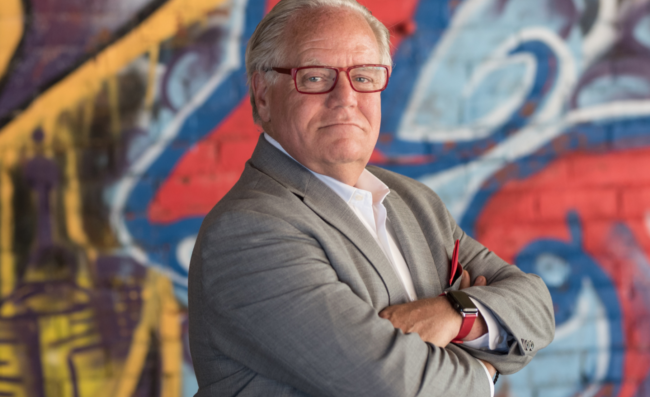
Today on the Banking Transformed Podcast, I’m joined by Sai Rangachari, Chief Product Officer at Temenos, to explore what modern core banking really entails, why it’s important now, and how banks can update without disrupting their operations.
Where to Listen
Find us in your favorite podcast app.

Jim Marous (00:12):
Every bank today is trying to appear modern, but you can't operate a digital institution with a core system that hasn't been updated since before the iPhone was introduced.
Jim Marous (00:23):
After years of adding new features on top of outdated infrastructure, the limitations become clear; legacy cores slow innovation, they hinder personalization, and they make it nearly impossible to compete in an AI driven world. In fact, the train has left the station and catching up gets harder every day.
Jim Marous (00:46):
Modernization is no longer a tech project, it's a strategic choice for whether a bank will stay competitive, it's a leadership choice as to whether or not they're willing to move away from status quo. Banks adopting a unified, modern architecture aren't doing it for appearances, they're not doing it for press releases — they're doing it because it provides the speed, flexibility, and most important, the resilience that legacy systems just can't match.
Jim Marous (01:17):
The good news, modernizing is no longer requiring years of planning and implementation. Progressive methods are giving banks safer, lower risk options that allow them to move forward with speed and scale.
Jim Marous (01:32):
Today, I'm joined by Sai Rangachari, Chief Product Officer at Temenos to explore what modern core banking really entails, why it's important now, and how financial institutions can update without disrupting their entire organization.
Jim Marous (01:49):
So, Sai, it's really good to have you on the show and to understand a little bit more about what Temenos is bringing to the marketplace, but more importantly, the challenges we're trying to solve in a marketplace that really needs to move faster to catch up.
Jim Marous (02:05):
So, before we start, can you introduce yourself to our audience and talk a little bit about your background?
Sai Rangachari (02:10):
Absolutely. Jim, first of all, thank you for having me, great to be here. I appreciate the kind intro as well.
Sai Rangachari (02:16):
I'm Sai Rangachari, Chief Product Officer at Temenos, and my background in a nutshell is about half my career was spent with startups and fintechs.
Sai Rangachari (02:27):
So, I started my career at OptionsXpress, which was acquired by Schwab later. I did a couple of startups. Even right before Temenos, I did a lending focused startup. So, we were building private label credit cards for SMBs, and then the other half of my career has been really large banks.
Sai Rangachari (02:46):
So, I spent a few years at CapitalOne when they were moving to the cloud, and then I led payments APIs and open banking and digital channels for JPMorgan's corporate and investment banking. So, it's been like fintechs on one side, it's been banks on the other side, super thrilled to be here at Temenos now.
Jim Marous (03:09):
So, it's interesting, you've worked with some very big organizations and obviously, some smaller ones, but being on that side of the desk, you realize that many financial institutions almost all rely on a fragmented system that's been accumulated over decades. What tangible differences does modern core create in the day-to-day banking operations and in the long-term innovation?
Sai Rangachari (03:35):
It's a really profound question, especially one that is super relevant in the AI era, which is what we're embarking on. So, as we think about first of all, it's inevitable. If you've been in operations for 20, 30, 40 years, you have stitched different systems together from different vendors to make magic happen for your customers.
Sai Rangachari (03:58):
So, it's almost inevitable to say like, "Oh, I have a hodgepodge of systems, I have multiple vendors, I have different cores, I have different softwares." But really, the big need of the hour for me is agility for organizations. I call it the organizational agility. Like in the AI era, the one truth, even in the beginning of the year, how we are talking about AI has completely changed how we are talking about AI today. Such is the pace of innovation.
Sai Rangachari (04:27):
So, we can talk about some of the innovations, and I'm sure we will in the podcast, but the one truth is the pace of change has increased quite a bit, and people that have a cost basis advantage, meaning they can run their operations for cheaper, pivot quickly and intentionally, decide whether they want to take an advantage of an innovation or not, that is going to be a big advantage.
Sai Rangachari (04:52):
So, when you talk about what enables those things, first of all, you don't want disablers and core banking for the longest time has been seen as, oh my God, it's the inner sanctum, we cannot live without it. It's extremely important, but it also inhibits growth. It's very legacy, it's hard to deal with. If you continue to stay in that mantra, you will find the world passing you by with innovations, and you can only hope that they're not going to make you relevant. So, if you want to stay relevant and you want to be intentional about which innovation you’re taking advantage of, you need agility.
Sai Rangachari (05:29):
I think one of the big levers is modernization of your core banking systems, and frankly, any system that is impeding today. So, I think it's super relevant topic, not doing anything is no longer an option in my view.
Jim Marous (05:46):
It's interesting, you unpacked a whole lot in your comments there, and some of them really hit hard in my mind because you talked about what organizations are talking about. And my biggest problem right now is that many institutions, be it having to do with core, having to do with AI, having to do with what customers they want to serve, there's a whole lot more talk than there actually is action.
Jim Marous (06:12):
And it's getting frustrating because from my perspective, we can talk all we want, but until we start to deploy, we're really putting ourselves at a real disadvantage in the marketplace. It's interesting because almost every organization is right now looking at how do we change our core? Do we do parts at a time? Do we work at a point where we're layering? Do we use a single core platform? How do we address this?
Jim Marous (06:40):
And it's interesting because Temenos has only one core platform, but that does not mean it's limiting to their customer base. How does this contribute to the modernization journey? What advantage does it provide that Temenos pretty much has one core platform they work from, from a strategic standpoint? And what does progressive modernization look like when a bank wants to work step-by-step rather than through a big, bank transformation?
Sai Rangachari (07:11):
Jim, first of all, you don't get it wrong with your question, it's like we're jumping right into the heart of the conversation. Listen, I did a brief stint at a big core banking vendor in the US as well as part of my career journey.
Sai Rangachari (07:28):
Having one core, it's crystal clear clarity for customers that the company is investing in that core. Like when you have multiple cores, what are you investing, and how are you investing? How do you plan to take all of your innovations?
Sai Rangachari (07:44):
Let's say you want to build agentic frameworks, are you doing it for all your cores or are you doing just for your latest core? That ambiguity does not exist with Temenos because there's one core. So, all the investments that we make go into that system, and customers, when they're ready can take advantage of that system. So, there's no ambiguity in terms of like are you investing in the software that I bought from you from a one core perspective.
Sai Rangachari (08:12):
Then there's the interesting point about progressive modernization. So, the way we think about our core, so one core has some disadvantages because it can become pretty large. So, Temenos is an example, operates in 150 markets.
Sai Rangachari (08:26):
Over the last 15 years, pretty much all the code that we've been writing in has been in Java, it's modern. More modern than some of the older ones but it doesn't change the fact that you have a large core that is trying to service retail, corporate wealth and other things.
Sai Rangachari (08:47):
So, in Temenos, we really have a three-pronged strategy. One is, we call it the best of suite. So, you come in and you say, "Hey, I want a payment hub, I want my pricing and product manager; I want my account deposits ledger system," you can get it. We call it the best of suite, meaning you can assemble that package and you can go install it.
Sai Rangachari (09:07):
The other end of the spectrum, you can come in and this goes to the heart of progressive modernization. You can come in and say, "Hey, real time payments is all the rage, help me renovate my payments only." So, we can actually deploy a standalone payment hub for you. We call it the best of breed solution.
Sai Rangachari (09:24):
So, you can have a digital renovation, payment renovation, a lending, a retail accounts and deposits renovations. And then in between what we call an internal effort modularity or composability, we're beginning to decompose the big core into logical components.
Sai Rangachari (09:45):
So, we have customers right now that came to us, they say, "Hey, we have a large core, we don't want to go through a four-year transformation, but we want to add commercial lending to our business. Can you help us? And we don't want to install this large monolith." So, we modularize that solution and give it to them.
Sai Rangachari (10:03):
So, it's a small footprint, it can scale autonomously, it runs and it's highly performant. So, the idea is whether you want to buy a package or whether you want to buy a pointed solution, or a module, or a composable module, we want to meet the customers what they intend to do.
Sai Rangachari (10:24):
The reason is progressive modernization. We realize not everyone, because we can't be on the soapbox saying, this is not the time to not act, you have to act. But then the minute you act and say, "Hey, I don't want to bite the entire apple, I just want to take a little piece, I want to renovate it," we want to be there to support.
Sai Rangachari (10:43):
So, progressive modernization has become a true rallying cry for many banks to say, "Let's move. Let's move logically and drive the right outcomes." So, if you want to go invest in stablecoins, you may most likely have to revamp your payment hub. We want to help you do that. Does that make sense?
Jim Marous (11:03):
Yeah. Well, it totally makes sense, and it also answers the question saying even though you can convert an entire core as part of a single project, that really, you have the best of both worlds, and you can help a financial institution really identify their North Star. In other words, you can help them define where they want to go eventually while getting them there in a modular way, in a way that's palatable, and in a way where they can actually work with speed.
Jim Marous (11:34):
So, you said that the modernization extends beyond the core and as you said, digital payments and other areas. Where do most financial institutions begin today and what's defining that starting point? I have an idea in my head where it may be, but where are most institutions saying, "I can't wait for this part of it."
Sai Rangachari (11:55):
So, it depends on their motivations, and it sort of changes from market to market. We've seen a few different flavors, and I know we're talking about core banking, but thinking about full stack banking for a second.
Sai Rangachari (12:12):
A lot of customers, they know a lot of banks, they have to do something about digital, and a lot of them are investing continually with us, with our competitors but they've started the digital renovations. But the other side of it where we're seeing a growing trend is a lot of commercial banking opportunities are popping up.
Sai Rangachari (12:32):
So, there's tier one saying, I don't want to use the same core I used for my retail, I want a sidecar because I want to test out a commercial lending for a commercial real estate wealth drop as an example. So, we see a lot of those.
Sai Rangachari (12:45):
So, we have a lending and deposit solution composable module for our commercial banks that they can take advantage of. We also see a lot of pricing and product manager on the retail side being the starting points.
Sai Rangachari (12:59):
So, a lot of times customers want to come in and say, "I'm fine with my ledgering system but I'm unable to launch new products. If I wanted to launch an overdraft protection product that takes me two years, how can I accelerate it? Can I renovate that module?"
Sai Rangachari (13:14):
So, we have the Temenos product manager that we can install for the customers that can be their starting point on their renovation. We typically see lending, pricing, product manager, and then on the larger picture payments and digital.
Sai Rangachari (13:34):
We also see a different trend. Some of the tier ones are coming to us and saying, "Hey, can I have a simplified ledger? I want to build my own surround systems, can I use a high TPS, transaction per second? I wanted in the thousands, can I have a simplified ledger that is super performant, cloud native, I want to deploy in multi regions, can you help us do this?"
Sai Rangachari (13:58):
So, it sort of varies, but if you are in retail, we see a lot of pricing and product manager being the starting points. If you're venturing into commercial, that's been a big starting point, and if you're thinking about your overarching banking stack, digital and payments, absolutely. Like real time payments, stablecoins, that's evoked so much interest that's triggered banks to start with payment hub quite a bit.
Jim Marous (14:25):
My own mind was going towards payments. But it's interesting because when you mentioned commercial, that's the progression of where they went from retail to small business and all of a sudden, they realized the least digital part of their organizations are on the commercial side, you're helping them in that area.
Jim Marous (14:40):
Which all of a sudden, I'm going like the light bulb went on. I go, oh, that makes a whole lot of sense from my perspective as well.
Jim Marous (14:46):
Core transformations are often viewed as risky. Which engineering, governance or organizational strategies effectively lower the execution risk? What are you seeing organizations do to maybe just settle their own minds from the perspective of when they're taking on this large project? It doesn't matter how you compose it or decompose it, the reality is, it's a large challenge. How do you see organizations lowering their execution risk?
Sai Rangachari (15:21):
So, listen, the basics still are the basics, and I would start off with the basics, which is strong leadership, strong conviction from the bank. So, it's not just a tech project, it is a business supported transformation, and then really focusing on what are the outcomes you want on the transformation. Because you have to be willing to invest in org design as well. Because one of the mistakes of the past (I don't see it as much anymore) was I want that same functionality I used to have, but in the new system.
Jim Marous (16:01):
I'm sorry, I call it turning paper to PDFs — that's not digital.
Sai Rangachari (16:07):
Right. And it's like they're so excited about all the new innovations, but when it comes time to implementation, they go back to the like — I want all of this plus everything I used to have sort of mindset.
Sai Rangachari (16:19):
I'll use an example of Commerce Bank, which is one of our clients in the US, and they've been fantastic in their approach to it. The outcome-based mindset of like, "Hey, this is milestone one. This is what we want to get out of you, and this is what business gets out of us."
Sai Rangachari (16:37):
It's pretty clear, their CIO is extremely visionary and strong. I think that mitigates quite a bit of downstream pain points because everyone knows what the outcome the bank is trying to do in terms of it. That also allows you to really make the progress more atomic, more agile in terms of delivery as well.
Sai Rangachari (17:03):
So, you can have the first PI, the program increment delivering X, the second PI, delivering Y, but you're not waiting two years to find out whether you've delivered value. Like you are continually streaming value from Temenos to Commerce and IT to their business customers, and eventually, the bank to their end customers sort of thing. So, having real focus on what you want on the outcome really, really helps. I know it sounds basics, but basics still apply in this world.
Jim Marous (17:36):
But it's missed a lot. And that's one of the things when you're setting up an agreement with a core provider, whoever it is; one of the things those organizations should bring to your organization, you have to have ears open for it, is the ability to set that North Star, to be able to know that from their perspective, from Temenos's perspective, the challenge is that you know what can go wrong in a relationship very quickly.
Jim Marous (18:04):
And so, you really ask the tough questions to say, number one, what is your goal and what you're going to achieve? Number two, how are we going to measure if we're getting there? Because nothing's worse than thinking you got there, but you never knew exactly what the mission was or what the North Star was.
Sai Rangachari (18:21):
Sorry. If I can quickly add, then comes the other parts of it. We want to make sure that teams act as one. And we realize we're a vendor, the bank is the bank, but you hit up on a great point. But once you have a shared outcome and purpose, then it becomes like how are we delivering that outcome together? So, the partnership mindset is extremely critical.
Sai Rangachari (18:49):
Jim, you must know from your experience, core banking is just hard. No matter what I say today and what you say today, it is a very complicated project. There's years of tribal knowledge buried in a lot of the processes. Not everything is clearly documented. So, the partnership mindset is extremely creaky and of course, you want to partner with someone who's done transformations, and who's had successful transformations as well.
Sai Rangachari (19:19):
We can talk about the tools as we talk about AI and a few other things, but to me, these are the basic ingredients. And if you set this up, then I think you're setting yourself to be agile so you can solve any challenges that comes along the way, and there are plenty of challenges. No matter what I say, no matter who says anything about core banking, every one of these projects has challenges.
Jim Marous (19:44):
So, from your perspective, because you're getting in front of clients on a regular basis, either as part of the sales process or implementation process; what distinguishes those organizations that effectively modernize their core from those that stall, maybe pull back, or maybe don't reach their goals? And you may have answered in the previous answer, but I'd like to double down on that because I think one of the things we forget about is what can mess it up?
Sai Rangachari (20:14):
So, I mean, lots of things can mess it up. What I have seen really strong successful leaders who've accomplished have in common are a couple of things. One is they understand their business. They're not CIOs that are buried in their office just focused on technology sort of thing, they actually can speak their business.
Sai Rangachari (20:38):
They know that their growth plans are X, Y, and Z because that gives them the sense of urgency that you need in these projects. That you are not trying to do this for vanity. You're not doing transformation for transformation's sake. You're doing transformation to drive growth, to lower your cost basis, improve your margins, whatever it is. They really, really understand it.
Sai Rangachari (20:59):
Two is, they understand there is twists and turns and set up the right accountability and partnership mechanisms. And we believe in the same things. Like who owns it? What are the outcomes? So, there's no ambiguity in the teams in terms of how they need to solve as we come into frictions.
Sai Rangachari (21:22):
So, they set up the structure so well, now the next question becomes what are the tools you can bring to the table to start advancing? And I'm happy to talk about some of those things, but setting up this foundation, like I've seen the leaders that do this successfully, this sets them apart quite a bit.
Jim Marous (21:42):
You know what, I poke it almost in every podcast I do right now, is that no matter how much we talk about the technology, it's not the technology as much as the leadership. It's not the technology as much as what the leadership is going to do with it from a deployment basis.
Jim Marous (22:01):
Because at the end of the day, if the organization is going to buy into it fully, they're not going to get the benefits fully. In fact, you're more likely, as we talked about a couple questions ago, to have a situation where the organization simply puts lipstick on a pig. There's no two ways about it.
Sai Rangachari (22:19):
And it's so funny you said that because I said that in an event last week, and it happened to be in Europe. I don't think it landed-
Jim Marous (22:27):
And they don't know that-
Sai Rangachari (22:27):
As well as it did.
Jim Marous (22:29):
It's funny you say that. I had the same situation; it's not a well-known term with everybody. Yeah, exactly right. So yeah, we can't get into any discussion having to do with transformation in general, let alone core transformation, core modernization without mentioning AI.
Jim Marous (22:48):
Do you see AI in banking as authentic transformation or is it simply innovation theater? There's another term that's not known throughout the whole industry, but what real use cases are you noticing today that shows you that this is all part of a bigger hole?
Sai Rangachari (23:08):
So, we are a hundred percent believers in the camp of AI is going to disrupt, transform banking forever. The reason I say this is, so today, I'll talk about where we're investing and then we'll use a couple of client examples in there as well.
Sai Rangachari (23:26):
There is a lot of innovation theater, there's a lot of articles around how AI projects never make it to production, but they don't talk about how some of those organizations cannot get any project to production, forget AI.
Sai Rangachari (23:40):
So, there's been hundreds of projects that banks have done — and I'm not naming anyone, but there's hundreds of thousands of projects that banks have done that have never reached production, none of them have gotten the bad press that their AI projects have gotten to so-
Jim Marous (23:54):
Pilots at scale but never see the light of day.
Sai Rangachari (23:57):
Right. So, there are three specific areas where we see short-term opportunities for AI and even bigger opportunities in the long term. The first one where we are investing quite a bit is we believe all of our products should have conversational UX. So, think about them as co-pilots for our products.
Sai Rangachari (24:22):
And we just launched our first … I talked about the Temenos product manager in the context of renovation, but one of the issues as we co-designed this with the customer was it took them multiple months to go launch a product because they have to go get the data, do the analysis, there's dependency on the SQL to get the data, maybe Excel to do the analysis, and then get the insight and then they have to understand regulations, launch a product. So, take something like overdraft protection.
Sai Rangachari (24:53):
So, you have to go get which customers would be affected or would benefit, go design the product, figure out the regulations, go launch it, back test it, roll it out. These things happen with the current UX. You have to go download the report, you have to write SQL, you have to do so many different activities, there's so many dependencies.
Sai Rangachari (25:14):
What if you just had a chat interface where you can go in and say, "Hey, I want to go look at my customers who had overdrafts in the last two years." And suddenly, you get a nice pie graph that's like here are your customers, and then maybe you want to delve into the demographics.
Sai Rangachari (25:29):
So, we believe conversational UX should be part of every product so customers don't have to go learn how to use our products, simply go and ask the question. And by the way, that's the way we're dealing with perplexity and ChatGPT and Claude these days. You go simply ask the question, and it gets you the response. You give it as much context as you need.
Sai Rangachari (25:52):
The second area for us we're investing heavily in is autonomous agents. So, we're looking at discrete functions in banking and we're trying to create agents that can go passive mode so it can listen only, or have a human in the loop mode, and then eventually when the trust is there, it can go fully autonomous.
Sai Rangachari (26:13):
So, I'll give you an example. We had launched our first autonomous agent for the financial crime mitigation product. So, in financial crime mitigation, one of the things that happens, Jim sends the money to Sai, let's say one of our names resembles another name on the watch list, it gets flagged as a transaction.
Sai Rangachari (26:31):
And now, a bunch of bots, rules and humans have to go look at it and unblock it, but there's a lot of false positives in these flag transactions. So, we actually built an agent that is looking at all the data, metadata, watch list, your past decisions, your current decisions, and it is giving you a recommendation, is that a false positive or not?
Sai Rangachari (26:56):
So, we're reducing false positives. We rolled this out, we have a top tier one bank in the Europe using it in production. So, this is live in production. They're seeing upwards of 30% reduction in false positives, with zero humans involved, and they do hundreds of thousands of transactions.
Jim Marous (27:14):
That solved a whole lot of problems.
Sai Rangachari (27:17):
So, they told us they were able to redirect somewhere from 15 to 25 people towards other high value projects because they no longer have to deal with false positives. But they didn't get there day one. So, they rolled it out, they had a listen only mode, they looked at the data, it's learned, we made some tweaks, then they had a human in the loop mode, which is, "Hey Jim, this is not a false positive." But Jim would still have to say, "Okay."
Sai Rangachari (27:44):
And then once they've gotten the confidence and it has 99% plus accuracy compared to what they were doing before, now they've turned it on in the autonomous mode. So, we think there are more autonomous opportunities. Think about daily reconciliation, regulatory reporting, and the other things.
Sai Rangachari (28:02):
The third one is what we call the lifecycle investments. Temenos products (and we hear this feedback from our customers), they love the product once they go live, but they always ask us, "How can I install this faster and cheaper? How can I run this cheaper? How can I upgrade this easier?" So, that's exactly where we're leveraging AI.
Sai Rangachari (28:25):
So, I'll give you a case study on upgrade. So, there's a lot of what we call L one, L two, L three code. So, L one is our core code, L three is the custom code that we might write for a bank or the bank might write themselves.
Sai Rangachari (28:38):
One of the big issues when you go to upgrade is all these custom codes, because if you are on the 2020 version of our software and you're upgrading to the 2025 version, the APIs might have changed, the custom code has to get rewritten.
Sai Rangachari (28:56):
So, we're actually leveraging AI to analyze all your custom code, we do a version compare between what you've installed versus what you will be installing, and it is doing an assessment on which code can port over, which code needs to be rewritten, and which code is no longer needed because it's already built in the new version of the software.
Sai Rangachari (29:17):
So, all those human work involved, the days and weeks and months’ worth of work involved are going to be gone as we launch this product, but those are the three buckets; conversational UX, autonomous agents, and then how do we make, install, run, upgrade, operate faster and easier and cheaper for our customers.
Jim Marous (29:35):
It's interesting, you've referenced it in a couple of the answers that you've given, is that is it a big change when you work with a system like yours to actually be co-creating with your clients? Because it used to be, and mind you, I'm going way back, but even in the last five years, I know there's a lot of people in the marketplace, a lot of vendors in the marketplace that they were further enough ahead of the game that the clients were pretty much taking what you delivered.
Jim Marous (30:05):
But it sounds like most of your relationships now, you're co-creating to get the innovation that you're not only evolving yourself as a firm, but you're using your clients to push that needle even further because everyone's testing different things. But as you learn and you move on, everybody benefits from that in that higher tide. Is this something that's relatively new in the industry?
Sai Rangachari (30:31):
I hope this becomes the norm. Jim, we started the conversation with organizational agility. So, there's a couple of things we strongly believe in and we've put this in place over the last year. One is we use a safe, agile method. So, every quarter, we have a chance to reprioritize our roadmap if we need to. We don't do it every quarter, but we have that flexibility.
Sai Rangachari (30:56):
So, the teams operate on a PI basis, a program increment, it runs for one quarter, it has three to four sprints inside of it. They release it and we're able to early release to a customer to test it quickly, and then we're able to look at the feedback and then act on it on the next iteration.
Sai Rangachari (31:16):
So, being agile is extremely important, but equally important is not building in a silo. So, especially things like AI, there's so much innovation theater, there's so much hype. The thing that we wanted to do, and I'll give you a very tangible example.
Sai Rangachari (31:29):
So, we worked with BIL, which is in Europe, a very large bank, Banque Internationale Luxembourg. And we were building our conversational UX, we call it the Temenos copilot for product managers, the product manager product.
Sai Rangachari (31:49):
We had an idea, we were going to go build it, but we went and did a design thinking workshop and saying like, "Hey, how do you guys actually use this product?" The personas we thought were going to use our product were not the personas that I thought the product manager would create.
Sai Rangachari (32:07):
But the product manager has a team of data analysts and a whole bunch of other people. So, it became very apparent the problem they were trying to solve and how they were trying to solve was not how we were thinking about it. So, we actually instituted a formal program called Design Partner Program. We also built our innovation hub in Orlando.
Sai Rangachari (32:27):
So, we routinely started inviting clients as we build new products or if there are problems that our clients are passionate to solve, essentially, we get into a room, it can last from one day to five days, depending on the commitment the bank is willing to make and the size of the problem.
Sai Rangachari (32:47):
And we're able to come out with much clearer outcomes, which we then go and validate with a few other clients as well. Just so when we go build it because ultimately, what's our goal? We want to build things that create value for our customers so why not just start with it?
Jim Marous (33:02):
It's interesting also, there's a lot of aha moments in our conversation that's really are exciting because what we're talking about here is, there were days not too long ago when the ability to share clients' names of who you're working with and what you're working on would be considered confidential.
Jim Marous (33:25):
The reality is the way you're working with clients, the way clients are working with you is a highly personalized development scale that really makes it so that you can talk all you want about X, Y, or Z organization knowing that Z organization or X organization or B organization is going to develop maybe the same type of tools, but in a completely different way.
Jim Marous (33:52):
So, the reality is every one of these relationships becomes highly personalized in the way they're developing, what their North Star is, what they want to sound and feel like. It's exciting because it really makes it so that the differentiation in banking could be palatable in the near future as opposed to simply what I talked about in a recent video, I just produced, different shades of blue or green. It's going to be exciting. Are you seeing that as well?
Sai Rangachari (34:23):
Yes. I think we're beginning to see it and I think we'll see a lot more of this with digital. Because one of the things that's really quietly happening in digital and we'll be ready to talk about this in the next month or so, is the cost of building digital experiences is going to go down drastically. And I don't mean that as the dollar spent, but the time it takes. So, digging on one example, Jim. So, we've been talking about hyper personalization of digital for a long, long time but you and I log into bank A, we don't get the same experience.
Jim Marous (35:00):
I'm sorry. We talked about personalized relationships 50 years ago in banking, just a different view of it, yeah.
Sai Rangachari (35:08):
And it's the same thing. The hyper-personalization and digital is exactly the same thing, but you and I log into the bank, you and I might have completely different banking needs, but we get the same experience. But one of the reasons for it is (not the only reason) the lipstick on the pig comment you made because they haven't fundamentally changed the operations behind. They put a shiny front end on top of it.
Sai Rangachari (35:31):
Or the other thing is, it is expensive to build an experience for you, a different experience for me and operate, but the cost of that can actually start coming down because now, you can go build a digital experience in days and weeks instead of weeks and months or quarters, and so on and so forth.
Sai Rangachari (35:51):
So, we're going to start seeing some of those things show up in banking which means people can get really creative about how to differentiate. Not just the high level, are you a credit union member, you get X versus banking Y, or if you're a business bank, then you get some extra benefits. I think we're going to start seeing more differentiation.
Sai Rangachari (36:14):
I don't think that's the case at the moment, but we are seeing a lot of that develop. Over the next three years, we had this conversation three years from now, I think we both will see enough differentiation in the market.
Jim Marous (36:26):
And it's going to be interesting because as I see it, the potential of what can happen will be more based on an institution's risk tolerance from the standpoint of are they willing to make those decisions that may not be perfect but are accepted by the customer, either financial institution as a customer, commercial client as a customer, small business as a customer, or consumer as a customer.
Jim Marous (36:52):
In other words, are you going to be willing to use the power of core and AI and information and data to such degree that you can make very personalized offers without the fear that it may not be a perfect offer because the consumer's already accepting that. It's just can you rethink the risk tolerance within your organization to do so?
Jim Marous (37:15):
Another interesting thing you reference is the financial/time cost of implementation. Your firm has always been known as a core provider to big firms, to the big banks; are you seeing that smaller and smaller organizations are now tapping into your skill sets and being able to apply them because now they can do so in a way that is palatable from a financial perspective?
Sai Rangachari (37:41):
A hundred percent. And just to kind of give you some context, we operate in 150 markets, so our pricing has to be adaptive to each of the markets. The bank in Vietnam is not willing to pay the same amount of money as the bank of the US as an example, and we've got a pretty large share in Vietnam as well.
Sai Rangachari (38:03):
But I’ll go back to our strategy, when I talk about the best of suite versus the best of breed, the banks that typically end up buying our suite, which is our package multiple like products bundled together are mostly the tier threes and large share of our client base fall under that bucket actually.
Sai Rangachari (38:22):
They love the fact that they have one throat to choke, which is another equivalent of a lipstick in the big comment there. But they love the fact that there's one single vendor that can bring all of these things together.
Sai Rangachari (38:34):
The larger banks typically are more interested on the best of breed side because they're comfortable dealing with multiple vendors already. So, it's not atypical for a tier one bank in the US to go in and say, "Hey, I'm going to get payments from a different vendor, I'm going to get digital from a different vendor. I'm going to get core banking from a different vendor."
Sai Rangachari (38:54):
They've got the muscle and the people and the processes to deal with it. That's what our best of breed strategy came in, where we want to go and offer a standalone solution for a problem. So, to answer your question in a nutshell, absolutely, the smaller banks which is the lion's share of our client base, they do enjoy the pricing and pricing power of the package. They would love one single vendor who can bring in core banking payments, digital altogether.
Jim Marous (39:28):
Is there any major trend you're seeing that has surprised you recently? Something that you just go, "I didn't really see this coming, but maybe I did as I look back."
Sai Rangachari (39:38):
Ther is not like a technology trend (not to sound arrogant) — but I try to keep up with all of these things. I think stablecoins timing kind of surprised me. And 2019, blockchain, cryptos, they were all the talk, they thought they were going to replace US dollar, all kinds of possibilities and then it kind of died off a little bit.
Sai Rangachari (40:02):
The mainstream cryptos were still fine, then we had a meme coin period. But now, this whole stablecoin and tokenized deposits, I didn't expect it was going to be 2025 that it made a resurgence, but I knew that was the big appeal of blockchain for me as well.
Sai Rangachari (40:20):
The other surprising thing is I think I'm surprised at how many banks have started embracing AI. They're still cautious, they're still worried about the data classification and data access, they're still worried about hallucinations and the other things. But listen, everyone's got the AI hype and every product that you get sold today has some AI in it. So, there is an AI kind of overload, but people are not afraid of AI.
Sai Rangachari (40:54):
I think one of the things that I have picked up on; majority of the banks we talk to are asking how to embrace AI responsibly rather than cautious or cynicism. I think that's frankly surprised me, but I'm happy about it.
Jim Marous (41:11):
That's interesting because how do you see (and maybe you just touched upon it) AI being implemented compared to other recent innovations like cloud, mobile and API? What's been fundamentally different? And maybe it's the speed of acceptance.
Sai Rangachari (41:29):
It's the speed of acceptance, but Jim, the one fascinating thing of AI, leaving out the superpowers of AI and everything is, it's probably one of the first technologies where you can use the technology to use the technology better.
Sai Rangachari (41:45):
Meaning you can actually use AI to upgrade your core that can be AI powered core, versus in the cloud world, you couldn't use cloud to get to cloud, you had to get to cloud which means you have to do the hard wires. You couldn't use mobile to get to mobile, you had to go build a mobile app to get to mobile. But I think blockchain was the same thing too. You had to have a blockchain team, it's not like it helped you get there, but AI actually can help you get there, and that's the fundamental difference.
Sai Rangachari (42:22):
Because we have the same question from our customers, we're saying, "Hey, we've got conversational interface in our new version, we've got autonomous agents in our new version, the next question is, how do I get to your new version?" That's all great, but I want to get to your new version, and that's why we invested in AI to do upgrades easier, so we can analyze your customized code to get there.
Sai Rangachari (42:46):
So, AI is very unique in that sense, and of course, the pace of change. I keep up with one tool and through that tool I keep up with the progress of AI. But if you didn't do it, it would be pretty overwhelming. That's such as the pace of AI.
Jim Marous (43:05):
It's interesting you also mentioned stablecoin. I find stablecoin and the way that financial institutions are looking at this as being totally unique based on the history I've seen in the past, which is right now resilience is defined not as much by risk and fraud, which is where the definition actually originated in banking at least, but really in being prepared for the unknown without really knowing what direction it's going to be.
Jim Marous (43:32):
I think organizations, what I've seen is organizations of all sizes are preparing for stablecoin without knowing how it's going to play out or when it's going to play out. I don't remember the industry maybe a little bit with instant payments, with instant overall, the whole dynamic of that, but they weren't even moving forward that fast.
Jim Marous (43:57):
But now with stablecoin, I don't know of many organizations that don't have that on their target list to be prepared for without knowing how it's going to play out, which is exciting because it really does redefine resilience in the perspective of modernization and being future-ready.
Jim Marous (44:18):
When you look forward … let's put it differently. Let's say you're a CEO of a mid-size financial institution that wants to start a modernization journey; knowing what you know, what's the first step you're going to take?
Sai Rangachari (44:36):
So, I think the first step I would take, assuming I know the outcome. SO, if I was a CEO for a bank, I know what I want to do. Like I'm dealing with some issue that I want to solve for, whether it's growth, whether it's expansion to a new market, whether it's altering the cost structure and improving margins, I would take that outcome, and I would look at I'm a big fan of this whole speed of light management philosophy, the Jensen Huang, Nvidia advocates or pushes in his teams. Once you see how fast one can go in your business, it's really hard to unsee it.
Sai Rangachari (45:16):
It's the same way, I would start visualizing what is going to stop me from getting there. And I would start focusing on those systems that is going to be an impediment for you to get there, and I would get started on how do I remove that impediment, AKA modernize.
Sai Rangachari (45:34):
But as I build confidence, let's say I start with module one and I start doing it, whether it's my product manager pricing or payments — once I get enough confidence, one of Temenos's motivations is how can we move the conversation of like, "Oh my God, core banking is important, but we have to tread carefully," to, "Yes, core banking is important and we tread carefully.” How can it enable innovation is the challenge that we are looking at.
Sai Rangachari (46:08):
When banking as a service was all there is like five years back and it's still there and I'm a big believer in embedded finance and distribution of banking through other distribution opportunities, core banking was not an enabler. There were companies that popped up that added onto banks that actually did the distribution of the banking as a service for the most part.
Sai Rangachari (46:34):
And there's all kinds of troubles those companies got into, we won't go into it, but can core banking be an enabler? So, taking a technology like MCP (model context protocol) so rather than have APIs that are rigid, could you have an MCP server that an LLM could access so some other third party can easily integrate into your platform?
Sai Rangachari (46:58):
Now, you still get to decide who that third party is and what access they should have, but once you've made those decisions, can you just make the integration easier? So, those are the challenges Temenos are looking for, but going back to your question, I would really look at what is my growth goal or what is my goal and what are the impediments and I would start progressively transforming that.
Jim Marous (47:20):
Every time you said what are the impediments? I get a smile on my face because I go, without being rude, I'm going to tell that CEO. And by the way, look in the mirror because you may be the biggest impediment. The success you've had over the years, the things that have gone so right, the reality is you can get a false sense of confidence and have a challenge to changing some of the things that you see every day around you that have not been changed for 30, 40 years.
Jim Marous (47:48):
The people you see that have to change their line of thinking, everything else that goes around with that, and it's cultural, but maybe do one of those 360 degree views of yourself with your direct reports. Those people that are further down the line that maybe implement this thing on a day-to-day basis, and say, "Guys, what are we maybe getting wrong here?" Because it's going to be the biggest hurdle.
Jim Marous (48:12):
It's interesting too, we've had a number of podcasts, we've been very fortunate. We had a number of podcasts where we're talking about core modernization, modernization, the innovation side-
Sai Rangachari (48:21):
I've been a regular listener, yep.
Jim Marous (48:23):
And it's make sure if you're listening to this, that you pick up on some of those other ones because no matter who's the person I'm interviewing, you're going to get a tidbit that says, "Boy, if I'm going to do this, this is what I have to look at."
Jim Marous (48:36):
We did an interview at The Financial Brand Forum last year with somebody from Zions Bank who went through probably the longest process I have ever seen. But she has great insights on things she learned in the process, way she had to transform the organization, things of this nature.
Jim Marous (48:54):
Whoever the provider is, and then do the interview with your providers in such a way that makes it so that you actually can ask the right questions to get to the right solution provider that's going to partner with you because the collaboration is what it's all about. You're going to be moving away from something as you move towards something in many cases, and it's going to be a big differentiators to who your organization is going to be going forward.
Jim Marous (49:20):
Sai, I am so happy you're on the show today. I really appreciate your insights. You brought some new perspectives that we haven't discussed before, some new viewpoints and your whole integration of how AI plays into this whole model is very exciting and very important. I'm hoping we can dig deeper into that going forward.
Sai Rangachari (49:41):
Jim, first of all, thank you for having me once again, and two, I'm glad to be here. I may have added some value to your listeners. That would be awesome.
Jim Marous (49:50):
Let's put it this way, there's at least one listener I can tell right now that you've added value to. And I often talk about the fact that I don't know everything, but I know some people that do, and it's really good to get continuously taught by those who know this stuff a whole lot better than I ever did or ever will. So, thank you for your time today.
Sai Rangachari (50:08):
I love it. If I can quickly add one thing to end, the thing is it made a really, really good point on impediment. I really wish every CEO, regardless of the industry, they have a way to measure their organizational agility. Make a simple decision and see how long it takes to get implemented in your organization.
[Music Playing]
Sai Rangachari (50:31):
You've got to have that baseline, and when you are talking to vendors, probe on partnership because there will be twists and turns no matter who sells you what. So, listen, thank you so much for giving me some air time and I really enjoyed it as well.
Jim Marous (50:48):
It’s interesting, I'll add one last thing because we're adding things as we go along. I did a video on what SpaceX could teach banking about innovation, and one of the key insights they show is they make sure that anybody they bring on will speed up the process because at the end of the day, any transformation that takes place will be driven by speed based on the slowest provider.
Jim Marous (51:11):
In other words, you're only going to go as fast as your slowest provider, and if you partner with your firm, one thing you have to be aware of, you may have to ask some of the other partners, you better speed up your game because I can't be held back. You can't give in to the slowest, you have to move to the fastest. So, again, thank you again. We could go on for hours. Thanks very much.
Sai Rangachari (51:34):
Thank you so much, Jim.
Jim Marous (51:37):
Thanks for listening to Banking Transformed, the winner of three international awards for podcast excellence. If you enjoy what we're doing, we would really enjoy a positive review. Also, check out my recent articles in The Financial Brand and the research we're doing for the Digital Banking Report.
Jim Marous (51:53):
This has been a production of Evergreen Podcasts. A special thank you to our senior producer, Leah Haslage; audio engineer, Chris Fafalios, and video producer, Will Pritts.
Recent Episodes
View AllThe SoFi Cross-Buy Engine Fuels Amazing Growth
Banking TransformedThe Best Banking Innovation Doesn't Need a Huge Budget
Banking TransformedArming Front-Line Bankers with AI Tools That Win Clients
Banking TransformedWhy Banks Miss Human Customer Moments"Most banks know far more about their customers than the customer ever feels. In this Banking Insight Video, I look at why relationship banking often feels programmed, from the quarterly business banker check-in that g
Banking TransformedYou May Also Like



Hear More From Us!
Subscribe Today and get the newest Evergreen content delivered straight to your inbox!
Advertising & Sponsorship
Interested in sponsoring or running an ad for your business on an Evergreen Podcast? Contact us to get pricing and availability.