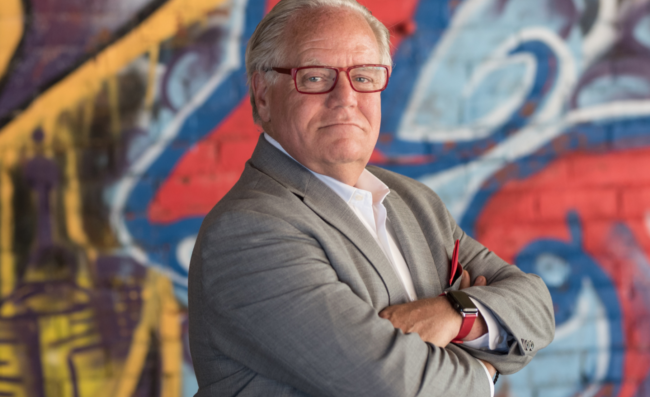
Hosted by top 5 banking and fintech influencer, Jim Marous, Banking Transformed highlights the challenges facing the banking industry. Featuring some of the top minds in business, this podcast explores how financial institutions can prepare for the future of banking.
About 25% of Americans can’t get a credit card from a major bank, and more than half are one or two missed paychecks from a credit crisis. Yet most financial institutions still design their products for prime borrowers and pretend the rest of the market doesn’t exist.
In this episode of Banking Transformed, I sit down with Steve Min, Chief Credit Officer at Credit One Bank, who has built a business around the customers most banks would rather turn away. We talk about why two-thirds of consumers don’t understand the basics of how their credit score is calculated, why the stigma around imperfect credit keeps people from getting help, and what it actually takes to rebuild a credit profile
Steve explains how Credit One approaches risk differently, why its Credit Wreckers program teaches people what not to do with their credit, and how building financial momentum can help borrowers qualify for better products over time. If your institution claims to serve the underserved, this conversation will challenge whether you’re actually doing it.
Resources: CreditWreckers.com ForWhatsAhead.com
This episode of Banking Transformed is sponsored by Credit One Bank
Credit One Bank is a financial services company and one of the fastest-growing credit card issuers in the U.S. Founded in 1984 and headquartered in Las Vegas, Credit One Bank offers a full spectrum of credit card products including cash back and points-based cards as well as high-yield certificate of deposit and savings accounts. Credit One Bank is also an official partner of the Las Vegas Raiders and the Official Credit Card of NASCAR, the Vegas Golden Knights and Best Friends Animal Society. Learn more at CreditOneBank.com, in our Newsroom or on social media (@CreditOneBank) on Facebook, Instagram, YouTube, and LinkedIn.
This is a call out to every financial institution. I'm tired of hearing everybody talking about how they're going to serve or are serving the underserved and the unserved financial marketplace. The reality is you're not doing it.
Jim Marous (00:26):
It's one thing to offer products, it's even more important to offer solutions that are accessible, show empathy, and don't make it look like you're just in it for yourself.
Jim Marous (00:38):
So, my guest today on the podcast is Steve Min from Credit One Bank, he's the Chief Credit Officer there. But this isn't your first rodeo. You've been at a lot of different financial institutions many times in the credit area. How did your career path really prepare you for what you're doing today at Credit One Bank?
Steve Min (00:55):
We are here to serve the broad market. Our customer base tends to not always have perfect credit the way some of the larger banks want you to have perfect credit when they're applying for one of their credit products.
Steve Min (01:07):
And our goal is to teach our customers how to continuously improve their credit profile so that they can have access to a broader spectrum of credit products.
Jim Marous (01:18):
It’s interesting because your whole business model is serving those that have an imperfect credit score. And I don't know if I know anybody in my life that at some point, didn't have that imperfect credit score. And part of that whole process is understanding why that happens.
Jim Marous (01:38):
Your organization spends a lot of time and money making sure you educate your consumers to be better consumers. Can you talk a little bit about how you build education and make it more empowering for the consumer?
Steve Min (01:51):
Sure. We've recently launched our Credit Wreckers program. It's a great and simple way for customers to understand what not to do. It's easy to say, “Do this, do that.” But it's even easier to understand, “Hey, I shouldn't do this.” When you touch a hot stove, you know not to touch it again. And we want to tell people what are the things they don't want to do.
Steve Min (02:14):
It's actually very simple. You break it down into thirds. The first third is make your payments on time, don't miss payments. The second third is don't use all the credit that you have available. If you have $1,000 credit line, it doesn’t mean you need to spend $1,000. Don't max out.
Steve Min (02:32):
And the last third is really making sure you have the breadth and the length of history on your credit profile. Making sure that you have different types of credit, making sure that you don't necessarily go out and cancel your oldest credit card or your oldest credit account, because that could negatively impact your credit score as well.
Steve Min (02:49):
You don't need to go out and cancel things just for the sake of canceling things because you've paid them off. In fact, I recently had one of my credit cards canceled because I didn't use it for over a year, and then I found out I didn't use it.
Steve Min (03:03):
And then I got an alert on my credit record saying, “Hey, your credit score has gone down because your average age of your credit accounts went down because one of them got closed.” So, it's important to make sure you watch your credit. And we want to make sure that we provide the tools that people need so they can understand how things like a credit score are really developed.
Jim Marous (03:29):
I don't know of anybody who hasn't at one point in their adult life been in some tough straits. My own situation, I've talked to the team here, it was way back in time. But the bottom line is that when I was getting out of college, I got my first credit card, it was with the financial institution I worked with.
Jim Marous (03:47):
And I realized I could not make monthly payments, and it would take me about four years to pay off that credit card and still live my life. That commonality of this hits everybody at different times. How does Credit One Bank address the fact that almost everybody is probably going to be in this situation somewhere along the line?
Steve Min (04:09):
Jim, I had a similar situation in college where I got my first credit card, and I didn't know any of the credit facts (the credit in thirds, as we like to say). And the first thing I did when I got that credit card, I went out and I bought the biggest stereo I could afford on that credit card. It (to your point) took me years to pay off that stereo because I didn't know better.
Jim Marous (04:33):
It’s interesting too, because Credit One Bank really gives so many answers to unanswered questions or to unasked questions. Not just for your customers, but for those people like my son, when he was going to buy an engagement ring and wanted to know, “Geez, is this going to put my credit rating in worse shape or in better shape?”
Jim Marous (04:53):
He had good discipline about paying it off very quickly, and he was looking for the reward points. But that discipline sometimes falls apart for various things that when you look at the future proofing, you're not aware of what's going to be in the future.
Jim Marous (05:07):
So, it's very interesting how your education, your ability to continually reach out in very open … it's not hard to find your lessons that you can actually help people prepare for what they may not know is going to happen.
Jim Marous (05:23):
One thing I like about Credit One Bank is you also educate consumers on how to improve and rebuild their credit score, what they need to do. And you mentioned about the rolling off of a credit line you had that you go, “Geez, I just saw my credit score go down, but it wasn't because I did anything wrong, it's because a credit line rolled off.”
Jim Marous (05:43):
How do you provide that to the consumer? I think when I talk about the empathy the organization shows, you're not in it to say the more we can get this person in trouble, the better off we're going to be. And there are organizations that do that.
Jim Marous (05:56):
We talk about the business lines that you could go to a payday lender, and you got off of a tough situation. But I think your focus on providing ways to improve their credit line is something special. Is that a mission of the organization overall?
Steve Min (06:13):
Absolutely. Making sure that our customers understand what they need to do to improve their credit profile so that they have access to a broader spectrum of financial products, really empowering them so that they have the right financial momentum to continue to improve their lifestyles.
Steve Min (06:32):
You can't necessarily do a lot of things without having very basic credit, like a credit card. Try to go out and rent a hotel room or buy an airline ticket, or any of these things that you and I take for granted.
Steve Min (06:46):
Join a gym, for something as simple as that, you need to have a credit card to be able to do those things. We want to make sure that we provide access to those credit cards and provide the information that our customers need to continuously improve their credit profiles.
Jim Marous (07:03):
So, interestingly, we talk about the financial momentum, we talk about changing that curve. When we drive, we have to change directions. It's not immediate change, but you want to build on what you've already established.
Jim Marous (07:16):
You're really trying to change the momentum of a consumer's credit history so that they can feel empowered, they get confidence, it impacts their family, it impacts their employment. That's everything, the way a person carries themselves. How do you make that happen? How do you help them keep that momentum going when it's going in the right direction?
Steve Min (07:38):
Our goal is not just to help people manage their credit, it's really to help them gain financial momentum. And that financial momentum is incredibly empowering for our customer base. It allows them to do a lot of things that they couldn't do in the past. And we just want to make sure that people have that right financial momentum so that they can continue to improve their lifestyles.
Jim Marous (08:01):
We were recently on a panel where we were talking about future-proofing: future-proofing credit, future-proofing financial services engagement. And Jennifer Hudson was the moderator, was just quite nice by that standpoint. But when you talk about future-proofing, how do you see future-proofing from a credit criteria?
Steve Min (08:23):
I think part of that is making sure people have the understanding and knowledge necessary for advancing their financial objectives. As we went out and have done surveys, we've seen about two-thirds of customers don't necessarily understand the basics of credit and how their credit profile is built.
Steve Min (08:46):
Larger banks, typically, are focused on one or two types of scores. I think everyone understands a credit bureau score and that a credit bureau score is a single numerical way for banks to identify what is someone's credit profile.
Steve Min (09:05):
We want to teach people how to improve that single score that they have so that they have access to a broader spectrum of products and really have the right financial momentum that they need to continuously improve their credit score.
Steve Min (09:22):
Our goal is for every one of our customers to have a better credit score. If you continuously improve your credit profile, you'll continuously have access to better and broader product sets. Things like auto loans, mortgages, things you may not necessarily qualify for now or may qualify for with a relatively high price.
Steve Min (09:43):
We want to make sure that our customer set, everyone really, has access to the broadest and best spectrum of credit products that are out there. And the only way to really do that is to understand what your credit profile looks like, understand how to improve it, and make sure that we give people the tools to improve that.
Jim Marous (10:07):
We understand that we can't determine what tomorrow's going to bring. And we want to get people out of the fear factor of “Geez, I hope this doesn't happen tomorrow.” And when you talk about future-proofing for what's ahead, it really means taking some of that risk out of the equation.
Jim Marous (10:36):
Making it so that you're not living on needles. Because we know it impacts relationships, it impacts the way a person works. It impacts the circle of friends they have, and what a person can do. You're not living life fully until you get to the point where you're not fearful of what's ahead.
Jim Marous (10:43):
You want to tell people “Don't live on the edge, don't take it up to the limit because something's going to come up.” As you mentioned, you end up at a hotel, or you're trying to rent a car, and you need to have that set aside.
Jim Marous (10:53):
And if you don't have the credit availability, you're stuck at the exit line at the rental car place or at the front desk of a hotel. How do you work with consumers, your customers, in helping them understand that? I mean, there's so many different levels of financial education and empowerment. How do you help them?
Steve Min (11:14):
I think it's a multifaceted approach. We obviously work a lot on education. We've recently launched our Credit Wreckers program that focuses on what not to do with your credit, but we also provide them the tools with our mobile app and our other products where they can get alerts. They can automatically make payments. They can set up alerts so that they know what's happening on their account at any specific time.
Steve Min (11:40):
So, we want to make sure that customers have as much information as they can about where their credit profile is. It's not just providing a credit score, because everyone does that, but we want to provide the education necessary so that people can improve their credit score.
Steve Min (11:56):
And basically, we allow them to watch it and watch it improve as they continuously push to improve their credit profiles. They have that financial momentum to really get that broad spectrum of products at a great price.
Jim Marous (12:11):
Can you explain a little bit about why your portfolio has grown and the referral business has grown? Is it because right now, more people are under stress? Or is it because you're actually doing business differently?
Steve Min (12:25):
Well, I think it's a little bit of each. We are in a volatile economic environment, there are a lot of people who continuously have stress in their lives who are building or rebuilding their credit profiles. But we've actively gone out and tried to expand our reach as well. So, we've gone out to populations that in the past, we hadn't necessarily gone out to.
Steve Min (12:47):
We've created a broader spectrum of credit products. Everything from what I'll call a relatively new to credit program, to programs that provide high incentives back to their customers for travel and for accelerated rewards points.
Steve Min (13:03):
I'd say it's probably half and half or a third and two-thirds. And the fact that yeah, people are challenged recently. And we've also gone out and tried to improve our reach to the broader population.
Jim Marous (13:19):
What I'm impressed with is the solution innovation you have, goes beyond simply new products, rewards products, your co-branded program with American Express and other things you do. You have almost every category of card covered for those people who may not have even thought they'd have access to that.
Steve Min (13:39):
We do have a spectrum of products. In fact, if you look at our X5 product, which is our cashback product, or our Wander product, which is our travel accelerator product. So, you get 10x rewards on travel. Those are the only products available with those types of incentives back to the customers for people who have less than perfect credit.
Steve Min (14:00):
If you go out there and you have less than perfect credit and you go out to a large issuer, you may not necessarily be approved for their top-end product that provides that kind of incentive back to you. And we want to make sure that we provide the best product that we can to those people who have less than perfect credit.
Jim Marous (14:26):
Steve, it's interesting, beyond just the numbers on the credit report, there's a stigma that people feel, and they feel like they're alone, that it's only happened to them, or them and somebody who they know, and they've been concerned about them.
Jim Marous (14:42):
How do you get over that stigma? Is it something that the reality is that more people than not are really fond of this credit disparity?
Steve Min (14:54):
You talk about not numbers, but I'm going to throw some numbers at you anyway. It shouldn't be a stigma because there's a huge proportion of the population. About a quarter of the population has what I'll call credit where they may not be able to get credit from a larger institution.
Steve Min (15:13):
And we want to make sure that credit is accessible to all. That is a big part of what we as a business do and want to make sure that people don't feel stigmatized. There's no stigma associated with having less than perfect credit. A large proportion of our population has less than perfect credit.
Jim Marous (15:33):
Well, it's interesting, it's not just 30% of those. Over 50% could not make a payment if they lost two paychecks. We don't save as a consumer group. And I think that we sometimes underestimate what the impact can be, and we only find out once it all starts falling apart.
Jim Marous (15:54):
And as you said, it's not a stigma except for the fact that you're in a difficult situation, but more than you know, are in that situation already. Obviously the payment space is the most dynamic in financial institutions right now. We’ve never seen so much change happen so fast. New products, new services, all types of debt.
Jim Marous (16:15):
What do you see in the future from your own perspective? You’ve been in the business for a while. You’ve seen a lot of change in the last couple of years. What do you see down the road and how will that impact your business model and the way you address your consumers?
Steve Min (16:25):
Well, what I would like to see is more partnership with the customers, with everyone. With the banks partnering with their customers, making sure that everyone understands what it takes to improve their credit profile.
Steve Min (16:41):
When we went out and we did a survey, we actually found that about two-thirds of survey respondents didn't understand the fact that missing a payment would stick on their credit record for up to seven years. They didn't understand that they shouldn't max out their credit lines. And not knowing those things is what's keeping them from improving their credit profiles.
Steve Min (17:07):
I want to make sure that all of our customers understand what's necessary for them to improve their credit profile and subsequently, have access to a broader spectrum of credit products, and have the right financial momentum to improve their lives.
Jim Marous (17:26):
It’s interesting too because when you look at financial education (and we've said it before), going beyond the simple couple of pages on your website to be able to build ways to help people even more ways.
Jim Marous (17:37):
I know that you're working on quite a few things right now at Credit One Bank to actually go beyond normal, to go beyond the expected. And to actually, again, show empathy on the consumer's perspective, so you can surprise and delight them at a time when no other institution wants to surprise or delight them. In fact, they'd rather just let them go.
Jim Marous (18:01):
We said at the beginning of the podcast that the financial services industry should have a warning bell going on right now. Because it is not a bad business model to serve the underserved, to serve those that are less worthy in a sense (from their own perspective), to get credit.
Jim Marous (18:20):
You've already proven that this is possible. What stands in the way of financial institutions actually making it a great business model to serve the more than 50% of consumers that right now are credit stressed or have a big credit disparity?
Steve Min (18:40):
What I've seen is that larger financial institutions are risk averse.
Jim Marous (18:45):
Risk averse, yep.
Steve Min (18:46):
They only want to lend to people that they know are going to pay them back. Our business model is a little different. That shouldn't limit our ability to lend to people with less than perfect credit.
Jim Marous (18:58):
What was interesting, on our panel, the fourth person on our panel gave a very, very emotional story about how your organization helped her dig herself out of a very negative situation. There are so many stories like that that we don't hear.
Jim Marous (19:15):
So, for those people that are watching the podcast or listening to the podcast and want to get access to this great story that was told, be sure to look at the link below in the episode notes where we provide access to that. In addition, there's a link to Credit One Bank for those people that want to know more about your organization and what you provide.
Steve Min (19:37):
Sure. You can go to CreditWreckers.com to see what not to do, to make sure you understand the things that actually will wreck your credit. As well as for our other site, ForWhatsAhead.com, to understand really what is ahead. How do you gain that financial momentum and really help to improve your profile and continually improve your quality of life?
Jim Marous (20:06):
And see, the Credit One Bank YouTube channel has so many short vignettes on how to improve your credit. And go to Credit One Bank or not, the reality is those are great tools for everybody. Even those who are not struggling right now.
Jim Marous (20:22):
One thing we sometimes forget is when your credit rating or your credit score is not where you want it to be, you sometimes postpone your own personal goals. It changes your lifestyle. How do you help consumers actually still achieve their goals?
Steve Min (20:40):
We have three primary ways of helping people achieve their goals. Number one is making credit accessible for all. Number two, promote responsible credit use through credit education. And number three, empower people with financial momentum.
Jim Marous (20:56):
Those are three, and I'll add one more. And that is to make people feel good. It’s interesting because you get in that funk, and it's hard to get out of that emotionally. And when you give them those three key elements that you just mentioned, it's great because it really changes the person's physical and mental state, which we don't get into that very much, but that's the real benefit there.
Jim Marous (21:23):
Steve, thank you so much for being on the show. I'm really impressed, Credit One Bank, I'm speaking on their behalf right now, your organization's behalf. But every time we turn a page on something I don't know, it impresses me that you are actually walking the walk as opposed to talking the talk.
Jim Marous (21:44):
You're making it profitable. You're serving the marketplace in a way that most organizations shy away from, or they just build into the overall portfolio risk. But the reality is, it is a good business decision. It is a good human decision. Thank you very much.
Steve Min (21:57):
Thank you.
Jim Marous (22:00):
Thanks for listening to Banking Transformed, the winner of three international awards for podcast excellence. If you enjoy what we're doing, we would really enjoy a positive review. Also, check out my recent articles in The Financial Brand, the research we're doing for the Digital Banking Report.
Jim Marous (22:15):
This has been a production of Evergreen Podcasts, a special thank you to our senior producer, Leah Haslage; audio engineer, Chris Fafalios, and video producer, Will Pritts.
Why Banks Miss Human Customer Moments"Most banks know far more about their customers than the customer ever feels. In this Banking Insight Video, I look at why relationship banking often feels programmed, from the quarterly business banker check-in that g
Banking Transformed
In this Banking Insights video, Jim Marous explores why relationship banking often feels overly programmed and examines how financial institutions...