
Banking Transformed
Hosted by top 5 banking and fintech influencer, Jim Marous, Banking Transformed highlights the challenges facing the banking industry. Featuring some of the top minds in business, this podcast explores how financial institutions can prepare for the future of banking.


Customer-First, Modular Banking Built for Speed
Against the backdrop of the iconic Bonneville Salt Flats, where speed records are broken and boundaries are pushed, Colton Pond joined me to interview three visionary banking leaders who are breaking through the traditional limitations of legacy core banking systems. This unique setting perfectly mirrors the conversation's theme: the need for financial institutions to accelerate their modernization journey and adopt a modular approach to the future.
In this compelling episode of Banking Transformed, Kelli Keough from SoFi, Chris Black from Thread Bank, and Raphael Reznek from Mascoma Bank share their real-world experiences transitioning from monolithic legacy systems to specialized, modular architectures. They reveal why treating deposits, lending, and wealth management as distinct domains isn't just a technical decision ... it's a competitive imperative that can make product launches 40% more efficient.
Whether you're a banking executive navigating modernization challenges, a fintech professional exploring infrastructure options, or simply curious about the future of financial services, this conversation offers practical insights from leaders who've successfully transitioned from legacy to modern, API-first platforms.
Where to Listen
Find us in your favorite podcast app.
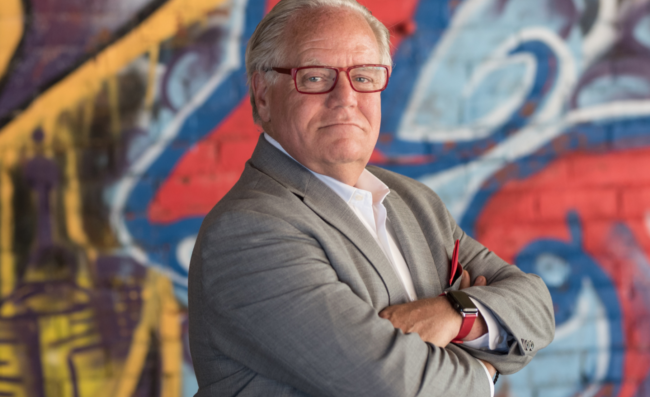

Jim Marous (00:11):
Hi, Jim Marous from the Banking Transformed Podcast, and by far, the most unusual place I've done a podcast today. After 600 podcasts, I'm now in the Bonneville Salt Flats in Utah. And honestly, when I say Bonneville Salt Flats, we had people going 140, 160 miles per hour during this event with LoanPro. Colton Pond, a good friend of mine from LoanPro, his company put on this whole event.
Jim Marous (00:35):
And we have some leaders from financial institutions, from credit companies, from solution providers, from very small solutions to the biggest solutions, and we're lucky today. I only got a good taste of the people that we've had at the event with completely different stories, which is pretty cool. So, Colton.
Colton Pond (00:55):
Couldn't agree more. And the whole premise of what we've set up here — and Jim, thank you for joining us, by the way. It is an honor to know that you've done 600 podcasts and this is the most unique?
Jim Marous (01:05):
Oh, by far. Second is way down the list. Things you hear in the background are helicopters, monster trucks, cars doing … there's a whole lot of crap going on in this dessert right now.
Colton Pond (01:17):
Well, we are very, very fortunate. One thing you and I have talked a lot about is modernizing the infrastructure of financial services. I've referred to it based on conversations with friends of mine on the path to freedom. And we have some of the leading financial institutions (in my opinion) that I have the pleasure of knowing very well, who are somewhere on that journey.
Colton Pond (01:39):
And what I love about the modernization journey, is it never ends. It's not going to be done, and we've got to think about how we constantly evolve. So, we're going to bring three executives from different financial institutions, of different sizes, of different origins and different focus areas to come talk about their modernization, and just call those out real quick.
Colton Pond (02:00):
So, Kelli Keough at SoFi, she's the business leader of Spend, Protect, Invest, Save. Very catchy, and I love it. Kelli's going to join us.
Jim Marous (02:08):
She's got a four-page business card.
Colton Pond (02:11):
Perfect. Raphael Reznek, he's the CTO at Mascoma, doing really cool things on-
Jim Marous (02:15):
Who's been a guest on the show before, yeah.
Colton Pond (02:17):
And then Chris Black, who's the president and CEO of Thread Bank, and a unique perspective of a community bank and a sponsor bank going through their modernization journey.
Jim Marous (02:26):
And as you said, what's really interesting about this whole dynamic when you're talking about core, is there's different ways to look at it. There's different ways to build it. As I mentioned today on the keynote, the smallest and the biggest financial institutions are pretty much doing it the best. because it takes visionary leadership who want to have a resilience.
Jim Marous (02:44):
And in the past, we've talked about resilience in a way that really dealt with fraud and risk. Resilience today means you're going to be ready for whatever the future brings you. And you're going to have a core that's able to adjust quickly. Does not mean you have to dismantle the current core, but you've got to bring the players together to give you a core that really will move you forward.
Colton Pond (03:02):
Couldn’t agree more. Well, let's dig in and bring on our first guest.
Jim Marous (03:04):
Sounds great.
[Music playing]
Jim Marous (03:09):
So, we're having our first guest here, as was mentioned. Colton, do you want to introduce the guest since she was a guest at your event today?
Colton Pond (03:15):
I would love to. Kelli, welcome.
Kelli Keough (03:16):
Thank you. Yeah, great to be here.
Colton Pond (03:18):
Awesome. So, we have Kelli Keough (as I mentioned), who leads Spend, Invest, Protect, Save at SoFi. One just interesting aspect is I looked at your LinkedIn (we know each other) as we were preparing for this, I noticed that you have a PhD in psychology.
Colton Pond (03:34):
I'm a PhD dropout. So, it doesn't really count, but I love to nerd out on psychology, behavioral economics, consumer behavior, which ties to your role at SoFi for sure.
Kelli Keough (03:44):
Very much. I mean, the whole concept of SoFi is helping people get their money right. And helping people manage the challenges of their life and be able to make great decisions, and do that all in one place, holistically, digitally. And it turns out, helping people through those emotional ups and downs, making great decisions is a big part of it.
Colton Pond (04:02):
100%.
Jim Marous (04:03):
So, Kelli, you work at SoFi, and anybody who listens to my podcast on a regular basis knows I'm a pretty raving fan of SoFi because I really like the model. I certainly like your team at both SoFi and at Galileo, who's been on my podcast, been live guest, and all this.
Jim Marous (04:20):
And I'm wondering, SoFi has changed a lot over the years. Can you go over just a little bit of a quick history lesson for those who are not aware? They see it as a student loan company, but that's not the story.
Kelli Keough (04:32):
Yeah. So, back in I think 2011, SoFi was founded with the concept of social finance, being able to find others who would help finance the education primarily of Stanford students. And it was a peer-to-peer lending model at first.
Kelli Keough (04:49):
Then quickly, actually pretty quickly, transitioned into a more traditional lending with lots of focus on student loan refinancing, helping people refinance their debt, and then expanded into personal lending. And I'd say that's kind of the second phase of SoFi's history.
Kelli Keough (05:04):
And then starting in around 2018, when Anthony Noto joined, we really focused on how do you serve all of the financial needs of our members. And that's when we brought in – at least we became a nationally chartered bank. We have our invest offering, credit card offering, insurance in addition to lending.
Kelli Keough (05:22):
So, the whole concept of being able to spend, invest, protect, borrow, also all in the same place, I think that's part of our mission now.
Jim Marous (05:34):
And it seems like it is very much like in South America and Africa. So, all these companies that really started as credit providers and then built out from there to build more services within that. You also, as an organization, have a part of the organization, Galileo, with Derek White, who serves and provides back-office transformation to financial institutions while you're also using them as a partner for your digital transformation.
Jim Marous (06:00):
A lot's happened the last three years with regard to the growth and the diversification of services. What advantage do you have in the marketplace compared to a traditional bank right now in a marketplace that's so crowded and everybody's trying to get a piece of the action?
Kelli Keough (06:16):
Well, I'd say first and foremost is we focus on experience, we focus on our members. And that holistic member-centric is key. And we try to think across as opposed to just serving within, “Oh, I want to come to you for a loan.” We try to think about how do we help you share data across so that we can help give personalized guidance.
Kelli Keough (06:36):
And then I would say we have focused a ton on engagement. We started as a lending company, but one of the challenges when you start with lending, sometimes a loan is a low-engagement product. You come, you take your loan, you may not even open up the app. You just have it, you get the money, and you go.
Kelli Keough (06:53):
But really what we've tried to do at SoFi is help bring people in. And we're really proud of the fact that our new products that we have, about a third of the new products that our members take out are from people who are existing members. So, they're deepening their relationships with us. And I think that's partly because we have a lot of daily engagement experiences now too.
Jim Marous (07:15):
And financial institutions (traditional financial institutions), it gets really sticky when they talk about engagement. Because they're afraid of making a mistake. They're afraid of saying the wrong thing to the wrong people at the wrong time.
Jim Marous (07:25):
Again, being the credit side, where you've already built trust in a solo-type way, to expand that trust, I don't believe, is as hard than trying to build it from this whole product where the internal organization is fighting with each other all the time.
Kelli Keough (07:42):
If you do write for the member, they … we call it cross-buy as opposed to cross-sell. Because the whole concept is our members should want and pull and drive the next thing that they want to do with us. We give them the options, we show them what they can do, and then they make those decisions as opposed to us pushing something on them.
Jim Marous (08:00):
So, we're talking about the core?
Kelli Keough (08:02):
Yes.
Jim Marous (08:03):
LoanPro is part of that core component.
Kelli Keough (08:06):
One of our partners.
Jim Marous (08:07):
How are you continually building that core to be (as I mentioned earlier) resilient in a way that expands engagement beyond experience? Experience is not enough anymore. You need that engagement going on, but how are you building the core to be able to service that?
Kelli Keough (08:23):
So, we are very fortunate that Galileo is part of SoFi, and at SoFi, I am actually one of the big customers of Galileo. Now, Galileo gives us a modern core that is modularized, that allows us to take components of it and build on that experience.
Kelli Keough (08:42):
And one of the things that I like to emphasize is you might be able to have modularized backends and systems and different components, but what's important is on top of that, you create a holistic experience. But what Galileo has done is with the modern core, has helped us also move fast. We ask ourselves the question, first of all, “How do you design something that's right for the members?” We start with design first.
Kelli Keough (09:06):
And then we ask ourselves the question, “Where in our company do we already have this capability, and how can we leverage it to get to market as fast as possible?” And then that gives us a base that we can now start to build on, using, I would say, even more modern technologies of AI, blockchain. We are going to see us start to really expand in those spaces, but we can build that on that modern core.
Colton Pond (09:29):
One question I have, Kelli, if you don't mind — so, gave you the intro Spend, Invest, Protect, Save. I'm a SoFi customer, I've never told you that.
Kelli Keough (09:35):
Thank you.
Colton Pond (09:36):
But what I've noticed is you're always launching new products. You all are incredible, and it's because of that modern infrastructure. How do you think about what products to launch, how to make sure they resonate with consumers, and the whole product development process?
Kelli Keough (09:50):
Well, like I said, it starts with the member first. And we really have tried to start with design thinking “We do a ton of work just designing what is possible, where could we go?” We actually have one in two years of designs that we have started to concept out, and that helps give us that North Star.
Kelli Keough (10:08):
So, as we are creating products, then along the way, they are building toward that experience, that North Star that we want, and in the backend too. We actually have a North Star for where we want our backend services, where we want the core to be, how we want to leverage Galileo. And we are taking those steps along the way that really helps us go fast and keep bringing new capabilities to market.
Colton Pond (10:29):
Well, I can't wait to see what those upcoming products are. You got me all excited now. Last question on my side, we mentioned your PhD in psychology. I want to know how you use that. What are key aspects you take from your background at psych into your day-to-day role in leading Spend, Invest, Protect, Save at SoFi?
Kelli Keough (10:47):
Well, I think first of all is that empathy for our members. Whether we are all in different financial situations, the reality is, is it's not easy, it's hard, and it can be overwhelming. And even the data that we get can be very hard to parse. And so, first of all, it's having empathy with our members.
Kelli Keough (11:03):
And then secondly, my background was actually quantitative in psychology. So, part of my background was in statistics, it's data. Understanding who, what they need, really going deep on the data to help get that deeper quantitative aspects of it is the other side, I think, of the equation.
Jim Marous (11:22):
My last question is, everybody's talking about AI, generative AI, personalization, all those dynamics. What are you working on right now with the idea of personalization, AI deployment, and what's going to make it different to work with SoFi than me working with a traditional bank as a customer?
Kelli Keough (11:41):
We have great work going on right now. We're working on what we call SoFi Coach. That really takes all of the data that we have that you've given us access to and helps optimize your cash, gives you ideas for what you can do next to better use your dollars that you might have lying idle, helps understand what expenses you have, where are opportunities to trim expenses.
Kelli Keough (12:02):
And you're going to see us continue to take that kind of coach model across all of our products. So, for example, if you're looking for an insurance, that's a really hard thing to figure out what to buy, why to buy it. Having really kind of guidance through that process, we think there's enormous opportunity.
Jim Marous (12:21):
That's exciting. It's interesting because you are where most people are shooting for. And you're more similar to some companies across the globe in the way they've expanded their offerings. But I'm looking forward to seeing what happens. We'll certainly have you back again. Thank you.
Kelli Keough (12:36):
Great, happy to be here. Thank you.
Colton Pond (12:38):
Thank you, Kelli.
Kelli Keough (12:39):
Thank you, Colton.
[Music playing]
Jim Marous (12:44):
Hey, we have another guest now for this podcast, a really fast-moving podcast, to say the least. Colton, why don't you introduce the guest from your event today?
Colton Pond (12:51):
Well, one, I will preface and say that Raphael is one of my closest friends and someone that I've really respected throughout the industry. So, we have Raphael Reznek, CTO at Mascoma Bank, the president of Mascoma Technologies, who will unpack that and help the audience understand what that looks like. But Mascoma Bank, you said today 127-year-old institution. You joined Raphael, how long ago?
Raphael Reznek (13:12):
Eight years ago.
Colton Pond (13:13):
Eight years ago. And what I've been really impressed is this modernization journey that you've been on. So, if you can just quickly walk everyone through briefly (because I know you've done a lot), that modernization journey and where it's led you today and the most impactful thing that you've discovered in that modernization journey.
Raphael Reznek (13:32):
Sure, thanks, Colton. So, I don't have a background in banking, it's all in technology. Arrived at the bank eight years ago and was pretty surprised by the level of technology that we had available to us as a community bank. And we quickly realized that we didn't have a lot of control over the products we could offer to our customers, nor the channels we could offer those products in.
Raphael Reznek (14:04):
So, as we looked forward, what the future would look like for the institution, we quickly realized that a FinTech or a competitor, a large competitor, could quickly introduce new products, and if they fail, they could quickly refactor that product and try again. And we cannot do that. Our upgrades from our core provider come once a year, and our competitors can release products once a day.
Raphael Reznek (14:35):
Like Amazon is able to introduce code every eight seconds, and they're out there lending $10 billion a year to small businesses. Those are businesses we should be able to lend to. So, we wanted to be able to (without knowing what channel and without knowing what product) offer and quickly refactor products and introduce new products.
Raphael Reznek (15:01):
And so, to do that, we had to modernize from the core out instead of from the digital wrapper in. So, we settled on a modern core, a headless core, and we determined that we did not want to boil the ocean. We wanted to be able to integrate that core into our existing ecosystem, and iteratively migrate an account at a time or a hundred accounts at a time from our existing core to our new core so we could test it out, and make sure things work right.
Raphael Reznek (15:33):
And that essentially means that the customer should not be impacted by our migration. The migration is a technology issue. It should not be a customer issue. So, over the last 14 months (we've been live for 14 months on our platform) we've been able to migrate, move data and not take the customer down so they can be in the middle of digital banking doing transactions, and they have no idea that we're moving accounts around or moving data around behind the scenes.
Colton Pond (16:05):
Help me understand how that works. Help me understand the underpinnings because we've talked about this a lot. Generally, a core migration in banking today is a flip of a switch. And what happens is you flip a switch-
Jim Marous (16:18):
Late at night.
Colton Pond (16:19):
Late at night, right? You find a bunch of errors in edge cases you got to hurry and solve those problems before the customer happens ... how does it actually work? Like how are you doing that? Because I know every bank and credit union would love to know the secret if you're willing to share.
Raphael Reznek (16:31):
So, a traditional migration is the flip of the switch preceded by 18 months of really painful work. So, the idea here is you do that work ahead of time. And when you say flip the switch, what this really means is we have built in an orchestration layer, and so we repoint the orchestration layer from one core to the other. So, it's really just like an address change.
Raphael Reznek (17:04):
So, we have all of the data, and we present this data to digital banking, for example. We don't have to ask the core for the data because we have a real-time repository. And all we have to do is change the address of where that system of record is. So, which core it is.
Jim Marous (17:23):
So, Raphael, you've been at the center of this whole process, it's your baby, so to speak. Obviously, a lot of people are involved in it, but you have the vision for where it's going to go. That process, it's never quite as clean as we think it would be great. What were some of the aha moments during the transformation that happened that you said, “Man, didn't see that coming,” or “I didn't expect that to happen,” both the good and the bad?
Raphael Reznek (17:49):
Yeah, great question. We had this concept that we were going to take Thought Machine vault and just plug it into our ecosystem, and it would not be a problem, that there would be no issues moving data around. And we quickly realized that our walled garden from our legacy provider is that. It is a well-defended walled garden.
Jim Marous (18:15):
There's a reason why people can't do a complete core.
Raphael Reznek (18:17):
That's correct. So, we learned that our legacy provider does not want to give up the data in any sense of reform, and they don't want to lose control of it. So, we had to take control of that data. We had to take that away from the legacy core provider and own it. We were supposed to own it anyway, we're responsible.
Raphael Reznek (18:44):
The customer doesn't know that we use a particular vendor, they look at us. The trust is with the bank, not with our technology provider. So, the aha moment there … and it certainly caused an extension of our project, it added 12 months immediately, just like that, determining that we needed to own that data and pull it out. That was an aha moment that was tough.
Raphael Reznek (19:11):
Another aha moment was when we looked at our batch processing legacy core and our real-time modern core, and we looked at how we were going to be processing overdraft fees and NSF fees. And this was right in the middle of when there was some regulatory pressure to reduce fees. And we were doing this anyway ahead of that regulatory pressure.
Raphael Reznek (19:36):
We've eliminated a lot of those fees, but we came up with a methodology with our new real-time core that allowed us to offer the customer, if they go negative at the end of the day, when we do our closing, we don't necessarily charge them the fee. We can give them an ability to make a deposit or bring money into the account over the next 24 hours and not charge them a fee. And then we also don’t charge fees upon fees as well.
Raphael Reznek (20:02):
Over the next 24 hours and not charge them a fee. And then we also don't charge fees upon fees as well.
Jim Marous (20:10):
So, really, it makes it so the evolution of what you did gave you the flexibility to look at each customer on an individual basis, on an ongoing basis. And overall, from the future look, it makes you a much more resilient organization from the perspective of if a new product — let's go back to COVID days, and the loans that were provided — that type of product introduction out of the blue can be handled by your core much better than having to work with your traditional core provider. Now, are you completely away from your core or are you running-
Raphael Reznek (20:45):
We're running in parallel. So, we're running two cores at once, but they're presented as one data set to all of the peripheral systems. So, when you log into our digital banking, the customer won't know that this account, account one is sitting on legacy core and account two is sitting on the modern core.
Jim Marous (21:01):
And that actually is not a disadvantage, it's actually an advantage, is it?
Raphael Reznek (21:03):
Yes, that's correct.
Jim Marous (21:05):
Yeah, go ahead.
Colton Pond (21:05):
One aspect within there Raphael that … I don't want to put words in your mouth but a potential other aha moment that I know that you all have built around is understanding how the different products and financial services work from deposits and lending are totally different, and different systems they can efficiently process those systems.
Colton Pond (21:25):
I just want to understand your viewpoint there and how you connect the entire ecosystem together that Mascoma has built with all the different modules of your infrastructure.
Raphael Reznek (21:36):
Right. Yeah, so the ability to compose your system versus accepting a monolithic product from a single vendor is really important because no one is good at everything. So, we want to be able to take best of breed and implement it quickly, not take years to implement it but implement it in weeks and months.
Raphael Reznek (22:02):
And the providers, there's a loan origination systems, BSA/AML systems, we are looking at best of breed and implementing those and connecting them to our orchestration layer and doing it rapidly. So, three months ago, we made a determination on a new teller platform. We had basically a six-week proof of concept. They spent four weeks working with our team, we did workshops on all of the business rules that were needed to implement this teller platform.
Raphael Reznek (22:40):
We then took five days, essentially took them five days to go from not any type of connectivity with Mascoma Bank to demonstrating deposits on their teller platform, running through our orchestration layer and hitting our cores (so, five days). That gives us that velocity we need to be able to test out new systems and prove whether it's going to work for us from a business and value standpoint.
Jim Marous (23:11):
So, who does the responsibility go on when you're bringing in other partners like LoanPro or somebody else, other components to be able to make it all work? How do you bring them up to speed on what you've created? Because you obviously have a very unique system overall. How do you bring them up to speed so that that doesn't create its own friction?
Jim Marous (23:29):
As I mentioned in our presentation earlier today, you're going to be held back by your slowest partner, and how do you keep them up to speed? How do you educate them on what needs to be done?
Raphael Reznek (23:38):
Yeah, so that's a tough one Jim because there are some providers that there are not really a lot of options around. So, you're dealing with a legacy provider, and they of course, don't know anything about our orchestration layer, and if we ask them to rebuild the integration on their side to our orchestration layer, you've just added 18 months and half a million dollars to the project.
Raphael Reznek (24:03):
So, what we've done is we are able to pattern facade our own core so that for example, a legacy provider likely has an integration with our legacy core. So, we pattern facade, they think they're talking to our core, but they're really talking to our integration layer. So, that way, we don't have to slow the effort down, and we can use something that is considered mature from their point of view.
Colton Pond (24:28):
I love it. Well, Raphael, thank you. One, I would recommend any bank, credit union, fintech that's thinking about a migration, modernization journey to chat with Raphael. Like you said, came from outside of banking, I know you've had a lot of aha moments in banking of how it works and learned a lot through that process. And I know from experience, you're more than happy to take a call and share your advice.
Raphael Reznek (24:49):
Absolutely. Thank you.
Jim Marous (24:50):
Well, and it should be, because it shows again, as we continue to show on our podcast, size is not the determination as to if it's going to work or not. It's not even the technology as much as we talked about it here, it's the leadership.
Jim Marous (25:04):
If you weren't in this organization, in the role you are at, that organization would not have made the transformation it did in much the same way at SoFi and other places. If you don't have that leadership layer, it's just not a technology play, you can't buy yourself out of problems.
Raphael Reznek (25:21):
No, that is correct. A hundred percent.
Jim Marous (25:23):
Great. Thank you so much.
Colton Pond (25:24):
Thank you, Raphael.
Raphael Reznek (25:25):
Thanks, Colton.
[Music Playing]
Jim Marous (25:28):
So, Colton, our third guest on this triage of amazing guests around transformation and core replacement, do you want to introduce the third guest?
Colton Pond (25:38):
Well, I'm really excited for this one; Chris, welcome.
Chris Black (25:41):
Thank you.
Colton Pond (25:41):
Chris Black is the President and CEO of Thread Bank. For those of you that don't know Thread Bank, they are a community bank at heart but do sponsor banking activities as well. And Chris, what I'm really excited for, is I've got to know you really well. You were here last year at Salt Flats Summit, thank you for coming back.
Chris Black (25:56):
Appreciate it.
Colton Pond (25:57):
Pretty cool environment. And you all have done a lot since the past year that we've been here, and we're excited to dive deep. We did a joint press release yesterday actually on some of the work that Thread Bank is doing to bring all of your data into a central source of truth, whether it's your community bank data for the loans and credit accounts you give there, or all of the fintechs as you say, threads or branches of Thread into a holistic environment so you can have one source of truth, very excited to dig in.
Colton Pond (26:28):
Can you give us a little bit overview of over the past year the journey Thread has gone on from a compliance and modernization?
Chris Black (26:37):
Yeah, no, appreciate it, and thanks for the invitation to join you guys and nice to meet you, Jim. We've not met before. But it's pretty simple for us, and as we put our bank group together about four and a half years ago, recapitalized a small bank in East Tennessee, partnered with them, with the mission to provide embedded banking deposits, loans, payments into branches, partners that we think of as branches of the bank.
Chris Black (27:04):
So, we can provide the best in class with the best infrastructure, data partners, risk management partners we can, to allow those branches to really flourish, to do what they do well. So, in order to really do this in the way that our vision has always been, which is really becoming reality, we talk a lot about homogeneity.
Chris Black (27:24):
So, homogeneity of data, homogeneity of our risk management framework, and then homogeneity of the technology and the payment rails. That doesn't mean that we have one infrastructure partner who is doing everything. It means as with LoanPro, we have homogeneity on the credit ledgering side, and that's what we're building with you guys to that end.
Chris Black (27:45):
Same thing on our embedded banking and bank infrastructure and kind of core deposit infrastructure, homogeneity in that sense. So, then this is how we build for scale. So, we don't have analysts going into one platform for this disparate activity and another platform for this and another for this. So, we really create that.
Chris Black (28:07):
I keep using the word homogeneity because that's the point. Because that is what inevitably enables the scale for our partners to do what they do best, which is to source, service, and build and scale heterogeneous use cases, whether it's small business verticalized or even horizontal that provides very strong technology, customer engagement, ease of running their financial lives.
Chris Black (28:34):
We're just taking the banking and then the banking rails to where our customers want the bank to be. Instead of making everything about the bank, we take the bank to where they are. And so, this journey really over the last year has just been an acceleration of fulfillment.
Chris Black (28:49):
And each of these things at the end of the day, lead to more ability to be more compliant, to be more efficient with data, to be more able and prepared to how do we truly deploy artificial intelligence in a way that helps our partners, help our joint customers to have the best financial banking experience that they possibly can.
Colton Pond (29:12):
I love it. Well, I highlight two premises, and the reason why I love Thread Bank and what you all are doing Chris, is because you're validating two key premises assumptions that we as a management team at LoanPro made about two and a half years ago. When I joined, we started focusing more working with banks and credit unions.
Colton Pond (29:30):
One is that the modern infrastructure, core provider of tomorrow will be broken up into three main components: deposit, lending, and credit and wealth. You all have done an incredible job leading the pack of banks and credit unions in that journey. And then the second is we saw in embedded lending, embedded finance, the debacle and collapse of Synapse and the utter disaster of what that was.
Colton Pond (29:56):
And the one things the regulators have hit really hard on is you need real time visibility and insights into what's going on. You are the bank, you hold the responsibility for compliance. I had a debate with someone once on who holds the compliance hold — it is the bank, the FDIC is knocking on your door.
Chris Black (30:16):
It'll be different than that, yeah.
Colton Pond (30:18):
But what you've done a great job is centralizing that data into central source of truth. So, you do have real time insights and you all are doing an incredible job.
Chris Black (30:26):
Well, no, I appreciate and it's such a massive team effort on our team. And that team is our management and employees obviously inside the bank, our board investors highly engaged, people who are experts in banking and in technology and financial technology and entrepreneurship, an amazing network.
Chris Black (30:44):
Things that we've developed with the network that we've extended through you guys and develop that. But this was the view always from the very beginning that the bank is the center in the United States of all banking activity.
Chris Black (30:58):
And that's where we've gone awry that many people did not take that to heart, and went and unfortunately hit easy buttons. But the easy buttons were set forth and out there out of necessity because it was very difficult from either a regulatory standpoint or perhaps an infrastructure standpoint to do the type of things that you need to do to do what we do at scale, and in a homogeneous way.
Chris Black (31:26):
And so, that's what created FBOs and has created the opportunities for many non-banks to take over banking activities, which are first and foremost compliance-related. That's first and foremost what banks are here to do. And that's all we're doing is reclaiming those banking activities run by the bank, centralized by the bank, to enable our partners to really do what they do so much better, I would argue than any bank.
Chris Black (31:53):
And I hate to say that because that's contradictory to many validated and really strong opinions, and it's an overgeneralization. But when we look at a verticalized, let's take a generic idea of accounting. So, we may have a partner who they're the most amazing small business accounting technology firm out there.
Chris Black (32:16):
We plug banking into what they do, it makes their ability to service that customer that much better, and no bank could ever deliver that full stack solution that we can, and so why fight that? Why not empower them and have the oversight and the management of the data, the risk, the compliance to make it all work ultimately for the bank?
Jim Marous (32:37):
So, banking is known for its silos in not a positive way. You're building your core conversion in silos just visually. How does the data come to data? How does the relationship get managed on top of organization? I mean, they're not handling the deposit data, they're not handling the other commodities of the data, how's the role of uphill?
Chris Black (33:01):
So, well, because it's all built on modern API-first infrastructure. So, today, many of the partners with their bank partners are very siloed by definition, and they're siloed amongst different banks. So, we're bringing everything together, that capability through one bank charter, and it may be different underlying infrastructure that creates those silos, but then in the branch, those threads, those APIs, that connectivity into our infrastructure comes together into the branch.
Chris Black (33:32):
And so, that's how you eliminate the silo. And so, then we capitalize on the capability of our partners to service that customer in the branch with all those different data elements and different APIs, and we do the same thing on the back end.
Jim Marous (33:47):
So, that said, because AI and everything having to go with … if we ever get to the Agentic AI, the way it's being talked about, how are you setting your organization up for that evolution? Because again, you have to have that combining of all the data, but you also have to be able to have it spurred out the new insights from that among three partners. So, how does that roll up and go back in again?
Chris Black (34:14):
Well, just like any construction, the footing is the most important part, the foundation. And so, that's the critical nature of this is the data foundation, the structural foundation, the vision brought to life with partners like LoanPro, and then having the right talent and the bright folks making the assessments, the judgements.
Chris Black (34:35):
We just hired a gentleman named Marty Miracle. He's our Chief Digital Officer. He has a long track record ... his name is Marty Miracle.
Jim Marous (34:41):
That's a high bar for somebody to have to live to.
Chris Black (34:44):
And I don't want to tell everybody that he lives up to it, but it's a great name. It's a great name for Marty. But his experience, and he's the right person at the right time to really bring and envelop this vision together with that experience of he's both a data and an AI expert in banking and in sponsor banking.
Jim Marous (35:03):
So, you're really building the resilience for what the future's going to bring. So, we asked this-
Chris Black (35:07):
And the adaptability.
Jim Marous (35:09):
And we asked this earlier today of a couple organizations we talked to: what were a couple aha moments, either positive or negative that happened in the process? You go, didn't see that coming, good or bad, and how have you evolved because of that?
Chris Black (35:24):
I don't know that we necessarily fully understood the need for homogeneity, but where we started this was again, out of necessity. We knew it was important, but we applied it first to BSA because we were just looking at just the incredible cost burden that BSA activities within banks represent and AML, especially when you're doing volume and scale that we're involved in.
Chris Black (35:47):
And so, we said, we've got to have all of our data in one spot, we've got to transform it, normalize it, and put it into one AML transaction monitoring system. So, our BSA analysts don't have to go, and we don't have to be scaled for four or five different systems. We want them in one, and as we validate and prove that out, then that can just be extended to kind of every possible extension.
Chris Black (36:10):
I think about cores as if you think of a headless core and how far up to the hairline can we take this homogeneity to capitalize on efficiencies, AI now interspersed within that over time to then allow for as many differences as possible at the top of that which is the customer funnel, which creates the differentiation, the stickiness for both us, for our partner that reduces customer acquisition costs, reduces churn, increases margins — all the things that any business wants and particularly a technology companies.
Chris Black (36:45):
And we're in a situation, we're observing our deposit behavior, and these are the most core deposits of anything that you can imagine. And so, this is incredible activity for banks because our partners act as relationship managers for us on our behalf because of the way we structure these things together.
Jim Marous (37:04):
My last question (I'll give Colton a way to wrap it up) is in the process you've gone through, in what you've done over time, what is one suggestion you give an executive, an organization your size or larger or smaller as they're embarking on and assuming that everybody's already embarked, but trying to go through that journey — what's the one recommendation or one thing you go, you know what, you better get this right?
Chris Black (37:30):
No question, all in commitment, no dabbling, and you've got to understand the fixed base of this type of operation is really significant, the requirement. You can't have a half of this or half of that or half of this in terms of personnel, in terms of data, in terms of compliance monitoring systems and all that type of thing. So, to folks who think it's the easy button of deposits and some great interchange revenue, that's just not the case.
Jim Marous (38:01):
The good news is the easy button now is being hit because you've made the whole process easier going forward, which is the big thing. Colton?
Colton Pond (38:09):
Chris, I just want to say thank you. I sincerely mean it. The premises that you all are validating on modernizing your infrastructure and deposits, lending, and then separately, and also bringing as a sponsor bank all your data decentralized spot.
Colton Pond (38:24):
The one thing I didn't mention that you all have taken even a step further is LoanPro by nature is a servicing platform. It's what we do. So, heaven forbid if the regulators ever said, "Hey Thread, you got to take over servicing that portfolio," you turn it on tomorrow.
Colton Pond (38:40):
Like you start servicing that portfolio immediately, and those are the kinds of controls that we need in the ecosystem that enable embedded finance, embedded lending to continue. Because there's been a lot of talk from folks that I strongly disagree with, that, “Oh, with all the regulatory challenges embedded finance is going away.”
Colton Pond (38:59):
Bullshit. We live in a system where it's based on supply and demand and there is too much demand for it to go away. It has to be done the right way by organizations like Thread Bank. So, I really appreciate you leading the charge on leading the industry forward.
Chris Black (39:16):
Well, thanks. It's probably too much credit for sure. We're doing what we need to do to be successful and really to manage the risk and the opportunities that we have in front of us. And maybe if I can, the one thing I'll say, I've said this a couple times and people who know me feel like you speak in analogies because I'm trying to paint pictures to communicate.
Chris Black (39:37):
And this is something I've said a couple of times recently, and where I'm hoping the industry, which is banks, technology companies and regulators, that we're all together in this thing, that it's a matter of language, and the language differential that has been inherent has been the thing that has caused a lot of the issues that we've seen, and we've got to fix the language problem.
Chris Black (40:00):
Regulators and banks traditionally have spoken English, and we've learned every bit of English that we can. Where the market, the demand is provocative, but they're speaking Swahili. They're not just speaking like Italian or Scottish dialect, they're speaking Swahili, and they're going to continue to do that, and that's why so much non-bank activity has occurred and left the banking system because the language spoken over here is not translating.
Chris Black (40:29):
We've got to create a translation mechanism to bring the banking activity back into the banks where it should be, which will make all of this much more successful as an industry. But that's a big commitment, and it's nice. It's very senior folks at agencies have directly said, “I think that's right,” and so that's a great start and we're hopeful that that is the case.
Jim Marous (40:53):
Thank you.
Chris Black (40:54):
Thank you.
Colton Pond (40:55):
Yes, thank you so much, Chris, for joining us. I learned when I went to Kenya that everything you learn from Lion King is actually Swahili. So, hakuna matata is the thing, Puma is how you say warthog in Swahili. So, I love that analogy and thank you.
Colton Pond (41:10):
And Jim, thanks for being here. I sincerely … you know this as a friend. Thank you for leading the industry forward on the thought leadership perspective, being here in this beautiful scenery at Salt Flats Summit and diving deep into operational insights, it's been awesome.
Jim Marous (41:24):
Not a bad gig as they say. As a final word from our three guests today, we learned a couple things. Number one, size does not determine success, it can happen at any level. Number two, technology as much we've talked about it today, does not determine success, it’s simply a means to an end, it's the leadership factor.
Jim Marous (41:44):
And I think what we've seen today, three different companies, three very different addressing different things, is that all three of the people that we've had have a passion, a leadership, and a vision for what the end game is, they know their North Star, and those organizations that are dabbling, that don't have the passion, don't have the place they got to go, do not know the order in which they're doing things, do not have a priority structure, will not succeed, will not become resilient.
[Music Playing]
Jim Marous (42:12):
You're simply going to do things the way we used to do them, which is let's see what we want to do now. Everything we've talked about too, fast as hell. I mean, the reality is everything that all three companies did, did it very quickly because they had the vision, because they had the passion, because they had the leadership, because they had the technology, but they knew where they were going, which makes it a lot easier.
Jim Marous (42:31):
And finally, you said it to me early this morning; let's not forget this is not an end game, this is a journey. And I think that we can talk to you a year from now, we're going to have a completely different discussion. It's going to build from where we are, it's not going to be brand new. But I think the dynamics of what's going on in the core conversion is so important.
Jim Marous (42:51):
And those organizations, no matter what your … size is not an excuse, compliance is not an excuse, regulations are not an excuse, and even your employees are not an excuse because your partners are bringing skill sets that you would never had internally and will never be able to build internally.
Jim Marous (43:06):
Thanks for listening to Banking Transformed, the winner of three international awards for podcast excellence. If you enjoy what we're doing, we would really enjoy a positive review. Also, check out my recent articles in The Financial Brand, the research we're doing for the Digital Banking Report.
Jim Marous (43:21):
This been production of Evergreen Podcasts. A special thank you to our senior producer, Leah Haslage; audio engineer, Chris Fafalios, and video producer, Will Pritts.
Recent Episodes
View AllThe SoFi Cross-Buy Engine Fuels Amazing Growth
Banking TransformedThe Best Banking Innovation Doesn't Need a Huge Budget
Banking TransformedArming Front-Line Bankers with AI Tools That Win Clients
Banking TransformedWhy Banks Miss Human Customer Moments"Most banks know far more about their customers than the customer ever feels. In this Banking Insight Video, I look at why relationship banking often feels programmed, from the quarterly business banker check-in that g
Banking TransformedYou May Also Like



Hear More From Us!
Subscribe Today and get the newest Evergreen content delivered straight to your inbox!
Advertising & Sponsorship
Interested in sponsoring or running an ad for your business on an Evergreen Podcast? Contact us to get pricing and availability.