
Banking Transformed
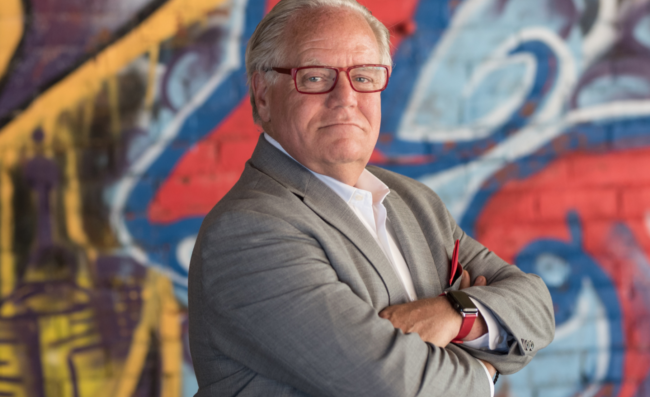
Hosted by top 5 banking and fintech influencer, Jim Marous, Banking Transformed highlights the challenges facing the banking industry. Featuring some of the top minds in business, this podcast explores how financial institutions can prepare for the future of banking.


From Products to Platforms: The Future of Banking
In today’s rapidly changing financial landscape, traditional banking is no longer enough. Customers expect more than just accounts, loans, and transactions—they want personalized, real-time value delivered seamlessly across every touchpoint in their lives. That’s where ecosystem banking comes in.
In this episode of Banking Transformed, I’m joined by Mike Cook and Carson Kotnyek from Zafin to explore how banks can move beyond legacy limitations and become orchestrators of value. We’ll unpack what ecosystem banking truly means, why orchestration—not just innovation—is the new growth engine, and how financial institutions can remain relevant by delivering holistic solutions that meet customers wherever they are.
If you want to understand how the future of banking is being built—not just in the branch, but in housing, health, commerce, and beyond—this conversation is your playbook.
This episode of Banking Transformed is sponsored by Zafin
Zafin's Loyalty Rewards capability helps banks deepen customer engagement by rewarding behaviors across the entire banking journey, not just their transactions and spends. It offers behavior-based incentives, flexible point strategies, and personalized rewards, moving beyond traditional spend-based models. With seamless integration and real-time analytics, banks can optimize loyalty programs to enhance customer lifetime value and drive sustainable growth.
Visit zafin.com
Where to Listen
Find us in your favorite podcast app.

Jim Marous (00:11):
Hi, Jim Marous, with another Banking Transformed Podcast. Today, live in the Evergreen Studios in Cleveland, Ohio.
Jim Marous (00:20):
There is not a financial institution that I know of that is not examining, re-examining, and talking a lot about replacing parts of their core for specific solutions and needs. But nobody wants to go through the effort of a complete replacement, or very few do.
Jim Marous (00:38):
So how do you go from where you are today to being prepared and resilient for the future of banking? How do you build an ecosystem that's going to make it so that you can adjust as you go along down the path of a customer's journey, capture the insight, be able to deploy it?
Jim Marous (00:56):
I think I spent as much time recently on the importance of deployment as opposed to technology. But today, we're going to talk about technology.
Jim Marous (01:05):
I am very fortunate today to have Carson Kotnyek, who we had on just recently from Zafin. And also, an old friend, Mike Cook, who I knew back in his IBM days but now is working in conjunction with Zafin. So, welcome to Cleveland, gentlemen.
Carson Kotnyek (01:23):
Fantastic, good to be here.
Mike Cook (01:24):
Great to be here, Jim.
Jim Marous (01:25):
So, you're coming from Canada? Came down to Cleveland to visit a little bit.
Carson Kotnyek (01:29):
Yes, indeed.
Jim Marous (01:30):
And tell us a little bit about what Zafin does, but also, your own role within the organization.
Carson Kotnyek (01:36):
Yeah, happy to kick things off. So, in the world of Zafin, the space that we have seen has been exactly as you noted around banks can't do a rip and replacement of the core. We're talking 5, 10 years, a couple hundred million dollars, the cost is too great.
Carson Kotnyek (01:52):
So, really, where we started and the challenge to help was, as we go through the core modernization journey, Zafin has come in to work with banks, work with core providers, and be able to externalize all of those key capabilities that allow you to be nimble and hit on a lot of what we're going to talk about today in the world of ecosystem banking.
Carson Kotnyek (02:12):
Some simple examples of that can be as straightforward as you have complex offers that you want to provide, certain segments of your customers, maybe they're in a gold or a platinum tier. We enable that to happen. So, whatever offer you want with whatever combination of rewards, of incentives, we enable banks to do that nimbly and very quickly.
Jim Marous (02:33):
So, really, the product innovation side of it, it opens doors that you were in the past constrained by your legacy systems, because they only can go so far as far as the manipulation of what you get out of them.
Jim Marous (02:46):
So, from your perspective, Mike, what have you seen in the industry that says, “We need to do things differently?”
Mike Cook (02:54):
So, we've been talking about core modernization and that 60-year-old COBOL and assembly code for decades now, Jim, and we've been forecasting the doom and gloom. I think we are now at a different point for two reasons. First thing, when we speak to our ISVs, the FIs, the Fiservs, the Temenos, all the guys who have core banking systems, they're projecting growth.
Mike Cook (03:16):
Analysts, the Foresters, the IDCs are all projecting growth, and they say, “We're actually in two years of a 10-year modernization window.” That's being borne out in the numbers. So, just for all your listeners out there, this isn't the same talk, this is different talk. This is now really happening.
Mike Cook (03:37):
We've seen innovation go from East to West in the world. Core banking modernization is well in and mostly done in parts of Asia right now. They have moved on to the next level.
Jim Marous (03:47):
And have had it for over a decade.
Mike Cook (03:49):
And it's coming.
Jim Marous (03:50):
And certainly, all the organizations over there, they were built on a digital platform that until relatively recently, last five, seven years, we didn't even have a model for a good digital core organization.
Jim Marous (04:06):
And now, even the big banks in the United States (Chase being the one that I'm going to refer to. And obviously in the European Union), they have built a complete digital platform that's the fastest-growing financial institution in the region without one branch. So, that's where we're going.
Jim Marous (04:23):
But again, it's the importance of making the system, making the data pay off. We talked about this in our first podcast when we talked about loyalty and rewards, but it goes deeper than that. It's the engagement factor. It's being able to have conversations, possibly via bots, along the way.
Jim Marous (04:41):
One term that your organization refers to quite a bit is ecosystem banking. What is ecosystem banking for a layman like me?
Carson Kotnyek (04:51):
Yes, indeed, yeah.
Mike Cook (04:52):
You go first, and I'll follow.
Carson Kotnyek (04:54):
An overused term, as many terms are in banking. And so, the way we are thinking about ecosystem banking is really focusing on that customer, that small-to-medium business, looking at the journey of what and what they are doing.
Carson Kotnyek (05:11):
So, when we think about ecosystem banking, we're thinking about a customer who is, say, operating and shopping on Amazon or who is using their Uber platform. The days of SEO search on Google are quickly shifting as we all know. And they're searching for, “Hey, what's the best credit card for me? Given that I like to travel, given that I value points over cash back?” That is happening through LLMs. That is happening through ChatGPT, through Gemini.
Carson Kotnyek (05:40):
And so, ecosystem banking is, as opposed to saying, “Hey, let's pull that customer back to our app, to our platform as the bank,” it is saying, “Hey, we need to actually go where the customers are and the ecosystem that they're operating in.”
Carson Kotnyek (05:53):
So, when we think about ecosystems, part of it is the platform itself. This can be TikTok Shop, this can be Amazon, this can be the Starbucks Rewards app. Artificial intelligence, as we know, is coming in through all angles and is heavily going to influence how we're searching and finding banking products.
Carson Kotnyek (06:10):
And then it is also the capabilities, meaning if I'm actually making a purchase, how does the payments happen? Maybe I need lending, maybe I need buy now, pay later. As well as how am I engaging with that ecosystem of brands?
Carson Kotnyek (06:25):
One example that comes to mind that we start to see (we spoke about Asia) elements of this ecosystem banking in North America. A good example is that you look at the confluence of Bank of America, Starbucks, Delta, we're starting to see Ubers in there as well.
Jim Marous (06:40):
I was going to say Uber, because I was not even landed on a Delta flight, and Uber was already connecting me going, “Here's the ride, here's the meals, here's things you want to see while you're here.”
Jim Marous (06:52):
I mean, the integration becomes seamless. It's not embedded payments, it's embedded processes that we all know could eventually be customized to me, as opposed to, “It's simply because I'm a Delta member and I'm an Uber member.”
Mike Cook (07:08):
Yeah. I think that's the difference, is what's driving this is frankly the customers. In that, if you go back 10, 15 years, our customer experience was managed and controlled (what McKinsey calls primacy of relationship), was through banking assets, bank branches, bank ATMs, bank apps, bank mobile. That's now fractured.
Mike Cook (07:30):
We're having financial events happening at a checkout where BNPL is kicking in. We have payment options coming out of our yin yang that’s from before, that we don't just use what's available at our bank. We use PayPal, we use TCH/RTP, we use a whole bunch of Zelle-type options out there that are outside the bounds of the bank.
Mike Cook (07:50):
This behavior is driving us to come up with an ecosystem of partners and providers that will fulfill that whole experience of what the customer is looking for. We already do this in banking, in fact, now. We do ecosystem banking, we use TSIs for all card acquisitions in a whole bunch of the banks.
Mike Cook (08:11):
So, banks are used to this behavior. They're used to these partnerships, but they haven't expanded it perhaps as much as the customers are going to be wanting. Again, we'll go back to Asia, DBS in the marketplace, incredibly successful.
Mike Cook (08:25):
Let me bring in for small businesses and for retail clients the products and services they need using my buying brand of having millions of customers. State Bank of India (one of the oldest banks in the world) has a marketplace of over a hundred different offerings where everything is integrated within the purview of the customer's view.
Jim Marous (08:44):
And you pick and choose the way you want to interact with all these apps.
Mike Cook (08:46):
You pick and choose. There's farmers’ portals, there's manufacturing portals, there's household portals. That's what we see coming. We don't see it so much in the West. But the consumers are the same. They're being shaped by the Amazons, they're being shaped by the Alibabas.
Jim Marous (09:01):
A lot of the holdup in the West is obviously legacy systems. They weren't built for modularization of offers. They weren't built for interchange or a shopping store of apps that you connect to that. And what's happened (and we've talked about it before with both of you) is that modern banking is being driven so much by the consumer that they're building their own open-banking relationships.
Jim Marous (09:25):
They're connecting their bank to their Amazon platform so that they know, “I don't have to push anything other than same way, same way, same way.” Even though you may have all the cars listed, we're going to sporting events now using mobile apps. And oh, by the way, they're not taking cash within the platform.
Jim Marous (09:42):
Well, geez, if I'm going to specific sporting events, why not customize my relationship with my bank with the things I'm doing where I don't have to do all the work? So, that being given, the ecosystem banking, knowing that we have so many different dynamics within segments.
Jim Marous (10:01):
We could look at the normalcy of the two generations and my generation as well on how we think that we all transact, and how many organizations we all use. Well, that's shifty because the consumer with them in control, they will pick and choose.
Mike Cook (10:17):
Let me just put something in there. That primacy of relationship, that perfect knowledge of the behaviors of your customer, just put a box around how much value that contains. In my old gig of running payments — payments are the audit trail of life. And when you see the audit trail of life, you can predict life events, you can predict the next best actions. You can do all of that stuff.
Jim Marous (10:40):
Especially in the digital world today.
Mike Cook (10:42):
Especially in the digital world, when you throw in social media and big data, you get context like we've never had. But if that data is being siphoned off into the ecosystem and it's blind to the banks, it's not a problem now, but it will be in the future. And you're pumped on agents. We're already seeing agents making buying decisions, making financial decisions for customers. And that's-
Jim Marous (11:07):
Or at least recommendations. I think we have to be cautious because in most banking environments, I don't see us for a long, long time come out and actually saying, “We did this transaction for you.” What I do think I'm going to see is, “Here's a link that we think you may want to put together. Here's a transaction we believe you should take advantage of, simply hit confirm.”
Jim Marous (11:28):
Very much like how appointments are confirmed via text. The text is going to become more and more important for that urgency, immediacy of transactions. You look at the transactions, what's possible.
Jim Marous (11:40):
Let's say two weeks ago, I think Grasshopper introduced that they're building a small business platform that's going to use agents as a way of finding out the way they want to make the next step. I believe it's going to have to be a confirmed step, whatever you want to do.
Jim Marous (11:54):
I don't want my financial institution to make those decisions until they prove themselves. But if you keep on hitting it like Amazon does, you go, “Good decision, good idea.”
Mike Cook (12:04):
Pretty much every AI model, pretty much every AI agent will not execute without human interaction. That's just the standard that's been set down. However, when I can load my portfolio of assets up and say, “Make me a recommendation on where this should sit,” the button's also going to come up saying, “Execute?”
Mike Cook (12:26):
You dropped by the open-banking phrase a little earlier in the discussion, and there's been countries around the world waiting for regulations to come up. Finally, in Canada, it's been superseded by behaviors of customers. Open banking is being driven by the market right now.
Jim Marous (12:42):
Regulations are catching up.
Mike Cook (12:43):
And these agents are just going to accelerate that. Because once I see the recommendation, once I look at that and I say, “Put this here, put this here, press the button,” it's done. We have no notion of that in our industry, Jim. That is here, that's-
Jim Marous (13:02):
It's thinking out of the box. But again, with platforms that today, we have third party solution providers that can provide the gateway to what is going to be the future of banking, or as an executive from U.S. Bank said at the executive leadership series at the Financial Brand Forum, he said, “Resilience is now not just fraud and risk.”
Jim Marous (13:22):
It’s how prepared are you going to be to be there (as you said at the very beginning), for when your customers want you to change the way you're doing things. You were going to talk to that point.
Carson Kotnyek (13:31):
Absolutely, and that's where this gets especially interesting. Is many of the rhetoric in the industry is we talk about what's coming and the change you need to be prepared for, but then you go and look at any big banks' earnings, and the urgency to change isn't there. I was-
Jim Marous (13:48):
Unless it comes to reducing costs.
Carson Kotnyek (13:51):
Absolutely, cost-reducing fraud.
Jim Marous (13:52):
They're using AI … internal or external, it's going to be mostly internal, efficiency, automation and replacement of people. But they're not really replacing people, they’re just redeploying them, which is a better model anyway.
Jim Marous (14:06):
So, what are you seeing out there? I mean, from the standpoint of the customers you're working with, you also use the term orchestration quite a bit. What is the difference between an orchestrated way of going about doing things versus incremental?
Carson Kotnyek (14:20):
Well, all of this ties together back to the call to action. When we go and look at any big bank, you're seeing year over year, 18% increase in deposits across Chase, Bank of America, U.S. Bank. So, deposits are growing every quarter. Customer acquisition continues to grow.
Carson Kotnyek (14:40):
So, when we say, “Well, we need to be ready for ecosystem banking in the future,” there is awareness, but the call to action isn't there because quarter after quarter, your results are crushing it. So, there is-
Jim Marous (14:52):
Success doesn't breed much change.
Carson Kotnyek (14:55):
Exactly, and so there is the risk of complacency as we move to the future. And so, getting to your question, part of what we see is the demographic change, a little bit is what we were all talking about before the podcast started, which is we all know it's been well-documented, well out in the news cycle that the greatest wealth transfer in history is happening.
Carson Kotnyek (15:14):
And as we go from transferring that massive amount of wealth from Boomers to Millennials, and over the next 10 to 15 years as Millennials enter sort of those later years of their career, and Gen Z is now the new CEOs, the new founders, they're driving culture, all of this becomes that perfect storm into why it matters for acting on ecosystem banking today.
Carson Kotnyek (15:38):
Because that culture is going to change, which is why you have to go and meet the customers (as we've been talking about), where they're operating today.
Jim Marous (15:46):
On the channel they want.
Carson Kotnyek (15:47):
Exactly, yeah.
Jim Marous (15:48):
And be able to simply transfer them between channels if for some reason the customer didn't pick the best channel for what they should do. A call center transferred to a branch maybe, a call center more likely transferred to maybe a place on the mobile platform that can help them quicker, easier using data that's up to date that second.
Jim Marous (16:09):
Mike, you have a long legacy of banking as I do. What is holding financial institutions back from what right now, as we're talking about it — it's one of several, but one of the most important holy grails is the ability to innovate products with a platform that's modernized without a rip and replace. That's a whole lot to absorb. But what would hold a financial institution? What do you see is holding financial institutions back that you're meeting with?
Mike Cook (16:38):
I'm going to say two things. First, what Carson said. For many banks, it's success. When you're returning 15 points year on year, the incentive to change is not there no matter what the Nostradamus’ out there are saying that this is going to change. The second thing (and I want to make a comment on that) not all banks are successful and profitable right now. It is a massively bimodal distribution.
Jim Marous (17:03):
It's a matter of optimization. Are they where they should be given everything else?
Mike Cook (17:07):
Well, 54% of the world's banks are underwater right now. They're not making returns on equity that we see in the markets. And so, it is a bimodal distribution and those who are on the lower end of that scale, they're talking to us a lot, because they have to grow revenue and profits.
Jim Marous (17:24):
And oh, by the way, the train's not stopping.
Mike Cook (17:27):
What creates change? It's the old favorites, it is structure. And we're structured around product silos still in most banks whereas customers are looking to be treated as a whole. We have a culture and a set of incentives that drive profitability by product and not profitability by customer or advocacy of customer. Those things are coming into a lot of the progressive banks, but really they're not embedded into the culture right now.
Mike Cook (17:56):
And the third one is infrastructure. The infrastructure, what we’re talking about in platforms. What the Amazons have, what the Alibabas have, what the Googles have — we don't see that in banking yet.
Mike Cook (18:07):
And yet the advice that analysts have been giving banks for years is, “Here's how you structure folks, enterprise-wide platforms for everything. About 28 customer journeys that map to life events, that's where you manage P&L.” That transition is like a 180 on the entire organization, and it is hard.
Jim Marous (18:30):
And you don't have to let go of the legacy success you've had, but you have to move forward. You can't stay there.
Mike Cook (18:36):
And that vision of focusing on the customer, being customer-obsessed, every successful fintech, every unicorn that we've seen out there has that as a singular mandate. And that's the gap between here and there.
Mike Cook (18:51):
Right now, to a lot of the big banks, the Fintechs are still ankle biters. They're taking out 1 or 2% of the asset base. It's whether you believe that is going to be the future. And that's sort of 10-year, 20-year window, it's a generational change that's coming, but we see it already.
Mike Cook (19:11):
In the chat before, I'm a Boomer with all my stuff in one place, you're a Boomer where it's split across six organizations. He's a Millennial who's going to inherit all our wealth and he's across eight organizations. So, it is going to come, and that wealth transfer is what we're going to have to get ready for.
Jim Marous (19:28):
Well, and just the satisfaction ratio right now, and I think about how I anxious we get when things don't act the way we know they can. It may be a Nostradamus where you go, “Man, they're not where they should be, because I know what I expect.”
Jim Marous (19:48):
Maybe it's the Amazon relationship, the evolution has happened so slow yet so quickly where we don't even know that what we see above the fold in old layman newspaper terms, it's what they know we're going to probably say yes to. We don't have to scroll thousands of products unless you enjoy that process, but give me the option.
Mike Cook (20:11):
You're moving into something that we've just started a research project on. When we talk about AI and banking right now, we've heard a crap load of stuff around productivity; I can automate decision making, I can do away with back-office jobs. Production and productivity (well-known and understood) well-talked about, I mean, I'm sure you've had dozens of conversations.
Mike Cook (20:32):
What we just hit on, the notion of an agent working on and behalf of customers, little less discussion on that, but it's happening and it's coming fast. The bit that we haven't seen a discussion on yet, Jim, is what happens when you have perfectly informed customers. We've never had a market where we have perfectly informed customers, there's an old sales adage: “Where there's a mystery, there's margin.”
Mike Cook (21:01):
AI is unpacking all of the ways banks make money out of us. We make the interest margin, there's fees here, there's exceptions there, there's exceptions … none of us really know that and now we all know that. And that level of authenticity and transparency in our behavior and interactions with customers now has to become.
Mike Cook (21:23):
So, we talked about how some of the biggest banks in North America are turning off 15 points year in year growth because there's money and money again. When we stopped quantitative easing, hey, there's a whole four points of interest margin that's been now floating around that we didn't have before, and we had backfilled that last decade with a whole series of fees.
Mike Cook (21:44):
Banks will always make money, and now, we're at a very rich point where banks are making money on money, they're making money on fees, they're making money on exceptions, and customers are going to become aware of that.
Jim Marous (21:58):
And oh, by the way, if they don't become aware of it, they can ask their AI tool today. You can ask their AI tool today and say, “Here's my 14 relationships, the size of my relationships and the organization where they're at, am I optimized from a fee basis? Am I getting my best return on this money? What should I do differently?”
Jim Marous (22:17):
And learning the probing process, we would do with generative AI, you get better and better asking that question to say, oh my gosh, it's very much like the subscription programs that can tell you, “Oh, we can save you $1,400 on subscriptions that you may not even know you have.”
Jim Marous (22:33):
So, with that in context and with generative AI in context, and knowing what Zafin does from the standpoint of taking what you already have, the core you already have and making it more dynamic and deployable — I mean, your company, really, it's on the deployment phases thing, it's being able to create new things that can deploy so that customers actually get more engaged with me as a financial institution.
Jim Marous (22:59):
That being said, how is generative AI either probably putting the gas down for you guys because you say we've got to be there when it's there because in a way, the consumer doing it themselves, using generative AI is a competitive yours in a way.
Jim Marous (23:17):
And so, what are you doing as a company to make it so that what you provide stays ahead of the sheriff? I could say stay ahead of the fintechs, but the bottom line is the sheriff is really the consumer that now has ChatGPT as one of the tabs on their search every day, and maybe use it instead of Google.
Carson Kotnyek (23:39):
Absolutely, absolutely. The amount of AI that is involved in the process of product development now is now up level to a level of capabilities. So, back to the earlier discussion we had around not just building individual products, but building capabilities customer-wide.
Carson Kotnyek (23:58):
One of the things I think about is when we talk about offers that go to … if we think about standard product and pricing, and I'm a consumer who's using ChatGPT to look at what account I open next. Maybe I'm out of college, I'm starting to gain a little bit of extra money so I'm looking to start investing. I'm going to go to ChatGPT and say, "Hey, where's the best place for me …" Maybe I want to have parks and cash and maybe I want to start investing in the stock market. Where should I go?
Carson Kotnyek (24:24):
You're of course going to see the Robinhoods of the world, but what we also want to make sure and a lot of what we're helping banks do is they might have an embedded wealth management platform that's easily accessible, maybe has zero commission free trades, but we need to make it so that is known, we need to be able to get that out there.
Carson Kotnyek (24:43):
And so, when we think about the old days of Google SEO and how we're going to change from not going to Google, the classic: “What is the best investing platform?” Now, to your point, we're going on ChatGPT and there's nuance.
Carson Kotnyek (24:58):
It's saying, "Hey, I have some cash I want to invest, and also I'm saving for a house. What is the best mix of what I need?" And so, if we think about the modern-day googling and SEO, we're now going to see that found through the LLMs, through the ChatGPTs of the world.
Jim Marous (25:15):
Actually, it's through both. And I was talking to somebody yesterday, he said, “You have to remember that SEO's not going away, it feeds into the LLMs. Oh, and by the way, you have to realize that the Googles are using LLM type models to build their LLM,” and so you have to answer to multiple masters rather than the single SEO master.
Jim Marous (25:35):
And as you look at that, and you look at generative AI and the potential there, the organizations you're working with, one of the things that your platform says, your website says is that there's minimal IT intervention. Which is interesting to me, because I don't know of many platforms that can actually say, “This is part of our mission.” We want to make it so that, I'm not going to call it plug and play because that's way too easy.
Jim Marous (26:03):
But the bottom line is you don't want to strangle the organization as they're trying to update their platform. And again, it's moving away from the product to the platform where it's picked from a grocery store of options to make your relationship stronger.
Carson Kotnyek (26:22):
Totally. We got to give a shout out to Shahir, our Chief Product Officer.
Mike Cook (26:25):
Let me take a shout at that. So, we're an accidental core modernization company. So, if you go back to the beginning of Zafin 20-
Jim Marous (26:33):
But that was just too long to put it under the name Zafin. It wasn't a good tagline.
Mike Cook (26:38):
No, but it's a natural evolution, is that if you go back 23 years when we started, product pricing billing, utility commodity function; define a product, define a price in the right table, build a client for the services.
Mike Cook (26:52):
A decade of business innovation says, “No, I need to start tiering clients, I need to put deal offers, I want get into the small, medium sized business and small business packages together, I need to kind of canvas them and do the proforma on them” and it's part of where we're using AI right now, is to do that modeling of what's a good offer compared to the market and compared to the client's expectations. So, that expansion of all the metadata around clients came in.
Mike Cook (27:22):
Businesses that we deal with have made the decision, their strategic investment for the future is to redefine that customer relationship and experience, and then they hit the brick wall of the 60 million lines of COBOL that's sitting in Hogan, and we hit this time and time again. So, the old Zafin, what we had was point to point interfaces, cheap, fast, ugly, terrible to maintain, and it breaks the platform.
Mike Cook (27:47):
So, we spent a year and a bunch of money building a platform that does two things; the integration, but more importantly the interoperability in that when you're conversing with a core — so all the customer data's here, I'm going to haul out the court back to where it was in 1964, it's alleged you're doing debits and credits. When I do that, I have to maintain interoperability between the two, reconcile balances, all the sweep accounts, that's what we’ve built.
Jim Marous (28:14):
With privacy and data still being paramount.
Carson Kotnyek (28:16):
Absolutely.
Mike Cook (28:17):
So, we did it for all the big ones, the Systematics, the Hogans, the Temenos, the new guys are easy. You'll see on our website there's a dozen of new guys, the Thought Machines, the Mambus, the Finxacts, because they have the right architecture. Because we have done so many now, we can do custom coat.
Mike Cook (28:33):
We have three clients now who are coming saying, “I built this pile of poo 60 years ago …” but we see the patterns and things like buy-in have given us that framework to say even if I haven't done it, I have a framework to do a checklist of where's this sitting? Where's that sitting, that sitting? None of it is … we're getting to value within three months — not three years, not 9 million bucks because we have this platform.
Jim Marous (28:59):
When you say value, how are you measuring value?
Mike Cook (29:02):
Oh, that's a great question.
Jim Marous (29:03):
Because the thing that's come up lately, the MIT study, the evidence study all said it depends on if you want to make bait switch, click bait. Click bait says, “Oh, organizations are not getting return on their IT and AI investments.”
Jim Marous (29:18):
The reality is no, I believe they haven't found ways to measure the value of that because they look at cost structure, cost cutting, that's easy. They don't look at losses that have been avoided through AI, they don't look at revenue gains because a lot of these things are very incrementally small on a per transaction basis. But again-
Mike Cook (29:40):
Let me give you three buckets for value here. The IT costs, yeah, we're reducing MIPS by taking the client out, we're reducing MIPS and overnight processing. It's a fraction of what has to come. So, when you've taken out a client, okay, now I can go after mortgages, now I'm going after lending, we're going to strip down the core over time, that's there.
Mike Cook (30:02):
There's a hidden cost that no one will quantify, is that when you actually put your data into a platform that's running at 5, 9, 6, 9, 7, 9s, resiliency, how many incidents am I missing that would've happened if I'd left it on the place back home?
Jim Marous (30:17):
What was my benchmark.
Mike Cook (30:19):
Yeah. That operational security, we didn't agree to it, but we all became dial tone in banking. We're no longer nine to five with batch windows, the expectation of customers is dial tone.
Jim Marous (30:30):
Instant payment brought instant everything.
Mike Cook (30:32):
So, we are an answer to that problem. The real exciting stuff for us is that we have a G set we're working with right now and they send us a terabyte of data every night that we processed. And as we went and rebuilt their product and pricing catalogs, they're going to realize 300 million in net interest margin that they didn't have last year — 300 million.
Jim Marous (30:56):
It's more than just one point.
Mike Cook (30:57):
We have a bank that introduced tiering amongst its customers that's way beyond the broke as poor, mass affluent, high net worth to actually tiering and looking at the centers of affection of every client and how that hierarchy works, their attrition rates are down 15, 20% now depending on the segment that they're looking at, because they have the data to create their own tiering that's not part of the history of the past.
Jim Marous (31:24):
And the biggest benefit, we talked about this on the previous podcast, is the loyalty factor. Things of that are a long tail, the long, long tail of success. They're not the immediacy, you're not going to say, “Oh my gosh, look at his relationship just went up $300.” No, that doesn't happen that way. The problem is the alternative today, and you referenced, and you referenced it, is it goes to zero.
Jim Marous (31:45):
I have two relationships. I was saying my business relationship generates close to nothing for the financial institution besides margin. They're not getting any transactional benefits from it because all of them are being done outside of that financial institution.
Jim Marous (31:59):
I would say my other finance institution is getting a little bit better, I'm seeing that they have little things, notifications, they're testing the AI market for me. And I think it's very interesting because so is ChatGPT through the ongoing dialogue that they're now asking follow up questions. That changes the game overall everywhere.
Jim Marous (32:21):
One of my two last questions is I'm a mid-size financial institution, I realize what the potential is, I realize that your platform truly through ecosystem banking, actually opens a door to potential around product building for me, you and you, as opposed to my segment, your segment, your segment — we're going to get more finite, but an every moment type dynamic that makes it so that you're going to generate all kinds of revenue you would never have found before because of the immediacy of the dialogue.
Jim Marous (32:56):
What makes you the most excited about where your company's going in the marketplace that's changing certainly as fast if not faster?
Carson Kotnyek (33:07):
I think it starts with the conversation we were having a little bit on the ease. So, said quite shortly is give us whatever you have that whatever comes out of your core, whether it's from 1967, give it to us in any format that you have it, we are going to be able to take it, bring you to the art of the future and the art of the possible-
Jim Marous (33:27):
Without breaking the PII.
Carson Kotnyek (33:29):
Exactly, all fully compliant-
Jim Marous (33:30):
How about external data as well?
Carson Kotnyek (33:32):
Yeah. And be able to layer in external data. One of the big things we're doing is not only be able to bring in what the bank has in any format, and we give it back to you and what you need it, but also the integration with all of the external platforms.
Carson Kotnyek (33:44):
So, when we think about the creative side, when we think about needing to be where offers are, where TikTok is, we are also fully integrated with groups like Adobe. So, wherever it is that you have your full … and when we start to think of the customer, we start to bring in the MarTech stack as well.
Jim Marous (34:01):
It’s like the holy grail for marketers. I'm a marketer by heart and a sales person, but more a marketer from my banking career. And not just distribute it to me, but those ideas, those offers, what comes out of the models, then deployed on your call center at your branch, everywhere else where this customer may have a touchpoint so that everybody's helping the customer realize, “We think this is probably pretty good for you.” Oh, and by the way, they say no, it's not across all platforms.
Mike Cook (34:34):
Let me bring it back to where we started on ecosystem banking. That mid-size, mid-America bank running an IT budget probably around the 7, 800 million a year — my colleague said at the beginning, core modernization, it's about 200 million (I'm afraid he's wrong, it's about five or six). So, maybe out of their 700 million budget, they have 150 a year to spend on new stuff. The rest of it's just keeping the lights on the old stuff.
Mike Cook (35:03):
So, it's going to take them 14 years to core modernize, or they're going to take all the stuff around client and give it to a platform like Zafin. They're going to take all the thing around small business lending and give it to a platform like Biz2Credit.
Mike Cook (35:19):
They're going to take all the things around payments and give it to any one of the zillion payment providers that are offering platforms for that right now. They're going to maintain a narrow core, and they're going to maintain governance of everything around it. That is not $600 million, that is an attainable transition. You just got to start and commit to the path.
Jim Marous (35:41):
It’s also quarterly movement.
Mike Cook (35:42):
Correct.
Jim Marous (35:44):
We grew up in the annual planning things. You said, “Oh God, I got to put this in again.” Lemme take … where's last year change a couple [crosstalk 00:35:53]. To your point, you were answering to the final number that was already determined. You just had to make it so if I was in market, you knew my budget wasn't increasing. We're got to take this, this, and this way.
Jim Marous (36:06):
But I think it's important because this is the way every industry is working right now. I believe the automobile industry is happening that way, every payments platform is working that way. And again, to be able to pivot, to be flexible enough to adjust immediately based on the marketplace, that's what you need.
Jim Marous (36:24):
We can't be at the mercy of a platform that can't work with other platforms. The good news is (knock on wood) we have so many solution providers that work so well together. So, you can plug and play your favorites, and you probably have 10 companies that go in the exact same space, but you work with every one of them.
Mike Cook (36:43):
So, we tend to get a little precious and think we're different in banking, but if you look at the rest of the world right now and you're a Midwest manufacturer, you're selling your materials through Alibaba and Amazon. You're running your storefront on Shopify.
Mike Cook (37:00):
You do not have an IT department, you have an ecosystem of platforms. You're processing your payments through whatever's offering you the best choice. You're getting small business lending money from finance or Biz2Credit credit or any one of these numerous unicorns that are offered. You’re already there. Banking is maybe the last one to the party.
Jim Marous (37:23):
We keep on talking about the last one to the party, people catching up — I'm a mid-size bank, 10 billion, kind of sweet spot for a lot of organizations because there are so many of them, in that range, 10 to 50, even a bit lower, smaller. You're being put in charge of that organization in the Midwest, what is the first thing that you recommend to yourself to do first to get unstuck besides getting unstuck?
Mike Cook (37:48):
Well, this is going to be a shameless marketing plug for my company, but it just also happens to be true. You start with customer. You get the customer value proposition right, recognize them as an individual, put together the package that's right for them. You start with that customer data, then you can replace all the rest because that's the source of money, that's the source of relationship. That's the source (again, I love this McKinsey phrase) of primacy. You got to get around the customer first.
Jim Marous (38:20):
And we talked about primacy at the last podcast. What do you see? When you look at what's going on in the marketplace and what they have to do next, probably just as importantly as if they said yes, I'm going to take it the other way and say, how long does it take to put the first layer in place and start to see results? What has been a good case study there?
Jim Marous (38:41):
Because obviously, a lot of that depends on … you can't make a promise because it depends on the client probably as much anything to actually do something with what's there. It's supposed to be a Salesforce integration that's on the back shelf and I'm literally not ever using it except for reports. Give me a great example of how long it would take to actually make an impact.
Carson Kotnyek (39:02):
Being a former McKinsey guy myself, I'm a visualization. So, I think about this in the graph, and a lot of our clients, what we see is a flat graph that then goes to a big bang. So, it's time over value realization.
Carson Kotnyek (39:16):
We very much are enabling a staircase. So, to your point on incremental and a lot of these banks, whether we like it or not, there is how the world should be and there's how the world is. If we have to operate and how the world is, is we need to do it incrementally, and we need to be able to realize value quarter after quarter.
Carson Kotnyek (39:34):
So, I'll give you a real example. One of my favorites that's very recent and sort of brings together a bunch of products, platformization as well as AI, is we all know if there's urgency to spend, where you can find dollars comes in the world of compliance, regulatory disclosures. So, we have a lot of clients who are saying, “We want to move in the market (we've enabled them to do so, product pricing offers), but we're slow on the world of disclosures, terms and conditions.”
Carson Kotnyek (40:06):
So, what we've been able to do is (and I love this, it goes back to the MIT study on the efficiency of AI) is this is just a brass tacks, real working use case. We've built a disclosures product where we can go, and we don't even need to have permission. We can just go on your website, take every disclosure you have, every terms of condition you have, drop it into the platform, find all of the components you have around disclosures, whether it's your credit cards, whether it's your new products, whether it's your offers, be able to componentize it.
Carson Kotnyek (40:35):
Then be able to have whatever offer you can dream up and we're starting to get-
Jim Marous (40:40):
And you're going to have combined rules and regs [crosstalk 00:40:43]-
Mike Cook (40:44):
We just did this for a top 20 bank in the States, and we went to the meeting, and they didn't expect it. Said, “Here's your disclosures. By the way, here’s …”
Jim Marous (40:53):
That's a box in the corner.
Mike Cook (40:55):
“Here's some gotchas that you might want to look at from the business side. Here's your regulatory submission.” And that was all generated by AI, and it's all freedom of information, access to it.
Jim Marous (41:05):
It's interesting because there are so many podcasts I end by saying at the end of the day, it's a matter of commitment to getting unstuck.
Mike Cook (41:16):
Great phrase.
Jim Marous (41:16):
We can find the excuse for not moving forward, in fact, the bank industry is notorious for it: regulations, compliance, my data is dirty. You've addressed every one of these at some point today whereby we can take data in any … and by the way, a lot of solution providers today can do that. So, that is an excuse I will blow out of the water every time. I think we look for reasons not to move forward because we have been successful most of our career.
Jim Marous (41:42):
We've been around the other successful people that have been coming up in the ranks with me and are my friends because we all had the same victories at about the same time. The challenge is, are you willing to disrupt that and actually change the way you do banking and be much more resilient?
Jim Marous (41:59):
As Dominic Ventura said: “To the things outside of risk and fraud to include, am I flexible? Can I adjust to any change in market condition, be it interest rates or be in product offers? Can I unwind a relationship that has to be unwound immediately?” Because of what happened at Silicon Valley Bank to go, “Oh my gosh, there's some companies that are in risk.” They all mostly all survived except for the bank itself.
[Music Playing]
Jim Marous (42:26):
But I think it's important as we look at the whole evolution of where we're going, the ability to do more with less, the ability to move very quickly and incrementally take those stair steps as you referenced, and again, just getting out of the way.
Jim Marous (42:46):
I can give you 30 institutions that would not let you combine the rules and regs because they're lazy, but they'd have to think through, oh geez, you got rid of my credit card … it's within this universal document.
Mike Cook (42:59):
But Jim, that would be banking transformed.
Jim Marous (43:03):
On that note, boy oh boy, he must've gotten a signal from the back.
Jim Marous (43:10):
Thanks for listening to Banking Transformed, the winner of three International Awards for podcast excellence. If you enjoy what we're doing, we would really enjoy a positive review. Also, check out my recent articles in The Financial Brand, the research we're doing for the Digital Banking Report.
Jim Marous (43:25):
This has been a production of Evergreen Podcasts. A special thank you to our senior producer, Leah Hasley; audio engineer, Chris Fafalios, and video producer, Will Pritts.
Jim Marous (43:36):
If you want to hear more about the Debbie platform and how it can boost engagement by rewarding positive credit behavior, check out our previous discussions with the Debbie founders on the Banking Transformed Podcast.
Recent Episodes
View AllThe SoFi Cross-Buy Engine Fuels Amazing Growth
Banking TransformedThe Best Banking Innovation Doesn't Need a Huge Budget
Banking TransformedArming Front-Line Bankers with AI Tools That Win Clients
Banking TransformedWhy Banks Miss Human Customer Moments"Most banks know far more about their customers than the customer ever feels. In this Banking Insight Video, I look at why relationship banking often feels programmed, from the quarterly business banker check-in that g
Banking TransformedYou May Also Like



Hear More From Us!
Subscribe Today and get the newest Evergreen content delivered straight to your inbox!
Advertising & Sponsorship
Interested in sponsoring or running an ad for your business on an Evergreen Podcast? Contact us to get pricing and availability.