
Banking Transformed
Hosted by top 5 banking and fintech influencer, Jim Marous, Banking Transformed highlights the challenges facing the banking industry. Featuring some of the top minds in business, this podcast explores how financial institutions can prepare for the future of banking.


Future of Banking Through the Eyes of a Shark
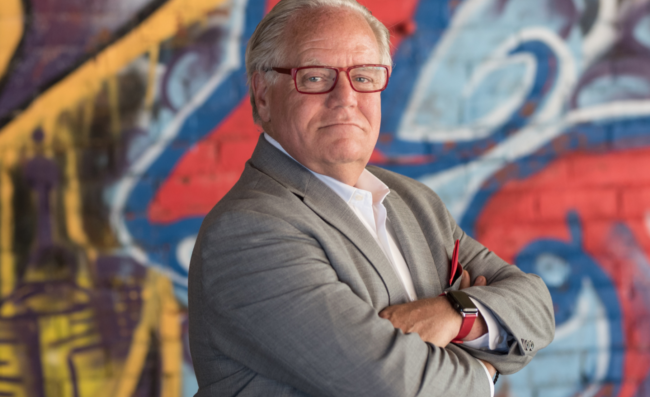
Today on Banking Transformed, I sit down with someone who never holds back – Kevin O’Leary from Shark Tank. We recorded this conversation live at the Catalyst Strategic Summit in Austin, where Kevin and I explored one of the biggest questions facing the industry today: What is the real future of retail banking—and where do smaller financial institutions still have a competitive edge?
Kevin shares his unfiltered views on consolidation, regulation, innovation, leadership, and why he believes niche banks and credit unions may actually be better positioned than the giants if they’re willing to move faster, specialize, and rethink what value really means for customers.
Where to Listen
Find us in your favorite podcast app.

Jim Marous (00:11):
So, I don't think I'm going to get into movies. However, continue to look at new ways of balancing your life. Doing what you need to do, combining with the things that you pretty much need to do to get through life today.
Jim Marous (00:27):
What's the biggest recommendation you can give a bunch of credit union executives who have a day job to look beyond? Maybe use an AI tool. It's a number of things, but if you were one of them, what would you recommend that people do to move on from where today is?
Kevin O’Leary (00:46):
Well, I learned something back in the ‘90s, which I think everybody should think about, from Steve Jobs, whom I worked for here. Got a nice guy, well documented. However, I did all his educational software for 110,000 schools in America. So, titles you may remember, Read Around, Carmen Sandiego, Oregon Trail, Mavis Beacon Teaches Typing, that was all us for him.
Kevin O’Leary (01:14):
And he taught me something very interesting, which really changed my life, that I think you should think about. He had this concept (it wasn't a concept, it was a truth for sure). Every single day of your life, in 18 hours, there are three things you have to get done.
Kevin O’Leary (01:37):
They could be any three things, but they are three things. It's always three things. And they're important either for your business or your family, or something about these three things. And that is called the signal. That's the signal.
Kevin O’Leary (01:55):
Your ability to identify the three things is your ability to know what the signal is. All the things that stop you from getting the three things done is called the noise. And he believed in the concept of an 80/20 ratio in successful managers or business partners. You had to be 80% on signal during 18 hours, 20% on noise.
Kevin O’Leary (02:19):
And I thought he was freaking crazy, but he was right. And look at what he achieved in his short life. The guy was focused. And the challenge with this concept (as you will learn, as I have) is it makes many people pissed off because you don't have time for the noise.
Kevin O’Leary (02:42):
And you just realize that you're involved in a noisy situation, and you politely say, “I don't want to talk to you. I don't want to engage with you because I'm really busy on something else that really matters to me right now.”
Kevin O’Leary (02:51):
Now, the only guy that I've seen with a higher ratio that I've done a little bit of work with, not much: Elon Musk. He's 100% signal. He's extremely awkward socially. You could be in a conversation with him with three or four people and he'll walk away the second he realizes he's getting nothing of value out of it. And people do a lot of small talk around him. He just walks away. Look at what he's achieving in his life.
Kevin O’Leary (03:23):
So, this signal-to-noise ratio is something that I would impart to you to try to think about in your daily life, and you'll become far more effective. Way better at what you do. You'll actually be a better person. And the reason that will be the case is that in business and in many aspects of life, it's not that you shouldn't want people to like you, you want them to respect you.
Kevin O’Leary (03:53):
And the reason they would respect you is you get stuff done. You actually achieve stuff. And many, many people will follow you because they know you get to where you're going. This is what I've learned from Steve Jobs. And why does it work? It's a big deal. And I can now tell which people have the ability to discern signal from noise. And those are the ones I invest in.
Jim Marous (04:21):
So, you look back, and you've learned a lot. You're continuously learning. As I mentioned to the audience, I met with you in April at another event. And one thing that was very apparent, you continuously learn.
Jim Marous (04:34):
There’s nothing you take for granted as you look at the marketplace and everything else. If you were to talk to your younger self, what would you do over again or do differently in the way you addressed your life since then?
Kevin O’Leary (04:46):
Yeah, I get asked that question a lot, and I've come to the conclusion I wouldn't want to change anything because I needed to make my mistakes and learn from them, so I don't make them again. And so, I remember my journey and all the paths that were the wrong ones, and I don't take those anymore.
Kevin O’Leary (05:04):
And I always tell this specific story about many decades ago, in the last week of my MBA class, this guy beside me had sat 24 months beside me. That case-study model that Harvard actually created where you're in a big theater and everybody has a nameplate in front of you, you have to show up for every class, three cases a day. You get to know these people really, really well over two years.
Kevin O’Leary (05:34):
And Barry sat beside me. And in the last week, they always bring in guests like Jamie Dimon-kind of guys to come in and talk to the class. And you're just ready to go. You're now about to get your MBA, and you're ready to get out there in the workforce.
Kevin O’Leary (05:48):
And he came in (I'll never forget it), and he walked around the bottom. There are two staircases up. It's a classic Harvard layout. And he didn't see anything for like a minute and a half, 90 seconds. It's a really long time, and everybody's anticipating he's going to say something. And he finally stopped after perusing all three sectors, just looking up at everybody. It's the weirdest experience. I'll never forget it.
Kevin O’Leary (06:18):
And he said, “Oh, you think you're so damn good. You're the MBAs, and you're going to get out there, and you're going to change the world. You know nothing. One-third of you are going to become consultants and live in a sea of mediocrity for the rest of your life and never make a decision of consequence, and then go to hell, all consultants.”
Kevin O’Leary (06:47):
And he was right. A third, we're planning on being consultants. And then he said, “A third of you are going to try and be entrepreneurs, but you don't have what it takes, and you're going to fail. And a third of you are going to try and become entrepreneurs and realize how damn hard it is. And you're going to spend a decade grinding really hard, and you can't believe the hardship, and you will make it. That means two-thirds of you are going to hell or are going to fail.”
Kevin O’Leary (07:16):
And I leaned over to Barry, and I whispered to him, saying, “What an asshole this guy is.” Today, that is me, at Harvard, where I teach. I do the same thing with every new cohort. And it freaks them out because that guy was right. He was right. So, that is the lesson of life to understand you don't have anything until you have experience.
Kevin O’Leary (07:43):
You are nothing until you've been molded and pounded like a piece of veal by the real world. And then you get the power, then you get the knowledge, then you have the experience, and then you start making the right decisions. And if you're lucky, you'll find that path, and you'll set yourself free.
Kevin O’Leary (08:01):
But it's not for everybody. And that is a sobering lesson. And by the way, the consulting firms hate me because I do it every year. And they sponsor a lot of Harvard. They pay to get these people out to take their lives into mediocrity and perpetuity. It’s terrible.
Jim Marous (08:18):
We tend to do that sometimes in banking as well. We want to teach people to come out of university knowing how we do things. And it’s kind of demotivating. We talked yesterday about AI and the impact on financial services. You gave some frightening examples that you have to always be aware of what's real and what's AI. And you gave Tilli as a spokesperson, as an AI-
Kevin O’Leary (08:40):
And they got the voice right on Tilli. That's seven days old. That new model.
Jim Marous (08:45):
That was crazy. When you're looking at financial services, there's some talk now about increasing the personalization of engagement and possibly using agentic AI in financial services. What do you see as a prospect of using an agentic tool to actually work individually with each customer built on their history and their dialogue that they have?
Kevin O’Leary (09:05):
Yeah, so let's remember just months ago we passed the GENIUS Act, which was the Stablecoin Act, which has nothing to do with volatile asset pricing. It's the digital currency backed by the US. Treasury. It's Stablecoin. And so, that was a big deal for Senators Hagan and Gillibrand, they worked on it for three years. I worked on that bill myself with the staffers.
Kevin O’Leary (09:25):
Very important move for banking because it provides for a form of digital payment that is far better than the SWIFT or the Fedwire or anything. It's much faster, more efficient, lower cost, and much more transparent for audibility in linear client aspects. And it's global. So, very simple use case, for example.
Kevin O’Leary (09:45):
I'll go back to watches, for example. Let's say I want to buy a piece from a very famous watchmaker in Switzerland. That's where most of them are. A guy named Simon Brette makes original watches. This guy is the rock star right now. He's the Picasso of watchmaking, number one dude. And he only makes one a month. And he's got 10,000 orders, but he charges about 80,000 Swiss francs.
Kevin O’Leary (10:04):
To get that money over from or from Miami, I've got to go through basically the Fedwire process. And I've got to send it over in American dollars, and then I've got to transfer from Missouri into Swiss francs. The whole thing takes about five days by the time it's over. A lot of friction money, 200 basic loads of fees.
Kevin O’Leary (10:27):
I finally convinced him. I said, “Hey listen, are you allowed to hold a Stablecoin over there?” Swiss just allowed you to do that because they passed at the same time we did in the US. I sent them over the deposit of, I think it was $55,000, in four seconds. Boom, right into his account. Cost four basis points.
Kevin O’Leary (10:51):
So, totally legit, totally legal, approved by both regulators on both sides. We're just seeing the tip of this. Now, the reason I tell you this, I was in Singapore last week, and let's say, let's send this app. This is an AI-driven app. So, it was like a Shark Tank for blockchain technology and financial services.
Kevin O’Leary (11:13):
I had real money to give away, engineering teams, three to five teams, and some very heavy engineers and me doing this thing in Singapore. Place was packed. It was like an ocean. People like Woodstock, this guy gets up and does a prototype demonstration of an app.
Kevin O’Leary (11:31):
You're outside of McDonald's or Starbucks. You simply hold up your phone, and you say, “Tall Wolf Oat Latte. Thanks.” That's it. What happens is the phone knows who you are. The AI knows who you are. The AI knows your accounts already, and you already have stablecoins in it or whatever your digital data system is.
Kevin O’Leary (11:53):
It knows where you are by geolocking you, it knows that you're five feet away from Starbucks. The Starbucks knows exactly what to prepare because it's given that data where the blockchains are. 90 seconds later or less, you walk in and you just pick up your cup. That's it. So, I said, “How the beap did you do that?” This is where we're going.
Kevin O’Leary (12:21):
And in order to do that, you have to be able to process millions of transactions of different-sized amounts, small amounts, all simultaneously. And we can't do that yet on the blockchain, Ethereum or Solana. They are single-lane highways. Authentication is a toll booth. When it gets really busy like last Saturday, it gets really stuck.
Kevin O’Leary (12:46):
So, the new tech, and this is where I want to invest because I haven't found it yet, is going to be multiple highways, multiple toll booths so that millions of transactions can go down the road at the same time and pass each other based on priority right through the toll booth. That's how the world's going to be able to just do Guinea burger, which is where we're going.
Kevin O’Leary (13:08):
Our kids … this is going to happen in the next few years. It's going to start in Singapore. They're very advanced over there. Total convenience for the consumer. I think they'll sell more burgers, more shakes, more everything when it's so easy. No app. You're not sitting around thinking the time you're going to pick it up. None of that stuff. We're past that.
Jim Marous (13:31):
Let's take a short break here and recognize the sponsor of this podcast.
[Music playing]
Jim Marous (13:38):
You and I both travel in and out of Jeddah, and it was amazing how quickly changes happened. I was just in Riyadh two weeks ago, and I was in Abu Dhabi at the beginning of the year. And it's even amazing within regions how much difference there is. But you see a lot of different ways of interpreting what financial services can do in these different regions.
Jim Marous (13:58):
You just brought up Singapore, but you were also in the Middle East quite a bit and even in other areas. Where do you see some of the things that are going to be coming to the US, because they're probably more of a digital platform in their countries and their regions than we are in ours? What do you see as big changes that you've seen overseas that haven't yet made their headway very much here?
Kevin O’Leary (14:20):
Well, the advancement of specialized AI – and we talked about the agents coming out of the UAE, but I learned something else as well in Riyadh, in Abu Dhabi, Dubai, Zurich, Norway as well. The managers of that money … the sovereign wealth funds — Norway's got a massive sovereign wealth fund. Massive. And they’re diversifying out of oil and gas and other sectors. They are the richest people on earth per capita against their sovereign wealth. They have zero debt.
Kevin O’Leary (14:50):
52 cents of every dollar every day comes to America. Why? The UAE generates 500 million every 12 hours of profits from oil revenues. They stick it in the S&P 500. It's the only market that can absorb half a billion dollars in one trade, and it doesn't move the market. We're the largest market on earth. And they are happy to leave it here if the policy is pro-business and returns.
Kevin O’Leary (15:32):
And it's kind of a derivative answer to your question, but what occurred to me recently (and I think I'm right on this), our number one export (and this is just a personal observation) is not energy or technology.
Kevin O’Leary (15:49):
Most people think those are our biggest exports, our tech, NVIDIA and all that, or our energy. It’s not. Our number one export is the American Dream. It's what everybody wants, and they all want to come here to pursue it.
Kevin O’Leary (16:06):
And I would think the mandate of any administration, including this one or the next one (doesn't matter), is to maintain the American Dream. And that means less government, more entrepreneurship. That's basically how it's always worked.
Kevin O’Leary (16:19):
And so, it always is a concern when you see somebody trying to move us away from what's made it so successful for over 200 years. So, when I see something like a New York mayor, that's a very bad idea.
Kevin O’Leary (16:34):
And we tried that already. It doesn't work. So, he's going to get in. But within 36 months, that state is going to be bankrupt again. But the point is, everything we do in policy (now that I see how much money wants to come here every day) is just keep exporting the American Dream.
Kevin O’Leary (16:52):
But there's nobody like this economy, and some people are willing to die and go under a river and barbed wire to get in here. I don't know any other country that that has happened. Certainly not China, you don't want to go there. You don't want to go to North Korea. I don't see them crawling up the beaches to get into Cuba. That's not happening. So, we forget that sometimes. It's very, very, very precious.
Jim Marous (17:16):
So, credit unions by their own nature (somewhat entrepreneurial) are unusually small in many cases compared to the rest of the banking industry. But they compete against Jamie Dimon and Chase. They're competing against Wells Fargo. They’re competing against China. They're competing against Amazon in different ways.
Jim Marous (17:34):
How do these organizations improve their chance to compete on a somewhat unlevel playing field? But if you were placed as the CEO or CFO of one of these financial institutions, what would you do to say, “Here's how we are going to compete and be different in a marketplace that's extraordinarily noisy?”
Kevin O’Leary (17:53):
Well, I know the answer to that question because it doesn't matter how wealthy you become. And I'm not going to pick on any financial institution or any money center or bank. I don't care how much you have. You're still treated like meat. You're just another account. It just doesn't matter. That may sound very strange, but you may be giving them $100 million for a fixed income portfolio, and you're just another client.
Kevin O’Leary (18:23):
What makes the credit union work is the personal relationship with the community. And if somebody sells their farm or sells their business, they're happy to stay with people they know for a multi-generational period.
Kevin O’Leary (18:36):
Otherwise, everybody could be on business. Because it's not just about the product or services. It's about the relationship with the family and the person. And that's missing in financial services now in a very big way.
Kevin O’Leary (18:51):
The guys that manage my fixed income out of Chicago are really, really old geezers. They should be dead, but they're not. And the reason I stick with them in their late 70s and early 80s is they're so good, having lived through all of the cycles of the economy, and they're so wise at what they know, and I have a relationship with them. So, there's no feature set any bank can offer me that would ever get me while I'm alive to change.
Kevin O’Leary (19:30):
And they're bringing up another generation of that personal kind of service with their clients. I can't tell you how radical that is. The role of a financial advisor or an institution is not to beat the market for their client. It's to preserve their wealth. I don't care if people beat the market. I don't want to beat the market. I just don't want to lose all my dough. That's all I care about.
Kevin O’Leary (19:59):
And so, to the extent that that's the message a union puts out there, that's far more powerful than saying, “Hey, hey, hey, let's buy some crypto, and let's make 17%.” I have zero interest in doing that. That's speculation. This is about wealth management or preservation of a family’s wealth, and there is a difference.
Jim Marous (20:20):
Okay, we talked about it a little bit yesterday, but it's very much tied to your last answer. We're about to have the biggest wealth transfer in our lifetime. It's going to go on for the next 30 years. But we're going to see Gen X, Gen Y, Millennials, Boomers, all getting pieces of this, and it's going to transfer.
Jim Marous (20:40):
Many of the credit unions here have an older-than-average customer base. The people that are going to be transferred to are quite a bit younger. What would you suggest they do to get more than their piece of the pie?
Kevin O’Leary (20:53):
Well, let's go back to my two old geezers in Chicago, because I have an important lesson about this. Very often one of my companies goes through a liquidity event. And a young entrepreneur that has been very focused on their business, and I've known them for five, seven years, they get bought out like Anna Skaya. She had nothing. Now she has $105 million.
Kevin O’Leary (21:16):
They're great entrepreneurs. They're very bad investors because they've never done it and they don't understand the concept of diversification. So, they're always asking me, “Well, what do I do?” And I say, “I'll introduce you to some money managers, some advisors in the government.” And I always take them to my geezers for the fixed income side. And I realized how important this is.
Kevin O’Leary (21:44):
There's this family; sold their business, and so, they had kids there too. I think the guy was 32, the daughter was 29, and a younger one rather maybe 16, mother, father. And they're all on the Zoom call with the two geezers, and I'm explaining – I have to stop calling them two geezers. Anyways, I call them the geezers.
Kevin O’Leary (22:05):
But anyways, they're explaining how fixed income works to the family and how I was suggesting a 40% allocation on this 100 million just for the baseline income. We're going to do some treasury, some Triple A, some Double A, nothing below that, and what that means and how that works and their fees and everything else.
Kevin O’Leary (22:26):
And afterwards, the guy calls me (the son), he says, “Kevin, what the hell was that? This guy's going to be dead next week. I'm going to inherit this money. There's nobody young in that operation. I mean, if I put the dough there, they're both going to be in the coffin next week.”
Kevin O’Leary (22:42):
I said, “First of all, not next week.” But the point was the geezer should have had the next gen in the room connecting with the next gen in the room. You got to have the next … you got to match up with the family. The right age so that there's a continuity in the thinking. Because nobody wants to take their money out, they want to just leave it where it is if it's working. It's being preserved. They're happy to stay there.
Kevin O’Leary (23:08):
So, preservation of what you got already, keeping the AUM, is making sure that you're matching to the next … either the wife is younger, or the significant other is younger. Somebody that's the same age that's going to have the continuity is what I'm saying. Which is so important.
Jim Marous (23:25):
And the final question, and it was provided by our audience. You get your guitar. You like playing it quite a bit. What's your favorite song to play?
Kevin O’Leary (23:33):
That's a great question. The thing about guitar is you never ever get there. It's always a journey. It's never a destination because there's always someone better than you. And I have many, many, many, many guitars. I was a shareholder of Fender, so I have many one-of-a-kinds and Gibsons making Mr. Wonderful for me. It's fantastic. And I play with a band called The Touchy Band in Nantucket. And I play with other bands too.
Kevin O’Leary (23:59):
But it turns out John Mayer is a great Shark Tank fan. So, he came to the Shark Tank set, I was honored to meet him. The guy is one of my favorite guitarists. He taught me something. It's always good to learn from the master.
Kevin O’Leary (24:12):
He said, “Most guys, they think what makes you better on a guitar, particularly when you play the lead, you have to go faster and faster and faster. Like a ‘70s big hair band, like a hummingbird screaming up and down.”
Kevin O’Leary (24:31):
He said, “That's not it. Go back and listen to the masters, the blues masters in the ‘50s, and slow it way down so that you rip into a note, and you pull the emotion out of it and learn how to slow it down.”
Kevin O’Leary (24:50):
And you'll be amazed at how much better you get and how much better you sound, and how many people will say, “Wow, that guy's a great guitarist.” Because you're just pulling the emotion out of it. And the way we do that is the blues (the three-chord blues), very simple. It's E, A, B or E, A, D. And then just being able to jam with those single notes one after the other. He's right. And that's what I practice now. And even my wife said, “Shit, you’re getting good. You used to sound like an idiot.”
Jim Marous (25:23):
That's a lesson for life, though, isn’t it?
Kevin O’Leary (25:24):
It is. Slow down.
Jim Marous (25:25):
Slow down. Play every chord of your life with emotion and with passion.
Kevin O’Leary (25:32):
That’s a really good analogy. So, I sit down with Bash now I can see the players looking over and saying, “Hey, who knew?”
Jim Marous (25:38):
Well, it's interesting because we're both the same age, and that's really a transition. It's one of those post-40 things where you go, “I learned something very important,” when you realize you've done a lot of things wrong, you're trying to get better at it. It's to live life with passion and to make sure you savor every moment. You don't know when you’ll meet some old geezers.
Kevin O’Leary (25:55):
I have lots of friends who have checked out of Dodge because they didn't go to slide number eight there and worry about their diet and exercise. That doesn't matter for longevity. It's kind of why it's on my mind. I'm trying to stay as mobile and as cognitively healthy because I'm never going to retire. I'm a vampire, actually.
[Music playing]
Jim Marous (26:13):
I've told the story before, but the doctor told me six years ago, “You either listen to me, or you won't see your son get married or your son have a kid.” And it's a wake-up call, but you named the four things there. The sleep, the exercise—
Kevin O’Leary (26:32):
And to get your brain tested. Anyways, I've really enjoyed this great crowd. You guys are fantastic.
Jim Marous (26:37):
Thank you very much.
Kevin O’Leary (26:38):
Thank you very much.
Recent Episodes
View AllThe SoFi Cross-Buy Engine Fuels Amazing Growth
Banking TransformedThe Best Banking Innovation Doesn't Need a Huge Budget
Banking TransformedArming Front-Line Bankers with AI Tools That Win Clients
Banking TransformedWhy Banks Miss Human Customer Moments"Most banks know far more about their customers than the customer ever feels. In this Banking Insight Video, I look at why relationship banking often feels programmed, from the quarterly business banker check-in that g
Banking TransformedYou May Also Like



Hear More From Us!
Subscribe Today and get the newest Evergreen content delivered straight to your inbox!
Advertising & Sponsorship
Interested in sponsoring or running an ad for your business on an Evergreen Podcast? Contact us to get pricing and availability.