
Banking Transformed
Hosted by top 5 banking and fintech influencer, Jim Marous, Banking Transformed highlights the challenges facing the banking industry. Featuring some of the top minds in business, this podcast explores how financial institutions can prepare for the future of banking.


High-Tech, Low-Touch Failure: How Banks Can Fix the Experience Gap
Banks love to claim they are high-tech and high-touch. The truth is, most are neither, and the gap between what institutions promise and what customers experience is widening fast. It is costing banks billions in lost trust, slower growth, and missed opportunities, especially as expectations accelerate across the rest of people’s financial lives.
At Fintech NerdCon in Miami, I sat down with two leaders who are actually closing that gap. Siya Vansia, Chief Brand and Innovation Officer at ConnectOne Bank, and Suzan Chaffin, EVP of Solutions at LoanPro, are showing what modern banking looks like when technology, culture, and leadership come together with clarity and purpose.
Our Banking Transformed conversation dives into the real work behind transformation. Not the marketing language, but the decisions, processes, and organizational alignment needed to deliver both speed and empathy. These leaders expose why retrofitting new technology onto old processes always fails, and how banks can rebuild for a future where high-tech and high-touch finally work together.
If your institution is trying to modernize, improve experience, or break free from legacy constraints, this discussion offers a practical look at what it takes to move faster and deliver better value today.
Where to Listen
Find us in your favorite podcast app.
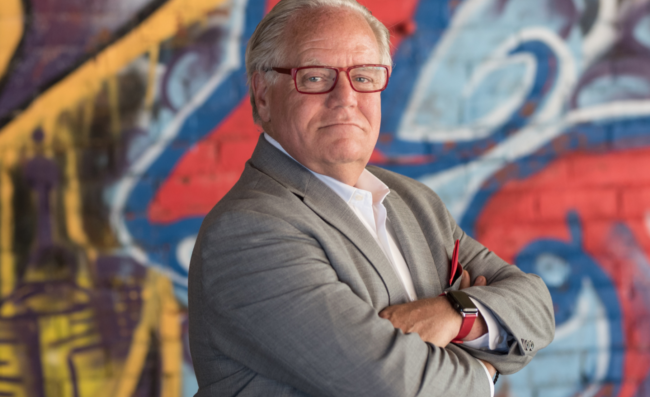

Jim Marous (00:11):
So, Jim Marous, coming to you from the Fintech NerdCon first-year event in Miami, Florida, in the middle of Wynwood Walls. And anybody who's been following me realizes I love graphic art on walls, so this is really fun. And even more fun is I'm doing a podcast here with two really, really cool innovators right now.
Jim Marous (00:31):
Basically, I'm with Siya Vansia, the Chief Brand & Innovation Officer at ConnectOne Bank. In addition, I'm here with Suzan Chaffin, the EVP of Solutions at LoanPro, and you bring solutions to the marketplace that actually are digital first in the best way.
Jim Marous (00:47):
While every bank claims to be high-tech, high-touch, most are neither. They're neither really good at high-touch nor high-tech. When a business owner needs to talk to somebody at midnight, where do they go? How do they get that human touch? Or when you come into the branch, why does it take so long to get things done?
Jim Marous (01:07):
And really, we're all trying to balance that. How do you get the touch with the tech, and how do you make that work? These two people right here are making it work. And I want to talk a little bit about what's going on, but let's start, Siya, with you. Tell us a little bit about your background before we get into the meat of the podcast.
Siya Vansia (01:23):
Yeah. So, I am with ConnectOne Bank, like you said. And we are a commercial bank, about $14 billion in assets, the largest we've ever been. We were only founded in 2005, so we're a 20-year-old bank founded by a non-banker that was highly frustrated with his own banking experiences. And so, his solution was to build a bank.
Siya Vansia (01:43):
And I say that because we've had a client-centric culture from inception, and it's really driven how we build and implement technologies and think about solutioning. And so, this business model has worked.
Siya Vansia (01:58):
We've been a high-growth company since inception, and today, we have over 60 locations. We serve the New York Metro market. And so, we've just been an incredible growth story along the way, and really forward-leaning into technology. It's why I have an innovation role at the bank.
Jim Marous (02:16):
What did you do before ConnectOne?
Siya Vansia (02:18):
ConnectOne, so out of college, I started a company that didn't work out, which is how I actually found the bank because I needed a bank account. And I started 15 years ago at a $400 million community bank.
Siya Vansia (02:32):
We were back then called North Jersey Community Bank. And today, I am still with that … I like to say we've been through like six different companies all within that story. So, as the company grew, I grew along with it.
Jim Marous (02:44):
So, tell us a little bit about your background while you're here.
Suzan Chaffin (02:48):
Well, I have the best job in the entire industry, so sorry, everyone. But I lead solution architecture at LoanPro, and I also lead implementation and delivery. So, I get the privilege of talking to prospects, existing clients, and really brainstorming solutions.
Suzan Chaffin (03:07):
Talking about partnerships, how to use our configurable systems to be able to build custom, personalized lending credit products. So, it's again, the best job. And then I worked previously for Galileo for about seven years, and I did the same thing at Galileo.
Jim Marous (03:31):
Great story.
Suzan Chaffin (03:32):
It's wonderful. So, thank you.
Jim Marous (03:33):
So, Siya, it's interesting, you've built a lot of partnerships with third-party providers. As we talk on the podcast a lot about those organizations that are smaller have an opportunity that's amazing right now to build what the Chases of the world can build because of the partnerships they set.
Jim Marous (03:48):
You've set partnerships with Nimbus, with Mantle, with obviously LoanPro. If you look (and it's not that far of a journey) back, is there anything you would do differently that is a good lesson for people that may be starting this journey that you say, “You know what? We did a lot of things right, but this one maybe wasn't as good as what we would've liked?”
Siya Vansia (04:09):
So, I think learning what you would do differently is part of innovation. There will be things that don't work out. And I think it's important that the company builds the ability to pivot. I think when we've seen success, it's when we define what successful outcomes are upfront with our partners.
Siya Vansia (04:32):
What is success to the vendor? What is success to the bank? And if there's a gap, how do we fill that gap? When we haven't done that upfront, everything becomes a little bit harder. I like to say measure twice, cut once, it's a famous saying. So, I think what I've learned is a lack of alignment upfront can lead to a harder project down the road.
Jim Marous (04:58):
So, it's interesting, I just did an insight video that came out, I think a week ago around what could SpaceX teach banking about innovation, and a couple of things that you mentioned are exactly what they do.
Jim Marous (05:07):
Number one, they are always learning. They're always implementing. They're doing it at speed. They're not doing it in projects that are sequential. They're really doing it where it's continuously going on.
Jim Marous (05:18):
And thirdly, they know their North Star. Now, that's kind of a little bit of a pun on what they do for a living. But the reality is, if you don't know where you're going, you aren't going to know when you get there.
Jim Marous (05:27):
That all seems logical, but we do (as financial institutions) get in our own way. How did you unwind some of the legacy processes and projects to make it so it's more ready for the digital bank environment?
Siya Vansia (05:42):
Jim, it's so hard, and I love what you said about the North Star. Because in every project that we've taken on, whether it was our partnership with Encino and digitizing our loan origination process, which is not easy to do on the commercial side, to implementing Mantle. You always have to go back to what the outcome is that you want to achieve because running a bank is not easy.
Siya Vansia (06:10):
We run a whole ecosystem, and there are so many components. From operations to tech, to client experience, to banker experience, to regulation, to fraud management to cybersecurity. And when all of these components come together, you can get very much stuck in the weeds. And so, you constantly-
Jim Marous (06:27):
Or stuck in the past.
Siya Vansia (06:28):
Or stuck in the past. And I always say innovation is not to unplug one vendor and plug something else in, it's to reimagine a process.
Siya Vansia (06:38):
And so, you constantly have to have communication and foresight and alignment around what that North Star is. I know I mentioned with your partner, but internally as well, all teams involved have to be aligned around where we're going.
Jim Marous (06:54):
And you have to get out of your own way.
Siya Vansia (06:56):
And you have to get out of your own way.
Jim Marous (06:57):
Because I know a lot of companies that employ a company like Mantle and then say, “Okay, we want exactly what you sold us, but we want to start with the driver's license,” which immediately, they're saying, “Poof, that it's just so wrong. We're not going to get there.”
Jim Marous (07:10):
So, Suzan, you work with a number of different financial institutions trying to bring that modernization of core and modernization of platform and composability of platform. What is the biggest challenge you see as you're working with financial institutions?
Jim Marous (07:25):
Not the sales part, but once you sold, what are some of the hurdles that you see that really financial institutions have to ask their question and go, “Are we going to be one of these companies that instead of implementing in two months or three months going to take a year?” What gets in the way?
Suzan Chaffin (07:44):
I'm going to be honest, I'm a little too direct.
Jim Marous (07:47):
That's what we want.
Suzan Chaffin (07:48):
Let's do this. It's being stuck on their legacy core and trying to understand how they can, with a sidecar, still incorporate into their legacy core solutions. I think data mapping, having the technical capabilities, or not wanting to be able to use third parties if they don't have the technical team members in place is just what I really see.
Suzan Chaffin (08:18):
Anything from what you might imagine to be a six-month implementation can snowball into a two year. So, is it, “Oh, I want to use my core, I want to have a mirrored balance. But I really want all of the innovation that you can bring.”
Suzan Chaffin (08:34):
“I don't want to have an 18-month runway to be able to build a lending product. I really like what LoanPro can do, and you can stand it up in two weeks. I want an innovation lab, but I want my old, old, stodgy core.”
Suzan Chaffin (08:43):
And we talk resales; how will you be able to map? What is the solutioning? How will you connect to all of your third parties? What does a “sidecar” mean? And then there are decisions that are made then when reality … and it can be very, very difficult.
Suzan Chaffin (09:07):
And so, it's that really just migrating or understanding how you can have two separate and still map into a single GL or have a data warehouse solution. There are so many banks that I talk to that don't have a data warehouse. They're just under infancy of becoming a modern platform.
Jim Marous (09:28):
Well, and you both sent to the same point that said if you don't know what you're trying to achieve, you won't get there. But there's got to be agreement upfront.
Jim Marous (09:38):
And I talk about the fact that when you're building something big like this, you need everybody within the organization who's going to touch it at any point, including compliance, legal — areas that you sometimes wait till the end and find out you've gone down the wrong path, or one they haven't bought into, you're going to run against that.
Jim Marous (09:53):
Let's take a short break here and recognize the sponsor of this podcast.
[Music playing]
Jim Marous (10:01):
You had to make decisions along the way as to build versus buy. What goes into that decision of either partnering, building, buying, or working in conjunction, or maybe it's a bit of both?
Siya Vansia (10:14):
Yeah, so, if our Chief Development Officer was here, his famous line is, “We can build it.” And it's a hard question to answer. I think I look at working with fintechs as a true partnership. They're not just vendors to us. And so, if a company like a Mantle or Encino can do something better than we can and they have the resources, then-
Jim Marous (10:41):
And they have the failures.
Siya Vansia (10:43):
And they have the lessons learned. They have the insights to other financial institutions that have done things well and things that haven't worked, we are all for partnering.
Siya Vansia (10:53):
I think when you make the decision, it always comes down to what's the end goal? What resources does the bank have? What resources does the partner have? If we are going to build, do we truly have the subject matter expertise to build?
Jim Marous (11:08):
And in the timeline. Because I'm sorry, you're not the biggest company. And at $14 billion, 60 branches, you have a lot of things on your priority list. And sometimes, even though you have a core that says they can do versus anything you say you can do (and at least they'll tell you that), what you have to do is find who's the best at it.
Jim Marous (11:27):
But I think the underlying thing (and I want to talk to both of you about this), is you have to have the leadership that's willing to say yes to partnering, to buying versus building, and not uproar people. I think the biggest challenge I'm seeing as I'm interviewing different-sized organizations, is leadership is going to be the key.
Jim Marous (11:47):
You can buy technology, but if you don't have the leadership in place, you're going to take three times longer, and you're not going to deploy it the way it's supposed to be deployed. I can give you a ton of examples.
Jim Marous (11:55):
Those who succeed at this do so because at the very top, they want innovation. They're going to support people that take chances. They're going to give you enough runway to fight the battle internally against those who say, “Why are you doing this? We can do it.” Or “Why are we paying again? We do it with somebody else.”
Jim Marous (12:13):
What's the hurdle that you see from LoanPro in that regard? How do you determine when you first knock on a door if the leadership's going to be there, as opposed to the talk versus the walk? Because I was in the sales team for a long time, and I got fooled more than one time with somebody who was a great friend of mine that said, “We can do this,” we got approval.
Jim Marous (12:34):
And all of a sudden, it either blows up or it completely, completely is different than what we thought we were going to achieve. How do you sense that out as a vendor? Mainly because again, those who listen as a finance institution have to ask the question themselves, “Are we that devil in disguise?”
Suzan Chaffin (12:54):
Yeah. I think it's, truly, do they have an appetite and aptitude to want to be able to innovate? What is their future plan? What is their growth strategy? Do you have a CTO? It's who are your team members? How have you invested in technology to date?
Suzan Chaffin (13:24):
If we are getting an audience with a bank, they typically have an appetite, or they are thinking about it in the short to near-term future. And so, it's the convincing of, it's the solutioning of that I see as more of a challenge than just being able to have a discussion with.
Suzan Chaffin (13:48):
The banks that we've partnered with, they have very much a forward thinking. They sometimes have a younger champion or executive team, that they aren't two years from retirement.
Jim Marous (13:59):
Which is actually why the smaller organizations tend to be much easier to work with because they have that innovative startup mentality more than, let's say, a mid-size asset firm that has legacy leadership. As I say, inappropriately more times than not, 30 white males that played golf together. 30 years ago-
Suzan Chaffin (14:16):
You said it not me.
Jim Marous (14:17):
Exactly, that have not had a bad year. How do you change when you haven't had failure to move to something new? How do you do that Siya?
Siya Vansia (14:28):
So, Jim, when I was given the innovation portion of my role, it was about four years ago. The first thing I did, we thought through what this means for the company, where we want to put our efforts, and do I need a team? What does this look like?
Siya Vansia (14:45):
And I still don't have an innovation hire. What I've done instead is build a stakeholder in every single department, and have someone I can go to who is either middle management, senior management that will engage and lean into these projects.
Siya Vansia (15:05):
So, there's constant communication. I think that has worked well. It takes effort. It's not easy to do, but I think that has really supported what we want to do moving forward.
Siya Vansia (15:17):
I do think at the top of the house, you need alignment around when there's a new initiative, why would we do this? What's the business case? How does this impact the business? How does this impact the client experience or the banker experience? What do we want to achieve?
Siya Vansia (15:34):
Our chairman and CEO has this really great term, he likes to create dynamic tension at the management table. And so, we have to have-
Jim Marous (15:41):
Well, it makes it fun.
Siya Vansia (15:42):
We have to have hard conversations. Sometimes, it's uncomfortable, but let's understand what does success look like. What are things that we should consider? What are things that can go wrong? When we get in each other's way, why does this happen? And that ultimately creates a better outcome.
Siya Vansia (16:02):
It's easy to talk about, it's not easy to do. So, three things, alignment across different divisions and having people you can lean on and advocate … when a project or an opportunity is brought to the table, it's great to have someone in legal or finance and compliance that can lean in and help unpack that opportunity.
Siya Vansia (16:21):
Second is top-of-the-house alignment with a little bit of dynamic tension in working through what the best possible solution is.
Jim Marous (16:29):
So, one of the biggest banks in the country located in New York, built a digital bank for the US. And after a number of years, they decided to “roll it into the traditional bank.” I usually say there's 35 floors of branch people in that finance institution. And it just blew up on itself, thinking you can do it. And then they built a very successful digital bank in the UK. So, that gives away who I'm talking about.
Jim Marous (16:59):
How have you been able to build two different financial institutions within one, and how do you determine where a customer goes to within your organization?
Siya Vansia (17:12):
So, we always start with the client in mind first. And so, who are we serving, and what is the product and service set that they need? Is it hands-on high-touch? Is it low-touch?
Siya Vansia (17:28):
And then how do we best serve them? That is always the North Star. If you can answer those questions, the answer becomes obvious. And that's how we've operated in every one of our opportunities.
Jim Marous (17:42):
What percentage of customers now are being deployed against the digital entity as opposed to the physical entity? Or is there a difference from the consumer's perspective? Or is it simply an internal?
Siya Vansia (17:57):
So, through ConnectOne, we offer an omnichannel onboarding experience. So, the clients can come onboard either through digital channels or in the branch, or a hybrid.
Siya Vansia (18:15):
And so, we are seeing an uptick in digital applications, of course, as expected. Primarily on the consumer side. As a commercial bank, our focus is still serving, is providing that high-touch experience to the business owner. And so, a lot of that is hands-on, and perhaps a part of the process is done through self-serve.
Jim Marous (18:36):
So, Suzan, you're going against core providers in many cases. You have to sell the fact that people may believe they're double investing to get a composable solution. Then how do you get through that barrier? Or how do you address executives that say, “We already get this, or we can do this,” when you know it's not the right answer for them?
Suzan Chaffin (19:00):
Well, I'd say, what is it that they're hoping to build in the future? What does their target market want? Because cores do not provide the same thing that a modern credit platform like LoanPro does. And so, it's not double dipping per se if you look at what do I need to invest and what is my return on that investment, and how am I going to grow my account holder base, and what does that actually bring?
Suzan Chaffin (19:29):
So, we look at the numbers, but we also look at the feature functionality. It's like, if you want to compete against fintechs, you have to be able to provide what fintechs have, and then more. I think banks that want to play in the modern credit space have that high touch. But then they also have the innovation. And so, it brings so much that maybe it's a little double dipping, but it's worth it.
Jim Marous (19:56):
So, it's interesting, Siya, she mentioned high touch, which was my next question, which is how do you bring high touch and empathy to digital interactions, and to really double down on the question, how is AI going to be playing into that in the future? Because we're at Fintech NerdCon, and AI's got to come into every conversation.
Suzan Chaffin (20:18):
AI is everywhere.
Jim Marous (20:19):
Exactly.
Siya Vansia (20:20):
I'm going to talk about two different scenarios. So, on the ConnectOne side, I think we're in an exploratory phase with AI. There's the obvious administrative content creation, marketing use cases that we probably all use in our daily lives, research.
Siya Vansia (20:42):
I think we're exploring ways; where do we have manual processes? Where do we have … someone here used the phrase “zombie work,” I love that term. Where are team members doing zombie work, and where can we solve for that, and then deploy solutions within our various processes?
Siya Vansia (21:01):
How can this support additional fraud and enhanced fraud monitoring? Very exciting use case for us to explore. We have a data lake. How can we leverage our data and scour through it using more modern solutions? I believe ConnectOne's brand is to be to provide white-glove service to our clients.
Siya Vansia (21:21):
And so, think if we were to expose AI to our clients, we should be really thoughtful about it. So, today, the primary objective would be solve for the zombie work being done in the back office. Now, we have a subsidiary that is wholly owned. It's a separate entity called BoeFly. They are a fully digital experience.
Siya Vansia (21:40):
And so, they are engaging with their client base in a full digital capacity. And I think AI can help them create content with the brand's voice. They serve the franchise space. So, if you're a Meineke franchisee, I can leverage AI and create content that speaks to you in a certain voice using the Meineke lingo.
Siya Vansia (22:07):
I can leverage AI to build for another brand in a really streamlined way. And I think there are some really hands-off use cases for BoeFly. How do you bring empathy into all of that? I think it's really hard, I don't have an answer for you. And I think in this phase of it, you still need a human in the loop.
Jim Marous (22:30):
Yeah. And not to say that that's bad. Because many people know the story I have with Delta, where I went through every channel to try to get something solved, and a human's the one who made it work. But the human knew everything because of their digital background.
Jim Marous (22:47):
They knew everything about what I had experienced in the last year, they knew everything I was going to be experiencing in the next three months. They knew me, they understood me, and they rewarded me with that empathy, that thought process.
Siya Vansia (22:57):
And ultimately, we're in the banking business. I always say we're in the business of trust. People keep their money, their hard-earned money, with us. They trust us. I think I believe we still live in an age when you have a problem, you just want someone to help you figure out the problem. Do you want to do research on your own?
Jim Marous (23:15):
Or maybe even ahead of time.
Siya Vansia (23:16):
It’s a little bit different, yes.
Jim Marous (23:17):
I want you to be aware of – or as our cars do, warn me when there may be a problem I may not see.
Siya Vansia (23:23):
I love that example.
Jim Marous (23:24):
Or an opportunity that you may … I call it the GPS of financial services. Tell me where the nearest off-ramp is for something I want to do. So, what do you see ConnectOne being (I'm not going to go any further than five years) five years from now? How's ConnectOne going to feel and look differently than it does today?
Siya Vansia (23:42):
So, I don't think ConnectOne's North Star or core values or why we exist change. I don't think how we operate changes. I think Connect is in our name, we are highly engaged with our clients. We want to build the best possible financial solutions for our clients at speed. Sense of urgency is one of our core values. How we do that I think evolves.
Siya Vansia (24:05):
And we have a commercial client base. To me, what's incredibly exciting is our clients are innovating, and they're modernizing their tools and technologies and infrastructures. And it's enabling new ways that we can potentially connect with them. And to me, that further enhances how they engage with financial services.
Siya Vansia (24:25):
So, five years from now, I think … today it's just ERP connectivity; tomorrow, we may be sitting within their ecosystems in really unique ways. And I think we're just scratching the surface on innovation for commercial businesses. And so, I'm super excited about where we can go.
Jim Marous (24:46):
It is cool because the digitalization of everything makes it so commercial's the last group of the banking part.
Siya Vansia (24:52):
Yes. We hit consumer, then we hit small business.
Jim Marous (24:54):
Maybe trust, but even investment services have been more advanced in the commercial side. So, five years from now, what does LoanPro look like? What are they moving towards as an organization to be able to serve the financial institutions of the future?
Suzan Chaffin (25:08):
I think we are powering personalization and having a very composable architecture to be able to say, “My demographic, or a subset of my demographic, this is what they want. To be able to build a program, a product, to be innovation labs, more or less solution.” I think personalization is absolutely going to be key.
Suzan Chaffin (25:32):
There's a lot you can do with machine learning and AI to be able to take your data sets and really understand and meet your customers where they are. I love the high-touch still, or the touch of having that human element.
Suzan Chaffin (25:49):
But it really is, what services do you need? What do we anticipate from data that we can get that you may need? Where else are you doing your banking? Where is embedded finance? I'm so excited to follow you, I'm a commercial nerd.
Suzan Chaffin (26:07):
So, I just think that LoanPro is going to continue to dive deeper and deeper into having the personalized products and services, and the partnerships that we bring to be able to have that holistic solution.
[Music playing]
Jim Marous (26:20):
Siya, Suzan, it's not nearly enough time, but we have time limits because other people are going to be using the booth.
Siya Vansia (26:27):
We can go all day. This is such a great conversation.
Jim Marous (26:29):
And the one topic we didn't get to is who's going to be the winners in the future? Because as we're looking around the room here, at this amazing event, it is, to me, exciting, the energy level, the people that interact with each other. There's no time limit set interaction where you can have a conversation with somebody who maybe is a competitor, find out where are you today.
Jim Marous (26:50):
I've had just amazing interactions, and I'm sorry, I'm very biased. I love Wynwood Walls. I love Wynwood, Miami.
Siya Vansia (26:55):
It's an incredible place.
Jim Marous (26:56):
You walk down every street, you go, “Whoa, that's something I didn't expect.” Which is really what we're up against today in our regular lives, you don't know what to expect. It's coming down the corner, and it's interesting how it plays out visually and on a vibe level here.
Jim Marous (27:10):
So, thank you both for being here. I guarantee you we're going to be talking with both of you again very soon. Thank you.
Siya Vansia (27:15):
Thank you for having us.
Suzan Chaffin (27:16)
Thank you so much.
Jim Marous (27:17):
Thanks for listening to Banking Transformed, the winner of three international awards for podcast excellence. If you enjoy what we're doing, we would really enjoy a positive review.
Jim Marous (27:27):
Also check out my recent articles in The Financial Brand, the research we're doing for the Digital Banking Report. This has been a production of Evergreen Podcasts. A special thank you to our senior producer, Leah Haslage; audio engineer, Chris Fafalios, and video producer, Will Pritts.
Recent Episodes
View AllThe SoFi Cross-Buy Engine Fuels Amazing Growth
Banking TransformedThe Best Banking Innovation Doesn't Need a Huge Budget
Banking TransformedArming Front-Line Bankers with AI Tools That Win Clients
Banking TransformedWhy Banks Miss Human Customer Moments"Most banks know far more about their customers than the customer ever feels. In this Banking Insight Video, I look at why relationship banking often feels programmed, from the quarterly business banker check-in that g
Banking TransformedYou May Also Like



Hear More From Us!
Subscribe Today and get the newest Evergreen content delivered straight to your inbox!
Advertising & Sponsorship
Interested in sponsoring or running an ad for your business on an Evergreen Podcast? Contact us to get pricing and availability.