
Banking Transformed
Hosted by top 5 banking and fintech influencer, Jim Marous, Banking Transformed highlights the challenges facing the banking industry. Featuring some of the top minds in business, this podcast explores how financial institutions can prepare for the future of banking.


How TD Bank Creates Unexpectedly Human Experiences
In an era where financial institutions race to digitize, TD has taken a distinctive approach by ensuring technology serves a deeper purpose: creating unexpected human experiences. As part of the Executive Leadership Series, sponsored by Naehas and recorded live at the Financial Brand Forum, I was joined by Todd Purcell, Head of Digital Strategy, Planning and Partnerships for TD Bank.
Our conversation explores how TD's digital ecosystem supports its brand promise with real-world examples of how the bank integrates advanced analytics, personalization, and multichannel engagement to make banking better for people.
Todd also discusses how TD's digital strategy has evolved to support rather than supplant human connections, resulting in measurable customer satisfaction and engagement improvements.
This episode of Banking Transformed is sponsored by Naehas
Naehas provides financial institutions with a centralized platform to efficiently manage product creation, pricing strategies, compliance, and disclosures. By automating complex processes and integrating advanced governance tools, Naehas significantly reduces operational risk and accelerates execution. Trusted by 6 of the 10 largest U.S. banks, our solution supports top-tier institutions in delivering precise, compliant offers with speed and accuracy.
Where to Listen
Find us in your favorite podcast app.
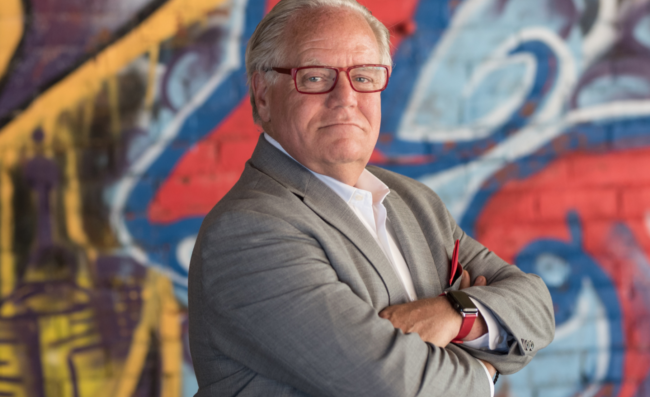

Jim Marous (00:12):
Really looking forward to this last interview for the Executive Leadership series before we get into the Pardon the Finterruption with Ron Shevlin. It's interesting because we're getting a theme here, I'm trying to work with regional banks, digital forward banks, credit unions regulator basically to talk about what's possible.
Jim Marous (00:33):
And some takeaways for those of you who haven't been at all my sessions, is that most organizations are fearful of the unknown, they're fearful of not catching up to what's needed by the consumer, everyone is talking personalization. You’d think I was an astronomer for the number of times I talked about the NorthStar, and I think this is going to be a really interesting conversation because there's some legacy here that I want to talk about.
Jim Marous (01:00):
I don't know how many in the room understand not only who TD Bank is today, but who TD Bank was in the past and it's going to be an interesting story. I'm really fortunate to have Todd Purcell from TD Bank who's in charge of the digital transformation strategy, innovation and partnerships.
Jim Marous (01:20):
So, as I mentioned TD Bank is a legacy organization with new technology and truly an innovative spirit. You joined TD Bank relatively recently in its history. Can you talk a little bit about your background that got you to TD Bank, and then a little bit about what you do at TD Bank now?
Todd Purcell (01:39):
Sure, thanks Jim and thanks for the opportunity. I joined TD back in December of '23. Prior to TD, my entire career has been really in digital transformation and I was lucky I think to start almost on the ground floor in 1995 when I was at Chemical Bank, if you can recall that then became Chase.
Todd Purcell (02:03):
And in that experience, I was in a rotational program, young in my career then I had this moment where there was a lot of startups, big banks thinking about a pure digital play, Wingspan Bank, if you can remember back then. And so-
Jim Marous (02:17):
We referenced Wingspan, when we've talked to Varo yesterday.
Todd Purcell (02:20):
So, there was a moment where I was really again, earlier in my career, and someone came over and said, “Listen, we're thinking about building a digital experience for Chase, it's called Spectrum.” It was a dial up service, “And can you take a look at it and think about how we go to an online experience.”
Todd Purcell (02:37):
I was really just the right time, right place, young enough to be excited and also young enough not to know what I wasn't doing. And then I had an opportunity to think about that and really build from the ground floor what became ICOB or internet chase online banking at a very early stage in my career.
Todd Purcell (02:53):
And that then started really what I've been focused on for the rest of my entire journey working at large brands, Chase, American Express, MetLife, The Hartford, USAA, Webster more of a community bank, but all around sitting at the center of those organizations, working across this consumer and small business segments and determining how to drive digital transformation to scale as head of digital marketing, head of digital servicing, digital strategy.
Todd Purcell (03:20):
But all really that same concept of how do you really interact with customers in a more meaningful way through the digital channel. And so, I've been super lucky to do that through my entire career and really what brought me to TD was a desire to get back. I was consulting for a couple years, but I knew I wanted to get back to banking.
Todd Purcell (03:38):
And what attracted me about TD was a phenomenal brand and they were at a point of inflection with a legacy store experience, but they wanted to transform digitally. And they've been doing good work, but they wanted to bring in some new, energetic thinking to the organization to say, "How do we drive that transformation faster?"
Todd Purcell (03:59):
And so, it really was an opportunity I could not pass up to come in and have an opportunity to think about doing this for a top 10 bank at scale is why I joined back in December and it's been 15 months of an amazing experience so far.
Jim Marous (04:13):
So, you talk about that digital transformation experience and I would agree that when you look at TD Bank, they were brand forward, they were doing well in digital, but that's not good enough right now. The speed you were with some amazing organizations that the focus was on how do we double down because this train's moving faster than we are.
Jim Marous (04:36):
I've talked about it many times that you have to go faster than you think you have to go because the train's going faster every day. Innovation, transformation change has never happened this slow or this fast will never happen this slowly again so you got to keep on ramping up. We're lucky in that we have 150 organizations downstairs that are willing to help you make that transformation quicker than either one of us would've ever thought five years ago could have happened.
Jim Marous (05:02):
I mean, you can do core transformation now in 12 to 18 months, you weren't able to do it in 10 years before and you'd keep on changing it because it'd happen to happen. We have seen in somewhat recent past, organizations say, "We're going to come in with a brand-new mobile banking experience." They pre-announce it 18 months ahead of when they're going to actually introduce it for whatever reason.
Jim Marous (05:24):
And you sit there and go, "Is this going to be outdated before it gets introduced?" Because things are now happening so fast. Was that as a premise, when you first came into the organization, what was the first thing that you knew you had to solve for, to make it so that you could move to the next step?
Todd Purcell (05:44):
So, as you can imagine during the interview processes, as they're vetting you and you're vetting them but based on all the experience I've had in the industry, I knew and I really knew what the problems were and what the challenges were and the opportunities. But I was careful in coming in with that blueprint to say, here's, "I know what to do. Let's go forward."
Todd Purcell (06:04):
I spent really the first three months in a listening tour talking to well over a hundred other executives across the organization to really ground myself in TD and ground myself in that culture and making sure I knew what would be effective to really drive that transformation.
Todd Purcell (06:19):
And so, what was the biggest need is at TD, while we were doing good things digitally, and we were making progress for sure, we have a solid experience but there was a focus on features versus first experience. And I think there was a feature war, but what about the experience?
Todd Purcell (06:38):
There also was a sense of lack of understanding that this is a 24 by 7, 365-day e-commerce engine that's running. And we viewed it as really a channel in addition to the stores and to our contact center, but not a real engine that's driving a conversation with our customers every single moment.
Todd Purcell (06:57):
So, we had a feature battle, we had a lack of understanding that it's a true e-commerce engine and also, we had a lack of understanding of the tools you need to really run that, to really run it as a true e-commerce engine. And most importantly, I think we had strategy sitting on the side of desks across the organizations and silos. We didn't have a unified vision of digital, we didn't have a unified strategy, and we didn't have a unified roadmap and that was critical.
Todd Purcell (07:23):
So, after that listening tour, understanding the culture, understanding the opportunity, my first focus was to develop that three-year strategy and to really enforce a unified single roadmap, prioritized ruthlessly versus 10 roadmaps, but one single roadmap.
Todd Purcell (07:41):
And that has been really instrumental in then letting us … well, it was slow initially in the first few months. Jim, it's helped us to accelerate that transformation because now we have a unified roadmap, a unified strategy and alignment across the organization.
Jim Marous (07:55):
So, as we talked about on our prep call and even the back, I'm a student in the financial services industry, I've been in it forever. I know names of organizations that most people would not even remember or even know what it would mean, sham it, there's a lot of them and legacy bankers will go, "God, that's right." And if there's been a couple of these on the internet where it's the tree of, “Oh, this is what these organizations were, and now they've all become this.”
Jim Marous (08:24):
What's interesting is your legacy is for those in the northeast, in Maine especially, is legendary. Commerce Bank was known for its humanization and their differentiation against all the big banks that were around them was, we are the most humanized organization known and our customers literally did love them. It was mostly a branch experience between dog biscuits, pens were legend.
Jim Marous (08:55):
In fact, Huntington Bank picked up the pen idea way back when it was Commerce that everybody had a pen, I think it was a green pen back in the commerce days and everybody knew they would be at every parade, they'd have really the community involvement was so legendary as well.
Jim Marous (09:13):
And I remember asking God, maybe seven years ago of a person that was in charge of the digital banking process, "How are you going to make the digital experience as human as what you're known for on the human side?"
Jim Marous (09:31):
So, I'm going to ask this now because I remember the answer we had back then, there was, “We don't know yet, that's what we're working on,” and it may be the same answer, but you're probably further along the path. How do you do that? Because there's still a large percentage of your customer base still may have in back of their mind, "Geez, I wish I had, or even employees."
Jim Marous (09:52):
How are you trying to do that? But in the same sense, how are you trying to bring back the two components, make it so that the legacy organization understands what we're trying to do digitally is not a threat to them from a brand or a human standpoint, but going forward?
Todd Purcell (10:09):
And when we talked about this before, I had to reorient myself too a little bit because coming in and being in the industry and really solely focused on digital as the primary channel and driving transformation. So, joining TD, we're called America's most convenient bank, I knew there was a store legacy and so I had to reorient my thinking a little bit to say, "Well, how do I think about digital plus that human interaction?" Because it is so important, I would’ve failed if I just came in digital.
Todd Purcell (10:37):
I knew we had to think about the digital, the contact center and the stores together and deliver that unexpectedly human experience that we talk about as our brand and America's most convenient bank, which has evolved. Because we for sure still have the pens, we still have lollipops, we now have dog biscuits coming out of ATM machines so we definitely think about that human interaction for those customers-
Jim Marous (11:00):
By the way, this can't just be talked over. You have dog biscuits coming out of ATM machines, explain that a little bit.
Todd Purcell (11:05):
It's something we played around with as an innovation concept to let that be available for our customers and to let them, when they come into our stores, which we call our branches our stores, let them interact in this and see how it works.
Jim Marous (11:18):
The dogs have to push it. I mean, I'm going back to Caesar yesterday, the dogs have to push buttons to get their biscuits or?
Todd Purcell (11:23):
I don't know, I don't know, maybe, some very intelligent dogs. But thinking about that is grounding myself and my team in the importance that we just could be singularly focused on digital but think about the human experience too. But my answer ultimately to your question is we haven't figured it out yet but it's definitely part of our journey. And we think about, again, what is unexpectedly human mean digitally, what is the equivalent of a lollipop digitally?
Todd Purcell (11:51):
And so, definitely in our thinking as we think about the three-year strategy and Lamont talked about it too, empathy, connectedness, giving our customers the ability to interact how they want to but in that digital interaction where frankly we should know much more about them in real time, explicit and implicit information, how can you really deliver on that experience with again, that empathy?
Todd Purcell (12:15):
And an example that I'm thinking about too is and I think it's talked about with the U.S. banking experience is there's this push in our industry that we must allow or give customer ability to open an account on their mobile phone in three minutes or less with three fields. And I'm saying, "Well, let's flip that on its head a little bit." Some customers that may be how they want to interact, other customers may want a very human experience.
Todd Purcell (12:36):
So, how does that, when you come in to open an account, maybe it's 10 minutes, maybe it's a guided journey, maybe there's a human at the ready in that interaction. So, not be so digitally focused for speed but think about really what certain segments of customers really want to interact and so we're thinking about that as we think about our-
Jim Marous (12:54):
Are you looking at a differentiated experience? That person can go the journey they want if they want it done while they're in the grocery line versus sitting down and having time to do it.
Todd Purcell (13:03):
Exactly. Yeah, very much a guided journey, let the customer choose their own path and not be so singularly obsessed with speed, fields and mobile, but let the customer choose their own path. And I think that's the ultimate answer to delivering a more human experience digitally.
Jim Marous (13:20):
That's interesting because when we think about digital, myself included, we think about how can you get as efficient as possible? That works for me but it may not work for other people. I go back to an experience I had two years ago in a suburb of Atlanta where I'm at a wedding, it's in the middle of the country, in the countryside, I should say.
Jim Marous (13:40):
And I had to pick up a hundred dollars bill for a wedding gift and got to a bank and the line of cars, I thought they were in line for Starbucks or Chick-fil-A, but they're in line for the bank. And I'm going, "Okay, I haven't seen this forever." And then I said, "Well, I'll just go inside," and there’s a line to get in the branch.
Jim Marous (14:01):
I'm going, "Okay, this must be a new bank. They must be giving something away," nobody stands in line for a bank. I get in, I finally get through the line. Oh, I'm asking people in line, "What are they giving away?" And they go, "Huh." They say, “It's always like this at the end of month.” I’m going, “Okay.”
Jim Marous (14:18):
I remember my branch days when there was no direct deposit that people would stand in line for this. I finally found out that what it was is the consumers in this market that I was at were all military, they were not trusting the banks, they deal almost all in cash in the marketplace and therefore what they're doing is their money was just deposited, they want to take out cash.
Jim Marous (14:42):
I said, "Okay, I get that kind of, but why the long auto tower line, when you have two ATMs?" They go, "The people don't want to change. We've had had people out there guiding them to a new — and all they want to do is withdraw money and they'll stay in that line forever to withdraw their money."
Jim Marous (14:58):
What that says, what it told me was, “Don't think everybody's the same as what you're selling out there in the marketplace,” myself selling in the marketplace in that a person may want a different digital experience. They want digital in one case, but human in another.
Jim Marous (15:13):
So, with that in mind and looking at that transformation, what do you do internally to reinforce that you're going to hold on to some of the things that our legacy? Because we worry daily that digital is scaring the jeebies out of the entire branch staff at least and many people internally because they think they're going to be replaced, AI also.
Jim Marous (15:37):
What are you doing from a strategy standpoint? Because you have a lot of roles in that title of yours. When you do that from the strategy, how do you work on the internal audience to make them comfortable with where you want to take TD Bank?
Todd Purcell (15:50):
So, specifically, what we're doing as part of our strategy, our three-year strategy, and is the first story arc is really around making the basics brilliant so customers could bank in our digital channel, but then we're thinking about the store and the context experience and so I'm moving away from because as an industry, how many times have we said omni, multi, opti? I mean, that's been around for as long as we've probably been in this space.
Todd Purcell (16:15):
And so, I've been purposeful in changing the language and I call it a connected customer experience. So, how do we deliver CCX? How do we deliver a choice, continuity and consistency in their interactions? And the key thing is choice.
Todd Purcell (16:30):
So, throughout the organization and through our contact center and stores, we're saying we are building a really robust, strong digital channel because for most of our customers, that's the primary channel they want to interact with but we still want to give them choice.
Todd Purcell (16:44):
So, we know the human experience in the contact center, the human experience in store is our legacy, but give them that choice. But when they do, when that customer does want to interact across channel, give them that consistency of experience and continuity of that conversation.
Todd Purcell (16:57):
And I think that has really kind of toned down a little bit of this. We're going to displace contact center folks, we're displacing store volume, we're optimizing the channel. We are very much delivering a CCX experience that's delivering that choice, consistency and continuity regardless of how they interact. And I think that has helped a little bit internally to change the dialogue and just reduce that threat of being no longer relevant in how you interact with customers.
Jim Marous (17:25):
How does your product set now look like in the future? Because we're talking about digital transformation, but at the same time, especially in an organization your size, you're trying to have a lot of things moving at the same time towards the same end direction. But where are you going from a product set, from an innovation standpoint to help serve those needs in the multi-channel, omni-channel, whatever way?
Todd Purcell (17:51):
And I've heard you talk before about especially the younger demographics, they even know what a checking account is or is that really even a phrase now relevant? But I would say right now, from a digital perspective and a product perspective, we need to be joined up a bit more where I don't think just in full disclosure and transparency, right now we still are very a product organization and a distribution organization but how do we bring it together?
Todd Purcell (18:17):
So, I think that's an opportunity for us to think about how does digital really start to think to be more than just a distribution, but really a way to think about how you interact with a bank from a product perspective. So, I don't think our products right now haven't evolved as much in terms of where they need to be to really address that question.
Jim Marous (18:36):
Where do you see them evolving? Where do you see the industry evolving from a … we all have the same product lines, we haven't really brought them together where there's one institution at PNC Bank that built the one product but they never deployed it the way I would've thought they deployed. They thought it was going to be for the younger consumer, it ended up being for an older consumer.
Jim Marous (18:55):
It was a transitional thing but it was a beautiful integrated product where the credit was connected to the debit, but it wasn't really a checking account, it was a multi-product relationship building that kind of made sense. What do you see the industry going to or what do you see TD Bank going to? What do you think the marketplace wants? And it may not be one product, it may be the way you connect them for all different customers?
Todd Purcell (19:21):
So, as I think again, going back to the three-year strategy our way 0.3 is to be the financial companion. And not in the sense that we have to own the entire relationship with the customer, but we can be that trusted money setter bank where the customer can use us as their hub and then build their financial ecosystem around us.
Todd Purcell (19:38):
And so, I think the industry has been an ebb of flow where there were super apps and then it went back to best of breed, then now it's coming maybe back to a single super app, especially with open banking. But I look at it at a space where we could be that core, trusted bank, trusted interaction with you, that partner with you, but then let you build your ecosystem around us regardless of where you want to bank.
Todd Purcell (20:03):
We're not going to control everything in your wallet but let us be that center and create that ecosystem where you could bank with us and you could have that experience trusted with TD and trusted with your other partners and I think that's going to be an opportunity. Let the customer interact, let the customer choose their own path, again, from products, but be the core and let them interact with this that way.
Jim Marous (20:24):
How are you going to be tracking the individual consumer's path? Because one thing to allow them to take that path but you got to proactively understand that path to know the next step they're going to take. GPS system doesn't work if you give me five different ways to get to my home, and you don't know which way I took. So, how do you see that happening at TD Bank where you actually find ways to monitor that path so you can be a better steward of their wellness?
Todd Purcell (20:56):
So, I mean I think CFPB 1033, the compliance requirement for open banking was a push for probably many of you and a push for us. But we're now saying, "Okay, that's a regulatory opportunity that we have to meet for the bank of our size."
Todd Purcell (21:10):
But now how do we really think about in a way that's enabling, how can open banking be an enabler? How can open banking let us get all that transaction information and then cleanse it, understand it, regardless of where it's coming from but then that I think is our GPS.
Todd Purcell (21:25):
By having all that information, cleanse it, enrich it, and then use it for insight based on whatever path they're going so I think that's how I see the answer. Because then we'll have all that information flowing through our central hub that gives us that GPS.
Jim Marous (21:43):
So, TD Bank, are you a build versus buy organization?
Todd Purcell (21:47):
I think it's a combination but primarily right now for our fintech partnerships, it's a buy and then customize. And I think we are looking right now, at least in the United States within AMCB, is those fintech relationships that are really accretive to our strategy. There's a ton of, as you know — there are amazing fintech companies with innovation happening at incredibly rapid pace.
Todd Purcell (22:17):
And of course, I get quite a few phone calls or emails every single day but it's really around what's accretive to our strategy and we're being very purposeful in those relationships that we choose and that we really bring in a strategic partners.
Todd Purcell (22:33):
And so, really, right now it's in our journey today, it's more of a buy situation for us and in the U.S. A strong, significant partner. So, we may only onboard two or three in the full year because it's really accretive to our strategy and we want a long-term partnership.
Jim Marous (22:53):
So, we've talked a lot on the broad scale of where you're trying to go in the future, but on a daily, daily basis, you got to fix the basics. We talked about this in the back, that at the end of the day, I got to get the basics right, that U.S. bank, yes, they're talking about innovation, five levels of innovation, they have a data set that really makes it easier.
Jim Marous (23:13):
They're looking at being resilient, but their definition of resilience had to do with how do I make sure I get all the basics nailed? How do I make it so that I'm ahead of where the consumer is, hopefully at some point. What are some of the basic things that TD Bank right now is trying to answer to and fix to make it so we get the basics right?
Todd Purcell (23:35):
So, going back to my comment before about the strategy, so we have that three-year strategy, first way point is make the basics brilliant, second way point is go beyond transactional, third way point is to be the financial companion that first waypoint make the basics brilliant is a change in how we approach things.
Todd Purcell (23:53):
Again, think about features but think about experience, and also think about the ongoing investment required to optimize that experience. I think I've seen other organizations, and I think TD has been historically at fault on some occasion of this. To invest in something, launch it, and then move on to the next opportunity. So, really, I've tried to change our focus to say, when we have our core experiences, we have to have ongoing investment to optimize those experiences.
Todd Purcell (24:21):
And so, we're looking at everyday banking and we do it very much in acumen centered language. So, I want to come in and check my balance, I want to send money to a friend, I want to pay a bill to my landscaper. So, we think about the everyday banking experiences and we're staring each one of those down, we're assessing what we call the digital readiness assessment of each one to say is that experience ready for a 100% self-assist?
Todd Purcell (24:47):
And/or if that experience wants it and that customer wants it the choice or the consistency or continuity for another channel, can that experience be ready for a cross-channel experience? So, we look at it like, is it ready for digital? And is it ready for CCX?
Todd Purcell (25:02):
So, we really, in a very methodical fashion, we stare down each one and look at them through three lenses of what's the CX, what's the business rules that we have in place, and what's the technology that's running it, and where are the friction points at each one of those dimensions that could be impacting everyday banking.
Todd Purcell (25:19):
And so, our focus over the past year, and especially going into, we call it make the basics brilliant, the sequel because that will flow into '26 as you think about making sure those experiences are working.
Todd Purcell (25:29):
And we're looking at bill pay, we're looking at mobile remote deposit capture, we're looking at Zelle, we're looking at authentication. Really the core experiences but making sure those are right. And that's a lot of work but I think that's critical. You earn the right to do more if you get that, what customers expect.
Jim Marous (25:47):
So, in your 18 months, what are a couple success stories you've had as far as it is kind of like going, geez, I don't know if I really want to tell anybody that this is one of the things that were broken in your perception. What are some of the success stories so that the consumer could feel that's happened in the last 18 months?
Todd Purcell (26:03):
A tremendous progress internally that maybe people aren't seeing just yet, but we are making advancements. We launched digital disputes, that's a significant enhancement for us, we've modernized the entire experience for mobile so it's a whole brand new on-brand more relevant, more contemporary experience so that's an accomplishment.
Jim Marous (26:26):
In what way is a contemporary?
Todd Purcell (26:28):
It's more white space, more inviting, more engaging in terms of how people interact from a user experience, it's more contemporary. So, digital disputes, mobile modernization, we're now enhancing the account setup experience to make it more intuitive when people come in post application to onboard. What's that experience feel like?
Todd Purcell (26:48):
So, there are a series of other enhancements but really we're chipping away at that. But I think what's more important in terms of enhancement we made in terms of the culture and the change and the focus on really on having that unified roadmap and strategy, that to me, it sets us up for even more success in '26.
Jim Marous (27:07):
What's it again? Unexpected?
Todd Purcell (27:12):
Unexpectedly Human is one of our taglines.
Jim Marous (27:14):
Unexpectedly Human, okay. So, sometimes the marketing group and the strategy group and the technology group, one gets ahead of the other, we're never too sure how that's going to happen. How are you making it unexpectedly human?
Todd Purcell (27:28):
So, well first I think we've established through the strategy team and through the work that our head of digital is that strong partnership with marketing, so we don't get ahead of each other and we stay in lockstep. So, I think with our marketing organization operations technology, it's a very unified planning process now so I think it's important.
Todd Purcell (27:50):
So, the Unexpectedly Human, again, I think we're still trying to figure that out, trying to see what does that mean and what does convenience mean? What does convenience digitally mean?
Jim Marous (28:02):
Going back to old branding at TD.
Todd Purcell (28:05):
What does that really mean to our customers? And so, another area of focus that we do, and I think it’s success to try to uncover that is we have established what we call our design sprint process. So, we take a problem like everyday banking and let's say mobile remote deposit capture and we have a design sprint thinking where we bring all the participants across the organization, all the functional areas in a room for two days.
Todd Purcell (28:33):
And we stare down the problem, what's the problem statement? And then start to ideate solution, rapid prototyping, and then test with customers in the market. And we do that in two days where typically that would take us 16 weeks so to me, that also is getting the right people together. And then as you think about that problem statement, how do we deliver that in an unexpected human way.
Todd Purcell (28:55):
Again, early in the journey, but that's changing our pace of transformation and do it in a way that's really joined up because you're getting everybody together to solve a problem versus in the past it was linear conversations, meeting after meeting, after meeting, now you're forcing that collaboration in real time.
Jim Marous (29:14):
What's interesting is what you're really doing is defining what you want your NorthStar; I've used that as I mentioned a whole lot lately. But if you define that, and if you can get everybody rallying, pulling the rope the same direction as opposed to, as you said, when it's separate, you may have different definitions of what that means to different people somewhat on a human personal basis going, "I say, you don't let go of this because that's my job. So, I don't want to let go of that."
Jim Marous (29:40):
How are you because Unexpectedly Human is something that is also an internal brand, it becomes something that you have to do and live to internally to your own employees. How are you from a communication and from a culture standpoint, trying to live that saying, “You know what, this does not mean replacement of humans by digital transformation or anything like that, but it may mean a change in roles.” How do you communicate that within TD?
Todd Purcell (30:09):
Within internally through the company?
Jim Marous (30:10):
Yep.
Todd Purcell (30:12):
I think it is using that beacon CCX language, I think starts to get that in terms of that choice, consistent continuity, I think being aligned to a single NorthStar vision, partnering with our market organization, which is the brand team, which is going to be delivering those messages out to the marketplace, I think having those conversations aligning on our brand value proposition, ensuring we're speaking the same language, is really the journey we're on Jim.
Todd Purcell (30:41):
And again, I feel that I haven't been able to answer that we've solved it, but we have a path forward, I think, to get after it. And it's about that connectedness internally to make sure we are, and really listening to and I think historically our market organization was over here and we were over here, I think now we are connected and that is critical. Because that’s the brand voice and digital is the largest manifestation of the brand every single day.
Todd Purcell (31:06):
Our customers interact with us 20 times on average a month, so we are delivering the brand experience 20 times a month to our customers, far in excess of what we see in the marketplace in terms of brand advertising and so we're trying to think about that. How do we start to deliver that message internally when those customers interact with us? Again, haven't figured it out, but that's what we're thinking about.
Jim Marous (31:27):
But the journey's there. I think anybody who comes up from the stage or meets me on a podcast or anybody we meet in this, anybody who thinks they've figured it out, I'm not going to say they're lying, but they're certainly stretching the truth. The reality is to know what you're trying to achieve to make sure it's communicated well within the organization to make sure there's enthusiasm around it.
Jim Marous (31:48):
Lamont was a great example of that you go, I've been lucky. You're the last interview we've had this weekend, there's not been one person that I didn't say, you know what, if they told me to charge through I'd find a way to do it because of their personality and that's part of what the hiring process becomes, it's a part of who you're around.
Jim Marous (32:08):
And a person can't have this personality on the external from the bank and not be able to live that in the financial institutions so it's very interesting from that standpoint.
Jim Marous (32:19):
When you are looking at the global environment and organizations, financial or non-financial, that are starting to really understand the way the consumer doesn't want digital only, but they want to have the digital human experience, what's an organization out there, big or small as I said, financial or non-financial that you're saying, "You know what, it's a pretty good aspiration, they're delivering on it pretty well."
Todd Purcell (32:47):
We take a look. So, we obviously do our benchmarking across other large regional banks and Citizen’s obviously one of them. We look at the national banks but we look for inspiration really from more retail experiences and where it connects that and again, I'm going to say the usual suspects in terms of the connectedness.
Todd Purcell (33:10):
But like Netflix, it's connected, there's consistency, continuity or Nordstrom where there is a human — I think you've brought up, I know you've talked about Nordstrom before, but to me that that's a human and digital experience that connects the colleagues in the middle of that.
Todd Purcell (33:26):
And so, I look at inspiration really from retail experiences that deliver that more human interaction that becomes empathetic and legendary and how do we bring that into TD. And we were talking earlier before too as part of our thinking as well is what does that legendary experience index look like? And we use that phrase versus NPS.
Todd Purcell (33:48):
So, we think about what's legendary and so, we set that high bar. I mean, it's not like that that's a pretty high bar to achieve a legendary experience index and we think it cannot only be delivered by digital but by the human digital connection and so, getting inspiration from retail to help guide that thinking is critical for us.
Jim Marous (34:09):
How do you measure that? I mean, I know what it's called, but how are you getting your input?
Todd Purcell (34:14):
It's a pretty typical way. I mean, it's a survey based. So, we survey customers at a transaction level, and then we get that information and we have a significant volume coming through our voice of customer through survey data and we have a team that methodically goes through all that feedback and then we take all that feedback, we identify the set of irritants that customers tell us and then we have an internal metric to say, "Are we reducing those irritants?"
Todd Purcell (34:43):
And so, those irritants flow into my team that then guides our strategy guides, the everyday banking focus guides our roadmap. And then it's a C-suite level metric because it's critically important for us but staring down the details, gathering that information and looking irritant after irritant after irritant and we report every single day.
Todd Purcell (35:06):
It's information that comes into my inbox every single day. Here's the LEI, the legendary experience index from yesterday, here's where it moved and here are the irritants that popped. And so, you could say, "Is that too much?" But I don't think it is because it could be that canary in the coal mine, it could be that something happening that is going south and we're going to track it every single day and see is something going wrong?
Todd Purcell (35:30):
And we try to then not to react all the time but to get a sense of what's that trend looking like? What's the saliency of that trend and can we act quickly on it? So, it is something literally, every single morning at 8:30, it pops into my inbox and we look at it.
Jim Marous (35:45):
So, it's interesting when you look at your results on your surveying process, are you looking more at what you've done right or are you looking for those things that are going wrong just as a human?
Todd Purcell (35:58):
It's a great question. I think some folks tend to look at what we're doing well because our LEI is exceeding our target. I tend to look at where there's moments of friction because if you only stare at the LEI and you look at JD Power, we have won some awards and some recognition in the industry on our mobile and online experiences which is phenomenal but if you looked at that, you'd probably say, “We're good.”
Todd Purcell (36:24):
But really getting after those irritants, really understanding what's driving that friction point, but then also making sure we understand the saliency of it. We can't react to everything, it could may only be one customer but let's look at the salience of what's wrong and then act on that. So, I think it's-
Jim Marous (36:39):
I think that's a great point. I think in the digital world, we do like the good news stories, that's human. But I think I've gotten more aware of things that don't work exactly the way I would've liked it to and we're becoming more discerning on what that means.
Jim Marous (36:55):
So, why does Amazon tell you where in the process this whole thing is because they had enough people that said, "I know you're going to get it here between two and eight, but I want it closer than that." That came from the cable industry where you think the pyramid is going to come at this point. They didn't come at that point.
Jim Marous (37:11):
I look at my Hulu example where I really like the fact that it continually is responding to the way I watch TV until my son and his wife started living with us down in Florida for about four months and he is a sports addict, and all of a sudden, all my preferred channels are all gone.
Jim Marous (37:29):
And I know you give me a chance to have different people on the thing, but he didn't want to go through that process because it's not the top one. And all of a sudden, I'm going, "Well this screwed up my whole sequence and now Hulu doesn't know me anymore." So, I said, "Why wouldn't Hulu go, has something changed here?"
Jim Marous (37:46):
You didn't all of a sudden want to see every sport out there but I have to go a long way before I see the news channel I want to go to. But those type of experiences and looking for what's sometimes broken are the really enlightening moments on, as you said, how do I make it unexpected? How do I make it legendary? It's fiction the little things, as you said, I got to get the basics done perfectly.
Todd Purcell (38:12):
And I think it's initially when I made that declaration as part of our strategy there was I think a little bit of pushback to say, "Well, we can't do all of our investment on that, we need to think about the innovation opportunities." And that was my concern and I think a lot of us are in this situation, tend to be a little bit of that dog with a squirrel. You tend to go after that next bright shiny object.
Todd Purcell (38:38):
And so, to really ground us and be ruthless in this but still think and we still have a significant investment in AI, significant investment in innovation, I don't want to get a sense that we're kind of back in 1990, but it's the balance. It's the balance and right now the balance has to be more on that everyday banking basics and be ruthless in really assessing what the friction points are at every single transaction.
Todd Purcell (39:04):
And so, we are really right now assessing every single interaction across the bank, what's happening in those interactions? Is it ready to be digital or not? What is it required to change that experience? Literally, Jim, transaction by transaction by transaction and I think that's mission critical for us to do quickly, that gives us the right to then innovate.
Jim Marous (39:27):
I mean, the digital world is beautiful because we can get instantaneous feedback if we build our back office well, we can become resilient and be able to change things on a dime. As you mentioned, you can test things that were never able to be tested before and get out of it if you don't like the test, you're not going to impact all the consumers in that basis and that gives you such great foundation to build.
Jim Marous (39:52):
It's interesting because you never know what may happen in the world that will change how people perceive your brand. I think we had a conversation, I talked about your American Express background and I said, "I love my American Express card, but for one reason more than any other, it's not the point, it's the fact that I get into Delta Clubs without any kind of hassle because I travel a lot and that gets me in, my card does."
Jim Marous (40:17):
Until this year and now they put a 10-visit limit with the American Express card. Now that's a Delta decision but who do I blame? I'm blaming them, in the back of my mind, American Express, and if I'm not blaming them, it may change my relationship because I may no longer want to pay for the American Express card that I'm paying for because that's what my value proposition was.
Jim Marous (40:40):
So, you never know what's going to happen in the marketplace that's going to have a ripple effect that may be greater than you expected or less than you expected but it means that the digital data points are everywhere and it may be what does Citizens Bank do that's going to impact your daily life or what does Chase do or Citi, something else, maybe it's just a brand new, maybe it's a comment made by a senior executive, at the end of the day, it gets back to leadership.
Todd Purcell (41:06):
Yep. I agree.
Jim Marous (41:09):
What does your leadership do differently to actually inspire this change management, this unbelievable continuity of delivering that Unexpectedly Human experience?
Todd Purcell (41:22):
It was one of the reasons why I joined TD was that leadership and that was from the outside. But now being part of the organization, I see it very much with our CEO, Leo Salom, and I think you can say it's palpable in terms of his commitment to the legacy of our brand and the stores and just the human connection he has, I think is really, really powerful.
Todd Purcell (41:54):
And that's flowing down to his leadership team, to the person I reported to Jo Jagadish, head of digital contact center, you sense that there's a strong vision of where we want to go, there's a strong understanding of where we're coming from and there's a really, really strong sense of that, that while we have to invest more in digital, accelerate that pace, there's no question but we have to stay true to who we are.
Todd Purcell (42:18):
And you feel it and you feel it in our employees and you feel it in our leadership and I think just that sense of that connectedness at the leadership level and a sense of our legacy and where we want to go in the future is really what impresses me and the commitment that they are now focused on digital is really, I think, an important pivot point for us. But that leadership, that understanding of the employee and the commitment they have to the employee is I think really, really important.
[Music Playing]
Jim Marous (42:54):
It's interesting, first time that's really come out in our conversations this week on the stage is that you don't have to let go of the past to go to the future but some of those legacy thoughts have to change, but your consumer's still going to judge you, they're there because of what you've done in the past, they can't judge what you're going to do in the future and to live to that.
Jim Marous (43:16):
I mean, that's why I wanted to have you as an interviewee is that I knew enough about TD Bank to be dangerous, I wanted to find out more about it, because it is the ongoing journey saying, how do I deliver dog biscuits and pens? I was going to say through digital experience, but you've already figured out the dog biscuit thing.
Todd Purcell (43:33):
We got that. That's hybrid experience.
Jim Marous (43:35):
Todd, I really appreciate your time, appreciate your story. I appreciate all your patience. If you sat through more than one of these, I appreciate that. And it's going to save you time because you're not going to have to hear it on the podcast itself unless you want to hear it again. So, thank you very much and thank you Naehas for sponsoring us and making it so all these interviews could take place. Thank you.
Todd Purcell (43:56):
Great. Thank you.
Recent Episodes
View AllThe SoFi Cross-Buy Engine Fuels Amazing Growth
Banking TransformedThe Best Banking Innovation Doesn't Need a Huge Budget
Banking TransformedArming Front-Line Bankers with AI Tools That Win Clients
Banking TransformedWhy Banks Miss Human Customer Moments"Most banks know far more about their customers than the customer ever feels. In this Banking Insight Video, I look at why relationship banking often feels programmed, from the quarterly business banker check-in that g
Banking TransformedYou May Also Like



Hear More From Us!
Subscribe Today and get the newest Evergreen content delivered straight to your inbox!
Advertising & Sponsorship
Interested in sponsoring or running an ad for your business on an Evergreen Podcast? Contact us to get pricing and availability.