
Banking Transformed
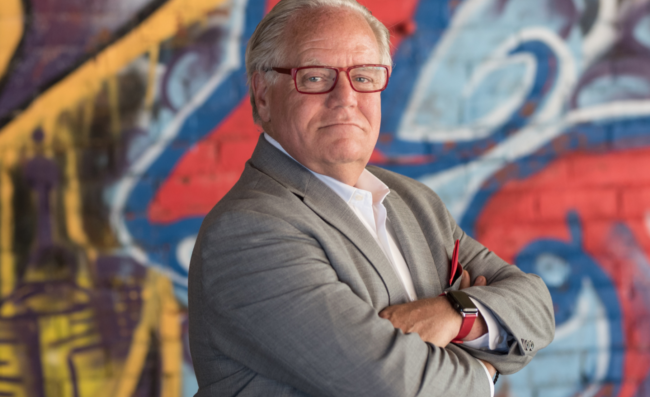
Hosted by top 5 banking and fintech influencer, Jim Marous, Banking Transformed highlights the challenges facing the banking industry. Featuring some of the top minds in business, this podcast explores how financial institutions can prepare for the future of banking.


How to Redesign Banking for the AI Age
How do you transform banks that have been built over centuries for a world where artificial intelligence operates 10 times faster than the digital revolution? We're not just talking about implementing new technology; we're reimagining banking for customers who interact daily with AI assistants and may soon entrust their money management entirely to intelligent systems.
However, banks that rush into action without understanding their organizational and cultural legacies will find their investments yielding disappointing results. The issue isn't the technology; it's that we equate activity with progress, making top-down decisions that overlook what's happening on the ground.
Our guest on the Banking Transformed podcast, Sophie Heller, is the newly appointed Chief Transformation Officer at BNP Paribas CPBS, bringing a unique perspective that combines strategic technology leadership with deep insights from behavioral sciences and organizational sociology.
Today, we explore why the pause before progress might be more important than the speed of implementation, how behavioral sciences are becoming essential tools for transformation leaders, and what it takes to redesign banking for an AI-powered world.
Welcome to Shaping Banking’s Next – podcast episodes hosted by Jim Marous and brought to you by Infosys Finacle and Qorus Global. These compelling episodes are inspired by the ‘Innovation in Retail Banking’ research, a report that has been tracking innovation trends, investment priorities, emerging business models, and real-world case studies for over 15 years.
In these episodes, visionaries, changemakers, and digital pioneers from the world’s leading banks will share how they’re driving innovation, transforming the banking value chain, and reimagining the future of banking. Join them as they explore bold strategies, innovative business models and next-gen technologies shaping the industry today and defining what’s next.
Where to Listen
Find us in your favorite podcast app.

Jim Marous (00:11):
Welcome to Banking Transformed, the top podcast in retail banking. I'm your host, Jim Marous.
Jim Marous (00:17):
How do you transform banks that have been built over centuries for a world where artificial intelligence operates 10 times faster than even the digital revolution?
Jim Marous (00:27):
We're not just talking about implementing new technologies anymore. We're reimagining banking for customers who interact daily with AI tools and digital assistance, and soon will entrust their money management, maybe to intelligent systems.
Jim Marous (00:43):
However, financial institutions that rush into action without understanding their organizational and cultural legacies will find themselves having investments that yield disappointing results. The issue isn't technology; it's that we equate activity with progress, making top-down decisions that sometimes overlook what's happening on the ground.
Jim Marous (01:09):
And actually, there's no better person that I know to talk about how behavioral science, organizational legacy culture, and the changing customer landscape has made a difference in banking than my guest today.
Jim Marous (01:25):
Sophie Heller, from BNP Paribas, is in charge of digital transformation at the bank. And she brings unique perspective that combines strategic technology leadership with deep insights from behavioral science and organizational sociology. These are deep thoughts. These are something that's over my pay grade to think about.
Jim Marous (01:48):
But the reality is it is being deployed on the ground at organizations globally. And BNP Paribas is really at the forefront of being the customer’s experience realm at a really high level, as well as making a lot of efficient changes in their operational systems.
Jim Marous (02:07):
Today, we'll explore why the pause before progress might be more important than the speed of implementation. How behavioral sciences are becoming more essential tools, and what it will take to redesign banking for an AI-powered world. And be sure to stay on this podcast till the end when Sophie gives you an insight into what she sees in the future of banking.
Jim Marous (02:34):
Banks face a paradox: needing to adapt quickly to technological advancements while ensuring a positive customer experience, all while meeting the next quarterly financial report. The deeper challenge actually is convincing employees and customers to let go of processes they’ve become accustomed to over the years in favor of new decision-making systems, which may be more efficient but may feel more impersonal.
Jim Marous (03:00):
So, Sophie, welcome back to the podcast-
Sophie Heller (03:04):
Thank you, Jim.
Jim Marous (03:05):
For those who don't remember, you were one of the very first guests we had in 2019 before COVID.
Sophie Heller (03:12):
Yeah.
Jim Marous (03:12):
And we've gone 600 shows since. Your passion for innovation, the customer experience, cultural modification, and especially employee engagement makes our first meeting one of my favorite shows ever. For those who may not be familiar with you and BNP Paribas, could you provide a short description of your company and your new role at the bank?
Sophie Heller (03:36):
Of course. So, BNP Paribas is a leading international banking group. So, we operate in 65 countries, but we have a very strong focus on Europe. We cover all segments of banking, so from wholesale banking, wealth management, and retail, and also special activities such as car leasing or personal finance.
Sophie Heller (03:55):
I sit in the division that is called CPBS, that regroups all the domestic banks and also the retail banks and also the specialized services. And my job in direct reports to the CEO of that poll is really to make sure that the business model and the operating model of our banks is gradually transforming to stay relevant to the changes that happen in the environment, to stay relevant with the needs of customer, employees, shareholders, of course, and also societies.
Sophie Heller (04:31)
So, this is a little bit the mission that I have, and I work for that with a team of 100 people that are experts from strategy to AI, going through product strategy and et cetera. And of course, we work together full hands with teams in the different banks.
Jim Marous (04:49):
It's interesting, in your new role, you've been posting on LinkedIn some of your thoughts, some of your impressions around the whole digital transformation, banking transformation process. And, in one of your posts, you emphasize the importance of not rushing into action without understanding the problem, probably your North Star.
Jim Marous (05:11):
In your experience, leading transformation at your financial institution, what are the most common mistakes you see organizations make when they skipped the reflection phase?
Sophie Heller (05:22):
I think that more than a mistake, what I would say is that it's underperformance and under learning. Because if you take the time to really formulate your business challenge in a very precise objective, for example, a behavior that you want to change — so a customer behavior or employee behavior, then you dig into all the reasons why people are not doing it.
Sophie Heller (05:46):
So, you explore vast areas of potential actions, you test them, and then you probably have more likelihood to pick up the most efficient solution. So, if you jump into the solution, maybe you have right intuition and it's going to work, but maybe you could have picked up a cheaper solution that would have been as effective, or maybe you could have also picked up a solution that will be much more efficient.
Sophie Heller (06:15):
So, I would say underperformance and also under-learning, of course, because if you do all that process with the testing, you understand what works, but also you understand why that works. So, I think that's … yeah, it's an opportunity to have more performance and more learning.
Jim Marous (06:30):
Well, it's interesting because our last conversation probably didn't discuss too much about AI. It's really gotten in the forefront, especially in the last three years. You compare AI and banking to the digital revolution of the 2000s, but 10 times faster. What does this rapid speed acceleration mean for transformation leaders like yourself? And how do you balance speed with strategic thinking?
Sophie Heller (06:58):
Yeah, it's really 10 times faster. And we can see that through the rhythm of adoption of customers, because, of course, what drives the transformation is also the changes in behavior of the customers.
Sophie Heller (7:11):
So, I think that the challenge, if you look at the digital back in the 2000s, it took years before we were able to fully embrace the potential of digital, because at first, it was so an expert thing that we needed to have dedicated teams.
Sophie Heller (07:28):
So, like the digital team, but then the rest of the organization were saying, “Okay, the digital transformation, those guys, so we continue to do the same.” So, it took years before actually the digital became the new way of working. And the challenge that it raises is that because the adaption is so much faster that you cannot be that long.
Sophie Heller (07:50):
So, you still need to start with also expert teams that are specifically good with the NLP and all the technology around AI. But you really need to accelerate the process of learning and adoption throughout the organization.
Sophie Heller (08:08):
So, I think one thing that is key, we find out is that, of course, you need to train the people, but you also need to really ask them as part of the mission, to say, “Okay, in your role, given your responsibility, either as a process owner or product manager, what do you think the impact of AI could be?” To improve customer service, to decrease costs, whatever — that it is everybody's job in the organization to understand what AI can do, but then to understand what they can’t do, and sharing all what is possible.
Sophie Heller (08:44):
And the advantage of being in a group like ours is that we can start experimenting in one country or one part of the company, and then communicate that to the rest so they understand … for example, we have completely redone the mortgage process. So, now we are able to analyze all the documents, look at the gaps between what the customer declared and what is in the document. That has been done in one country with a lot of success. And that can be replicated in others. So, yeah.
Jim Marous (09:15):
So, it's interesting because while we often don't think about it, almost every employee, in the back of their mind at least, is thinking, “Will AI replace me?” If you're fixing a mortgage process that you just mentioned, there are people in the mortgage area that go, “Geez, am I putting something in place that's actually going to take my job?”
Jim Marous (9:36):
How do you train your teams for eventual AI rollouts while still making them realize they can be part of that process? What do you do internally to make it so that these people advance the same way the bank is?
Sophie Heller (09:51):
I think that first of all the project that I'm talking about (and this is the same for all the projects that we do), we do it with the people that are responsible for the activity. So, for example, you go to the product owner that is responsible for the mortgage process. And you say, “Okay, you know what? We could simplify your process, we could decrease your cost doing that.” And of course, because this is part of his objective, he will be very interested to do.
Sophie Heller (10:19):
So, I think it's also building solutions, or another example where we included also the frontline, for example, to automate a solution that is answering to their IT support needs. So, we really worked with them to say, “Okay, what should it look like to be useful for you?”
Sophie Heller (10:38):
So, I think that what works (but this is a little bit the same also for digital) is we need to sit with the people, understand what their concerns are, and then show them how AI can really solve the problem.
Sophie Heller (10:52):
But I think we could probably go back to that later, because of course, this is only the beginning, I think, that it's like digital in the 2000s. First of all, you start to adapt your existing processes by copying them in the digital world. And then, more years after, you realize that new business models are emerging, new competitors and the changes is much more drastic and profound. So, I'm sure that we will observe the same thing with AI.
Jim Marous (11:26):
It's interesting, because you referenced it, that this is really something we've done before but on a much smaller scale, I guess. And what's interesting is I look back five years ago (and that seems like a long time ago, and on the other hand, doesn't), we realize that back then, the consumers weren't as demanding. There weren't as many examples of great digital experiences out there, but now they're everywhere.
Jim Marous (11:52):
In fact, there's a lot of experiences where consumers are daily dealing with embedded finance or dealing with AI tools in new ways on a consumer level that we would've never imagined. What are we entering when we look at consumers becoming more aware and demanding of what we do with our information?
Jim Marous (12:14):
Because on one hand, they get concerned about us knowing too much. On the other hand, they want us to implement tools and products and services using these tools. How do you balance the digital with the human aspect in your business models and your product development?
Sophie Heller (12:33):
This is a very wide question-
Jim Marous (12:35):
Yeah, covered a lot there.
Sophie Heller (12:37):
But I think that as also for the digital, it really comes with what is going to bring value for the customers. Because for the digital, it’s the same thing. I mean, the relationship with the data, it's a balance between what are the information that I'm giving away and what's in it for me.
Sophie Heller (12:59):
So, if the benefit that you give to consumer … and of course, you need also to be transparent, but you also know that the European Union is very strict also on regulation, much more, I think, than the U.S. So, people have also this certainty that there are really barriers and guardrails that are being put. But then there's really the trade-off of, yeah, I'm giving information, but I understand why and how this is going to be useful for me.
Sophie Heller (13:27):
But I think that to the previous question that you asked also about the balancing of the speed and strategic thinking, I think that I would say that the balance probably, which is tricky, is more the balance between the speed and the risk management. Of course, being a financial institution and with the regulation and et cetera, there are many things that probably you can do, but not necessarily you want to do.
Sophie Heller (13:58):
But really, implementing the guardrails, the monitoring of your models, the testing of your models, also re-teaming exercises to make sure that you try to hack what you do to make sure that when you finally put something in production for consumers or for employees, you have really reduced the risk. So, I think this is what slows things down, but for the best, is really this taking into account the risk factor.
Jim Marous (14:32):
You're right. I mean, you still need to follow that, and anybody can put a technological advantage in place. But you're right, risk trumps it all because if you lose the trust of the customer, which is, if you let go of the risk factor, everything else falls apart.
Jim Marous (14:52):
Sophie, when you look back over the last several years, what has been one of the major challenges at your financial institution that maybe you weren't expecting that you've dealt with? Because I'm sure you've always been more advanced and further down the path at your organization with regard to digital and banking transformation.
Jim Marous (15:13):
But some of those challenges you're facing are ones that probably are still in the foreground of many financial institutions. What are some of the challenges you've had to address at your organization as you've addressed broader transformational issues?
Sophie Heller (15:29):
One is the one that I mentioned in my post, and you gently referred to it. It's the fact that it's much more valued to be action-driven rather than impact-driven. And especially, I think in traditional banking where the measurement was relatively … I mean, you had, of course, the financial results, and then you were monitoring sales, for example, or satisfaction of customers once a year.
Sophie Heller (15:57):
But when you move into the digital space, you have so many metrics that you can have. So, it forces you to have a much more data-driven culture and to make decisions because you are able to really understand all the steps of your process, and this change of culture to be much more data-driven. Assuming that you don't necessarily know what the customer wants and that you need to test, you can be wrong.
Sophie Heller (16:28):
So that the sense of failure is okay because I'm learning, that is very challenging, and especially probably in a French organization because of culture, because the failure has a very different meaning in Europe in general compared to the US. So, I think this remains a challenge even though we've made really a lot of progress.
Sophie Heller (16:53):
And also, the willingness that people want things to change very rapidly and the patience that it takes to change things. So, you need to be in those jobs, as you know, you need to be extremely resilient, and really persistent over time.
Sophie Heller (17:16):
Because also, one of the challenges I face is that people inside the banks are changing all the time because we are organizing those career paths where people will take a role for three years and then they move to another role.
Sophie Heller (17:32):
But when you are working in an environment that is evolving so fast, you hardly have time to train someone to the new role that is already leaving, no?
Jim Marous (17:43):
Yeah.
Sophie Heller (17:44):
And I think that at a certain point maybe we need also to reconsider how we appoint people to those roles because you need consistency. I mean, I've learned a lot because I've been in more or less this role since eight years, and also, many people of my team.
Sophie Heller (17:54):
So, we have all the history, we have all the learning of what we've tried and what succeeded, what failed. But if you change the people all the time, you lose that. And so, you are going a little bit backwards. So, I think this is maybe another challenge that I find not easy.
Jim Marous (18:18):
It's interesting, when we sat down at your bank six years ago, it was amazing because it was very clear, and it’s one of the things that really drew me to you and your organization, that you are an ongoing learning human. You don't sit on what you've learned and say, “Okay, I'm good because I learned this and I've been successful.”
Jim Marous (18:40):
You've focused quite a bit over the years on behavioral sciences and organizational sociology. Things that, I mean, even to me, they are thought processes that I'm not familiar with. But your ongoing focus on this really … and the application of those insights really make a difference. And you've said are critical for all digital transformation and Chief Transformation Officers.
Jim Marous (19:07):
What have those taught you? What have behavioral sciences and organizational sociology taught you that have really been able to be deployed in your organization?
Sophie Heller (19:16):
Yeah. I think that if I start with the organizational sociology, you realize that when you're doing transformation, a lot of the topics that we handle are by definition very complex, because if they were simple, all the banks would handle by themselves, no?
Sophie Heller (19:34):
And when you have a complex topic, you need cooperation. Now cooperation, we are always talking about that cooperation and collaboration. But this is actually very hard because people … what sociology teaches you is that people don't like to cooperate. Because-
Jim Marous (19:51):
People might change.
Sophie Heller (19:53):
Because they like to be able … not because they are bad, but just because they want to move forward. They want to feel independent, they want to feel in control. When you are cooperating, you need to let go of a certain power, you abandon part of your power. And so, for many people, that is complex.
Sophie Heller (20:14):
And also, sometimes, they also have a lot of different tasks to do that are very short-term oriented, and maybe they don't find the time. So, I think that to look at the difficulty of cooperation and making people change in a not naive way.
Sophie Heller (20:33):
I mean, to understand really the human nature and why this is complex helps you because it's nothing personal. It's not because people don't want or don't like you, and what I realized is that for people in my team also that are working on those projects, it felt really reassuring to understand all the mechanisms that can prevent cooperation and to feel better with this.
Sophie Heller (21:00):
So, already that I think is good. Then we realized also that some of the things that we do, we involve people that are in the transformation that we are, as I was saying before, working on the fact that we take the time to align really on the objective. I mean, there are many things that we were already doing, so it was nice, but I think that was really a help.
Sophie Heller (21:24):
And as for behavioral sciences, I think that it complements really nicely on the design and test and learn practices that we had implemented. Because I was alluding to that earlier, because it forces you to be very rigorous about transforming a business challenge into a specific behavior that you want to change. For example, you can say, “Yeah, I'd like my client satisfaction to be better, and I'd like my front lines to be more customer-oriented.”
Sophie Heller (21:59):
But what does that mean? What do you want people to do completely that they are not doing now? Because if you are talking about values or culture, this is very fluffy, it's very complicated to change. But if you say, “Okay, I want people to always call back if they're busy,” and the client calls to say, “Okay, I'm calling back this client in 24 hours,” or “I've always took the time, at least 15 minutes, to prepare the meeting with my clients systematically,” and et cetera.
Sophie Heller (22:29):
So, you go from that business objective to then behavior, then you select what are the most relevant behaviors you want to change. Then you go through this process, understand why? Why? Why? So, why are people not doing this? And you have a holistic view about incentives, communication, social norms, and systems. And so, you deepen and you enlarge also your vision about the problem, and then you can identify solutions.
Sophie Heller (23:01):
And for example, I'm mentioning social norms because this is not something that we would have thought naturally. So, when you think about helping people to have a new behavior, you would think about the training, the communication. Of course, you need to communicate, you need to train the people. And very often, that's it.
Sophie Heller (23:20):
We say, "Okay, change is this," but you don't reflect on what the environment is on their machine or in their office. You don't reflect about what are the social norms that you can use to make it desirable.
Sophie Heller (23:20):
So, I think it helps with the definition of the problem, it helps with the creation of solutions, and it puts a rigor also to the test and learn. Because if you have defined precisely the behavior, then you know exactly how you are going to measure it. So, yeah, it's a nice compliment.
Jim Marous (23:54):
Okay. So, a lot of what we talk about when we talk about banking transformation is really how we get the people, I'll call it below us, but in the line areas, to do better, how do we change their behaviors.
Jim Marous (24:08):
But what we find in the podcast I've done over the last five years is that at the end of the day, success and failure is often defined by executive management; how they embrace change, how they actually will change their mindsets to what's being done going forward.
Jim Marous (24:26):
How do you (you're part of the executive management team) work with your peers and those above you to change the way they look at things to make it easier so the culture actually does adjust to the new norms?
Sophie Heller (24:41):
Yeah, another hard question. I think we also touched upon that last time, but first, you need to create a confidence with those people. So, as you say, I'm a member of the executive team, but I have a boss, and he's part of the programmers.
Sophie Heller (25:09):
So, it's also, first, building the confidence so that you have promised things you have delivered. So, the confidence is there. Once the confidence is there, you can start … I would say that it's bringing a lamp and putting the light on things that normally, they would not look at.
Sophie Heller (25:32):
So, normally, you look at that and it's perfect, but look here, there is something interesting as well. So, you put the light on something, and then you need to come always with, oh, if we would be able to do that, that would really bring that benefit. So, you need to … because for changing, not a lot of people are interested, but if you say, "Okay, we are great, we are doing great, but look at that. If we do this on top, that would be really interesting. And this is the small steps that I propose so that we can check quite rapidly if that works.”
Sophie Heller (26:12):
So, yeah, propose something in addition, start small demonstrating the value, and then once you have demonstrated the value, then you can do something else, I think.
Jim Marous (26:24):
It’s a good point, because it makes it so that there's less risk to the executive officers saying, "You've already proven that the process works." You almost come back to them afterwards and say, “We need your reinforcement here because it's working.” Yeah.
Sophie Heller (26:39):
Yes, exactly. But then let's be clear; you have also people that are very open, and they will change easily. Others don't change, and with some people, you don't succeed. And this is also okay, because we can never change-
Jim Marous (26:57):
A lot of times they're the ones that have had great successes in their careers, so they rest on those successes, what they've done in the past, but for good reason. But-
Sophie Heller (27:08):
But I liked very much what my boss said once. He said, “The bank that we have built no longer works. I know because I've been doing this bank.” And I think that was a very strong message because he was acknowledging the fact that at a certain point, it was okay, but now, it's not what we need to do. So, yeah, having this confidence and those messages that are given at the top set also the tone and helps a lot, of course.
Jim Marous (27:37):
It's interesting, Sophie, that at most banking organizations, the beginning of the digital and AI transformation process and the deployment of technologies started as far as internal process improvements that basically cutting costs.
Jim Marous (27:54):
In fact, many organizations are still in that phase, before expanding to improving customer service, which is sometimes harder to measure, longer-term changes. It takes the consumer to actually buy into what we're doing.
Jim Marous (28:09):
How do you ensure that the evolution creates genuine customer value rather than just operational efficiency when, really, on a quarterly basis, most organizations are evaluated by their bottom line?
Sophie Heller (28:24):
I think what you say is right, and you cannot skip that part. I mean, you need to deliver projects that are bringing operational efficiency. And even when we were focusing on the customer experience, my AI team was already working on efficiency, on the risk-scoring efficiency, on marketing campaigns with measure of ROI so we could really demonstrate all the pricing — we could really demonstrate with AB testing what was the additional revenue or decreasing cost of risk, for example.
Sophie Heller (29:00):
So, you need to have in your portfolio at least, I would say, 70% or 80% of the initiative that are really bringing tangible financial results. But then you need to keep the 20% that are more bets on the future, more complex, more long-term. But you need really to have both.
Sophie Heller (29:23):
And the credibility also, I think, comes from the fact that you are still delivering those things that are in line, as you say, with the short-term priorities, but without neglecting the other part. And to decide on the other part, I think it's really coming from what the customers want.
Sophie Heller (29:45):
So, for example, now, we are focusing a lot on virtual assistants, because of course, with the GenAI, it allows to have much better experience with the virtual assistant because they can really fully understand your question correctly and formulate the right answer.
Sophie Heller (30:02):
So, it's a big initiative that we have. But every time you come back with a customer, and you say, “Okay, the customer would like to have a very personalized answer to his questions 24/7.” So, we cannot do that with that AI.
Sophie Heller (30:18):
So, if we can provide that, that is bringing a lot of value for customers because they don't have to be in the line, or they can do at 2:00 in the morning. So, yes, you need to make sure that you are meeting a customer’s needs. And if you’re meeting a customer’s needs, then you have other metrics that you can also measure.
Sophie Heller (30:39):
So, how many of the calls can you avoid? So, you have more customer satisfaction, and you are monitoring the NPS and the satisfaction, of course, and the usage of the service. But you can also measure how many calls were avoided, so how many savings you've done. So, I think it's always nice to be able to find a balance, yeah, between-
Jim Marous (31:01):
Well, it's interesting too, because you keep on coming back to the metrics that if you build metrics in place that measure both, then you're bringing value, and it is tangible. It's not just the dollar cost savings, but you say, “Look at what's happened to our NPS scores, look at what's happened to our product usage, look at what's happened to our engagement levels.”
Jim Marous (31:21):
So, Sophie, I know that you are always looking forward and looking to what's coming up in the future. What excites you about what's coming up in the near future, maybe the mid-term future, in the financial services industry that really maybe excites you because it's going to be a bigger challenge than you've had in the past, maybe excites you because it's going to give you the capability to do things you never thought were possible? What excites you about the future?
Sophie Heller (31:49):
It's going to be very not original, but of course, I would say AI because I mean the rhythm of adoption from customers makes you think that it is already driving the way that customers access to digital services. So, this becomes the norm. I mean, I don't know for yourself, but I don't do Google search anymore, I ask GPT.
Sophie Heller (32:19):
And now, we have all these e-commerce websites that are thinking of just, well, you know what? Our website is useless because we just need to have a conversation, and we have all the data products well-ordered behind with the inventory, the characteristics of the products, and then we will have a conversation. So, of course, in banking you are always influenced by what happens in society, and usually it doesn't start with the banking.
Sophie Heller (32:50):
So, when I bought an iPhone a long time ago, I was among the first. The experience was so amazing that I said, “Of course, the customer will want to have a mobile application.” I think that once you see as a customer how easy this is, then you say, okay, of course in banking, people will want to do the same thing, they don't want to go to the bank to do a transfer, blah, blah, blah.
Sophie Heller (33:17):
So, now it's the same thing. So, if everybody is accessing information and accessing digital content through just voice and conversation, this is even more drastic as a change. Because you can think for the digital, it took a little bit of education for people because it was not natural for many people to go on the internet, learn how to navigate the browser, this is a little bit complex.
Sophie Heller (33:47):
But AI, you have a conversation. It's mimicking a human conversation, so there's no entry cost. So, of course, everybody's going to adapt it much quicker than the digital. And that will set the bar also for financial services; the way you want to access your data, question your account, and et cetera, you will want to ask questions. So, how much did I spend last month? What do you advise me to do in that situation? Blah, blah, blah.
Sophie Heller (34:21):
So, the first implication is how do you rethink your mobile application in order to be conversational, because this is going to be the way that people will interact with you first thing. Second, it raises the bar of advice because if people are able to already have a lot of advice, which is really precise and relevant, if you describe well the situation through a normal generic assistant, it means that as a bank, the Virtual Assistant of your bank or the advice that your frontline are giving needs to be above that.
Sophie Heller (35:03):
So, in the interest of the customer, very transparent, and that is huge change. So, I think that's what excites me the most but also frightens me because it's so big change is wow, that the bank is going to transform radically. I mean, the bank in maybe five years even, because it's so quick the change, will have nothing to do with the bank that we have now-
Jim Marous (35:31):
Yeah.
Sophie Heller (35:32):
And I want to come back with this point with a difference in digital. It's not just that it's quicker, it's also that it's so much easier for customers because this is natural, because this is like going back to what we used to do before the digital, you would ask a question to someone, and he would answer you. This is the same thing. So, you see what I mean?
Jim Marous (35:54):
Yeah. Well, it's amazing to me too because of the cloud and technology that's out there, we can capture every conversation and build on that. As you said, almost like banking of the past where somebody would come into the bank, you have a conversation with them, you remember that good customer over and over and over again. You remember that their kids went to college, you remember this-
Sophie Heller (36:18):
Yeah.
Jim Marous (36:18):
Now, we have the technology to save every conversation so that even things that aren't banking related and from other places in the ecosphere, we can build on those conversations to help the client. And as you said, that's going to take trust, because especially in France and places like that, or countries that are probably less trusting of the financial institutions, that sometimes aren’t in the United States.
Jim Marous (36:46):
But we already see this in the retail business, that in digital retail, we give all kinds of information that we probably don't even know we're giving about our lifestyle that they're capturing. To be able then to take action to make recommendations based on that is so exciting because-
Sophie Heller (37:04):
Absolutely.
Jim Marous (37:04):
It makes us so that we really functionally have to get really good at what we do best. But in the outside, we have so much information that's going to make it so that we can deploy our solutions at the right time. I'm not going to have to worry about how I pay for something or what I do on a monthly basis because we're all creatures of habit.
Jim Marous (37:25):
When the bank starts to remember our habits and helps us with that, it saves us time, it saves us anxiety, especially at a time when there's so much indecision out there, and the ability to adjust and make the financial decisions.
Jim Marous (37:40):
But also, the consumer is resilient that if tomorrow we wake up and we find that the financial markets have tumbled, we'll immediately have a response to the consumer to say, “We know what you're feeling, here's what you should probably look at doing.” That's exciting because it answers what we've been trying to do forever, which is-
Sophie Heller (38:02):
Absolutely.
Jim Marous (38:03):
Get back to the human aspect of personalization on a one-to-one basis.
Sophie Heller (38:08):
And much more, because the traditional banker would not be able to process in real time also all the transactions of the customer and everything. So, yeah, there's the same experience as talking to the human, but you have more precision and more reactivity and proactivity possible.
Sophie Heller (38:34):
The question is how many people will want to still talk to someone that is enabled by AI, or how many people will be completely comfortable with talking to an agent, a virtual agent, which is not a person-
Jim Marous (38:48):
Yeah, or the combo. You think about business bankers-
Sophie Heller (38:51):
Or the combo, yes.
Jim Marous (38:52):
Business bankers. If the business banker has all the information, not only in what we think you might be interested in, but we understand your competitive situation better than you do because of the … as you said, looking at GenAI all the time, I can do research on you, your bank, everything that's happened lately in a capsized, easy way.
[Music Playing]
Jim Marous (39:13):
But if I can bring that to you, and I am making myself more valuable because of the tools that I have, then the human is still involved. But the human's got to embrace that learning and continue to evolve themselves as well, which gets back to the very beginning of our conversation today.
Sophie Heller (39:28):
Yeah, absolutely.
Jim Marous (39:29):
Sophie, thank you so much-
Sophie Heller (39:32):
You're welcome.
Jim Marous (39:33):
It is so enjoyable to get back together with you again. I've got to get back to Paris to see you. I got to-
Sophie Heller (39:37):
Yeah, that would be great.
Jim Marous (39:38):
I got to see you in person. Have a nice glass of wine and do some climbing, some walking, or something else you like doing as well. So, thanks a lot for being on the show.
Sophie Heller (39:48):
It was really nice, thank you for the conversation. Thank you, Jim.
Jim Marous (39:50):
Thank you.
Jim Marous (39:52):
Thanks for listening to Banking Transformed, the winner of three international awards for podcast excellence. If you enjoy our work, we would appreciate it if you give us a positive review. In addition, check out my recent articles on The Financial Brand and the fantastic research we're doing on the Digital Banking Report.
Jim Marous (40:12):
This has been a production of Evergreen Podcasts. A special thank you to our senior producer, Leah Haslage; audio engineer, Chris Fafalios, and video producer, Will Pritts.
Jim Marous (40:21):
Finally, before you get off this podcast, make sure you also look at Sophie's first podcast she did with us back in 2019, where she talked about where digital transformation was then before COVID even hit.
Recent Episodes
View AllThe SoFi Cross-Buy Engine Fuels Amazing Growth
Banking TransformedThe Best Banking Innovation Doesn't Need a Huge Budget
Banking TransformedArming Front-Line Bankers with AI Tools That Win Clients
Banking TransformedWhy Banks Miss Human Customer Moments"Most banks know far more about their customers than the customer ever feels. In this Banking Insight Video, I look at why relationship banking often feels programmed, from the quarterly business banker check-in that g
Banking TransformedYou May Also Like



Hear More From Us!
Subscribe Today and get the newest Evergreen content delivered straight to your inbox!
Advertising & Sponsorship
Interested in sponsoring or running an ad for your business on an Evergreen Podcast? Contact us to get pricing and availability.