
Banking Transformed
Hosted by top 5 banking and fintech influencer, Jim Marous, Banking Transformed highlights the challenges facing the banking industry. Featuring some of the top minds in business, this podcast explores how financial institutions can prepare for the future of banking.


The Untold Journey of a Female Tech CEO
For tech firms serving banks, survival isn’t guaranteed. It takes more than a great product or engineering talent to stay ahead. It requires relentless innovation, the ability to scale without losing agility, a deep understanding of financial institutions' pain points, and above all, visionary leadership that adapts to change rather than fears it.
On this episode of Banking Transformed, we welcome Ana Inés Echavarren, the dynamic CEO of Infocorp, a company that has not only survived but thrived in this volatile environment.
But her story isn’t just about corporate growth — it’s a story of personal reinvention. From her roots in engineering to becoming one of the few female tech CEOs in Latin America, Ana’s journey is marked by lessons in courage, adaptability, emotional intelligence, and the transformative power of mentorship.
A vocal advocate for women in tech and leadership, Ana challenges old paradigms and champions diversity as a competitive advantage. This conversation serves as a roadmap for what it truly takes to build a resilient, purpose-driven, and future-ready organization.
Where to Listen
Find us in your favorite podcast app.
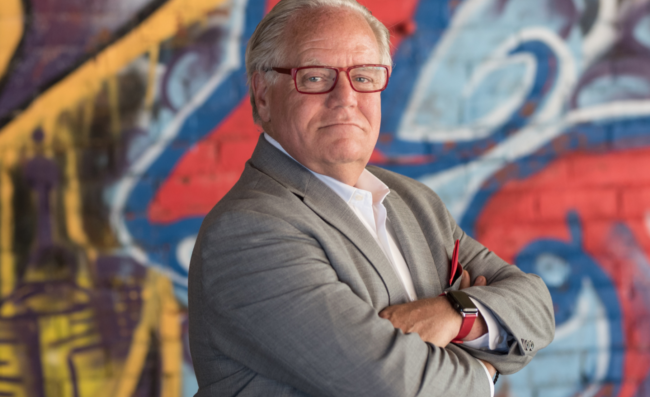

Jim Marous (00:12):
Welcome to Banking Transformed, the top podcast in retail banking. I'm your host, Jim Marous.
Jim Marous (00:19):
For tech firms serving banks, survival is not guaranteed. It takes more than a good product or a great product, it takes engineering talent, but more importantly, it takes a relentless drive for innovation, the ability to scale in an agile way, a deep understanding of your customer's needs, but most importantly, a passion for what you do.
Jim Marous (00:50)
In this episode of Banking Transformed, we welcome Ana lnes Echavarren, the dynamic CEO of Infocorp; a company that has not only survived, but thrived in this very volatile environment. But this is not a story about Infocorp or products or services, this is a story about Ana herself.
Jim Marous (01:14):
Her story is not about corporate growth (even though she's achieved that to the nth degree), it's a story about personal reinvention from the time she was a child to today as a CEO of a Latin American company.
Jim Marous (01:32):
Ana's journey has a slew of lessons she's going to share with us today. She's going to talk about courage, adaptability, emotional intelligence, and her insatiable desire to learn and lead in an empathetic way. Do not miss any part of this episode because what's exciting is the story she tells and the lesson she can give every woman and man about how to lead in a very disruptive environment.
Jim Marous (02:10):
As I mentioned in the introduction, today's story is going to be more than just a typical CEO success story. What we're going to be doing is actually exploring the real, somewhat messy human process of building a career in technology as a woman.
Jim Marous (02:29):
From handling gender bias to navigating company acquisitions; from conquering imposter syndrome to mastering the art of strategic reinvention, Ana's journey actually offers a master class in turning limitations into strengths.
Jim Marous (02:48):
So, Ana, I am so excited to have you on the show. We met close to a decade ago, and then reunited in Miami a few months ago. For those who may not know who you are or heard of Infocorp, can you give me a little background about you and your company?
Ana Ines (03:07):
Yeah. Yeah, first, let me say, Jim, that I'm so excited and honored to be here. You have been my total idol for more than a decade. I met you … you do not remember me, but I have a photo with you, I don't know, 15 years ago-
Jim Marous (03:26):
I found it.
Ana Ines (03:26):
In London. You gave a speech about something that at the time seemed like science fiction in banking. And now, it's not so much, now it's here — but you told us about that 15 years ago. So, we met again in Miami, as you say, in the fintech Americas where you rocked it. Once again, it's always a pleasure. So, thank you so much for having me today.
Ana Ines (04:02):
So, about Infocorp — Infocorp, we started long time ago, 1994 (as a Uruguayan. Uruguay for maybe somebody doesn't know, it’s in South America, southwest country in South America) as a development company, as a software factory. And our first customer was Banco Santander in Uruguay. And in 1988, we made a home banking for them.
Ana Ines (04:35):
It was a very successful product. They recommended us to Santander in Colombia, in Chile, in Puerto Rico, and at some point in time, we understood that we knew a lot about the banking industry. We had a really good product so we made it a product. We turned into a product company, and we are now the proud owners of IC Banking, which is an omni-channel banking platform.
Ana Ines (05:09):
And our mission is to help people love their banks through awesome experiences in digital banking. We have now partnered with more than 50 banks in Latin America and the Caribbean, and we keep helping them grow, increase adoption, loyalty, et cetera.
Jim Marous (05:34):
So, you've been at Infocorp for a very long time and been CEO for 10 years, but you didn't take the traditional journey. If I'm not mistaken, you started off in the company at a very low level and without really technical background. Can you tell us a little bit about your background story and maybe even go to where did this inspiration to work for a tech company come from in the beginning?
Ana Ines (06:03):
In fact, it's a very funny story because I mean, I was a scientific girl. I loved maths and I always knew I was going for something to do with science or whatever. But when I was young, I didn't have a computer at home. So, I knew I wanted to do something to do with engineering not history, or not those things.
Ana Ines (06:38):
And when I went to university, the computing engineering career was the shortest one. It was five years, and the other engineer careers were six, and I wanted to really work quickly. I needed to work. So, that's why I took computing engineer.
Ana Ines (07:00):
I didn't know what a computer was really. I mean, not that much. And luckily, I did that because when I learned about technology, I understood that you could take whatever business you wanted in the world, understand their needs, and through technology, make them happen, and have real business results, that was mind blowing for me. It's the best career I could have chosen, but it was, I don't know, God who sent me that, so yeah.
Jim Marous (07:44):
But you went through different roles. Can you talk about some of the roles you had at the company on your way to becoming CEO? And I think it's even more interesting; once you got selected to be CEO, it was because you had been involved with the board before that. It wasn't a natural, like it was something that progressed along the way. But your different roles at the company, how did they prepare you for the position you have today?
Ana Ines (08:13):
Another funny story. When they asked me to be a CEO, I said, "No, I don't want that." They had convinced me, and in fact, they hired a coach to coach me because for two years, I said no to the CEO job.
Ana Ines (08:35):
But you know when you ask me this question, it brings me back to my family and the things I learned from them, because I think that you are kind of always a product of the family from you were born. I mean, you learn what to do and what not to do.
Ana Ines (09:03):
And I was very lucky because my parents were serial entrepreneurs. Not particularly successful ones, in fact, they failed once and again, but they dreamt big. They tried to make the dreams happen. They made mistakes, and they always try to learn and start again.
Ana Ines (09:30):
So, my mother always told me that my destiny was in my hands, and she said, "Ana, the biggest thing, the best thing that I can do for you is give you the best education that we can pay for." And they made big efforts because money was kind of a challenge at the time, but we got the best education that we could have.
Ana Ines (09:58):
And she always told me, "You can do whatever you want to do with your life. You just have to work hard, work hard, study a lot, learn a lot, try, fail, and start again. To learn, you have to fail." And my father in particular, he was the one who dreamt big. And he had these big, big dreams and he failed once and again, but he always stood up and started again.
Ana Ines (10:38):
So, that's why I didn't want to be a CEO because I had seen my father had his own companies and failed once, and I guess I was like I mean, I like to organize, plan, I'm good at planning things, making things happen, but I want somebody else to lead. I will follow but I don't want to fail like he did.
Ana Ines (11:08):
So, I started in Infocorp as a project manager, and I was very good at it because I mean, that's what I like to do. I'm a computer engineer, so I started programming, but I was awful. I didn't like to program because you have to be very detailed, you have to have so much patience to find the bad, and I'm not patient at all. I’m very, very anxious, I like to move quickly, and I’m very organized.
Ana Ines (11:44):
My kids tell me that my heart is a spreadsheet because I'm always planning. When we go on vacation with my kids, I have a spreadsheet, summer vacation spreadsheet, a winter vacation. But when I started project management, then I led the development area. Then when we became a product company, I started the product area and I led it, then the challenge was to sell.
Ana Ines (12:25):
So, I moved to manage the sales team, and I loved sales. I loved being with customers. I still love, I still do it. I love to understand their business, understand which are the hardest pains, and how we can help them to remove those pains and get results.
Ana Ines (12:50):
So, when they asked me to be a CEO because I had been everywhere in Infocorp. So, my boss at the time, he told me, "You’re the best person to do it." And then I got scared. My bosses had been and still are so awesome. I mean, they were strong leaders, they had I mean, been so smart, they had taught me so much, they had led the company so far that they had set a bar so high that I didn't think I could be there.
Jim Marous (13:34):
So, in looking at yourself, what do you think is your strongest asset that you bring as a CEO? Is it your organizational skills? Is it your people skill? What do you think as you look at yourself are the things that make it so you can be where you are?
Ana Ines (13:54):
Well, you know with time, I learnt, and I asked a lot of feedback because I need to understand. One of my strengths, I think (and it comes from my parents) is that I like to learn, and I understand that you have to fail to learn quick.
Ana Ines (14:15):
So, I tell my team, I mean, “Please fail quickly,” and we don't punish failure. It's very good when you fail if you learn, of course, quickly. So, I love to keep learning, I try to be better all the time, and I have a lot of passion for what I do. I love what I do.
Ana Ines (14:41):
When people ask me, “Tell me about yourself.” I always start telling that I am the CEO in Infocorp. And they say, "Yeah, but that's not who you are. You are?" And I'm of course a mother of two kids, a wife, but I mean, I am the CEO in Infocorp. It's not a job for me, it's my passion. So, it's like a very important part of who I am. So, I love what I do.
Ana Ines (15:12):
I have lots of energy because people energize me, customers energize me, I love my team. I have the most wonderful team in the world. We know each other, we've been working with each other for a very long time. They are better than me in almost everything. But what I do best, I think, is push them.
Ana Ines (15:39):
Because to get results, you need a team, and I learnt the hard way that I can be very smart, whatever, I can be very organized, planned, but if I don't get my team to buy my dream, to leave the dream with me, to have the same purpose, then I will go nowhere.
Ana Ines (16:03):
So, my job is to push them, to push them all the time and try to be better and better, learn from our mistakes. I'm obsessed with excellence and I know it's very difficult, and probably we'll never be there because we are people and we make mistakes but we will always keep trying.
Ana Ines (16:28):
So, I love to change things and the world changes, technology changes all the time. So, I'm always looking outside Infocorp, talking to my customers, talking to people like you who are showing us that's the future, that's the future, you need to be prepared. And I’m always trying to move things inside the company.
Ana Ines (16:53):
Whenever we are too comfortable with something, I say, "Let's change this." And my team sometimes tell me, " But Ana, I mean, we've just changed this methodology, and it's working okay, why should we change it again?" “People, because I mean, it can be better. Once we do it right one way, then of course, there's a better way to do it, so we have to be uncomfortable.” And that's my strength, I think.
Jim Marous (17:26):
It's interesting, we've interviewed quite a few women that have been extraordinarily successful in their positions and it's interesting how when we've spoken to many of them, they have the same certain qualities.
Jim Marous (17:40):
Number one, an unbelievable passion for what they do. It's not a job, they truly, you can tell by just the way they speak about it, how much they love what they do. And as a result, people want to be part of your orbit because you are enjoying it so much, they would love to enjoy their jobs as much as you love yours.
Jim Marous (18:03):
Secondly, and it's interesting because I think it's somewhat a trait I have seen more in women than in men — the continuous desire to learn. And maybe it's part of that whole dynamic that women aren't still seen as being the leaders of tech firms or businesses and as a result, I'm not going to call it insecurity or inferiority, but you don't want to fail in a way that makes it because you failed.
Jim Marous (18:36):
As you said, you can always fail. There are always going to be hurdles (your father, your mother both experienced that), but I think that as a woman and I would even say, especially in South America, where you're in a position that maybe you're saying, "I'm very unique, this is not normal." That you don't want to have somebody say, "Well, this was because of something that you could have taken care of, that you’re continually learning."
Jim Marous (19:01):
The two things that really stood out the first time I met you and the most recent time I met you, is number one, your passion for what you do, and you truly, as soon as I saw you in Miami, it was immediate, it brought back the memories. Your emotional level, your enthusiasm for everything around you draws people to you, which makes it so, as you said, you don't have to be the smartest person in the room, but you do want to surround yourself with some of those smartest people to get their skills that you can learn as well.
Jim Marous (19:41):
Obviously, it isn't an easy path. What are some of the challenges that you've seen over the years that you go, "Boy, that kind of threw me off a little bit. That was not one of my shining moments, or maybe I was questioning my ability to do what I was doing?"
Ana Ines (20:05):
That's a good question. Probably, as you say, I think that most women, we are very hard on ourselves, because deep inside there's something that tells us we want to be like men, and there's something there that's still going on.
Ana Ines (20:30):
It's better now, but I mean, I never felt like I was a bias or whatever. I mean, I never felt (I cannot find the word in English) that I was different from men or that somebody was treating me different. But deep inside of me, I wanted to be this superwoman. Like I don't want to be less than any man in the room, and I was very, very demanding on myself (you say that's the correct English expression) so, I wanted to be perfect.
Ana Ines (21:17):
I have two boys, now they are 19 and 15, but when they were babies, I didn't want to stop … when you live in Uruguay, Uruguay is a 3 million people country, very small one between Argentina and Brazil (two very big countries). So, our market, our internal market is very small. So, when you are born as a company in Uruguay, you have to try to be able to sell elsewhere in the world, not in Uruguay.
Ana Ines (21:58):
So, we had one customer in Uruguay and all the others in Latin America and the Caribbean. So, I was, and I am on a plane, many, many days in a month. So, when my kids were babies, I wanted to keep that going on because I was like, "Motherhood won't take me back. I mean, I'm a woman and I can do it."
Ana Ines (22:28):
And at some point in time, it came to me that I was no superwoman. I was a woman and I am a smart woman and powerful and everything, but I needed to slow down a little bit because I needed to be with my kids.
Ana Ines (22:48):
I remember taking a plane once because I had to meet with some customer in Colombia, and my youngest was with a high fever, and I cried all the time during that flight to Colombia. And now, I don't know why I even got in that plane. I mean, I should have said, "I cannot go." I mean, I have something that's more important than my job, that's my kid. But those things I learnt with time.
Ana Ines (23:25):
I learned that I'm a person, that I'm human, I have feelings. And one of my best friends now who is a very smart woman here in Uruguay, when I started interacting with these high level bank CEOs and these smart people, and I was usually younger than them, and I didn't know as much.
Ana Ines (23:55):
I mean, I learned, but of course, I felt that they always outsmarted me, and I didn't know enough, and I didn't know how to talk with them because I'm a very emotional, passionate person. It's very difficult for me to stand still and be a hundred percent professional and not show my feelings, and I thought that that was what I had to do.
Ana Ines (24:25):
And then I talked to one of my friends she was not my friend at the time, but she was a senior lawyer here in Uruguay and it was the best advice anybody gave me. She told me, "Ana, you are a person, you're a human being, and everybody else also is. So, they can be bank CEOs, they can be bank presidents, they can be smart people, whatever, but in their heart, they are human beings and they have feelings just like you. So, if you connect with them at a human level, that's it. That's all you need to do, connect. You have to be yourself, you cannot pretend to be somebody else. You have to find something in common to talk about, probably technology or whatever or the banking industry or digital," and that's what I did. I connected with people.
Jim Marous (25:28):
That's interesting because you do rely on the fact that you have a tribe. You have people you rely on outside of your business world that you know everybody who's successful, you find that they have their network.
Jim Marous (25:43):
It may be family, it may be friends that they draw strength from, and sometimes, they take down their barriers that … because you do put up, everybody does — not a woman or not a man, but everybody puts up barriers in the business world that says, "I'm not going to let them see all of me because there's some things that I just don't want them to see."
Jim Marous (26:04):
On the other hand, in your other life, you do surround yourself with people like you. I can't imagine you surround yourself with 20 people that are not inspirational, that are not aspirational, that don't have goals, that don't have families, that don't have these multiple challenges. Probably surround yourself with people that are like you, but not like you, they're your tribe.
Jim Marous (26:30):
We have a guest on that continues to refer to the fact that you need to have your tribe, and what makes your outside influences so special? What do your friends or what do your people that you rely on outside of the business world, what do you look to them for? What do they provide you?
Ana Ines (26:53):
Awesome question Jim. You're pushing me, Jim, but you are right, it's like that. Also, learnt it with time because I started working very young and I started traveling when I was very young. So, my friends, my school friends, luckily, they are still my friends. I have many, many groups of friends, but my best friends, we have known each other since we were two-years-old.
Ana Ines (27:32):
And we are a group of eight girls that we keep meeting all the time and we are real friends. But when I started working, it was so awesome for me, and it was the first time I took a plane. The first time I took a plane, I went to Canada, to Ottawa, that was my first job outside Uruguay.
Ana Ines (27:56):
And I was so passionate about it that for a time, and I was doing my career at the same time. So, I was studying, working. So, at that time, I did very little time for my friends, and that's maybe my only regret because all the other mistakes I made, I learnt from them and that's okay.
Ana Ines (28:19):
But then, luckily, at some point I understood that what you said. I needed, I needed to be myself, I needed to be with people that know all the things, all my weaknesses, and love me anyhow. So, I have this very, very strong group of awesome women that are my friends, then I have these other groups of women that I've met all the time in work, in other groups. I’m part of many, many groups.
Ana Ines (28:56):
I'm part of YPO, which is a very important group for me. I’m part of the board of Endeavor, which is a company — I don't know if you know, Endeavor? It has its headquarters in New York, but it's a non … how do you say this? That's ONG in Spanish. It's non-profit organization that helps entrepreneurs and companies get bigger, that's the objective.
Ana Ines (29:33):
Infocorp was an endeavor company, and then now, I'm part of the board. I'm part of the board of the Uruguayan chamber of IT here in Uruguay where we try to help companies to grow. So, I have several groups of friends (personal friends, professional friends), and they help me be myself, understand myself, talk about my feelings, cry when I'm sad, love when I'm happy.
Ana Ines (30:11):
And in the professional area, everything changes so fast. Everything changes so fast. I mean, I'm never, and at this point in time, I'm finding very, very challenging because it's a different time when nobody has done it. Nobody has done AI before and failed, so we are learning and failing everybody at the same time, which is awesome.
Ana Ines (30:44):
But in YPO, I have a very strong group of entrepreneur guys and in Endeavor too, and we talk all the time about what are you learning? I mean, have you tried this? Does this work? And it helps a lot. I mean, I couldn't do my job and couldn't have my life without them. That's for sure.
Jim Marous (31:06):
So, you bring us up to the present that way, in that over the last five years, everybody can look back on COVID. And we thought COVID was the worst thing and the most challenging thing we've ever met, and we realized that was simply a different way to work.
Jim Marous (31:22):
Yes, we lost lives, a lot of terrible things happened, but the reality was what came after COVID, which was the financial crisis, and all the changes that have happened, and the speed of change that have happened has never been like this as you said. It's good that you're a learning person because you can't do your job today without continually learning.
Jim Marous (31:47):
What have you learned or what inspires you and challenges you or keeps you up at night today in a world that's moving so fast certainly, in the tech world, certainly in the banking world? What are you doing to stay prepared to lead a company that's in the middle of all this change?
Ana Ines (32:11):
I think in fact that AI (I'm sure) is like the next industrial revolution. I mean, we are in the middle of something like that. And I think that the difference is not technology. Technology is a tool. It has always been a tool, but I think that leadership mindset will be the difference.
Ana Ines (32:42):
So, I think that as leaders, we should ask the question: are you using AI to look backward at what happened or forward at what's coming next? So, I think this isn't about this revolution, it’s not about technology adoption. I'm convinced it's about leadership evolution.
Jim Marous (33:15):
Yes. No doubt. I agree that especially when you're looking at generative AI, and I look at the fact that generative AI has taught us that it's not the answers, but it's the questions you ask that make you good at generative AI, which is really, when you look at it, what leadership's about.
Jim Marous (33:37):
You've mentioned it already today that if you don't ask the questions to the people around you that have all these skills, you won't learn anything new. And if you keep on thinking that the burden of all those answers are on your shoulders, you won't succeed. And that really opens our eyes to the potential, but also the fear of not knowing at the same time.
Ana Ines (34:03):
And you know what Jim, this is my opinion, I hope nobody gets offended with it. But I think that a truth that might sting a little bit is that most leaders and most people today are still operating like industrial workers. They are focused, and we are focused on tasks, outputs, managing processes-
Jim Marous (34:32):
Cost. Cost as opposed to the experience, yes.
Ana Ines (34:35):
Yeah, rather than developing the strategic human-centered capabilities that AI amplifies. I mean, I think that the people and the leaders that understand which skills will become more valuable in an AI-driven world, they are the ones that will be competitive. I'm hoping to be one of those. Because technology has always changed the skills that matter most for leaders.
Ana Ines (35:11):
And I understand fear. I have friends, I know people that say AI is going to take my job away, but I really think that they are missing a fundamental point here, is that a job in the end is just some skills that you apply and some processes you follow. So, we have to think which are the skills that will be more valuable in these times that are coming.
Ana Ines (35:45):
So, of course, other skills will become less valuable and there are some jobs that won't be so valuable anymore, that's right. But if we think, and you can think with me, you can help me think — but in this new world, where AI will drive the way. I mean, but mindset, your ability to cast a vision for the future because AI expands possibility, it's an amplifier.
Ana Ines (36:24):
So, your mindset, then your strategic thinking. I mean, you have to focus which is difficult because there are many, many things happening. So, you have to understand, okay, which is the 80/20 rule. I think that that works all the time.
Ana Ines (36:41):
Communication, communication, translating complex ideas into actionable directions: change, flexibility, adaptability, talent development — we need more senior people because AI can do easy tasks, it does not do that well very complex tasks. So, we need people to supervise, we need senior people. So, we need to push people higher to do more difficult work, so I think that's what we need to do.
Jim Marous (37:23):
You mentioned it, that all of us somewhere in our minds think that AI could replace us. Certainly, in a technology company like your own, that's a challenge because you have a bunch of employees that you have to inspire to say, "You can go beyond where you are today, you don't have to be replaced by AI."
Jim Marous (37:45):
How do you train people? How do you inspire people? How do you guide people so that they don't get caught up in the noise of maybe being replaced, but instead, as you've done, take what AI is and grow yourself and say, "This does not threaten me. It just pushes me harder?" How do you coach your team? Because you have a lot of employees in the field that every day somebody's saying you could be replaced.
Ana Ines (38:20):
Yeah, that's true. It's not easy. It's not easy but in our case, our customers, banks, have been pushing us to be better and faster for a long time now. Because I mean, usually, our projects are big projects, they used to take two years to implement.
Ana Ines (38:51):
Everything changed, so now, if you want to do a two-year project, I mean, that's crazy. In two years, the world will change. So, when you finish the project, you will have to start again. So, our banks have been pushing us a lot to be better and faster, and we have been trying to be, and finding new methodologies, agile, trying to be more senior.
Ana Ines (39:18):
I mean, we have tried many, many things in Infocorp to be better and faster. And when we found AI … I mean, we have been talking about machine learning and everything for a long time, but generative AI has really changed the rules of the game.
Ana Ines (39:39):
So, two years ago, and this is thanks to Constellation, which is — I forgot to mention this, but we sold the company to a Canadian group called Constellation in 2020, and it has made us stronger and better. So, maybe I can tell you about this afterwards.
Ana Ines (40:00):
But one of the best advices that they gave us two years ago was, "Guys, you need to have an AI area in Infocorp. I mean, and you, Ana, need to lead the way." So, I got that. I know that when you have to make change happen in a big company, you need to change first, and it's from up upside down.
Ana Ines (40:27):
So, I learnt AI, I use AI, I loved it because I'm an engineer at heart. So, I've tried every tool, everything. And then we started talking with people and said, "Guys, finally, we have a tool that will help us do projects faster, better, with less errors. Instead of having more people, we will have more bots or whatever agents helping us to be better."
Ana Ines (41:02):
And almost instantly, two or three guys raised their hands and said, "Ana, we want to lead the AI area if you let us." They were junior people, but okay, you want to do it, let's do it. We started with no idea. We made an AI committee once a month, then it was every two weeks, now it's every week because everything changes so quickly that we need to make decisions.
Ana Ines (41:35):
And we started doing some proof of concepts. We tried this tool, this tool, this other one, then Constellation, they formed an AI committee, and so that was huge help because we started understanding which tools were better than others or more secure — security is very important in the financial industry, so you cannot do anything — and we started getting small results.
Ana Ines (42:08):
Like “ Ana, look, this functionality that it used to take two weeks for a person to do, it takes two hours for this agent to do it.” So, we started making projects faster and better and getting better results, of course, with a customer. So, it's been like in a way, very, very easy. In another way, it's been, and it still is very challenging because adoption, it has not been easy because we as human beings resist changes, and it's human, I mean, it's natural.
Ana Ines (42:51):
So, you tell a guy who's very good at what he does, and he does it very good, “You need to change,” and he says, “Why?” Because you can do it better. Because I mean, you can do like 20 things instead of one. So, we are in a process. It's not easy, but I think we are doing it very good. I'm happy.
Jim Marous (43:16):
Let's take a short break here and recognize the sponsor of this podcast.
[Music Playing]
Jim Marous (43:23):
Welcome back to Banking Transformed. It's interesting because in talking to you, it's again, looking at, you keep this entrepreneurial spirit within your company, your startup spirit, your dad, and your mom's background, it's really your vision.
Jim Marous (43:38):
You just celebrated a birthday, and when you celebrate birthdays, you usually say, "Okay, how have I done in my past and how am I going to be doing in the future?" As you look five years ahead, where do you want you to be and doing in five years? What do you envision yourself, your company? What do you see as the future of you in five years?
Ana Ines (44:06):
Five years seems like a very long time, a very long time. But one of the things that I'm obsessed right now is with happiness. I met Harvard professor a couple of months ago, he's called Arthur Brooks (if you don't know him, you should), and he has a mathematical formula for happiness, which is enjoyment and purpose.
Ana Ines (44:41):
And he says, "If you don't enjoy yourself and with others …” achievement, achievement is the second thing. Human beings need to fight for things. We were born, we hunted for our food, so we need to achieve things and then you have to find your purpose. And if that formula … I mean, of course, you never have everything a hundred percent, but you need to have one of those and many of those components.
Ana Ines (45:15):
And then purpose, I hadn't thought about that, my personal purpose. I hadn't thought about it, and he made me think about this. And I think that I was put in this world to help others thrive, and especially women. I like to say, and I like to think that I'm like an agent of movement and change, and help other people make things happen.
Ana Ines (45:51):
And especially as we talked about a little time ago, we are not enough women in the technological space, nor in the financial stage. And one of the things that happens is that we don't have role models because there's few of us.
Ana Ines (46:19):
I mean, thank you for this, because we need more women talking about our failures, our successes, and we are leading companies. There's many, many, many of us but we don't like to show so much ourselves. It's like we don't like it, not the thing I prefer. I mean, now I'm older and it's getting easier, but I used to not really like when they interviewed me or whatever, but we need to do it.
Ana Ines (46:53):
We need to show other women that there's a lot of women in the world changing the world in biotech, for example. Biotech is a field where they're mostly women there leading, exceptionally innovative and good company.
Ana Ines (47:11):
So, I think that my purpose is to show other women that you can do it, that it's hard because it's hard. You will cry on a plane at some point in time but you can do it. What you need is what you said, you need a support group, you need a tribe.
Ana Ines (47:30):
In my case, my best support group, my friends — but my best, best, best, best support in the world is my husband. We've been together for 30 years now. We met when we were 20-years-old, and he has always been so supportive.
Ana Ines (47:52):
I mean, he was at home with the babies when I was on a plane visiting customers, and it was hard for him, but he never, never told me, "No, please stay home." On the contrary, he always say, "Ana, you have to go, I will take care of them."
Ana Ines (48:13):
My mother was of course, very important in the process because she stayed home when I flied. His family, he's part of an Italian family. Seven brothers, crazy people, but they were always there for me. So, when I was somebody else in the world and somebody was sick at home or whatever, they were always there, so you need a support group. If you're a woman, I mean, you will need it because-
Jim Marous (48:47):
Everybody needs a support group, yeah.
Ana Ines (48:50):
I guess so, yeah.
Jim Marous (48:51):
And I think as a woman, you have to avoid thinking that that's a failure or a weakness, I guess. Because men have their gang, they have their people to hang out with, and we don't fear anything. And as you said, women don't tend to promote themselves or find others like them, and that's the biggest drawback, I think. But on the other hand, I think it's the biggest drawback for men that we self-promote over ourselves.
Jim Marous (49:20):
But Ana, this has been such a joy. Get to know you better, I appreciate you opening up, I appreciate you sharing your journey because I think it shows that if you have an intense eagerness to learn, if you have an impatience about time, which your first story about, "I didn't want to take the five-year course because I could get out earlier in four years," there's an impatience there.
Jim Marous (49:50):
You need to have a family that supports what you want to do, both your own family but just as importantly, the family you grew up with and to have models to either aspire to or to, in some cases, avoid, but you become a creature of your background. And I think you take it maybe for granted, but the energy around you is so positive that people want to be in your circle.
Jim Marous (50:20):
It was very strange; when I saw you in Miami earlier this year, it was almost as if when you came into my orbit before I even saw you, I could feel your presence, and as soon as I turned around, it was as if we had not seen each other for like a day. It wasn't like we hadn't seen each other since we did a webinar together, but then we saw each other in person in South America.
[Music Playing]
Jim Marous (50:45):
But I thank you very much for being on the show, your story is a great one. It's one that I'm glad … we went through a lot to get this whole podcast scheduled because both of our schedules worked against us. But thank you so much, I appreciate your time so much.
Ana Ines (51:01):
Thank you, thank you. You really, because I mean, I'm very honored to be here. Thank you for your words and thank you for making this podcast. I mean, I'm your fan. I hear all your podcasts all the time, I learn a lot, and I think you're doing a very, very valuable job, and we need more of these things. So, thank you. It's been a blast for me.
Jim Marous (51:27):
Thanks for listening to Banking Transformed, the winner of three international awards for podcast excellence. If you enjoy our work, we'd really appreciate a positive review. Also, check out my recent articles in The Financial Brand and the fantastic research we're doing for the Digital Banking Report.
Jim Marous (51:44):
This has been a production of Evergreen Podcasts. A special thank you to our senior producer, Leah Haslage; audio engineer, Chris Fafalios, and video producer, Will Pritts.
Jim Marous (51:56):
Finally, be sure to listen to some of our other podcasts where we've interviewed dynamic leadership women, people like Gina Bleedorn and Leda Glyptis. They put together, we'll show you some qualities that all of us can live by.
Recent Episodes
View AllThe SoFi Cross-Buy Engine Fuels Amazing Growth
Banking TransformedThe Best Banking Innovation Doesn't Need a Huge Budget
Banking TransformedArming Front-Line Bankers with AI Tools That Win Clients
Banking TransformedWhy Banks Miss Human Customer Moments"Most banks know far more about their customers than the customer ever feels. In this Banking Insight Video, I look at why relationship banking often feels programmed, from the quarterly business banker check-in that g
Banking TransformedYou May Also Like



Hear More From Us!
Subscribe Today and get the newest Evergreen content delivered straight to your inbox!
Advertising & Sponsorship
Interested in sponsoring or running an ad for your business on an Evergreen Podcast? Contact us to get pricing and availability.