
Banking Transformed
Hosted by top 5 banking and fintech influencer, Jim Marous, Banking Transformed highlights the challenges facing the banking industry. Featuring some of the top minds in business, this podcast explores how financial institutions can prepare for the future of banking.


What Bank Executives Miss About the Fintech Threat
Is your bank being unbundled without realizing it?
Most banking leaders are still watching the obvious disruptors. But the bigger threat may be happening behind the scenes, as software platforms, embedded finance, and agentic AI begin to reshape how financial services are delivered and who owns the customer relationship.
In this episode, Rex Salisbury, founder of Cambrian, joins me to discuss what these shifts mean for traditional banking, why legacy moats are weakening, how seriously bankers should take Nubank's long-term U.S. potential, and what leaders need to do now to stay relevant.
In this episode:
• Why financial risk often shows up in strategy long before it shows up in earnings
• What Nubank's model signals for the future of competition in banking
• Why banks need to think beyond products and toward platforms, ecosystems, and execution
#BankingTransformed #Fintech #RetailBanking #DigitalTransformation #AgenticAI #EmbeddedFinance #Nubank #BankStrategy #FutureOfBanking #Cambrian #RexSalisbury
Where to Listen
Find us in your favorite podcast app.
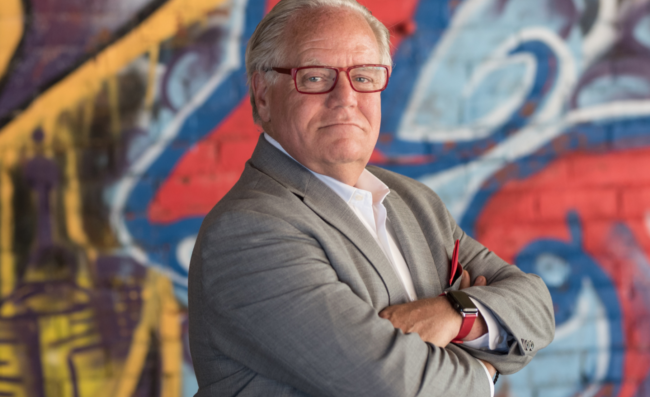

Jim Marous (00:11):
If you think the biggest fintech threat to your bank is a digital wallet or a sleek new credit card, you're missing the real story. While the industry watches companies like Nubank and wonders what its US entry could mean, a far more important shift is already underway. Banking is quietly being unbundled by software platforms, embedded finance, and AI tools that move from insight to execution in a nanosecond.
Jim Marous (00:39):
Today, we're joined by Rex Salisbury, founder of Cambrian. Rex invests in the companies rebuilding financial services from the ground up, often before traditional banks even see the risk. He's going to join us to discuss why legacy banking models are evaporating faster than most executives realize, what threats matter most, and how banks should respond before the competitive ground shifts even further.
Jim Marous (01:04):
So, Rex, first time on the show, I don't know how we've missed each other through these times, but you're on various organization boards or advisory councils working on how to get more information out to not only the fintech founders, but also financial institutions on how to do banking better.
Jim Marous (01:22):
So, to start off right off the bat, from your vantage point as an early-stage fintech investor, what are the two or three trends in US banking executives have to be taking more seriously right now?
Rex Salisbury (01:35):
I think the number one trend to be paying attention to right now is the fact that there are at scale tech players who are today taking market share in mass affluent. That was not true even three years ago, and it was not true of the companies that were founded 10 years ago that they started in the mass affluent.
Rex Salisbury (01:53):
They started down market with younger or less affluent customers who banks largely did not care about and did not know how to serve profitably. Now, what you're starting to see is that equation has flipped, they are actually starting to take market share for the customers that banks actually care about and in the intervening 10 years, banks’ products have not kept pace, and it's a one way door.
Rex Salisbury (02:16):
Once you start experiencing better, modern products, you don't go back. And so, you might be sitting there and be like, “Hey, I'm a banker, things are going fine.” 10 years, Robinhood's a $50, $100 billion company, NuBank's an $80 billion company, but we're fine. My business is still growing at kind of roughly the same rate it's ever been. And I think that's missing the point that we've actually just in the last couple of years started to hit the place where customers are leaving banks for some of these new platforms.
Jim Marous (02:49):
It's interesting, Rex, because it's a trust factor. Seven years ago, the fintechs were unknown and as you said, the people that were not being served by financial institutions said, “Well, I'll put my secondary account there and maybe I'll transfer it over.” And all of a sudden, now we're seeing companies like Chime having the most number of checking accounts open on a monthly basis, more than Chase, more than any other organization.
Jim Marous (03:13):
And I think that's because people said, you know what, nothing went wrong so my trust factor has gone up. And even bigger than that, the services now being offered by the Robinhoods, by the SoFis, by even the Allies-
Rex Salisbury (03:27):
And that's where I would say trust does matter and if you screw up trust, it doesn't work. I don't think it's just a trust factor, though, because I think if you're a mass affluent customer and you looked at Robinhood or you looked at Chime five years ago, you would say, “This does not serve all of my needs. I'm not actually interested in this product regardless of whether or not I trust this institution.”
Rex Salisbury (03:46):
Now, when you start to look at those product offerings, you realize it's more compelling oftentimes in terms of the breadth of products or certainly, in terms of the rewards that are offered to you or the lack of cost. Chime, for example, started as a free product for many folks for whom they could not have a free checking account post-urban.
Jim Marous (04:07):
So, bankers, what they're getting wrong about the fintech marketplace is that they're underestimating the threat and misunderstanding where value is created. Is it more than just the fact that they're digital that's the threat or is it basically that they're creating products, moving the speed of digital to be able to serve the customer better.
Jim Marous (04:27):
Because I sense the fact that a lot of this happening still behind the scenes. I talk to bankers all the time going, do you realize how much silent attrition is happening that you don't even have a taste of because you haven't lost that customer in your mindset in the old-fashioned way of saying, “Oh, they're still on the books.”
Rex Salisbury (04:45):
The other thing is it's also generational the amount of time it's taken for this to happen. In the last 10 years, Gen Z and millennials have grown up and so they might never have moved their primary broker's account to you in the first place, so you didn't necessarily notice the churn happening.
Rex Salisbury (05:03):
But to your question like what is actually causing it? I think there are two really big things. One is product, and product is thing everyone sees and thinks about. The other big one is business model transformation.
Rex Salisbury (05:13):
And if you take a look at what Robinhood is doing … a lot of people don't like the idea that Robinhood is encouraging day trading. But if you look at what Robinhood is doing, they basically have a way of monetizing and engaging users through their brokerage account that none of the big banks are very good at competing with.
Rex Salisbury (05:31):
And so, they have this monetization engagement engine that no one else has replicated, and they've attached to that the ability to cross sell and upsell more traditional banking products, like a credit card that gives you 3% cash back, like a high yield checking account. And what's interesting about that is not just the product innovation, it's very hard to build an incredibly engaging, seamless, digital front end for a brokerage account.
Rex Salisbury (05:57):
If you log into Robinhood and you log into a Merrill Lynch or a Schwab or someone else, there's a world of difference in that product experience. But there's another part that's even harder than the product experience in some ways, and that's the business model.
Rex Salisbury (06:12):
And because Robinhood has a unique way of monetizing on the brokerage account, they make about 2% return on assets for their clients. It means they're comfortable being more aggressive in terms of the value they give back to their consumers for the other products.
Rex Salisbury (06:26):
A 3% cash back card is dead on arrival at every single bank because they don't know how to make money off of that. It remains to be seen the extent to which Robinhood can make a lot of money off of that, but it's going to be a product within a broader product suite, and it's helping drive their gold subscribers.
Rex Salisbury (06:44):
Also, they have a high yield account. If you tell a banker, “Hey, all of your customers now need to be getting market leading yield on your accounts,” that quite literally breaks the bank. Because banks, the core thing bringing them together is low cost of deposits.
Rex Salisbury (06:59):
And if you're saying, “Hey, we're going to give away all the interchange, we're going to give away all the net interest income, but we're going to make money by doing a bunch of things, doing it super efficient at scale, having fewer people in the back office,” they're like, “Oh my God, I can't compete with that.”
Rex Salisbury (07:14):
Structurally, my lines of businesses are incentivized not to do that. Because you're thinking about each not from a customer perspective necessarily, but they're often managing it at the line of design. I'm the deposits line of business, I'm the card line of business, and they're not able to work across those silos nearly as well as a newer company can.
Rex Salisbury (07:37):
I talk a lot about Robinhood, and I talk a lot about Robinhood because they're one of the few that has I think, reached any degree of scale in mass affluence. I expect there will be others, it's just that Robinhood is the first.
Rex Salisbury (07:48):
And I think the best rough proxy for understanding what this looks like is, if you look at JPMorgan Chase, and you look at their digital monthly active users, which isn't like a great number, you’d probably care about a different number, but it's a number that they disclose regularly. It's about 60 million monthly active users, and on average, a Chase customer has a $60,000 account balance.
Rex Salisbury (08:09):
Robinhood went from having basically zero customers that had something approaching a $60,000 account balance, call it three years ago, to having about 4 million of them. They don't break out their deposits by gold subscriber but it's probably pretty close or much, much closer than their average account to what a JPMorgan Chase customer looks like, and that has gone from zero to 4 million.
Rex Salisbury (08:32):
So, three years ago, you'd say like, “There really aren't any customers there that folks care about.” Fast forward to today, 4 million growing at whatever it's growing at now. It's growing a lot faster than it is for the big banks and Robinhood is just the first one to come.
Rex Salisbury (08:47):
You mentioned Chime. Chime historically has served down-market consumers earning less than $30,000. But if you read their S1 or any of their lease in public earnings, they say our core customers, anyone earning up to $100,000.
Rex Salisbury (09:00):
They’ve launched a secure card, they're launching new products, they want to move upmarket. Now, it's going to be a lot of work for them to move upmarket but they're going to try to do it. And when they do, if they bring customers and market share, those are going to come at the expense of the big banks.
Rex Salisbury (09:16):
So, big banks really in just the last three years – and it's not just the big banks, it's also the long tail of banking institutions in this country who tend to serve the older generations as opposed to Gen X, Gen Z, millennials, they are actually starting to go after the customers that banks care about. And that's just on the consumer side of things. We could talk a lot more about what's going on the business side of things.
Jim Marous (09:39):
So, Rex, with this being said, we're talking a lot about the wealth transfer that's going to happen as people my age start passing on, and the money's being managed by people that are much younger than us, our kids or maybe our spouse, but kids are the ultimate thing. Can the major banks who have had these legacy accounts forever even bar the doors? Can they close the barn doors?
Jim Marous (10:04):
The horse is already out of the barn with all the people in this next generation having relationships that they're much better served, they're much more personalized services and different asset tiers and things of this nature. Is the legacy banking environment more of a threat than anybody realizes because of the wealth transfer that's going to end up happening?
Rex Salisbury (10:26):
The wealth transfer – so before, we were talking about mass affluent; mass affluent households are well off, but they generally don't have a lot in assets. Maybe they have a few hundred thousand dollars total in investable assets. So, when you talk about the great wealth transfer, you're really talking about the top 10% and really even the top 5% or 1% of the population where all of the investable assets tend to sit.
Rex Salisbury (10:49):
If you look at total net worth, it's really not until you get to the top 10% where 50% of their net worth is held in stocks and other kinds of financial assets. So, it's a different kind of customer, but it is a very important customer to be considering, and I think banks are also screwed. Here, banks is a little bit interchangeable with RIAs because some banks have wealth management practices. And I think there, they are also quite screwed.
Rex Salisbury (11:17):
And the reason for that is that the infrastructure these folks run on … first of all, the average age of a wealth advisor is a lot older than the average age of the child of their current client. And so, it's like hey, you show up, your parent is passing away, about to pass away, or just you're doing financial planning and it's still 10 years, 15 years before that happens, and you go and interact with this person, they just don't feel like someone you relate to.
Rex Salisbury (11:46):
So, just on the relational piece, let alone the product or the technology experience, I don't think it aligns. And then they're like, “Hey, congrats, you get to have our white glove experience. Come down to our office and sign a bunch of paperwork to open these accounts to pay us a 1% management fee to now have a really, really crappy software experience that you can log into.” And you look at it, you're like, “Wait, I just took like a step back 30 years. This is terrible.”
Jim Marous (12:16):
They're able to do it themselves on their phone better than their bank can do it on their behalf.
Rex Salisbury (12:23):
Absolutely. It is easier for me to trigger … so I'm a customer of Mercury Personal. Mercury Personal is an example of how — and this is very, very early. They're probably in the thousands of customers, but they're going straight after a more affluent client base with a personal banking account.
Rex Salisbury (12:39):
It is easier for me to send a wire with Mercury Personal than it would be to call my banker and send a wire. I do not want to call a banker to send the wire. I do not want a banker to be pitching me and saying, “Hey, Rex, great news. You want something done, just text me. Now, I'm going to charge you 1% on your assets, I'm going to require you to hold a lot of deposits with me that I don't actually pay you interest on, but anytime you want something done, just call me, I'll do it.”
Rex Salisbury (13:04):
I don't want to call you. I shouldn't have to call you. It's not that hard. Why can't I just click a button to send money? Stop asking me to call you. I don't want to be taken out to play golf. If you're paying for golf, I know I'm paying you in some back ass words way. I want good software that works reliably, and then ideally, I'm paying for it in some clear and transparent manner.
Rex Salisbury (13:30):
Now, that's probably not actually going to happen because it turns out people don't like paying for things in clear and transparent manners in financial services, so that's probably still going to become the case where you have these opaque revenue streams in the ecosystem.
Rex Salisbury (13:43):
But in terms of the fundamental expectations of the client and what they want, I just don't see a world in which the typical – and it's mostly millennials who are going to start receiving distributions from boomers, is going to want the same experience that their parents did. It's going to necessitate an entirely different set of products and services.
Jim Marous (14:03):
So, you're deep in the fintech space, so you obviously have to look at legacy banking to figure out weaknesses so that your investments actually apply to the weaknesses in legacy banking. And I know what your answer is probably going to be here, you're going to say all of the above. But when you look at the biggest structural weakness of legacy banking today, that they have to be able to solve for, is it the experience? Is it the cost? Is it speed of market, or is it the-
Rex Salisbury (14:28):
It's the product and how the product experience intersects with the business model. I think what is starting to happen, so let's continue to talk about kind of the top 5%, so above the mass affluent. What is happening now is I think more and more products and services are getting bundled around the core wealth management experience.
Rex Salisbury (14:46):
The great news about doing wealth management for a client is you have a huge relationship with them, their investments tend to be pretty sticky, and even if you're not charging them a 1% management fee, but you're the custodian, you can monetize those assets from 10 to 25 bps a year in a way that may be completely invisible to the end client. So, that's a pretty sticky recurring revenue stream.
Rex Salisbury (15:10):
Now, it used to be the person who did the wealth management was like, I don't want to do your taxes. That's a lot of work. It's low gross margin, I'd rather refer it out. I don't want to do your estate planning. It's a lot of work, it's low gross margin, I'll refer it out. I am the wealth manager or the RIA, but the bank is separate and that's another project for itself.
Rex Salisbury (15:29):
I think increasingly what clients are going to demand is no, I want one platform that is going to do my wealth management, my estate planning, and my taxes and they're going to do it all in one. I think the reality is, taxes are going to be free. You can already see this today.
Rex Salisbury (15:42):
And this is one of the first things that's starting to happen in terms of the AI revolution, is a lot of people are starting to offer free taxes as a client at the lower end for call it the middle class. And for mass affluence, it’s more of a retention tool to kind of retain existing customers or an acquisition tool, to help you say like, hey, you put up a bunch of posts to say do your taxes for free, you get attention from folks, you might be able to cross sell them new products and use an acquisition tool.
Rex Salisbury (16:12):
But at the very highest end, I don't think anyone's like, “Hey, I'm going to move a million in assets, 5 million assets over just because you'll do my taxes. Also, the taxes are more complicated. So, I don't believe that you're going to be able to do the taxes.” But I do think more people are going to start to require a fully integrated product experience that covers every aspect of your financial life. And I think the thing that's most likely to get bundled around is around kind of the wealth management stack.
Rex Salisbury (16:38):
And you can even look at Robinhood and see how this is kind of the case. Robinhood started as this kind of toy account for day trading, your play money for mostly young folks. Now, they've moved into the full set of accounts. They're working on private banking. They now have their card. So, they're working on trying to move up market. But there are other folks who are trying to work on ways of doing this as well where you have kind of a tech enabled or tech native RIA that is doing the full product of services for their clients.
Jim Marous (17:10):
So, we've gone through a lot of changes. Fintech, eight years ago, nine years ago, was disrupting everything. We were worried about disrupting everything. There were companies being introduced every single day, and it's not that way anymore. And in fact, a lot of the disruption in fintech has been partnering solutions with the traditional financial institutions.
Jim Marous (17:32):
And I think you almost get lulled into a false sense of confidence with a legacy banker where they assume that because we're not seeing all these headlines of this much money spent here, this much money spent here, that the disruption has slowed.
Jim Marous (17:45):
From what you're seeing, is it really slowed or has it moved deeper into the infrastructure in intelligence and distribution, as opposed to that flash in the pan organization is going to solve a niche?
Rex Salisbury (17:58):
I totally agree with this perception. I don't think it's unreasonable to have that perception, but I think it's completely wrong. And it's not unreasonable to have that perception because we've been hearing about these new things for 10 or even 15 years now, and you're like, “I'm still here.” Like all of the doomsday scenarios that people were talking about 10 years haven't happened, this is crazy. That was all just hype. It's not real.
Rex Salisbury (18:25):
But you actually start to look at the numbers, you can see that it is now finally starting to happen. But there's no hype about it. It's just this long tail of execution and growth. And the things that are getting hyped now are the next generation of things that are going to happen in financial services and in AI. That is going to be even bigger and more transformational than the last 10-15 years of what has happened in fintech.
Rex Salisbury (18:51):
But that last 10 or 15 years is finally starting to get to the point where it's penetrating into the incumbent's home turf. And that's why I would be particularly scared about if I were a large incumbent that didn't move very fast in the last 10 or 15 years, it's like, well, those companies are now coming for your core customers.
Rex Salisbury (19:11):
And by the way, we have a new bigger shift that's even earlier and that's going to be even more transformational. There's less clarity as to what exactly that's going to look like yet. But even if you manage to fight off this wave that's currently happening, there's going to be another bigger wave that's driven by all the disruption that AI is going to bring across the entire economy, including financial services.
Jim Marous (19:36):
Let's take a short break here and recognize the sponsor of this podcast.
[Music Playing]
Jim Marous (19:45):
So, somewhat buried in the lead a little bit here, but NuBank is obviously an organization that if you watch the market on an ongoing basis, they raise your eyebrows because they're big. And I'm down in Florida this time of the year, and they're building a stadium down in Miami to house a soccer team. Well, that's not the biggest thing they're doing. They're a little different from your challenger bank story.
Jim Marous (20:09):
They started in a marketplace that distrusted banks from the very beginning. So, they got a little bit of a headstart in the way they dealt with their consumers. But it's more than just a Latin American success story. You just did an interview with a NuBank executive, what was the biggest takeaway you had and maybe the biggest aha that most American bankers may just not catch?
Rex Salisbury (20:40):
So, NuBank wants to come to the US. Coming in the US is very hard. Historically, it doesn't work super well. Lots of folks have tried it. That said, NuBank is not the only one coming into the US; we’ve got NuBank, we've got Revolut and then we also have a bunch of companies that are starting to rescale that are getting their own charters and moving up market.
Rex Salisbury (21:02):
So, whether or not it works out for NuBank super well, there are enough people trying things that probably one of them is going to figure out a formula for what will work. So, I'm not going to say that I'm 100% confident that it will work for NuBank or exactly what working would even look like. But here's what I would be paying attention to with respect to NuBank.
Rex Salisbury (21:24):
So, one, I think it's just interesting to reflect that yes, they started in Brazil, which is more of a greenfield market where the incumbents ... I'm not happy with the pace of innovation and the product service and that sort of stuff for the incumbents we have in the US.
Rex Salisbury (21:39):
But if you listen to Cristina Junqueira talk about what it was like when she was working at an incumbent bank in Brazil, it sounds a lot worse in terms of the basic products and services that are being offered to clients there.
Rex Salisbury (21:52):
One thing that's super impressive about NuBank is Brazilian GDP is about $2 trillion and their GDP per capita is (I'm going to get this wrong, but let's call it) roughly a fifth. It's a lot lower than it is in the US.
Rex Salisbury (22:05):
So, when they first launched their card and credit card was their very first product they started with, their annual revenues per user were like $10 or $20. Very small compared to annual revenues per user for a typical American client in the banking system. What that meant was they had to be incredibly efficient about serving that customer.
Rex Salisbury (22:27):
If you tell an American banker like, “Hey, you got a million customers and you can make $20 a year off them,” they're like, “Can I please get rid of them? I am losing a lot of money.”
Jim Marous (22:36):
I'll give them to NuBank. Exactly, yeah.
Rex Salisbury (22:38):
Yeah. Good. I will pay you to take these customers from me. But that's the world NuBank grew up in. And they figured out how to serve customers profitably at least on a marginal basis, pretty early on. Maybe not at the $20 user per year, but around the 40.
Rex Salisbury (22:59):
And now, what's pretty impressive too, is despite it being a much lower GDP per capita country, they've managed to cross sell so many products and develop such a deep relationship with their customers that their annual revenue per user are about $200, which is roughly equivalent to a Chime.
Rex Salisbury (23:13):
And so, that's pretty interesting to be like, wow, they're operating super efficiently and despite being in a lower income country, have relatively good monetization. And so, if you see someone who's very efficient, like that, come to the US, you should be like, “Wow, they're going to be able to do things we can't do because they have had to develop these capabilities that we have never actually had to develop at scale within the US context." It is basically their efficiency-
Jim Marous (23:43):
Their activity rate’s 83%. I mean, the reality is they built from a core of credit cards, as you said, they expanded the services and learned as they went. They have a massive customer base, and you can talk about the profitability per customer, but the reality is WeBank in China doesn't have that much higher of an average revenue per customer but they have a lot of customers.
Jim Marous (24:07):
And once you get really good and learn your chops on dealing with scale and engagement, that kind of changes the ball game from the standpoint of no traditional bank has ever had to do that. And there's a lot of underserved customers in the US that they could scrape off the bottom and feel comfortable with in masses, and could do it to a degree what Chime's done, but maybe even more so because they didn't work under the regulatory hurdles within the US at the beginning.
Rex Salisbury (24:42):
Also, NuBank is now a brand. They're not a brand that most people know about, but I think this is one of the big things that works for the largest financial institutions in the US, is there are brands that people know and trust and that's just kind of like, “Where do I go?” “Oh, I know the names of the big banks.”
Rex Salisbury (24:57):
NuBank is a beloved brand in Brazil, way more so than any of the banks in the US. That translates precisely zero to about 90% of the US population, but 10% of the US population or maybe 20% of the US population in the state of Florida, which to your point is where they're building a stadium, they know who NuBank is.
Rex Salisbury (25:19):
So, that Latin American brand that they've built does translate to certain areas in the US where those customers do know about NuBank and know they exist. NuBank also is now not a scrappy startup. They can move to the US, get a bank charter, and name a stadium after themselves. So, they don't have to try and figure out how to be super scrappy for a bunch of years to establish that brand.
Rex Salisbury (25:43):
And then underneath that, once they get that initial slug, it's up to them to build a great product, great experience. But they're a pretty formidable company, because they've been able to do this in a way that no one else has had to do it in the US.
Rex Salisbury (25:58):
And so, that's what I'd be paying attention to them is basically taking that incredible brand, that incredible discipline around execution, and finding an initial foothold in a set of customers who probably are already a little bit familiar with that brand, and then what can they do with it from there? But whether or not they're successful, they're not the only ones-
Jim Marous (26:15):
That's what I was just going to ask you. What other fintech companies are you impressed with the way they've grown and the opportunities they have on the horizon whether or not you invest in them or not? And some of them, I'm sure, are more back-office names than they are front office names. But what firms really right now are truly growing at scale and ones to be looking out for?
Rex Salisbury (26:39):
This is where I think up until now, we've talked pretty much entirely about the consumer world, all the way from kind of lower middle class or close to the poverty line folks with Chime, up to mass affluent with folks like Robinhood, and then we talked about the super prime and the wealthy in terms of the asset management stuff.
Rex Salisbury (27:00):
A lot of the names that impressed me most though in the fintech ecosystem are on the B2B side. And if you look at folks who have just incredible products and incredible product velocity and incredible growth rates, it would be names like Ramp and Mercury and Brex. And in fact, Capital One just acquired Brex for $5.15 billion, which was the biggest bank fintech deal in history.
Rex Salisbury (27:25):
And if you haven't used Mercury or Ramp, it is a fundamentally better product in terms of logging in. Especially if you log into Ramp and you want to manage all of your spend, including card spend, just nothing like that really exists with the incumbents.
Rex Salisbury (27:44):
And so, once you get used to that, again, it's a one-way door. There's a lot of stickiness and there are a lot of small business owners who like having their Amex cards to give them personal rewards and all this kind of stuff, so it takes time for that to penetrate, but these are just fundamentally better products and experiences.
Rex Salisbury (28:00):
Also, what's interesting about these companies is they have gotten started being exceptional at just one product. So, Mercury started with the bank account, Ramp started with card spend. Ramp now has Ramp Treasury, which they want to expand into a full-service bank account and Mercury has had card and card spend for a while.
Rex Salisbury (28:22):
Although Mercury, the credit card expense management size thing before was just on virtual debit cards, that is maybe a little over a year old. I'm probably getting that wrong. It's probably older than that. But they're starting to increasingly compete with each other and add on a bunch more products.
Rex Salisbury (28:39):
But that also means they're going to start competing much more across product lines with banks. And folks like Mercury and others are getting their charters. It will mean at some point they step into lending in some way. So, we've gone from these exceptional monoline companies on the B2B side to they're quickly trying to do everything.
Rex Salisbury (29:05):
Mercury acquired a payroll provider, for example. And this is where it gets interesting too, is not only are they going to layer on all the existing products that their classic competitors might have, they might compete orthogonally and start to bundle in products and services that banks have never thought about taking on because they never had the product and software capability to think about executing on that front.
Rex Salisbury (29:30):
And so, that's where it's going to get really interesting. It's not just when they have all the products to compete with incumbents, but they start doing fundamentally new things in new ways. But we're still early on that front.
Rex Salisbury (29:40):
The Mercury, the acquisition of the payroll company just happened, to my knowledge, there are no customers live on a Mercury payroll service, nor would I imagine there would be in the next three to six months. But by end of year, who knows? And so, I think watching folks like that take off are super interesting.
Rex Salisbury (30:00):
And then, I would also just go through the list of the 12 folks who have applied for charters. It’s also remarkable to reflect on the fact that Erebor Bank, the bank started by Erebor Bank that wants to bank a lot of venture bank companies especially defense tech companies, they went all the way from application to opening customer accounts in I believe under 12 months.
Rex Salisbury (30:22):
And that comes after 15 or however many years of us basically not issuing net new charters. So, it's not just the names I've mentioned, there are now new folks who have barely gotten started, who are already coming out of the gate faster with their own charter. So, there's just going to be more competition than ever before. So, those are the banks and the fintech competitors you might see and think about.
Rex Salisbury (30:48):
There's another wave on the B2B front that I think is probably the most important wave, and that's the rise of vertical SaaS. This is easiest described with someone like Toast. And Toast is vertical SaaS for restaurants.
Rex Salisbury (31:02):
If you run a restaurant, you do not wake up saying, “You know what I want? I want a bank account, and I want to go to a bank branch and get a bank loan.” What you want from first principles is a piece of software that runs every aspect of your business for you.
Rex Salisbury (31:18):
Before AI, it was pretty hard to build a lot of software. So, that meant you had to pick a few different things, and Toast started with the point-of-sale terminal. And then years later, they've expanded into doing payroll and doing Toast Capital. So, they actually lend to their customers. It took them like – I can't remember the exact timeline, but let's call it like six years to at least start doing the lending thing, but lending is now like 20% of their revenue.
Rex Salisbury (31:42):
So, if you want a loan and you're a restaurant, you no longer have to go to a bank branch, you no longer have to go through a one to three-month process to get a loan. It's a little bit more complicated than this, but you can press a button in a piece of software you're in every day and get capital. And eventually, it will be that easy. It will literally be, what do you want? Here are the terms, accept.
Jim Marous (32:07):
In much the same way that PayPal does this, where they know flow funds and PayPal is willing to offer you pre-approved loans because they know your business better than your bank does.
Rex Salisbury (32:17):
And what is happening now is Toast is many tens of billions of dollars of market cap. Again, I think roughly 20% of their revenue comes from Toast Capital. Now, if you want to build a vertical SaaS platform for something like hair salons, golf courses, funeral homes, it has become a lot easier to build more software.
Rex Salisbury (32:37):
And that software can do your CRM, your scheduling, your appointments, your payment processing, your payroll, your bank account, your FinOps and reconciliation, and your accounting, which means they have complete insight into your financial credibility as a business, which means they'll also be able to do loans.
Rex Salisbury (32:57):
And so, what is going to happen is that loans aren't going to be something that people walk to a bank to get anymore, loans are going to be provided to you in the normal course of business by a piece of software that has context around your entire organization.
Rex Salisbury (33:12):
And that's going to move from ... if you look at restaurants, there are over a million restaurants in the country. Restaurant spend has recently crossed (although I think it was maybe three or four years ago during the pandemic) grocery spend. Restaurants are one of the largest verticals. So, it makes sense that Toast is one of the first large vertical SaaS companies. It's just a huge category.
Rex Salisbury (33:35):
If you take the 8 million small businesses in this country, there are a lot of other verticals, and now all of them are increasingly going to get their own versions of Toast. And those bits of software are going to be exceptional, and they're actually going to cover more service area from day zero than Toast was able to do when they started.
Rex Salisbury (33:53):
And that means that if a bank goes to a small business customer and is like, “I have a bank account, and a card, and a loan,” and people are like, “But do you manage my whole business for me?” And they're like, “No, no, we don't do that. We take two weeks to open your bank account by the way.” And the customer is like, “I already have an account, it's inside my software. And they already give me loads and I just click a button and I get a loan. Why are we talking?” And that's the world we're having where it's going to be truly embedded.
Jim Marous (34:29)
It's crazy, Rex, because I go back a few years when banks were actually giving the terminals that would take the card payments from small business to small business. It's part of the business. You had salesmen out there giving those to organizations so they could have their accounts.
Jim Marous (34:46):
And then they completely got out of that right at the cusp of data being important, that you'd be able to collect all that data and be able to serve the customer more than just on the credit card side, but on the data side. And now, you see things like Toast, you see things like PayPal, you see things like Square, all these other organizations, you go they have made complete business models around the capture device and around the entire software stack, as you said.
Jim Marous (35:12):
And it's crazy because these are parts of the business that the banking world gave away because they didn't see the profitability at the time. And there's other things such as agentic AI, Stablecoins, these other things that are gnawed at the edges of the relationship that consumers and small businesses and corporations actually have with their financial institutions.
Jim Marous (35:35):
How does a traditional bank hang on in this environment, or what defenses or are there defenses … I see a smirking already, so I'm going down a path … I hate to tell you, but that horse left the barn. Again, back to that analogy.
Rex Salisbury (35:53):
That's why I'm in business, is I believe that.
Jim Marous (35:57):
But the thing is, a lot of bankers kind of believe it, but it keeps them up at night where they're realizing that there's all these organizations that they don't control anymore and they don't control their consumer. It looks great on a financial statement that you have the same number of customers, you have the same number of deposits, but these are manufactured and they're not holding what they've got as far as where it's going to go forward.
Jim Marous (36:21):
You've recently had conversations around Stablecoin and Agentic AI, and how this can really, really substantially disrupt organizations, not just on the payment side, but organizationally in the way they do business.
Jim Marous (36:33):
Are we looking at the beginning of what you and I have talked about, the sky is falling moment, where all of a sudden we're going to see a massive consolidation in the banking industry that we've talked about for decades, and it's never really happened to the degree we thought it was going to happen.
Rex Salisbury (36:50):
It's still going to take time. It's still going to take another 10 years, but I think now for the first time-
Jim Marous (36:53):
But 10 years is a short amount of time. I mean, six years ago was COVID and that feels like yesterday.
Rex Salisbury (37:01):
And let's go back to the Robinhood gold number, 4 million subscribers versus Chase's 60 million monthly actives. Once that starts getting to 10, 4, it's kind of spread out across — there are another big five banks that also have 60 million. You still don't really feel the pain of 4. But when you get to 10, and 10 is not that far away, it's maybe another two years.
Rex Salisbury (37:23):
And then you start to think about the Mercurys and the Ramps and the Chimes and maybe the NuBanks, and across all those folks … when you start to get north of the 10 million customer mark that are being pulled out, that's when banks really start to notice it.
Rex Salisbury (37:40):
Right now, the economy is still growing, people are getting ... I think economic is going to continue to grow. But it's growing enough that even if you're losing a little bit of market share, you still see growth in your business.
Rex Salisbury (37:52):
At some point, I think that flips where the underlying growth of your existing customers relative to the attrition, and that's maybe two years away, where you start to feel the pain of some business lines actually just stop growing and start shrinking. And I think we're going to start to see that in the first business lines in another year or two.
Rex Salisbury (38:11):
And I know there have been some large private market investors who do cohort analysis of new businesses. Who do they open bank accounts with? Who do they use for their card spend? And when you do the rankings of those, it is not the big five banks who have the largest market share.
Jim Marous (38:27):
And they're not opening the most new accounts. I mean, yes, it's death by a thousand cuts but the reality is, organizations, financial institutions got to realize that if Chime is getting the most new consumer accounts right now, opening up on a monthly basis, that should be a warning sign that says, it may not hurt now, but it's hurting each of you a little bit, but eventually, they're going to get scaled to the degree that they become a household name beyond the original target market.
Jim Marous (38:56):
And it's going to happen for the Robinhood, it’s going to happen for the SoFi, and it may happen in different ways than the PayPals of the world where you say, they already had a brand but they completely shift their business model to serve in new ways. It's bigger than a warning sign because as you said, scale may not be there, but by the time it is, are you ready to respond?
Jim Marous (39:18):
And I'm going to put you in the spot a little bit here. If you were all of a sudden, they convinced you somehow to become a CEO of a legacy bank, what's the first thing you would do to respond? I mean, obviously, I'm taking a bland organization, but saying most of them are very similar to each other. What's the first thing you would do to defend turf, assuming that you had enough revenue and everything else to do so?
Rex Salisbury (39:46)
No one should give me that job. I do a terrible job. But I mean, the three buckets to mostly think about are buy, build, and partner. And I think the reality is you probably have to buy something and equip that team that you're purchasing to really go after it. And this is why I think the Capital One acquisition of Brex makes a lot of sense.
Rex Salisbury (40:11):
I don't think Capital One could have built Brex internally, and even now that they bought Brex, they're going to have to make sure that they give them enough operational independence to pursue the market opportunity as it exists today, but that's probably one of the most important things for you to do.
Rex Salisbury (40:26):
But an acquisition like that is really hard. If you're not Capital One, and you have a much bigger existing SMB business practice and card portfolio, it's incredibly political and difficult to try to do that. And so, it's just a very hard job to do to take, I think, the degree of the bull batch that you would need to do as a banking leader to make some of this stuff happen.
Jim Marous (40:52)
So, that being said, and knowing that you have to restructure this, we see things like something that you never would have seen Chase building a digital-only bank in the UK, but not building themselves, building with a partner. Which was very interesting that you don't usually see something like that happen with them. You're seeing organizations … I mean, Chase bought a number of fintechs-
Rex Salisbury (41:15):
And by the way, they had Finn by Chase, which they started and then they killed. It's hard to build these things internally.
Jim Marous (41:22):
Before that, they had the online bank and I keep on saying that when you have 35 stories of branch bankers in your tower, it's pretty hard to all of a sudden say, “We're going to go into the digital-only world,” which is what they would have loved to have done. They didn't have to fight anybody in the UK because nobody works at the organization before that. But do you see any-
Rex Salisbury (41:41)
And even for Goldman, which didn't have that, they found it very, very difficult to build this because the other parts of Goldman were making money and this part was costing a lot of money, that was difficult for them too.
Jim Marous (41:54):
Hard to sell to quarterly shareholders. So, do you see any legacy bank being able to get out of their own way enough to compete aggressively with the fintech providers that we see possibly? I mean, we make all kinds of assumptions, but they're obviously doing a lot of things right. Do you see any of the legacy financial institutions or a set of financial institutions are going to be able to get out of their way to serve the marketplace the way the fintechs can right now?
Rex Salisbury (42:21):
I think probably the part of the large bank franchise is the most defensible or anything that operates at the largest level of scale. So, they're like the global corporate banking franchises where you bank the largest companies in the world.
Rex Salisbury (42:33):
You can also see a little bit of how this is playing out just with what's going on private credit and banks are re-trouncing and being the more senior lenders to the private credit firms who then take the more junior positions. Well, they don't take the more junior position, but they're the ones actually out there making loans to the end company.
Rex Salisbury (42:52):
And so, I think there could just be this kind of re-trouncing where they become partners in infrastructure but also, if you're a huge organization, you want to work with someone like JPMorgan who has a huge balance sheet.
Rex Salisbury (43:09):
And so, for some of the largest customers, that's where they're still going to be … they're going to have an opportunity for a while. But even for largest banks, global banking and those large customers are not 80% of their business, they still really depend on the mass affluent in these other segments to be these broadly diversified businesses.
Rex Salisbury (43:32):
One other thing I'll mention too, is we talked a lot about understanding how the transformation is starting to happen by speaking about the end customer and what they need and why what they need does not map to today's ecosystem. And I think that's probably one of the most important lenses to understand how banking transformation is going to happen.
Rex Salisbury (43:50):
But there's another lens which is just starting with the business model of banking. And to oversimplify, one of the core things about banking is you take deposits, and they're about 20 trillion in bank deposits, and you pay no interest. And then you lend out at a much higher rate, and to do that lending, you spend about 50% of the spread on your costs, like that's your expense ratio.
Rex Salisbury (44:16):
So, you don't pay any interest, you're pretty inefficient in terms of how you lend that out, just because it's the expense of managing all those people and processes and things that manage those loans, and then you lend out at a high price.
Rex Salisbury (44:31):
Most of that $20 trillion in bank deposits is just kind of idle money that's sitting there, not because the customer intentioned it to be that way, but because there's kind of friction in the system, and it's kind of a pain to move money around. I have this, I hold more cash than I would like because ACH is a pain, I need some money here, I need some money there, like dividends came in there, I haven't moved around.
Rex Salisbury (44:54):
That's what the financial ecosystem depends on, is inertia to be able to charge 0% interest to be able to make spread. If you believe that we're going to have real time money movement at scale in the next 10 years, and we're going to have agents or more autonomous software – this doesn't even have to be crazy, it's just sets of rules that move money to seek yield and are able to do that in real time as opposed to getting stopped because it's a bank holiday or a weekend or it's 5 PM.
Rex Salisbury (45:24):
So, if you just believe that you're going to have software moving money to seek yield, how can you possibly believe that in 10 years, there's still going to be $20 trillion of bank deposits that is willing to receive zero yield? I don't see that being true, regardless of all the customer stuff. And if that's the case, the cost of capital is one of banks core competitive advantages, and that deposit franchise is going to be eroded.
Jim Marous (45:53):
At the same time that you run out of ways to cut your costs in the back office – it's not surprising that agentic AI is being used more to cut costs in the back office than it is to deliver better services, better products, better experiences. And you go at some point, you zero out and you still have your hard costs of branches and old technology in the back office that you can't work around.
Rex Salisbury (46:20):
And this is, I think, the big thing that people did not talk enough about with the collapse of the SVB. It's like, oh my goodness, like a lot of people don't actually know what happens. If you're a banker, you know what happened. They mismanaged rate exposure and they didn't expect rates to grow. And that's when they're like, “Wow, that was dumb. You shouldn't have done that.”
Rex Salisbury (46:35):
But why did customers move their deposits? They moved them for a perfectly rational reason that they had large amounts of money, and they didn't want to get paid 0% interest on it anymore, and rates went up for the first time in 5 to 10 to 15 years. So, the fundamental reason why people started moving money was just rational. They didn't want to be wasting money.
Rex Salisbury (47:00):
And there are a lot of people who are going to rationally start looking at their money all across the financial ecosystem in the next 1, 3, 10 years and realize they don't have to get paid 0% interest anymore.
Rex Salisbury (47:13):
And when the SVB collapsed and they did the whole thing like how many banks are functionally insolvent, it wasn't just SVB, it was a lot of banks, and the reason why customers were making rational choices.
Jim Marous (47:24):
And rational choices that for the first time ever could be done on this. That I can be taking money out-
Rex Salisbury (47:30):
And the rational choices precipitated a bank run but people are just like, “Oh, it was a bank run.” Yes, it was a bank run, but it was precipitated not by consumer psychology, but by people making a very rational choice to not get paid 0% interest.
Rex Salisbury (47:46):
And so, I think that was a harbinger of what is to come. Not a harbinger of like, “Oh my god, we're going to have massive bank runs and they're all going to collapse,” but more of a slow bleed of deposits into seeking higher yield alternatives.
Jim Marous (48:00):
And the inefficiency of banking is what holds money where it is. You and I and everyone else, anyone between ages of 20 up to 90, has money at an organization that's not the best financial decision, but it's sometimes easy to open, almost impossible to close. And you go, you know what, I got money in my Starbucks account that's not much bigger than that, so I can deal with that.
Jim Marous (48:24):
But the reality is it's going to be made more and more efficient and consumers are going to — they now have the capability to day trade their money in a way that makes it so that it's massively efficient. They get rid of the spread, they own the spread within their own organization.
Jim Marous (48:39):
We talked about open banking. Well, in the UK, it's different than the US, but in the US, I have open banking every day. I deal with multiple organizations. I'm transferring money between them, I'm owning my open banking account.
Jim Marous (48:51):
On the other hand, it is a story I tell many times that you talked about transfer money for a wire. I can't transfer money from my business bank to my consumer bank, which are both top six banks, which gives it away that it's right around that five or six level that one of them is without writing a check to myself because one of them doesn't work with any third-party provider to transfer money. So, I'm sitting here going, twice a week or twice a month, I'm writing a check to myself, taking a picture, sending it. You go, there's efficiency to that, but it’s a very inefficient process.
Rex Salisbury (49:23):
I used to have to do that. Any small business owner who has personal business, it's just kind of painful how stupid a lot of this is. I've thankfully gotten away from the point where I have to write checks to myself, which is crazy that you can put ink on paper and that allows you to transfer more money than-
Jim Marous (49:41):
And you're limited.
Rex Salisbury (49:41):
Moving money from one beneficial owner to the exact same beneficial owner digitally, cool. That's the current state of affairs.
Jim Marous (49:49):
Rex, I'm glad we finally got together. It's interesting, you have a very positive attitude about banking. It just isn't the traditional banks we're all used to, and you've actually started a fund that basically puts your money where your mouth is. And it's not as easy to have money flowing in and flowing out as was maybe eight or nine years ago, but it's a much more rational decision being made.
Jim Marous (50:15):
And I can't go throughout this without giving a plug out to the organization we're both trying to work with, with Fintech NerdCon, which is a great organization that's putting on a great event in San Diego this year instead of Miami. That really is getting together the best of the fintech world, the best of the banking world to say, “Okay, how do we bring the intelligence together to move the entire marketplace forward?” So, great to talk to you.
Rex Salisbury (50:40)
I'll say one other thing. This is a little bit outside of my core area of expertise to start getting more like regulatory stuff. But one of the things that people react to the thing we talked about for deposits is, okay, if banks don't have deposits, they're like, “Well, who's going to make the loans?”
Rex Salisbury (50:52):
And I find that so frustrating because I think it's talking out both sides of your mouth because bankers are like private credit is unsafe and a fundamental risk to the banking ecosystem. It's growing really fast. Well, you have your answer, you'll make the loan.
[Music Playing]
Jim Marous (51:08):
Oh, exactly.
Rex Salisbury (51:08):
And then they're saying it's unsafe and you say, well, you do realize private credit funds, unlike a bank, tend to be funded with about 40% equity. Now, I am also scared that there's going to be opaque leverage that creeps into the ecosystem in ways that we can't fully appreciate.
Rex Salisbury (51:24):
That happens. That's just an inevitable function of financial markets. I don't like that. But 40% equity, if you tell a banker they have to run a loan book and fund it with 40% equity, they're like, “Oh my God, I couldn't make any loans. That's impossible. That’s impossible.”
Rex Salisbury (51:38):
Both of these things cannot be true. No one will make loans, but this person is making loans, but we can never make loans. It drives me nuts because there's a bunch of intellectual inconsistency from the banking community with regards to like we have to have banks to make loans and private credit is risky, and like some other things. Other food for thought to leave you with.
Jim Marous (51:59):
Thank you so much for being on the show, I appreciate your time and your insights. Thanks a lot.
Rex Salisbury (52:05):
Awesome. Thanks so much, Jim. See you around. Cheers.
Jim Marous (52:09):
Thanks for listening to Banking Transformed, the winner of three international awards for podcast excellence. If you enjoy what we're doing, we would really enjoy a positive review. Also, check out my recent articles in The Financial Brand, the research we're doing for the Digital Banking Report.
Jim Marous (52:25):
This has been a production of Evergreen Podcasts. A special thank you to our senior producer, Leah Haslage; audio engineer, Chris Fafalios, and video producer, Will Pritts.
Recent Episodes
View AllThe SoFi Cross-Buy Engine Fuels Amazing Growth
Banking TransformedThe Best Banking Innovation Doesn't Need a Huge Budget
Banking TransformedArming Front-Line Bankers with AI Tools That Win Clients
Banking TransformedWhy Banks Miss Human Customer Moments"Most banks know far more about their customers than the customer ever feels. In this Banking Insight Video, I look at why relationship banking often feels programmed, from the quarterly business banker check-in that g
Banking TransformedYou May Also Like



Hear More From Us!
Subscribe Today and get the newest Evergreen content delivered straight to your inbox!
Advertising & Sponsorship
Interested in sponsoring or running an ad for your business on an Evergreen Podcast? Contact us to get pricing and availability.