
FIsionaries
The FIsionaries Podcast, sponsored by Alkami Technology Inc., shines a light on financial institutions (FIs) at the bleeding edge of digital transformation. The podcast, hosted by Jim Marous, features banks and credit unions sharing lessons learned from their digital transformation journeys as well as insights from fintech partners and other industry thought leaders. Each episode will provide regional and community banks and credit unions with insights, tips and tricks to elevate their digital banking game.



How an Unconventional CEO Is Rebuilding Red Rocks Credit Union
What happens when a credit union CEO comes from outside the industry and refuses to accept legacy thinking as the cost of doing business?
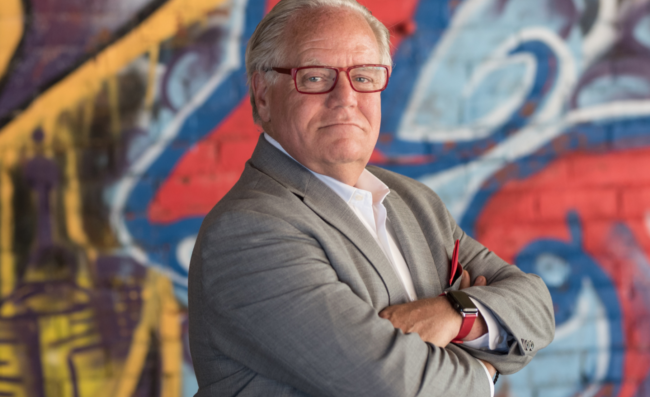
Live from Alkami Co:lab in San Diego, Jim Marous speaks with Darius Wise, President and CEO of Red Rocks Credit Union, about how an unconventional leadership path shaped the transformation of a $360 million credit union in Colorado.
Wise shares how his background as a pastor and nonprofit leader helped him focus Red Rocks on a clear “why”: enriching lives. From there, the credit union built a culture of change, modernized its tech stack, improved digital account opening, launched AI-powered member support and pushed the organization to move with more speed.
This episode is not just about digital transformation. It is about leadership, purpose, culture and the courage to move faster without losing sight of the people you serve.
Sponsored by Alkami Technologies.
#FIsionaries #Alkami #RedRocksCreditUnion #CreditUnions #CommunityBanking #DigitalBanking #BankingLeadership #CultureChange #DigitalTransformation #AIinBanking #MemberExperience #CreditUnionGrowth #FintechPartnerships
Sponsors

Alkami Technology, Inc. empowers financial institutions to evolve and thrive in the new digital age of banking. Our premium digital banking platform powers regional banks and credit unions to grow confidently, innovate at speed, and adapt nimbly—all while providing a secure, frictionless experience to the consumers and businesses they serve—24/7/365.
Where to Listen
Find us in your favorite podcast app.

[Music Playing]
Jim Marous (00:11):
Hi, Jim Marous, coming to you from Alkami's CoLab event in San Diego, California at the Gaylord Resort. And we're having a FIsionaries Podcast here today, and as always, what we're trying to spotlight are those organizations that punch above their weight on an ongoing basis, doing things that most institutions only dream of.
Jim Marous (00:30):
So, today, we have Darius Wise, the President and CEO of Red Rocks Credit Union out of Colorado. We're in Colorado.
Darius Wise (00:37):
Yeah. You know that. Littleton, Colorado, that's where we're headquartered.
Jim Marous (00:40):
And how big is Red Rocks?
Darius Wise (00:43):
Red Rocks is $360 million in assets. We're serving about 18,000 members in the beautiful state of Colorado.
Jim Marous (00:52):
So, in a little preview of discussion on your background, give a little history of your background. It's not the traditional route.
Darius Wise (00:59):
No, Jim. It's not the traditional route. Thanks for having me, by the way. Glad to be here with you. So, I was a pastor for 17 years and pastored at a church of about 25,000 in Atlanta, Georgia, and then moved to Denver to plant a satellite community of that church.
Darius Wise (01:18):
The church that I pastored at in Denver was about 1,200, and then moved into the nonprofit, the more community-based nonprofit sector, served as executive director of a nonprofit that helped families who live below the federal poverty guideline exit poverty, pursue a better quality of life. So, been in community-based organizations for the better part of two decades.
Darius Wise (01:43):
And so, yeah, was recruited into the industry by my predecessor, fantastic human being, saw something in me. And we were sitting down over lunch one day, and he said, “Darius, I'm retiring in about five to seven years, and I think you'd be a great succession candidate to present to the board. I would love for you to serve as my COO for the next five to seven years. I can teach you the industry, but I can't teach what you do. You're a leader of leaders, and I'd love to have you.”
Darius Wise (02:11):
I told him no initially, and then said-
Jim Marous (02:14):
Makes sense. I can see why.
Darius Wise (02:15):
Yeah, that's a big jump. Said no initially, and then three months later, said yes. That was seven and a half years ago, and it's been a fun ride.
Jim Marous (02:25):
So, how did you sell it to yourself? So, the career path, where you were, so you're serving communities, somewhat aligned there – but what made it in your mind to say, “I can make a difference in this financial institution?”
Darius Wise (02:42):
I mean, I think at the end of the day, community service organizations, whether it be nonprofit, as a pastor or serving in the finance industry, the cooperative of credit unions, the purpose at the end of the day is the same.
Darius Wise (02:58):
And we say at Red Rocks that our mission, our vision, if you will, our purpose is to enrich lives. And so, I was in the business of enriching lives spiritually for two decades. I'm in the business of enriching lives holistically, financially at this point in my career. It's really at the core the same motivation.
Jim Marous (03:23):
It's funny because since our first conversation, I'm going, I kind of get where this alignment, but you have to sell it to yourself. It's still something out of your realm where you're going like, “Okay, I'd like to think it's the same core of everything, but can I do it?” And oh, by the way, and not going in as a teller, you're going in as a COO, so you can't fake it until you make it.
Darius Wise (03:42):
You can't fake it. Yeah, no, you can't fake knowing the industry. And so, I mean, frankly, anything takes about five years to master. And so, learning the industry took the time that it took. I couldn't fake it, and I'm a good student. I think one of the skill sets that I have, one of my primary skill sets is curiosity. I'm a curious human by nature, and so that served me well moving into a new industry.
Darius Wise (04:10):
Before making the change, I talked to several business leaders that I trust and admire. And one of them said, “Darius …” he’s a venture capitalist at this point in his career but he had run several companies. And he said, “I've stepped into several companies that I knew nothing about.”
Darius Wise (04:25):
He said, “Business is really at the core about solving problems. If you get really good at solving problems (and you're really good at solving problems), I think you're going to be a success in business.” And so, over the last six and a half years at Red Rocks, we've solved a lot of problems. That's a lot of what has led to a measure of success for us early on.
Jim Marous (04:49):
So, it's interesting, because when you look at the credit union space, when you look at financial services, when you look at business, it's all about people, it's all about communication, and at the end of the day, it's about sales. Not the actual transaction, but selling people and organizations to follow you which I'm bringing a whole lot of analogies here about what you did before and what you're doing now, but the reality is, at the end of the day, it's all human.
Jim Marous (05:18):
But when you came to Red Rocks, part of your major initiative, certainly when you went from COO to CEO, is going digital. That's counter. All of a sudden, I'm seeing divergence in the road, going, okay, my GPS says I probably normally would go this way, but they're taking me on a detour, because they're saying there's some real big challenges and this roadway is staying human only. How did you do that at Red Rocks?
Jim Marous (05:44):
Because looking at your timeline, you had to be at what I'm going to call the early, early stages of digital transformation in the industry, so you weren't necessarily behind, but that speed of transformation has gone rapid as heck. So, how do you build that into your repertoire of what you had to learn that probably wasn't in your background?
Darius Wise (06:06):
I think, Jim, technology – I think what we all know is technology waits for no one. It moves incredibly fast. Over the last three and a half to four years, some of our most intentional work has been gutting our tech stack. I've talked and we've written a lot about this concept.
Darius Wise (06:29):
We had a core that was outdated, our CRM, our LOS, and so every primary account opening, every primary tool that we use to interact with our members at our largest branch, if you will – our digital branch is always our largest branch. And so, we gutted our tech stack, and that started with our core three and a half years ago. We switched over to-
Jim Marous (06:56):
So, this was after you went from COO to CEO then?
Darius Wise (07:00):
Yeah. So, this was actually during the interim period. So, I was interim president and CEO. We were going through a core conversion in that timeframe. And so, we started the core conversion process-
Jim Marous (07:13):
So, the groundwork was set before you had to implement it?
Darius Wise (07:16):
Absolutely.
Jim Marous (07:16):
I'm not going to say so because it takes all the people, but the reality was this was coming whether or not you were on board or not.
Darius Wise (07:22):
This was coming ready or not, Darius or not, this is coming. And so, my predecessor had made a great decision in terms of which core to choose. We shifted to KeyStone Corelation, OpenAPI, fairly new core when you look at the broader landscape of cores in the industry, service providers in the industry, but I just felt like they were a little bit ahead of their time.
Darius Wise (07:48):
And so, new core, new online banking platform, new CRM, new LOS, new online account opening, we literally, Jim, from the ground up gutted our tech stack for the purpose of creating this personalized digital experience that was frictionless and effortless for our membership.
Jim Marous (08:12):
The North Star stayed the same.
Darius Wise (08:13):
The North Star stayed the same.
Jim Marous (08:15):
But how you got there was different.
Darius Wise (8:16):
It was different and frankly, it was really about creating a member experience that kept our people coming back. And I really feel like at this point in time, all of these things that we're discussing are table stakes. And here's why. All of us, and my phone is over here in the chair to limit distractions while I'm having this conversation with you.
Jim Marous (08:38):
Because you're offline for a few minutes here.
Darius Wise (08:40):
Because I'm offline for a few minutes. But frankly, all of us walk around with these devices in our hands that give us access. And as a financial institution, we're not just competing against the likes of the big guys, the Chases, the BoAs, the Wells, the even larger credit unions. As a mid-sized to small credit union, we're not just competing against those guys; we're competing against Netflix, against Amazon, against every digital experience that our members have.
Jim Marous (09:08):
Ubers – everything we're doing.
Darius Wise (09:08):
Everything that they're doing. And so, us creating an effortless and frictionless experience isn't shouting from the rooftops and beating our chest as if we've arrived, it's actually creating a base layer of foundation that we can stand on as a credit union and say, “Hey, we've got these table stakes, very rudimentary tools in place.”
Darius Wise (09:33):
And so, that's partially why we gutted our tech stack. We didn't want our members looking at other experiences that they have, and essentially judging us in the negative.
Jim Marous (09:48):
So, it's interesting because I'm seeing so many different correlations from the standpoint that you already viewed that digital was how to make your member experiences better beyond the human aspect.
Jim Marous (10:00):
You're also realizing that at your size, relatively small in the marketplace, and in the community, even, that you still had the competitors that were the brands that all of us know well across the country. They're not regional and not even local, and you had to stand out, not just as a good community organization, because you can die on that sword, but as a leader, you had to believe that was a journey.
Jim Marous (10:26):
And I'm going to question you about this but I'm going to kind of make a statement at the same time. Your background as a pastor and communication skills you have to have there, and to have followers became extraordinarily instrumental, especially when you had a change in leadership.
Jim Marous (10:43):
You had to bring all your people onto the same boat, row in the same direction, at the same length, and be excited about doing so. That's where sales and culture come in. How did you do that? I mean, I can feel right away, it wasn't hard for you as a person to believe that was going to be possible, but how about the tactical?
Darius Wise (11:04):
Yeah, tactical. I think for me, Jim, I'm a big Simon Sinek fan like all of us probably are. You know where I'm going with this. We started with why. We got ourselves in a room at really the first year that I stepped into the CEO role, we were trailing credit unions in our state over the past 10 years in loans, deposits, and capital growth.
Jim Marous (11:35):
To assets, yeah.
Darius Wise (11:36):
Yeah. And so, I started with why. We created a new purpose statement. We charted a course for who we wanted to be when we grew up. So, we created a three-year strategic plan. So, that purpose statement, I shared that earlier, we wanted to enrich the lives of our membership.
Darius Wise (11:59):
The three-year strategic plan was we wanted to lead in member experience, we wanted to be in the top quartile of NPS nationwide, that's between 70 to 75. So, we wanted our member experience to be top in the nation. We wanted to create a high-level staff experience for our staff. So, we simply prioritized creating a life-changing experience for our staff, for our employees. So, we wanted to be an employer of choice. That's the phrase that we used.
Jim Marous (12:32):
And make it harder for them to just leave on an instant.
Darius Wise (12:35):
Make it really hard to retain top-tier talent. It was a talent war when I stepped into the CEO role.
Jim Marous (12:40):
It's very difficult when you're behind the curve. Because you're the third choice on a person's list. You're the necessity job as opposed to the career choice.
Darius Wise (12:50):
That's right. And then thirdly, we wanted to grow. Healthy things grow. So, we wanted to be 500 million in assets, that was our aim at that point in time. And so, over the last three years, we've leaned into all three of those, what we called our north stars, our kind of corporate goals.
Darius Wise (13:06):
And so, we started with why. Why are we setting out to do good things? Because we want to create an unforgettable experience for our employees, we want to create a high-level member experience for our members, and that's going to turn into growth.
Darius Wise (13:20):
And so, you talk about sales, I started with vision. Vision was where we began the process. And so, because of that and you think of that number two goal of creating that member experience, that starts with digitization.
Darius Wise (13:35):
So, nothing was hypothetical or just chasing the next shiny object or done in silos, everything was structured around, here's our broader purpose, here's our broader strategy, here's our North Star, how do we lean into that?
Jim Marous (13:52):
So, it all sounds good, it always does. What was the biggest challenge you had over the last, let's say, four years?
Darius Wise (14:02):
Yeah, I think the biggest challenge-
Jim Marous (14:05):
I'm picking that time period because you already had the path, you had the vision set, you had the North Star set, but even with all that in place, crap hits the fan once in a while. What was the challenge you didn't expect that came up or maybe you did expect it, it was just bigger than you thought.
Darius Wise (14:24):
I would say the macroeconomic environment has been challenging to say the least. We talk about it's not our responsibility to dictate. These are things we can't control. You can't control the macroeconomic environment, but what we can control is the things that I just discussed. That would probably be one of the more significant challenges that we've experienced. I would also say the talent war. How do we recruit and retain top tier talent? That's another challenge that we face.
Darius Wise (15:01):
I think the other challenge that we face as an industry is fraud. I mean, we're actually-
Jim Marous (15:07):
Can't forget that.
Darius Wise (15:08):
We're actually going through an exam right now. There was a year in that timeframe that we took $100,000, and this is small change for some organizations that are larger, but this was a big deal for-
Jim Marous (15:20):
Real money.
Darius Wise (15:20):
Yeah, this is real money. Took $100,000 loss due to fraud. And so, the advent of AI, which is a ... I'm a big believer, and I shout this from the rooftops, it's a revolutionary tool that is revolutionizing the way that we do life and work.
Jim Marous (15:42):
What do you think?
Darius Wise (15:42):
The way that we think. You're exactly right.
Jim Marous (15:44):
You're leading with questions as opposed to answers, and that's interesting because in your past life, that communication skill was kind of part of who you were, but it's not part of most of us. And when you play with chatbots, you play with Claude AI, you play with any of these tools, you realize that I got to address life differently, I got to continually evolve very quickly because it's not slowing down for us, as you said at the very beginning.
Jim Marous (16:14):
From that perspective, was there any challenge within the organization as far as people or you had that pretty much nailed down, but it was more than geopolitical and just the environment that we've been thrown ... I mean, COVID, we never thought we'd ever say this, that was easy.
Jim Marous (16:31):
It was about distribution, but then you get into the financial crisis two years later, you go, “Oh, this is a wake-up call that isn't fun,” and now you look at the speed of change and the noise beyond us. That every day in every one of our lives, we come to work sometimes checking our phones and saying, “What was said when I slept last night that's changing my day-to-day?”
Jim Marous (16:57):
And realizing that that noise is in everybody's head on top of, “Am I going to be replaced by AI? Are we going to get the growth numbers that we needed? Am I going to be able to answer the board tomorrow about something that wasn't on my agenda last night when I went to bed?”
Darius Wise (17:12)”
You said have we had challenges with people? That is a resounding yes. We've had several challenges with people, and this is why I highlighted over the last four years when you said, “What are the biggest challenges?” I think people has been the hardest, and that's recruiting and retaining top tier talent.
Darius Wise (17:33):
It's been a big challenge to my first year in the job. During the core conversion, I had an employee come to me, one of our key leaders, and said, “Darius, I got a job offer offering me 20% more.” We couldn't compete, and I high-fived him, we cried together, and he walked out of the door a few weeks later.
Darius Wise (18:06):
And some of these are real case-in-point scenarios based on the market we were in. I don't think we're necessarily in that kind of market anymore, but it is critical to create an environment where we are able to retain top tier talent.
Darius Wise (18:24):
And some of the ways that we do that is not just, obviously, some of the table stakes of comp and benefits, but creating a culture where people love to be a part of. And so, that's why we focused on becoming an employer of choice.
Darius Wise (18:36):
These are the things that we can control, Jim. We can't control what someone else is willing to pay, we can't control the broader market, but what we can control is paying competitively and creating a culture that's essentially irresistible.
Jim Marous (18:53):
So, let's take a short break here and recognize the sponsor of this podcast, Alkami Technologies.
[Music Playing]
Jim Marous (19:03):
Welcome back to the FIsionaries podcast, sponsored by Alkami Technologies.
Jim Marous (19:08):
What's interesting, too, is over the last five, six years, we're an industry that now has so many exceptional solution providers that make it so that when we have a challenge over talent, when you have a challenge on who do I have to solve my AI problem, I don't have it in this … my team is not that.
Jim Marous (19:28):
You can now find partners at the smallest institutional level at any asset size, and you can outpunch the big guys, especially what I call the mid-majors, those asset sizes from number 20 to number 2,000 institutions who have leadership that haven't changed their ways, who haven't looked upon themselves and saying, “I've got to be the leader of change as opposed to the inhibitor of change.”
Jim Marous (19:53):
You have a board in many of these institutions that have been together or a leadership team that's been together since they played golf together as management trainees and have not had a bad year, and they get lulled into the false sense of security that, “Yeah, sky is falling, I've heard that too many times. We're doing well.” But are you optimized? Have you built the foundation in the back office to be able to evolve to the point of making a difference? Are you truly building the foundation to hit your North Star?
Jim Marous (20:24):
So, when you talk about the back office, part of your digital transformation has been not just saying, I'm going to put data, analytics, customer care, all my channels together to flow equally. You're now evolving to, and you already brought the AI thing, to knowing that you're going forward North Star. The little detour in the road is how do I anticipate what my members want to really differentiate that?
Jim Marous (20:52):
We've done research in the marketplace, we talk this really well. You've been here for a day and a half, you've had at least five conversations. Somewhere in the conversation came up AI or agentic AI or something like this.
Jim Marous (21:04):
It's going to come whether if we're ready for it or not, because the consumers, as you said in the early part of this conversation, already you're getting a form of that level personalization with the Amazon, with the Uber, where you've made it seamless.
Jim Marous (21:17):
Where do you see that going? And how have you addressed because you're having to leapfrog yourself in many cases. How are you addressing not only the back office, but the front office, being able to address being there before your members know it?
Darius Wise (21:32):
That's right. Yeah, Jim, great question. And if we're not talking about AI (one of the things that I learned quickly about this industry), we're already behind. If we're not having that conversation intentionally, we're already behind.
Darius Wise (21:45):
One of the things I learned about this industry pretty quickly is that it's fairly insular. We don't often look outside of the industry for best practices. And I found it really valuable to look for partnerships that are not just credit union specific, but partnerships that are a bit broader as well. So, for AI specifically, we've started with governance. I think we've started where we need to start, and that's with governance and policy.
Jim Marous (22:22):
As long as that’s right, everything else falls apart. Eventually.
Darius Wise (22:25):
If you get that right, AI shouldn't create insecurity, it should create trust and security. Implementation of AI. We had a lot of our teammates asking questions early on around what does this mean for my job from a futuristic standpoint? And there are some companies that are doing mass layoffs, and I think that's unfortunate.
Jim Marous (22:50):
I don't think it has to be part of the equation.
Darius Wise (22:52):
It does not have to be part of the equation, Jim.
Jim Marous (22:54):
It's great for headlines.
Darius Wise (22:55):
It is. It's great for headlines, but we look at AI as creating opportunities to enable our staff to focus on the more personalized and customized conversations and relationship opportunities. So, when we launched AI, we started, obviously, with governance and policy, and then we looked for specific member use cases, like what problems are we trying to solve by implementing AI?
Darius Wise (23:20):
Not what shiny objects are out there because we got all the calls from all the vendors, just like my other colleagues and contemporaries, but we looked at starting with the end in mind in terms of what key use cases can we implement AI and solve real problems for our members.
Darius Wise (23:39):
Our call times and hold times for our call center were a pain point for us. And so, the member use case was Roxy. We partnered with Interface AI, and it's a 24/7 voice assistant that solves all your routine inquiries for our callers, for our members. So, we launched in November of ‘25, over the last several months, six or so months, it's taken 9,200 plus calls with a 78% solve rate. That's fantastic for us. It solved a-
Jim Marous (24:24):
You're a case study for them now. Pretty Good.
Darius Wise (24:26):
It solved a real-time problem by leveraging agentic AI. And so, for us, we started with the end in mind, what problems are we trying to solve? We didn't start with the shiny object, which I think is a problem for institutions specifically with minimized tech spend. Our tech spend is a fraction of what some of the big guys are. So, we've got to be deliberate-
Jim Marous (24:48):
We've talked about it in recent conversation that the tech dynamic, except for budget, is the easy part. It's actually leveraging it and doing it for what, again, your North Star is. So, when you look at those tactical things, you're saying, solve our members' problems, but how about those problems that the members don't necessarily see because they're already members? So, the front door. I talk about this often.
Darius Wise (25:14):
Love that.
Jim Marous (25:14):
How are you doing on new account opening on loan process, all the nits and nets, the transactional things that become a challenge to growth because your current members maybe don't feel because they're not opening another new account for a while, but how do you solve for that or how are you solving for that?
Darius Wise (25:33):
I think you said something earlier and it's partnerships. You got to have the right partnerships. For us, when we started looking at some of the pain points in our account opening process two and a half years ago, we looked for partners.
Darius Wise (25:49):
And we did our research, we went through the process of an RFP, and we got every vendor that we could think of that was best in class in a room, and we decided to go with Mantl for that reason. This was before the acquisition, which is exciting for us.
Jim Marous (26:07):
I actually meet a lot of companies that the relationship with Alkami came out of the Mantl relationship.
Darius Wise (26:12):
Yeah, which is neat. And so, we signed on with Mantl and I will say, it's one thing to sign on, it's another thing to integrate.
Jim Marous (26:27):
I'll say another thing to get out of the way. And to say, I'm queasy about your requirement to do this to meet this, but that's the transformation of human resources, digital resources, and actually internally, how do I embrace the change that I have to accept even if I have to cringe or if somebody in my office is saying, you're going to pay for that, and realizing I'm willing.
Darius Wise (26:53):
I'm willing. I'm willing to take the calculated risk to do it. So, I would say integration and then our word for the year is optimization. We've got amazing tools, and now it's really about optimizing and fully optimizing those tools.
Darius Wise (27:10):
I love the phrase that you used, not just for our membership, but if it's not serving our staff, again, employer of choice – if it's not serving our staff, we got to make sure that this is making workflows more efficient, more effective.
Jim Marous (27:25):
They know where the problems are.
Darius Wise (27:26):
They know where all the pain points are.
Jim Marous (27:27):
You got to make it open door so they can mention that because we're not all on the front line as much as we'd love to be. The new account opening and things of this nature, how did that work for you?
Darius Wise (27:40):
It's been night and day. In fact, our marketing VP just sent out information in relation to the increase in applications, the solving of problems for our members in terms of them being able to not ... applications aren't falling off, and those pain points that they were experiencing, they're not-
Jim Marous (28:03):
What are the numbers? Percentagewise.
Darius Wise (28:08):
Percentagewise, I think we're probably about 50% in terms of ... we're seeing that workflow, so-
Jim Marous (28:14):
With all these organizations that are raising their hand when we ask, how many of you have the top priority being growth, and everybody raised their hands, so many organizations don't implement what needs to be done. The easiest growth model in the world, which is make it easier to come through the door digitally.
Jim Marous (28:33):
We fake ourselves into that confidence that says, “No, everybody loves coming to the branch.” How about the people that didn't and they walked away? They attrited during the process because it took so long. So, I'm going to put you on the spot here, and we may have to cut this. What are you down to from a timing standpoint for a digital account opening when being able to get a new account on a phone?
Darius Wise (28:55):
Yeah, I think under three minutes.
Jim Marous (28:59):
I'm glad there's a video as well. Just gave him a high five for you people that listen to the podcast because I think it's important because you had to make a major decision, which was let go of the driver's license.
Jim Marous (29:10):
And in my experience, be it Mantl, be it any of the other providers, people sign on, they know the rules, and then there's something that messes up, and a driver's license, by the way, takes it from a three-minute to a nine-minute. Open your Apple credit card, you found, I had to touch that screen only three times, and I had credit.
Darius Wise (29:32):
Yeah, Jim, one of the things that we talk about with our staff is thorough and fast. You can't just be thorough. And for so many years, me stepping into this industry, one of the things I admired about our industry is that being thorough is never a problem for credit union industry leaders. There's going to be enough research and-
Jim Marous (30:00):
Reasons for being thorough.
Darius Wise (30:00):
Reasons for being thorough, but being fast was a blind spot for us. And so, that doesn’t mean that you negate being compliant, that doesn't mean that you negate-
Jim Marous (30:14):
That’s a key element. It’s a balancing act.
Darius Wise (30:16):
Absolutely. You have to. And so, sometimes we have to be more thorough than fast, and that’s okay. But being faster and creating an experience where our members don’t have to take … it doesn't have to take 10 minutes to sign up again.
Darius Wise (30:29):
We don’t just compete with the big banks, we compete with every digital experience you have, and so we wanted to be sure – and don’t quote me on the three minutes, I’m going to make sure that that’s true, but it is faster.
Jim Marous (30:41):
You’re fast. And the reality is you’re getting customers, prospect, members, whatever you want to call them that you wouldn’t have gotten otherwise. So, you’re changing the demographics groupings of who your members are because of who you were before.
Jim Marous (30:56):
You had those people that really admired your community base, they really admired the way your humans treated them as humans, they were proud to be a member of your organization. The good part is the people you’re bring on now are still proud to be a part of your organization.
Jim Marous (31:14):
Your employees are really excited to be with a dynamic organization that’s ahead of the curve. They come both ways on the street and I’ll guarantee those organizations can’t open an account as fast as you can and create more static.
Jim Marous (31:28):
Finally, and I’m looking at my watch, going I can go hours with you because you’re a dynamic human that came in and your benefit … you didn’t have the banking experience going, “We’ve always done it this way,” you go, “I don’t know what you’re talking about.”
Darius Wise (31:43):
I don’t know why.
Jim Marous (31:45):
Let me preach to you for a while. But your history is in converting nonbelievers. I’m going to take it way too deep here, but what would you recommend to other organizations that get stuck in doing things the same way, get stuck in not wanting to change because it doesn’t feel good, and is able to balance the human with the digital and the risk with the speed? Big question for one answer.
Darius Wise 32:15):
Yeah, big question. I think it’s a great question Jim. I mean, I could do this for hours as well. You are easy to talk to, and you got so much knowledge about where our industry was and where it’s going-
Jim Marous (32:25):
I got 50 years of knowledge before.
Darius Wise (32:27):
I know, right. That’s a good thing. That’s why you’re so sought after. I would say for community financial institutions that are thinking about making this change, start with a clear use case. I think it’s easy to especially with the advent of AI, there’s a pool of the ocean temptation dynamic. How do you eat an elephant?
Darius Wise (32:54):
You’ve heard the old adage, one bite at a time and I think starting with a clear use case and for us that was our why. It was our … who are we? Who do we want to be when we grow up? And then reverse engineering how we leverage tech, digitization in tech, in solving those problems versus starting with a shiny object.
Darius Wise (33:18):
And so, for us, it was starting with who are we? Where are we going, and how are we planning to get there? It may sound a bit old-fashioned but it’s proven over the test of time.
Jim Marous (33:34):
You say may sound old-fashioned, but what your answer was there was not even in your being seven years ago. The word digital would’ve come up, AI would’ve not come up. But it’s interesting because it really gets down to do you have the willingness, the ability, and the passion for leading with change but keeping that one static … you know Artemis just landed-
Darius Wise (33:59):
Yeah, I got to see it launch.
Jim Marous (34:00):
They would not have … what?
Darius Wise (34:00):
I got to see it launch. It was pretty cool.
Jim Marous (34:02):
Really? Where were you?
Darius Wise (34:03):
I was in Orlando with a group of — I sit on a board for-
Jim Marous (34:08):
What a great timing to be a … and you were just hoping, “Don’t delay. My trip’s not going to …”
Darius Wise (34:15):
Because my flight’s going to leave tomorrow.
Jim Marous (34:17):
But it’s interesting because all those people were pulling in the same direction to achieve a very intimately small goal which go further, go to a place we haven’t gone before, and return them safely. And anybody who takes that for granted doesn’t understand the impact of embracing change, taking risks (modified as they maybe) and truly disrupting what you’ve lived and done for your life. It’s why I am here still at 27-years-old and why you’re still enjoying what you’re doing in a brand-new way.
Jim Marous (34:56):
I really appreciate you being a guest. I will tell you that I’m going to get Alkami’s approval at some point, I’m going to get you on my podcast as well because you’re a unique individual with a great story.
Jim Marous (35:05):
But I think you mentioned in your last response that this is what community organizations need to learn – no, it’s what the industry needs to learn because I know very large organizations that haven’t achieved anyway near what you’ve achieved, is scaling differently. But the reality is we have partners out there that make this possible.
Jim Marous (35:26):
Sometimes you have to integrate these partners what they even have learned how to work well with each other, play in the same sandbox when they compete in certain ways because at the end of the day, you got to call the shots, it’s on your shoulder. Thank you very much. Appreciate it.
[Music Playing]
Darius Wise (35:41):
You bet.
Recent Episodes
View AllState Bank of Texas Pursuit of Frictionless Banking
FisionariesColony Bank’s Digital Communications Playbook
FisionariesHow First US Community Credit Union Is Driving Digital Growth
Fisionaries88% Digital with Zero Silos: Belco's Omnichannel Playbook
Fisionaries
Hear More From Us!
Subscribe Today and get the newest Evergreen content delivered straight to your inbox!
Advertising & Sponsorship
Interested in sponsoring or running an ad for your business on an Evergreen Podcast? Contact us to get pricing and availability.