
Living for We, Season 2: Keep Ya Head Up
Every bullet fired creates two victims: the person who is shot and the one pulling the trigger. It’s a traumatic experience for both; the victim may lose their life, and the perpetrator may lose their freedom. This season, we're asking what can be done to end cycles of violence in cities like Cleveland, Ohio when the shooters value their reputation over their own lives and see innocent bystanders as collateral damage.



S2E11: Hope in Akron
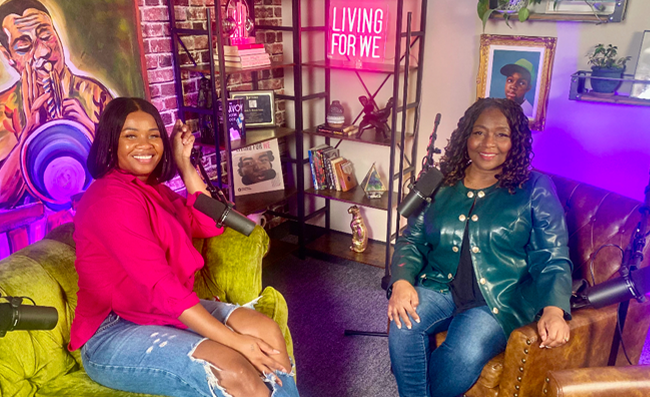
| S:2 E:11In this powerful final episode of this season of Living For We: Keep Ya Head Up , co-hosts Marlene Harris-Taylor and Myesha Watkins turn their focus to Akron, Ohio — a Northeast Ohio city grappling with the harsh realities of gun and police violence. They sit down with community advocate Courtney Brown, founder of Winners and Leaders, and Taylin Ray, a high school freshman who was personally impacted by the violence. Taylin reflects on the loss of his good friend, 15‑year‑old Jazmir Tucker, who was shot and killed on Thanksgiving Day by police. There was an outcry of concern over the controversial incident, but the case is still being reviewed by local officials. Together, they also discuss how Courtney’s after-school program, including a transformative component called Man in the Mirror, is helping young Black boys see brighter paths forward.
Later, the conversation expands to include Minister Stephen Muhammad and Marcel McDaniel of Akron's Street Teams initiative, which uses Credible Messengers — individuals with lived experience — to mentor youth and interrupt cycles of violence.
This episode wraps up a season of emotional, raw, and affirming conversations with Black men and women across Northeast Ohio. Marlene and Myesha reflect on the themes of trauma, resilience, grace, and community power — and share how local heroes are stepping up, even when no one else is coming to save us.
View our full list of resources here.
Have you or someone you know been impacted by gun violence? Or do you have any thoughts about what was shared in today’s episode? Share your story for a chance to be featured on the show!
Where to Listen
Find us in your favorite podcast app.

Voiceover:
Living For We is part of the Connecting the Dots between Race and Health Initiative from Ideastream Public Media made possible by generous support from the Dr. Donald J. Goodman and Ruth Weber Goodman Philanthropic Fund of the Cleveland Foundation, and made possible in part, with support from Enbridge Gas Ohio.
Marlene Harris-Taylor:
Warning: this episode contains descriptions of violence.
Myesha Watkins:
Viewer discretion is advised.
Marlene Harris-Taylor:
Today, on Living For We: Keep Ya’ Head Up.
Courtney Brown:
Jazmir Tucker was in my program. I don't know if you're familiar with Jazmir Tucker, but he was shot and killed by police on Thanksgiving. So, it’s really been hard on my heart just lately because seeing somebody like that … and Jazmir was the type of person he wanted better for himself. He was just a kid just like me. He reminded me just like me.
[Music Playing]
Marlene Harris-Taylor:
Welcome to Living For We, we're so glad you came back to join us for this conversation. Today, we're focusing on a community just down the road from Cleveland, Myesha, Akron, Ohio. And we're talking about the gun violence situation there, and we could be talking about any city USA, right?
Myesha Watkins:
Absolutely. I think one of the things that we know to be true about Akron is their increase and consistency in police violence. It's heartbreaking.
Marlene Harris-Taylor:
It is. There's been so many young black men who've been shot by police in a controversial way in Akron, and we're going to get into that with our guest today.
Our guest is Courtney Brown. He's the founder of a program called Winners and Leaders, and we're so happy to have him along with one of his mentees, a young man named Taylin Rey, who's a freshman at Buchtel High School in Akron.
Myesha Watkins:
Yes. And also, was a friend of Jazmir who was shot and killed by-
Marlene Harris-Taylor:
Jazmir Tucker. Yeah, such a sad situation and still being investigated. So, Courtney runs a program, a six-week afterschool program for kids to try to intervene, to keep kids from becoming victims of gun violence and ending up incarcerated.
Myesha Watkins:
And it's called The Man In The Mirror. It makes me want to sing.
Marlene Harris-Taylor:
That's part of it. Man In The Mirror is part of his six-week program, but the overall program is called Winners and Leaders. And we're so happy that they came to sit down with us.
So, Courtney, you are very familiar with what's going on with gun violence in Akron. Can you tell us what's really happening in the streets there in Akron?
Courtney Brown:
Marlene, would you like it from a perpetrator perspective or from a victim standpoint?
Marlene Harris-Taylor:
How about both?
Courtney Brown:
From both? Okay. Akron, Ohio is a very small community, a very small city, and especially the inner city. Everybody knows everybody. If you making any kind of noise, whether it's positive or negative, people from the east, west, north and south is going to know who you are instantly.
And there’s just a lot of evilness going on in our streets. Everybody robbing Peter to pay Paul, everybody trying to feed their families, everybody trying to eat. And it's just not enough resources for one. It's not enough to go around, everybody's taking from everybody. And that's a trigger-
Marlene Harris-Taylor:
Not enough jobs.
Courtney Brown:
Not enough jobs, and that's a trigger. The Goodyears, the Firestones, I mean, they're around a little bit, but not like back in the day when my grandfather used to work for Goodyear and he worked for Goodyear for 20 years and 25, 30 years, something like that, I don’t know. He was able to take care of my family and instill values in my parents, which led down to me. But again, when I'm broke, I'm poor, I'm robbing Peter to pay Paul. I'm trying to keep up with the trends.
And just think about it, being broke and trying to keep up with the culture trends. The trends that you see on TV, that don't even go together. You can't do it without doing something illegal, without being involved in things that you shouldn't be involved in. It is just a lack of resources. It's just a lack of love in our community. And that's where I stand with it.
Marlene Harris-Taylor:
What about from the victim perspective?
Courtney Brown:
You can't be yourself. From a victim perspective, you cannot be yourself without being aggressive. If you try to be yourself and be passive in Akron, Ohio, you'll get ran over, you'll get walked on, you'll get stumped on. And if you put up a little fight, they don't want to fight no more.
They feel like it's more easier just to shoot you and whatever happens, happens. A lot of people, especially this younger generation, they have the I don't care attitude. And granted, I understand. Because guess what? When I was 18, when I was 19, when I was 20 and I was playing with guns and drugs and in the streets and doing stuff like that, I had an I don't care attitude.
My friends used to call me Loc because I was crazy. Anything, I go off, I don't care. I didn't care … thought about the consequences afterwards from that perspective. So, that kind of lifestyle builds animosity in our community, amongst friends, amongst family, amongst relatives. And usually, 9 times out of 10, the people that's killing each other, they know each other.
Myesha Watkins:
Courtney, I think too, what you're explaining is not specific to Akron, Ohio. This is the culture of scarcity in all inner cities across our country. Where there is poverty, where there is limited resources, where there's a lot of pain, where there may be hopelessness.
One of the things that we always talk about, Marlene and I talk about, is the proximity to pain. If you and I live in the same hood, and both of our parents and our families are working or not working, and you have something that I don't have, the mindset by any means necessary becomes true. And not because we want it to.
A lot of people are doing things for survival with hopes to thrive, but oftentimes. that survival gets people caught up in situations that can allow them to be not alive and not free from going to jail.
Marlene Harris-Taylor:
Let me bring Taylin into the conversation because you mentioned young people, Courtney. And I'm wondering, Taylin, you're in high school, in Akron. What's it like for you as a high schooler in terms of being in this environment where gun violence is so common? And as Courtney just said, people are so on edge?
Taylin Rey:
It's kind of hard because when I go to school, I be thinking about … like the school I go to somebody … a girl in high school just bought a loaded gun to our school two weeks ago. So, it's kind of hard just thinking about me going through all this and me just losing my friend in general, and all the gun violence going on because it just affects somebody's life so hard, and sometimes, people can't get over that. So, it's kind of hard for me to be around all that sometimes and stuff.
Marlene Harris-Taylor:
And you go to Buchtel High School?
Taylin Rey:
Mm-hmm (affirmative).
Marlene Harris-Taylor:
So, how did they discover the girl had the gun?
Taylin Rey:
I guess it was a mistake, but I guess she was walking around, and she put her book bag in the locker, and somebody told that she had the gun, and then they found it and then they took-
Marlene Harris-Taylor:
So, what did the people, the students in school, was everybody talking about it? Were people scared? I mean, what was the reaction?
Taylin Rey:
Yeah, I think it was a couple people scared. And then it was some people that really wasn't scared because some kids they used to that. They used to being around guns and stuff like that because it's no older adult in their life teaching them that they don't need to be around that type of negative stuff in their life.
Courtney Brown:
It's common. This has been going on … every year, somebody's bringing a gun to Akron public schools. When I was in high school, one of my friends brought a gun to school. And he got caught bringing the gun to school, and now he's doing 56 years to life.
My best friends that I rode with every day, they were so gun happy. And I had even got gun happy for a little bit, just hanging around them.
Marlene Harris-Taylor:
Now, what do you mean gun happy?
Courtney Brown:
That's how it starts as a kid. Oh, I got a gun, it's levels. So, the first time you see a gun, you're so amazed, “Oh, I got a gun.” You feel like you're powerful. You feel like you're invincible. You feel like you're somebody that can't be touched.
But then you have this feeling behind you, this pressure, this now you want to shoot the gun. So, you waiting for any minute to be able to shoot this gun. Any type of circumstance, any type of situation. And the first time I shot a gun, I was 14-years-old. I was 14, and me and my friends, we got into it with a group of guys from the west side of Akron. I'm the youngest out my crew.
And we going to this park, we end up getting into it. We getting into it, and I'm 14, all of the rest of these guys are 16, 17, 18, and I'm the one who's shooting the gun, because that feeling that I just told you. And at that time, all the older people was saluting that instead of something like, “Bro, you tripping, you a star athlete, you could go to college and play football.”
By the grace of God, I still went to college and play football. But I didn't know at the time my life was going down the drain. Even though I was … thank God for my parents, I had good parents who could handle themselves, because I was a menace in the streets. I was bad, I was … things that I shouldn't have been doing, but my parents always made me stay focused in school.
Marlene Harris-Taylor:
But it's interesting too that you had good parents, mom and dad at home. And a lot of times, we think about kids who are engaging in violence and gun violence, the whole cliche of the broken home thing right?
Courtney Brown:
You’re absolutely right. The first person that really told me they loved me and gave me my hug wasn't my mother and my father.
My mother and my father, they did things as parents. They made sure I had shoes, clothes, they made sure I was doing the schools. But saying I love you and showing that love and affection and that care wasn't really brought up in my household. I was getting that down at the park, in the Joy Park Community Center down in my neighborhood.
And one of the first people that told me they love me gave me an ounce of cocaine and a gun. And I was 12-years-old at this time. And I already didn't have my mind straight because I had already just got out of foster care. I was already dealing with a lot of emotional trauma, a lot of PTSD that I didn't even know then. Then when I get to Joy Park Community Center and I'm starting to build relationships and get a little older.
Then next thing you know, I'm old enough now, yeah, let's get this young dude and get him on the block. Get him on the block, let's get him doing this, instead of saying, “Nah, bro, you play football, keep the ball in your hand.” Because he saying people that was giving me guns and drugs knew how good I was in football but they didn't care about that because they wanted to put some money in my pocket.
Marlene Harris-Taylor:
I hear this like tension between good versus evil in your life.
Courtney Brown:
Angel, devil. And who's supporting the angel and who's supporting the devil is 9 times out of 10 what you're going to lead to. And that's why I try to tell these young kids, that's why I started my organization Winners and Leaders, because all young kids in the inner city is going to face the angel and the devil on the side. And 90% of them are going to have the support of the devil on the side, which is going to basically push you to the devil's side.
So, me, on the other hand, I try to like man, look what I've been through. By the grace of God, I'm here today, free and healthy and making strides in my life and being successful because my picture wasn't always this clear, my vision wasn't always this clear.
Look, just like the NFL Draft is going on now, and every time around this year, I get so emotional because if I feel like if I would've kept my nose clean — and people always tell me like, “You wasn’t the biggest, you wasn't strongest, you wasn’t the fastest, but you was one of the most skillful players I ever played against.” And if I would've kept my nose clean, who knows what I could have did?
Marlene Harris-Taylor:
How did this transition, because as you said, you were doing okay in high school, you got to go to college. So, how did that transition till you ended up in prison?
Courtney Brown:
The system drowned me because of my mistakes. So, when I was a freshman in college, I couldn't afford a laptop, so I ended up stealing my coach's laptop. I broke into his office, and I stole his laptop.
Just went to tell some of my players, boom, boom, they end up telling on me. I end up getting kicked off the team. After getting kicked out of college for a semester … it was only for a semester because I had a case, I had a pending case and I end up … couldn't afford a lawyer, got a public offender.
It was like a F5 felony, which was the lowest felonies. I ended up getting probation for it. And I was supposed to report every Friday call. And I missed a Friday, I get reported, I had to go to court, and the judge sent me to prison.
Marlene Harris-Taylor:
Was this your first offense?
Courtney Brown:
This was my first offense. I got a probation violation, and he sent me to prison and maxed me out for one year.
Marlene Harris-Taylor:
For one year?
Courtney Brown:
For one year, yep. And that led … when I got out of prison, I wasn't able to get no jobs. I really didn't have no resources. Now, school didn't let me back in. So, guess what I did? Went to the guys that I knew where the guns and the drugs was and said, “It is time, man, I messed up. I'm ready. I'm ready.”
Marlene Harris-Taylor:
I mean and I think about your story in that so many other people who come from privileged backgrounds, I'll just put it that way — if they were in that same situation, they never would've been sent to prison.
Courtney Brown:
They never would've been sent to prison.
Marlene Harris-Taylor:
Juvenile-
Courtney Brown:
Yeah, I had some juvenile stuff. I was in Down Street, I was in foster care. So, I probably had … when they get into their little systems, and they probably could see y'all. Yeah, let's set him up the road. And actuality, I just needed a little bit of counseling, a little bit of treatment from a trauma that I experienced that I didn't know was trauma at the time, and why I was acting out. And just a little bit of education.
I didn't ever have nobody … I'm sitting in court and I'm seeing people get help, going to programs, going this, I'm like, “Where my program? You sent me right to the penitentiary at 19 for a stolen laptop that the coach got back.”
So, I think about it and sometimes, I'll be like, “Dang man, what if he just would've gave me some help, where would I be at?” But unfortunately, he didn’t, let me go into prison two more times for three years and two years.
Myesha Watkins:
This week, Governor Wes Moore of Maryland passed the legislation called the Expungement Reform Act. You were sharing that you had a probation violation where you did not call on a Friday, and when you went to court, the judge sent you to jail for a year.
And so, this is exactly what this act is trying to prevent, because going to jail for a year, when you reenter back into society, you shared that you had many issues and barriers.
Courtney Brown:
No resources, nobody didn't want me. I said, “I just went to prison for one year for a felony theft.” And I'm like dang, my life is ruined because I couldn't get back into college, I couldn't get a job. I went to try to get a job at McDonald's, I had a friend who was a manager, and they said he couldn't hire me because of that felony.
What was I supposed to do? Still to this day, I don't have an answer for a 19-year-old kid that can still turn his life around after he made a bad decision, he can still turn his life around. But when he comes back into society, what am I supposed to tell him? And he's hungry, he needs clothes, he needs shelter, he got bills. What am I supposed to tell him?
Marlene Harris-Taylor:
So, we need something like that on more of a national level.
Myesha Watkins:
What typically happens is they go back into an economy that works. They go back to the streets, they know how to turn 50 to 500 real quick. But then that turns back to recidivism and then the cycle continues.
So, my ask to elected officials is that follow the example of Governor Wes Moore so that our returning citizens who have served their time can come back and do what is needed to thrive and not just survive in our communities.
Courtney Brown:
Once you get into that system, it's hard to get out. Now, I'm a teacher, I'm a counselor, I do a lot of things in the community with kids. I don't want to see kids continue to throw their life in the prison system or throw their life to graveyards. For what? You could always do that. Why not pursue your passion first? Why not pursue what you love first?
You can always go to the streets. It ain't going nowhere. At least give yourself a shot first. Go follow your passion first. He wants basketball, man, dude, everything you got to do to follow your dreams in basketball.
Marlene Harris-Taylor:
Because I see Taylin looking at you, because I'm thinking, “Taylin has heard this before.” Have you heard this before Taylin?
Taylin Rey:
Yeah.
Courtney Brown:
Taylin been in my program. Him and Jazmir Tucker was in my program. I don't know if you're familiar with Jazmir Tucker, but he was shot and killed by police on Thanksgiving. So, it’s real been hard on my heart just lately because seeing somebody like that … Jazmir was a type of person he wanted better for himself. He was just a kid just like me. He reminded me, just like me.
Marlene Harris-Taylor:
Unfortunately, that's another thing that's been happening in Akron a lot.
Courtney Brown:
Confrontation with police and community violence.
Marlene Harris-Taylor:
There was Jazmir, there was Jayland Walker where there was some protests in the community. So, how is that impacting people in Akron that have so many of these cases with the police shooting young black men?
Courtney Brown:
It really feels like it's the community versus the police. It's us versus them. And it shouldn't be like that.
I’ve sat down and had conversations with the mayor, I done had conversations with the chief of police, I done had conversations with the … even the fire chief of police. I done had conversations with council members. I'm heavily involved trying to figure out how can we stop this? Because it's unacceptable.
Like I said, Jazmir was a 15-year-old boy who was walking, and he was shot by police. He was shot by police on Thanksgiving night. And when he was shot by police, he was shot in the back. They took about 9 to 10 minutes to render aid to him after he'd been shot. The officer went into his trunk and actually got a rifle. He didn't shoot him with his regular gun, he actually went to his trunk and got a rifle.
Marlene Harris-Taylor:
I mean, were they having some conversation? Was there confrontation?
Courtney Brown:
There was no conversation, no confrontation. They said they heard gunshots. The police said that they heard gunshots, and they were responding to the gunshots that they heard. And then they happened to see a male walking. And from that point on, the officer turned on his video camera late, it was blurred out. It was just a mess.
Marlene Harris-Taylor:
I should say from the police perspective, that there is an investigation. This case is still being investigated.
Taylin Rey:
Why use your weapons instead of trying to talk and help? Why y'all not trying to talk it out, instead of using an AR-15 killing a young man that's 15-years-old, that was literally just walking? I looked at the video, I instantly showed my mom, and then after that, everybody started posting it. My emotion broke down. And it's crazy because literally, a couple months before this, he was just helping him get his life better.
He wanted to go play basketball and everything. And he had a twin brother, they both wanted to just play basketball and just stay out-
Courtney Brown:
Stay out the way, just be kids. Find their way, find what they love, find out their passion, man and this hurt.
Marlene Harris-Taylor:
How's the family doing?
Courtney Brown:
They fighting a good fight. They fighting a good fight. They just want justice for their baby. That's it, that's all. And hopefully, they get what they're looking for and they can continue to heal because it's always going to be a fight, especially my friend Ashley, Jazmir's mom, she's a strong woman. I talk to her, and we done had conversations at two o'clock in the morning. We done talked about a lot of things, we done confided in each other. And she is doing better than where she was.
But every day is going to be hard, just waking up without her baby boy. She never thought she would have to bury her son. And I don't think no mother really thinks that. And it's hard for her. And I try to be there, I try to be the friend that she needs and comfort her.
Marlene Harris-Taylor:
You decided to start a program to try to make a difference. Can you tell us about your program?
Courtney Brown:
Yeah. I created Winners and Leaders, it's a nonprofit organization that I created to save lives in the inner city. My Man In The Mirror Program typically is after school. This summer I'll be having My Man In The Mirror Program. It’ll probably be in the morning in the camp style format, in the camp style. But when school is in, it is after school.
We have established that a lot of kids get in trouble outside of school hours. So, it's called Out of Time School Network. So, we establish what these timeframes are. And it's typically from I think 3:00 PM to 7:00 PM.
I try to do football camps, come train, let's train, let's throw a football around. Let's go to Akron U because I'm still going to Akron U right now. I'm a grad student at Akron U finishing my principalship license. So, I'm able to use the facilities and use my organization and stuff like that. So, that is a good blessing, a help that I do have.
Marlene Harris-Taylor:
How many kids do you have at one time?
Courtney Brown:
It can range from 6 to 30. I done have 30 kids in the class, I done had six. I do a class with two because I'm saving a life.
Myesha Watkins:
I know, that's great.
Courtney Brown:
And saving one life is worth everything to me, because if I could save one life, I did my job. But now, I'm getting in … I'm probably about at a hundred right now and I want to get to as many lives God bring to me. And that's all I want to do, because I know, man, I done been to prison. I done experienced everything these kids is going to go through.
I done been shot, I done been to prison, I done been in college, I done got degrees. I done been in fights, I done gang banged. I done did everything. So, I'm doing this for a reason. So, you should follow me.
Myesha Watkins:
Drop the mic.
Marlene Harris-Taylor:
So, Taylin, what brought you to the Winners and Leaders Program?
Taylin Rey:
First of all, he's a great man to be in a program with. So, okay, first I lost my stepdad to gun violence too, right. So, I was experiencing mental health. I was angry, I didn't want to crash out on anybody in a violent way, but I was going through mental health that affected me mentally.
I was kind of getting angry at people quick and stuff. I came to the program, he helped me stop and think and don't react to something very violent. Because you reacting to something violent. If you taking somebody's life, they can't get their life back.
Marlene Harris-Taylor:
I'm so sorry to hear about your stepdad.
Myesha Watkins:
One of the things we talk about often is like what's the underlying issue that leads people to either choose violence or retaliate to violence, or respond to violence. And it seems like with you, the murder of your stepfather initiated some symptoms of mental illness or mental health symptoms.
And because you knew that that wasn't you, you got connected to a program that immediately helped intervene or prevent, or step in that gap to say you will not be another young person who turned their pain into more pain. So, I'm glad that you have this program. How big is your team?
Courtney Brown:
It's just me.
Myesha Watkins:
I'm thinking like, “Yo, it ain't no way.”
Courtney Brown:
I have volunteers for my back-to-school drive, but for my own ground programs and things that I do in the community, it's out of my pocket, it's out of my time, I don't get no resources, I don't get no help, I don't get nothing. It's out the kindness of my heart.
Myesha Watkins:
So, if you were to say, to say that there's a million-dollar person listening, how much would it cost annually to run your program with maybe like five staff members, including yourself and your salary?
Courtney Brown:
Just because I know what to do and I done researched a lot of things, it don't really take that much money for me.
Myesha Watkins:
How much money?
Courtney Brown:
A hundred thousand.
Myesha Watkins:
A hundred thousand dollars.
Courtney Brown:
That's it. Yeah, with a hundred thousand dollars, I can change a lot just because I have respect in the community of Akron. The community members respect me. The families respect me, the parents respect me, the kids respect me, the athletes respect me, the government officials respect me, the people in the education administration respect me. I have a lot of respect just because all the obstacles I overcome.
Myesha Watkins:
How do you just choose the pathway of stability and doing everything right when there are so many risk factors against you? What would you tell young people? How do you keep ya’ head up?
Taylin Rey:
I would say, hang around the right people and make the right decisions. Because if you always make the right decisions and hang around the right people, the right people that's ahead of you, could really tell you that you're doing good and keep doing this and stuff. And the wrong people could tell you like no, you not … like it's a lot of haters in this world.
So, I would just say, hang around people that you know is your friend because there's a lot of people that can call you your friend that's not really your friends. So, trust yourself, trust in God and always just make sure you're doing the right thing.
Marlene Harris-Taylor:
Just a final note on the shooting mentioned in this segment. Seven months after the deadly shooting of 15-year-old Jazmir Tucker, the Ohio Bureau of Criminal Investigation completed its review of the incident.
Tucker was shot and killed by Akron Police on Thanksgiving night. Investigators say Officer Davon Fields fired three times, and Tucker was hit by three bullets. Two of them in the back and one in the arm.
Police say they were responding to gunfire reported nearby. Tucker did have a gun, but it was found zipped inside his jacket pocket when he was killed. Shell casings recovered from the scene were matched to Tucker's weapon according to police. Because of the circumstances, prosecutors from outside Summit County are handling the review to determine if any criminal charges are appropriate.
Courtney is just so full of life. I just love his passion for this work.
Myesha Watkins:
You can just hear his advocacy like pro everything. He wants so badly and has done such a great job at really impacting these young man lives.
Marlene Harris-Taylor:
Well, I hope he listens to you and thinks about how he might add to his team so he can increase his impact.
Myesha Watkins:
The hundred thousand dollars program, okay.
Marlene Harris-Taylor:
Well, Myesha, we're getting ready to talk to a couple other folks from Akron who are also working to help kids and try to make sure that kids are going on the right path. And they're working with the Minority Behavioral Health Organization in Akron to start a new program that's called the Street Teams Program.
Myesha Watkins:
Yes. And it's also based on Credible Messengers. And Credible Messengers are individuals who have lived and shared experiences who can go into these communities where they feel safe and can talk to young men and women whose stories are similar to theirs and change the trajectory of their lives.
Marlene Harris-Taylor:
Well, we're so happy that Minister Stephen Muhammad and Marcel McDaniel came through to tell us about the program.
Myesha Watkins:
I'm looking forward to hearing this other side of Akron.
Marlene Harris-Taylor:
Tell me, Minister Muhammad, how did you get involved in this issue of trying to help youth and trying to find solutions to gun violence?
Stephen Muhammad:
2012, we had a rash of killings down in Akron. Four, most notably, that were very vicious. We hadn't seen anything like it. And several groups began rallying around trying to see what can we do.
We had already been doing some work, coming out of the Million Man March, which was ‘95. And then we had several events after that that were trying to galvanize black men help us to start to see that we had more in us. We could be contributing more, doing better by our women and our children, that kind of thing. And just trying to invite them to manhood, being responsible.
The Million Man March was around atonement, reconciliation, responsibility. And we remember that event. Some do.
Marlene Harris-Taylor:
That was a wonderful time.
Stephen Muhammad:
Yes.
Marlene Harris-Taylor:
To see all those black men come together in Washington, D.C. That was so awesome.
Stephen Muhammad:
Absolutely. And what that showed us was that's who we want to be. Conditions sometimes get in the way of that.
And so, fast forward to 2011, 2012, when these events happened in Akron, there was a couple of groups in Akron that we had worked with in the community over the years. But now, we knew, okay, if we don't get a handle on this … and this was before the guns really became very prolific, they were just little spots of shootings.
But now, it's something very different between gangs and drugs. It's morphed into something that we have to say, wait a minute, what's actually happening here? And these were more younger demographics that was somehow getting their hands on weapons and they were using them.
Marlene Harris-Taylor:
And when you say somehow, what do you think the somehow is?
Stephen Muhammad:
Outlets, corner stores. They have a back room where you go in, you give some kind of signal — there's all kind of nefarious behavior happening in these back rooms. But one of the things that is going on is they’re gun outlets.
Marlene Harris-Taylor:
And the pandemic played a little role too, didn't it?
Stephen Muhammad:
It absolutely did. We thought, okay, nobody can go outside. You in your homes and things had quieted down.
Marlene Harris-Taylor:
That's what we thought.
Stephen Muhammad:
And then almost overnight, there was this massive explosion. And Akron per capita, the killings in Akron were on the same pace as a city like Chicago. But in Akron, you feel it, you know this young person, you know the family.
Marlene Harris-Taylor:
So, where do you think we are now in this? I mean, as you said, the whole game has changed out there. The guns are still there, younger and younger people getting involved. What's your assessment of where we are now?
Stephen Muhammad:
We are still very much in a state of emergency. But I would say this, young people, when you finally get a chance to bond with them … and this is a tall order because they see me as old. So, when we would go into the schools and try to bond with them, it took some time.
The only thing I had working for me was many of them have seen me since they were babies. So, they say, “Okay, I recognize the face.” And I think this is critical to note, because if they detect any part of you that is only in this because there's a grant pending or social media is out there, I can get monetized, you are going to lose them.
Marlene Harris-Taylor:
Oh, that's a great point. They can spot a fake, is what you're saying?
Stephen Muhammad:
They really can.
Marlene Harris-Taylor:
So, Marcel, what do you think about this? This assessment of what's going on right now?
Marcel McDaniel:
It is definitely a authenticity thing. I just had a conversation earlier, somebody was telling me that too many of the people that say they do what I do, they only want to deal with the kids that they want to mess with their mamas. You know what I mean? I mean, it's just what it is.
Marlene Harris-Taylor:
Wow, I hadn't thought about that one. That's a way to dating.
Marcel McDaniel:
Right. In the streets, it ain't the money, it's the juice.
Marlene Harris-Taylor:
What you mean by that?
Marcel McDaniel:
I mean, you put so much work in the streets, you reach a certain status, that's all they about now. We didn't call it that, we didn't call it clout, just that you got Juice. And that's all they care about now.
But I remember trying to figure out who wants to be a nobody after I done dedicated my whole life to being somebody in this? I mean, people want to be somebody no matter where they at.
Marlene Harris-Taylor:
That's true.
Marcel McDaniel:
I know people, they don't even want to get out of prison because they somebody in prison.
Myesha Watkins:
And I think that's such a great point. I ran the streets, I ran the yard, I ran this, and now you want me to ask you if I can have a day off? And so, sometimes, the glory days are the hardest days because now who you are, the money may not be the same, the juice may not be the same, the respect may not be the same.
And so, how do you develop your new image from there when the best parts of yourself is also the worst parts of yourself?
Marcel McDaniel:
I think for me, it was that … it's even more juice for me in this space. Because I can actually … I always tell the young brother, I say, “Every one of y'all somebody's ancestor, and the direction of your tribe is going to be dependent on moves you make.”
I mean, my daddy, granddaddy all went to prison. So, somewhere along the line, a wrong decision was made. And I always tell them, it's like this work … you got the opportunity to change lives on a grand scale.
Marlene Harris-Taylor:
And not just your life, generationally.
Marcel McDaniel:
Generationally. So, I look at it like I'm at peace because now I feel like … see I'm doing God's work. This ain't man's work, this God's work. And man, I feel something that's beyond anything I ever felt in the street. I thought that was what it was.
Marlene Harris-Taylor:
Well, let's talk about the work that both of you are doing, trying to help young people who haven't made that decision yet to get out of that life. So, how do you approach that Minister Muhammad?
Stephen Muhammad:
I mean, what Marcel just said was really worth revisiting because that's the trajectory. He's what can happen if you understand what your real identity is, which is a process, and you need someone to help you with that.
To transition from having being known as a thug or a killer or how many bodies you got. The things that … I believe again, another force is fostering this kind of glamorization. We know where that's going, but in his mind, not only is this all I know, but what if I can't be anything else?
Myesha Watkins:
The audience that we're trying to reach to is young people. And I think the question too is, how do you get young people to see this?
One of the realities is that they haven't lived enough to have that awakening or that moment to say what else is on the other side? A lot of young people who are now driving the violence are 10, 11, 12, 13, 14, less than 20.
And so, what type of language or experience or advice do you give to somebody who have yet to live to know that there's something different on the other side?
Stephen Muhammad:
We all have been affected by a hidden enemy. And when I hate myself, I don't think I have any value, then I'm subject to do anything. My life has no value and I'm impulsive and I'm young and I'm depressed, and I'm 16 or 15, and I have a gun. Now, the first time somebody disrespects me, oh, guess what? I'm going to get my respect.
And whatever else happens, I don't care if I get killed in the … we've asked some of these young cats, “Do you want to die?” They said, “I ain't afraid of dying.” I said, “I know that bro, because you strapped." I said, “But you don't want to be murdered. And I know that because you're strapped.” So, we can stop pretending now, we can put all that stuff aside, and now it's just me and you.
Marcel McDaniel:
Speaking of that, what he's saying, I can remember I went to trial for murder and got acquitted, and I got out and about two weeks after I got out, my mother said … he asked me if I've been looking for a job. So, I said, “Ma, I never told you I was getting no job.” And she said, “Well, you just almost caught life in prison.” And I said, “Mom, I'm going to die in this.”
And I, when I told her that, I meant that. I'm going to die in this.
Marlene Harris-Taylor:
You told your mom that?
Marcel McDaniel:
Yeah, I'm going to die in it. This is what … and I really felt that.
Myesha Watkins:
What did your mom say?
Marcel McDaniel:
She just looked at me. I mean, she just looked at me … she used to tell me she would just always wait on the call. She said she was just always waiting on that call to come in the middle of the night. And I mean, for years it was like that. And I mean, I end up finding myself in prison for murder, again. It was either one or the other. That's what it was going to be.
Marlene Harris-Taylor:
You're like this is my life, this is what it's going to be.
Marcel McDaniel:
That's why I talked to them little brothers, I know where they at. I know what they feeling.
Myesha Watkins:
They always say those who are the most proximate to the pain is the closest to the solution. If all you have is the stories that are passed down to you are of incarceration and pain and trauma and hurt and streets and drugs, where's the representation of something different?
So, we have young people who already started at a disadvantage from the stories and the history that they're being told. Everybody doesn't have the opportunity to learn about black history outside of the February that we get.
And so, our history is literally the one that we're living and the one that we're sharing with our family and in our hood, some people don't make it out the hood.
Marcel McDaniel:
But these the men that’s loving on you. You don't know … when you are a kid these the men who loving on you. And this what they do.
Marlene Harris-Taylor:
They’re your role models.
Marcel McDaniel:
They're the role models. You don't know it's a whole another world out there.
Marlene Harris-Taylor:
Another life that you could have.
Marcel McDaniel:
Right, you don't know that.
Marlene Harris-Taylor:
Now, how are you bringing this into this new program that Akron is putting together? The Credible Messenger Program.
Marcel McDaniel:
Minority Behavioral Health Group.
Marlene Harris-Taylor:
Minority Behavioral Health Group has been working on this-
Marcel McDaniel:
I already was working with them. We've started off … I just do a lot of work with them.
Marlene Harris-Taylor:
So, how are you structuring the current version of the Credible Messengers Program.
Marcel McDaniel:
I go into juvenile, I go into DH, I go to Indian River. We having conversation about me going in there more. I'm going to Cog Hills in a couple weeks. One of the first things, we training some guys right now, we got some guys going through a program called The 100.
Minority Behavioral Health Group already had that program where they were like we going to train a hundred black men to do mental health work, African-centered. So, that's the first step of the guys who want to be Credible Messengers, the way we going to do this work, we got them going through that.
Marlene Harris-Taylor:
This is exciting. Just even thinking about a hundred black men trained in this work going out and trying to help other people.
Marcel McDaniel:
I mean, this like the-
Myesha Watkins:
Also addressing their mental health too.
Marcel McDaniel:
This like the fifth cohort right now, yeah, the fifth cohort. So, this is the first one we putting guys in there who actually going to do Credible Messenger work. But we-
Marlene Harris-Taylor:
And how will they reach the young people? The Credible Messengers?
Marcel McDaniel:
It's like neighborhoods. Like Dre from Benham. He going to have more of a connection with a youngster from Benham than somebody from down the way. So, that's-
Myesha Watkins:
Absolutely. Oh, you talking Cleveland language, huh.
Marcel McDaniel:
Yeah. I mean, I know Cleveland.
Marlene Harris-Taylor:
You might be from Akron, but you know Cleveland.
Marcel McDaniel:
Yeah. I've been all through here. But you need that … that's why we got to get it spread it out, where we start off every side of town, we got them. So, because this first thing it is, these young dudes do their background checks.
Marlene Harris-Taylor:
Do they?
Marcel McDaniel:
Yeah, they do. They check.
Stephen Muhammad:
They know it's something going on. They're not just sitting back wondering, “Hey, well what are they planning?” They know that there's a program out there, and they coming from me, but to our earlier point, they want to know well, who's coming.
Because the mayor can't come, the police chief can't come or none of their reps. So, the Credible Messenger is one who has been selected and prepared really before he got there to do that kind of work, and without that, it can't move.
Marlene Harris-Taylor:
I know that you are about reinstalling a street code.
Stephen Muhammad:
Yes.
Marlene Harris-Taylor:
Can you talk about that?
Stephen Muhammad:
Well, again, one of the things we saw during the pandemic and after, was this was a young demographic that didn't have any standards.
So, again, in the nineties, if you heard about a shooting, it was either gang related or it was dope related. But now, none of that was true. It could be anything. You said something about me on Instagram, you liked my girl's picture on IG, so I'm killing you about that.
We do ask them though, when we do a peace talk, you're seven times more likely to be shot if you carry. I know the gun makes you think you're invincible, but you're seven times more likely to be shot if you carry, why? Because I think I'm invincible. I can go anywhere now, I'm safe, I got my gun.0 But he got a gun too now.
So, we choose not to carry, and we ask them to not carry, just to put it on their mind. We know that they're going to eventually say, “Well, I can't get caught slipping.” But if I'm not carrying, I'm going to think about where I go, who's there, and do I have to be in these places? Now, I'm thinking more mathematically and more strategically, and I'm also buying myself more time.
Marlene Harris-Taylor:
Myesha, it's great to see that there's efforts going on in Akron that are attacking this problem. We've talked to folks from Canton and we've talked to folks from Cleveland. We've covered a lot of northeast Ohio in this season. But one of the things that you've said over and over is that these issues are in every city, USA.
Myesha Watkins:
Yes. And oftentimes, in the most impoverished communities where we feel like we have to save ourselves, but the skills and the mindset and the experiences and the resources that we have, unfortunately … and most of the times, we're hurting ourselves more than we are of rebuilding because it's by any means necessary.
Marlene Harris-Taylor:
And I'm so proud that we've been able this season on Living For We, to hear from black men from all walks of life. From black men who are struggling to get themselves together, black men who were once incarcerated, black men who are attorneys, black men who are in every-
Myesha Watkins:
Trauma doctors.
Marlene Harris-Taylor:
Trauma doctors, every segment of our society, talking about their lived experience. I'm so proud of that, because you don't hear that everywhere.
Myesha Watkins:
And it was beautiful from the youngest, Lorenzo, to the oldest and hearing how … unfortunately, a lot hasn't changed from where Lorenzo is now to our oldest male guests, that those same challenges are still here.
And so, then it's just like how do we really talk about the built and lived environment that continues to get people like Lorenzo and Amir and Devin and the list goes on of guests that we had on here, even to Taylin, to not get caught up in this cycle that continues to be written by the many voices that we had on our couch.
Marlene Harris-Taylor:
Yes. And we've heard so many themes reflected over the weeks that we've been putting out the podcast episodes.
We've heard unfortunately, that so many young men start early picking up a gun for various reasons, but getting caught up in this cycle of feeling like, “Hey, this gun makes me feel important.” And then they do some things and then they get caught up and some of them end up incarcerated. Some people unfortunately don't make it past their teen years.
Myesha Watkins:
Yeah. And I think one of the hopeful parts about this with young people as young as 11 being caught with a gun or picking up their first gun is the VIP Program and what Judge Sheehan is doing, that if you get caught with a gun that wasn't used in a violent or criminal case, that you get grace over guilt.
And you get community to come into the courtroom to help you really paint the picture to people who just don't understand how one missed phone call can get you put into jail for a year if you're on probation.
Marlene Harris-Taylor:
I'm so proud that we've been able to lift up these community heroes.
Myesha Watkins:
Yes, shout out to them.
Marlene Harris-Taylor:
People like Courtney, people like Marcel, people like Minister Muhammad that we had on the show today. People like Walter Patton and Vinny and Dre. There's so many heroes who are out there in the community doing the work. Because often, people think that everybody's just throwing up their hands.
Myesha Watkins:
And well, the women too, oftentimes we talk about black women and women being a backbone, but we had some of the strongest women on our couch, from elected officials to mothers who lost their children to gun violence, and to mothers who are continuing to navigate alongside their children as a new normalcy is developed of like who am I post being a survivor of gun violence? And it's just the many conversations.
Marlene Harris-Taylor:
This season, we've also been collecting resources. Everybody who came onto the podcast, that is a resource for the community, we made sure that we collected that. And we have a resource page on our homepage.
So, if you want to have access to our resources, all you have to do wherever you're listening to or watching this podcast is go in the description and there's a link to that resources page.
Myesha Watkins:
Absolutely. And in addition to that, understanding that family in a traditional sense look different now where we have like coaches and programs, and other people to be able to aid in that resource so that if you cannot, there's other people that will help you and stand in the gap to help you figure out what your child needs, what your family needs in a holistic way.
Because one of the things that we heard a lot is just like family instability. How can we get people and programs in place so that we can continue to live for we. And living for we is like helping one another, not judging.
Marlene Harris-Taylor:
That's what living for we is all about. The community coming together to help each other and not waiting on some big outside force to come and change things.
Myesha Watkins:
Because they are not coming to save us.
Marlene Harris-Taylor:
Well, you've been a wonderful co-host.
Myesha Watkins:
Thank you.
Marlene Harris-Taylor:
I'm so glad we had this chance to work together. And I want to tell you as you continue this work to keep ya’ head up.
Myesha Watkins:
Thank you so much. We would like to give a shout out to our amazing producers.
Marlene Harris-Taylor:
Yes.
Myesha Watkins:
Shout out to them.
Marlene Harris-Taylor:
Let's shout out to our amazing producers, Declan Rohrs and Erin Lann, because they have been working so hard behind the scenes.
Myesha Watkins:
Yes. And shout out to Kae too.
Marlene Harris-Taylor:
Shout out to Kae.
Myesha Watkins:
Shout out to Kae. Shout out to Raven and Sam, but-
Marlene Harris-Taylor:
On our marketing team and our Ideastream marketing team, we have a great team behind us, you guys. You see me and Myesha sitting in these chairs, but there's a lot of people in the background who are working hard to make us look good.
Myesha Watkins:
And I am really grateful for all of the influencers, including the Cleveland Remembrance Page.
Marlene Harris-Taylor:
And shout out to Sam Poetry, because not only did he create our theme song for the season, but he's been a great influencer on Instagram.
Myesha Watkins:
He’s really good too mixing those videos together. And so, shout out to everybody behind the scenes who made this season another Webby Award-winning season, we’re going to claim that-
[Music Playing]
Marlene Harris-Taylor:
From your lips to God’s ears.
Myesha Watkins:
Yes.
Marlene Harris-Taylor:
Keep ya’ head up, everybody.
Myesha Watkins:
Keep your head up.
Recent Episodes
View AllS2E10: The Cavalry Ain’t Coming
Living For We: Keep Ya Head Up | S:2 E:10S2E9: Hope in the Crossfire
Living For We: Keep Ya Head Up | S:2 E:9S2E8: A Second Chance
Living For We: Keep Ya Head Up | S:2 E:8S2E7: A Tale of Two Clevelands
Living For We: Keep Ya Head Up | S:2 E:7
Hear More From Us!
Subscribe Today and get the newest Evergreen content delivered straight to your inbox!
Advertising & Sponsorship
Interested in sponsoring or running an ad for your business on an Evergreen Podcast? Contact us to get pricing and availability.