
Living for We, Season 2: Keep Ya Head Up
Every bullet fired creates two victims: the person who is shot and the one pulling the trigger. It’s a traumatic experience for both; the victim may lose their life, and the perpetrator may lose their freedom. This season, we're asking what can be done to end cycles of violence in cities like Cleveland, Ohio when the shooters value their reputation over their own lives and see innocent bystanders as collateral damage.



S2E9: Hope in the Crossfire
| S:2 E:9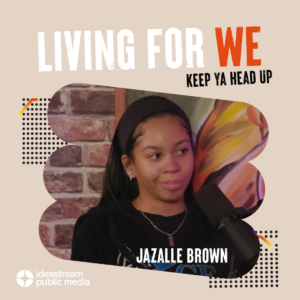
Gun violence doesn’t care about city limits—and Lorain, a small town on the shores of Lake Erie, about 25 miles west of Cleveland, knows that all too well. For teens growing up there, guns are easy to get, and conflict resolution? Not exactly something people are taught.
In this episode, we hear from Amir Whitehead, a high school student who lost one of his closest friends in a shooting on Lorain’s south side. His friend was caught in the middle of gang violence—a devastating reality for many young people in the area.
Amir is part of a local program called ACES (Achievement through Community Education & Support). It’s not your typical anti-violence program—it’s more like a lifeline. It offers mentoring, counseling, and a way out for teens who might otherwise get pulled into the streets.
One day, Amir was just walking to lunch when the associate director from ACES stopped him and said, “Hey, want a summer job?” That moment changed everything.
ACES was started by Michael Ferrer, who’s always worked with youth. But when the Lorain police chief sent a letter to all the nonprofits in town basically saying, “We can’t keep the community safe unless something changes,” Michael knew he had to act. ACES doesn’t wait for kids to come to them—it goes out and finds the ones who need help most.
Jessicka Castro, the associate director, gets it on a personal level. The program helped her when she was a teen, and now—even though she’s a registered nurse—she’s back, paying it forward. “This is my calling,” she says.
And it’s working. 90% of teens in ACES go on to graduate. That’s not just a stat—it’s a sign of hope.
Where to Listen
Find us in your favorite podcast app.
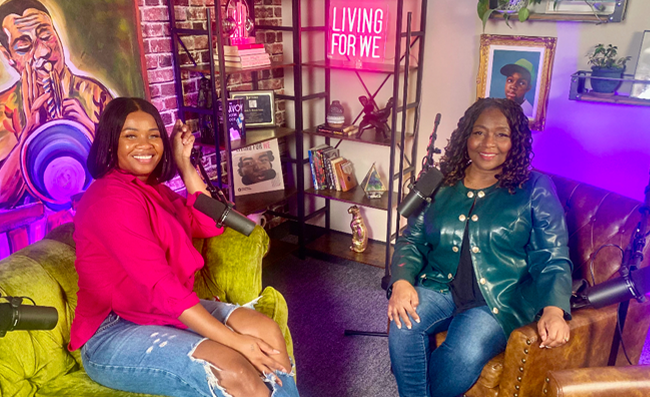

Voiceover:
Living for We is part of the connecting the dots between race and health initiative, from Idea Stream Public Media, made possible by generous support from the Dr. Donald J. Goodman and Ruth Weber Goodman Philanthropic Fund of the Cleveland Foundation. And made possible in part with support from Enbridge Gas Ohio.
Marlene Harris-Taylor:
Warning: this episode contains descriptions of violence.
Myesha Watkins:
Viewer discretion is advised.
Marlene Harris-Taylor:
Today on Living for We: Keep Ya head up.
Amir:
One of my closest friends that I grew up with ended up dying to gun violence on the south side of Lorain, and shooting at other people due to gang violence.
So, they had one out and they're arguing with another, like side of group of gang bangers and they see each other, and they get shooting at each other. And my friend, he accidentally got shot in the crossfire.
Marlene Harris-Taylor:
Welcome to Living For We, I'm Marlene Harris-Taylor here with Myesha.
Myesha Watkins:
Yes, I'm here. Hey y'all.
Marlene Harris-Taylor:
We're still here and we are having even more conversation about gun violence in Northeast Ohio, community gun violence.
And today, we're talking to some folks from Lorain. So, we're going to hear from two young people, Amir and Giselle. And they're going to talk about this program, this wonderful program there called ACES, which is a program that mentors and tutors students in Lorain schools. And the students have an opportunity to find skills, get skills to make sure that they graduate.
Myesha Watkins:
Absolutely. They have a 90% success rate in making sure that these students who are hard to reach are graduating.
Marlene Harris-Taylor:
Myesha, some people may say, why are you talking about gun violence in Lorain?
Myesha Watkins:
Gun violence has no borders, and it is not even a city or a county-wide disease, it's a national problem. And I think that with that lens, we need to start addressing it from every level.
Marlene Harris-Taylor:
Yeah. And the people from Lorain tell us that they do have absolutely a gun violence issue, no matter whether it's Cleveland, Lorain, Akron. If there's an urban center in any of the communities in northeast Ohio, there's going to be this community gun violence issue.
Myesha Watkins:
We need to hear from young people there, because oftentimes, the media does not tell us the stories of small communities.
Marlene Harris-Taylor:
What happened with your cousin?
Amir:
So, he had told one of his friends to take him to go somewhere. And he had with me and somebody there, it was like in the alley. So, when he got there, he got out the car, he's waiting for him to come. And when he came, they got into altercation and they were wrestling for a while, and he pulled a gun out and shot him.
Marlene Harris-Taylor:
I'm so sorry to hear that. Where'd that happen?
Amir:
It happened in Kentucky.
Marlene Harris-Taylor:
And how old were you at that time?
Amir:
This was about last year, so I was 17.
Marlene Harris-Taylor:
How did the family deal with that? I know that was a rough time.
Amir:
I didn't fully process it to the day, I actually seen him in the casket, I'm not even going to lie. I couldn't process it at all. It didn't seem real. I wake up the next morning, it's just like I don't know, it's just like I still can't believe it. Everybody crying, I'm not crying at all. I'm just sitting here thinking this just got to be a dream or something, this not real.
The day of his funeral, I went in there that day, I walked in there, I see him in the casket, it was just like that's when everything just poured out. I started crying, my mom and my sister, they trying to hug me and I'm just sitting there bawling my eyes all like this cannot be real. I'm just sitting there like dang, I don't know what to say. And it was just a bad time in life at that time. I was really going through it for a while.
Myesha Watkins:
Amir, I really appreciate you coming on here and sharing. Too often when we talk about gun violence, we ask people to share their stories and solutions and their pain and not knowing how much it actually takes for you to get in a position to share this.
So, I just want to say thank you so much for sharing a part of your heart with us to be able to engage our listeners who may be going through some of the same things that you're going through. That's really brave of you and I'm grateful for you.
Amir:
Thank you.
Marlene Harris-Taylor:
And I know that's not the only time that you've had to deal with gun violence in your life. Can you talk a little bit more about some other things you've been through?
Amir:
Four months after my cousin passed, one of my closest friends that I grew up with ended up dying of gun violence too months later on the south side of Lorain. And they’re shooting at other people due to gang violence.
So, they had one out and they were arguing with another side of group of gang bangers and they see each other and they get the shooting at each other. And my friend, he accidentally got shot in the crossfire.
He didn't even get shot by anybody he was like arguing with either, he got shot by one of the people he was with. And I ain't even get to go to his funeral because his mom, she made his funeral private, nobody could go except for family members.
But the day of his funeral, I just remember being on the phone and I was bawling my eyes out about it, like I can't believe he died. I was sitting there crying. In my bathroom, I got a little bathroom in my house — I'm in my bathroom on the phone crying so crazy. I'm just like, “Why? This is really real.”
And at that point in time, it was like my other cousin just died and he died, it was so bad. I was just sitting there, I was smoking heavy every day, probably like four to five times a day, trying to just get the fact out of my head that they both gone like this not real. I really just, I don't know. Everything about it, didn't want to talk about it, I hated hearing about it. It was just-
Marlene Harris-Taylor:
Almost too much.
Amir:
Too much.
Marlene Harris-Taylor:
And the fact that you couldn't go to the funeral because sometimes people don't realize that the funeral – my mom always used to say it's for the living. It's for really for the people left behind. It's a way for us to process our grief. And the fact that you didn't get to go to the funeral didn't give you that opportunity to process your grief in community with other people who cared about them.
Myesha Watkins:
One of the things that I see often working in gun violence prevention is that families are very protective because they don't know who or what or how their loved one passed away. So, they choose to keep the circle tight.
And what happens is that they identify family, friends, and peers and teachers, you all don't get a chance to grieve because the parents and the family are so private now because they lost someone that meant a lot to them and they forget what that person meant to other people.
So, I'm sorry that you did not get that moment, but a lot of families are afraid because in Cleveland, we had retaliation at funeral homes, and where people will come to the funeral homes and shoot up the funeral service to finish something even if the life was lost.
And we had one of those in Cleveland. So, a lot of funerals are often private, even though the family don't know that they're probably hurting somebody else by not allowing them to have that space.
Marlene Harris-Taylor:
I can understand how a family would feel that way, and be protective, but not always thinking about the other family — not the blood family, but the friends who are family. I understand you have something special on your home screen, on your phone?
Amir:
On my home screen, I got like four … well, my cousin, one of my close friends, my other cousin and my other close friend I spoke about today on my page. It's like a transition thing. So, it goes from them, and then it go to my friend that I lost to suicide. He killed himself.
Myesha Watkins:
By a firearm?
Amir:
Yeah, he shot himself.
Marlene Harris-Taylor:
Giselle, we want to bring you into this conversation. I know it's tough to kind of hear the pain that Amir's going through, but I know that you've had your own struggles dealing with loss and gun violence. Can you talk about it a bit?
Giselle:
Yeah. So, in my story, I have cousin A and cousin B and my aunt. So, cousin A and B are brothers. And my aunt, they were all very close. And one night, they all went out to a party. And cousin A approached my aunt's girlfriend, and he was basically like flirting with her, making her uncomfortable and things of that nature.
And so, my aunt addressed it, like that's my girlfriend, you are making her uncomfortable. And cousin A didn't like how she came off or any of that. So, he basically threatened her and made her feel some type of way.
So, with my aunt feeling like that, she ended up going to cousin A's house and she tried to make peace with them, but he basically wasn't going for it. And they got into an altercation in the kitchen, and that ended up resulting in my aunt shooting cousin A. And after my aunt shot cousin A, she tried to exit the house, but when she tried to exit the house, cousin B was already outside and he started shooting at her, and my aunt started shooting back and that resulted in cousin B also dying.
Marlene Harris-Taylor:
Wow. So sorry. And so much in the family. People not being able to find a way to talk it out, pulling out a gun to solve the problem. I'm so sorry to hear that you lost two family members in that situation. So, how are you processing it?
Giselle:
I don't know. It's kind of weird because certain family members took certain sides and that kind of like divided us, and it's kind of hard because family's all that you have, and it just turned into a bad thing so quick.
Myesha Watkins:
Thinking about just like interpersonal conflict like that when emotions are so high and people that are in those conflicts feel like the easiest way to handle it, is to end it. What are your thoughts around interpersonal conflict and both of you, how do you navigate interpersonal conflict?
Giselle:
I kind of just like keep my distance when people have drama and all that, I just kind of keep my distance from it.
Marlene Harris-Taylor:
So, if it starts, you just kind of like leave the room, exit the house?
Giselle:
Yeah. Or I just like-
Marlene Harris-Taylor:
You don’t want to be a part of it?
Giselle:
Chill in the corner or something.
Marlene Harris-Taylor:
Yeah, because sometimes people think of Lorain, it's a smaller community. It's not a big city like Cleveland. So, people think, well, it's safer in Lorain, you don't have to deal with gun violence in Lorain. But that's not your reality Amir.
How does it feel for you as a young black man walking around Lorain, hanging out with your friends? Do you feel safe most of the time?
Amir:
For a while, yeah, I feel I could go anywhere at a point in time. Me and my friends would be on our bikes riding around going all around the city. But now, sometimes you do got to like – I wouldn't say not lie, but like you definitely got to watch what you're doing sometimes because some people out there really just don't really care at all.
Myesha Watkins:
What about at school?
Giselle:
Yeah, there's always that thought in my mind like something could happen or something could be going on in the building like when we go on lockdowns or something like that.
Myesha Watkins:
Do you ever see people with guns at school?
Amir:
I have. I've been to school before, and somebody has had a gun in the school before. I have seen at least a couple people, probably two to three people that have came to school with guns.
Myesha Watkins:
Do you think it's because they don't feel safe or-?
Amir:
No, it is because of the gang violence. Literally, they coming to school with their guns to go argue with the other gang that they beefing with. That's what they be doing that for.
Myesha Watkins:
How has working at ACES helped you navigate the grieving process of the lives lost to gun violence and suicide?
Amir:
I ain't going to lie, it helped a lot. I can just say like I know I can go to Ms. Jess about anything. Like my whole life, I used to go to ACES before I ever started working there, I was a kid there. So, just being there, just me and her, the first time I met her, she knew my family members. So, it was just like we connected like me, her niece, like we connected quick.
Her niece and her daughter, we all just became really close real fast. And it was just like my first year, I remember my mom dropping me off and I'm like, “But I don't want to do this. Why am I at summer camp? I'm not trying to go to summer camp, blah, blah, blah.”
After that whole summer, I tell my mom every year after that, “Sign me up for ACES, sign me up for ACES.” I really love being around that and just knowing Ms. Jess knowing that I know like if I'm really going through anything, like I really know I can just call her phone and she going to pick up, and she going to be there for me. It’s just really a good thing.
Myesha Watkins:
If you can look at the camera and give the listeners and those who are watching a sentiment of hope, what would you say, out of all the things that we talked about, what would you tell them?
Amir:
Don't let none define you as a person, I ain't going to lie. Just keep going. Try your best to just stay to yourself. Keep good vibes around people, don’t come into a place like being so negative and making everything negative at the place just because you going through something. Try to like be your best self in front of everybody.
Giselle:
I would say just be positive and hard times get easier and you’re going to push through it.
Myesha Watkins:
It almost sounds like keep ya head up to me.
Marlene Harris-Taylor:
I think so too, yeah.
Myesha, I'm going to steal one of your words because the ACES Program sounds really dope.
Myesha Watkins:
And that's a fact. Shout out to the ACES Program.
Marlene Harris-Taylor:
Shout out to the ACES Program. Now, that we've heard from the two young people who made their way through the program and are still working for the program now, we're going to talk to the two people who are running that program. We're going to stay in Lorain and talk to Michael and Jessicka, the Director and Associate Director of the program.
Myesha Watkins:
Yes. And I'm looking forward to listening to them because Jessicka once was a participant in the program. So, it really does have to be dope for her to come back and invest her time into changing the lives of young people.
Marlene Harris-Taylor:
She's been impacted by gun violence, and so, they understand what it's like to have a lot of young people in their program who are impacted by gun violence, but they're working their program to make sure that these young people make it to the other side and especially make it to graduation.
Myesha Watkins:
Absolutely. And that's important.
Michael Ferrer:
I used to be a grant writer for the Head Start Programs, and I got a call from a friend one time and he says, “Hey, I know you're volunteering out there and you're doing some things with some youth.” And I just got married, and I was getting paid some really, really good money writing grants, and he calls me up and he tells me, “Mike, these kids …”
Our police chief had just sent a letter to all the nonprofits in Lorain saying, “You guys don't step up, I can no longer guarantee the safety of the citizens of Lorain. So, please nonprofits, step up. It isn't about nine to five.”
And so, he called me up and I said, “What are we talking about here?” He goes, “Well, you'll run the youth center man. You’ll run it any way you see fit.” And I just got married and I called my wife, I said, “You know what? I know I just got my first paycheck, and it was big, but I'm thinking I really want to go to this youth center and do it.” She goes, “Well, how much of a pay cut we talk about?” I said, “Well, $50,000 less.”
Marlene Harris-Taylor:
That's a big one.
Michael Ferrer:
I said, “But if I'm a grant writer, I believe I can recoup that as time goes by if I do what I say I'm going to do, and we show results.” She said quit and I quit the same day. So, then I did a craziest thing I ever did and that's how a lot of these kids are employed now, is I went to the Workforce Development Agency, do you know they give out those summer jobs?
Marlene Harris-Taylor:
Yes.
Michael Ferrer:
And I said, “I have a program, it'll be a feeder program, we’re turning employment, but they'll do everything. They'll learn English, every morning they'll be trying out for lines, so they'll be doing communication. They'll be building sets, they'll be learning their math, all of that. But I only want the kids that have failed here. I only want the kids that you don't want to work with any longer.
And to my surprise, they go, “How many can you take?” And I said, “Well, I'd like to start out with 45 or 50.” I go, “Well, what do you need?” Well, that part was new to me, I go, “Well, I don't know, maybe 75,000.” They said, “We'll give you a hundred thousand right now.” And so that lasted 14 years. So, that's what gave these kids these summer jobs.
So, I went to both gangs in our area and just said, “If you guys would declare the youth center a neutral site, that there can be no violence, no nothing there — if you would consider doing that, we'll work with the young people and when they're done at the end, I will give them a cash monetary amount of money for all the work that they've accomplished.” And they both said yes, and we never had a single trouble. That was back in 1995, ‘96, right in there.
Myesha Watkins:
If I am a parent in a Lorain community and I would like my child to be a part of ACES, how would you tell me about the program?
Jessicka Castro:
ACES is predominantly a mentoring program, it stands for Achievement to Community Education and Support. So, as you hear the community in there, that's huge. We're huge on community.
But I would definitely say, bring the kid that you feel like you can't anymore. You feel like oh, this is just too much. We have people from the courts calling us saying, “Hey, we got a kid that they just – it just seems like a lost case.” Bring that kid to us. When you see the kid acting up at home, bring that kid to us. Sometimes kids can't open up to their parents, it's just one of those things.
Myesha Watkins:
Is this a free program or do I have to pay?
Jessicka Castro:
It's definitely free. Everything is free.
Michael Ferrer:
They never pay for anything at any time — field trips or whatever, food, it doesn't matter. They will never pay a penny.
Myesha Watkins:
And this is what, Monday through Saturday?
Michael Ferrer:
This is every day in the school and then on Saturdays, and then sometimes at night. But we encourage you to do what you're going to be doing. Like if we find out you speak well, you're going out for a play. And we push it.
So, we say, “Your obligations are out there. So, if you miss us, miss the program, don't you worry about it, you're still in the program as long as you're still moving forward.”
Marlene Harris-Taylor:
So, you see yourself primarily as a mentoring program, but you look for the strengths in the kids and direct them to the resources that they need.
Michael Ferrer:
To get them to the goals, and the goals are always going to be pass the semester, pass the year, graduate, go to college, or have a job that will self-sustain you.
Jessicka Castro:
Create a pathway.
Michael Ferrer:
Those are your paths, and we're there until that happens. We get so many calls from kids who were in the program two years ago who want some help getting back into college, we get that all the time. But they also give back.
Jessicka Castro:
We find the resources. If we don't have it, we'll find it. We'll figure it out.
Michael Ferrer:
For parents who are at the end, kind of the limit, we just say, “Oh, but we're going to need something from you. We're going to need feedback.” As we continue working, first you need to tell us, “He don't ever take out the garbage. He don't ever clean his room.” We need to do that. Then when we go horseback riding, we say, “Man, we really would love for you to go with us, but you don't even help around the house, bro. I can't hook you up like this.”
And our teachers have leverage, that's why we go on nice field trips. A lot of people call and say, “I don't know what you did to him, but he's doing his job.” Well, because he want to go horseback riding again. Right now, it's for the incentives, down the road it'll just become habit. Whatever they need, we need to adapt to that need. And we've done this for so many years that we have friends everywhere that will help us to fill the gaps in that we don't have.
One of the things that we're given by the Lorain City School system is we're given a certain amount of students that are potential graduates. They could, and about 20 of them, if found, brought back to school and reengaged, they could theoretically graduate in May or June.
So, they gave us … just going back the last three, four years. Started out, they gave us 18 and said, “Work with these, these are kids at Success Academy. They're way behind.” 16 out of 18 we graduated that first year.
Then second year, they gave us 35. We graduated 33 out of 35. Then last year, they kind of went a little crazy and said, “Here's 67, go find them.” 64 out of 67. And this year we were given a total of, I think it was 52, all 52 graduated.
Myesha Watkins:
Oh, that's a blessing.
Marlene Harris-Taylor:
Congratulations.
Michael Ferrer:
We don't quit, when we find a kid, we'll say, look … so you know that some kids don't go to school because they had a little thing going on in Lorain. There was a fight club. And if they pressured you to be in the fight club and you weren't in the fight club, they find you at school, they harass you, they threaten you.
So, some kids weren't coming to school. Jessicka would go find them, we sneak them in the building, get them tutoring, get them mentoring, and take them home. That was crazy. And then we give them a ride also. So, my staff, there's only four us.
Myesha Watkins:
I have a question for Jessicka, being once a participant in the program and now, one of the main women running the program., how was it?
Marlene Harris-Taylor:
Associate Director
Michael Ferrer:
For all practical purposes, she's the director. Okay, understand. I take orders from her.
Marlene Harris-Taylor:
She's running the show. The woman who's really running the show.
Michael Ferrer:
She is.
Jessicka Castro:
So, I say being a participant, it was great in the aspect of right now, working with the students that I'm working with now, I can relate. I can put myself directly into their shoes. I come from a lot of the same background, poverty, drugs, gang violence, lots of shootings.
So, I've dealt with all of that. So, now, when they come to me, I could say, “Hey, look, I was someone who was once in those shoes. I was someone who had nothing.” I mean, besides a prayer, that's all my dad used to say. That's all you can do, is pray.
So, besides that, I felt like just life was terrible at points in times, and why me? And felt like I would never get out of it. And so, that program was actually a safe haven for me to be with other people who are going through the same thing that I'm going through.
But then now working with the kids, now I could be their safe haven. They can call me and say, “Hey, Ms. Jess …” like Amir, he may call me at 2:00 AM, he knows I'm picking up at 2:00 AM. My husband is great as well because he knows if I get out of that bed, he's like, “I get it, there's a student that's in need.”
So, now, working, of course, I'm a registered nurse as well, but I pick up independent jobs just to make sure I can stay with these youth. Like this feels like my calling, definitely.
Myesha Watkins:
That's beautiful.
Marlene Harris-Taylor:
Yeah. For both of you.
Myesha Watkins:
Do you feel comfortable sharing a story of how you've been indirectly or directly impacted by gun violence?
Jessicka Castro:
A lot of my friends within, I'd say like the last three years have been shot for one reason or another. We had one of my really close friends who's like a family member to me. We were just at a party and at that party, there was an altercation, and the kid was drunk and he ended up shooting her brother right in her face. And when that happened, the guy didn't even remember he did it. The next day, he was just like lost, completely confused.
The kid that Amir talked about who committed suicide, he's actually a student that he would come to ACES at points in time. He ended up shooting himself, like couple doors over from his house.
Then one of my really, really close friends in 2021, he got into an altercation. And it was like five o'clock in the morning my phone rang, I thought it was one of my students, and it was actually a coworker. And she called me up and was just like, “He's gone, he's gone.” And mind you, we were really close. Like every day, every day we hung out.
So, she's like, “He's gone.” I'm like, “What are you talking about? What do you mean he's gone?” And I live up the street from the hospital. So, I had to wake my husband up, who's a really close friend of his as well, they called each other brothers. And I had to explain to him like he's gone.
And we didn't have the most detail, but when we got to the hospital, it was a lot of chaos. That had to be the most, I'd say the craziest death I've ever experienced because of I knew both sides of the family, and they just were like beefing right at the hospital.
And so, it was too much for me because I could feel stuff like really intense. So, I want to be here, and I want to be here at the same time. So, I was there holding her, then I'm holding my husband, but I'm trying to figure out what's going on with me as well.
I knew this kid since we were little. Our grandparents knew each other, our mothers, it went that far back. And when we found out who killed him, he was a friend that we also grew up with. So, it was like really bad at the time because social media took over and it was like he's a snake, he's this, he's that. When I catch him this, that. But I have mutual friends on both sides, but this was like family, family.
This was a friend but of course I couldn't get involved in that. Not only do I have too much to lose, but there was just so much going on in my head that time. And then trying to be there for my friend as well, who was like a sister to me. Just trying to really cater to her and her kids because they were really, really close.
And so, also delivering that to my kids as well, that was someone that they called their uncle. So, it was a lot, I didn't really know how to process it, but then I had students that I had to be there for. So, there were just so many things going on.
Marlene Harris-Taylor:
When you picked it back up after work, where did you find your peace?
Jessicka Castro:
I would say a lot of prayer. Just because that's how I was raised. I was raised black father, Puerto Rican mom, and so prayer was always the thing. Just the way I grew up, there was a lot going on and I didn't think I'd live past 16 just because of the stuff that was going on around daily.
These were daily battles that I faced, but I was always super intelligent. So, school was fun for me. Like to this day, I learned one new thing every day, it's a goal of mine. So, going to school-
Marlene Harris-Taylor:
School was your refuge.
Jessicka Castro:
Yes. That was a great outlet for me. Prayer, but also the program, believe it or not, I had a lot of these students-
Marlene Harris-Taylor:
The ACES Program?
Jessicka Castro:
Yeah. They were comforting me in the way I would comfort them. They would always write me, “Hey, Ms. Jess, are you okay? Do you need anything?” I was getting flowers from my students at the door, and just them even showing up and just saying, “Hey, we're just here just to give you a hug real quick, and then we're leaving.” I'm like, “Oh, you don't have to leave.” They're like, “No, we just really wanted to come to give you a hug.” And they're going through their own thing.
So, to me, I was like wow, that's a blessing that we're working in sync.
Marlene Harris-Taylor:
You're helping them, they're helping you. You've heard about the kids working for you. Jessicka, what are some of the other components of the ACES Program?
Jessicka Castro:
One of the main things that we do is we go to the high school, to the Success Academy, which is more or less a credit recovery program, or kids that maybe have gotten in trouble in a main side of the high school.
So, for example, at the end of your freshman year, you should have so many credits. And if they're far behind, then they'll have an alternative way of them getting their credits, so they'll come to Success. So, we show up every day and we find those kids and we work with them to make sure that they can graduate.
Michael Ferrer:
Five hours every day of the year.
Jessicka Castro:
Sometimes, it's not even their grades, it's just what's going on at home. So, some days I just take them for a walk and just say, “Hey, what's going on?” And able to get that out of them. And sometimes, just sharing a piece of me so that they know that well, you get it. That's one of the things we do.
And then we have an afterschool program as well where we meet once a week and when we meet, we have sometimes these sessions, I call them in your feels.
So, what we do is we sit in a circle and we let it be known that this is a safe zone. Anything can come out here, and we just have a conversation. And that conversation sometimes takes us over the time that we're supposed to be there, but they're more comfortable by the time we leave, because it's like man, I didn't know you went through that, or I didn't know that I wasn't alone.
That's a huge thing for these kids, is they feel like they're the only ones going through something. They feel like at home, it is just me going through this. A lot of our guys have daddy issues, like real daddy issues, and I don't necessarily have those. But then my husband, that's where I say, “Hey, I need you to come on in.” And he'll sit there and take them under his wing and-
Marlene Harris-Taylor:
You mean daddies who aren't there?
Jessicka Castro:
Daddies who aren't there, yes. And some dads who are there, but they aren't necessarily present. They are there for whatever other reason. You have some females also who they have just issues in general with mom not being home until after the bar closes.
They're seeing several men coming in and out, and they just don't know how to cope with that. They don't know, “Is that what I'm supposed to do?” They don't have someone there to pull them in and say, “Hey, that that isn't the route you should go, there are other options.”
Michael Ferrer:
One of the things the kids ask us, when I talk about the problems, they go, “Sorry, but crap happens to me after five. It happens to me after school, not during school.”
We started a chat room, 11 hours a day. We start at 6:00 PM, I have the last shift, which ends at 1:00 AM. And they can get on the chat room at any time, ask us anything they want. Talk to us, talk to each other. We have like sometimes 57 kids on there talking to each other, and then we just back away and let them talk. And they start helping each other through this.
And then it became a situation where they started – every time they get A or something or pass a test, all of a sudden, they started announcing and everybody goes, “You go girl. Oh my Lord, you the man. You the man.” We just back off now. We just started saying, “Hello everybody” or something, and then just let them go at it.
Jessicka Castro:
Yes.
Michael Ferrer:
And monitor. And we run a mentoring program, and I get calls all the time. Like reminding me when you said that earlier on, that you want to … we get that a lot. And here's what we get.
“I want to come help, man. I want to influence, I want to be powerful with these kids. I want to help them to where they got to be.” I said, “That's good. When can you come?” “I’ll give you one hour a week, bro. I give you one hour a week. I could be there every Tuesday at three o'clock.” I said, “That's going to make you feel good, ain't going to do nothing for the kids. You know how many people have walked out of their lives?”
So, you going to come one hour a day and think you are impacting a kid? No, what you've done is you've left. And for the rest of the 39 or whatever hours you put in a week, they don't get to see you. So, you're just another person that came in their lives and walked right back out.
If you can't give me 10 hours every week, I can't use you, I just can't use you. These kids have too many people walking out of their lives. That's why we have to be available all the time.
Marlene Harris-Taylor:
And you guys have so many different components to the ACES Program for the people who are watching or listening and thinking, how can I bring that to my community? How can I do that? Help them understand how is what you do a gun violence prevention program.
Because when people think gun violence prevention, they don't automatically think afterschool program, a summer camp, a play, the different things. How is this gun violence prevention?
Michael Ferrer:
There's a difference. Talking to youth, talking at youth, there's a huge difference in that. When you talk and you listen, they actually feel like you feel it maybe, that you see it maybe. If you want to help, talk, but more important, listen, listen.
Marlene Harris-Taylor:
That's step number one.
Michael Ferrer:
And help along the way. You know what the majority of my kids are missing in their lives? That's it, that's how simple. It's nice job, man.
Jessicka Castro:
Yes, I agree.
Michael Ferrer:
That's all they're missing, it's free, and nobody gives it. What they're telling you, and sometimes teachers, sometimes you're just like your brother because they knew your brother and he's in prison, now you're going to prison. That is still very pervasive out there. But if you listen and you answer the phone after normal business hours, they know okay.
And you become sort of a surrogate father without ever having intended to have any kind of role like that. But a lot of it is listening and knowing that it's possible. I still remember the day I worked at a center only with Hispanic kids, mostly for Hispanic kids. And so, then I moved to the Salvation Army, and that's the first time I worked with mostly African American kids.
And I remember the moment when some kid, I was reprimanding for something he had done that was wrong, and he looked me in the eye like that. And I'm standing there going, “Oh no, you did not.” And I jumped on his case.
And when it was over, this little black girl came up to me, she goes, “Why you treat him so disrespectfully?” I go, “Did you not see what he …” She goes, “He was giving you respect.” In my family, in my culture, when you talk to an authority figure, you look down. African Americans I did not know, are told you look me in the eye when I talk to you.
Myesha Watkins:
I ain't taking my eyes off you. I was going to say, what are you talking about?
Michael Ferrer:
I did not know that. And that lesson that I learned right then, changed my whole life. A little kid, she could have been nine-years-old, taught me that I don't know it all. So, if you want to make a difference like this, just make a difference. Just be there, listen.
Myesha Watkins:
Yep, that's it.
Marlene Harris-Taylor:
Michael and Jessicka are doing such great work in Lorain, but even when you're doing this work, you still can be impacted by gun violence.
Myesha Watkins:
So, we learned while recording this episode that Jessicka lost a friend to senseless gun violence. And the message from Mike is shared that this young person lost their life over a $10 gambling game.
The issue is that there are so many instances like this that happen every day in communities where people are choosing to solve conflicts by gun violence. Even when we're trying to do something around educating and sharing space and creating space and sharing resources, that this problem is so big that two things can be true at the same time.
And so, I do want to send my condolences to Jessicka and the Lorain community, and those who are surviving the loss of her friend, to keep ya head up and know that there are people who are working and advocating relentlessly to ensure that our communities are safer.
Marlene Harris-Taylor:
Keep ya head up.
Tanisha Ferguson:
My son name is Dailyn Ferguson, and he was gunned down in front of me on May 8th, 2022, at his shoe store, Dfkickz in Lyndhurst, Ohio.
I was there visiting him to receive my Mother's Day gift. This happened in front of his special needs sister and his three-year-old brother as well. This has changed my life forever. Hopefully, I'll get justice soon. Everybody are in jail, but it changed my life forever.
Recent Episodes
View AllS2E11: Hope in Akron
Living For We: Keep Ya Head Up | S:2 E:11S2E10: The Cavalry Ain’t Coming
Living For We: Keep Ya Head Up | S:2 E:10S2E8: A Second Chance
Living For We: Keep Ya Head Up | S:2 E:8S2E7: A Tale of Two Clevelands
Living For We: Keep Ya Head Up | S:2 E:7
Hear More From Us!
Subscribe Today and get the newest Evergreen content delivered straight to your inbox!
Advertising & Sponsorship
Interested in sponsoring or running an ad for your business on an Evergreen Podcast? Contact us to get pricing and availability.