
FIsionaries
The FIsionaries Podcast, sponsored by Alkami Technology Inc., shines a light on financial institutions (FIs) at the bleeding edge of digital transformation. The podcast, hosted by Jim Marous, features banks and credit unions sharing lessons learned from their digital transformation journeys as well as insights from fintech partners and other industry thought leaders. Each episode will provide regional and community banks and credit unions with insights, tips and tricks to elevate their digital banking game.



A Credit Union's Journey to a Modern Core System
On this episode of the FIsionaries podcast I am at the Alkami Co:Lab event in Grapevine Texas. I’m joined by Amy Krasikov, Vice President of Digital Experience at Raiz Federal Credit Union. Amy provides an inside look into their extensive overhaul of both their core platform and online banking system.
This revamp of their digital infrastructure has yielded amazing results, with a rapid adoption rate of 20% in less than 24 hours, escalating to over 50% within the first week. More importantly, their digital banking experience has garnered exceptional ratings of 4.8 on iOS and 4.9 on the Google Play store, reflecting the credit union's commitment to providing a seamless and user-friendly interface.
Amy also shares her vision for the future, her near-term priorities and how Raiz Federal Credit Union will continue to differentiate itself in the marketplace.
Sponsors

Alkami Technology, Inc. empowers financial institutions to evolve and thrive in the new digital age of banking. Our premium digital banking platform powers regional banks and credit unions to grow confidently, innovate at speed, and adapt nimbly—all while providing a secure, frictionless experience to the consumers and businesses they serve—24/7/365.
Where to Listen
Find us in your favorite podcast app.
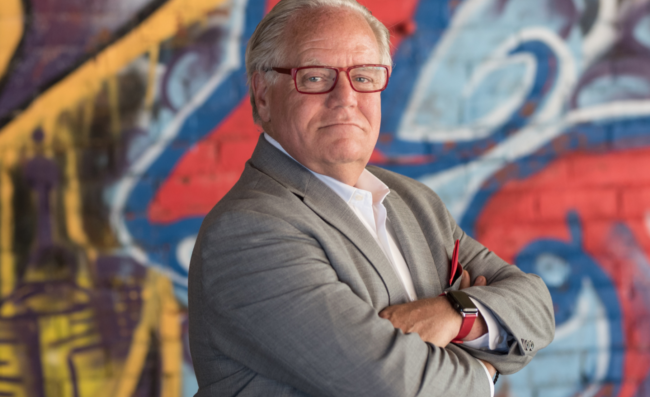

Jim Marous (00:10):
So, welcome to the FIsionaries Podcast, sponsored by Alkami. My name is Jim Marous.
Jim Marous (00:15):
The FIsionaries Podcast shines a light on financial institutions at the cutting edge of digital transformation, provide you with the tips and tricks to elevate your digital game, no matter what size your organization.
Jim Marous (00:28):
On this episode of FIsionaries Podcast, I am at the Alkami Co:lab Event in Grapevine, Texas. I'm joined by Amy Krasikov. Did I get that right?
Amy Krasikov (00:39):
Very close.
Jim Marous (00:40):
Okay. Krasikov, I'm going to go with that. vice president of digital experience at Raiz Federal Credit Union. Amy will provide an inside look into their extensive overhaul of the core and their mobile banking platforms that they did in 18 months.
Jim Marous (00:57):
So, anybody who's out there making excuses for not being able to do it or not wanting to do it, Amy is the person to talk to.
Jim Marous (01:03):
They revamped their digital infrastructure in such a quick pace and marketed in such a way that they had 20% rate of adoption in less than 24 hours, escalating to 50% within the first week. That's pretty crazy. So, more importantly, their digital banking experience ratings escalated. So, it's a win-win all the way around.
Jim Marous (01:26):
So, we want to get into that a little bit and talk about what did it take, how did she do it, and what's next?
Jim Marous (01:33):
So, Raiz Federal Credit Union is located in El Paso, Texas and has a passion for knowledge and pursuit of growth grounded in their heritage as the El Paso Area Federal Credit Union founded in 1936. They now have 70,000 members and provide a full range of financial services.
Jim Marous (01:51):
So, Amy, before we dive into the specific topics, can you tell me a little bit more about you and a little bit about Raiz Credit Union?
Amy Krasikov (02:00):
Absolutely. So, vice president of digital experience. I moved to El Paso two years ago. I'm actually native of Colorado. Been in the credit union industry, it's sad to admit, but almost 25 years. It's crazy how quickly that time passes.
Jim Marous (02:13):
Gosh, yes.
Amy Krasikov (02:13):
At Raiz, I love it. It is an absolutely amazing place. And if you've never been to El Paso, it is a little secret in Texas that is amazing. If you ever want the best food, oh my gosh. Yeah, I'm going to stop there because y'all are going to want to come.
Amy Krasikov (02:28):
So, Raiz has really transformed in the last several years. So, it moved from El Paso Area Teachers Federal Credit Union. We rebranded two years ago to Raiz Federal Credit Union, also pronounced Raiz for our Spanish speakers. And its base is root.
Amy Krasikov (02:43):
And the reason why when we rebranded, we really want to live where we began. Teachers are our roots and education is the base of everything. So, we're really honoring our educators through that space.
Amy Krasikov (02:55):
It's an amazing organization that's going to continue to focus on leading edge digital technology and moving forward as innovators in that space.
Jim Marous (03:05):
So, change sucks. I say this almost every podcast at some point. And it's not fun for people. It's not fun for companies. And with it comes surprises.
Jim Marous (03:13):
Most people would freak out around a core conversion. Certainly, one that was a complete rip and replace, as they call it sometimes. And on top of that, your mobile banking conversion. 18 months. I know you can go on days and days for this, but how in the world did you do that?
Amy Krasikov (03:35):
So, think about the core conversion is the first foundational layer in banking. You have to have a strong core. And our challenge is that we had a very aged core. So, we really could not upgrade-
Jim Marous (03:48):
Everybody does.
Amy Krasikov (03:48):
Everybody does. But we really could not upgrade our digital platform on the existing core that we were on. So, we needed to move forward and find a solution that will help us advance and continue to advance and be more agilely focused. If I want to use it in that way.
Amy Krasikov (04:03):
And when I say it took 18 months, of course, prior to that was a year of selection and they selected the core. And I came in really right as the project was beginning. So, I got to come into a preselected vendors and move forward with an amazing project.
Amy Krasikov (04:19):
And they launched core first. So, they focused on core for the first six months. And then in I say December we started mapping our digital banking.
Jim Marous (04:28):
What year would it have been that you did the-
Amy Krasikov (04:30):
So, 2022, we converted in 2023. So, started in '22.
Amy Krasikov (04:36):
So, December of '22, we started mapping all of our digital banking needs and really familiarizing ourself their digital banking platform, which is Alkami. And we then launched our ERP project in January, and we were live in July 24th, 2023.
Amy Krasikov (04:53):
So, core conversion, digital banking, and about 22 plus additional vendors that connect into the digital banking platform.
Jim Marous (05:02):
Which is interesting because you've been banking long enough to know that plug and place scenario is so important, but it's relatively new because vendors would fight against each other. Your core provider would say, "No, we don't want to use this," or, "You not want to do this."
Jim Marous (05:16):
But now, every one of your solution providers really need to work with each other seamlessly, otherwise they're going to be out. Because the last thing you need is friction internally to build a non-friction experience for consumers because they're going to feel it.
Jim Marous (05:31):
And you're not a huge organization. You don't have a lot of people sitting around. How did you delegate what had to be done both internally and externally?
Jim Marous (05:42):
And how important then is your partner to say, I'm going to use American game, "I'm going to give you the football and make you run down the field, but I can't run with you. I got to trust you to get to where we're trying to get."
Amy Krasikov (05:56):
I won't sugarcoat it, it was difficult. We partnered with a project management team to really help keep the entire project on track, to help keep all of the pieces of the projects moving.
Amy Krasikov (06:08):
So, they really focused on the core, and the core innovation, and the core project in terms of each of the little nuances that needed to happen. And ensure that each of the vice presidents and business line leaders were getting what needed to accomplish done.
Amy Krasikov (06:24):
And then in terms of the digital side, I have a small digital team at the time, three. And they really led the entire digital banking conversion and help coordinate with the groups. And then reported back up to that project manager with the core.
Amy Krasikov (06:40):
When you're talking about our IT teams, our IT team created a group called Business Process Solutions. And they were a group of three at that time as well who were leading with the project manager who was a partner that we contracted with to make sure all of the business line leaders were answering the questions, getting the worksheets done, doing the testing.
Amy Krasikov (06:58):
And then the organization (and this is crazy in an organization with about 200 employees) dedicated almost half of the employees to the core project.
Jim Marous (07:10):
Okay. So, we talk about the technology, we talk about what it takes to make all this happen. But the reality is we're dealing with people.
Jim Marous (07:18):
We're dealing with people who, in today's world, if they don't say it, they certainly feel it, are threatened by the innovation we're taking. Because going from old to new means that jobs change, responsibilities change, some jobs are lost, some could be built.
Jim Marous (07:35):
How did the organization get over that hurdle? Or was it a cultural mission from the top that drove that?
Jim Marous (07:45):
Because we know how people feel. Tellers feel this, everybody feels it. But when you're getting almost everybody involved in the project, how do you keep them from holding back and saying, "Well, I think we got to leave this the same because my job."
Amy Krasikov (07:59):
Yeah. Both actually. When you talk about cultural and talk down, there is a lot of culture related to that. You have to have buy-in at all levels in this kind of organizational change. I will say though, it is about constant communication with the teams.
Jim Marous (08:15):
I love that.
Amy Krasikov (08:15):
And helping empower them. And that that's one of our core values is empowerment. We want our team members to empower, uplift, and impact.
Amy Krasikov (08:22):
So, when you're looking at your job and you're looking at your role, it was constantly reminding them, you have the opportunity to define this. You have the opportunity to change and improve this for the better. Look at what you need to do, not how you used to do it.
Amy Krasikov (08:39):
Now, were there setbacks? Absolutely. Were there folks who were challenged with the change? Absolutely.
Amy Krasikov (08:46):
And even post-launch, it was reevaluating, where are we now? What changes are not necessarily where we wanted them to be, because not everything goes well in a conversion. If you have never done them, you might not know that not everything goes well. And you have some post work to do.
Amy Krasikov (09:05):
So, following that from the leadership level, we have spent the last six months really ensuring that all of the teams understand their roles and their jobs well. And that they still have that empowerment to make a difference and change how they work.
Jim Marous (09:20):
We interviewed, not on this podcast, but my other podcast, a person by the name of Liz Wolverton from Synovus in Georgia. She focused on exactly what you said, which is if you communicate well, nobody feels threatened because they'll realize they have a path going forward. And that's so important.
Jim Marous (09:36):
If you look back now, was it more technology or culture that drove the change that you had?
Amy Krasikov (09:44):
We absolutely had to move forward because we were in a system that was being sunsetted. So, we had to make a choice.
Jim Marous (09:50):
Oh my gosh. So, this was a little push versus shove.
Amy Krasikov (09:53):
Yeah, it was a little push versus shove. But I will say that in terms of culture with where we want to be, and being a digital first organization that wants to be and strives to be leading edge, the sunset was the opportunity to really live and breathe who we are.
Jim Marous (10:12):
So, I often talk about the GPS of financial services in different ways I talk about it. But one of the things I talk about is the fact that you can't get any place without knowing where you're going.
Jim Marous (10:22):
I understand that your old system would be in sunset. But what would your vision of where you had to land at the end of this, or at least the end of the conversion part of it, what were you trying to achieve?
Amy Krasikov (10:35):
We were trying to achieve a improved experience where the technology was not the friction layer to member experience. And when you think about member experience, it starts with the employee.
Amy Krasikov (10:47):
If you have a branch model, you need a solution that is very easy to both train and use at the employee level in order to then really serve and build relationships with your members.
Amy Krasikov (10:58):
And on the other side of the coin, we really wanted a system that we could have, as you mentioned, plug and play. We have no developers today. And that's [crosstalk 00:11:08].
Jim Marous (11:08):
So, you're relying on your partners for the development.
Amy Krasikov (11:10):
We're really relying on partners today.
Jim Marous (11:12):
Which by the way, I believe is the only way to do it because the developers have to be at the front edge of transformation. While if you are doing it, you'll tend to lag only because someone else is getting the upper hand.
Jim Marous (11:26):
But it's again, finding the right partners, making sure they commit to making it so you have the best of X, Y, and Z. And letting them do their thing.
Jim Marous (11:37):
I mean, you referenced this often, but I had a gentleman in Kenya, actually, I was doing a bank conference there and I said, "What's the biggest challenge to digital transformation?" He goes, "Bankers who can't get out of their own way." That again, it's a change mentality that says if you don't buy into it, it will fail on its own weight if nothing else.
Jim Marous (11:58):
So, your overall experience was what your goal was. What was the biggest challenge during this transformation both on the digital banking or online banking as well as the core?
Amy Krasikov (12:09):
Doing them at the same time, really was.
Jim Marous (12:12):
Would you do it again that way though?
Amy Krasikov (12:13):
I would stagger it.
Jim Marous (12:14):
Yeah. Obviously, start with core.
Amy Krasikov (12:16):
Exactly. And get core actually launched three months prior to launching a digital solution.
Jim Marous (12:23):
I'm sorry. I love it. Three months prior. Yeah, we don't want to lag. I mean, you're a speed demon. I like it. This is a pretty good.
Amy Krasikov (12:30):
Yeah. At the same time, on the same day caused challenges. And when you're trying to make decisions with the core and you need to pivot with the core, now you're waiting on a decision with digital banking because you absolutely need that piece of core to be done.
Amy Krasikov (12:42):
And that caused us to really be tight at the end with getting our digital where we needed it to be. And we had to make some strategic decisions to do a day two type launch on some of the features with digital banking to really hit that goal.
Jim Marous (12:56):
Yeah, because they're both huge on their own. Now, it's interesting because when you talk about the whole transformation process and the speed at which you did it, you still are converting the entire core.
Jim Marous (13:08):
It doesn't matter what size organization it is, because it's not a volume thing. It's not how many customers it has changes how hard the core is. No, you have the same number of services as everybody else.
Jim Marous (13:17):
What do you think makes it so it takes so long for some institutions to change their core, change their online banking? I know some online banking processes that have gone three to five years. I know at least one core that I believe we're on a 12th year right now. And I get worried that what started is now old.
Jim Marous (13:40):
What do you think makes it so that your organization seemed to do it in a magical time period, but other organizations really struggle? Because you get an idea of what's going on around you.
Amy Krasikov (13:49):
You do. You really have to commit to the project and the timeframe. We all have priorities and we all have fires that happen. And in business, you have to really make that commitment that this is the top thing we're doing as an organization. This is where we're dedicating our time and our resources. Everything else goes on hold.
Amy Krasikov (14:10):
And that can be difficult because you might miss an opportunity to become a leader in something because you're focused on this one thing. But if you don't do that one thing now, then as you say, with a core that's 14 years aged, you're so far back, you are now, needing to restart.
Amy Krasikov (14:25):
And that was something actually our CEO said, because I will say when you're thinking about change, it's very challenging and doing these big projects all at the same time.
Amy Krasikov (14:34):
And it was our core conversion, our digital banking system. And I've said 20 plus integrations, it's also bill pay. And if you've ever done a bill pay conversion, is in itself a challenge.
Amy Krasikov (14:44):
So, doing all of those at one time, we as a senior leadership team pushed back and said, "Why are we doing these all at once? This is a lot of change for our employees and our members to ingest."
Amy Krasikov (14:56):
And I really like the way our CEO phrased it was that we could stagger these. But if you stagger and do a core, now you're two to five years out from doing a digital, now you're two to five years out from doing ... and by the time you're done, you're now, as you said, so far out, you're 15 years out, you're now so aged and no longer relevant. When are you ever going to catch up?
Jim Marous (15:16):
That's extraordinarily interesting because again, I'm fortunate enough to meet a lot of organizations and it really sometimes gets down to the CEO finally saying their vision is I can't afford this. But that CEOs, their job's completely changing. And I'm going to exaggerate a little bit, he could lose every employee in the process.
Jim Marous (15:39):
Now, on the consumer side, the member side, change also impacts them. And what happens behind the scenes is not really invisible as much as we try to make it so that hey, we're still doing the same way we've done it. How did that impact your members and how did you alleviate those challenges?
Amy Krasikov (15:59):
So, the core conversion, we went from an account centric to, well, now, member centric. And that's really difficult for a lot of cores. And when you ask the previous question, what makes it so hard to change? That's one of the reasons.
Amy Krasikov (16:11):
So, a previous core I was on in my past life, they were also account centric. And their provider offered to switch to a member centric.
Amy Krasikov (16:18):
And by that I mean you use your social security number to aggregate all of the accounts under one person versus an account centric, which is often the bank model too, where you have each account individual and you can have multiple accounts all under you. Well, we-
Jim Marous (16:31):
Which is impossible for the consumer, by the way.
Amy Krasikov (16:33):
Right. But we had that and most of institutions do. And we were thinking about how to manage that change. Every decision that you make, you have to do it with the consumer's best interest in mind. What are the uses that they can do and how is it going to affect them? And you need to keep that in the forefront when you're making your decisions.
Amy Krasikov (16:54):
And the way that we handled, I'll say aggregating from five accounts down to one, was we kept the oldest. And that's how we communicated to try to simplify that for the members. And it really is about communication. We chose to communicate very early about the core.
Amy Krasikov (17:12):
So, when you're talking about core and digital, we started in December. We weren't even going live for seven months.
Amy Krasikov (17:19):
So, we let them know it was coming. Our CEO did a video about it. We started doing communication. And then there's these little touch points, and then there's these reminders to let them know that this change is happening.
Jim Marous (17:28):
So, they continually felt the good things coming.
Amy Krasikov (17:31):
Exactly.
Jim Marous (17:32):
Very much like I laugh because financial institutions, you never see their name on your — oh by the way, these accounts or these apps are being updated today. You'll never find a financial institution.
Jim Marous (17:41):
You're actually including the members to say, "We're doing this now. We're doing this now." Which can trigger anxiety just by communication. By the way, we're taking this thing away from you and we're going to change it to this. And people freak out at times just by the visual aspects being different.
Jim Marous (18:00):
But you included them in the process, which as you look back, what was a negative surprise for your members? What created the most angst that maybe if you knew that that was ... because it sometimes can be crazy basic that you'd say, "Didn’t miss that one."
Amy Krasikov (18:20):
Well, the most angst really when you are aggregating thinking about the digital experience connected to a core, I have a username for each one of those individual accounts that I've had to log in with. So, which username do I now, use when I go to log into a new system? I don't remember which one was to my older one.
Amy Krasikov (18:38):
So, I would say that caused a lot of angst was so-
Jim Marous (18:42):
The aggregation that has a beautiful endpoint creates its own challenges because the consumer, I know myself, works with this independently and I don't know one password versus another, let alone how they interact and which ones are connected.
Jim Marous (18:56):
I mean, I had a situation with a bank where I had money transferred from one account to another to make up for an overdraft that happened. And I could not for the life of me figure out why the bank showed up a day later.
Jim Marous (19:09):
And that aggregation really hadn't been smooth or aggregation with other organizations, you said, payments or bill pay. Those create their own challenges too because we're changing the process. We're moving a whole lot of chairs on the deck.
Amy Krasikov (19:23):
And that also, was the unintended there, what caused some angst was you might have had an e-bill set up with bill payer A, but Bill payer B doesn't have that relationship with the vendor, or that vendor isn't accepting new enrollments in their e-bill system at that point in time.
Amy Krasikov (19:42):
So, you as the consumer go to see your e-bill and it's not available and you do get a paper bill a cycle later but there was a delay.
[Music Playing]
Jim Marous (19:54):
So, let's take a short break here and recognize the sponsor of this podcast, Alkami Technologies.
Jim Marous (20:04):
Welcome back to the FIsionaries Podcast sponsored by Alkami Technologies. So, the members I take it now, I mean from the numbers, are pretty bought in. They've also learned new things and learned new ways to do things.
Jim Marous (20:20):
Obviously, you've said communication about 20 times so far, the communication with your branch people, which are really the point of angst. If I got a problem, I may not go on the branch very often, but the time I'm going to be doing it, I'm not going to be making that phone call.
Jim Marous (20:36):
Was it a higher or lower anxiety point when you did the conversion? Were you surprised by how well it did or didn’t? Or were you surprised by geez, we didn't see some things coming or both?
Amy Krasikov (20:50):
Both actually. I would say both. And we prepared in a couple ways on that member side and the communication side. So, we launched a conversational chat bot with AI with our conversion.
Jim Marous (21:02):
Good timing of that.
Amy Krasikov (21:04):
So, we had the intentions to do the off-hour support so that they could enroll or they could register, they could figure out what their password was or what they needed to do and they could get into their accounts.
Amy Krasikov (21:12):
We also then prepped our staffing and we had more supports. We did subject matter experts at each one of our branches. And even if they were back office because we had so many people involved, they were there to support our team members.
Amy Krasikov (21:24):
And we also, contracted a call center to do additional call center support for the month after conversion, knowing there's higher volume overall with that support, where people might not understand the aggregation, they don't understand how the payments worked. Maybe they're having challenges logging in.
Amy Krasikov (21:40):
So, being able to have that support and have places where our team members, if they couldn't answer the question, where they could go to get that answer quickly was helpful. I think that that went well and how that worked.
Amy Krasikov (21:55):
And the part that didn't go well I think more was that aggregation of those usernames. That was the part that gave a little bit more challenge for our call center and supporting our members. They were able to figure out what their username is and after authenticating, help them through it. But was more challenging.
Jim Marous (22:14):
And the end point is going to be really much better than it was. But getting there, there was no way around it. You couldn't do it any other way.
Amy Krasikov (22:22):
And explaining to people you can't convert their password. Well, why couldn't you convert my password? Because that's encrypted and that's in the other system and you wouldn't want us to do that.
Jim Marous (22:31):
Exactly. You want to complain, you got something to complain about. Yeah.
Jim Marous (22:34):
So, when you look back, how long have you been completely converted?
Amy Krasikov (22:39):
Oh no, this is March. So, almost nine months.
Jim Marous (22:43):
I got nine in a year.
Amy Krasikov (22:44):
Yeah.
Jim Marous (22:46):
So, what's next? Wasn't as digitally ready as what you thought it was going to be.
Amy Krasikov (22:51):
Our online account opening and the account opening overall is not digitally ready and as ready as I want it to be. We need a much prettier and easier, a much faster front door to get through. And we need also, to improve the flow for our loan application and mortgage applications.
Jim Marous (23:08):
But loan applications, dual kind of applications, which anybody who listens to my podcast, any of them, they'll know, those are bugaboos for me. They're things that drive me nuts that we say we're digital, we can do it digital by say 15 minutes. You go, "No one has that kind of patience in this world."
Jim Marous (23:26):
On the other hand, I will argue for you in this case that if you hadn't done the digital conversion the way you did, you would've had a hard time I think from a mentality and culture standpoint, doing what really is necessary to make online or digital account opening and lending happen.
Jim Marous (23:45):
Because the biggest bugaboo when you can partner with the best company out there to get down to three minutes. But if you start by going, by the way, we still believe in driver's license and we need the ID, you're not going to get there no matter what system you have.
Jim Marous (23:59):
But now, you've done everything you've done. I would think the mentality is almost everybody's pulling the same dress and going faster, better, don't make excuses, get everybody in the room.
Amy Krasikov (24:12):
It is. And I am appreciative that our compliance team is challenging themselves on the ways that we can do non documentary identification. And what are all of the backend checks and solutions we can use to automate and improve that flow. There's a lot of fun vendors we've been looking at and a lot of ways we can-
Jim Marous (24:36):
There's some great solutions out there.
Amy Krasikov (24:38):
There really are.
Jim Marous (24:38):
And great partnerships within solutions. But what's funny is organizations buy these and then still put the roadblock in place.
Jim Marous (24:46):
And I feel sorry for the vendors who go, you're not getting what you paid for. You'll make excuses as to I'm happy. But you're not, that wasn't your vision. And the new customer volume that's going to come with that is extraordinarily strong.
Jim Marous (25:02):
But I would argue that by building a culture that says change is going to be fast, it's going to be disruptive, but it's in the end point, we're looking out for the member. You have all the pieces in place to make that whole process easier.
Jim Marous (25:15):
Because if you hadn't done that that way, it's very hard to get to that point. And again, it gets back to the communications, all the things you put in place.
Jim Marous (25:23):
And it's interesting because I started going back to COVID days where we had the COVID relief funds that came out, we got told about on Thursday and had to introduce it on Monday without any idea what we were ... and the government created, which, what could go wrong?
Jim Marous (25:37):
But using that as the guide, you've kept that speed, that mentality, that culture of getting it done. You were there at the very beginning, you probably remember less about what it was like before that. But for those people are on board, I have to think that it's a lot better place to work. Because they know the destiny, don't they?
Amy Krasikov (26:00):
They do. And it's reminding them that we have a human centered approach. We're always putting the human first and it's about human dignity.
Amy Krasikov (26:08):
And when you do that, and when you focus on not only high tech, but high service, that's where they start understanding, okay, this is why all of this change is so important. Because we want to move people forward in their financial life. We want to improve their financial wellness.
Amy Krasikov (26:28):
And when you define what that means and you help them see that vision and that they are that guide for the member, then how many people understand what to do, what the next step is. How do they move forward in their financial life? They don't know. We do.
Jim Marous (26:44):
They're looking for you to give you that.
Amy Krasikov (26:46):
They're looking for that. Refactor that problem.
Jim Marous (26:47):
They're looking for a partner that's going to help them with their solutions. I use a lot of analogy, but one of them is they don't want to know what's in my rear-view mirror, they want to know what's in my GPS system.
Jim Marous (26:59):
So, they want the help to say, "I'm expecting you with all the information you have, and now you have this major digital conversion, to know what I should be doing next without me having to handhold you." We're not there yet as an industry but that takes data analytics.
Jim Marous (27:15):
How did the conversion change your ability to use data and analytics for better personalization, better engagement, which is whole lot more than just experience. How did your conversion help that?
Amy Krasikov (27:28):
Oh, again, the prior system was antiquated aged. It didn't really allow us to have all the hooks that we needed to pull data out and really analyze it in the way we wanted to.
Amy Krasikov (27:37):
So, the conversion was again, I called it the foundation. I like to think about building a house, this foundation. Absolutely had to have that foundation. And now, we're starting to put up all the walls so that we can build this beautiful house and open that door and invite everybody in.
Amy Krasikov (27:52):
And when you think about data analytics, that's part of the framing of the house. You have to have everything pulled out and organized. And we have a new business analytics team that is building our data lake. And we'll be starting to mine all of that.
Amy Krasikov (28:05):
Everybody's putting together what their executive dashboards need to look like, thinking data first and what are the questions need to ask of data to be able to really inform them and make those personalized offers to people so that you are not only offers, but actions, you're helping move them forward.
Amy Krasikov (28:21):
So, when you're thinking about fraud, have you set up alerts? And you haven't set up alerts. Let's get you to set up alerts.
Amy Krasikov (28:27):
These are the kinds of alerts that you should be thinking about. Have you set up your biometrics? Have you enabled face recognition? Have you talked about these different ways that you can secure your account beyond a password?
Amy Krasikov (28:39):
And getting them to engage with that next best action, not only next best offer or service, which might move their financial life forward, but not as necessarily protecting their financial intent.
Jim Marous (28:50):
Really exciting because I'm putting myself in ... by the way, this is a blast because we don't usually get the opportunity to talk to somebody that's done the things we all wish we could do.
Jim Marous (28:59):
But it gets rid of your excuses in this process because you can no longer say the system won't support it. Sorry, systems can support everything right now. And we're only held back by our own ability to get the next job done.
Jim Marous (29:12):
So, you referenced the foundation in the house. What's the next remodeling job you're going to be doing at Raiz Federal Credit Union?
Amy Krasikov (29:20):
Account opening. That's the next remodeling job. That's the biggest.
Jim Marous (29:22):
When is that plan for?
Amy Krasikov (29:24):
We are doing vendor due diligence actually at this time. I'm hoping to get a contract signed by May and something in by end of year, beginning of January.
Jim Marous (29:34):
Okay. So, again, everybody, real life, we're not talking about annual plans. This is not an easy process. But I'll bet you they’ll beat the time period because they don't want to take it longer for that than they do for their core conversion.
Jim Marous (29:50):
But it's interesting because the mentality built in. And then when you move to the loans, you're doing the same thing.
Jim Marous (29:56):
But your timeframes are so much different than a traditional financial institution that automatically goes back to their legacy mindset and says a year or two years.
Jim Marous (30:08):
And I kid about the fact for onboarding processes, when I do research, about 53, 54% of the financial institutions say they have it. About 36, 37% say we're going to get this year, we're going to make sure it's a priority this year. And the rest say it's not on the priority list.
Jim Marous (30:23):
That number has been the same for over a decade, which means all the people that say it's on next year's doesn't get it done.
Jim Marous (30:29):
I get the feeling that you have a very strong sense of prioritization within your organization and that checklist gets done. You become anal as an organization focused on getting it done. And again, with the ultimate goal being the member's going to benefit. Which means the employees are going to benefit and the organization's going to benefit.
Amy Krasikov (30:50):
Absolutely. And we have created a quarterly roadmap that all of our leadership team has each project because we're a decentralized organization. So, that allows us to make decisions that we need to make to get the job done and keep things moving.
Amy Krasikov (31:03):
And in that we have to communicate very well as leaders to ensure that we're not overlapping in terms of projects and resources because there's only so much time and resources.
Amy Krasikov (31:13):
And we do. That quarterly roadmap helps us move forward and keep our eye on what's important and where we are and how we're committed to do that.
Amy Krasikov (31:21):
And a question you had asked earlier, one of the things my CEO likes to point out, most organizations will put their digital team inside of an IT group or possibly in marketing.
Amy Krasikov (31:36):
Our digital team is separate, and its own unit and outside of that, and has continued focus. So, that digital team is not only an innovator in the space that it owns, it's a consultant across the organization to ensure that every business line puts digital first and is thinking about that experience and journey for the member.
Jim Marous (31:58):
And I would imagine you bring compliance into the front end of this process rather than the back end to make them bought in part.
Jim Marous (32:03):
You mentioned it earlier, but we sometimes in the marketing world, which I came out of, like to bring them in lasting going, "Okay, what are you going to do?" Well, that puts them on the spot to do something and not necessarily positive.
Jim Marous (32:15):
You bring them in the front end, they become a partner in trying to see how they can make it a partnership organization and it gets rid of a whole lot of challenges down the road.
Amy Krasikov (32:23):
Absolutely.
Jim Marous (32:24):
Okay. Final question. You need to make a recommendation to financial institutions of all sizes based on your history and your experiences over the last few years. What's your major recommendation?
Amy Krasikov (32:39):
Oh, my major recommendation. I really like what you said about no excuses. My major recommendation is to make a plan. Communicate that plan, get buy-in on that plan. Buy-in is huge. And not just from the executive team. And buy-in from the team members who will live and execute it is huge.
Amy Krasikov (33:02):
And then move forward with that plan, take action, take steps, and then measure was it successful? Was it not? And where do you need to pivot and change?
Jim Marous (33:15):
Yeah. Such a pleasure. It's great to be at Co:lab where there's so much going on, so many innovative people going to be interchanging.
Jim Marous (33:21):
I'm sure you have a laundry list of things you need to accomplish while here, probably a few vendors you have to visit either calling them out and going, "Hey, you got to pull your weight." Or, "Hey, you got to come in and see me." But it's a great environment.
Jim Marous (33:34):
Thank you so much for sharing your story because it's extraordinarily unique in the industry for an organization not only to still do a core conversion, but not to do it in pieces parts because you can now. That's good but it also, makes it so we draw out this process much longer than it has to.
Jim Marous (33:51):
I'm glad you survived. I'm glad your team survived, but I can see also, why the passion you show and the commitment you show internally. It's very clear why people follow you on what you are envisioning and how you follow your organization. So, thank you so much.
Amy Krasikov (34:08):
Thank you, Jim, so much. Appreciate it.
Jim Marous (34:10):
Thanks. Thanks for listening to FIsionaries Podcast. We hope you enjoyed our deep dive into all the tips and tricks you can use to help elevate your digital game.
Jim Marous (34:20):
If you enjoyed this episode, please be sure to support it, but also share it with coworkers and people outside your organization who may benefit from what we learned.
Jim Marous (34:29):
This has been a production of Evergreen Podcasts. A special thank you to our senior producer, Leah Haslage, and our audio and video engineer who shared today, Will Pritts. Thank you very much.
Jim Marous (34:38):
Also, be sure to keep listening to this podcast. We're doing a lot of innovative things and we're talking to people that have really done the things we all are afraid of. Hope you have fun.
Hide TranscriptRecent Episodes
View AllState Bank of Texas Pursuit of Frictionless Banking
FisionariesHow an Unconventional CEO Is Rebuilding Red Rocks Credit Union
FisionariesColony Bank’s Digital Communications Playbook
FisionariesHow First US Community Credit Union Is Driving Digital Growth
Fisionaries
Hear More From Us!
Subscribe Today and get the newest Evergreen content delivered straight to your inbox!
Advertising & Sponsorship
Interested in sponsoring or running an ad for your business on an Evergreen Podcast? Contact us to get pricing and availability.