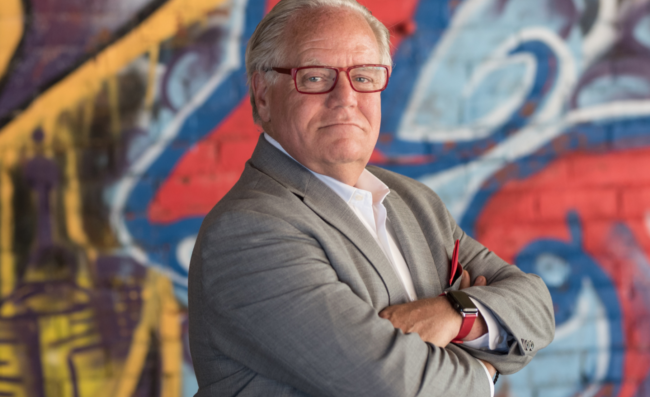
The FIsionaries Podcast, sponsored by Alkami Technology Inc., shines a light on financial institutions (FIs) at the bleeding edge of digital transformation. The podcast, hosted by Jim Marous, features banks and credit unions sharing lessons learned from their digital transformation journeys as well as insights from fintech partners and other industry thought leaders. Each episode will provide regional and community banks and credit unions with insights, tips and tricks to elevate their digital banking game.
Building a Digital-First Bank to Serve the Needs of Underserved Communities
On this episode of the FIsionaries podcast I am at the Alkami Co:Lab event in Grapevine Texas. I’m joined by Grace Pace from Quontic Bank, headquartered in New York City. Grace will share how Quontic has leveraged a digital first strategy to establish a nationwide presence.
In addition, we discuss some of the innovations that have set Quontic Bank apart from competitors while helping the organization become future-ready.
Sponsors
Alkami Technology, Inc. empowers financial institutions to evolve and thrive in the new digital age of banking. Our premium digital banking platform powers regional banks and credit unions to grow confidently, innovate at speed, and adapt nimbly—all while providing a secure, frictionless experience to the consumers and businesses they serve—24/7/365.
Welcome to the FIsionaries Podcast sponsored by Alkami. I'm your host, Jim Marous. The FIsionaries Podcast shines at light on financial institutions at the cutting edge of digital transformation provided with the tools to elevate your digital game, no matter what size your organization.
Jim Marous (00:26):
On this episode of the FIsionaries Podcast, I'm at the Alkami Co:lab event in Grapevine, Texas. I'm joined by Grace Pace from Quontic Bank, located in New York City. Grace will share how Quontic has leveraged digital first strategy to establish a nationwide presence.
Jim Marous (00:42):
In addition, we're going to discuss the innovations that have set Quontic Bank apart from competitors while helping the organization become future ready. So, welcome.
Jim Marous (00:52):
It's great to talk to an organization that really has transformed themselves from being a community bank that is serving underserved communities to very quickly becoming a digital bank that's doing the same nationwide, but in a digital platform.
Jim Marous (01:08):
Can you provide a little background into your background as well as what really sets Quontic Bank apart in the marketplace?
Grace Pace (01:16):
Sure. So, I've been at Quontic for around four years, and I've always been in the digital banking space. I like to say I grew up in digital banking. When I started out, I was the kid in the room, and-
Jim Marous (01:27):
I'm sorry, I'm looking at you now going, “You still look like the kid in the room.”
Grace Pace (01:30):
I'll take that. I will take that. I was the kid in the room and that's when we called it product in e-commerce. We were trying to navigate into the digital banking space at the community bank I started working for, and they said, "You're young, you figure out this computer stuff." And so, that's kind of how I got going.
Grace Pace (01:48):
But ever since I've been at different institutions leading digital and product management, platform management some marketing here and there, but that's what led me to Quontic as they were really ramping up their digital transformation.
Grace Pace (02:03):
Quontic started in 2009. Our founder purchased the bank in sort of in distress, like a humble community bank in New York. And probably around 2019 we really had the vision to make it digital and to try our hand at some innovation. So, since then we've really ramped it up. That's been one of our core objectives and it's been exciting. We've done some cool stuff.
Jim Marous (02:28):
So, in your organization, do you have both a traditional bank as well as a digital bank or has it now become simply a digital first bank?
Grace Pace (02:35):
Good question. So, we are completely digital. We closed our last branch in August of 2021, and ever since we only serve our customers online. We do have a lending arm. So, we have a mortgage company that we do have a couple loan offices. You can come in for closings, things like that. But otherwise, we are completely digital.
Jim Marous (02:57):
So, you've been at both a traditional financial institution that has a digital component to it as well as a digital first organization. What's the difference in how they work, how they think from your perspective?
Jim Marous (03:11):
Because some organizations are looking to set up a digital arm, some would love to go completely digital, others are simply saying, "I want to be a traditional bank that has digital. What's it feel like or how does it work behind the scenes in both of those types of organizations?
Grace Pace (03:25):
I think the biggest difference for me is the alignment. So, at banks that I worked at where we launched a digital branch essentially, there was almost like two worlds operating under an umbrella and our objectives were kind of conflicting in some ways.
Grace Pace (03:41):
And we had to think about things from the digital side, we had to think about it a one way. But from a maybe in branch side, it would be different. And so, I would say with Quontic being fully digital, we're all on board with that strategy. There's a lot of alignment and we're kind of all in.
Grace Pace (03:56):
We have to really think about how can we service our customers when they can't walk into a branch? And there's some workarounds you have to think through. You're trying to do a mobile deposit and it's not working for some reason. How do we get that check in? And it's probably a timely thing. They need that deposit immediately.
Grace Pace (04:11):
So, I would say, for me, the biggest difference is just the all-in mentality of the digital experience. We rely on it. Things like uptime and all of that make a lot more sense to us and are very important because we don't have a backup. We have to have a very effective online platform that is always available and always working well for our customers.
Jim Marous (04:34):
Well, it's interesting when you have to work around culture, leadership, focus as you've mentioned. I have examples at very big banks, Chase being one, where they built a digital unit and a branch unit, they tend to fight each other. Because obviously the digital unit is the threat to the branch-based unit.
Jim Marous (04:54):
My wife is in retail. When she went from store-based retail to digital retail, she immediately became the enemy of the people that she had worked with for so long. And that’s the whole dynamic of “I’m afraid of my job.”
Jim Marous (05:09):
Your organization, because it's been digital first for so long, the people you bring on, the people you have on place already have that digital mentality. So, you don't have to deal with the threat of, "Oh, this is going to threaten my job." So, that's one element that you're different than a traditional science institution.
Grace Pace (05:25):
Correct. The good thing there is that we try to enable our employees. So, this didn't happen overnight. We have operations, we have groups at the bank that do have more of like a less digital role, but they're still so vital.
Grace Pace (05:41):
And so, we really try to enable them by saying like, "This technology we might be introducing, or this automation we're introducing is just making you be able to work more effective and help and aid you in serving the customers, not eliminating your position."
Jim Marous (05:56):
So, being a digital first organization, your competition are fintech firms for the most part and the really good legacy bank. But even the really good legacy banks that have really good digital capabilities don't necessarily check off all the boxes from the standpoint of being able do digital well.
Jim Marous (06:15):
From account opening to loan applications to everything else that's being done. You have to do them all remotely. What kind of speed, what kind of scale do you have right now from the ability to open new accounts to get new applications? How quickly is that being done at your organization?
Grace Pace (06:31):
So, we pride ourselves on that. We can open an account in less than five minutes. We try to really slim down the account opening process and only ask what's necessary. We have an automatic booking API, so the account goes from account opening to on our core immediately.
Jim Marous (06:47):
That's key. I mean, because a lot of times there's a deleted on the front end or on the back end, putting it on the books, which makes it that if a person wants to do something immediately upon opening the account, they can't do it because they don't exist yet.
Grace Pace (07:00):
Yes. And we give you your account number immediately. So, you have that. So, if you want to go set up a transfer, a direct deposit or something like that, we already have your account number presented at the end of your experience opening the account.
Grace Pace (07:10):
And we have a single sign on into online banking. So, you've already given us all your information, we don't want to ask you that again, to enroll in online banking. We pass all that information over to our online banking platform, Alkami and so really it's a pretty quick experience.
Grace Pace (07:25):
We do a couple of strategic things where we ask for funding before you submit your application. Therefore, you don't have to come back later. There’s friction there, getting people to come back and fund-
Jim Marous (07:35):
It actually helps both sides of the equation. Helps you, obviously.
Grace Pace (07:37):
Yes. It helps us and it also helps the customer.
Jim Marous (07:39):
It helps the customer as well. Because you're not going to have stumbling points in the process or things you have to go look for type thing.
Grace Pace (07:45):
Exactly. So, that's our goal. We try to give you, we've mentioned account number, routing number, immediately we want you to be able to use the account. And when you talk about competition with fintech firms and some of the larger banks, Quontic, we don’t try to be everything. We’re trying to do a couple things really well.
Grace Pace (08:03):
And I think where you get in trouble is just trying to be that mega bank that you maybe aren't. We did a campaign around Valentine's Day that was saying that we're okay with being your side bank. We don't need to be your main bank. We can be your side bank. That's fine and we're good with that.
Jim Marous (08:20):
So, it's interesting because the struggles with fintech firms in the last two to three years has been that it's really hard to build a business in a business way where you're making money as opposed to simply getting funding from a scale and speed standpoint when you're simply digital or even a limited-service offering. How are you doing it? How are you building volume in a world that volume's tough to get?
Grace Pace (08:49):
Yes. A couple things. One, we invested in platforms that are flexible. We also have in-house developers, which I find to be very important because every bank is ... we deal with legacy platforms in some regard, and we're all kind of a snowflake. It's all different.
Grace Pace (09:05):
You can't just go from bank to bank and be a developer and know exactly how it's all set up, there's not a playbook for that. So, you really need that institutional knowledge to be in-house because that's how you can get things done quicker. So, that's really important to us.
Grace Pace (09:21):
And honestly, we're a small bank. We have a small team, so we're not really stumbling over ourselves. There's not 10 layers to get something approved. We're sort of all rolling up our sleeves and deciding on a direction and making it happen. So, I would say that's kind of how we do it. We try to be agile in that way.
Jim Marous (09:38):
How do you get value? Because your brand's limited knowledge because you're not doing national TV ads, you're not a Chime or something like that's mine on Super Bowl.
Grace Pace (09:49):
Our marketing guy might disagree with you, but no, I'm just kidding.
Jim Marous (09:51):
Yeah, no, no, it's — no great. That was what I was going to ask you. How do you get that volume? How do you get that recognition when you're not simply in Queens?
Grace Pace (10:03):
Good question. So, we've tried to set ourselves apart with a couple of innovative products, one being our wearable checking account. So, we have a ring and it's in my backpack. I should have grabbed it. You wear it and it has your debit card chip in it, so you tap and pay anywhere contactless is accepted.
Grace Pace (10:20):
And that was something where First Bank of the Nation to launch it. And we got a lot of attention there, which then gets people curious and then they explore other products, and we sort of go from there.
Grace Pace (10:31):
We also launched the first Bitcoin account in the nation, which we've since sunset given the environment but that really sort of put us on the map. And so, we try to think about what are some of the shiny objects that our marketing dollars within itself because it's so expensive in the digital world to market.
Jim Marous (10:50):
How's been the take up on the ring?
Grace Pace (10:51):
Actually, great. It was one of those things where we weren't sure people would like it and we get awesome reviews. People love it. We give it for free. So, we don't charge you for it because we kind of wanted people to test it out.
Grace Pace (11:04):
We were working through some things, and we wanted to understand, do people like it, and if we charge you for it and then you don't love it, then we have a problem. So, it's just a value add to the account, and we get awesome feedback.
Grace Pace (11:16):
I always joke that when we had to test it, I had my team out working on it at a gas station, at a Target, wherever. And at first, we were turning things off and on to kind of test different aspects. And so, you'd tell the cashier that we're going to pay you with a ring, and they were looking at you like you're crazy and then it wouldn't work.
Grace Pace (11:36):
Like when we were first testing and they were like, "Okay, this person is a nut." And so, I think I freaked out like a bunch of people in my town. But anyways people love it.
Jim Marous (11:44):
Well, it's interesting because you introduced that a couple years ago, right?
Grace Pace (11:47):
Yes. Around two years ago.
Jim Marous (11:49):
So, it's interesting what's happened in the marketplace since then where many, many, many more people are paying by QR code at the restaurant. They're using the mobile capability, understanding that the security in that is greater than it is in a plastic outlet.
Jim Marous (12:08):
From a security perspective, that's a major issue when you're looking at Bitcoin, when you're looking into the ring or when you looking at other metaverse solutions that you've touched also.
Jim Marous (12:18):
How do you keep security at, I know you do keep security at the forefront, but how do you work with partners and be able to provide the security necessary to allow these kind of enhancements in these innovations?
Grace Pace (12:30):
So, a couple things. One, we have a really solid vendor management group that we fully vet all of our partners and we hold them to a high standard. We have a really great info security group that is constantly monitoring performance and understanding the changing environment.
Grace Pace (12:46):
But from the actual mechanics of it, like the debit card ring, I like to say if I found your ring on the floor, I don't know that that's ... if I find your debit card on the floor, I have your debit card number. I know that it's a debit card and a payment device, the ring has no number associated to it that a customer can see, or a person can see and it's not evident that it's a payment device. And so, I like to think that that's honestly safer than carrying your debit card around.
Grace Pace (13:12):
But even the Bitcoin account, that was just simply a checking account on our core. And our partner was handling any of the Bitcoin interactions. So, in a lot of ways it's really just education with our regulators and even internally to explain what we're trying to do and understanding that some of it really isn't as risky as it sounds. And it's really just leveraging banking solutions that have been around forever and thinking about them in a little bit of a different way.
[Music Playing]
Jim Marous (13:50):
So, let's take a short break here and recognize the sponsor of this podcast, Alkami Technologies.
Jim Marous (14:01):
Welcome back to the FIsionaries Podcast sponsored by Alkami Technologies. So, your charter and your mission really references the underserved communities being able to reach those that may not get traditional banking services the way they should, various different reasons.
Jim Marous (14:17):
How do you stay true to that mission and to that objective of being an organization that's digital because transferring what you can do from a tactile standpoint versus a digital standpoint, it's difficult. I knew an old financial institution up in the northeast used to give out pens and dog biscuits and all that. I said, how do you transfer that feeling in a digital way? How does Quontic?
Grace Pace (14:42):
That's funny you said that, at one point we sent everyone a lollipop and we said, “It's everything but the lollipop that you get in the drive through at the bank.” But our serving underserved communities, pillar of Quontic really started in the lending side. We’re a CDFI bank and so that’s really where that piece is.
Grace Pace (15:01):
And from the digital bank side, we're nationwide, we try to keep our opening deposits amounts low. We try to be accessible. But really, we're gathering deposits so that our lending side can empower those communities and that's really where we see the impact.
Jim Marous (15:20):
So, more like a CRA scenario in a global or more global sense. What are the biggest challenges that you face as an organization today in an environment that certainly is changing so quickly? Competition continues to get more intense.
Jim Marous (15:36):
You pick up a newspaper. I don't think anybody picks up a newspaper. You pick up the computer and read the news for the day and you never know what you're going to hit. What's the biggest challenge you have at Quontic?
Grace Pace (15:49):
I think for all of us, it's just trying to differentiate, constantly thinking of ways to how can we be different? How can we better serve our customers? Like you said, we aren't a national name that everyone's aware of, we are getting there.
Grace Pace (16:00):
I mean, we've had some really interesting accolades lately, but we recognize that not everyone knows, has ever heard of Quontic Bank. And so, we really try to differentiate ourselves and also just continue to make our experience solid.
Grace Pace (16:13):
I think that kind of speaks for itself and helps with even word of mouth. I mean, word of mouth exists in digital banking as well. It's not just in community brick and mortar banks. If I love my digital bank, I'm going to tell someone about it, and they may come open an account as well.
Jim Marous (16:29):
Well, speaking of loving your digital bank, you're on the cutting edge of a lot of new innovations. You've touched into the metaverse area and things of this nature. How do you find partners that are going to be at that place in the journey to be able to support you?
Grace Pace (16:46):
Good question. We just went live with Alkami in November, so that was probably a two-year process for us, really thinking about build versus buy and then which platform. Because as a digital bank, your digital banking provider is really the heart of it all so that was a super-
Jim Marous (17:02):
And you always think you can do it, but you know that also slows you up.
Grace Pace (17:06):
Exactly. And so, we decided to buy instead of build, and we had to really, really think about who our partner was going to be. Not just someone that works for us today, but someone that's going to fit our mold going forward.
Jim Marous (17:19):
You don't want to go through that process again very soon.
Grace Pace (17:21):
Absolutely not. I think I lost some years of life there but as anyone would say, who's been through a conversion, it's tough. But I think that was something that we really took our time deciding because we knew that was such a strategic move for us.
Jim Marous (17:37):
What's the biggest opportunity at your bank right now? What do you look at and say, "This is kind of pretty cool that can come up in the future?" Without giving away any secrets.
Grace Pace (17:48):
Well, I can't say too specifically, but I think for us it's our ability to move quick. I've worked at a lot of institutions, and we can find something that we think is cool and make it happen.
Jim Marous (18:00):
It's really a culture thing, isn't it though?
Grace Pace (18:00):
Yes. So, we have core values at Quontic, and one of them is try it on. And so, what we think about is, obviously we need to vet an idea, make sure it makes sense, but we can try something on. It doesn't have to be the best thing ever. It doesn't have to be in existence for the next 10 years. And so, for us, our leadership all the way from top to bottom is ready to try stuff on. And we don't slow ourselves down that way.
Jim Marous (18:32):
So, I'm going to look right at the audience here and say another example of leadership leading the ability for an organization to transform themselves, it's about the leadership. If you don't have a leadership that will embrace change, we'll try it on.
Jim Marous (18:47):
Well, not be afraid to fail, not in the bad way, but afraid to fail in a way that says, "We've learned through the process, we've measured what we did right or wrong." And you have insane focus. I mean, look at your organization. You don't have, as you mentioned, the wide array of services you focus on what you can do well, and you do it often.
Jim Marous (19:08):
When you look at the metaverse, what do you see as the, not just Quontic, but overall, what do you see as the future of what could be the future of the metaverse and metaverse, I'm not going to talk about the financial, we'll define it differently.
Jim Marous (19:23):
But when you're looking at the use of data AI, when you look at a personalization, when you're looking at ChatGPT or generative AI, when you're looking at non-branch branching, which you're already doing to a degree, what do you see as the future of a metaverse environment?
Grace Pace (19:38):
Wow, that's a tough question. I think for us, we were one of the first to make it out into the metaverse. It was just simply like a banking post. It was not a branch or anything like that. It was just a place to visit and kind of show that, "Hey, we're out here too, checking it out. We're just as curious as you guys are."
Grace Pace (19:55):
But I think in some ways in that area, like AI and metaverse, I think we're okay with others trying it first a little bit. You know what I mean? I think we're still kind of getting our arms around it and understanding what's the impact? Where should we focus? Should we at all? And I think the answer is yes, but understanding what our approach is, I don't know that we're really there yet.
Jim Marous (20:21):
It's interesting, your agility, your tried on means that nobody has to have much of a lead. I mean, I'm sure it was the same with the Bitcoin situation. That critical currency thing where you're going, "You know what, we can be a fast follower, but really be a fast follower as opposed to most bank that they'll talk that game, but not really play."
Grace Pace (20:39):
It'll be three years later. Yes, agreed. And we do use, we have a chat bot functionality that has been immensely helpful for us in terms of understanding what our customers are asking us and being able to answer those things quickly. That's where we've sort of dabbled a little bit. But otherwise, I think we're kind of seeing what the industry does, and then, like you said, we're able to move quickly when we decide our direction.
Jim Marous (21:05):
It's exciting. I thank you so much for being on the show, because it really shows somebody or organizations out there that are still trying to become digital, how you can become digital. They still have to make the decision, do you want to make it a separate unit or part of the entire bank? Because there are different ways of working there and challenges.
Jim Marous (21:23):
But even more importantly, how does an organization become all in on digital, and how do they select partners that will keep them ahead of the game? Because as you said, “I can't be that late at anything because my customers are the front end, they're wearing the rings.”
Jim Marous (21:39):
They're wearing the wearables, they're wearing the watches, whatever it may be. The glasses, eventually, whatever that may be. And I've got to be there, but most importantly, I got to do the basics well.
Jim Marous (21:49):
This is a really interesting conversation for me because we always think about the expansive financial institution that offers everything, and then they keep on adding things, don't charge for it and that's the way it goes. You're really sticking to basics, offering extraordinarily competitive rates, building business through that platform as well, so really appreciate you being on the show today.
Grace Pace (22:09):
Absolutely. Thank you.
Jim Marous (22:10):
Thank you. Thanks for listening to the FIsionaries Podcast. We hope you enjoy the deep dive in all the tricks and tips that you can use to elevate your digital game.
Jim Marous (22:19):
If you enjoyed today's episode, please be sure to share with others in your organization and those outside your organization who may learn from what we talked about today. This has been a production of Evergreen Podcasts. A special thank you to our senior producer, Leah Haslage and audio and video engineer Will Pritts.