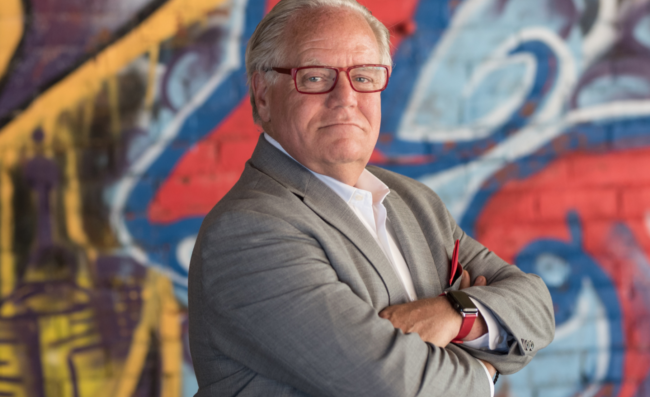
The FIsionaries Podcast, sponsored by Alkami Technology Inc., shines a light on financial institutions (FIs) at the bleeding edge of digital transformation. The podcast, hosted by Jim Marous, features banks and credit unions sharing lessons learned from their digital transformation journeys as well as insights from fintech partners and other industry thought leaders. Each episode will provide regional and community banks and credit unions with insights, tips and tricks to elevate their digital banking game.
Meaningful Banking Innovation at First Fidelity Bank
With assets of $2.7 billion, First Fidelity Bank has nearly doubled in size since 2017. My conversation with John Symcox, Senior Vice President and Chief Innovation Officer at First Fidelity Bank, explores how smaller financial institutions can innovate at speed and scale, particularly in the underserved treasury management and commercial banking areas.
Symcox shares how the COVID-19 crisis permanently shifted his organization's approach to rapid deployment, how they've leveraged fintech partnerships to compete with major institutions, and why their focus on relationships first and technology second has been their formula for success.
Discover how this community bank has managed to "punch above its weight" in delivering innovative solutions without sacrificing the human connection that drives its business.
Sponsors
Alkami Technology, Inc. empowers financial institutions to evolve and thrive in the new digital age of banking. Our premium digital banking platform powers regional banks and credit unions to grow confidently, innovate at speed, and adapt nimbly—all while providing a secure, frictionless experience to the consumers and businesses they serve—24/7/365.
Hello, it's Jim Marous from FIsionaries Podcast today, podcasting at the Co:Lab 2025 in Nashville, Tennessee, sponsored by Alkami.
Jim Marous (00:21):
Innovation is defined in many ways. In banking a lot of times is simply a move a little bit forward as you're adjusting products, but that's not really innovation. It's looking at banking not only from a product standpoint, but from a delivery standpoint, and being able to look and say, how are we going to build banking that's better for our consumers, for our commercial customers, and for our employees.
Jim Marous (00:46):
Today, we have John Symcox from First Fidelity Bank out of Oklahoma City with us. He's in charge of innovation at First Fidelity. And while we've covered innovation before, we're going to be covering a little different element as well, which is treasury management and the commercial side of business, which I don't think we've covered in any of our FIsionaries podcasts before today.
Jim Marous (01:07):
So, John, before we get started, can you talk a little bit about your background at First Fidelity and in banking?
John Symcox (01:13):
Sure. Been at first Fidelity Bank for 15 years at this point. But I grew up in banking, and so I've seen many, many different cycles of where banking has gone and been in this role of innovation since 2017. And so, been able to kind of see that fintech, digital transformation cycle happen.
John Symcox (01:39):
And so, our bank's fairly small. We're 2.7 billion. But we've grown, we've almost doubled since I've been in this role. And so, most of it is in commercial and business. And so, I think that's a big piece of why we're successful is how we've innovated in that space.
Jim Marous (02:03):
Well, it's interesting because in the banking world, we all talk about innovation but at least from what I see from the outside looking in a lot of the innovation is more transformation, is more making another product better as opposed to truly generating new products, new delivery vehicles, new ways of communicating with your customers. How do you define innovation at First Fidelity?
John Symcox (02:30):
Yeah. Well, the first thing I always say is innovation is not invention. And so, what we're doing is we're trying to take problems that the real world has, and generally in today's age, these problems kind of manifest from other industry innovation.
John Symcox (02:48):
And so, the challenges that our institution sees on the forefront kind of spawn from how business is done in other spaces. And so, that's kind of where we look at it, is how do we create the pathway for those other businesses to be innovative and take their businesses down whatever pathway it is.
John Symcox (03:11):
So, you saw the evolution of e-commerce and how does e-commerce play a role in a business? Typically, when you think about banking, you think about consumer side, and it's like, what's the consumer experience with, how do I pay with my debit card or whatever online? And that was kind of the first problem. And do I trust it? And how do we do all that?
John Symcox (03:32):
That also kind of spawned the fintech world because they saw problems that weren't being solved, because of the lens that banks and credit unions were looking through. And so, I feel like our bank took a little bit different pathway, and we started down that road of looking at it through the same lens, but we kind of said timeout. What is the real question behind the question that everybody's trying to solve?
John Symcox (04:03):
Because it's always the shiny objects that are out there that everybody kind of thinks about when they think about innovation. It's the new platform. It's the new ... how does it look kind of thing. And we're thinking it's much deeper than that.
John Symcox (04:19):
We're in banking. We run deep ledger cores and general ledgers, and we have payment settlements and reconciliations, not the sexiest thing in the world for anybody to really talk about. But those are the things that drive banking.
John Symcox (04:35):
And so, we said, let's be innovative in that world first, and then we can come and we can do all the pretty stuff in between a lot of those things or as a add-on. And so, that's kind of how we ended up in this, or I ended up in this role inside of our bank.
Jim Marous (04:55):
So, it's interesting, we interviewed a gentleman, Mike Abbott from Accenture a few weeks ago, and we were talking about the fact that from a user experience, from a consumer side for the second, is that the mobile banking apps between bank A, bank B, bank C, most customers are very happy with the way they work. They get very high ratings, but there's very little differentiation.
Jim Marous (05:19):
In the commercial space we have the same dynamics, and the commercial space and small business space has moved slower than the consumer space in digital banking. But as we talked about a couple weeks ago on another podcast, is that the reality is these are still consumers who run small businesses, they're still consumers that run big businesses and maybe multiple people that run payroll, treasury management, the ledger things of this nature within a large organization.
Jim Marous (05:48):
So, while we're talking about business and businesses and the elements of what takes to run the business, the reality is the consumers are always being exposed to the way other industries, as you referenced, are doing digital.
Jim Marous (06:04):
From the standpoint of using information to build better relationships, to building more engagement, to actually expanding beyond the realm of what may have been retail, may have been car travel, may have been any of these things.
Jim Marous (06:17):
So, at a bank your size, how do you innovate at speed and scale? Because I would imagine it's very hard, almost impossible to build those solutions internally. Has the new fintech environment and the viewing of these fintech partners as opposed to being competitors, being collaborators, has that helped you quite a bit?
John Symcox (06:41):
So, I think there's really kind of three steps in that approach that we take. And so, kind of backing up, so I've been in this innovation space for a long time. So, the cycles of the companies we're working with are — when I first started we were just looking at a lot of companies that were seed funded Series A, like infants in the process.
John Symcox (07:06):
And their founders were adolescents. They might have been at other companies that have been startups in the past, but they're doing more of their high velocity startups now, which is what I call them. So, the ones that ramp up quickly, as opposed to in the past it was a longer runway for a startup to really take hold before Facebook and Google and everybody started buying these things up, and then we hit that velocity.
John Symcox (07:35):
And so, it was a lot harder to trust the tech and a lot harder for us to find the founders and the teams that were really good at what they said they were going to do.
Jim Marous (07:46):
Because they didn't really understand banking very much.
John Symcox (07:49):
They didn't.
Jim Marous (07:49):
They understood tech. But not the elements that you have to go through from a compliance, from a regulatory, from a money standpoint.
John Symcox (07:56):
Exactly. And so, now we're in this maturity phase where founders are in their second, third, fourth iteration. And then, the companies that they're in are maturing to stability, scalability, their profitability is starting to stabilize the company. And we can trust them a lot more. It doesn't mean they don't get bought up still, or some of those things happen, but it's a lot easier.
John Symcox (08:21):
And being in this space, having the relationships, as much as we'd like to think tech is this Facebook, Instagram, interpersonal, social media event, it's really about those relationships. And that trust in the partners that you are able to forge through different connections in the fintech space.
John Symcox (08:41):
And so, I focus a lot on those relationships and really, who are the teams? What does their turnover look like inside the organization? And then really kind of what is their founder's vision? Because what we see in a lot of businesses is that even though we call them founders in tech, any other business you ever see that — I used to do business consulting prior to this, was this CFP doing financial management and business consulting for small businesses.
John Symcox (09:14):
And the vision of the owner or the founder, or the person that's been in the business for a long time drives a lot of that business. And the relationships that person has drives a lot of that business. And so, the question is how does that person stick around and how does the business run the tech, in our case, how does the tech run when they step back?
John Symcox (09:36):
Or they outgrow that founder's role in a lot of cases. And that's really difficult because it's still kind of a task these days that maturity to stability is that next hurdle that's really difficult to handle, but it's about those relationships. And so, we really focus on the people of the companies, almost over the tech.
Jim Marous (10:04):
Well, it's interesting as you're peeling back layers that they don't often see. We've gone through that phase during 2020 to 2013. And even before 2020 where we were just buying shiny objects. Because money was free and how can we spend it quite aggressively?
Jim Marous (10:28):
But the reality was a lot of mistakes were made during that time period. A lot of partnerships were built that one side of the other partnership said, "This is not at all what we expected." When you look at your career in the innovation side from 2017 to today, what's been the biggest change in the way you look at innovation, but also at the marketplace as a whole?
John Symcox (10:51):
I think people are understanding the use cases better. I think that was like you said before, people who originally started were tech people seeing a problem trying to solve the problem and approaching it that way, which is what you want in a tech company is to be focused on that. But they didn't understand the banking side.
John Symcox (11:11):
So, you're starting to see this collaboration of banking and technology, and now you're starting to see the mergers of it. So, I mean, we've seen banks have spinoffs of tech companies because they've started little projects inside the house and then they've grown up and they turn them into actual, production level companies.
John Symcox (11:32):
And so, just that mentality of the banks has shifted from when I started when everybody was like, "Well, we'd love to do that, but we can't afford to do that." Then 2020 hit. And everybody's like, "Well, we can't afford not to have a digital onboarding package." I mean, there were people that didn't have mobile apps at banks before 2020.
Jim Marous (11:55):
It was all online. Yeah.
John Symcox (11:56):
And they were like, "We got to get this mobile app thing." And these little banks were scrambling and then when they got into it, they actually, a lot of them made leaps. Because in technology it's so much easier to let somebody else go, make the mistakes and then leapfrog them because of the lessons that you can learn.
John Symcox (12:15):
So, all those mistakes that were made in the past has allowed a $2.7 billion bank like us to make the leap into a space where now we're competing on our commercial platform with the likes of Bank of America and Wells Fargo.
Jim Marous (12:33):
Well, it's number one. And I look at 2019 as a really transformative year. Because at the Financial Brand Forum, we saw all these solution providers talking to each other as much as they were talking to the banks.
Jim Marous (12:45):
And so, that merger of making it so we all can get a piece of the pie. And where they all work, as you found out, you can pick and choose the best solution provided for a part of the business you want to work with. And they'll work together. They go out of their way to make it, so they don't fight each other or they understand the data. They think of this nature.
Jim Marous (13:08):
And even the data side. I think what's exciting from a perspective of your size organization is if you don't have your data completely right in the back office, you have partners out there that'll work on your behalf to make that data right, at least for their solution, which makes it better for you.
John Symcox (13:24):
Absolutely.
Jim Marous (13:25):
I think the other thing that we found at 2020 was when they came up with the COVID loans and the benefits, we innovated between Thursday and Sunday, a government program that none of us knew really much about before that Thursday when they came out with the rules, and we put it out there.
Jim Marous (13:43):
And so, all those excuses of, "Oh, we can't do things that fast," because before in 2017, we were still in the annual planning stages. We'll put a new account opening process in place by the end of the year. Now we can do it in three months, we can do it economically. If we get out of our own way, we can actually transform the way the bank does business significantly from the consumer perspective, but also internally at the same time we're fixing our back office, which holds us back a lot of times.
John Symcox (14:14):
Absolutely. We actually felt that firsthand. I believe we were like this third most productive PPP bank in Oklahoma. And we also ran-
Jim Marous (14:25):
You have some big competition in Oklahoma too. You have some people that moved extraordinarily fast in Oklahoma. Yeah.
John Symcox (14:31):
Yeah. Absolutely. And we kept up and I think that moment where, like you said, the back office usually gets in the way when everybody came to work on that Wednesday, and realized something's going to drop and then everybody-
Jim Marous (14:47):
Coming to work meant they came to their computer in their home.
John Symcox (14:51):
Well, for us, we actually showed up at the office during that entire time. Because what we decided is, this thing's important. People are going to be struggling and we're a community bank, so what is it that we have to do to step up for our customers?
John Symcox (15:07):
And so, on that Wednesday, we knew something was going to drop. And so, Thursday everybody showed up. And like you said, Thursday to Sunday, we had a full-on process in place where on that Monday we were starting to take applications for the PPP and we ended up rebuilding that in the middle of the PPP because they changed the rules on us, and they changed the portal on us and everything. So, we ended up-
Jim Marous (15:33):
And suppliers are coming out of the woodwork saying they can help you that path, you're going, "This may be one we have to almost go it alone."
John Symcox (15:39):
We did go alone at it and then we had to rebuild it twice. And so, that was the thing that changed the mindset inside our organization of like, okay, in that crisis moment, everybody stepped up. So, when it's not a crisis, what makes our company any different to be able to do things that we never thought we could do.
John Symcox (15:59):
And so, during that same period, so we were doing PPP, we also replaced our entire phone system during that summer, for every branch. We implemented probably two or three major platforms over the course of the next 18 months while all this COVID stuff was really kind of working out and people started changing the way they thought about how we can evolve and innovate inside our own organization.
John Symcox (16:25):
And so, we've really not stopped that momentum. And so, Alkami being a big part of our commercial platform now. So, in 2022, we made the decision that it was time to get the UIP to match the backend stuff we've been working on. And so, we're just running down that road and that payments revolution that is pretty much on the cusp with real-time payments and FedNow and all those things.
Jim Marous (16:54):
Keeps on changing. Yep.
John Symcox (16:55):
Yeah. I mean, we're to the point where we're ready to deploy RTP FedNow fully with Alkami's help, they're making that possible with our other partner Pidgin. And so, as we start working through all these use cases, I mean, if we got thrown a hey MasterCard starting tokenized transactions on their debit card program coming soon, we would be able to handle the changes that go on because of that mentality change from our entire organization in 2020.
Jim Marous (17:35):
So, let's take a short break here and recognize the sponsor of this podcast, Alkami Technologies.
Jim Marous (17:45):
Welcome back to the FIsionaries Podcast, sponsored by Alkami Technologies. It's interesting, you mentioned how when the PPP loans came out, you brought all the key components of the organization together into the office.
Jim Marous (17:58):
Was that involvement of everyone across a solution set? Was that something you did before? Was that something that because of the speed and everything else that was needed, that round table of all the components, including compliance and legal, I'm sure all were brought together and said, we've got to all focus on getting that solution out.
Jim Marous (18:21):
I would imagine that changed the way your organization looked at innovation, but it also made it so that you said, "This worked before." When we want to put in a treasury management program, we're going to get all the people around the table, make them all buy in.
Jim Marous (18:35):
Which as we find when we are doing the podcast and learning more about organizations across the globe, realizing that communication from within and involvement from within in an innovation process, number one, makes it so there's no surprises at the 11th hour as we've all experienced, where a certain area of the bank will say, my role is to look over this and make it my stamp of approval. So, they feel like they have to do something. But if you involve them on the front end in the development, kind of takes that issue away.
Jim Marous (19:06):
In addition, the ability to do it at speed, the ability to find partners from outside the organization to implement components that you're not equipped to do. But as you said, and we find this more and more, and which is why this podcast series is so exciting to me, is we find organizations your size punching at the weight of a financial institution that we would've never conceptually thought was possible.
Jim Marous (19:31):
Number one, the cost has been down. The cooperation between fintechs has made it so you can pick and choose your selection as opposed to simply going to one provider that you waited until they were ready to put it in place. And so, it really changes your role and your ability to do what you need to do.
Jim Marous (19:48):
So, let's talk about treasury management a little bit. In the treasury management space, that is a space that most organizations your size may talk about, but they're not truly innovating or deploying new solutions. This is something we don't talk much, cash management, treasury solutions, investments, all these different payroll.
Jim Marous (20:11):
Each one is an element of the commercial relationship that kind of stands on its own, but they've got to go towards the centerpiece that says, here's still the way we're going to deliver our customers. How do you do that?
John Symcox (20:25):
That's a good question. So, like I said, we've almost doubled over the course of the last 10 years-ish. And so, less than 10 years. And a lot of that has to do with us finding the right people that are commercial lenders. And so, the thing is, the commercial lending space is very much a relationship-based program.
John Symcox (20:47):
And so, finding the right people that have those relationships and so we innovated our loan process so we're faster to decisions. Like we have loan committee twice a week. We do these things that speed up that lending process. And what that does is that builds relationships and trust because we'd rather give you a no tomorrow than string you out for two weeks and then go, "Ah, we can't make this-
Jim Marous (21:14):
And then they have to find something else. And they're asking for money because they need money. I mean, I'm thinking this as a small business owner myself going, if I ask for that, it's not like I'm going, eh, I just want to play around with it.
Jim Marous (21:26):
No, and swing out for two weeks means you've taken two weeks of my time. I may be thought and the commercial lender's going to always give you the encouraging thought. So, you're not going to necessarily look elsewhere and say, "I'm going to cover my tracks." And to find that out immediately is a big deal.
Jim Marous (21:43):
But you also brought up the fact that the human side with the backup of the digital side is really the way commercial businesses run. Digital becomes a ... while consumers the other way around right now. But the human relationship, the brand's relationship, the person-to-person meeting at their offices. It's a big deal.
Jim Marous (22:05):
And you need experts not only in commercial lending but in the businesses, your business, because you're in the Midwest, you're in farm community, you're doing a whole lot of things there. So, there's a whole lot of elements that get into the whole agriculture set between equipment and bridge loans for crops coming and everything else. I don't know about farming. But I know it's not the easiest place to play. But again, you're talking about innovation both on the human and the digital side.
John Symcox (22:31):
Yep. And that's where it really becomes a big piece is you establish those relationships. You have those high-quality lenders that are building that trust up, and so then your treasury programs can come in and use technology to fill a broad gap of things.
John Symcox (22:49):
So, having that platform allows your lender to focus more on the relationship and then the bank and the technology to focus on how do I help your business run. And that's all the business owners are really looking for in their relationships is like, I need somebody that I can trust, but I really just need that person to also deliver everything I need to run my business and make it easy for them.
John Symcox (23:14):
Because they have that consumer mentality, like you said earlier of every day I get on to my mobile app for my personal stuff, or I go into QuickBooks and it's very easy to run my accounting. So, why is my bank so difficult to work with, right?
Jim Marous (23:28):
And they have more to work with than any of these other companies do.
John Symcox (23:31):
Exactly. And so, we have to have those relationships to build that trust, but then we also have to deliver. And it's this user experience, it's this bank experience, the client experience that really has transcended from a consumer profile where we said we have to back up what we're doing.
John Symcox (23:52):
So, we built all this infrastructure on the back end, whether it's our organizational structure or the technology or the processes, and we're still innovating every single day. I mean, it's not easy. We're 105-years-old, so we've had to reinvent ourselves over the last 10 years. And for-
Jim Marous (24:12):
Over the last two years. Yeah.
John Symcox (24:13):
Over the last two years for the 50th, some odd time. And so, that's really where this treasury platform with Alkami and the partnerships with that we have to make everything happen, really kind of sets us apart in the marketplace at this point. And so, it's really not the UI it's the merger of that human relationship. And backing it up with the technology that we can deliver.
Jim Marous (24:40):
Keeping the foundation of what First Fidelity has always been with what it needs to become. So, success story from the past. What's one of your success stories you go — besides the PPP, what is the success story, you go, you know what, I'm pretty proud of what we accomplished there and what we delivered to the marketplace.
John Symcox (25:00):
Yeah. I would say, I mean, PPP is definitely, if you were to talk to some of our leadership, that was a feat that's worth talking about.
Jim Marous (25:09):
Because nobody thought it could ever be done speed wise. The amount you did. The fact that you were number three in the marketplace-
John Symcox (25:16):
We didn't have any fraud. Everybody had so much fraud across the country. Maybe one that we questioned, but we didn't have any losses off of it and we didn't have any fraud that was found. So, it was things like that.
Jim Marous (25:31):
Yeah. You still delivered volume and so it wasn't like, we're the third largest bank in Oklahoma. We delivered like one 20th of anybody else. No, it wasn't that.
John Symcox (25:40):
We were high volume.
Jim Marous (25:41):
You found a way to do it
John Symcox (25:42):
And low fraud, it was great. But outside of that, I think one of the things that I'm probably most proud of is that we've been able to deploy a lot of features inside of our mobile app that are non-traditional.
Jim Marous (25:59):
Like what?
John Symcox (26:00):
So, we have a partner with Unifimoney that does cryptocurrency, that does gold and silver does fractional share investing. We have another partner that we're able to deliver credit score and subscription management and all these features and we're first to the market with a lot of these, you're starting to see Atomic come into play. SavvyMoney starting to come into play.
Jim Marous (26:24):
Our consumers using it.
John Symcox (26:25):
And that's the cool thing is we went down the road of aggregation of accounts and everything and our adoption was low. And everybody's like, "Well, why would we do all these other things?" Well, these other things are starting to pick up momentum more and more.
John Symcox (26:43):
But the thing is, when we do our surveys of like, "Hey, what do you like about First Fidelity Bank?" They may never touch the cryptocurrency deal. They just love the fact that we have it because it shows that we're thinking about what kind of things do they actually think about?
John Symcox (27:01):
They may not invest in cryptocurrency because whatever their reasoning is, but if they ever wanted to, they could. And so, it's just like, "Hey, I need an easy credit score." "Oh, I didn't know I had two Netflix subscriptions that I was paying for." And so, there's a lot of little things like that where we're able to like embed a bunch of features and make banking less about check your balance and more about manager your finance.
Jim Marous (27:31):
You're giving them more reasons not to leave you. Which we talk about quite a bit that everybody thinks they have great loyalty because the attrition rate is under 2%. Well the reality is people don't leave their banks anymore. They just open up new relationships.
Jim Marous (27:46):
The more that you can serve that aspect of banking, the more you can be out there, the more you can actually tell the people you have this on an ongoing basis. Because if you keep it a secret, I had a client once I consulted, and they were doing all this tremendous stuff. They said, "Our problem right now is, is growth."
Jim Marous (28:02):
I said, "How can that be a problem given what you've told me?" And we peeled back the layers and realized they're never marketing the stuff they're doing. They simply are doing it. They had a three-minute new account opening process. They had a five-hour small installment loan process. They had all this great stuff.
Jim Marous (28:22):
They were one of the early people on the same day payments. And you go like, "But they're not doing it." You're obviously out there telling the people, "By the way, we have this to let you know."
Jim Marous (28:35):
So, now let's look forward. Next 12 to 24 months. I don't think I'm going to go too far out beyond that because I think you have a pretty rapid process. There's things you have on that, what do you have coming up? That you can reveal, but you're kind of excited about because that's where you're heading, what you're trying to solve for.
John Symcox (28:55):
Yeah. So, one thing, and like I said, we're small, and we punch above our weight quite often.
Jim Marous (29:02):
I love it.
John Symcox (29:04):
I think one of the things that I'm most excited about is we are trying to build a technology that's really data driven. And it's a concept of customer profile 360 of the holistic view of the customer. And so, what we want to do is we want to build that ultra personalization that you get inside Facebook or Instagram. And there's companies out there trying to do it.
John Symcox (29:30):
But I think the way we're doing it where it's not just about the digital engagement side and trying to push digital ads, but actually bringing in the ATM network and the branch network and the way that we design our programs are based on the behaviors of the customer.
Jim Marous (29:48):
So, how the customer does banking, not just what they do in banking. So, you have the ability to actually say, "Hey, we're going to look at the way you're doing banking."
John Symcox (29:59):
Yes. Yes.
Jim Marous (30:00):
And even I would imagine, but correct me if I'm wrong, the flow of funds to know what else are they doing outside of at First Fidelity.
Jim Marous (30:09):
So, it's been great talking to you. I really appreciate your time. I appreciate the insights you shared, but also, most importantly, the way you're looking at innovation. I think the fact you involve a lot of people from across the company because you, you don't want those last minute surprises. The way you're looking beyond what I'm going to call a normal bank your side. But we're finding out more and more of the FIsionaries Podcast.
Jim Marous (30:34):
You're probably more along the lines of who we're talking to. The way to be able to meet head to head against the biggest banks in the country that are building branches still in your markets and to truly have fun doing banking.
John Symcox (30:49):
Exactly.
Jim Marous (30:50):
It's been great having you on the show. I appreciate it.
John Symcox (30:52):
Well, thank you so much, Jim.
Jim Marous (30:53):
Thanks a lot.
John Symcox (30:53):
It's a pleasure to be here.
Jim Marous (30:54):
Thanks. Thanks for listening to the FIsionaries Podcast. A special thanks also to Alkami for the sponsor of this podcast, for the Evergreen team that works on making this all possible. A special thanks to Leah Haslage, our senior producer and Will Pritts and Chris Fafalios, who are the digital audio and video producers.
Jim Marous (31:16):
Hope you can join us again as we do how you look at small organizations that can punch above their weight in financial services.