
FIsionaries
The FIsionaries Podcast, sponsored by Alkami Technology Inc., shines a light on financial institutions (FIs) at the bleeding edge of digital transformation. The podcast, hosted by Jim Marous, features banks and credit unions sharing lessons learned from their digital transformation journeys as well as insights from fintech partners and other industry thought leaders. Each episode will provide regional and community banks and credit unions with insights, tips and tricks to elevate their digital banking game.



NASA Federal's Formula for Digital Transformation Success
In this episode of the FIsionaries Podcast from Co:lab 2025, I'm joined by Liam Petraska, Digital Banking Manager at NASA Federal Credit Union. Petraska shares the remarkable story of how the $5.5 billion credit union transformed its member experience from a dated platform with 1.3-star reviews to a modern solution earning 4.8 stars in less than 18 months.
He reveals the keys to their success, including strong leadership buy-in, cross-functional collaboration, clear communication strategies, and a culture that embraces continuous evolution.
Tune in to discover how NASA Federal approaches vendor selection, manages organizational change, and maintains momentum in the constantly evolving landscape of digital banking.
Sponsors

Alkami Technology, Inc. empowers financial institutions to evolve and thrive in the new digital age of banking. Our premium digital banking platform powers regional banks and credit unions to grow confidently, innovate at speed, and adapt nimbly—all while providing a secure, frictionless experience to the consumers and businesses they serve—24/7/365.
Where to Listen
Find us in your favorite podcast app.
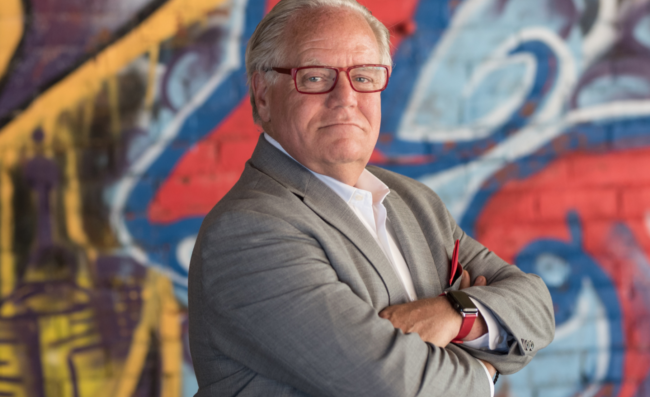
Jim Marous (00:10):
So, Jim Marous shared the Flsionaries Podcast booth at Co:Lab 2025 sponsored by Alkami.
Jim Marous (00:18):
Digital transformation can start at any point. You can start from a standstill to a fast process, or you can be in the middle of the process. But one thing we have to remember is change is not going to stop. It's not going to go slower, and you have to continually evolve.
Jim Marous (00:34):
Today's guest from NASA Federal Credit Union will share a story about how they went from a legacy core to a digital-ready platform in less than a year. From analysis through to implementation. It's an amazing journey, but one that everybody should take note of as you're making excuses for why you're not moving forward.
Jim Marous (00:58):
I am so fortunate today to have Liam Petraska-
Liam Petraska (01:02):
Thank you, Jim.
Jim Marous (01:02):
From NASA Federal Credit Union here with us. And it's interesting, Liam, we always like to start with what's your background? How did you get where you are today? Just share that with me for a little bit.
Liam Petraska (01:13):
Yeah, absolutely. So, thanks for having me, first of all, Jim.
Jim Marous: (01:15):
Thank you.
Liam Petraska (01:16):
So, yeah, been with NASA Federal Credit Union for about three years. I'm the digital banking manager there. So, I serve as pretty much the primary stakeholder for digital banking. Although most of my job is kind of getting cross-functional folks together, stakeholder groups, kind of formulated the steering committee group and then we all make decisions for digital banking.
Liam Petraska (01:35):
Previous to that, I was in another credit union, Mission State University Federal Credit Union for about six years as well. So, I've been in credit union space for about 10 total.
Jim Marous (01:44):
And before that?
Liam Petraska (01:45):
In the music business. Yeah, we just had this conversation. So, I was a DJ for quite a while in my 20s.
Jim Marous (01:51):
Technology.
Liam Petraska (01:52):
Yeah, exactly, it’s tech for sure. And then worked in the music business for a long, long time before moving into the banking space.
Jim Marous (01:59)
So, Liam, a lot of times we have a guest on, they've been going through the transformation process for a long time. In fact, I think the last few interviews we've done, the person has been in banking at their organization for 10, 15, 20 years. Reality is you have a fairly new foothold at NASA Federal, but it's not a slow-moving credit union.
Liam Petraska (02:21):
No.
Jim Marous (02:21):
They have a technology and an innovation core, but it's my understanding that as far your digital banking platform transformation it's been rather recent, and it's been very fast. Can you explain a little bit about that?
Liam Petraska (02:37):
Yeah, absolutely. I joined NASA about three years ago. And I really joined to help solve digital banking. They were on an older platform, West Comms symmetry platform which many people know for a good amount of reasons. But when I joined, NASA was actually fairly far along in terms of digital efficiencies. Especially, in back office, things like that.
Liam Petraska (03:02):
We're a $5.5 billion credit union but very lean in terms of employees because you don't need that workforce to support it through RPA and things like that. And so, I came with a very specific purpose, which was how do we do digital banking in NASA?
Liam Petraska (03:16):
And so, very quickly, I think were there for about three months before we finally decided, hey we're going to find a new platform, we're not going to attempt to keep this one alive internally. Did our own RFP process.
Liam Petraska (03:29)
Nine months later, we picked Alkami as the platform. 9, 10 months after that, we're going live on Alkami in November 2023. We saw huge changes that we'll talk about from the membership experience. And now, we've been live for about a year and a half. We're outside of the post-launch wake that was left behind when you try and button up support and fix bugs. Now, we're just rolling.
Jim Marous (03:53):
And how much is your asset size again?
Liam Petraska (03:54):
$5.5 billion.
Jim Marous (03:55):
And how many branches?
Liam Petraska (03:56):
13.
Jim Marous (03:57):
So, rather lean from a branch standpoint for the amount of assets you have.
Liam Petraska (04:01):
Correct, yeah. We're very national-focused. We're very brand-focused. We still have the local footprint in the Maryland D.C. area because of the government connection. With segs like NASA and SpaceX, it's much more of a national footprint.
Liam Petraska (04:13):
And so, that was one of the really big focuses for digital banking, is how do we go to a platform that's going to let us scale beyond just our local environment? And be a digital experience that people expect from a brand like NASA.
Jim Marous (04:27):
So, you were brought in to actually make digital banking happen?
Liam Petraska (04:30):
Yeah, do the thing.
Jim Marous (04:31):
So, obviously, when it took what you said three months to decide that you're going to develop a new platform.
Liam Petraska (04:38):
Correct.
Jim Marous (04:39):
And then nine months to implement it.
Liam Petraska (04:41):
Yeah, it's go time.
Jim Marous (04:43):
That is speed beyond comparison. I've been banking for close to 50 years now. And it is amazing what's possible today from a small base of assets to be able to build partnerships, and then make something live quicker than we could make a decision about an onboarding program in the past.
Liam Petraska (05:03):
Yeah.
Jim Marous (05:03):
But to do that it's not just the technology. I've referenced it in the Flsionaries Award ceremony we just had, is that you need leadership that buys into innovation, doing something quick, being able to do big and scalability at the same time.
Jim Marous (05:22):
How important was that because you came from Michigan State University Credit Union, which has a great leadership core from a standpoint of partnering, building and innovation, doing things that no one has done before between the CUSO and the credit union. How did that impact your movement forward as far as speed expectations, not just from your management but from you as well?
Liam Petraska (05:44):
Yeah, that's a really good question, and there's a couple of things there for sure. I was immediately blown away by the amount of trust put in me being new to the credit union to say, "Hey, you have a ton of experience in the digital banking space from working at MSU," where we'd built our own digital banking platform.
Liam Petraska (06:03):
And, so the board, our executive level, all the way down to middle management, just the amount of trust in the process was immense to me. I still have a massive amount of respect for that. And then I think really when we got the band together at NASA, we had a really good cross-functional group from operational sectors, marketing, retail services and such.
Liam Petraska (06:30):
And we as a group went along through this vendor search process. I love the digital banking space, I'd known Alkami and folks at Alkami for a long time, but we looked at close to 12, 15 different platforms. And I think you have to because it's awesome. There's so much cool stuff out there.
Jim Marous (06:47):
Well, they keep leap frogging too.
Liam Petraska (06:47):
Yeah. There's new players, old players, established ones, ones that are on the rise, ones that are on the fall. You have to look at all of them. And so, being able to do that as a group and bring everyone along with you so they feel invested in the decision, I think is huge. I think one of the best things that has worked well at NASA is having a specific role to help move the needle.
Liam Petraska (07:13):
And that's like what I've … even post-launch, kind of I view my role to be is help move things forward, and continue to work with everyone at the credit union, get the buy-in and things like that. But progress has to keep happening regardless.
Jim Marous (07:27):
You can't stop.
Liam Petraska (07:27):
No, you can't.
Jim Marous (07:28):
Because I reference the fact that the train is moving, it's running faster than ever before.
Liam Petraska (07:32):
100%.
Jim Marous (07:33):
And it will not slow down again. So, you can't no longer assume that you can be a fast follower and ever catch up.
Liam Petraska (07:38):
Exactly.
Jim Marous (07:39):
Because the consumer is pushing that needle too. You're finding the consumer and your team is following you.
Liam Petraska (07:43):
Well, at Alkami, they say the North Star is the customer. For a financial institution let's remember, and it's meeting their expectations and that's where you have to start as the source of truth and then work backwards from my perspective.
Liam Petraska (07:57):
I think the other thing that's really helped, you mentioned MSU and that experience, having been involved in that process to build a digital banking platform gives you a ton of perspective of the time and effort it takes to support that.
Liam Petraska (08:10):
And I think that's a good cross-section where you're at a unique spot where you can talk both languages. You can talk about expectations within the FI and challenges with any platform that can happen. But then you also empathize and understand from the vendor perspective what it's like for a platform like Alkami to support, let's just say, 20 million users at once.
Liam Petraska (08:22):
It's a really good cross-section to make sure to continue to foster that relationship, because ultimately, the vendor you chose, that's your team. That is who's there for you. And so, keeping that positive relationship with the Alkami team has been amazing too.
Jim Marous (08:47):
So, I know you go through a long litany of qualifications to make the decision you made. If you were to say the top three that were so important for you, because the reality is every institution that we talk to has a different set of criteria that were the most important. Some of it is because of what legacy is in place, some of it is about their North Star where they want to go.
Jim Marous (09:07):
We've learned more and more about the fact that organizations have to also say when they invested in a new platform, they had to say as far as where that money goes, how does that correlate with where they're going in other areas because you can't unwind some of those things.
Liam Petraska (09:22):
Correct.
Jim Marous (09:23):
If you were to say what the top three criteria were, what are you really looking for when you found a partner?
Liam Petraska (09:28):
I would say number one with Alkami was 100% just the maturity, and not from an old guard standpoint. I had a lot of respect for Alkami when I was at MSU. I had made connections there prior, and they are one of the few platforms to me that have been able to say modern while refactoring themselves multiple times.
Liam Petraska (09:50):
So, one of the lessons learned from building a digital learning platform is that it's the support that's hard. It's really easy, frankly to build a brand new digital banking platform in a vacuum and start selling it. You can do that. 5, 10 years down the road when you've got hundreds of clients, and it's not new anymore, and it's not fast anymore, that's really when the challenges start to hit.
Liam Petraska (10:10):
And so, Alkami as an organization and as a platform had done that several times, and come out stronger at the other side. And so, that to me, was one of the main things that we looked at was that. The second …
Jim Marous (10:23):
So, basically, to make sure that the organization not only has a legacy that's strong, but has resilience that can move forward, and you get the feeling they're not resting on their laurels. They're continually evolving as an organization.
Liam Petraska (10:38):
Yeah, you definitely get the best of both worlds. It's not a new fly-by-night player or anything like that. It's established. It can prove itself but it's not stuck in time, and those players exist too. The second thing I'm going to say is, what can it enable? So, our perspective at digital banking and I think probably, the best view is that it facilitates other things. It is what gets you to the next thing. It's not the destination.
Liam Petraska (11:06):
So, we knew right away that we wanted to consider newer things like P2P and crypto down the road of real-time payments. And so, you needed to find a platform that would give you that in the future. It didn't have to get it for you at go live, but just knew it had those vendor partnerships, those relationships.
Jim Marous (11:24):
It's nice because they're evaluating their partners on your behalf. And that way, if you find one that's within their core, it certainly makes it easier. But also, from a resilience standpoint, finding that they're continually looking for new partners with their client such as Mantle, in this case.
Liam Petraska (11:43):
100%, yeah. And I think that they do an outstanding job of vetting their vendor partners too, because it's not all just checking boxes, and every fintech that comes through the door doing integrations and stuff. They do an outstanding job of making sure that integrations continue to happen in a way that doesn't negatively impact the UI/UX. It's direct integrations, it looks native, it feels new. It's not i-frames and SSOs, new tabs all over the place.
Liam Petraska (12:05):
I think that would be the second thing. And the third thing to your point is the people. I love the Co:Lab conference because I'm so close with so many people at Alkami. And that's again because that's our team. Like there might as well just be a department of NASA Federal Credit Union at that point.
Liam Petraska (12:22):
And we had heard feedback all along the way from other FIs that had gone to Alkami. They seek to understand at a deeper level what is ReFI trying to do. And you hear that again and again. You hear that in the credit union space and you're like okay.
Jim Marous (12:37):
You got to feel it.
Liam Petraska (12:39):
Yeah, and you do 100%. We had two salespeople on our implementation or our actual vendor search project, Chass and Mark. I still text both of them. And then that went so well that we waited for the shoe to drop when we went into implementation. We're just like, "Oh, okay the sales guys are done, you sign the paper."
Liam Petraska (12:59):
And our implementation team was amazing. And so, you're like, "Okay, this is great. The go lives is going to go." And then we're going to … I assume we're going to go the sales manager and the manager, "I don't care, boss." It just never happened that way, and everyone on the leadership team was outstanding. And so, it's just been a good relationship from start to now. The people on the Alkami team were just outstanding.
Jim Marous (13:24):
What's interesting, not one of your top three, but I know it's the number the one item for many people in the organization, is security and risk. And the reality is it's like saying, "I'm going to the restaurant, I know I'm not going to see rats in the front. If I do, the game is over with immediate …" I think that doesn't say it has a lower priority, it's the one that can kick them out of the room immediately-
Liam Petraska (13:47):
Without a doubt.
Jim Marous (13:47):
With other on the team. You need to make sure that you have somebody that's going to pass those tests, but it doesn't matter how good they are in one, two and three, if they don't pass the security thing, it's not going to get there.
Jim Marous (14:01):
So, you ran very fast, you had a mission. You were obviously passionate about that as your team was, as your management was, probably at some times, doubting whether or not you're going to actually hit the finish line in the time you're going to. What was one of the challenges or negative surprises you had in the process, you go, "Geez, I didn't see that coming. I missed it when I wasn't in the same role where I was before?"
Liam Petraska (14:26):
Yeah, it's a fair question. When I think about probably goshes or things like that, again, we had a very clear view of what we wanted to do. Digital banking at NASA had been there for so long that so many business processes have kind of just been assumed at that point. And so, when you start to unravel all of that, or you start to go through and say, okay, you have to explain now to a new vendor how does ACH work? What are the expectations of ACH?
Liam Petraska (14:56):
What it really uncovers is everyone knows how it works from muscle memory. To explain it is totally different. And so, I think with any sort of digital banking conversions, especially if you haven't done one recently, one of the gotchas can be that the lack of documentation or the lack of, “I know how my current system works, I don't know what I actually want or need out of a new one” because we're using the old one as the metric. Even if the old one's terrible.
Jim Marous (15:24):
Well, it's like legacy core. We get stuck with one foot in the past and maybe a toe or a little bit more in the future. I use [inaudible 00:15:33] analogy that if you don't go there first road to go to grab a second one, you're further away the next time. Especially, doing it at the speed that you did it and the scale that you did it, you can't afford to not let go of that rope.
Liam Petraska (15:46):
Yes, and you have to. And in certain situations, you have to let go and what happens, happens. And that's why I think when you do have a goal, you have to focus on … as with digital banking to me, you don't have to boil the ocean, you don't have to do everything. You don't have to do every check box.
Liam Petraska (16:04):
I always use the analogy that a lot of times, you're replacing the platform and that is the change. You don't have to bring extra changes with it, and it's really common that is the speeding train that's hit all the green lights in project land, and then people start throwing stuff at it because that's been blessed. So, you can just go.
Liam Petraska (16:24):
And so, it is really important to be able to keep a focus on what are trying to do, what can we save for day one, day two, day three. And, yes, if you miss something along the way especially in the speed at which we did it, you adjust. You stay flexible, agile as they say.
Jim Marous (16:40):
So, you need to also internally have everybody on the same page from the very beginning. You have to bring the right players in to implement at the speed you're doing, and have them all feel engaged and part of that. How do you do that at NASA?
Liam Petraska (16:56):
Yeah, we had a couple of different groups that came in different phases. And so, again during the vendor search process what we had is our stakeholder group, and pretty much every department of the credit union was represented there by some sort of leader.
Jim Marous (17:09):
Every area?
Liam Petraska (17:10):
Yeah. Correct.
Jim Marous (17:11):
Including legal and compliance?
Liam Petraska (17:12):
Yeah, they were there. And so, we were able to go through that vendor search and get everyone's feedback. At the time we did basically a little SWOT analysis for each team. Again, we did 15 demos between both myself and David, our CIO, and then the other ones we knew would be potential good fits, we'd bubble up to that group.
Liam Petraska (17:34):
And so, by the time we got to the point where we were able to decide from Alkami, everyone knew why. There were no surprises or anything like that. I definitely think you can't leave it up to committee by any means. There were no votes.
Liam Petraska (17:48):
And so, we had a secondary group that was a steering committee which was a select amount of the C-level group and myself that really were the ones to distill the feedback and ultimately, make the decision, but it was made in line with the feedback we got.
Liam Petraska (18:01):
So, there was no need for some sort of override decision or anything like that. And then once we went live we basically kept those two groups intact. The stakeholder group shrunk slightly just from an operational standpoint, so you still have marketing and payments and call center, and compliance is in there, too, and IT and tech and myself.
Liam Petraska (18:23):
And so, that's the group that meets on a weekly basis. They know everything that's going on with Alkami. Changes that we're making, changes that Alkami is making.
Jim Marous (18:30):
Because you said, it's an evolutionary.
Liam Petraska (18:32):
It is, yeah.
Jim Marous (18:18):
It went from revolutionary to evolutionary really quickly.
Liam Petraska (18:34):
Exactly.
Jim Marous (18:36):
And you can't stop that because, as you said, you didn't check all the boxes right out the gate. You made sure that the platform was there, and then that evolution takes place.
Liam Petraska (18:44):
Yep, and again you continue to get the buy-in, you're able to get that cross-functional list, what does everyone want? And so, we do that on a weekly basis, and then we also keep that steering committee in place, too, for larger strategy like decisions of, "Okay, what are we going to do next year? What's the long-term stuff that we want to chase?"
Jim Marous (19:04):
How do you make the awareness across the organization be on the leaders? In other words, the teller in branch three, or the manager in branch seven? Or the person who's in charge of credit adjudication on consumer loans?
Liam Petraska (19:19):
It's always specific, Jim.
Jim Marous (19:21):
Well, only because every one of these people feel somewhere in them that they're at risk with digital banking.
Liam Petraska (19:27):
100%.
Jim Marous (19:28):
And by the way, you're not doing rebranding, you're doing a reconstruction of everything they're used to dealing with. How do you keep that communication wide? And how did you do that within NASA?
Liam Petraska (19:40):
Yeah, honestly, that's always going to be a challenge without a doubt. When you've got digital banking at the core of what you are doing, and it's no more less important than anyone else's role, but everyone else is doing their job day in and day out.
Jim Marous (19:56):
Right. Not like you have extra time on that.
Liam Petraska (19:58):
Right, exactly. And so your point, digital banking is always changing, always evolving. Every week we have changes that are going live somewhere whether it’s setting changes Alkami updates, things like that. So, we have a few levels of communication that we put in place. So, right after go live, we've got an internal Office 365 environment. So, I have a little share point block that I ran.
Liam Petraska (20:19):
And so, probably, I'm going to say about twice a week, I post updates on what's coming. And that could be on our platform really, some mobile release screen shots, push provisioning going live, and things like that. And I use that as the cliff notes for an employee. That's like saying, what's going on with digital banking this week, and we do that.
Liam Petraska (20:40):
I take the release notes from Alkami that Alkami publishes and put that, literally copy and paste that for everyone to see if they want to take a look at it. And then we utilize teams and so we're able to have channels where people on our payments teams, call center, retail service can report issues. And so, that's a way not only to open a ticket but escalate and ask questions frankly.
Liam Petraska (21:01):
And it's not just myself that's in there, it's that same stakeholder group, plus more. So, what you actually see is a nice collaborative approach to support where it's not essentially just me opening tickets with Alkami or have an answer for everything, someone else in call center can be like, "Hey, I saw that and I fixed it this way."
Liam Petraska (21:17):
And so, communication is always going to be a challenge for sure. You're going to have people that they didn't read the board, and I don't blame them. They got other things to do.
Jim Marous (21:25):
Yeah, they got all kinds of things going on.
Liam Petraska (21:25):
And so, honestly, I'm going to say the final thing is always having an open door policy. I try and make a point to always say that anyone at any point in the credit union, if you've got a question as a member using the platform, or if you have a point reach out to me directly. We can hop on a quick call, we can do a screen share. I can open a ticket, I can escalate with Alkami, like anything.
Liam Petraska (21:46):
It's getting past a little bit that concept of everyone's busy so they're scared to talk to you. It's hard when people say, "Oh, yeah, I know you're really busy but …" and it's like, "No, it's my job." I'm here for this level of support. And so, all of that blends together into this kind of continuous communication that occurs whether that's on a schedule basis or one-off.
Jim Marous (22:16):
So, we'll take a short break here and recognize the sponsors of this podcast, Alkami Technologies.
[Music Playing]
Jim Marous (22:25):
Welcome back to the Flsionaries Podcast, sponsored by Alkami Technologies. So, I get the feeling that change mentality continuously evolving, was already in place before you got there.
Liam Petraska (22:36):
Yeah.
Jim Marous (22:37):
You sound like you had to also take somethings at a standstill.
Liam Petraska (22:41):
Yeah.
Jim Marous (22:42):
Maybe the digital banking platform was, but there were other things going on in this organization the whole time. And so, when somebody comes in, change is part of the mentality that took place there, it wasn't like, "Oh, by the way, we have something coming down the tracks, and it’s going be a complete different day." They've been hearing that from different areas of financial institutions for quite some time.
Jim Marous (23:02):
So, what is the biggest thing besides getting the platform up, what's the biggest innovation you've introduced since that platform came up? It may not be innovation, what's the biggest improvement?
Liam Petraska (23:17):
Yeah, that's a better one. The reason I say it's hard is because it's night and day. The platform that we were on before was a legacy platform. It looked and felt like it was in 2003. And so, one of the very first things though that we looked at and I looked at when I joined NASA Credit Union are customer reviews.
Liam Petraska (23:40):
I remember looking at the app store and mobile on iOS and android, I'm not kidding, were 1.3 and 1.4 stars. There's an Alkami video where I call it a horror show, and it was. It honestly was. I remember they were telling us, "This is not good enough." And so, that was a huge part of the Alkami consideration was that MX, that getting that UI/UX experience in something that was cross-platform and felt feature parody across both mobile and desktop.
Liam Petraska (24:07):
Both of those platforms now are 4.8 and 4.9 stars, to the point where we had our marketing team respond to negative reviews and say … we had reviews that were like, “Junk it and start over.” And our marketing team is in there like, "Guess what, we did?" And they had members going back and changing the review to a 5-star review. That to me, was the ultimate-
Jim Marous (24:30):
That's a big pat on the back.
Liam Petraska (24:32):
Oh, yeah. It was an immediate just jolt, I think to both the credit union and to membership. We've had people and members that were like, "We finally see that you were paying attention. We see that you're making an investment, we can't wait."
Liam Petraska (24:47):
And so, that was step one. And one of the other things that I loved is that we had members in our review saying, "Oh, I want Zelle." And now, thanks because we have Alkami, we can have Zelle, and we're going to have Zelle this year.
Liam Petraska (24:59):
And that's just another round of that of like, "Hey, we've been listening and now, I can respond to you and say, thanks to the platform, we're innovating," and we're catching up and we're doing things, and we're both bringing us into what our members expect. And honestly, going further at this point, and to doing features that I don't think would have been possible without Alkami's help.
Jim Marous (25:20):
With that in mind, looking forward. I'm not going to go very far because you got all kinds of … in then next year, what is on your to-do-list that you're seeing? It's funny because you have such a tight timeframe with when you're going to be doing these based on what you already did in such a short timeframe. Kind of puts you under a little bit of pressure. But what will you be doing in the next six months, one year, whatever else right now?
Liam Petraska (25:44):
Yeah, I would say one of our biggest focuses is always on the card experience. And so, when we went live with Alkami, not only did we bring in hard lock and travel notices and all the kind of what are table stakes now. One of the items that we actually helped Alkami with building was the merchant transaction level block.
Liam Petraska (26:02):
So, you could say I want to allow in-store but not online. I want to allow ATMs but not adult purchases and stuff. And so, we had that. We launched push provisioning with Alkami in January. So, now, we've got the direct wallet integration there with Apple Pay and Google Pay which is great.
Liam Petraska (26:19):
And then really, what we're pushing for this year is actually buttoning up the true digital issue, and it's like real-time activation flow where now, members will be able to activate the card digitally by itself and say, "I don't have the physical card here but I want to use it with my wallet" and then not activate that physical card, it comes in the mail, and now, you're fully activated.
Liam Petraska (26:39):
So, really buttoning up that whole flow because we put a lot of time and effort into that card management process. Zelle has a big thing. Zelle is something that I think members have been asking for, for quite a while. Obviously, Zelle made changes to their retail app, so we were able to work with Alkami to prioritize the project and that should be live by summer, which is huge based on what I'm hearing.
Jim Marous (27:00):
I think it's important for people who may be listening that may have had all these things in place already to understand the process you have here, because you were in literally the dark ages and didn't have a lot of things that all your competitors, most of your competitors had. You're coming out of the dark ages to the light years now.
Jim Marous (27:21):
And I think it's because your process is all structured in such a way that change is actually good, and it's expected, and you're continually evolving. It's kind of fun because you came from an organization that was very mature from the standpoint of building partnerships, doing innovation. You now are saying, "I got to get the basics right, and then I can do these others things that are so important in the areas that are moving the fastest such as payments." Which is going at lightning speed every day and you never know when you open the paper what's going to come up next.
Liam Petraska (27:52):
It's true.
Jim Marous (27:53):
As you mentioned in pre-discussions around crypto and things like this. And then you have to prioritize it based on what your members want, because at the end of the day, you could do something you have a passion for but you may be the only one and maybe five other people that want that. You got to go, "I'm not so sure if that's what I want to invest in right now."
Jim Marous (28:11):
How do you get the commitment for the next step that you do, every next step? Do you go to the management team? Is it the same core that was in the process to begin with?
Liam Petraska (28:20):
Yeah, it comes actually through a few different flows. It's interesting because you always have some level of what's our plan in the next 12 months, 24 months, what have you. We make a point not to project too far out because we can’t. There's just too much going on. And so, we really focus on what we want to do probably over the next four quarters.
Liam Petraska (28:39):
And so, that keeps it nice and tight, that keeps it close, that keeps it real. And so, you can say things like, "Yeah, we want a P2P solution. Yeah, we want to improve cards. Maybe we want to do things like youth banking and things like that." And those tangible partners exist in the market space today.
Liam Petraska (28:54):
The other level of things that's been nice too, Alkami has continued to put effort in the SDK and EPI side of things. And so, we do have an internal development team that we used to be responsible for keeping features live on our old platform. And so, it was actually nice to move to a platform that had our other box so that we could actually focus on building things we wanted to build, not keeping something alive.
Liam Petraska (29:17):
And so, we actually have a lot of projects we want to custom development this year. We're very collaborative in the Alkami space. We help run multiple other user groups, and so what I'm trying to actually-
Jim Marous (29:28):
This is kind of crazy. I'm trying to put this in context that you're a relatively new partner but one that has known what's available in the past. You're pushing your providers on things that they may not be ready to be pushed on. It's not because you want to let things go, but you're going, "You know what, I'm here now. I'm able to entertain these elements."
Jim Marous (29:52):
We're seeing this more and more that it used to be that the providers would basically be the ones saying, "Hey, you got to do this, you got to do this, you got to do this." And now, a lot of financial institutions are pushing providers to move that thing forward.
Jim Marous (30:05):
You saw the product people on scene today and what they're doing, and they're changing your mind that I'm sure you're going, "I got to find a way to do this maybe even beyond what they're thinking." Finding the right provider that has an open mind to say, "We'd like to work with you on that" is a big deal.
Liam Petraska (30:23):
Well, I have the opinion that the credit union space is very fintech obsessed and there's a lot of good providers out there, for sure without a doubt. But you can get stuck window shopping for a long time. And so, the other thing that we actually leave open is what organically happens? What random fintech do you meet at a conference that someone goes, "Yeah, that's actually a good thing,” and we weren't looking for you.
Liam Petraska (30:48):
And we've had that this year. We've had situations where we had introductions with fintechs that were in our long-term three to five-year map that were like, "No, now, is the right time."
Jim Marous (30:57):
Because it enables other things.
Liam Petraska (30:58):
It does. It enables other things or it's the perfect time at the right place, and all of that makes sense. The other thing that I think is really good, especially with larger platforms like Alkami or Q2, things like that, they have a very robust client base. And so, I think financial institutions, that our clients also need to be proactive when they hit a wall somewhere, because you're going to hit a wall somewhere like if the roadmap’s full or we can't do that right now.
Liam Petraska (31:25):
You have a network that you can actually, you'll ask quite a bit to get what you need to do. If you say something like … I'll just use an example. If I say I want beneficiaries in digital banking, and maybe Alkami doesn't have it. I can guarantee there's probably five, six, seven other credit unions that want beneficiaries that will have the STK and DEBs that will happily build that together.
Liam Petraska (31:45):
And so, you have to take a very collaborative approach, work with your vendors, work with the features and integrations that they have, but that whole other network of other credit unions that are also trying to solve the same thing, like there's a really good open source movement there that I think honestly, could be taken advantage of even more to solve our problems.
Jim Marous (32:05):
And to build that kind of … you can do it in an event like this, but to be able to build it in such a way you find a neighborhood that says, "We’re all in the same space in what we want to do next. Plus, let's figure out a way around this."
Liam Petraska (32:17):
Yeah, exactly.
Jim Marous (32:18):
So, the banking space is changing every day. You're doing a lot at NASA. What excites you about the future of banking right now?
Liam Petraska (32:29):
I think what excites me the most especially about digital banking is that kind of same move the needle process that we have an attitude at NASA in terms of always pushing forward. That whole market is being pushed forward. Every digital banking provider is having to move or change.
Liam Petraska (32:49):
You see platforms like Alkami, Q2, Lumen, market leaders growing and having to evolve, but there are so many other new platforms too, that I think are a really good open up and comers to watch. And you have this whole other-
Jim Marous (33:06):
Even if they're specialists.
Liam Petraska (33:07):
Oh, for sure. And you made a really good point earlier that it isn't always the market leaders that's the best bet. There's a lot of benefit to being smaller, and you probably have more choice at that point. And so, I think-
Jim Marous (33:23):
And less layers when you're trying to implement something.
Liam Petraska (33:25):
Exactly.
Jim Marous (33:26):
You cannot get their speed at any organization that's between number 100 and 1,000 as far as size. You just can't.
Liam Petraska (33:33):
No, and I think the entire digital banking market has gotten so competitive now that it's pushing everyone forward. And so, you've got this established players, you've got the no code players. You've got some folks that are still doing it in-house. You've got Backbases of the world that are our platform playing things like that.
Liam Petraska (33:51):
And it's just exciting to see what people are doing and letting some of the techy stuff left to fintechs, and then you end up in situations where digital banking is an enablement layer. It's transfers of transfers, balances of balances. They're going to look different, but they're probably going to start looking the same. And so, it's how do you differentiate.
Jim Marous (34:11):
That's going to be key, isn't it?
Liam Petraska (34:12):
And it's how do you deliver quickly.
Jim Marous (34:14):
I mentioned in a couple of the other podcasts that we've done here is that, Accenture came out with something that said your mobile banking app gets high grades across border 99% of the organizations. How do you make them look different? How do you make the functionality look different?
Jim Marous (34:29):
I looked at Chime, I guess it was last week now, they'd introduced a $500 line of credit and put it on the app. They're not even going to use credit braille safe. They built enough logic to say, "Here's what's …" that's the future.
Liam Petraska (34:42):
Yeah, like little micro loans.
Jim Marous (34:43):
To break out risk and make it so you don't get hog-tied by, "Oh, our risk profile has to be this, this, this." Or maybe we can go lower than $1,000 line of credit in a banking world, which that's like, "Oh, my gosh, what are you going to do with that?" You go down to $100 and make it so everybody has that stop gap and insurance policy that says if something goes wrong, I can cover it. That's a big deal.
Liam Petraska (35:07):
Yeah, and honestly, another good point. So, you mentioned security earlier. Honestly, I think from my perspective, the reason that it wasn't one of the top three is because that's an expectation. If you have to say security is a priority and call that out, that would scare me.
Jim Marous (35:23):
Yeah, and the reality is you have other people in the organization that is their every day, every second-
Liam Petraska (35:29):
Oh, without a doubt.
Jim Marous (35:30):
Mission. And if they're doing their job correctly and have the right partners and the right evaluation of what's going on, they're going to save you.
Liam Petraska (35:36):
Yeah, and honestly, again to callout, Alkami specifically, I know there's other players in this space too. Making it go beyond just MFA or IP monitoring and things like that, and actually being able to make real-time decisions where it's not reactive anymore, it's not a batch where you're trying to be like, "Oh, a wire went out yesterday."
Jim Marous (35:55):
You did it digitally.
Liam Petraska (35:57):
Yeah, like being able to stop in the moment without impacting the member experience. That is chef’s kiss if you can get there.
Jim Marous (36:05):
Yeah. Liam, wow, time goes fast when you're talking. You have an excited attitude.
Liam Petraska (36:11):
Thank you.
Jim Marous (36:11):
But I think it's because you see what's possible, you've brought a big team along with you. You have a big foundation that you said, "I know what can happen." And when you got that opportunity to try something in other organizations, kind of like the play thing. It was like-
Liam Petraska (36:28):
Oh, it's fun, yeah. It is.
Jim Marous (36:29):
It's a big old sandbox, you're going, "I can be a big fish in a nice sized pond and do a lot immediately." And it's not just you, it takes all the team. It takes all the communication process. But I think what's important here is that no matter where you are in the digital transformation process, stop making excuses about how long it's going take.
Liam Petraska (36:50):
Yeah, 100%.
Jim Marous (36:51):
Stop making excuses about compliance, regulation. We can't do this right now for this, that. The reality is, you can. You just have to have that attitude, and have an organization around you that really supports that level of transformation.
Liam Petraska (37:07):
Yeah, you 100% said it perfectly without a doubt. I agree 100%, the change can happen. The organization just needs to believe in it, which mine did and it had a ton of trust in me and still does. And you see the impact of it. You see how well it can go when everyone is on the same page working towards the same goals. And that, again, the go live isn't the finish line. If anything, that's when the excitement begins because you-
Jim Marous (37:32):
Opportunity is wide open.
Liam Petraska (37:33):
Yeah, expectations are now met. We're where we need to be, now we've level set, now where do we go? And that's the fun stuff.
Jim Marous (37:40):
Great having you on the show.
Liam Petraska (37:41):
Yeah, thank you, Jim.
Jim Marous (37:41):
It's a blast. Thank you very much.
Liam Petraska (37:42):
I appreciate it.
Jim Marous (37:43):
Appreciate it.
Liam Petraska (37:43):
Thank you.
Jim Marous (37:44):
Thanks. A special thank you to my team from Evergreen who's here making this live event happen. A special thank you to Leah Haslage, my senior producer, and my audio engineer and video producer, Chris Fafalios and Will Pritts. Again, thank you so much for listening to Flsionaries Podcast. Hope you can join us again.
[Music Playing]
Recent Episodes
View AllState Bank of Texas Pursuit of Frictionless Banking
FisionariesHow an Unconventional CEO Is Rebuilding Red Rocks Credit Union
FisionariesColony Bank’s Digital Communications Playbook
FisionariesHow First US Community Credit Union Is Driving Digital Growth
Fisionaries
Hear More From Us!
Subscribe Today and get the newest Evergreen content delivered straight to your inbox!
Advertising & Sponsorship
Interested in sponsoring or running an ad for your business on an Evergreen Podcast? Contact us to get pricing and availability.