
Living for We, Season 2: Keep Ya Head Up
Every bullet fired creates two victims: the person who is shot and the one pulling the trigger. It’s a traumatic experience for both; the victim may lose their life, and the perpetrator may lose their freedom. This season, we're asking what can be done to end cycles of violence in cities like Cleveland, Ohio when the shooters value their reputation over their own lives and see innocent bystanders as collateral damage.



S2E2: No Safe Space
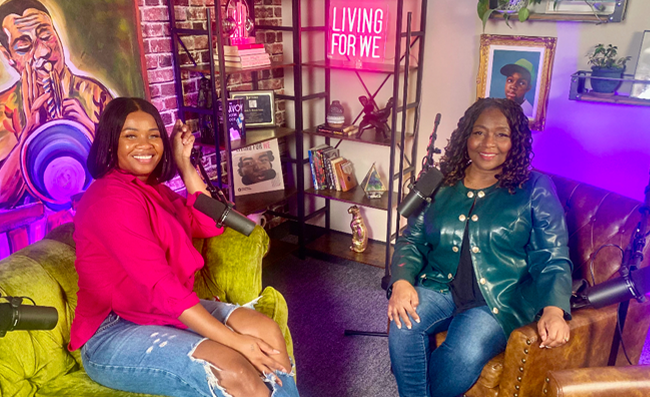
| S:2 E:2What happens when a regular day at school turns into the worst day of your life? Teens in Northeast Ohio are facing gun violence or the threat of gun violence in what should be a safe space. Living For We hosts Marlene Harris-Taylor and Myesha Watkins speak with Garfield Heights High School student Travis Page who found himself running for his life the first time he attended a football game as a freshman. A shooter interrupted the football game and sent students, parents and players scrambling to escape. We also meet a mom and a daughter, Reina Gomez and Francine Torres, who are still reeling from an incident at a Lorain County High School. Students and teachers were terrified when a student brought a gun into the building and the school went on lockdown – with everyone thinking there was a shooter on the loose. It was bad information, but students were traumatized and desperate to escape. We also talk to Dr. Terrance Menefee, a long-time administrator and principal in the Cleveland Metropolitan School District. He lost 17 students he was mentoring to gun violence in a five-year period. Menefee shares the challenges involved in keeping kids safe when arguments that begin on social media can end in gun violence near school buildings.
Have you or someone you know been impacted by gun violence? Or do you have any thoughts about what was shared in today’s episode? Share your story for a chance to be featured on the show!
-
Below are some organizations and resources mentioned in the episode. Find our full list of resources here.
Moms Demand Action is a grassroots movement of Americans fighting for public safety measures that can protect people from gun violence.
In an average year, 1,602 people die and 3,753 people are wounded by guns in Ohio. Gun violence costs Ohio $22.3 billion each year, of which $493.7 million is paid by taxpayers. Learn more about gun violence in Ohio here.
“We’re young activists committed to ending gun violence in our communities.
We’ve grown up in the midst of America’s gun violence crisis. In fact, we’ve been called the ‘school shooting generation.’ Now we’re rising up and organizing in our high schools, colleges, and communities across the country to demand action to end gun violence.’
Where to Listen
Find us in your favorite podcast app.

Narrator:
Living for We is part of the Connecting the Dots between Race and Health Initiative from Ideastream Public Media, made possible by generous support from the Dr. Donald J. Goodman and Ruth Weber Goodman Philanthropic Fund of the Cleveland Foundation, and made possible in part with support from Enbridge Gas, Ohio.
Myesha Watkins:
Today on Living for We: Keep Ya Head Up.
Raina Gomez:
There was this female staff member, and I'll never forget her face, she just looked at me and she slammed the door. And I was just looking at her and I was crying and I was like, "Please let me in. I don't want to die." And it gets me emotional.
Marlene Harris-Taylor:
It's okay.
Raina Gomez:
And my friend, she ran to me and she tripped and she started crawling to the door and she started banging on the door and she was like, "Please let me in. I don't want to die."
Travis Page:
We saw all the football players from the field start running towards us and we were like, "What's going on?" And then we heard the shots closer, and that's when we ran.
Marlene Harris-Taylor:
Welcome to Living for We. In today's episode, we're talking about how community violence and gun violence sometimes spills into our schools, Myesha.
Myesha Watkins:
Absolutely. And thinking about young people in a space that I do not even understand where a regular day in a classroom can turn into the worst day of your life if an active shooter is in a school building. How does a young person supposed to prepare for something like that?
Marlene Harris-Taylor:
I know. And how do they even process it afterwards and go on with that trauma? So we're talking about that today, and our first guests are from Lorraine. In 2023, there was an incident that happened at the vocational school. It started off with interpersonal conflict in a bathroom, and then somebody pulled out a gun and somebody ran out of the bathroom. And that set off the alarm bells and activated the process that the school is supposed to follow.
Myesha Watkins:
Protocols that make sense or you think make sense on paper, but then in the actuality of the event, nobody knows what to do when it's chaos. So knowing that this will bring out a lot of emotion, I have two school age daughters that I too worry about their safety at school.
Marlene Harris-Taylor:
So Myesha, we're getting ready to talk to a mom and a daughter who were caught up in that situation at that high school, Raina Gomez and Francine Ramos.
Raina Gomez:
It was last year of my freshman year, first year of high school. It was in the middle of my second semester and it was just a normal day. And I was in my second period math. And we sat down, she passed out our testing cards, and as we were signing in, not even two minutes of us being even signed in, just the announcements went off. And someone who worked in the office, they were just screaming and they were like, "This isn't a drill, this is a red lockdown. Run. Just run. Get to a room. Run." And it just went quiet. And the whole side of the wall was just glass. So me and my friend were looking out of the glass wall, and kids and teachers were just running and screaming and people were tripping over each other.
And me and my friend hurried up and got up and everyone else just followed. And once we walked out of the room we were in, people were just running everywhere. And there were teachers and staff just pushing kids out the way and running into rooms and slamming the doors and locking them. So in the moment we were all just freaking out. And I didn't know what to do, so me and my friend Lily, we just split up from the group and we were hurrying up and looking for a room to go in and everyone was just shutting the doors. So we were freaking out at that.
Marlene Harris-Taylor:
It just sounds like chaos.
Raina Gomez:
Yeah, it was crazy.
Marlene Harris-Taylor:
What about that original room that you were in with the instructor taking the test?
Raina Gomez:
The instructor just left. Once she heard run, she just was gone.
Marlene Harris-Taylor:
She ran.
Raina Gomez:
Yeah.
Marlene Harris-Taylor:
So she didn't think to shut the door in that room and keep you guys safe in that room.
Raina Gomez:
I don't think that she thought it was a good idea to keep us in that room, because the whole room was just windows.
Marlene Harris-Taylor:
Ah.
Raina Gomez:
So me and my friend, we ran out and when we ran out, we saw one door and we ran towards it and someone locked the door and shut the curtains and I was knocking on the door, bang-
Marlene Harris-Taylor:
As you were running toward the door.
Raina Gomez:
Yeah. They just shut it.
Marlene Harris-Taylor:
My God.
Raina Gomez:
So then there was another room, and I looked at my friend and I was like, "You go that way. I'm going to come this way. If I find a room, I'll call for you. If you find a room, you call for me." And when I ran to this one room, there was this female staff member, and I'll never forget her face, she just looked at me and she slammed the door. And I was just looking at her and I was crying and I was like, "Please let me in. I don't want to die." And it gets me emotional.
Marlene Harris-Taylor:
It's okay.
Raina Gomez:
And my friend, she ran to me and she tripped, and she started crawling to the door and she started banging on the door and she was like, "Please let me in. I don't want to die." And there was a male teacher behind her and he looked at her and put his hand on her shoulder and he was like, "Let her in. Let her in. Let her in." So once he opened the door, me and my friend ran into the room and they hurried up and started putting chairs in front of the doors, locking the door. And then people were just hiding under the tables and hiding in the side of the walls and stuff. And our teacher, she was like, "Oh my God, we're going to die. We're going to die." And I was just like-
Marlene Harris-Taylor:
The teacher was losing it.
Raina Gomez:
Yeah. And it was three adults and then the rest of us were just kids. So we were all just sitting there and waiting for announcements of what's happening. And we sat down and this one girl, she was sitting beside me and she's just screaming and crying. And then this one boy, he covered her mouth and he was like, "Stop. They're going to find us. You have to be quiet." And everyone's just loud and everyone's trying to tell everyone, "Calm down. Calm down. We're going to get caught."
So I'm sitting down and the first thing that came to my head was, I need to text my family. Because if this was my last time, I'm going to be able to talk to them, I just wanted them to know I love them and everything. So I'm on the phone with my mom and she's like, "All right, just stay calm. It's going to be okay. I promise you you'll be okay. I'm going to try and come get you. I'm going to try and figure out what's happening." I'm like, "No, you can't come up here. They're not letting no one leave." And she's like, "Does the police know?" And I'm like, "Yeah. I think they called." And my peers were calling their parents and their parents were calling the police. And my peers were also calling the police. And she's just talking to me, just trying to calm me down and get my mind off of what's happening. So we're just talking about anything.
Marlene Harris-Taylor:
You weren't concerned about being quiet at that point? Because I know one of the things is you don't want to be discovered by a shooter.
Raina Gomez:
At that point, honestly, no, because everyone was talking. Was it a smart idea? Probably not. But I don't know. At the point I wasn't really thinking. We weren't all screaming loud. We were all at a whisper, but then we all just stopped talking for a minute and me and my mom were just on the phone silent.
Francine Ramos:
You could hear so much chaos in the background through her whisper. I don't know if it was lockers, but I could hear the chaos in the background behind her whispers. So at that moment, I feel it was just active at that specific time. There was really nothing more that they could have done except for waited that out.
Marlene Harris-Taylor:
Right.
Francine Ramos:
Her calling, not being able to see her, hearing the panic in her voice, but yet knowing that she was facing this and trying to keep calm, but also trying to gather the information, what's going on. So of course immediately I'm looking on social media. Thank God we still have a landline. So while I've got her on FaceTime, I'm using the landline to call the sheriff's department to find out what's happening there. So I got in the car and I drove there.
Marlene Harris-Taylor:
How did you find out it was not really a shooter, and how did things end that day?
Raina Gomez:
The staff, they had these mics and they were all talking to each other around the building. And as they were talking, everyone's listening in to what's happening and what they're saying. And after an hour or so, they were like, "Okay, well you could start turning on your lights. Don't leave your rooms. But we think we got it under control." The police came in and they found the person who made the threat in the building.
Marlene Harris-Taylor:
So there was a threat, a real threat.
Raina Gomez:
And-
Marlene Harris-Taylor:
But it just was not really, didn't turn into action. They didn't do anything.
Raina Gomez:
Yeah. But there was a threat. So they got the kid and I think they arrested him and took him out the building, but we all stayed in our rooms and it was just shocking because they just play it off like it didn't happen. Our teacher just connected her phone to a whiteboard and started playing movies.
Marlene Harris-Taylor:
What?
Raina Gomez:
Yeah. And we're-
Marlene Harris-Taylor:
Like it was just a normal day. Carry on.
Raina Gomez:
Yeah, we were watching, I don't even know. It was some type of comedy and we're all just sitting down and everyone's just looking around like, that's it? That was it?
Marlene Harris-Taylor:
And even though it wasn't real, the shooter, there was not a shooter, the trauma that you experienced that day.
Raina Gomez:
It's just the fact of being in that position of thinking, this is the last time I'll ever see my family, or this is my last everything. There will be no tomorrow. I won't see my mom tomorrow. I won't be at school tomorrow. When you're in that moment, it's just like all of these thoughts run through your head of like, this is real. I never thought today would've been-
Marlene Harris-Taylor:
My last day.
Raina Gomez:
Yeah.
Marlene Harris-Taylor:
And no 14 or 15-year-old should have to go through that.
Myesha Watkins:
This topic is so hard. Raina, I remember speaking to you during our Listen and Learn sessions and just the same emotion that you shared that day or that I felt that day in talking to you, I feel it now. Just want to say thank you so much for sharing such a harsh reality for not only you, but so many young people who are going to schools across the country where their parents have this fear of that, if I send my kid to school today, will it be the last day?
Marlene Harris-Taylor:
Well, we should explain, Myesha, that in preparation for this season of the podcast, we spoke to people across Northeast Ohio and we had five Listen and Learn sessions that Myesha led and facilitated for us. And we did one in Lorraine. It became clear through that conversation that this was something that that community needed to talk about. What happened at the school that day.
Myesha Watkins:
Definitely.
Marlene Harris-Taylor:
Because there was so much anger in that room expressed by the parents.
Francine Ramos:
I Had no idea why they were locking my child out of a room. And in that moment, the fury in me to think that somebody would not help my kid or help another child in that situation was so devastating to me, and I didn't understand. And sitting through this forum with you guys, it opened up a whole nother reality of a world to me. Not just what my child went through, but the way that our school systems are set up to just act like it never happened. We're going back to school tomorrow and okay, maybe there's, we'll have counselors on hand. Of course there'll be counselors on hand. Why is if the whole school underwent this trauma-
Marlene Harris-Taylor:
Together.
Francine Ramos:
Yes. And why-
Marlene Harris-Taylor:
You got to acknowledge that together.
Francine Ramos:
Yes. Not only acknowledge it, but some kids just don't know how to ask for help.
Marlene Harris-Taylor:
So there was no plans to have say an assembly the next day and say, we're so sorry this happened yesterday. We know some of you, et cetera, et cetera. Just move on, like it didn't happen.
Francine Ramos:
When I went to the office to go get her, I mean, the whole staff, and granted, I understand they need to be calm, but there was no answer that they gave me to explain the chaos that we just went through. What it taught me was that your kid is on their own. It's not about the conversations that you have in school, it's about the conversations you have at home.
So our conversations went from how are your grades, to, you need to now identify every exit of the building. You need to know exactly where you're going to. You need to try to make sure that there's no shooters on the top of the building to see if you could run properly. Again, the distance between the building and it being in a rural area, it's wide open. So if there was an active shooter on the roof, and I'm instructing my daughter to run, I am now instructing her to be a target.
Marlene Harris-Taylor:
One of the things we heard in that community meeting that we shared in Lorraine, we heard this was the plan, that the school actually followed the plan, which was teachers are told you shut the door. You don't let anybody in. We don't care who it is. We don't care how much they're begging or pleading. One person from the police department used this phrase, "Well, when we came up with the plan, we knew there was going to be," did he say collateral damage, Myesha? What was the phrase he used?
Myesha Watkins:
Or casualty?
Marlene Harris-Taylor:
They acknowledged that even in the best case scenario that there might be some casualties or I can't remember his exact word, but it felt so cold and callous.
Myesha Watkins:
Matter of fact too.
Marlene Harris-Taylor:
Very matter of fact at the time.
Raina Gomez:
It was just so crazy because when I was in the room, people were knocking and banging on the door and I couldn't... They were my friends. I know this person who was knocking and crying on the door. We sit together at lunch, we talk in class, and hearing them cry and beg like how I was and knowing I can't get up and go open the door and let them in, it was just crazy. I couldn't do anything.
Myesha Watkins:
School systems need to understand that it's not just about education in a moment with people. Mental and emotional health is at risk. It's not just the physical safety that people are worried about. How do you want me to focus on my math test when just yesterday there was an active shooting drill and I thought this was what had been my last day in class.
So we don't pause with intentionality to say, let's assess every student to see what their needs are. Let's contact every parent to figure out their comfort in us being able to create a safe place. Let's make sure the communications are taken care of. Then you just leave people to assume and I think that's where systems have to do better.
Marlene Harris-Taylor:
To have to sit there and think, this might be my last day. That's just not something you get over in an hour. So how do you feel like it's still impacting you, Rayna?
Raina Gomez:
Now, when I go to school, I'm more on edge, I guess, because I mean, I don't know, it could happen any moment now. It's still a topic that me and my peers have, and it's like every time we're in class and there's an announcement, everyone just gets quiet and they're like, oh my God, it could happen again. Or oh my gosh, it's probably a red lock down. When I'm in class and random, we'll just get an announcement, everyone just gets up and gets ready.
So it's still a thought in everyone's head that it could happen. In my head now, I'm going to run now. Now that I know, I'm not going to wait in a building now because I know the teachers and the staff aren't there to actually help. They're there to save themselves. So now I know whatever class I'm in, I'm just there and I know what exit to go to now and where to go and how to get out.
Marlene Harris-Taylor:
Wow. They've lost your trust. So as a mom, what can the school do to get your trust back that they're keeping your child safe?
Francine Ramos:
At this point, I feel kind of like she does. There's not much. In the beginning of this school year, we were now faced with the whole no cell phone issue. That is a very big ordeal for me after what we experienced the year before.
Marlene Harris-Taylor:
I should explain that many schools across the country and across Northeast Ohio are thinking about these policies of making kids either turn in their cell phones to the office or something like that because we do know as a fact, the cell phones are disruptive to teens in school.
Myesha has talked about how cell phones often are the way that kids are beefing with each other throughout the day, that may lead to some other kinds of gun violence. So school administrators are grappling with that and trying to figure out, well, what do we do?
Francine Ramos:
Exactly.
Marlene Harris-Taylor:
So one of the solutions that they've come up with is to, well, let's just not have kids have their cell phones in school. You're saying there's a different side to that though.
Francine Ramos:
Well, there is very much of a different side to that. So JVS's protocol was to lock the phones in what? Plastic?
Raina Gomez:
It's a phone box.
Francine Ramos:
Okay. So this was their protocol now, and my concern is well, in a situation again of what we had last year, how does that play out? We go from having a emergency announcement, run. The school wasn't sending out any messages. I never received a message from the school about anything regarding this. This all came from the quote, unquote, kids inducing panic.
In my opinion, before you want me to learn how to send my child to school without a cell phone, I would like for you to teach every other parent out there to teach their children not to take a weapon into school. The cell phone isn't a weapon. I could understand that it can be disruptive, it could be a distraction for a child, but when your child, if that would have been my last conversation with my daughter and you're going to tell me that she can't have a cell phone, I most definitely have raging issues when it comes to that.
Where are the metal detectors? If you're not going to teach us how to handle a live active shooter, start doing regular meetings with the school about something. There has to be something done more than, oh wow, that was yesterday. That was a year ago. Here we are a year later. This has completely changed her life. It's completely changed our life. They always say try to find the good out of the bad. The good out of this is we are so close.
Marlene Harris-Taylor:
That's beautiful.
Francine Ramos:
Yes, that's the most beneficial part of it. I now have separation anxiety. I do not want nobody driving her to school. I don't want nobody picking her up. I would need to do that because I know if I drove her to school, I know she's there. If I pick her up, I know she's there. I'm not waiting on secondhand information.
When I'm at work and the phone rings, if I see her number, my heart drops. Nobody in the world will tell me I can't leave my desk. I can't answer her phone call. I can't leave. I won't ask permission to leave. I don't care whether that's my job. My child comes first. That is my job.
Myesha Watkins:
Listening to this. That's such a privilege too. Imagine in communities where gun violence happen all the time, and you have a single mother who is working at a job and if she leaves, she will not be able to provide for her kid. Where it's just like, do I pick my livelihood or my child who can lose her childhood or his childhood? Too often they don't have the space to even choose.
To your point, it's like that could have been my last phone call with my daughter. So now every call I have to treat it like the last and every moment it's like the last. Already there's so many feels that come with being a parent, but in addition to an experience that has been life-changing for you both.
Francine Ramos:
I'm more calm to let her go out with her friends than I am to send her to school.
Myesha Watkins:
Oh, wow.
Francine Ramos:
I would rather her go hang out at a friend's house, go watch a movie, go run the mall. Even though I know she's still in public and things could happen there. When I send her to school, if my child is in danger, I deserve to know that. I deserve to have a say in that. We should have options. We should have a form where it could be discussed.
Marlene Harris-Taylor:
Thank you for keeping up the fight because we know that there's other parents who likely feel the same way you do, but they just don't feel empowered to speak up.
Myesha Watkins:
The work is starting with you, like a conversation that we all had almost a year ago has put a fire into you. That's how people organize and start. My heart is with you and your community and to the parents and the students who have been impacted by, it doesn't always take a death to be traumatized. This experience with you two have shown us that you can be indirectly impacted by an experience that even you tried to prepare for.
So let's continue to live for we and prioritize our people over guns. You have an amazing voice. You have a great skill. I think that you'll be an amazing organizer and just try to figure out if you can amplify your voice for others who are being impacted by such a traumatic experience like you and your school.
There's national programs too. March for our Lives. Students Demand Actions, Mom Demand Actions, the Brady, which is a national organization. Every town there's a national organization that helps with people who experience active shooter drills or school shooters that can give you resources so you're not starting by yourself.
Francine Ramos:
The gathering that we got to do with you guys prior and even thereafter, they were short-lived, but it was very, very powerful.
Myesha Watkins:
Thank you. Again, your tears that day, your tears today, and all the days that we don't know of. I just want to say thank you so much for being brave enough to share.
Raina Gomez:
Thank you.
Marlene Harris-Taylor:
We reached out to the school district to see if they wanted to be a part of this conversation about the incident, but they declined to come on the podcast. So, Myesha, we just spoke about an incident where there really wasn't a live shooter, but now we're going to talk to a student who was involved in an incident where there really was a shooter.
Myesha Watkins:
Yes. Travis Page, 18-year-old senior at Garfield High School who had a traumatic life-changing situation his freshman year at a football game.
Marlene Harris-Taylor:
At a football game. It was his first time going to an event like that, and it really impacted his high school career.
Myesha Watkins:
Absolutely. He shared a moment where he in fact had to be a hero and he put the safety of someone else before himself. So shout out to Travis.
Travis:
I remember everything so vividly. I called my mom and I was like, there's shooting going on. People were hiding in the woods. People were like, there was an active shooter in the crowds actively shooting. You could hear the gunshots and then the police officers was yelling, looking for the shooter. It was a lot.
Marlene Harris-Taylor:
Do you even know what started off all that?
Travis:
Honestly, no. I was in the bleachers when everything happened. I was in the bleachers. I remember I was talking to my friends. Everything was going perfectly fine. Everybody was talking and then you hear gunshots, and then I didn't hear it right away. They were shooting in different times.
So the first few gunshots that went off, you could hear people screaming, but of course there's going to be screaming because we're at a game. So we didn't really pay attention to it until we saw all the football players from the field start running towards us and we're like, what's going on? Then we heard the shots closer and that's when we ran and we had to run into the woods and hide in the woods.
Then when we heard the shooters closer, that's when everybody started running, trying to get out the gate and stuff. That's when people started getting trampled. The little kids started getting trampled. I tried to help one kid. It was this little girl. I think she was looking for one of her friends or something, but I was able to put her on my back.
The football players, when they got... They started running, they was bumping into everybody. I almost got knocked over. The little girl got knocked over off my back and thank God I was able to help her before she got trampled, because I almost got trampled trying to help her out. I'm a little dude, you know what I'm saying? So them guys were huge.
Marlene Harris-Taylor:
As a person who's experienced this on this level, what are your thoughts about solutions?
Travis:
We have afterschool programs and stuff, but I would say make the programs more engaging with the students. Make them want to come to the program and not just think of it like, "Oh, that's a after-school programs," it's boring and stuff. Because I thought like that of course too before I actually got into the program. And then I got into the program and then years later, no, it's like that was the right choice I made for sure.
Marlene Harris-Taylor:
I love Travis. He's such a good kid. He's doing so well. I think he's going to go far.
Myesha Watkins:
There's a lot of people that I look up to and respect. He might be the youngest one to be able to risk his own safety to save a life. If my children was ever in a situation like that, that's not far from being a reality, I would really hope that there was a Travis there to be able to protect them.
Marlene Harris-Taylor:
Absolutely. Myesha, I'm really excited because we're getting ready to talk to Dr. Terrance Menefee and get the perspective of someone who's been working in the Cleveland School District and Cleveland Heights District for many, many years.
Myesha Watkins:
So much experience being able to talk about having lost 17 scholars to gun violence in a five-year period. That has to be hard for him.
Marlene Harris-Taylor:
Unbelievable. And it's interesting to hear the perspective of an administrator and he also shares the perspectives of teachers, who sometimes have a different point of view than parents around things like the cell phone policies.
Myesha Watkins:
One of the things that he mentioned in our interview is we just need to trust the system, we as parents. And I do have a fear of being a mother to grade school students, that you can't always trust the system, but when you have good people like Dr. Menefee inside systems that is really trying to make effective change, it makes the trust a little bit easier.
Marlene Harris-Taylor:
He's also tried some innovative things with trying to work with gang members, so I'm excited to share his thoughts with everybody. Dr. Menefee, thank you for joining us on Living For We.
Dr. Terrance Menefee:
Thank you.
Marlene Harris-Taylor:
How many years have you been in the school system?
Dr. Terrance Menefee:
34, 35. This is going into my 35th year. So I've been involved working in the city of Cleveland really since 1995 when we hosted the first summon on violence here with gangs here in Jim Brown Amer-I-Can Program. I helped sponsor that back in 1995. And so I've been active in the community since then, maneuvering between the streets, if you will, and also schools and communities.
And so what's different now is that before with respect to gangs, they were in larger territories of let's say the city of Cleveland. So you had one area such as you may have Kinsman, you may have Superior, you may have what we call down the way, just different facets of the city that these neighborhoods were kind of carved up in these chunks if you can think of a huge puzzle. And those people who lived in those areas, if they participated in gang or gang activities, they were united in one, if you will, per neighborhood.
Those, any type of violent situations, they rarely happened in schools back then. Anything that was handled with respect to gangs or anything like that, street fights, they were basically outside of the school rim, would be on the street somewhere. With that was the emergence of social media. And so with social media, there was just a different connection if you will, and reach if you will, that gang members had, people had, individuals had. And so you had people who lived in the same neighborhood, essentially a street over that were fighting the guys that were on the next street over that they went to elementary school with.
Let's say you had an issue with somebody in the neighborhood or who went to another school. Well, you're hearsay or talk would just be between your peers and maybe a phone call. Or back in the day when we used the phone, you would get the three-way call and you have your friends or you may be gossiping or talking about someone. If it got out of that circle, you would know immediately who said something. But with social media, everything is about being seen and heard. And so, you have people who have these beefs, if you will, but other individuals that put it out there in social media. And then you have-
Marlene Harris-Taylor:
For the world to see.
Dr. Terrance Menefee:
For the world to see. Right.
Marlene Harris-Taylor:
Not just in their little small group.
Dr. Terrance Menefee:
Exactly right. And so people can see it and they start chiming in in these chat groups. It's not just the argument that's happening with text messaging, but when it gets serious, it's you have these guys or females who make these diss tracks, meaning like a rap track that is directly or indirectly dissing somebody or another group. And then the response may be from the other group, another diss track. And then people are watching this, they're commenting on it. And then it gets to the point, okay, well this generation is really into so-called keeping it real or being real. And if you're going to do something-
Marlene Harris-Taylor:
It's on sight.
Dr. Terrance Menefee:
... you better do it right. It's on site. They don't care. So if you notice that all the malls would, so they-
Marlene Harris-Taylor:
On site means it's on?
Dr. Terrance Menefee:
Wherever it is.
Marlene Harris-Taylor:
Wherever I see you-
Dr. Terrance Menefee:
Wherever, it's going down.
Myesha Watkins:
It's on in a funeral.
Dr. Terrance Menefee:
Right. It doesn't matter. I asked some of my kids who were involved in gangs like, "Man, why do you guys shoot everybody that's just around?" And his comment to me was, "Doc, I hear you." He was like, "But we consider them casualties of war. So anybody that's around, whether it's an old person, a little kid, or whomever, if they want that person, whoever is around, is going to be a casualty of war." And that is the mentality.
Marlene Harris-Taylor:
Casualty of war over a TikTok beef or an Instagram beef.
Dr. Terrance Menefee:
Instagram beef. And then some of the stuff is deeper than that too, because then you also have drugs and you have people who are robbing. There's everything that goes along with the underground world of criminals.
Myesha Watkins:
I think one of the things that we can talk about too is just too often a lot of people responses to conflict comes from hopelessness and despair.
Dr. Terrance Menefee:
Sure.
Myesha Watkins:
Just like I don't have, you have. The have and the have nots.
Dr. Terrance Menefee:
Certainly.
Myesha Watkins:
And when you think about it, many people in the proximity of you, we don't have a lot, but what we do have is intimidated to somebody that wanted it. And what I do know from my growing up is by any means necessary. So if I have to rob, kill or steal, it may upset you, but it's going to benefit me and my family.
Dr. Terrance Menefee:
Right. The worst thing that you can call any kid is broke, broke or dirty. Those are really fighting words.
Myesha Watkins:
And even if they're true.
Dr. Terrance Menefee:
Even if they're true, those kind of things keep people fueling. Again, people, this generation scared to get embarrassed. If you lose a fight, you always have to think about the get back. So every situation, there's a get back. Meaning that if I lose, well, I'm going to get back and my get back is going to be with a gun.
Marlene Harris-Taylor:
But then all this thing comes into the school environment. So as an administrator in schools, how does that affect how kids are moving through the school day and what you can do to be able to keep them safe while they're there?
Dr. Terrance Menefee:
Right. Well, part of it is that you have parents who are influencing this too. And I hate to say it that, and I have 100 other colleagues that can attest to this, is that the parents are sometimes worse than the kids. And you can see where that mentality comes from. If there's a situation at school, a fight that happens, then you have parents and their friends and relatives coming up to the school ready to fight. They're cursing, they're doing things that are just terrible in front of other kids and they don't think about, "Hey, you're in the institution of learning." But in their mind it's like, "W ho did this to my baby? I don't care. I'll fight a kid. I'll shoot a kid."
I had a quote from a parent that told me, "I don't care. I got bail money and burial money." And I'm like, "W ow, is that where we're at right now?" And as schools try to maneuver through the day, you have kids who had, prior to this year, access to social media where these fights would happen. And so we were behind in terms of like, man, why is it that these fights are happening at this particular time? And every kid knows where this fight is happening, it's scheduled. They have their cameras out, the fight happens, in the end it's posted. And so, as school districts try to figure this thing out, it's like, man, how can we-
Marlene Harris-Taylor:
Stay ahead of this?
Dr. Terrance Menefee:
... stay ahead of it. So one of the best things that ever happened was the cell phone ban in the state of Ohio, one of the best things that's happened. And in most school districts there has been a decrease in the number of violent incidents that have happened since the cell phone policies have been enforced. And what I'm looking forward to seeing is the data in terms of test scores and also how much of a violence drop that there has been since cell phones have been banned.
I know for a fact just in my daily walking conversations with administrators, not just in Cleveland but the inner ring suburbs, it's really had a positive effect on the culture of schools. And I believe that test scores will show that because of this, that test scores will increase and the focus in classrooms will get back to what's important.
Marlene Harris-Taylor:
I certainly hope the data backs that up. It's interesting you're giving us a different perspective because we just spoke to a mom who had a different perspective on this because her child had been in what she thought was an active shooter situation. It turned out not to be, but her child was scared nonetheless, called mom. Mom was able to provide her some comfort in that situation. Mom freaked out, of course. Went to the school. And so that mother is saying, "You can't keep my child safe in that school, so I need to have direct access to my child during the day."
Dr. Terrance Menefee:
I'm a parent, I'm a girl dad of three, and so, no cell phones are allowed where my daughters attend school. Old school, trust the system. If there's a situation, the schools are set up to put out mass messages to all parents, mass emails if need be. And we have safety plans in place that if there is a situation that the schools, we have a protocol in terms of what we need to do. That emergency, that parent respectfully may have told her daughter or told the school that she needs to have access to where every parent thinks that their situation is important, it's an emergency. And so therefore, what something that may be would be a possible-
Marlene Harris-Taylor:
It was a school shooter, but it turned out that the person didn't follow through on the threat.
Dr. Terrance Menefee:
And I've been through that several times at most schools that I've been at. Okay. And so, we tell parents that again, there's a system in place. It's important that you have a contact number that works in place and on file at the school so that you can get the information.
What tends to happen, is that when you register your kid for school, unfortunately, sometimes their number changed, that happen that parents don't go and update the phone number. And so I can't tell you the number of times we tried to get in contact with a parent and that number no longer works or it's not on, or something along those lines. It doesn't belong to that person anymore. And so that causes problems.
So as a parent, you need to make sure that you are handling your business as a parent and making sure that the school has your most update information, whether it's cell phone, emergency contacts, email, even we use social media. I find more parents on Facebook and Instagram than I do with just a regular cell phone number.
Myesha Watkins:
With all of the many years you've been in several school districts, how many scholars have you lost to gun violence?
Dr. Terrance Menefee:
Oh, wow. Right now that count is probably up to about 24. When I was at John Adams, there were 17 in my five years manning as principal there that we lost.
Marlene Harris-Taylor:
17 in five years.
Dr. Terrance Menefee:
Three on one weekend, three on one weekend alone. I remember that specifically. These were kids that I had contact with, communication with. Then there were also kids who had just been shot that were still coming to school and my mind couldn't grab like, wow, just in this amount of time in this two-mile radius, the number of kids that have been killed. But things were really popping, if you will, in the city of Cleveland during that particular time.
Myesha Watkins:
Were you brought to John Adams for a specific reason?
Dr. Terrance Menefee:
There were some things that were happening at John Adams at that time that the leadership felt that my expertise, along with another colleague's, Dr. Luciana Gilmore's expertise, we approached that in a co-principal way to have some change happen there at John Adams. It worked. We were seeing the results. One of the programs that me and my assistant principal Mr. Winston ran was Our Brother's Keeper, John Adams program, where we had, there were probably eight gangs with 12 different sets, if you will, off of those gangs. You had the official gangs, but you also had neighborhood cliques, certain neighborhood cliques, and also family cliques if you will.
Marlene Harris-Taylor:
All under the umbrella of one gang.
Dr. Terrance Menefee:
Right. We decided to bring these boys together. What we did was that we met with them once a week. I brought people in from clergy, police, pimps, former drug dealers, former name it, who they knew or they heard of, and brought them in to talk to these students. They were very direct. We were in a space where it was non-judgmental and we talked things out. It got to the point where we were actually praying with these boys and they wanted to pray. When I got there, I'm like, "Okay, so what do I have to do as the principal, fellas, for us to be able to coexist here in the building?"
They were like, "Well Doc, we want to go car racing and paintball fighting." I'm like, "Really? So what you're telling me, if you guys keep the peace in the school, all I have to do is at the end of the year we go paintball fighting and go-karting?" They was like, "Yeah." Bet. It was on. They kept their... They were mediating stuff. They were able to coexist in the same building. I learned a lot that they were cool inside of the building, but they'll tell me, "Doc, I can't talk to him when he's outside."
Marlene Harris-Taylor:
Outside. That's interesting that that carrot worked, though.
Dr. Terrance Menefee:
Yeah. But this is what they wanted. From that they kept their end. Even had some guys who were maybe seeing a girl in another neighborhood that the other guys gave them a pass. They didn't say anything while they were over there visiting or whatnot. At the end of the year, they were like, "Okay, Doc. We kept our end. When we going to..." We got a bus, went over there, took about, it was probably about 45 boys, ate like kings, we go-kart race. They paintball fought. We took pictures together. Then we coming back and we pulling back into John Allen's parking lot. They're like, yeah, "Doc, will we want some t-shirts now." They wanted to be a part of something that was positive.
Myesha Watkins:
Is this something that other people could replicate what you did there?
Dr. Terrance Menefee:
It is based off, everybody's culture is different. What happens at, so for instance, what happened at Adams, I couldn't necessarily do at Kennedy because the dynamic and the culture. The culture changes every three years and it's faster now with social media. What may have worked at Adams back for me in 2017 was in Jermaine at JFK in 2021.
Marlene Harris-Taylor:
You have to tweak it.
Dr. Terrance Menefee:
Right. Yeah. Had to tweak it. But again, if you know your culture, you know your neighborhood, you know the kids who are there, the shot callers that are, or in the schools, the athletes, et cetera, those people, if you have relationship with them and continue to build that relationship, the type of programming that I talked about can have some positive effect and change.
Marlene Harris-Taylor:
How do we even think about beginning to unravel this? What is the answer?
Dr. Terrance Menefee:
From a school's perspective, I would really like to see therapists and guidance counselors and social workers in every school. Because if we can deal with these social, emotional, mental piece of that inside of school, at least that is one place where a student could have access to someone to talk to them about whatever mental health issues they may be having. There are other organizations, the Hope Fund organization, they're also a partner. There are several that are out there. Sports and activities are also important. You have to keep your other sports, whether it's drama club, you have to have your clubs open back up, if you will, because we have to have avenues outside of social media and a kid being on the phone to activities for students to do.
Marlene Harris-Taylor:
Well, listen, we want to end on a note of hope. What can you share with parents, kids, us, the community? That might be a way of hope around what you've seen in the schools, in your work, in this space of trying to reduce the gun violence?
Dr. Terrance Menefee:
You have to be the biggest advocate for your student, whether it's social or academic needs. Go to parent-teacher conferences, schedule appointments with your teachers and the administration to talk about what's going on. Because the more you advocate and you get ahead of things, educators, teachers, et cetera, are aware that you are an involved and engaged parent and then you will become more informed.
Marlene Harris-Taylor:
Dr. Menefee, thank you so much.
Dr. Terrance Menefee:
Thank you
Marlene Harris-Taylor:
For being here.
Dr. Terrance Menefee:
Thank you. Thank you. I will.
Marlene Harris-Taylor:
Wonderful show today, Myesha. Such good information and such great advice. Dr. Menefee, what a treasure for the local school district. I know that he just recently retired, but he's sticking around and they need his wisdom.
Myesha Watkins:
His credibility. Not only is he trusted inside the system, but it seems like he's good on any MLK Boulevard. From what I heard, MLK Boulevard is always in the roughest parts of every city across the country.
Marlene Harris-Taylor:
Always. Right.
Myesha Watkins:
The fact that he's able to be relatable, to live in the communities that he teach in to support the scholars in and outside of school. Again, sending my love to all people that have been impacted by school violence or community violence or police violence or just gun violence in your environment to just keep your head up.
If that's not enough, get involved in people organizing, creating an advocacy group around some of the same challenges and fears. If it's school shootings, go to PCA meetings. If it's community meetings, talk to your council person and if there's a county problem, get involved with your county exec or your county council people. But we have to start somewhere. The problem is we're not outnumbered, we're just unorganized. How do we utilize our shared experiences to build people power at the bottom and hold people accountable, including school districts, and mayors, and county council, and city council people.
Marlene Harris-Taylor:
I love the advice to do something. Get involved. It's not hopeless. I know there's a lot of challenges and I know there's a lot of barriers, but people can make a change.
Myesha Watkins:
People power.
Marlene Harris-Taylor:
Well, thank you so much for joining us for this episode. We'll see you next time.
Myesha Watkins:
Yeah, and keep your head up.
Listener:
I'm an attorney here in Cleveland, Ohio. Unfortunately, while I was in college at the University of Michigan, our dorm was subject to gun violence by one student directed to other students. Unfortunately, two other students were killed in the process. This was in 1981. It obviously affected the families and all of the individuals involved. I was an RA in the dorm, and one of my friends who was also an RA, was killed in the process responding to the violence. This situation unfortunately has not changed and it has not gotten better. Always affects not only the families, but all of the persons who were participants or witnesses to it. We need to really do whatever we can to try to end that and I'm now participating in the organization to try to reduce that gun violence.
Recent Episodes
View AllS2E11: Hope in Akron
Living For We: Keep Ya Head Up | S:2 E:11S2E10: The Cavalry Ain’t Coming
Living For We: Keep Ya Head Up | S:2 E:10S2E9: Hope in the Crossfire
Living For We: Keep Ya Head Up | S:2 E:9S2E8: A Second Chance
Living For We: Keep Ya Head Up | S:2 E:8
Hear More From Us!
Subscribe Today and get the newest Evergreen content delivered straight to your inbox!
Advertising & Sponsorship
Interested in sponsoring or running an ad for your business on an Evergreen Podcast? Contact us to get pricing and availability.