
Living for We, Season 2: Keep Ya Head Up
Every bullet fired creates two victims: the person who is shot and the one pulling the trigger. It’s a traumatic experience for both; the victim may lose their life, and the perpetrator may lose their freedom. This season, we're asking what can be done to end cycles of violence in cities like Cleveland, Ohio when the shooters value their reputation over their own lives and see innocent bystanders as collateral damage.



S2E3: You Right, I'm Wrong, I'm Gone
| S:2 E:3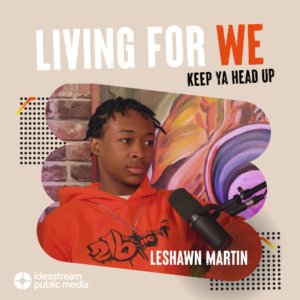
Something as simple as the smallest slight or embarrassment like losing a pickup basketball game, can lead to gun violence. Young people reacting in the moment and not taking half of a second to think, combined with easy access to guns is a deadly combination. Too often these interpersonal conflicts are leading to a loss of life or to prison time for young Black men.
In this episode, we speak with two Cleveland teens about the stress of avoiding violence at school, and in their neighborhoods. Community advocate Walter Patton, founder of the award-winning mental health program Ghetto Therapy™️, also speaks with us. Walter started Ghetto therapy ™️in Cleveland’s Outhwaite public housing community in 2018, and it now serves 1600 people every year with free weekly therapy meetings. He’s joined on the couch by Cleveland Peacemaker’s outreach worker Vincent Evans. Author of Self-Care for Black Men, therapist Jor-El Caraballo returns to share advice on how to handle interpersonal conflicts
View our full list of resources here.
Have you or someone you know been impacted by gun violence? Or do you have any thoughts about what was shared in today’s episode? Share your story for a chance to be featured on the show!
Where to Listen
Find us in your favorite podcast app.
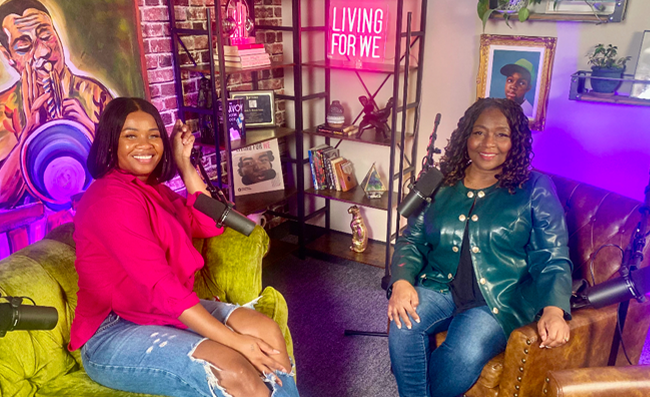

Marlene Harris-Taylor:
Warning, this episode contains descriptions of violence.
Myesha Watkins:
Viewer discretion is advised.
Marlene Harris-Taylor:
Today on Living for We: Keep Ya Head Up.
Dejuan:
Yeah, my friend, he got killed in front of me so I know how I feel to see it happen.
Marlene Harris-Taylor:
So, what happened with your friend?
Dejuan:
Basically, wrong place, wrong time.
Vincent Evans:
We still had these mental health issues, we still have all this trauma and we act out in a certain way and we don't have people to walk us through that to say, “Man, it's okay. It's okay to cry. What you going to do to me? I'm going to cry, yeah, because it hurt, it hurt.” And it's okay to hurt, now what do I do with that hurt?
[Music Playing]
Marlene Harris-Taylor:
Welcome to Living for We. Myesha, we're getting ready to hear from two young men from the east side of Cleveland, LeShawn and Dejuan. And we're going to talk about this issue that is at the root of a lot of the community violence, interpersonal conflict.
Myesha Watkins:
Something as simple as me knocking a microphone out of your face can cause you to pick up a gun and want to shoot and/or kill me. And it's just thinking what else could have been done? What other intervention could have been done instead of immediately going to a firearm.
And what we're seeing in the community is that it's little things like that that causes someone to lose their life to gun violence or to the system. And young people are taking that half a second to say, “If you embarrass me, I'm going to shoot you.” Too often, interpersonal conflict is solved with a firearm.
Marlene Harris-Taylor:
Well, let's hear from LeShawn and Dejuan.
Myesha Watkins:
What do you think drives conflict that can lead to gun violence?
Dejuan:
I think that show up in really like, “Oh, you from there, I'm going to kill you.” It could be just simply that you from that block, oh yeah, I'm into it with them. Everybody think that's the cool way and I think that's really the part right there, everybody want to be this gangster.
Marlene Harris-Taylor:
Everybody trying to be a gangster or pretend like they're a gangster.
LeShawn:
Like always being tough. That’s what I be telling my little brother like, “You can't always be tough bro.” Because it's somebody that's always going to be trying to be tougher than you and that's going to probably do what they say they going to do. You might just be talking and somebody going to get your ass for real.
Myesha Watkins:
That's real.
Dejuan:
You can show like your masc … whatever the word you say.
Marlene Harris-Taylor:
Masculinity.
LeShawn:
Yeah. That in a different way. You don't got to be you showing them by you about to take somebody life, no. Because you aren’t even going to be built for what you going to turn into after that or what's going to happen to you. Because trust me, I know somebody who … yeah, but he don't act the same.
Marlene Harris-Taylor:
Like he shot somebody.
LeShawn:
Yeah. Like him knowing he killed people and he don't act the same.
Marlene Harris-Taylor:
It affects you. You can't just do this and walk through the world the same. And we know that a lot of people who get caught up either get shot or do the shooting, sometimes it's about just little things. People get into little arguments or little beefs and it ends up with somebody getting shot.
Dejuan:
Yeah. My friend, he got killed in front of me. So, I know how I feel to see it happen.
Marlene Harris-Taylor:
So, what happened with your friend?
Dejuan:
Basically, wrong place, wrong time. After it happened, I wasn't really scared or nothing, just I was immune to it. Of course, I cried, but then it is like I just wiped him away because it was like, you know what I'm saying? He in a better place but feel me.
It's still like that's a everyday thing though. No matter who it is, it could be somebody you don't know, but you seen that happen before, you see what I'm saying? So, it's a everyday thing for real.
Myesha Watkins:
I just want to say I was over here trying not to be so proud, but to acknowledge that you cry. Too often black men try not to cry. And even when they do something, you say, I just wiped them away like it's literally okay to cry. I think the strongest thing a man can do is cry. So, thank you for sharing that moment with me. It means a lot.
Marlene Harris-Taylor:
Shawn, what do you think about that in terms of have you seen anybody get caught up in a situation that started off as something like really small and then it ended up being a big deal?
LeShawn:
My friend, he died in Akron. He was at some type of rapping, promotion or something. He was recording live or whatever and he got into a argument with some random people, him and his friend. And then, I guess they got to fighting and they just shot him and killed him.
Marlene Harris-Taylor:
How did you find out?
LeShawn:
Every Tuesday we used to go hoop at City Life and he wasn't at the school and everybody like, “Where Ant at, where Ant that.” Then the teachers was like, “Oh, you all don't know.” Like, “We don't know what?” They was like, “His mom called us and said that he passed away yesterday.” And I was like, “Swear to God.” Because I was just texting him before he left to go to Akron. He was supposed to go to Akron, do his show and come back but they yeah …
Marlene Harris-Taylor:
So, sorry about that. It's a lot to deal with for somebody in your age and then you just got to go on and act like nothing happened.
Myesha Watkins:
Yeah. Especially finding out about it in school is just like, “What do you expect me to do?” What type of support did the school have for you after they shared that information?
LeShawn:
They had therapists come for everybody that knew him or for everybody that knew him. Because he didn't get to graduate. He was supposed to graduate that year, he was a senior. So, we had made everybody cap and gown had his face on the top.
Marlene Harris-Taylor:
Oh, that's nice.
LeShawn:
And then we made posters and stuff, we did a balloon release, we had a memorial there. He had his funeral the same weekend and everybody went to his funeral. But as far as the school, they just had therapists come.
Because after that stuff got hectic. I fought three days in a row after that and then it was like a whole bunch of stuff going on. Everybody arguing, everybody fighting, it was just crazy.
Myesha Watkins:
Do you think it was because everybody was sad that Ant-
LeShawn:
It wasn't even the fact that everybody was sad, it was just the people that he didn't mess with was talking bad and talking down on his name and all that.
Marlene Harris-Taylor:
So, then his friends got mad that other people were talking about him.
Myesha Watkins:
That happens a lot where all you have is your friendship and then when that friendship is lost for somebody to disrespect a friendship or that person that can cause friction between you and another person who may not matter as much.
But now I got to handle it in a way that can cause me to either be suspended from school and/or lose my life if it's that serious.
So, what would you tell someone who have lost someone to gun violence? How are you all navigating that space?
LeShawn:
I ain't even going to lie. I don't even know because I ain't even navigate or nothing. I'll still be thinking about that, it's crazy. But I just try to distract myself from it though but that's not going to always be right all the time so I'm just trying to get myself together.
Marlene Harris-Taylor:
It stays with you. It lingers.
Myesha Watkins:
How do you think adults can help? People that you trust?
LeShawn:
I don't know. When I need my space, just give it to me for real. And I be a lot, I'll be in my room, my mom be calling me like, “Why you don't want to do, do,” “I'm just trying to go to chill in my room.” She be thinking I'm depressed or something, which I'm not, I just be chilling.
Marlene Harris-Taylor:
But it is hard though to get through something traumatic and that's traumatic. Learning that news about your friend, that's traumatic and it is hard. I can understand why your mom worry about it. But you saying, “Just give me some space mom.”
Dejuan:
We want to be independent, but at the same time, we need help with learning how to be independent and learning what we want to do.
Marlene Harris-Taylor:
For people that are listening to this podcast, the people who maybe some of your friends or maybe people you don't even know who are around your age and they're trying to figure out how to do things the right way, what would you say to them?
LeShawn:
Stay positive and stay woke and focused. Whatever your goal is in life, keep chasing, don't let nobody tell you you can't and you'll make it.
Marlene Harris-Taylor:
That's great advice.
Myesha Watkins:
That is. I needed that today. Sometimes even as an adult division can be shaky sometimes. And so, not to sit here like we have it all together, adults too struggle with some of the same things that we're asking you all to do or to implement.
People say things like it's simple and easy and it's not. Sometimes you just be like, “The wrong way isn’t looking too bad,” especially if it allows me not to be in jail or to lose my life. And so, I guess it's really subjective on what people think is the right or wrong way.
Marlene Harris-Taylor:
So, LeShawn, what's your answer to that same question. The people who are watching and listening, what message would you want them to take away from our conversation?
LeShawn:
Just stay out the way for real. Just stay out the way, don't look for trouble, don't look for nothing negative, just surround yourself around positive people and have a drive for what you want to do. I like to agree with what he said. Like, “Don't let nobody tell you you can't do nothing.” And try to try to go to school too. Stay in school.
Myesha Watkins:
What we really want to do as we wrap up is just saying send our hearts to you all for you all friends you all lost to gun violence. I respect your tears, the ones that you shared, that you experienced that day, but really just want to tell y'all to keep you all head up. Not like this, like gangsters, this is how gangsters keep their head up.
Marlene Harris-Taylor:
Keep your head up, for sure.
I hope that conversation we had with LeShawn and Dejuan resonated with somebody out there that people watching saying, “Yeah, I feel that that's me. I understand where they're coming from.”
Myesha Watkins:
Absolutely. I hope that it does because as adults we have these conversations and young people are saying, “No, it's not even like that.” But it is like that. And they made it clear that you can lose your life over something as small as stepping on somebody's sneakers.
Marlene Harris-Taylor:
One thing we want to do in this season of Living for We is we always want to talk about solutions as well. We're getting ready to hear from Walter Patton and Vince Evans, two people who are out here in Cleveland really trying to make a difference.
Walter Patton runs Ghetto Therapy, which is a free therapy service that's available to people in the community. And he's been doing this for about five years now and it's really become a community resource.
Myesha Watkins:
We're also going to talk to Vincent Evans. Vince is a employee of Cleveland Peacemakers and he will share more. The cool thing about having these two on a podcast is that they work together in a community.
Cleveland Peacemakers and Ghetto Therapy partner often and the communities that Ghetto Therapy has offered Cleveland Peacemakers also support families and young people.
Vincent Evans:
I am an outreach worker for Cleveland Peacemakers Alliance. Myesha, we don't work together, she is my executive director, but she gives us a sense of direction and I always say she gave me, but she always says that I earned a position but she actually provided the platform for me to do the work that I love doing.
We work with young people, basically trying to reduce violence, gun violence through prevention, intervention and restoration. We try to get on both sides of the gun before it happens, teaching people to be safe as well as the ones that's using it, teaching them conflict resolution skills ahead of time before it does that as well as getting in there.
The intervention is when it happens while they're in court. Helping them through that process while they're going through something as well as the people who are shot in the hospital, trying to make sure that they don't retaliate. And the restoration is once you're off of probation or out of the court systems, how do we get you into a good space in life once you're out of the hospital?
Our main thing in the hospital is what do we do to make sure you don't retaliate? What can we put in place for you? What resources can we provide? We don't want you to go out here. We want this to be the last shooting in this event in this particular situation.
Marlene Harris-Taylor:
Wow, you doing God's work. Walter, I think you also are doing God's work with Ghetto Therapy. So, tell us a little bit first about just Ghetto Therapy.
Walter Patton:
Well, first I'd just like to say I'm blessed to be on the couch with my boy V man. You a sharp man. You hear me? You just going in, I appreciate that.
Ghetto Therapy, the first ever free and open to the public mental health therapy service directly in the middle of the hood and we going into year four of every week for the last three and a half years, we only missed three Wednesdays. So, that's like one Wednesday each year but the goal is to stay consistent.
Over the last three and a half years, we connected over 2,500 residents to licensed therapists. Out of that 2,500, 900 of those residents have never been to a mental health therapy service at all and 300 of those residents out there, 900 has an anxiety disorder. So, now they working with licensed therapists that come through Ghetto Therapy.
So, Ghetto Therapy has been a big place, a big piece of the community as an asset and we know therapy is not the answer to all, but it is one solution.
Marlene Harris-Taylor:
Tell me about how this got started. Where'd you get the idea and how'd you even begin?
Walter Patton:
So, in the project, so I'm from Outhwaite right over on case court and we smoking, we drinking, we doing a lot of this because we beefing with the neighborhoods. So, you get into it with King Kennedy, you get into Garden Valley, you get into it with 30th and all these different neighborhoods, we feud in these public housing.
So, we use coping mechanisms such as weed, we use drink, we use sex, we use all these different coping mechanisms, but we never thought about utilizing the therapist. So, one day I'm just sitting in the projects, we in a circle because Ghetto Therapy happens every day in the projects. That’s one thing.
We could sit in this yard, we 30, 40 deep and we outside just talking, communicating, laughing, we talking about the negatives, the positives but I wanted to bring a therapist into the room. So, I started over in El Dorado's barbershop, this is 2020 right before the pandemic hit. We didn't have no therapists in there, it's just community. I'm trying to connect the elders with the youth and just talk, really unorthodox.
So, when the pandemic came, they shut us down because the barbershop closed. Then I opened back up on East 55th and I had a partner there at the time and she was like, “Walt, well, you know you utilizing the name therapy, you can get sanctioned by not having a therapist.”
So, all that did was, you know, the average person would've quit. Like, I ain't about to look for no therapist, I'm cool. But it just turned the light on for me and I was tapping out to my network because I was on the same St. Vincent Charity residence board.
So, I sent the email, I'm like, “Hey, any therapist want to come down the way at 6:00 PM?” And every therapist got back and was like, “We aren’t coming to no projects after six o'clock are you tripping.” So, it was one licensed therapist, her name was Shannon Yarbrough and she was like, “I'm coming. I stay in Central, I'll be there.” And she came.
So, the original idea came from me sitting in my front yard on Outhwaite inside the projects but putting this into the space and then actually inviting therapists. So, it was originated in my front yard because this is what we was doing anyway. We just added a therapist in the room at the time just for the legal part but then it turned to be what it is now.
Marlene Harris-Taylor:
You heard the conversation with the young men, with LeShawn and Dejuan. So, I'm sure Vince, that you've heard a lot of those same kind of thoughts from young people that you work with, right?
Vincent Evans:
Yes. And I can personally identify because what we don't realize is that a lot of our young black men are being hunted. They are being hunted by what they're calling the ops, they're being hunted by law enforcement, they're being hunted by probation officers and court systems and systems in general.
One of the things we want to know is, can you imagine what it's like to not be able to go out of your house without grabbing a gun because you don't know who out there want to shoot you, who out there wants to end your life because they don't like you, because they want to fight you, because you have a hood right now.
One of the things we're finding now especially with the gang involvement, is that I work at a school, we having fights because you didn't help me fight because you were in class so now when you get out of school, we jumping on you.
So, now I got the guys who we jumping on, the guys from the other neighborhood, I got the guys from my neighborhood, I got the police, I have all of these different people at me and what can that do to you when you 16-years-old and this's your life?
Marlene Harris-Taylor:
No, I can't imagine, to answer your question, I cannot imagine being a young man, 17, thinking about all these things all the time. Having it weigh on me and not even sometimes realizing, I think that it's weighing on you.
Myesha Watkins:
Because it just becomes a part of your thought process.
Vincent Evans:
And personally, I didn't have to imagine it. At 17-years-old, I had to live it. I found myself in an apartment in San Jose, California with police banging on the door, kicking it down, and I had a gun and they came for me, being hunted like an animal. And at 17, I stood in front of a judge who told me, “You are not fit to be around decent people.” And he sentenced me to life, to a life sentence. Well, actually to numerous life sentences.
Marlene Harris-Taylor:
For what?
Vincent Evans:
For murder. Basically, I was present when two men got killed. I didn't even have a gun on that particular time, but one of their brothers, thanks to the media saying that I was a person of interest, one of their brothers came at me in broad daylight and we had a shootout, he died, I lived. And as a result of it, I was offered eight years to tell on him.
I refused to do it because of street pride or whatever it is, this was my best friend. And instead they gave me a sentence of 15 of life and a bunch of other sentences but at the end, I was stuck with 15 of life and three years for a gun specification.
And the parole board didn't care, I went seven times and their thing was, “You killed a man.” And I could tell him all the time, “It was only worth eight years if I'd have told on somebody.” But because I didn't, now I do 27 and a half years.
Myesha Watkins:
The conversation around this is like interpersonal violence. Even as men who understand systems, who understand community, do you find yourself like young people struggling to navigate interpersonal conflict as an adult man?
Walter Patton:
All the time, especially inside of Ghetto Therapy. The therapy service, I work, my environment, it's emotional intelligence for real. You think about it, I'm now in a space where I see three therapists outside of Ghetto Therapy. So, I see a reiki therapist, I see a mental health counselor and I do art therapy a lot.
And what that helped me do the most was just think of consequences before you react. You think of consequences once you react and then make that decision based off of that. So, yeah, a lot of the times it just emotional intelligence and resilience and just knowing the consequences through experience but not all young guys got that experience I got, you know what I'm saying?
So, just thinking before you reacting, it sounds small, it sound cliche but just think about the consequences before you react and you'll be surprised of what you got yourself out of. Just thinking about the consequences before you make that reaction to something negative. And I think about it all the time. I just think about what could possibly happen to me and what has happened to me and I don't do it, I don't do it.
Marlene Harris-Taylor:
Vince, what's your definition of emotional intelligence?
Vincent Evans:
I believe it's just being aware of the feelings that you're having and being able to act on them in a way that's productive as opposed to destructive. Emotional intelligence is just knowing what your emotions are, understanding them, being able to process them and then moving forward after processing them. How do we keep going in a way that's beneficial not only for myself, but for those around me?
Walter Patton:
That's what I was saying about your consequences. Always think about the consequences before you make a decision. I think that comes with experience and age. I think emotional intelligence, you don't get that at 16 or 17, I think that you get that over time through experience and you start to learn about your consequences for your actions.
I got emotional intelligence in my 30s. Now you may get it before me, and if you do, that's a blessing but I think it comes with the experience of consequences in what you've done and now you're more knowledgeable of making that decision because you know the consequences for it. So, with me, I think emotional intelligence come with experience.
Myesha Watkins:
Vinny, what's your saying? The three-step saying.
Vincent Evans:
Oh, yeah, you want to avoid conflict, it work with your wife, it work with your business partner, it work with your boss-
Myesha Watkins:
With your executive director.
Vincent Evans:
It work with your executive director, especially with your wife and your executive director.
Marlene Harris-Taylor:
Yes. Tell me this, I need to know this.
Vincent Evans:
And you can road rage it, it works with everything.
Marlene Harris-Taylor:
Works road rage too, okay.
Vincent Evans:
Everything. I'll pull over.
Marlene Harris-Taylor:
Oh, I got to hear this.
Vincent Evans:
And they do that, you right, I’m wrong, I’m gone.
Myesha Watkins:
And you stand by that.
Vincent Evans:
Stand on that.
Marlene Harris-Taylor:
I love it. You right, I'm wrong, I'm gone.
Myesha Watkins:
You can put it over a B too.
Marlene Harris-Taylor:
I like that. I'm going to remember that.
Myesha Watkins:
That’s real. Vinny, I have a question for you. At 17, what did you think that you needed if you can speak to your younger self?
Vincent Evans:
We talk about me going to prison at 17, but at 16 I was in college and people don't talk about that. They're more fascinated with the prison thing than they are with the college. What I needed then was a me, and I've said that to you many times. The reason I do this work is because I wanted to become the man that I didn't have in my life when I was 14, 15 and 16.
The one that would've told me when I was in college, “Stay where you at. You got it, you did it, you failed a grade, but you still graduated at 16, got a full scholarship and went somewhere.” The one that would've said, “Don't come home on the weekends and do this.”
Now, remember I told you my mother was suicidal. So, when we talk about why we do the things we do, my mother on several occasions threatened to take my life. She literally put gasoline through my house and locked us in the house. Locked us in the house and was going to end our lives.
So, I wanted to live so badly that any threat to my life, I took very seriously because I'm not going to die and I ain't going to let her do it.
And as I got older and realized later on, my mother was struggling and we don't understand with suicide, we don't understand it. They just don't want to live like they been living. Just like young people, they don't want to live like they been living but they don't have the options. Nobody's showing them, nobody walking them through it.
Marlene Harris-Taylor:
They don't know.
Vincent Evans:
So, this is where we come in now. We still have these mental health issues, we still have all this trauma and we act out in a certain way and we don't have people to walk us through that to say, “Man, it's okay. It's okay to cry. What you going to do to me? I'm going to cry because it hurt, it hurt.” And it's okay to hurt, now what do I do with that hurt?
One thing I learned, and here's a saying that I love saying, when you feel helpless, what do you do? Help somebody. So, ain't no self-care for me. My self-care is when I go grab a young man and want to change his life and I do everything I can to change his life, that's my self-care.
Marlene Harris-Taylor:
So, through helping other people, that's helping you also.
Myesha Watkins:
Because healed people heal people.
Marlene Harris-Taylor:
So, I'm thinking about you and I'm thinking about Walter and Ghetto Therapy, and I'm thinking you probably need some therapy Vinny, after seeing all that, I mean, what do you do to make sure that you're not traumatized?
Vincent Evans:
I cry. I'm traumatized. For the record, I'm traumatized. Prison traumatized me, life traumatized me, the things I've seen traumatized me. Some people talked about depression. I lost my best friends to murder, I lost all of my very closest friends to murder, I lost my mother to suicide. So, I understand the need for mental health.
With Walt going to Ghetto Therapy, I've watched people transform themselves because it's a therapy. Mental health is ostracized in our community. It was now we finally stepping up and saying, “Hey, I got issues.” I told Myesha, that young man crying, I'm a cry baby and that's the key to it.
I do this work not because I want to make up for anything I did wrong. I'm not trying to make amends, although that's a benefit to it. I do this work simply because the same reason he do the work it needs to be done. Somebody got to do it. God gave me a second chance. A judge looked at me and said, “You’ll die in prison. You'll never see another day.” But my God said, “I'm going to see it.”
Marlene Harris-Taylor:
You out here, you doing it. You are doing it. You making a difference. You really are. And I want to say to all of you, keep your heads up.
So, Walter, I wonder what you think about the systems that are in place because we're talking about individuals who are ending up in households where there's hurt, where there's trauma, where there's mental health issues that aren't being addressed. But I know that you often speak about the fact that some of this is intentional.
Walter Patton:
The reason why I don't really engage in a lot of gun violent conversations is because gun violence to me, in my opinion, is a structured business. If you stop the killing, you lose judges, you lose prisons, you lose hospitals. So, the reason why I don't really talk that much about gun violence because I feel like it's a structured thing.
So, when you think about this environment don't have any grocery store, you think about a lead field community, you think about violence and you think about an environment that's surrounded by eight prisons that have more prisons than schools, this is the structure that we living in.
So, of course, yeah, he walking out the door and scared for his life or maybe not scared carrying a pistol to defend itself but this is what's structured. This is how we were put in this community to live. These are laws and legislations that was wrote, this is not from an emotional standpoint, this is from facts.
We can look up laws and legislations, we can look up public works administration, we can look up the FHA, the Federal Housing Act, we can look up all of these laws and legislations that put us in this impoverished community for us that comes from public works administration.
We talk often about redlining. I always get told that this is a recycled conversation, redlining, redlining, nobody ever do anything about it. And it is a recycled conversation, but it's only recycled amongst organizations who get paid to create PowerPoints around it. But if you ask people that live in redline communities, what is redlining, they can't tell you.
Marlene Harris-Taylor:
That was just deep Myesha.
Walter Patton:
You feel what I'm saying?
Marlene Harris-Taylor:
That was deep Walt because the point you're making is a lot of people who are well intentioned even are profiting from the system the way it is.
Walter Patton:
Yeah. So, that's why redlining is always talked about amongst organizations and never inside of the community which redlining impacts. I went to John Adams where Pierre was murdered and I talked to the kids directly after that and they had me coming in there, my calm, and I asked the students in there to raise their hand if they ever heard a red line and not one student raised their hand.
But then you had the principal in there talking about, “It's not your environment. Don't blame your environment.” How you can't blame your environment when you surrounded by all these social determinants of health and they don't know if they can make it to school the next day, they don't know where they going to eat.
They have a kidney disease or a heart disease, don't know why, because it's lead field homes. You know what I'm saying? And this is how we grow up on a day-to-day basis inside of impoverished communities where the average resident of Lyndhurst by Beachwood lived 24 years longer than the average resident in Huff and Central because of their structured environment. This is strategic.
So, that's what I mean by systems. And I can never not talk about the systems because this is the laws and legislations that was wrote against us and amongst us for us to live in these environments and that's why I always talk.
Marlene Harris-Taylor:
Because when you think about it from that perspective, it would be impossible for there not to be chaos.
Vincent Evans:
Can I say this one thing? You keep talking about systems. Systems do exactly what they were designed to do. And the young people said it earlier when you all asked them like, “Well, what's the solution?” I'm going to tell you all the secret. You can do whatever you want. But at the end of the day, ain't no money and solutions.
When I go back in prisons, guards ask me like, “Why would you come back in here and try to help these guys?” So, you all to go get a real job?” That’s my goal when I get out here, I'm going to make, if I'm going to do everything I can, so you all got to go do real job. You all aren’t going to sit there and count me and teach your kids to count my kids, we aren’t going to do that.
Marlene Harris-Taylor:
It's just so much money in it.
Vincent Evans:
It's a bunch of money in it, google it. How much does it cost to incarcerate a juvenile for one year in Ohio? 240,000. How many years of college can that same juvenile get? And they giving them, I just went to court with a little boy ain't killed nobody. Did some robberies, did some stuff, five years. They just made a million dollars off of a car thief who made some bad decisions. Systems do exactly what they was designed to do.
Marlene Harris-Taylor:
What other things could we do in spite of all these systems that are designed to take young black men out of communities into prisons away from family, so they can't create their own family or raise their own children and then we say, “Hey, why aren't they all these single black mothers?”
Walter Patton:
We got to create our own environments. Over the last two years, Ghetto Therapy has brought in close to a quarter million of dollars funding based off of, that's the most money I ever made in my life. Of course, it's for programming but when I was working for Cleveland Clinic Evergreen, we was bringing in 12, $13,000 a year probably after taxes.
And you mean to tell me that with my record and my felonies, I can create my own organization to bring in a quarter million dollars for making a change in my environment. So, my thing is design our own environments.
If your environment suffering the most from diabetes, then you create a meal prep program. If your environment suffering the most from cancer, then you create some solutions for cancer. My environment, 90% of the residents from Central, Kinsman community was illiterate. So-
Myesha Watkins:
What's the percent?
Walter Patton:
90, 90%. 2016 June seeds of literature. I was studying that and I'm like, “Man, I just got studying my environment and I created a therapy service.” I found out that every home that was built before 1978 had lead in it. I was events coordinator at Land Safe Cleveland.
Myesha Watkins:
What would you say because too often this is what comes up, “It's not really my problem, it's just my community.” So, instead of trying to be a solution, I just complain. Because too often, you're in the same communities, you'll hear people say, “Man, they don't care. We just out here doing whatever they … like nobody's coming to save us.”
Which sometimes I believe that there's true to but for the people saying that nobody's doing anything, what would you tell people to inspire them or get them hope so that they can create a solution for the problems that continue for generations to impact the communities?
Walter Patton:
I would say that if you don't want your people to grow up in the same environment that you went through and go through the same things you went through to, then make a change, that would be my only thing.
Because you can't tell somebody who traumatized from the community, who got bullied, who was scared, who didn't have the right outfits, and finally got some money and they moved out and now they down talking to community, they will never come back because they're so traumatized by what the environment did to them.
They will never come back to help now that they got the money so you really can't talk to them about it. But I will stress that if you don't want the kids to grow up after you, to suffer what you went through, then make a change, that's all I could say.
Myesha Watkins:
Sometimes I got to tell myself, “Maya, you got to lead by example.” Because it's easy to tell people how to handle conflict when you're not in a crisis or when you're not in a chaos and you're like, “Oh, just do A, B, C and D.” And sometimes people in the communities that we work with, the choices are bad or worse.
And we were talking about this on one podcast, we're telling somebody to put their gun down, they're at a bus stop, they put their gun down there at a bus stop somebody, they're opposite them and then they get shot. And so, the first thing they're going to say is, “Yo, Vinny, you told me to put my gun down, but what did you put in my hand? What opportunity and safety did you create for me?”
So, we got to be mindful that even with therapy and our messaging around conflict is that we create a safety plan and a message that just does not sit with the young person, but it gets to their family so that they'll know he didn't choose not fight because he was afraid, he was trying to work on his ways to handle conflict, but he made sure that he helped mediate the situation so that even after they fought, they talked about ways that they can resolve it and would the parent be receptive to that?
And so, I think that's really important when we're talking about the messaging to the families, the communities and individuals. How do we bring in their whole ecosystem so that they're not feeling isolated or like the black sheep and trying to be different in a family that's still may be sick from the disease of violence.
Marlene Harris-Taylor:
That's real Myesha. That's great.
Myesha Watkins:
You don't got to raise your hand on the couch.
Marlene Harris-Taylor:
We not in the classroom, Vinny.
Vincent Evans:
I don’t know, it's two quick things I wanted to say and you say it all the time, we have to involve the young people. It's empowerment. My definition of empowerment is involving others in the process of their own upliftment period.
We have to give the young people a voice, we have to, we can say like, “What are we doing to put in place?” No, what we have to do, and you say this all the time, we have to get them to use their minds. Envision a life where you can leave out the house and not have to grab that gun.
What would your life look like if you can get in a car that don't have tinted windows on it, roll your windows down, turn your music up and go in any community you want to? What would it look like if you can leave out the house, pat, realize you forgot your gun and say, “You know what, I'm going to leave it today.” What would that look like? What does it take to get you to that space? That's very important.
And the second thing I wanted to say, and I'm done, is that the reason I love this brother and I'm going to tell you why I have a three-year-old daughter. I'm 47-years-old. I may not be here tomorrow. I think about death constantly because I could be gone from anything.
So, I need to know that I made the world better for her and as long as there’s brothers like him, I know that if my daughter needs somebody, I'm leaving in the world with people like him. And that's why I say I love his brother and ain't no shame in that. I don't have to preface it with no homo and all of that stuff. I can say we have to have that black love, ain't no shame in that.
Marlene Harris-Taylor:
No shame at all.
Walter Patton:
I love you too.
Vincent Evans:
The fact that you working and you're making a real difference and you are a man and if I'm not here, my daughter can look to you and say, “That's a man.”
Marlene Harris-Taylor:
So, Myesha, Walter and Vince were fantastic and they really leaned into emotional intelligence and helping people.
Myesha Watkins:
And it reminded me something that Jor-El said in episode one. The therapist from New York said something similar.
Jor-El Caraballo:
We don't teach men and young boys conflict resolution, instead we teach them that you are supposed to be the person who holds the power in any given situation. So, then when everyone thinks that what happens, what do we think is going to happen is that we're going to be battling for power in that moment every time, no matter the stakes and without skill, without real conflict resolution skills.
And so, that's one of the dangers and I think that's where masculinity starts to become toxic, is that we say, “Okay, you have to be a man, but we're also not going to arm you with tools to be an evolved human being.”
We're going to leave you out here to encounter really difficult things in your world. We're not going to give you tools to navigate them so that you can go home to your family, so that you can continue making the money that you want to make, so that you can continue to achieve your dreams of being an entrepreneur or what have you because you will need skills to do those other things.
Let's teach men and boys skills to communicate. They can still be masculine, they can still hold their ground, they can still be powerful and exist in that power and strength but also conflict resolution also means negotiating also means compromise, it also means knowing when to step down, when to fold, when to pivot and we need all that.
Myesha Watkins:
In your book, what are some of the steps that you offer that black men should be taking in their own lives to heal and to be better?
Jor-El Caraballo:
So, steps that black men can take to heal and be better. It's interesting you brought up this idea of self-care for black men sort of being revolutionary and I think that it is. And so, I think my sort of foundational thought is I want to challenge people to accept that, I want to challenge other black men to accept that for themselves.
That yeah, this is a conversation you can have, this is actually important. What if you were taking better care of yourself, would you be able to break some of the inherited traumas that exist in your family? Will you be able to live longer than your father or grandfather because you're taking better care of your health and you're managing stress better, like all these things. I just want to start with that foundational idea of just trying to believe that this is relevant to you.
Myesha Watkins:
Myesha, when we first met and we were getting to know each other, I asked you what did you think was the root cause of the gun violence that we see on the streets of Cleveland and you said …
Marlene Harris-Taylor:
Interpersonal conflicts, the inability to handle your emotions when you're disrespected or confronted in a situation where you feel unsafe. And literally a lot of people from government or other systems they'll say is gains and clicks.
In addition to that, it is when you're confronted with disrespect, you have a half a second to respond and how are you going to respond that way? And ultimately the response in our communities ends up with someone being either dead or incarcerated.
Marlene Harris-Taylor:
Interpersonal conflicts, it seems like a simple concept but so hard for people to get a handle on.
Myesha Watkins:
Yeah. And then when you think about young people understanding what emotional intelligence is, I know it's a word that is trending now but just being in tune with your feelings. Like if someone disrespects you, which feeling is the most heightened? Are you embarrassed? Embarrassment shouldn't lead you to making a decision that can cost you your life.
Marlene Harris-Taylor:
Well, it's been a good show, and I hope that everybody out there will continue to keep your head up.
Myesha Watkins:
Absolutely.
Male:
Gun violence has tremendously affected my family for the last two decades on all levels. In the community where I live and work, the Circle of Brotherhood in Miami, Florida is doing some awesome transformative work in terms of dealing with gun violence and also building collaborative working coalition with organizations like the Healing and Justice Center.
Neighbors can surely start wanting for their brother and sister what they want for themselves. It's a mindset shift that must take place and that mindset will bring about the transformative work, what we want for our brother and sister, what we want for ourself. But it starts with the example of just one or two neighbors. Keep doing the great work my sis.
Recent Episodes
View AllS2E11: Hope in Akron
Living For We: Keep Ya Head Up | S:2 E:11S2E10: The Cavalry Ain’t Coming
Living For We: Keep Ya Head Up | S:2 E:10S2E9: Hope in the Crossfire
Living For We: Keep Ya Head Up | S:2 E:9S2E8: A Second Chance
Living For We: Keep Ya Head Up | S:2 E:8
Hear More From Us!
Subscribe Today and get the newest Evergreen content delivered straight to your inbox!
Advertising & Sponsorship
Interested in sponsoring or running an ad for your business on an Evergreen Podcast? Contact us to get pricing and availability.