
Living for We, Season 2: Keep Ya Head Up
Every bullet fired creates two victims: the person who is shot and the one pulling the trigger. It’s a traumatic experience for both; the victim may lose their life, and the perpetrator may lose their freedom. This season, we're asking what can be done to end cycles of violence in cities like Cleveland, Ohio when the shooters value their reputation over their own lives and see innocent bystanders as collateral damage.



S2E4: Something Greater Than Me
| S:2 E:4In this episode, we’re heading to church with three men who once got caught up in street life, landed behind bars, and found a new purpose. Now, they’re using their experiences to reach others who are struggling with what it really means to be a man.
Stanley Frankart shares a powerful story about a moment when his life could have gone in a completely different direction—one where he might have faced a murder charge. But he believes divine intervention stepped in. It was in prison that he was introduced to Jesus, and today, he’s one of the founders of Young Christian Professionals, a Canton, Ohio-based community organization that started behind bars and now helps others transition back into life after prison.
We also talk with Bobby Johnson, a man who became a spiritual mentor to both Stanley and our third guest, Deshawn Johnson, while they were incarcerated. Bobby had a rough childhood, but at just 8 years old, someone told him he had something greater inside of him. It wasn’t until he went to prison that he fully stepped into that calling—mentoring and ministering to other men.
Deshawn Johnson joins us, too, sharing how he’s thriving as a business owner. He runs The Experience Barber and Beauty Shop in Akron, a place where men can relax, connect, and have real conversations in a safe space. He’s also paying it forward by providing jobs for formerly incarcerated men.
The impact of Young Christian Professionals is growing—their mentoring program now reaches five prisons across Ohio. This is an inspiring conversation about redemption, purpose, and second chances.
View our full list of resources here.
Have you or someone you know been impacted by gun violence? Or do you have any thoughts about what was shared in today’s episode? Share your story for a chance to be featured on the show!
Where to Listen
Find us in your favorite podcast app.

Voiceover:
Living For We is part of the Connecting the Dots Between Race and Health Initiative from Ideastream Public Media made possible by generous support from the Dr. Donald J. Goodman and Ruth Weber Goodman Philanthropic Fund of the Cleveland Foundation, and made possible in part with support from Enbridge Gas, Ohio.
Marlene Harris-Taylor:
Warning, this episode contains descriptions of violence.
Myesha Watkins:
Viewer discretion is advised.
Marlene Harris-Taylor:
Today, on Living For We: Keep Ya’ Head Up.
[Music Playing]
Stanley Frankart:
You know, I knock on the door, got my hood up, got my pistol on me, of course, as he's looking out the door, I know he's not reaching for a cell phone. And so, at that point, from where you're sitting to where I'm sitting, I shot him in the face with a nine-millimeter.
The forensics team said, “There's no way humanly possible that man should be living.” So, that was my first inclination that something greater than myself was working on my behalf.
Marlene Harris-Taylor:
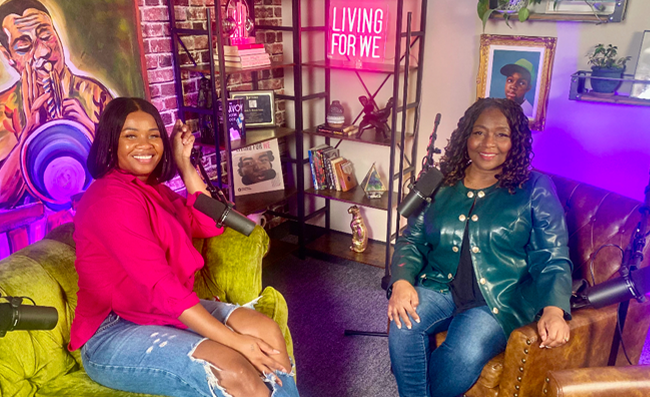
Welcome to another episode of Living For We: Keep Ya’ Head Up. On today's episode, we're talking to three men who have been involved with gun violence and were incarcerated, but now they're on the other side, building a life, building community in Canton, Ohio, Myesha.
Myesha Watkins:
These men have found faith while in prison to change their lives and develop programs that literally are transforming those who were formerly incarcerated to come out and change lives in communities.
Marlene Harris-Taylor:
And they started an organization called Young Christian Professionals in Canton. That organization was started behind the walls, if you will, as they were learning about God, involved in their Christianity, growing in their faith. And then as they came out back into the community, they kept that organization going, and now, they're helping other people who are still incarcerated.
And Stanley is part of the group that started the Young Christian Professionals. Stanley came home first, and he worked with some other folks in the community to get Young Christian Professionals off the ground so they could begin to help other formerly incarcerated men.
Stanley Frankart:
So, just to be very, very candid and blunt, $17,000 in drug money, nine ounces of heroin came up missing from a trap house that I was selling dope out of. And basically, the dude who allegedly took the drugs and the money was the boyfriend of the girl who had this house that I was selling drugs out of. And so, the girl told me where the man lived, and I went to confront the man.
And it was three in the morning, I knock on the door, got my hood up, got my pistol on me. Of course, as he's looking out the door and I look at him reaching for the back of his waistband, I know he's not reaching for a cell phone. And so, at that point, from where you're sitting to where I'm sitting, I shot him in the face with a nine-millimeter.
The forensics team said, “There's no way humanly possible that man should be living.” But what happened was the bullet went in through his temple. Because when I shot him, he tried to turn and it went out behind his ear on the same side of his head. So, that was my first inclination that something greater than myself was working on my behalf.
I didn't know what that something was. I didn't grow up in your traditional household where people were going to church, didn't grow up in your normal Bible believing household. My mother wasn't a Christian at that point in her life.
So, that wasn't something that was familiar to me, but it did spark that thought in me that there's no way humanly possible this could have happened. I expected that gentleman to end up dead. Everybody around us expected him to end up dead. So, there's something greater that's to be explored at this point.
At that point, I was 18-years-old, and so being able to really face at that point the reality that yeah, my life needed to be different or else I was going to be facing a life sentence or end up dead in the streets realistically – that was something that I was starting to think about, but it really didn't set root.
Myesha Watkins:
I remember working at the Boys & Girls Clubs in Cleveland that is now northeast Ohio. So, I remember a young club kid got shot and he survived, and after he got shot, it was like, “Oh, you survived. Oh, you the man now. Oh, we love you now, we here.” And it's just like he got his badge of honor by almost losing his life.
So, being able to talk about that, people paid attention to him, and he felt like when he was trying to do everything right, nobody paid attention to him. He just continued to make bad decisions from that point on because he loved the attention that he got from being a survivor of gun violence. They're finding so much love or perceived love in living a lifestyle that's dangerous.
Stanley Frankart:
That's real, I think for me, it was a part of that. I really think it was a level of misunderstanding what manhood was about. And so, mama always used to say, “You're the man of the house.” And at 10-years-old, she'd be like, “Stan, you're the man of the house.” And-
Marlene Harris-Taylor:
Talk about pressure.
Stanley Frankart:
Yeah, exactly. And there was a level of pressure, but my idea of what manhood was at that point was very limited. It was limited to the people that I’d seen standing on street corners, to the people that I’d seen carrying guns, to the people that I’d seen driving a Cadillac on 26 inch rims, and my idea of manhood at that point was, “Okay, I guess I got to put food on the table.”
And at 10-years-old, who going to hire a 10-year-old? That's really what birthed in me what people would've identified as a monster or somebody who was caught up in a cycle. I misunderstood what manhood was, and there was no reasonable voices in my life telling me what a real, integrable kind of manhood looked like.
Myesha Watkins:
Where did you find the mentorship of what a man looked like if you couldn't find it in your reality or on the movie screens that we were?
Stanley Frankart:
I mean, to be really candid, I found it in prison. It was three men in particular who raised me up to what it looked like to be a real man. That person was Bobby Johnson, Alfred Cleveland, and Savalas Crosby. And to this day, they still mentor me and still disciple me and still show me what true manhood looks like. And I'm the father, I'm the husband, I'm the man I'm able to be today because of the investment that they poured into me.
And so, I think as much as the setting of prison gets shade, there are bright lights, there are diamonds in the rough, there are people who God has, I believe, sent there specifically to touch hearts like mine, and to touch hearts like other young men who are navigating this journey so that they don't never have to go through that revolving door.
And I think that's where the ministry birthed, is that Young Christian Professionals was designed to reach these young men who were entangled in gangism, caught up in the urban poverty stricken mindset of, “I got to hustle to get out the streets, got kill, got to rob, whatever it is,” because there is more hope to life than just doing that.
There is more hope to overcoming whatever plagues the families and the communities that we live and reside in. The hope is that for me, I found it in a person named Jesus. And that really is what resurrected me out of the depths of prison, and the revolving door of recidivism.
I'll never forget the day, December 28th, 2012, I was up in multipurpose room at Richland Correctional and it was six guys on my side, it was eight guys on the other side, and we were going up there to have a little brawl or whatever you want to call it.
Marlene Harris-Taylor:
And what was that over?
Stanley Frankart:
Honestly, it was over some petty stuff that happened on the streets that one of my dudes came into the joint with from another set, from another side and I didn't even understand it. But I just basically told the dude like, “Bro, I'm tired of you sitting here complaining and crying about it. You either going to go up there and punch on dude, or I'm going to punch on you.”
And dude was like, “Alright, we're going up there then.” And so, I mean … at 21, I was 21 at the time. At 21, you don't have no real common sense. I mean, I didn't at that point, let me say it that way. And so, I go up there and I'm swinging a lock in the sock, and I ended up getting jumped by these eight dudes.
And at that point in my walk, I realized that like, yeah, I was powerless over my own life, that anything in me that wanted to get off of the ground – I don't know anybody who wants to be stomped, kicked, punched, hit with a lock in a sock, I'm missing a tooth about it. I don't know anybody who wants to be in that kind of a predicament who wouldn't want to get out of it.
And as much as I wanted to get out of it, I couldn't. I was being stomped, kicked, punched, all of that on the ground, and man, I couldn't get up off of the ground. And it was at that point, I had been on a little bit of a journey exploring some different faiths and trying to understand what it meant to have purpose in life and all of that that, but I got exposed to the Bible where I learned about the name Jesus, and I learned about the name God.
And so, I said, “God, Jesus, whoever you are, if you are real, get me off of this ground,” and literally, five minutes later, I was walking out of that multipurpose room, and from that point forward, my life was radically changed.
I ended up having to get moved on the move sheet to the reintegration dorm, which typically didn't happen unless you had like I think a year or 18 months till you left or go see the parole board, and I had neither of those.
And so, when the COs asked … I thought I was going to the hole for fighting, and they said, “You're going to one low, pack your stuff.” And I said, “One low,” I said, “There isn’t no way, I didn't sign up and I'm not eligible.” And they were like, “I don't know, you need to pack your stuff and go.”
So, I went down there and when I went down there, I moved on third street. I was on the top bunk and there was a person that moves right across the street from me on the bottom bunk. And that person caught my attention because they had Cartier frames on, and in the streets, that's some lingo that say like dude might be connected.
Myesha Watkins:
Have my money.
Stanley Frankart:
Yeah. You know what I'm saying, got some cheese. So, I'm like, “Well, shoot, maybe he know the plug, maybe he know how to get in,” and that was my angle at that point. I didn't know nothing else. And I had a friend in the same institution that I grew up with, his name was Alex Fletcher, and that friend used to tell me about a guy named Bobbo who used to disciple him.
And I didn't know what disciple meant. I was like, “Bro, what you mean?” He's like, “You getting down with the gangster disciples?” He's like, “No, he's teaching me about the Bible.” And I was like, “Oh, okay.” And so, I was like, “Whatever,” at that point I wasn't exploring. So, I was like, “Cool.” And anyway, that name Bobbo stuck with me.
And so, when I happened to look at the guy who had the Cartier frames, I jumped off of my rack after count, I said, “Hey man, what's your name?” He's like, “Bobbo,” and it clicked. And at that point, it was like, “Dang!”
I was like, “Bobbo, man, you discipling my friend name Flex.” I was like, “I don't know what it all has to do with, but if it got anything to do with God, Jesus or the Bible, bro, would you be willing to teach me?” And he's like, “Give me three days, I'll pray on it.”
And over the course of that time, I was being delivered to things. Literally, flushed drugs down the toilet, threw my cell phone away. I ended up folding the flag on the gang that I was representing at that time and basically told him like, “Whatever you feel we need to do, let's go ahead and handle it like men.”
I remember them looking at me and laughing and saying like, “Bro, you can't turn your back on us. You made us.” And I was like, “Bro, I'm serious, it's over with.” And I'm like, “Whatever we need to do, let's do it.”
And so, they walked away and they laughing and chuckling but I was serious. I knew I had to change some things. And so, the third day, Bobbo came and told me, “The Lord said yes,” and from that point forward, got into the word, he started teaching me about Joshua and what real leadership looked like.
And I remember reading that book in the Bible, didn't understand anything about it, but he busted it down for me, and then we went to the gospel of Matthew. And in the book of Matthew fifth chapter verses 14 through 16, is where I met Jesus face to face, where I truly got saved.
I realized that I was the salt that had lost its flavor, that I was in need of it, and I cried out and said, “Jesus, I'm the salt that lost its flavor, fill me,” and at that point, my life was changed.
Marlene Harris-Taylor:
Tell us about the organization and the work you do.
Stanley Frankart:
Young Christian Professionals, it's a nonprofit organization, tax exempt that strives to really truly restore individuals who are navigating the justice system to living abundant lives. And what our goal is, is to develop and dispatch Godly leaders, specifically from incarceration, being able to work with their families, making sure that families are ready to receive them back and walk with them through that process.
Because we know families are just as impacted by somebody's incarceration as the person who's incarcerated. And so, we do programming, we do peer support from people who have lived, experienced doing mentorship or discipleship with men and women that are navigating this journey.
We try to provide those tangible resources, whether it's hygiene, clothing – we partner in the community for housing, counseling, therapy because all of those things make up the holistic person that steps in right in front of you.
And so, our aim and our goal is to be a mission and a ministry driven by people who've been impacted themselves so that other folks can break them chains and the gospel of Jesus Christ is the way to do that, I believe so.
Marlene Harris-Taylor:
So, you started the Young Christian Professionals when you were actually incarcerated yourself?
Stanley Frankart:
Yeah, absolutely. It was a conglomerate effort of me and three other gentlemen: Bobby, Alfred and Savalas. And really our aim was to again, make an impact for the folks that were involved in gangs, involved in drugs, crime, poverty, guns, violence, all of those things.
And so, oddly enough, our mission was to reach the heartless felons who were part of the prison gang of heartless felons in prison, and it would turn out to be a wonderful success, it ended up being our first cohort.
In August of 2015, 75 men came out and wanted to figure out what it looked like to be a Young Christian Professional, and we asked these men to commit to some rigorous things. We asked them to recite creeds that were biblically based.
Every single time we gathered together, when folks was on the yard and doing things that they didn't have no business doing, we would pull up on them and say, “Hey bro, we don't cut in the chow line. We're examples of Christ, we're representatives of the king,” and these are things that we would tell them to do.
We would ask them to commit to refraining from alcohol use in the institution, tobacco use in the institution, pornographic materials in the institution. And so, 75 men committing to do that was a huge thing.
Marlene Harris-Taylor:
That's wonderful, yeah.
Stanley Frankart:
It was a tremendous blessing. And it was, we believe God showing favor, and that just continued to build, and the momentum and the word continued to spread and having disciple makers like Bobby Johnson and Savalas Crosby and Alfred Cleveland, who were known in the institution for doing good integrable work, made the difference. It set it apart from most of the other ministries that were in there.
And so, I was the first of us to come home in 2017. When I came home and transitioned home, I felt like it was my holy calling from the Lord to make this into a ministry for us to be able to do ministry to what we were called.
And so, we began to do the paperwork and tried to file for the nonprofits, and now, we're making impact. We're in five different prisons across the state doing reentry mentorship. We've been having the privilege of touching men and women and families lives who've been systemically impacted in great multitudes.
And we don't think we've seen the surface of it yet, we just believe that God is going to continue to do great things. And our ministry covers all the way from Cleveland down to Cincinnati, and we got disciple makers across the state, and Lord willing one day across the world, and so we're on our way in Jesus' name.
Myesha Watkins:
Hallelujah.
Marlene Harris-Taylor:
How do you personally measure success when you are working with people?
Stanley Frankart:
Personally, I measure it based on how they measure it. So, I think sometimes we try to prescribe what success looks like for people. But what success is for Stan may not be the case for John. And what's success for John may not be the case for what’s success for Nick. Stan's former success may be getting his little bachelor's degree at Ashland University online.
Myesha Watkins:
Big bachelor.
Stanley Frankart:
Amen, big bachelor, I appreciate that. But that may be my form of success, it may not be Harvard. But for me, that's how I would define success as a ministry, as an organization, is looking at the imago deity, image of God and people and saying, “What has God called that person to be?”
Myesha Watkins:
It's so crazy too, Stan, like in this space of gun violence prevention, dominate culture measures success whether you go to jail or if you die. But there are so many lifesaving interventions that we do every day from a person who literally was going to school one day now graduating from school, or a person that always broke curfew, that stays home before the street lights come on.
Even though that's not reducing gun violence, this person was at the highest risk of shooting or being shot but this relationship with his mom caused him to put down the gun. And so, it's all about narrative building too, but a lot of people don't care about that. They want to know was shots fired, did somebody go to jail?
And it's just having people that's intentional to say, “Before I tell you that, let me tell you about what success looks like for the 25 men that I'm discipling or that I'm mentoring or that's in my program.” This magnitude of gun violence is so huge that if we can save lives through relationships, the success is there because now, we have 25 more young people that can save the lives of those other 25 that fell through the crack.
Stanley Frankart:
We miss the real-life implications of how just deeply impactful the disease of gun violence is. How we've gotten to a place where we're so desensitized to violence that it almost is like, if I don't do violence, then people think I'm sweet or people think I'm soft, that’s a desensitization.
We don't question that like people on insulin who are being saved and sustained by insulin are recovering and doing well. We don't question that even though people die from diabetes every year. So, when we come to these person-centered approaches is what I like to call them, person-driven strategies, and one person puts down a gun, it should be the same type of response.
We should be celebrating that one person, that five people, 25 people who aren't out there carrying a pistol the same way we do when somebody who's able to afford their insulin medication can finally get the insulin that will help them sustain a healthy way of living.
It's a disease and when we look at it and approach it with the same mind frame as the disease of diabetes as we do gun violence, we can say, you know what, 25 people who put down the gun today, that is a win. That is a success.
Marlene Harris-Taylor:
Myesha, what a moving discussion. Man, I felt like I was at church because the faith was so strong there.
Myesha Watkins:
Thank you, Jesus.
Marlene Harris-Taylor:
Thank you, Jesus.
Myesha Watkins:
And it’s so cool that it started behind the walls, now it's in community, and now, it's about to go nationally and go into all of the prison systems to get people aligned with faith and purpose to come out into the communities and change lives.
Both guests who are not related, Bobby Johnson and Deshawn Johnson are very closely connected because Bobby Johnson was the mentor to Deshawn Johnson. And that mentorship continues to spill out into the community that there's even a barbershop that Deshawn Johnson created.
Marlene Harris-Taylor:
He uses that business that he has to help other people who maybe to keep them from getting involved in the streets, and also formally incarcerated people to give them a job so they can build a life and maybe even start their own business.
Myesha Watkins:
Entrepreneurship – because they once were entrepreneurs maybe the illegal way but how do you use those transferable skills to make it legal opportunity so that the only way out of this disease and system is not either to die or go to jail, but you can actually live in peace.
Marlene Harris-Taylor:
And Myesha, Bobby Johnson was just released from prison a few days before we spoke with him.
Deshawn Johnson:
My house was the hood for real. My dad was a pimp, my dad was a hustler, we seen multiple women, we seen trash bags of weed, we seen drugs, seen everything. It was in our house and a lot of abuse against women, you know what I'm saying?
Like my mom in particular, I seen people break in our house and put guns to our heads, to my mom's head, and me and my brother and my sister on the couch, we crying and all that.
Marlene Harris-Taylor:
Oh, my gosh, you were a child when that happened.
Deshawn Johnson:
Yeah, I was a child. I was probably about four or five. The kicker about that though is the very thing that happened to us then, me and my brother grew up doing.
Marlene Harris-Taylor:
But that's what happens. People do what they see, and that's what you saw so that felt normal.
Deshawn Johnson:
That felt normal. And from that point on, we were doing all kind of like elementary, junior high, we even getting ahold of our first guns we robbed somebody.
Marlene Harris-Taylor:
And what age was that?
Deshawn Johnson:
Probably about 13, 14. Dudes talking about his guns and okay, you talking, we broke in your house, got the guns and we had our guns. So, I mean to see that song is coming back to have us in some type of way. And you know what I'm saying, that's where I believe the humanity comes in. I don't want to judge you based off what you're doing – why did you do this?
Because once we get to the root, we could uproot what it is because if it's not, it's just like cutting the tree down and it's just going to grow back. For me, that root came when Jesus came. He just changed my heart. I was callous, I was hardheaded, in and out of DYS, in and out of Dan Street, just violent, anger. All that stuff that I experienced as a kid, I was living out.
And my mom couldn't handle me, then she put me out when I was around 16. 16 led me to hustling, chopping cars, and ended up going to do DYS at [inaudible 00:22:25] Boys School, 17 – got out of there at 18, and then never really had like a path.
Myesha Watkins:
And Deshawn, as I'm listening to you, I'm just over here thinking I'm working with young men whose stories are the exact same and there's a huge age difference. Maybe they're thinking like “Nobody understand,” but listening to you, I can name 25 young people that had the same story, and they're only 16 right now. So, I appreciate you sharing that.
Deshawn Johnson:
You're welcome.
Bobby Johnson:
I believe that's our driving force. What we seen, we did. So, now, we are determined to be a Godly example. So, when people see us, they see what it look like. What do positivity look like? What do a man look like? What do a Godly man look like? What do a true leader look like?
And so, we’re passionate about being a Godly example and that was the first thing that I focused on when I went to prison. I went to prison six months, I believe after I graduated high school, my goal was to go to Cleveland State-
Marlene Harris-Taylor:
And that got interrupted.
Bobby Johnson:
And I went to another college that I didn't see.
Myesha Watkins:
School of Hard Knocks.
Marlene Harris-Taylor:
A college called School of Hard Knocks.
Bobby Johnson:
I was young. So, I was like, “Okay, I'm going to be young, but I'm going to live for God and let me be an example.” And then once I got a little older, got a little seasoned, got a little bit mature in my incarceration, I say, “Now, I want to be a Godly example and show people what it look like to be a true man of God, a man of integrity.”
Marlene Harris-Taylor:
So, what led you to have a life sentence at such a young age?
Bobby Johnson:
Choosing the wrong people to hang out with. I believe I was a young person that wanted to fit in, wanted to be accepted, didn't feel like I was accepted, didn't feel like I was valued or honored, not in my household. At five-years-old, I experienced gun violence, my father shot himself in front of me.
I was a little boy, came outside and I looked at my dad and I said, “Dad, what you doing?” He looked at me and pulled the trigger, and I was five-years-old. By the grace of God, he lived through it, but it still affects your children.
Marlene Harris-Taylor:
I'm sure that image is probably implanted in your brain.
Bobby Johnson:
It is. But it's been my encouragement, it’s been my motivation. I know the consequences of what gun violence can do. He followed what his father did, even though his father was an FBI agent, but he followed what his father did.
Marlene Harris-Taylor:
But your father was in the streets, and so you kind of followed that example into the streets.
Bobby Johnson:
We got the same name. So, I'm thinking, “Okay, that's my identity. That's my identity. We got the same name, oh I must be just like him.” And then when you get in trouble, your mother going to say, “Oh, you just like your daddy.”
Myesha Watkins:
You just like your daddy.
Bobby Johnson:
So, now I'm thinking about everything that my daddy do. Oh, my daddy drink, oh my daddy he mess with all different type of females, oh my daddy, he make money like this, and so now I want to follow in that.
Marlene Harris-Taylor:
So, Bobby, I'm curious, what are the seeds of your spirituality? Did that start when you were a young man?
Bobby Johnson:
So, at eight-years-old, after I had aunties, I have spiritual aunties I'm talking about, they spoke life into me. Even when I was doing wrong, they were still speaking life and saying, “Bob, you're chosen.” I'm like, “Nah, I'm doing all this bad stuff at your house and you still talking about I'm chosen.” “No, you chosen.”
Marlene Harris-Taylor:
They didn't give up on you.
Bobby Johnson:
They didn't give up. I remember when I was probably about 23-years-old, I was walking the yard in prison by myself, and I was crying and I was asking God, I said, “Man, why am I not normal?” And I just heard a voice, “Man, because you're not normal.” And that was the time I just really embraced who I am.
Who am I? I am a man of God. Who am I? I'm kindhearted, I love people, I love helping people. I'm not a thug, I'm not a gang banger, I'm not a drug dealer – this is me, I'm just Bobby, and I embraced it. And once I embraced it, it seemed like my life went to another level. And I bring that up because I want our listening audience to grab hold to that too.
Just embrace who you are, you know that you are a great person. I'm going to use that word great, I am not going to even use the word good. You are a great person, you're outstanding. There's no one like you, and my goal was to leave a mark in history.
And that's my pursuit even right now, I'm going to going to leave a mark in history. And I'm going to be a Godly example so others can follow the lead, and leave a mark in history as well. And I believe that what we are doing today is going to encourage people to leave a mark in history.
Myesha Watkins:
So, I got a question for you Deshawn. So, did you just … it was like word on the yard that you need to go mess with Bobby, because how did that happen? I just want to know, was you walking the yard and you was like, “God, I need some discipleship.”
Deshawn Johnson:
How did that happen? I had with Savalas, which was one of my mentors – I don't want to say outgrew, I got what I needed from him, and I knew I was about to go home, and I knew I needed something because now I feel like I'm floating.
Marlene Harris-Taylor:
Is it a scary feeling when you're like, “Oh wow?” everybody wants to go home, but at the same time, is it a scary feeling when you know, “Okay, I'm about to go out and start my new life.”
Deshawn Johnson:
To a degree, I was in my living room, in my apartment, working out, you know how you can only go so far to the front door, you look out the window and then you know you can't go outside, so you go back to what you're doing? I had to tell myself it was okay to go outside. When people come home, you can't expect them to jump buildings, everybody got a different process.
And coming home to normal life when you've been basically doing a routine, getting up at five, six in the morning when they turn the lights on, when the yard open, go to chow or whatever you do – go to school or lunchtime, count time. Then whatever you do in the afternoon, count time again, and then if the yard opens. It’s like you've been programmed to this.
Now, I got to come home and be normal especially when you done a lot of time and you done been around a lot of people. Like you really didn't have no privacy, you had to really adapt to your environment to where you come home, and you don't even know how to do those things no more.
Marlene Harris-Taylor:
And you've been home for 10 years now.
Deshawn Johnson:
Yeah. March 18th I'll be home 10 years.
Marlene Harris-Taylor:
But you are not just home, you're thriving.
Deshawn Johnson:
Yeah.
Marlene Harris-Taylor:
You’re doing well.
Deshawn Johnson:
Glory to God.
Marlene Harris-Taylor:
Yeah. Now, how did you take that and turn it into becoming a businessperson, an entrepreneur?
Deshawn Johnson:
I always had dreams since I was a kid. I seen my dad was part of that. That's one thing my dad did. He had multiple business alongside a lot of his illegal activity. He had a waterproofing company, which he was trying to reel me in before I got too wild, it just didn't work. But when I came home, one of the things that I wanted to see was a barbershop. I wanted to be an owner.
So, when I came home, I went to a barbershop, I worked there about three years. The guy, one of his shops were failing, and he came to me and asked me, “Do you want to take this over?” And I’m like, “Yeah.” Because God was leading me that way.
And He had showed me that he would come to me and tell me that. So, I kind of walked in that path. But from then, I just built, God just … even when I didn't have the money, it was the faith part, you know what I'm saying? It was the faith part.
Marlene Harris-Taylor:
Had to step out on faith.
Deshawn Johnson:
Had to step out on faith. It wasn't for me, it was for people. Because the way God wanted to do, was He wanted to create an atmosphere where people could come in and drop a low off without even you having to preach to them.
Create the atmosphere to where some type of change is exchanging when you leave, and then you create an atmosphere especially for black men because we walk around so tough and so hardened all the time.
Come a place where you relax and I don't tolerate disrespect, I don't tolerate this, we have a standard here, we're going to do this. And my thing too was what goals do you have? How do I plug you into a resource that can get you to that place because I understand we don't have safe places and sanctuaries like that.
And we constantly roaming around crashing out when we don't have a place like that. So, that was the thing for me, is bigger than me just cutting hair, is really … I remember when-
Marlene Harris-Taylor:
What's the name of your shop?
Deshawn Johnson:
The Experience, 88 East Mill Street, Akron, Ohio, 44308. The Experience Barber & Beauty.
Marlene Harris-Taylor:
And you do such a wonderful thing with your barbershop in terms of trying to encourage other people. I understand that you only reach out to folks who are formerly incarcerated folks to come and work in your barbershop. Is that correct?
Deshawn Johnson:
Yeah. Not only – I love preventive care before they get down the road, because you got to have a net before and after. If you could stop them from going, you could stop them from going. But if they in the midst of it, hey, we got something for you.
Marlene Harris-Taylor:
So, sometimes it's to try to help you to get out of that life before you go to prison.
Deshawn Johnson:
Yeah, because they reach out. They reach out, it's just it's not a lot of us out here that have the ability to bring them on land.
Myesha Watkins:
You've been incarcerated several times, what made this last experience different?
Deshawn Johnson:
I was able to surrender, and God was able to break the fear, to break the mold, to break the mental chains, to break the emotional chains and the healing that I needed in certain places that I wouldn't have got nowhere else.
I walked into that prison angry at God, but he was like, “I did it.” And when I left, when we walked to the gate that day-
Bobby Johnson:
Your last day?
Deshawn Johnson:
Yep. I cried because I understood, I was so happy because of the change that happened. That Sweet Victory by Trip Lee, that song was ringing in my head, like I really won. Because I went home with my barber's license, I went with some seminary, and I got disciple, and other classes. It was just like God, you knew what it take.
Marlene Harris-Taylor:
You took advantage of the resources that were in there so that you could come out differently.
Bobby Johnson:
It was beautiful watching his transition. He said, “You know what, I'm going to cooperate with God and let Him do his work, amen.”
Marlene Harris-Taylor:
He said he surrendered, yes.
Bobby Johnson:
Yeah, he surrendered.
Marlene Harris-Taylor:
Well, we wanted to ask you guys about Stanley Frankart. Stan is with the Young Christian Professionals in Canton, and he does a lot of work with people who have been formally incarcerated. So, what's your relationship? How did you meet Stan?
Deshawn Johnson:
I met Stan in prison and our relationship wasn't close. We was in passing or in the same groups or in service, but we really got close when he came home, and we just built from there. And the integrity this guy has, the loyalty – the same way he was in the streets going hard is the same way he going on this side.
And you respect truthfulness, and you respect realness and authenticity. And he isn’t going to hold no bar, he isn’t going to hold no punches when it's coming to telling you the truth. Like, “Bro, this is what I see,” you need those people. And he's a gem in my life.
Bobby Johnson:
You know, crisis produces miracles, and Stan is a miracle just like we are. But crisis produces miracles. I was in three low in Richland, which was the honor dorm, and I moved to one low, and soon as I moved to one low, I put all my stuff up and here comes Stan.
He jumped down. I see this little dude, he jumped on the bed. He say, “Bro, your name Bobbo?” That's my nickname, Bobbo. Was like, “Yeah, my name Bobbo.” He say, “You mentored my friend.” He said, “Can you mentor me?”
And when he said that, I say, “Man, that was a grown man move right there.” That was a grown man, and I respect it. And so, from that day on, I was just mentoring, I just poured into him, and I seen a leader from afar.
And then when it was face to face, I said, “This is exactly what I've seen all along. This is a leader that's going to have an impact in the world.” And so, he started talking about how he had a desire for young people. I said, “I got a desire for young people as well.” So, him, myself, and Al Cleveland, we started Young Christian Professionals.
It's designed to develop Godly leaders. We use entrepreneurship as our tool to draw them, and we educate them and that's what we've been doing. So, that's how I met Stan.
Myesha Watkins:
After you turn 18, six months later, you got a prison sentence. And how often is that the reality for so many people living in the greater Cleveland or urban communities across the country where you have this plan of like, I'm 18, I just finished prime, I'm about to get a job, and then you get this sentence.
One thing in Cuyahoga County is we have one of the highest bind over race for young people being charged as adults. What would you say to young people who are finding themselves in similar situations by being connected to the wrong people?
Bobby Johnson:
One of the things I would say to the young people, get the revelation that God used people. Because He use people and he's bringing people in your life to speak a word. But when you hear that word, just grab it.
Even right now, God is using us. We're speaking out of our lived experience. It's something about a lived experience that can resonate to the soul. It's something about a lived experience that can be impactful.
So, we're speaking from a lived experience. I believe if you just catch it, catch that very word that you need, because it's going to be something that's going to be said and it's like, “You know what, that's for me,” and just grab hold to it.
You're going to have certain feelings of sadness and depression, and all those things that's going to say loosen it, but don't allow your five senses to rule and dominate you. But when you get it, when you get that word, just stand on that word because there's going to be that very word that's going to give you strength to move to the next stage in your life.
And you say, “You know what, I'm experiencing some things,” yes, you are experiencing some things because you supposed to experience the things that you experience because you're great. You’re a leader. So, God will bring two leaders here to speak to another leader, don't let no one tell you nothing different.
You don't think like the average person because a leader don't think average, we think above average. But when you hear that word, just grab hold to it real tight and put it dear to your heart, and never let it go, and watch everything that you desire come to pass.
Because the Word of God said that desire of the righteous is granted. The desire of the righteous is granted, it's going to come to pass. And even if it take 25 and a half years, multiple incarcerations, don't walk by sight, walk by faith because you going to know it's going to come to pass.
Deshawn Johnson:
Know who you are and be confident in that. We didn't have an identity, so we tried to find our identity in groups of people or things or gangs or money or women – whatever that thing is, for me is knowing who you are, and be confident that you separate, I mean you separate it or you just set apart. You go to know that because once you grab that, the decision-making changes.
Because we are not going to put Gucci and Louis Vuitton on a horse, you understand what I'm saying? Once you find out your value, you don't lower it. Everything has to come up, and everything that doesn't come up, don't belong.
So, really for me, it was identity and really being confident in knowing who I was and God calling me even in the midst of me doing wrong. Like in the midst, I knew He was like, “Don't do that.”
Myesha Watkins:
So, when I was in seventh grade, similar to your story, we had a home invasion where people came in our house looking for money and drugs and put a semi-automatic gun to the back of my head, and my siblings head.
And I just remember my mom yelling out like, “Kill me, don't kill my kids.” And to be in that situation, I remember my baby sister saying she never wants to be a mom because she don't know if she can die for somebody else.
But when I started doing gun violence prevention work, I had buried that thought so deeply that I never thought I was impacted by gun violence. But it’s in that moment, my 5-year-old – she was five at the time. She said, “Mommy, I don't want to die of gun violence,” and I was reminded that in seventh grade that that happened to me.
So, I think about people every day who go through this chaos that seems functional, but it's extremely dysfunctional. But you only know that it's dysfunctional if you take yourself out of it. And too often, if you take yourself out of it, you lose your identity that you are comfortable with.
Your friends start saying you corny, your family thinking you acting different, you talking white – like all of these things to be able to elevate yourself. And I think in you all conversation, what I heard is like we're all gifted, we just got to figure out how to use our gifts.
Even you all parents who did things illegally in streets, they still had a gift to run an illegal business. All of us have these transferrable skills, we can either use them to survive and to thrive, but too often, we're using our skills to survive.
And then that lands us in places like you both spoke about in a system of hard knocks that oftentimes, it's hard to come out. But when you do come out and you're supported with resources and family and community, the chances of you being violated or going back to prison are slim to none.
What would you all advice to young people who have to navigate the justice system and then come home to reenter back into society, where the resources are slim and the expectations are high.
[Music Playing]
Deshawn Johnson:
Never give up. Because when it seems the hardest, it's usually the darkest before it becomes light. Create a plan in the midst of what you doing, the steps that they got you doing, ride it out. Make it plain, pay your child support so they ain't got that on you, none of that stuff. Do what you got to do. Even if you got to sleep on the floor for a season, even if you got to stay with somebody, be humble for a season, and then get out because it’s possible.
Hopeless people don't have goals, people with hope have a goal, and the hope helps you endure the process. Set a goal no matter what it looks like. You got the capacity, you did it in the streets, you put your life on the line. Put your life on the line for you and your family now.
Marlene Harris-Taylor:
It’s so apparent that faith is so important to all three of these men in their journey now that they're on the other side.
Myesha Watkins:
Absolutely. Even listening to Stan share the moment when he was incarcerated saying that he had this experience that God connected him to Bobby Johnson, and literally, that was the moment that he knew that God had more than what he has already experienced, that his life could be greater and better. And it's so obvious of the impact that he's making in community.
Marlene Harris-Taylor:
And they are working on solutions for people who are coming out of prison to make sure they don't go back. And the main solution is to make sure they can have a job or they can start a business, that they have some way to make money that's legal.
Myesha Watkins:
And that's important because when you come out, the first thing that people ask you for any job application, is that have you been convicted as a felon, and the answer is yes. And oftentimes, that can put you back into what you know, which is usually the streets.
And so, I'm so glad that programs like Young Christian Professionals and The Experience Barbershop and community violence intervention organizations like Cleveland Peacemakers and those all over the country provide opportunities for those who have been system impacted so they can use their lived and shared experience to change the trajectory of our young people and shape what safety really looks like in our communities.
Marlene Harris-Taylor:
So, we told them to keep their head up, but in this case, I don't think we need to tell them that.
Myesha Watkins:
Not at all. They know.
Marlene Harris-Taylor:
Because they know. They have their faith that's helping them keep their head up, they're looking up.
Myesha Watkins:
That's good. Jesus, that was good.
Marlene Harris-Taylor:
You got bars.
Kenya:
Hello, my name is Kenya, I teach kindergarten. I see the impact of gun violence, I see where it can stem from right in the classroom. Teaching our most vulnerable students who are having their first experience in public school, it is literally a pipeline to prison, and that has been researched and it's still very evident.
I was listening to Nipsey Hussle, he has a quote, and he says, “We have to reassess how we react to being disrespected.” And I'm wondering if we were to do that in the black community, particularly what that would look like. We need to become unoffendable. We need to reassess how we react when we are disrespected. Who else is going to help us?
Recent Episodes
View AllS2E11: Hope in Akron
Living For We: Keep Ya Head Up | S:2 E:11S2E10: The Cavalry Ain’t Coming
Living For We: Keep Ya Head Up | S:2 E:10S2E9: Hope in the Crossfire
Living For We: Keep Ya Head Up | S:2 E:9S2E8: A Second Chance
Living For We: Keep Ya Head Up | S:2 E:8
Hear More From Us!
Subscribe Today and get the newest Evergreen content delivered straight to your inbox!
Advertising & Sponsorship
Interested in sponsoring or running an ad for your business on an Evergreen Podcast? Contact us to get pricing and availability.